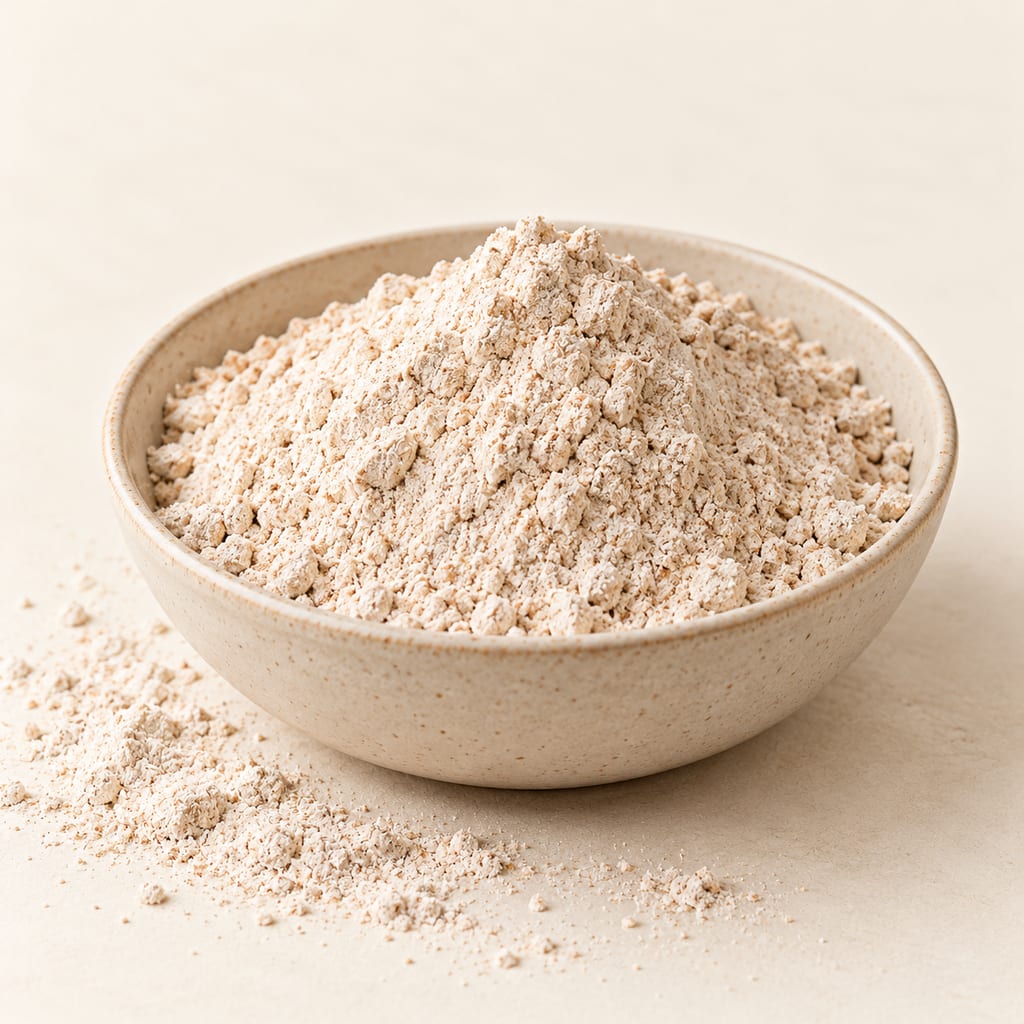
Whole-wheat flour
Whole-wheat flour contains the bran, germ and endosperm of wheat in their original proportions. Its fuller grain flavour and dough behaviour depend on the wheat and milling.
 FermenteaWhere food goes to change
Modern method
Sourdough starter
A flour-and-water starter begins with whole-wheat flour, then receives regular all-purpose flour feeds. Once established, this living culture can raise bread dough.
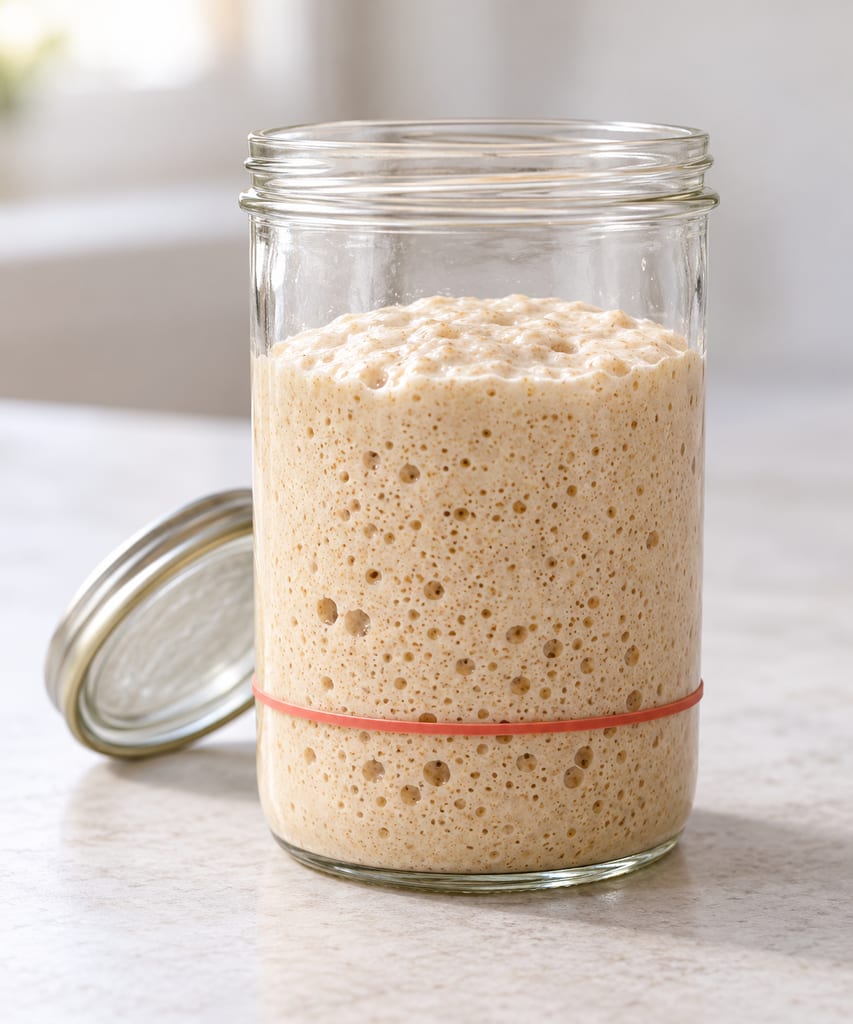
This recipe records the beginning of a sourdough starter, not a finished loaf and not a packaged culture with known strains. Its first mixture is equal weights of whole-wheat flour and cool water: 50 grams of each. The paste sits loosely covered for a day, then a measured portion is refreshed with all-purpose flour and water. Daily volume is kept small by retaining 50 grams and discarding the rest; after the first refresh, the routine becomes twice daily. The starter is a flour-and-water culture being established by repeated additions of fresh food.
The title describes the particular sequence that makes this method distinctive: whole-wheat flour starts the culture, while all-purpose flour is used for subsequent feeds. The method comes from King Arthur Baking's test kitchen, which reduced its earlier larger batch after baker feedback in February 2026. That date is the history of this published formula, not the invention of sourdough or a claim about the first use of a starter. Other bakers build and maintain starters with different flours and ratios.
Once established, the starter is used to leaven bread dough. A young culture is not ready simply because the calendar says day five or day seven. This method describes readiness as reliable doubling about six to eight hours after a feed. The time gives a practical reference point for this formulation and room-temperature practice; it is not a universal speed limit for every kitchen, flour, or culture. The recipe's small batch is intended to build a culture for ongoing baking, rather than to yield a fixed quantity of bread.
Whole-wheat flour brings the whole milled grain, including bran and germ as well as the starchy endosperm. King Arthur recommends beginning with whole-grain flour because it expects a richer field of naturally occurring organisms than in refined flour. That is a useful practical rationale for choosing the first feed, not a guarantee that every bag carries the same microbial population or that an individual starter will mature on the same timetable.
The flour also changes the mixture's physical character. Bran particles absorb water and remain visible, so a whole-wheat starter can look darker and more textured than one made with sifted white flour. In this recipe, the first mixture is a 1:1 flour-to-water ratio by weight. Later feeds use the same weight of flour and water, but the flour changes to all-purpose. The ingredients are kept simple so the reader can see how flour-and-water fermentation proceeds without fruit, dairy, sugar, or a commercial culture added.
Controlled research has found that flour type and extraction rate influence sourdough communities and their fermentation products. A study comparing refined and wholemeal soft and durum wheat flours reported differences in microbial composition and measured acids, sugars, and amino acids. Those results explain why flour is not an inert filler, but they do not identify the organisms in this home mixture or predict its flavor. The flour variety, milling, water, temperature, vessel, and the organisms that establish themselves together all matter.
During sourdough fermentation, yeasts produce carbon dioxide that can leaven a later dough, while lactic acid bacteria produce organic acids and other compounds that affect acidity and aroma. Sourdough starters commonly hold a community of yeasts and lactic acid bacteria, but their members and proportions vary. This recipe does not inoculate the flour with named species, so it cannot promise a specific organism or a fixed flavor profile. The microbial community is an outcome of the flour, environment, time, and repeated feeding.
Each refresh is a form of backslopping: some active mixture is carried into a new portion of flour and water. Keeping 50 grams while replacing the rest with fresh feed changes the balance between the existing culture and new substrate. Repeating the routine provides fresh flour and water while limiting how much starter accumulates. That is why the discard is part of the small-batch schedule rather than a mistake or a sign that the previous mixture failed.
Food scientists distinguish spontaneous flour-water starters from processes begun with selected commercial cultures, and from methods that combine a culture with later backslopping. This recipe begins spontaneously and then propagates the portion retained at each feed. Research on starter microbiomes has linked differences among cultures with measurable differences in bread acidity, volume, and crumb properties, but those studies do not let a baker infer exact results from a jar's appearance alone. A home starter's behavior belongs to its own conditions and feeding history.
On the first day, the flour and water are mixed until no dry flour remains, loosely covered, and left at about 70°F (21°C) for 24 hours. This gives the freshly mixed flour time to hydrate and ferment before it is refreshed. On day two, 50 grams of the mixture are kept and combined with 50 grams water and 50 grams all-purpose flour. The retained portion carries the developing culture forward; the fresh feed supplies new flour and water without allowing the total mass to grow rapidly.
On day three, the recipe moves to two feeds, roughly twelve hours apart. At each feeding, retain 50 grams of starter and add 50 grams water plus 50 grams all-purpose flour. The same rhythm continues on days four and five, and days six and seven if the mixture is not rising reliably. By mass, each feed is one part retained starter, one part water, and one part flour. This 1:1:1 pattern is specific to the recipe's small batch; other feeding ratios are documented and produce different dilution and timing.
The timetable is a workable routine, but temperature changes the rate of fermentation. King Arthur advises cool water in a warm room and lukewarm water in a cool room, and explains that a colder environment slows starter growth. A twelve-hour interval therefore describes the intended cadence, not a promise that every starter reaches the same point at the same hour. If the culture is not consistently doubling after a feed, this recipe says to continue the twice-daily refreshes rather than declare it mature by date alone.
Equal weights of flour and water make the initial paste a 100% hydration mixture in baker's terms: water weighs as much as flour. The retained starter also contains flour and water, so the first refresh is not simply a fresh 50-gram portion of each. Keeping the recipe in grams makes those proportions repeatable and avoids the volume changes caused by flour being packed loosely or tightly into a cup. The small-batch weights are deliberately modest, but a sufficiently large jar is still useful because an active starter expands.
King Arthur notes that on day two a new mixture may show no obvious activity, or may already show bubbles or some growth. Either outcome can occur before the regular twice-daily rhythm begins. A single visible rise is therefore not the criterion for calling the culture established. The repeatable post-feed doubling cue later in the method gives the baker a more useful comparison across several feeds than a one-time burst of gas.
Use a roomy, non-reactive vessel that leaves headspace for expansion. Glass, crockery, stainless steel, and food-grade plastic are suitable container materials in King Arthur's starter guidance. A loose cover keeps the mixture from drying while allowing pressure to escape as gas forms; this is not a sealed canning process. Mixing thoroughly at the start prevents dry pockets, and scraping the sides keeps old flour from building up above the active mixture.
Observe how the starter rises and falls between feeds. Bubbles, expansion, and a repeatable rise after feeding are useful process observations. The recipe uses consistent doubling six to eight hours after a feed as its readiness cue. A ruler, elastic band, or marked jar can make the change in height easier to compare, but the mark measures volume change, not microbial safety. A sluggish rise may reflect a cool room or a culture that needs more time; a single early burst is not the same as dependable activity across successive feeds.
Temperature changes how quickly the same ingredients move through the schedule. At a cooler room temperature, the starter may need longer to show the same rise; in a warmer room, the timing may compress. King Arthur's advice to choose cool or lukewarm water in response to the room is a way to moderate the starting conditions, not a substitute for observing the mixture. The recipe does not call for a laboratory incubator or a tightly controlled fermentation chamber.
Whole-grain flour can make the early mixture look different from the later all-purpose feeds: flecks of bran remain visible, and the paste can feel thicker as particles absorb water. Those appearances are expected consequences of using a less-refined flour, not a calibrated test of microbial activity. Record the feed time and starting height if the culture's pace is unclear; comparing it with its own previous feeds is more useful than comparing it with another baker's warmer kitchen.
Flour-and-water sourdough fermentation is old, but the origins of a particular household starter are rarely traceable. A food-science review describes sourdough as an ancient cereal fermentation and surveys how starters are propagated, while noting that flour, inoculum, and processing choices create different practices. Such evidence supports a long history of fermented cereal foods; it does not establish one birthplace, one first starter, or an uninterrupted line from an ancient bakery to a modern jar.
The recipe here has a much narrower documented history. King Arthur Baking's test kitchen states that its home starter method was updated in February 2026 to make a smaller amount in response to baker feedback. It is a contemporary American baking instruction, with metric weights and a domestic schedule, and its own source identifies the steps and quantities. Keeping those records separate avoids turning a modern measured recipe into an unsupported claim of cultural antiquity.
King Arthur's broader guide offers pumpernickel flour as another whole-grain starting choice. This entry follows the whole-wheat route and changes to all-purpose flour for later feeds. Other documented starter practices vary flour, hydration, retained amount, feeding intervals, and whether a baker begins with spontaneous fermentation or a selected culture. These are not interchangeable adjustments: changing the flour or refresh ratio changes the mixture's composition and the amount of established culture carried into each feed.
The purpose of this starter is to raise bread dough. Once its response to feeding is reliable, a baker can use it in sourdough bread formulas and continue refreshing the portion kept for future baking. The starter itself is not the dough and does not determine a loaf's formula by itself; bread recipes differ in how much starter they use and how long they ferment. Its acidity and gas production develop during maintenance, while mixing, shaping, proofing, and baking happen later in a separate recipe.
Starter culture is not the same thing as the bread dough that it raises. In this build, flour and water are refreshed over several days until the culture responds consistently; later, a bread formula combines a portion of that starter with its own flour, water, salt, and fermentation schedule. The starter's acidity and gas production can influence a loaf, but the baker still controls the dough's hydration, mixing, shaping, and proof. A jar that is vigorous at one feeding does not replace the later dough's own timing.
Whole-wheat flour is the choice for this recipe's first mixture, while pumpernickel is a documented alternative in the source's wider guide. Some bakers keep a culture on whole-grain flour; others use refined flour for routine refreshes, as this recipe does after day one. Flour choice may alter texture, aroma, and fermentation behavior, but the cited comparison study was conducted under its own defined conditions. It should not be treated as a promise that switching flours will fix a sluggish jar or reproduce a particular loaf.
Raw flour is not ready-to-eat food and can carry pathogens. The CDC advises against tasting raw dough or batter and recommends cooking flour mixtures; wash hands and surfaces after handling raw flour. A starter is therefore a preparation ingredient, not something to taste raw as a safety test. The fact that a mixture has bubbles, a pleasant smell, or a high rise does not establish that raw flour is safe to eat.
This recipe describes the initial build and a readiness cue, but it does not provide a validated preservation process, a room-temperature shelf life, or storage limits for every established starter. Do not infer those details from the fermentation schedule. Follow a tested maintenance or storage method for the culture you keep, and bake dough thoroughly before eating. The measurements, 70°F starting environment, and six-to-eight-hour doubling cue belong to this particular King Arthur method; they are not food-safety critical limits.
Sourdough starter is a maintained flour-and-water culture used to raise bread. King Arthur Test Kitchen reduced this home method to a smaller batch in February 2026 after baker feedback. It begins with whole-wheat flour, then continues with all-purpose flour rather than remaining a whole-wheat-only culture.
Scaling: source batch only
Raw flour can carry E. coli or Salmonella; a starter remains raw until later baking or cooking.
Hazard sourceDo not eat raw starter or dough. Bake or cook food made with it, and wash hands, bowls, utensils and counters after handling raw flour.
Control sourceRaw flour can carry harmful germs. Do not taste the starter; use it in food that will be baked or cooked, and wash hands, tools and work surfaces after handling it.
Modern US-published method; the source does not place the origin of sourdough in the United States.
Whole-wheat flour contains the bran, germ and endosperm of wheat in their original proportions. Its fuller grain flavour and dough behaviour depend on the wheat and milling.
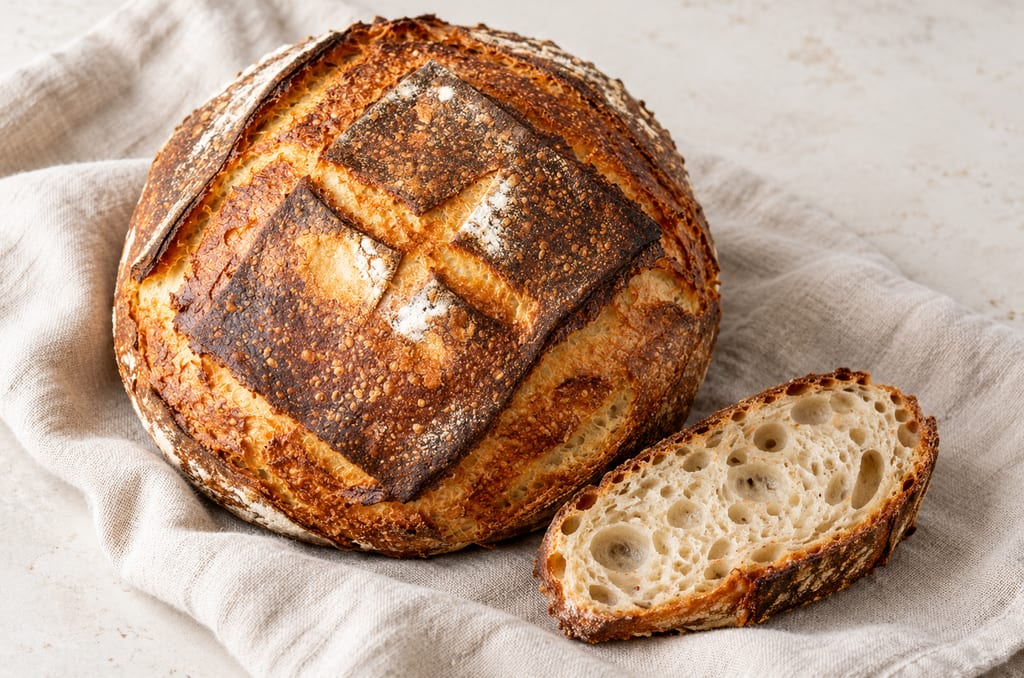
A ripe sourdough starter leavens this modern low-handling loaf. Three hourly folds organize the sticky dough before a long refrigerator rest, final proof and covered bake.
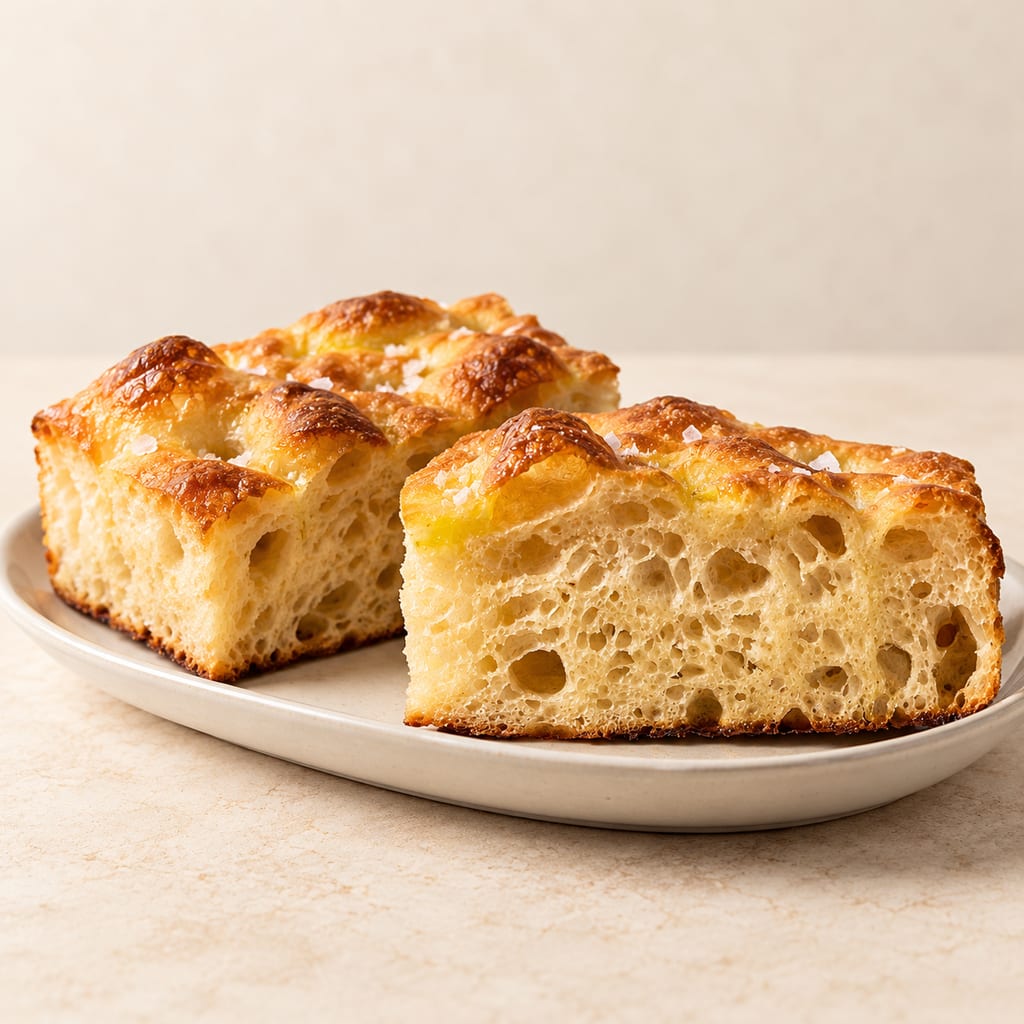
This sourdough focaccia uses ripe starter in place of commercial yeast. Olive oil enriches the folded dough and coats the pan before a long proof and a crisp, salted bake.
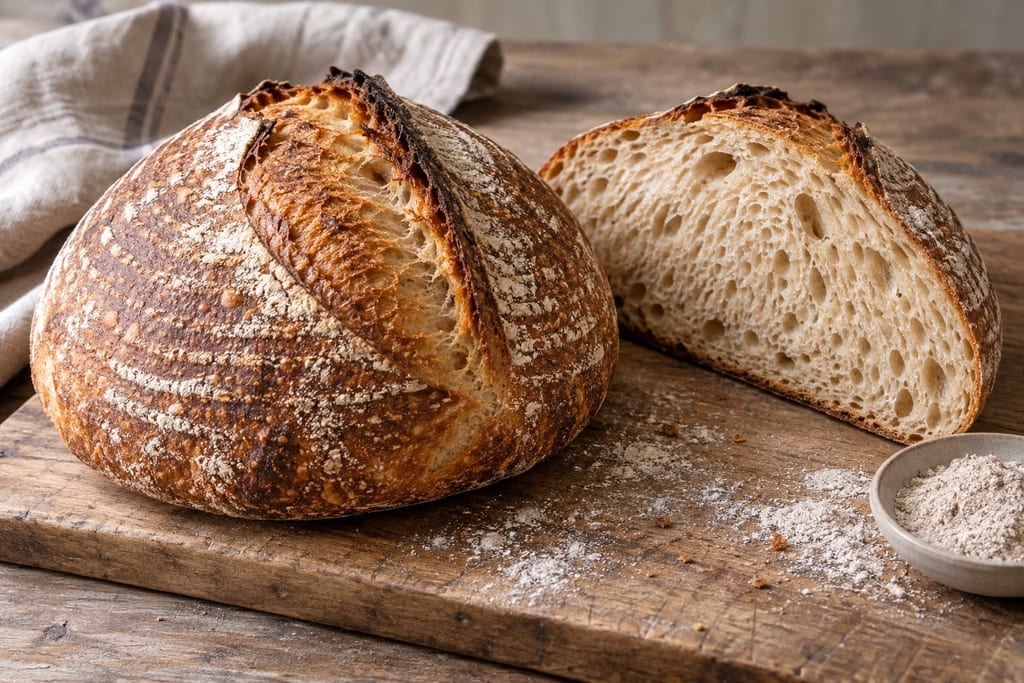
Jeffrey Hamelman's Vermont sourdough builds a liquid wheat levain before adding a modest measure of rye flour blend. The dough is folded, shaped and baked as two crusty loaves with a tender, open crumb.
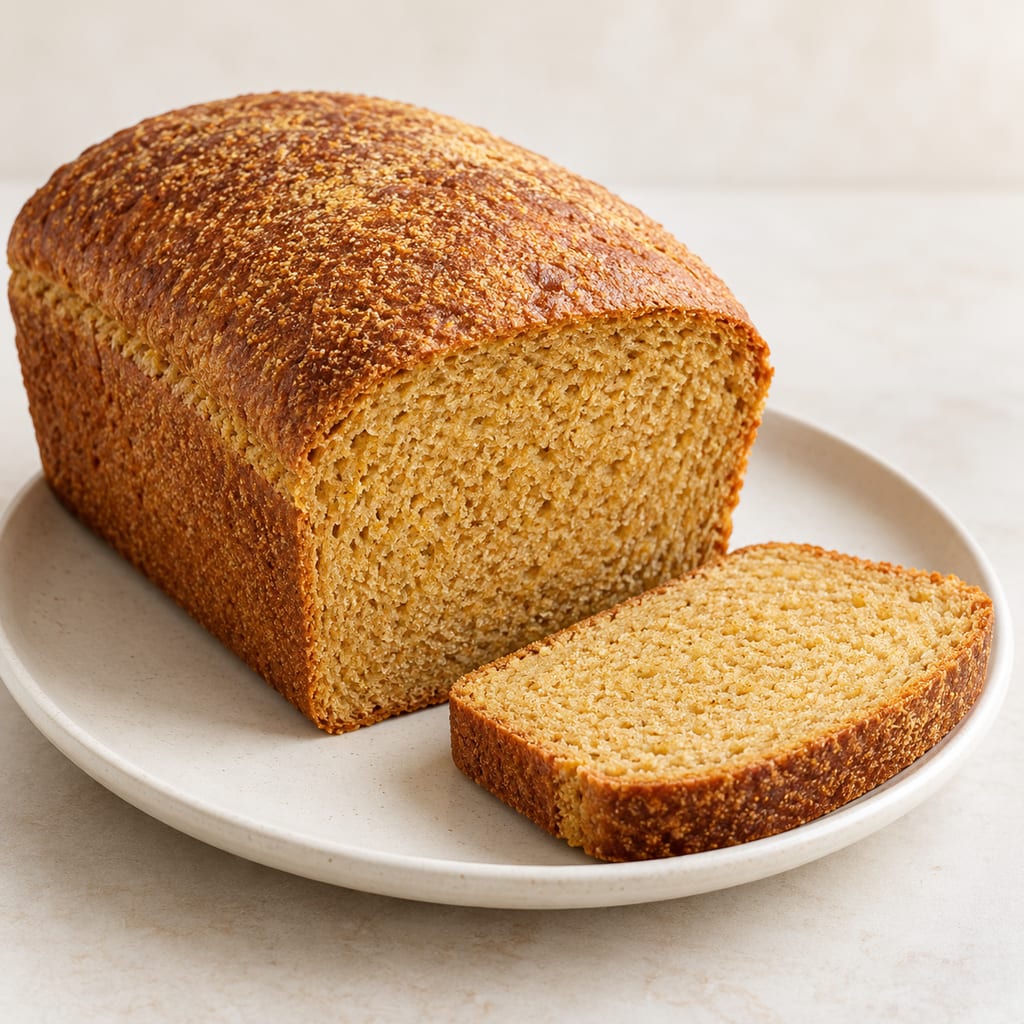
Anadama is a New England yeast loaf made with wheat flour, cornmeal and molasses. Scalded cornmeal enriches the dough, while molasses lends sweetness and a dark crust; it is especially good toasted or beside soup and baked beans.

A yeast-raised wheat ring shaped from a firm dough, briefly boiled and baked. This source-batch formula gives a gently malted crust and a chewy crumb.
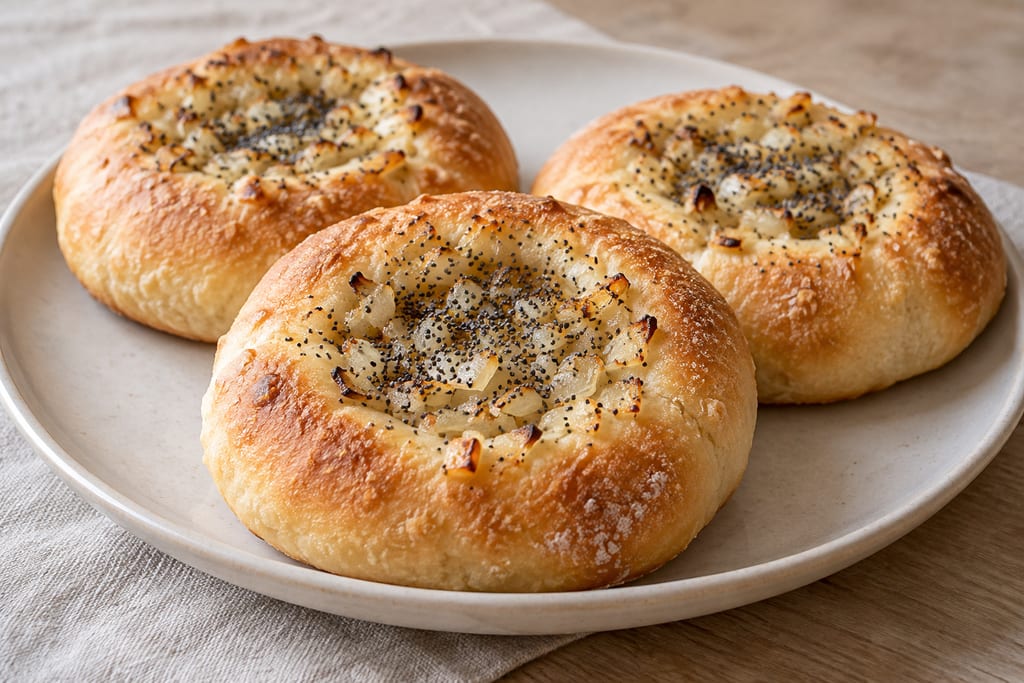
Bialys are soft, yeasted wheat rolls baked without boiling, each shaped with an onion-filled central depression instead of a hole.
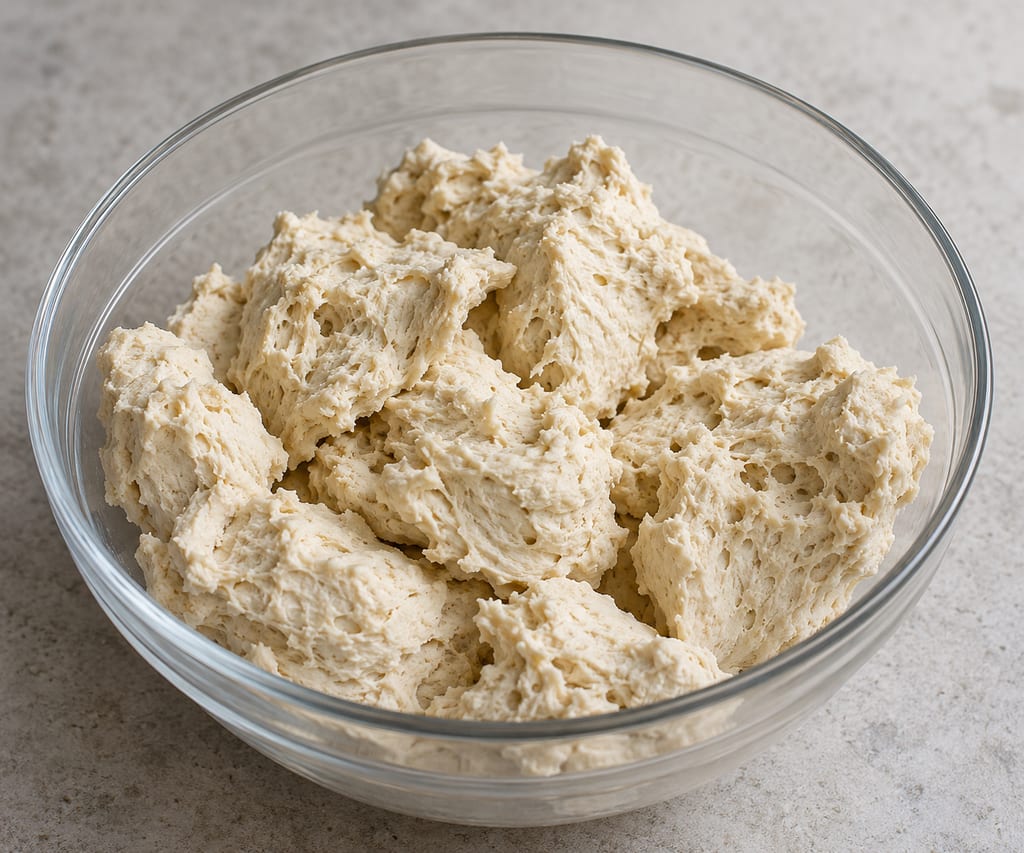
Biga is an Italian bread preferment of flour, water and a little yeast, usually a stiff unsalted mass of about 45 per cent water, fermented ahead and then mixed into the final dough.
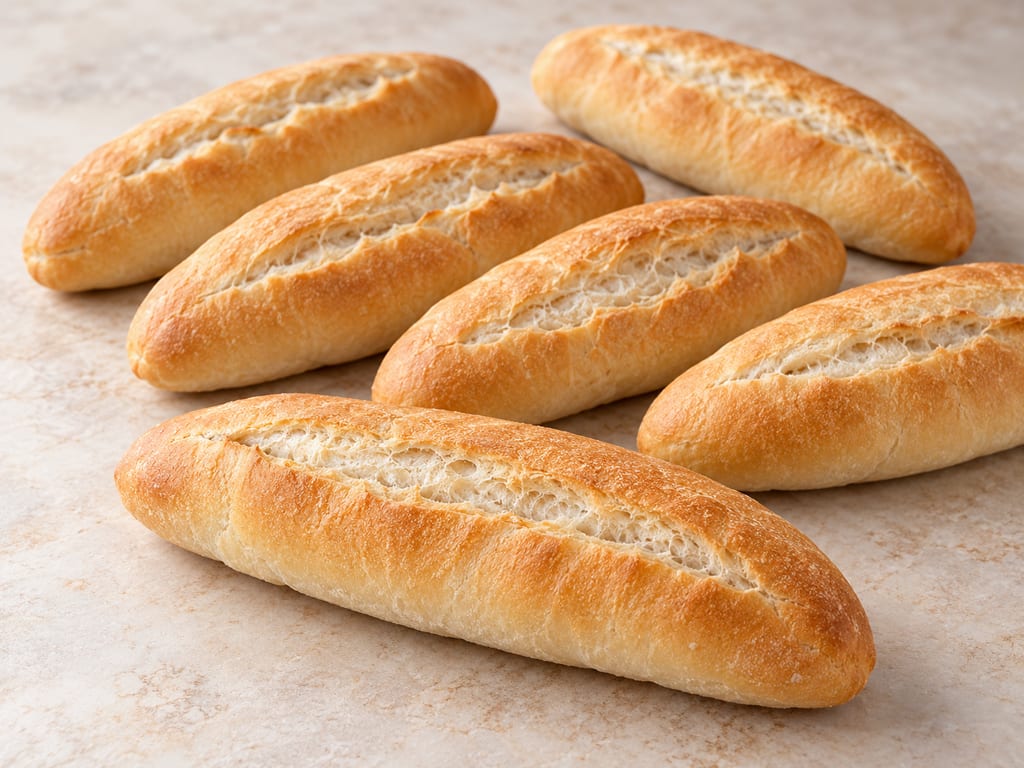
Six yeast rolls for Cuban sandwiches, shaped into long tapered loaves and slashed down the center.
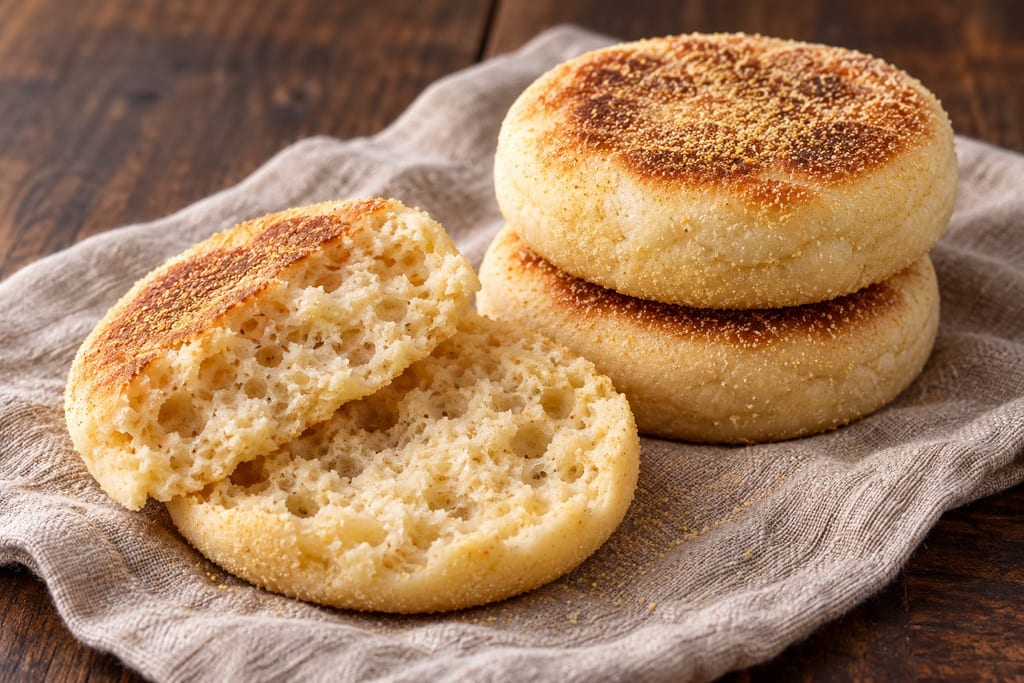
King Arthur’s six-piece English muffin batch uses a yeast preferment, two folds and a skillet or electric griddle; it is distinct from the sourdough-and-yeast version already catalogued.
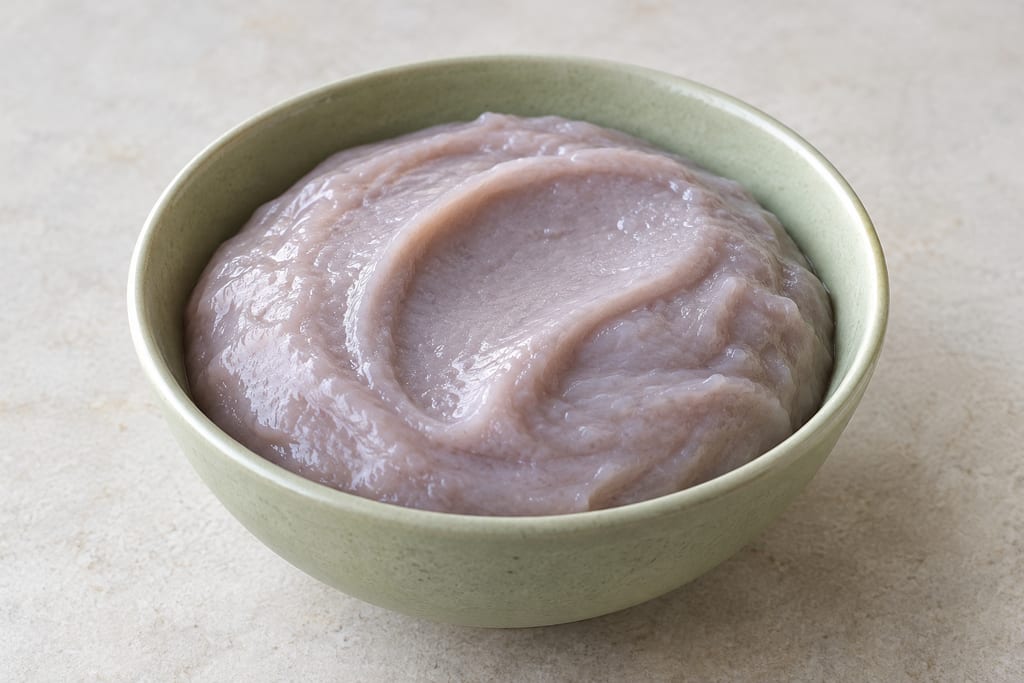
This modern introductory batch boils 500 g edible taro, then pounds it with water into fresh poi. It stops before fermentation and makes no preservation claim.
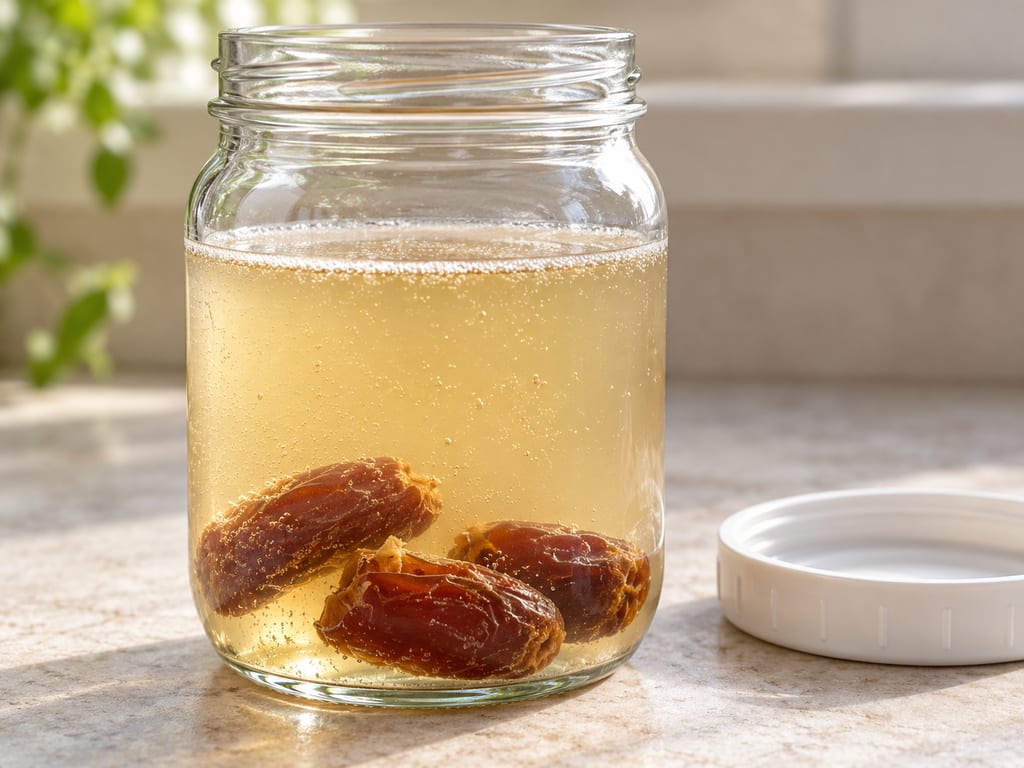
Fruit yeast water is a spontaneously fermented liquid made by soaking fruit in water, with or without sugar, to grow yeast for starting bread dough or a separate flour starter.
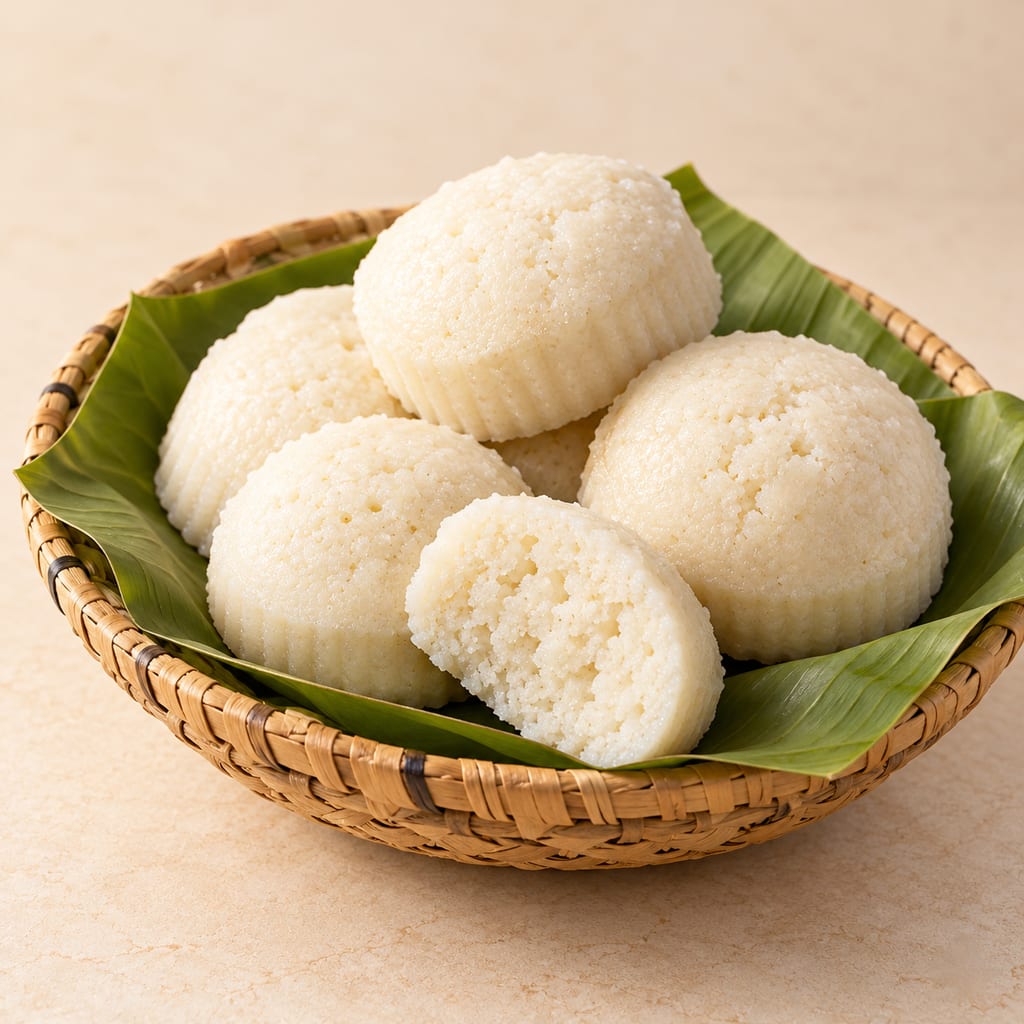
Soft, lightly tangy steamed cereal bread documented across Benin and Togo. This page gives one measured rice-flour research method; maize-based Ablo and mixed-grain versions remain distinct traditions.
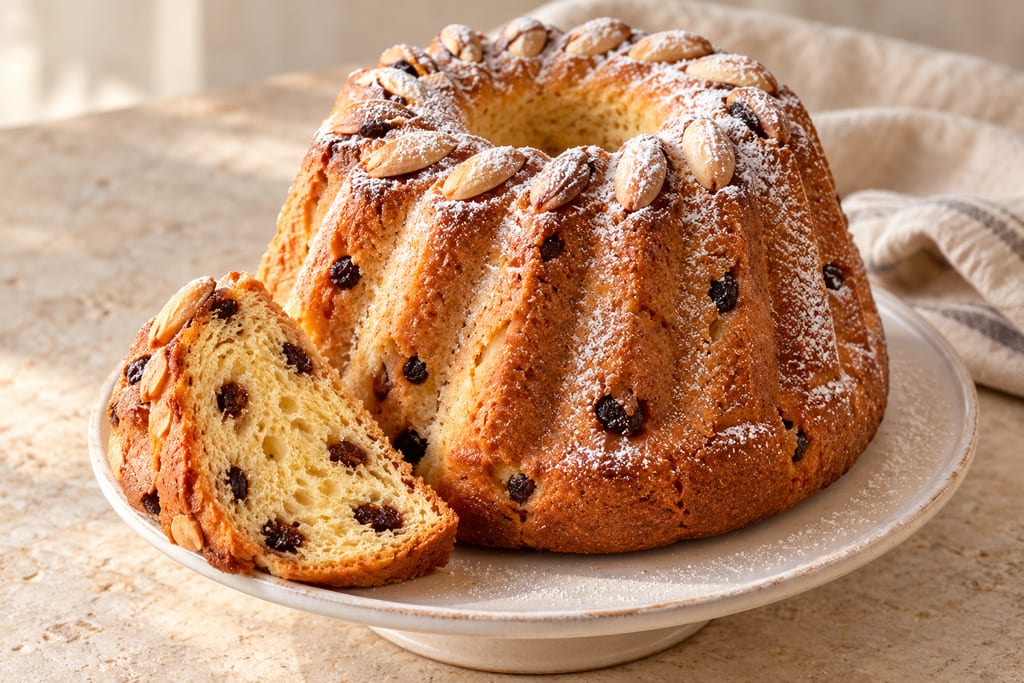
An enriched Alsatian yeast ring with raisins and almonds, kneaded with butter, proofed in a fluted mould and baked until browned.
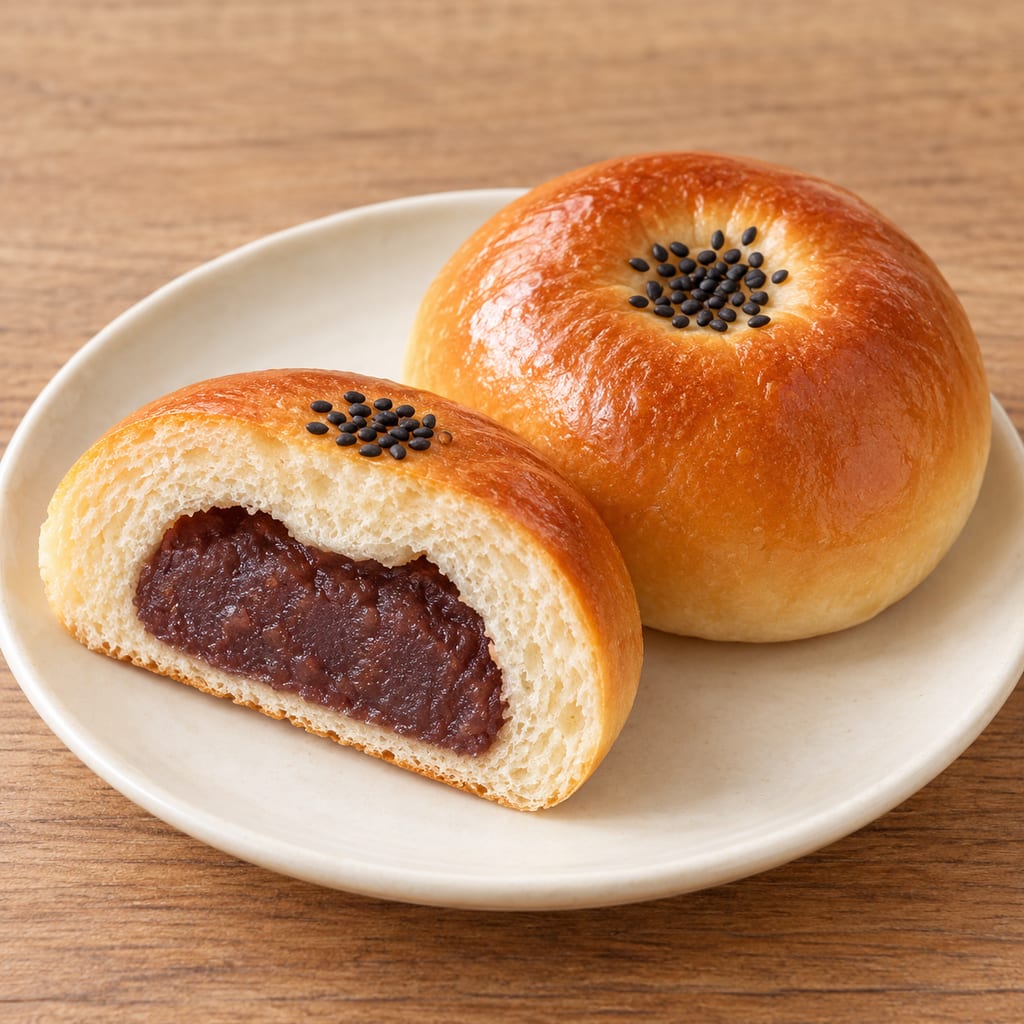
Anpan is a soft wheat bun filled with sweet red-bean paste and finished with egg wash and black sesame. This dough rises with commercial instant yeast.
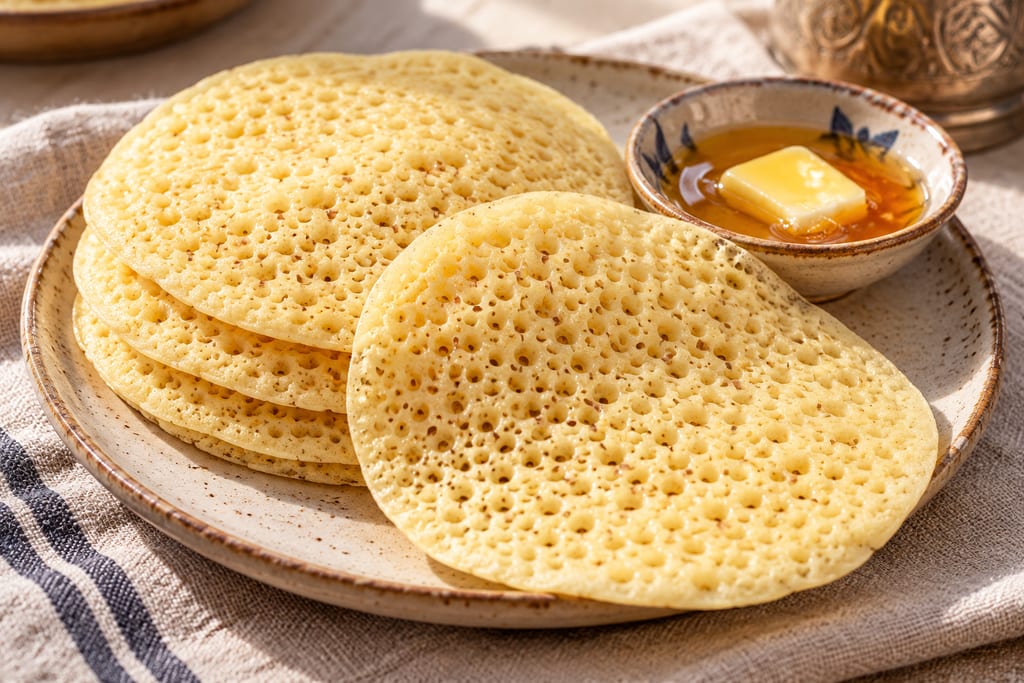
Moroccan semolina pancakes made from a thin yeast batter, rested until foamy and cooked on one side until the surface sets with a honeycomb of holes. This source-specific batch makes sixteen 5-inch pancakes.
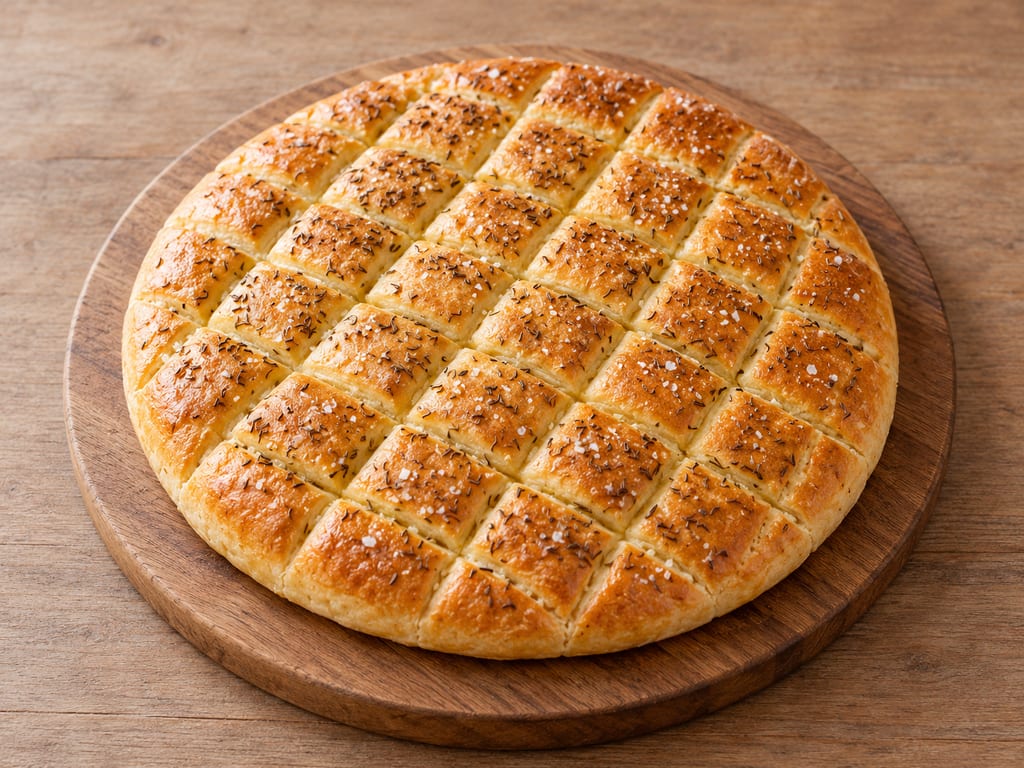
A round Slovenian flatbread scored in a grid and topped with caraway and coarse salt.
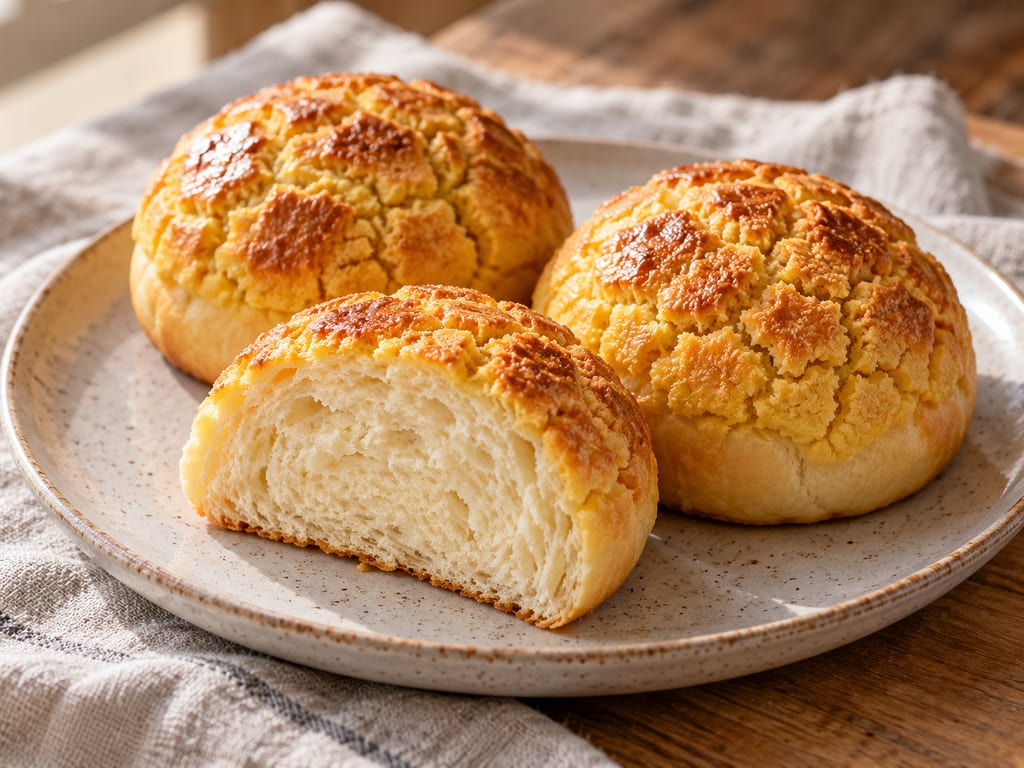
Hong Kong-style pineapple buns have soft yeast dough beneath a crisp, sweet pastry topping.
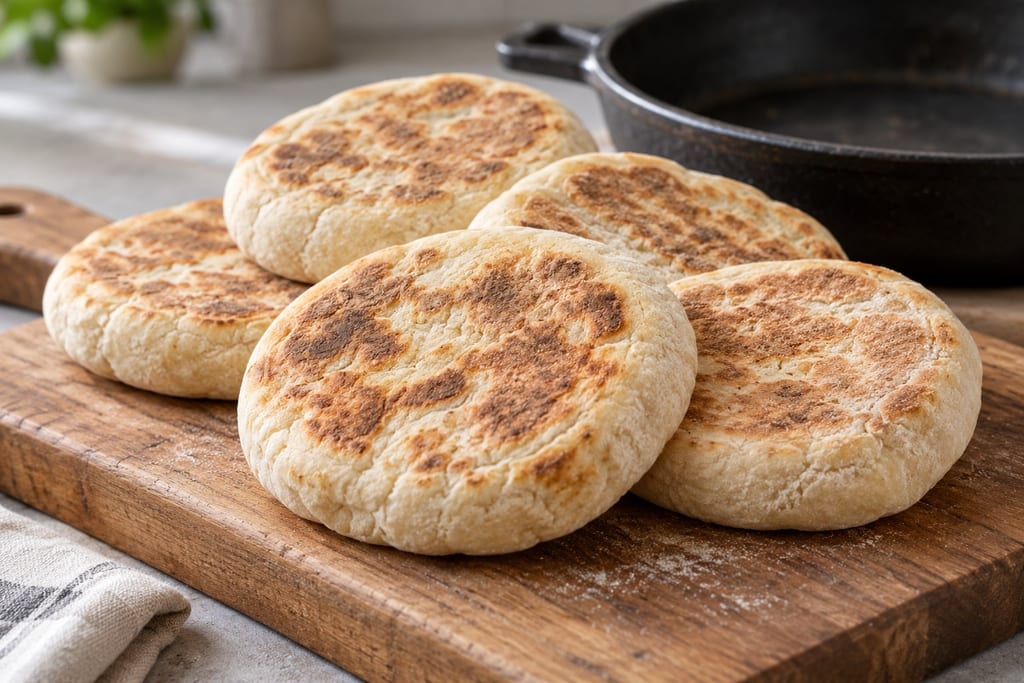
Sweet-potato wheat breads with fresh yeast, browned in a pan and finished in the oven. This is the bread component of Teleculinária's scrambled-egg dish.
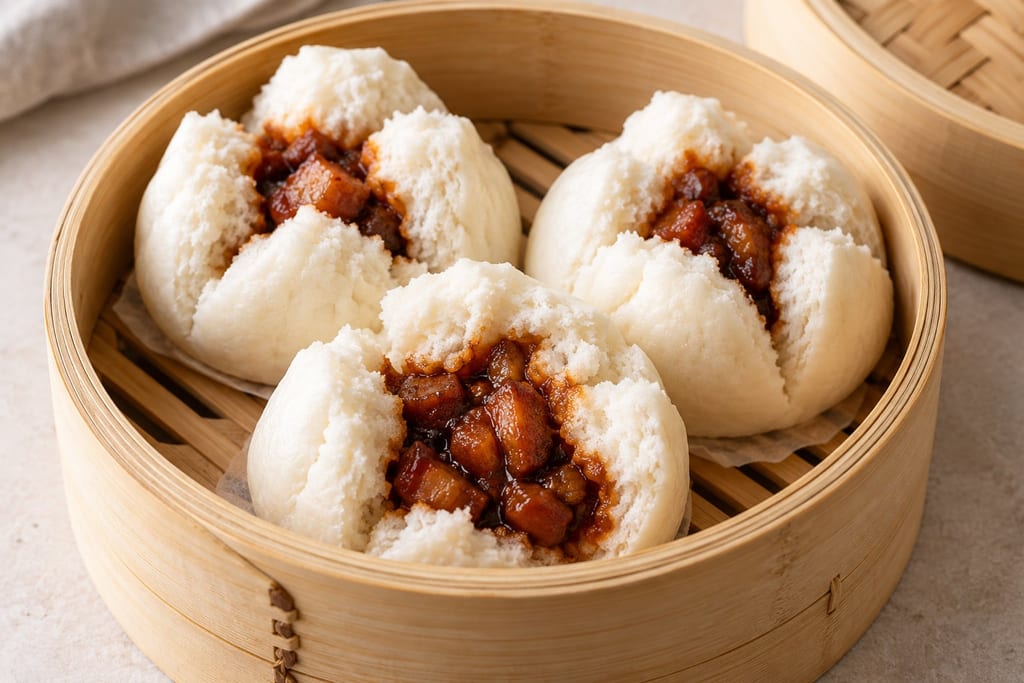
Fourteen fluffy steamed buns filled with cooked char siu and a thickened oyster-soy sauce.

Soft, spreadable Calabrian pork sausage made with a great deal of red chilli and fatty pork, stuffed into natural casings, sometimes smoked and matured while staying soft.

A way to add independent temperature logging to an existing food dehydrator without changing its built-in controls or protections. It is a monitoring method, not a rewiring plan.

Pleurotus cystidiosus is the abalone mushroom, a cultivated oyster-type fungus with dark brown caps that grows more slowly and is more demanding than other Pleurotus species.

A dark, balanced vinegar from Emilia-Romagna made by combining cooked or concentrated grape must with wine vinegar, then acetifying and refining it in wood under a protected specification.

A living dairy inoculum that starts controlled cream fermentation, developing acidity and aroma before sour cream or cultured butter is finished.

A small electric incubator holds jars at a selected temperature for yogurt and other documented warm food preparations. Controls, capacity and vessel arrangement vary by model.

Adygean salt is a seasoned table salt associated with Adygea and the wider North Caucasian culinary tradition. Salt is blended with garlic and a variable selection of herbs and spices; the exact mix depends on the named style and maker.

The African Caesar-group mushroom, Amanita masasiensis, is a wild ectomycorrhizal species of central and southern African woodlands, eaten locally. The genus contains deadly poisonous species, so identification needs care.
No community contributions have been published for this entry yet.
Sign in to contribute. Published comments and photos are free to read.
King Arthur BakingInspiration
Sourdough Starter Recipe50 g flour and 50 g water initial mix
about 70°F (21°C) for 24 hours
50 g retained starter refreshed with 50 g water and 50 g flour
Cited in: A starter in its making; Why whole-wheat flour begins the culture; The schedule and its changing rhythm; Equipment and signs of progress; History without an invented origin; Variations and what this starter is for; Food safety and practical limits
Centers for Disease Control and PreventionSafety
Say No to Raw Doughraw flour may contain pathogens; cook flour mixtures and clean after handling
Cited in: Food safety and practical limits
King Arthur BakingProcess · Organisms
Sourdough BakingSourdough starter contains wild yeast and lactic acid bacteria that leaven and flavour dough; supports mixed-process classification without assigning species to this batch.
Critical Reviews in Food Science and NutritionFood history · Microbiology · Fermentation methods
Sourdough production: fermentation strategies, microbial ecology, and use of non-flour ingredientsDescribes sourdough as an ancient cereal fermentation and distinguishes spontaneous flour-water Type I processes from starter-culture Type II and backslopped Type III processes; identifies mixed lactic-acid-bacteria and yeast communities as typical while cautioning that added ingredients and conditions alter outcomes.
Cited in: A starter in its making; A community grows through refreshment; History without an invented origin; Variations and what this starter is for
International Journal of Food MicrobiologyFeeding practice · Microbiology · Variation
A review of sourdough starters: ecology, practices, and sensory quality with applications for baking and recommendations for future researchReviews re-feeding/backslopping practices, the influence of flour and conditions on starter communities, and the limits of what is documented about global feeding practice.
Cited in: A community grows through refreshment; The schedule and its changing rhythm; Variations and what this starter is for
Journal of Food ScienceMicrobiology · Bread characteristics
Sourdough starter culture microbiomes influence physical and chemical properties of wheat breadA study comparing twenty starter microbiomes found differences in bread acidity, loaf volume, crumb firmness and other measured properties; its results support culture-specific effects but do not predict this recipe's exact outcome.
Cited in: A community grows through refreshment
International Journal of Food MicrobiologyFlour · Microbiology
Wholemeal wheat flours drive the microbiome and functional features of wheat sourdoughsA controlled study comparing refined and wholemeal soft and durum wheat flours found flour-dependent differences in microbial communities and fermentation metabolites; the studied laboratory conditions do not specify the community in an individual home starter.
Cited in: Why whole-wheat flour begins the culture; Equipment and signs of progress; Variations and what this starter is for
King Arthur BakingMethod · Feeding schedule · Equipment
Sourdough Baking: Create a Sourdough StarterRecommends whole-grain flour for starting a culture; describes container choices, loose cover, room-temperature timing, first-week schedule, variability in early activity and signs of a mature starter.
Cited in: A starter in its making; Why whole-wheat flour begins the culture; A community grows through refreshment; The schedule and its changing rhythm; Equipment and signs of progress; Variations and what this starter is for