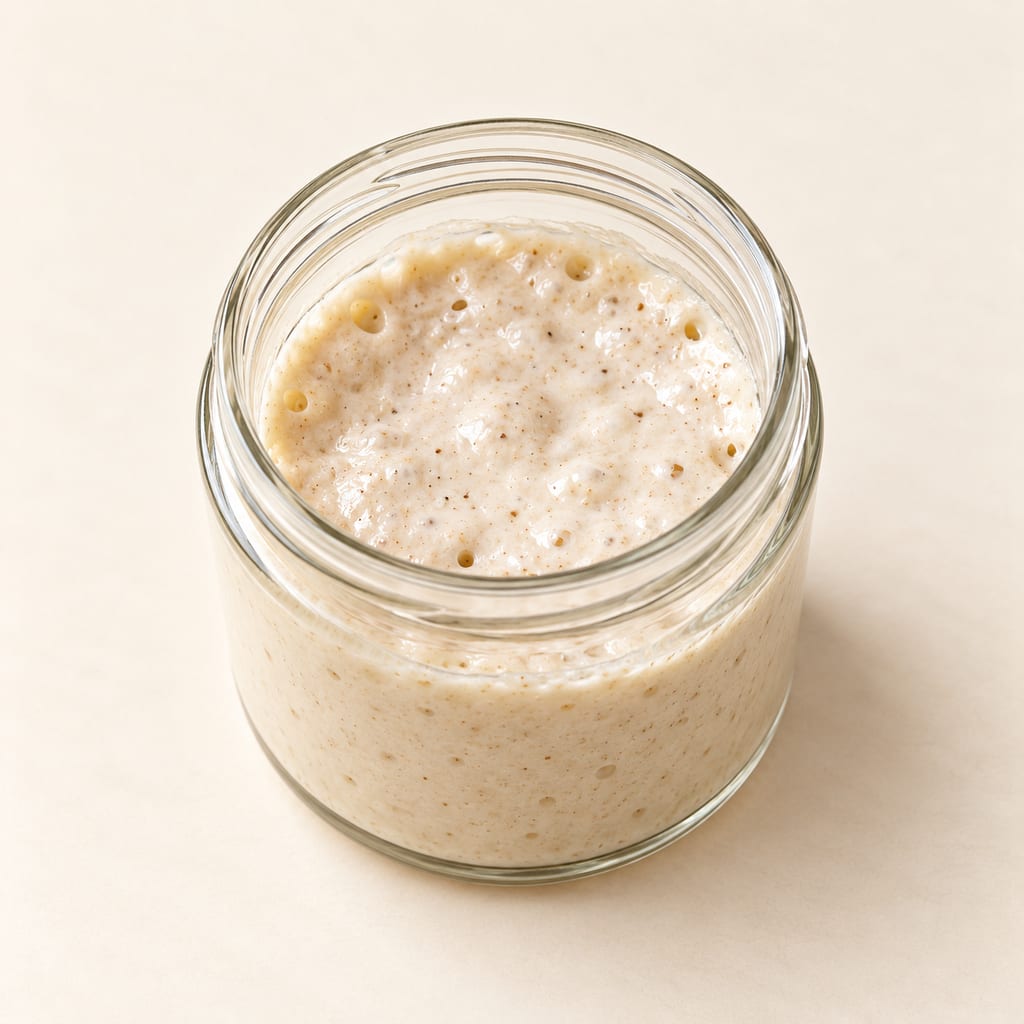
Ripe sourdough starter
Ripe sourdough starter is a refreshed flour-and-water culture active enough for a baker’s intended dough. Its yeasts and bacteria provide gas and acidity.
 FermenteaWhere food goes to change
Vermont Sourdough
Jeffrey Hamelman's Vermont sourdough builds a liquid wheat levain before adding a modest measure of rye flour blend. The dough is folded, shaped and baked as two crusty loaves with a tender, open crumb.
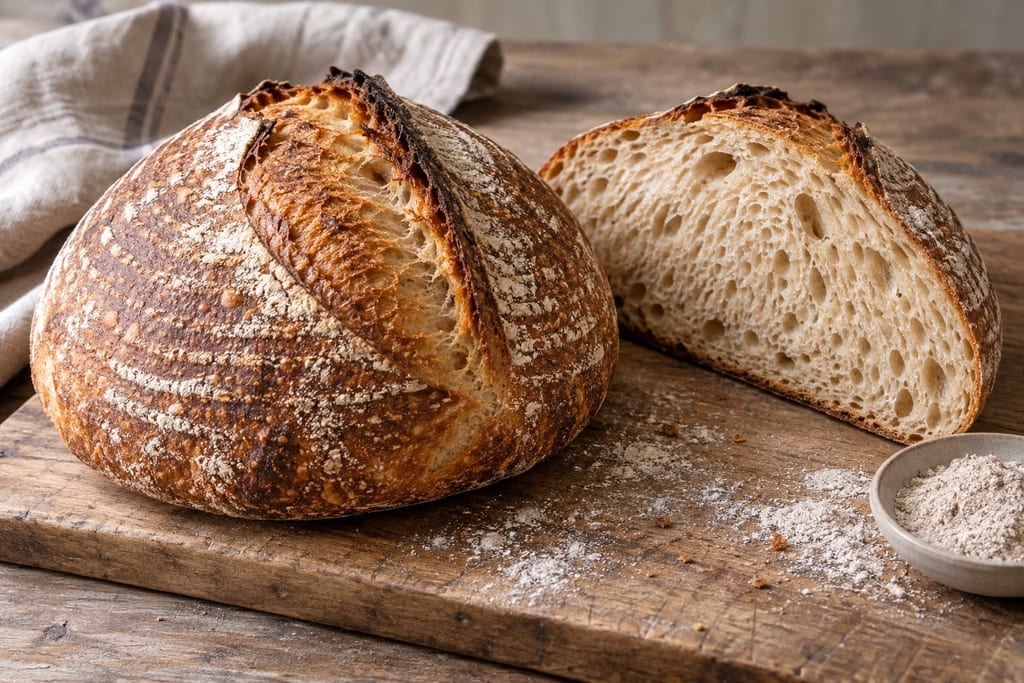
Vermont Sourdough is a named modern formula by baker Jeffrey Hamelman: two broad loaves made with a liquid wheat levain and a modest portion of rye flour blend. It is neither a pure rye bread nor a recipe for beginning a starter. The starter is already established and ripe; the levain is a small, freshly mixed build that expands overnight and supplies the culture for this dough. The finished loaf has a crisp, deeply browned crust around a chewy wheat crumb, with rye lending a darker grain note rather than dominating the flavor.
King Arthur's company moved from Boston to Norwich, Vermont, in 1984, and its bakery and baking school opened on that campus in 2000. Those dates explain the place-name attached to this recipe: they do not locate the origins of sourdough baking, which is a much older and geographically broad practice. Hamelman's formula belongs to contemporary American baking education, where a named loaf gives home bakers a reproducible route from a small maintained culture to a full batch.
The formula's identity comes from the proportion and handling. Most of the dough flour is all-purpose wheat flour; the smaller rye addition is a branded rye flour blend rather than necessarily pure rye flour. The culture enters first in a liquid levain at roughly equal weights of flour and water, then that levain is combined with the larger dough. This staged build lets the baker prepare an active preferment and observe it separately before committing the flour and water for two loaves.
Sourdough has been made in many places and from many grains; the word names a leavening practice rather than one regional bread. Modern reviews classify starter systems by how they are maintained and used, but those categories describe fermentation management, not a single flavor or cultural identity. Hamelman's loaf should be read at its own scale: it uses a small liquid preferment built from an existing starter, then a wheat-forward dough with rye. Its Vermont association is a contemporary bakery connection, not an ancient regional claim.
A sourdough starter is a community of yeasts and lactic-acid bacteria living in a flour-and-water environment. Yeasts release carbon dioxide as they use fermentable sugars; gas held by the developing dough helps it expand. Lactic-acid bacteria produce organic acids and other metabolites, contributing tang and aroma and changing the dough environment. The balance of organisms and products is not fixed across all starters: flour, hydration, refreshment, time and temperature select among communities. For that reason, the recipe's ingredient name does not justify assigning a specific species to Hamelman's levain.
The mixture of the levain is intentionally wet: 135 g flour to 170 g water, with only 14 g ripe starter. It is left 12–16 hours at room temperature. That is a source-specific schedule, not a universal time to maturity. A cool kitchen, a warm room, a recently refreshed culture, or a different starter can change how quickly the mixture rises. The formula describes expansion and bubbles as its practical sign; use the clock and observed activity together, understanding that neither predicts an identical flavor in every kitchen.
The broader sourdough literature is careful about claims. Published reviews describe a diversity of microbial communities and large differences in sourdough procedures and bread outcomes. Fermentation can alter acids, aroma compounds and dough behavior, but the existence of a sourdough starter alone does not prove a particular health benefit or a precise nutritional change in this loaf. This is breadmaking through microbial leavening and acidification, followed by physical dough development and baking; the bake kills the active culture rather than leaving the bread probiotic.
The starter's acidity is one part of a changing dough environment. Organic acids contribute taste and can influence flour proteins and enzyme activity, while yeasts and bacteria also create aroma-active compounds. Which compounds dominate depends on the community and conditions; a tangy flavor is not a reliable assay of acidity or of starter species. In a home bake, the formula's practical markers are expansion, dough strength, proof and bake endpoint, rather than laboratory measurements that its source does not ask the baker to take.
The 660 g main portion of all-purpose flour provides most of the starch and gluten-forming proteins. When hydrated and mixed, wheat proteins form an elastic network that can stretch around gas cells. The 93 g rye flour blend supplies rye flavor and components of the rye grain while its wheat fraction, if any, depends on the product formulation; the recipe page does not publish the blend's exact composition. It is therefore best to keep the named blend when following the formula instead of assuming a straight swap with whole rye flour will behave the same.
Water hydrates flour, dissolves salt, and gives enzymes and microbes a medium in which to work. The levain's water is described as cool; the main dough water has no specified temperature. The total dough is fairly wet and soft, so the recipe relies on rests and folds rather than aggressive kneading to organize it. The 18 g table salt seasons the loaf and changes dough handling, while the source gives no warrant for substituting a different salt by volume. Weighing the ingredients preserves the documented ratios.
Rye and wheat are both cereal grains, but their doughs are not interchangeable. Rye contributes distinctive flavor and water-binding constituents, while this recipe's wheat-rich framework is what makes a free-form, scored loaf possible. A loaf made with a much larger rye share needs its own method, because rye dough structure, mixing behavior and proof cues differ. This is why the name 'rye levain bread' should not be read as a generic rye formula.
The long levain build separates culture development from dough mixing. After it has had its overnight rest, the baker combines it with the main flour and water but holds back salt. The ensuing 20–30 minute autolyse gives flour time to absorb water and begin hydrating its proteins and starches. This makes the dough easier to bring together; it is a physical hydration rest, not another fermentation claim or a guarantee of a particular crumb.
Salt goes in after that rest. Mixing continues until the mass feels cohesive and somewhat springy, but the method does not demand a perfectly smooth, fully developed dough at the mixer. The dough then rests for an hour, receives a four-sided fold, and rises another 90 minutes. Folding stretches and stacks portions of dough, gradually building organization while the dough ferments. The recipe's optional second fold after 45 minutes is conditional: it is for dough that still seems weak, not an obligatory extra manipulation.
Dividing and rounding create two pieces of about 750 g. A short covered rest allows the dough to relax after division, making final shaping easier. Round or oblong loaves are both acceptable. If the dough is slack, a proofing basket or a bowl lined with a smooth, floured towel gives it lateral support. The final room-temperature proof is specified as 1½–2 hours at 68–78°F; the recipe also permits an overnight covered refrigerator proof. These are alternative paths, not stages to combine indiscriminately.
The preheated lidded baker captures steam released by the dough during the first part of baking. The covered bake encourages expansion before the crust sets; uncovering browns and dries the exterior. Scoring gives the loaf a deliberate place to open as it expands. The source uses 450°F, 30 minutes covered and 10–15 minutes uncovered, with an internal reading around 210°F as an endpoint. Preheating empty vessels is only appropriate when the chosen baker is rated for it. Cool on a rack before slicing: cutting warm bread compresses the crumb and releases steam before the interior has finished setting.
Time windows are useful boundaries, but dough responds to the room and the culture. The source's levain range is 12–16 hours, the first dough rise is one hour, and the bulk rise after folding is 90 minutes, with an optional fold mid-way. If the levain is sluggish or the room unusually cool, the baker should expect the schedule to shift; this page does not invent a temperature or a pH target for that situation. The final proof's 68–78°F range is explicit, but even there visual expansion and dough feel matter.
An underdeveloped levain may contribute less lift, while a dough that has not built enough strength can spread rather than hold its shape. Conversely, letting a dough ferment far beyond its capacity can weaken its structure. These are general baking interpretations, not source-tested diagnoses for every failure in this formula. The most useful response is to keep records of the culture's refreshment, room conditions, timing and dough behavior, then alter one variable in a later bake rather than changing flour, water, temperature and proof time all at once.
Flour's water absorption varies with milling and storage, and the rye blend's exact composition is not stated. If a baker departs from the listed product, the dough may feel different. The source's soft-dough basket option anticipates that some batches need support; it does not authorize arbitrary flour additions. Likewise, the overnight refrigerator option changes the schedule and dough temperature, so it should be treated as its own proof path.
This bread's balanced wheat crumb and restrained rye make it adaptable at the table. King Arthur's formula presents it for sandwiches and toast: the crust supplies a firm edge while the interior remains soft enough to slice. Its tang can be more apparent after the loaf cools and the crumb settles. Toast emphasizes the grain and crust; sandwiches pair naturally with fillings that benefit from a slightly sour, sturdy bread. Those are serving suggestions, not additional tested recipes.
Compared with a high-rye loaf, this formula is lighter in color and more elastic, and compared with a commercial-yeast loaf its rise depends on a ripe starter and longer fermentation. A baker should not expect every starter to yield the same acidity or open crumb. Sourdough research documents variation in fermentation conditions and resulting loaf properties, so comparing two loaves fairly requires keeping flour, starter condition, shaping and proofing reasonably consistent.
King Arthur's recipe suggests storing the bread loosely wrapped at room temperature for up to five days and freezing for longer storage. Cooling completely before storage helps avoid trapping moisture in the wrapping. The crust softens as moisture redistributes, while exposed cut faces dry; to refresh slices, toasting is a practical serving treatment, not a preservation method. Raw flour safety remains relevant during mixing: don't taste unbaked dough, and clean hands and equipment before moving to ready-to-eat foods.
Sourdough bread is sometimes promoted through sweeping claims about digestibility or nutrition. Reviews of the research report effects that depend on flour, fermentation process and comparison bread; results from one formulation cannot be transferred automatically to this exact recipe. This bread remains ordinary wheat-based bread, and its fermentation does not remove the need to respect wheat allergy or gluten-related dietary restrictions. The formula is not described as gluten-free, and the presence of fermentation is not evidence that it is safe for someone who must avoid gluten.
Jeffrey Hamelman's named Vermont Sourdough is a modern King Arthur Baking formula. Its Norwich bakery opened in 2000, after the company moved to Vermont in 1984; neither date establishes an origin for sourdough bread.
Yield 2 loaves · Scaling: source batch only
Raw flour may carry E. coli or Salmonella before baking.
Hazard sourceBake fully; wash hands, bowls, utensils and counters after handling raw flour or dough.
Control sourceRaw flour can carry harmful germs. Do not taste unbaked dough; wash hands, tools and work surfaces after handling it.
The named formula is associated with King Arthur Baking in Norwich; this does not claim a Vermont origin for sourdough itself.
Ripe sourdough starter is a refreshed flour-and-water culture active enough for a baker’s intended dough. Its yeasts and bacteria provide gas and acidity.
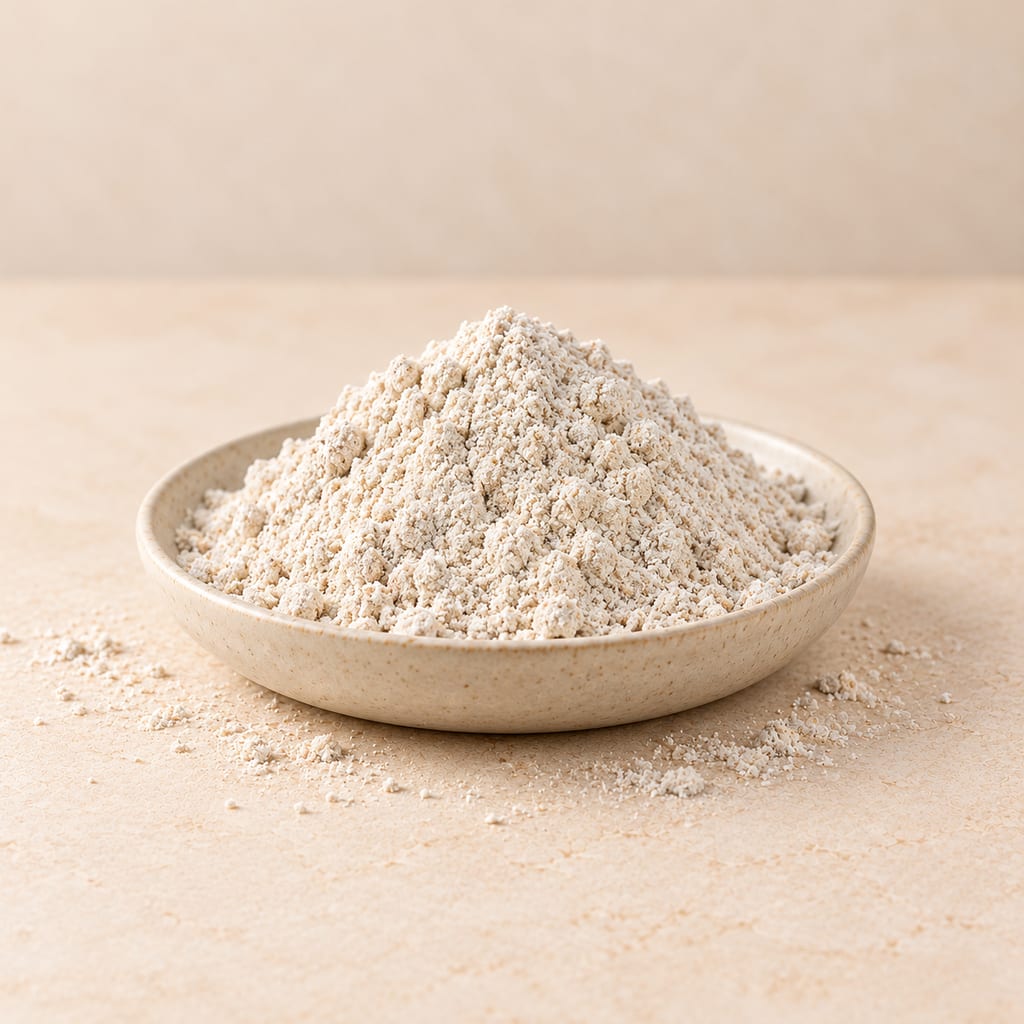
King Arthur Rye Flour Blend combines rye flours with wheat flour for rye character in a dough with some wheat gluten structure. Its component proportions are undisclosed.
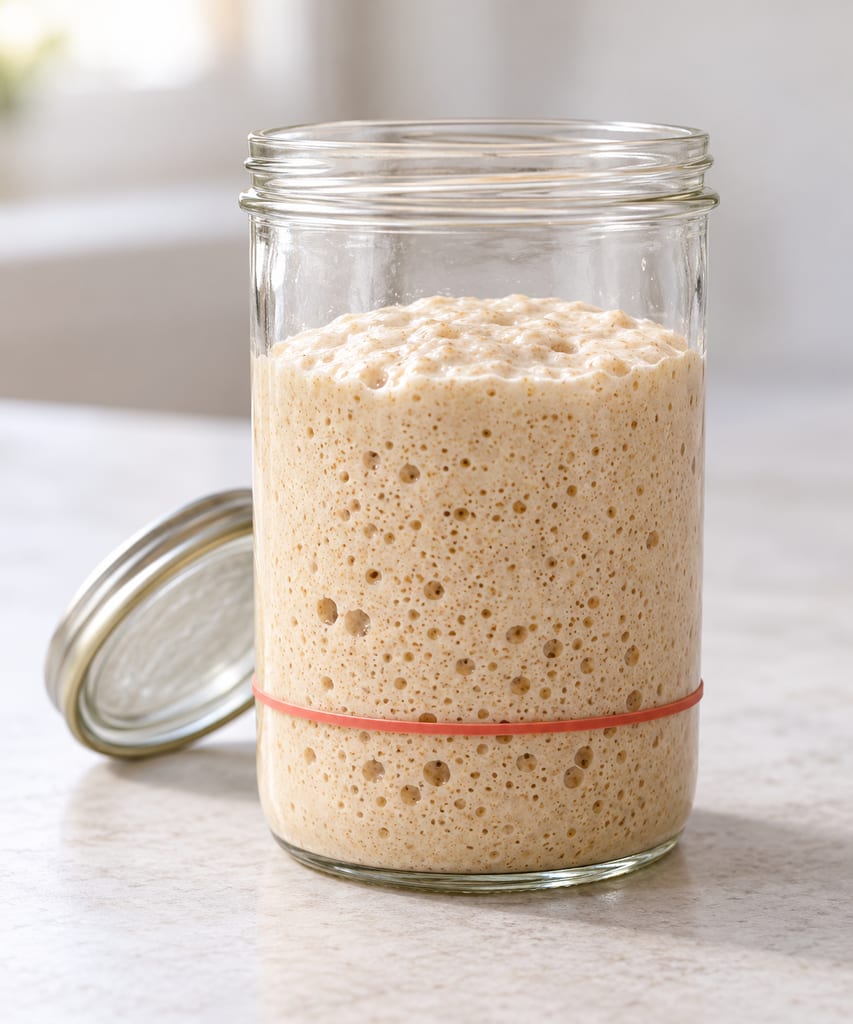
A flour-and-water starter begins with whole-wheat flour, then receives regular all-purpose flour feeds. Once established, this living culture can raise bread dough.
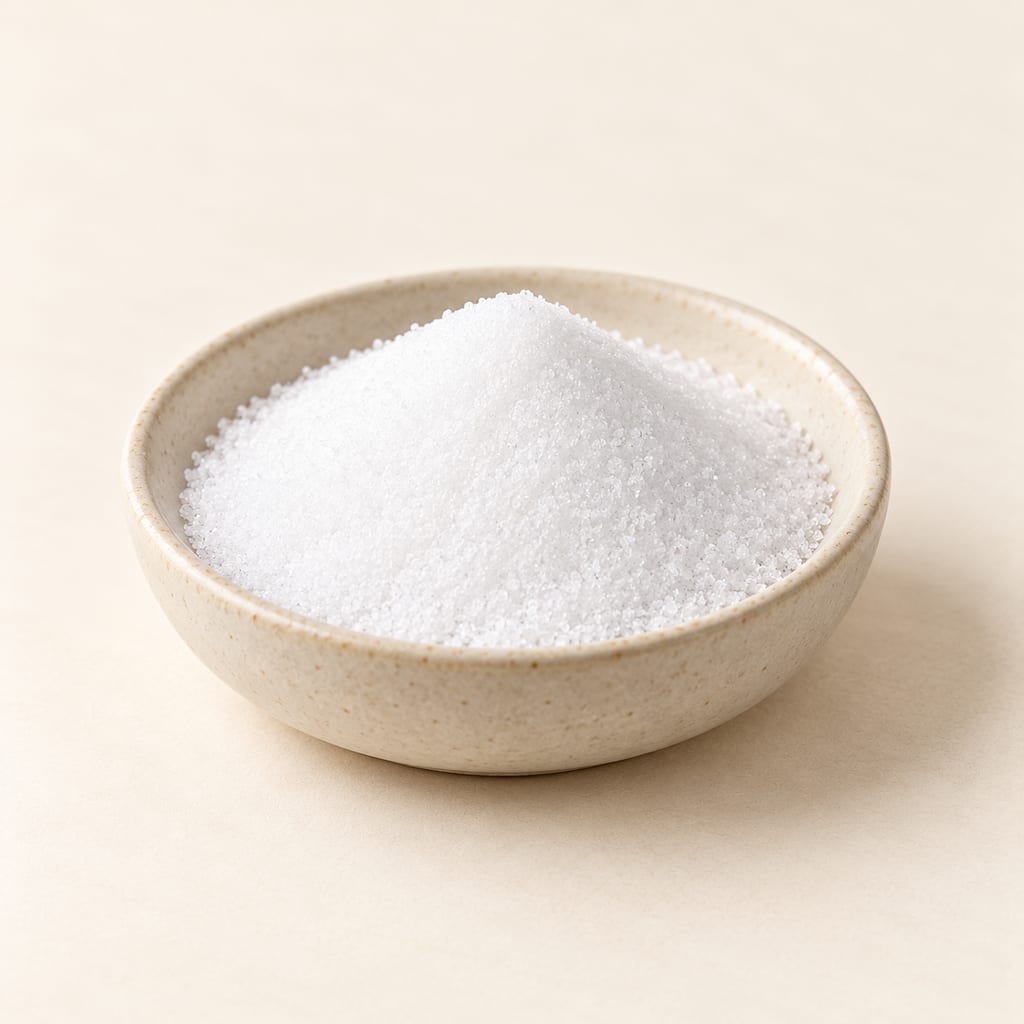
Table salt is fine-grained food-grade sodium chloride for everyday seasoning and measured cooking. Products may include iodine or an anti-caking agent.
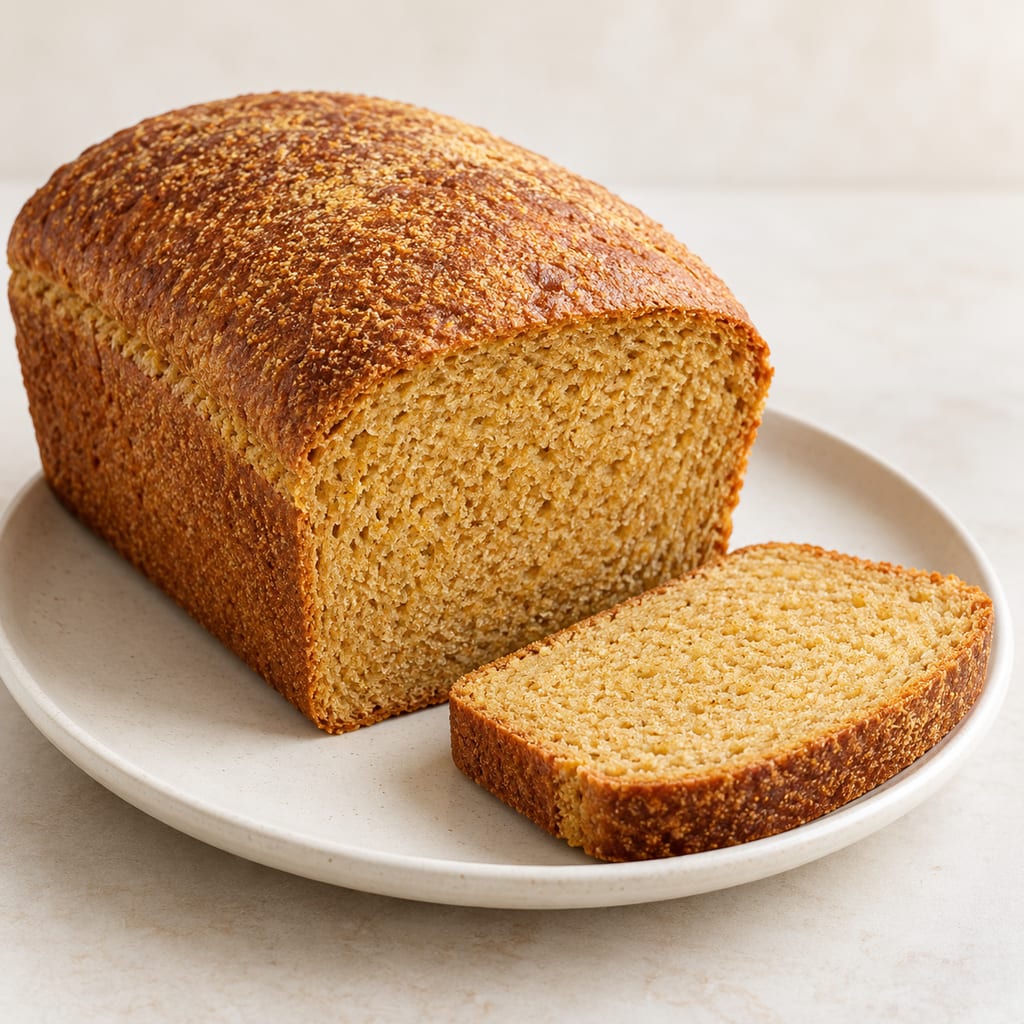
Anadama is a New England yeast loaf made with wheat flour, cornmeal and molasses. Scalded cornmeal enriches the dough, while molasses lends sweetness and a dark crust; it is especially good toasted or beside soup and baked beans.

A yeast-raised wheat ring shaped from a firm dough, briefly boiled and baked. This source-batch formula gives a gently malted crust and a chewy crumb.
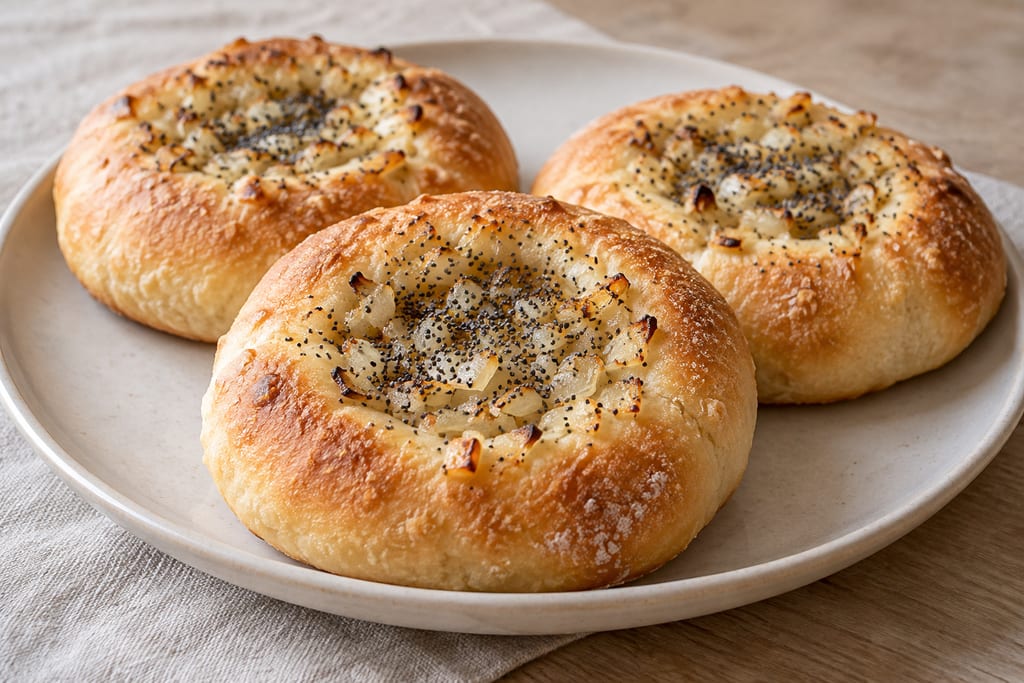
Bialys are soft, yeasted wheat rolls baked without boiling, each shaped with an onion-filled central depression instead of a hole.
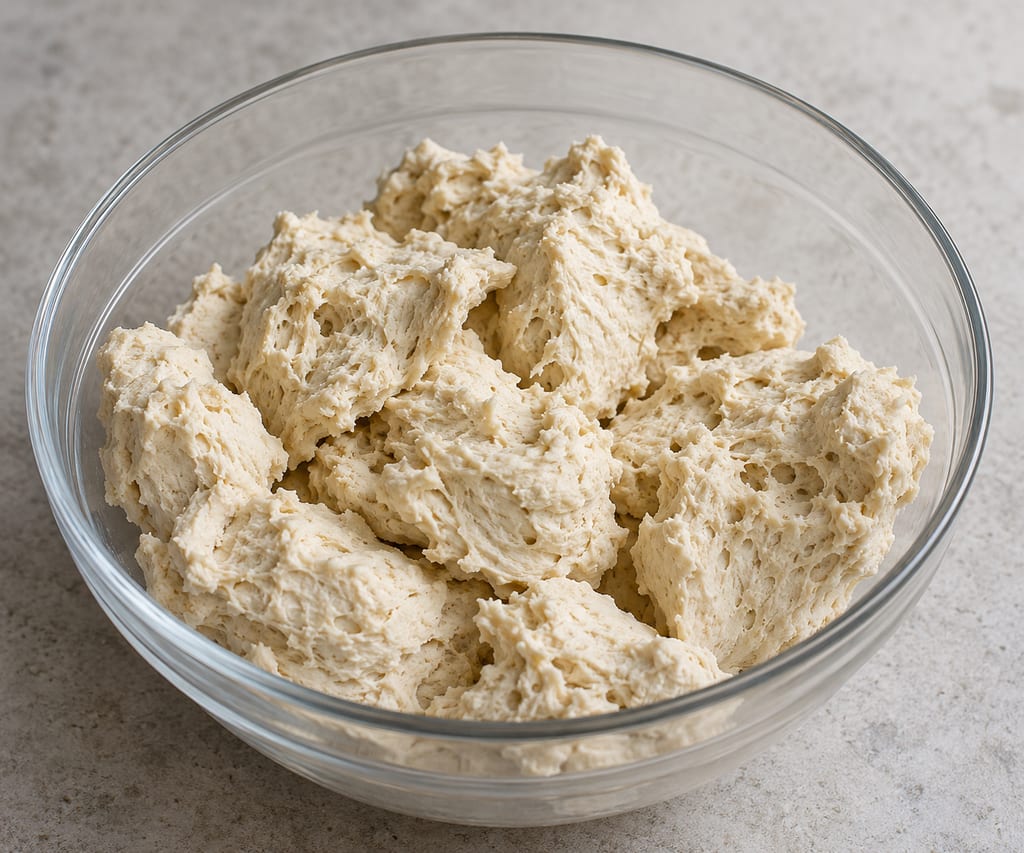
Biga is an Italian bread preferment of flour, water and a little yeast, usually a stiff unsalted mass of about 45 per cent water, fermented ahead and then mixed into the final dough.
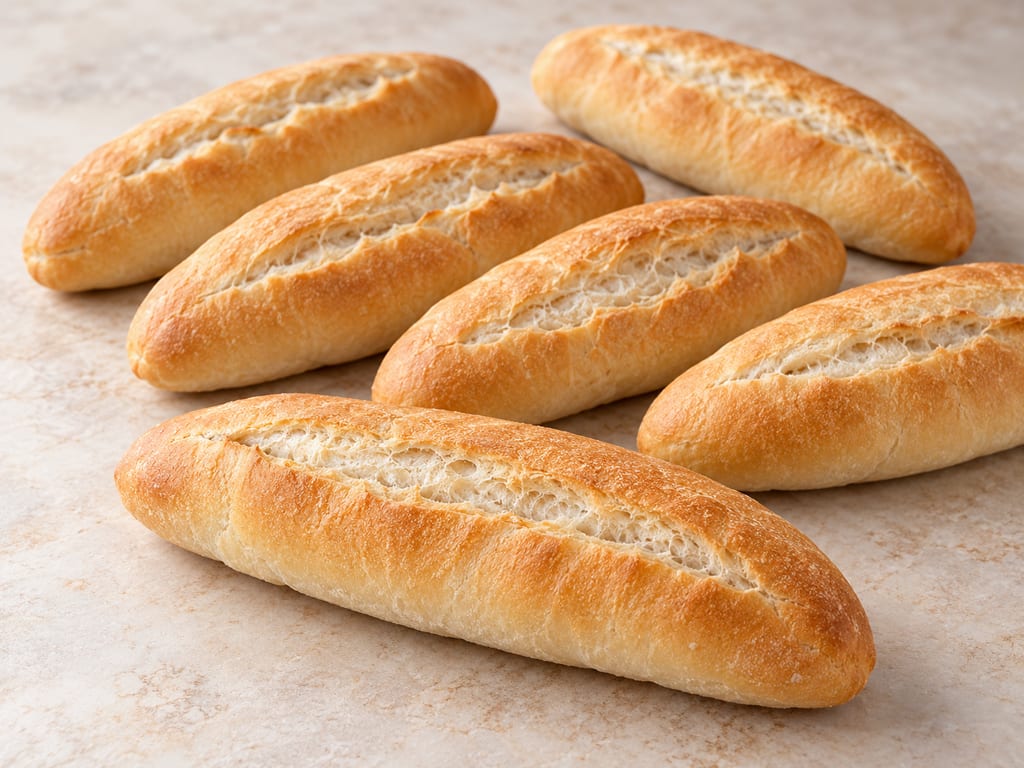
Six yeast rolls for Cuban sandwiches, shaped into long tapered loaves and slashed down the center.
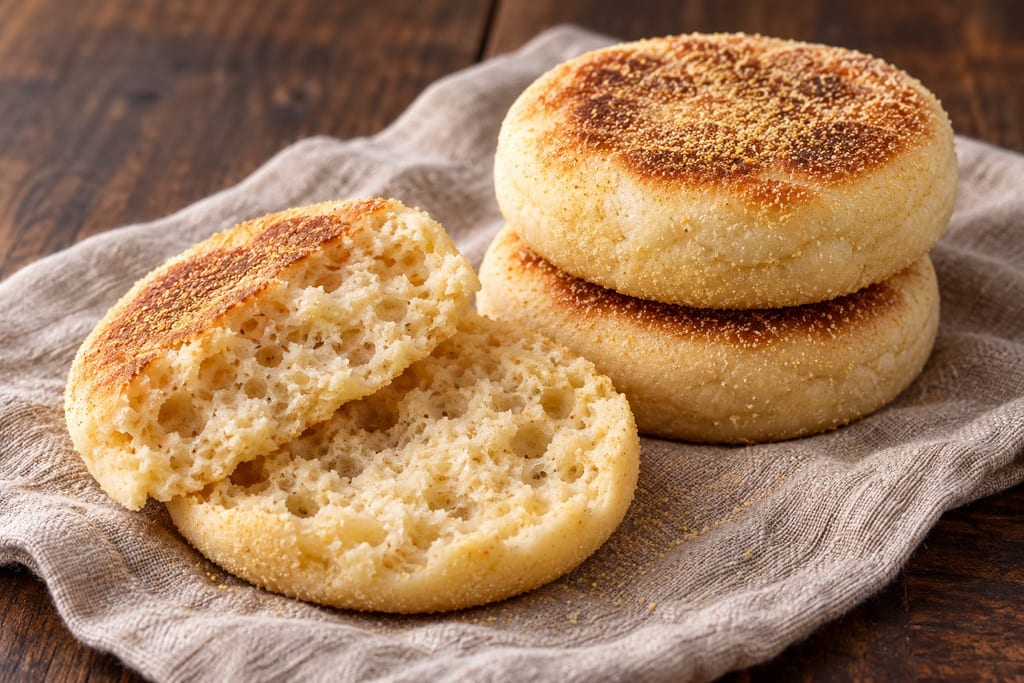
King Arthur’s six-piece English muffin batch uses a yeast preferment, two folds and a skillet or electric griddle; it is distinct from the sourdough-and-yeast version already catalogued.
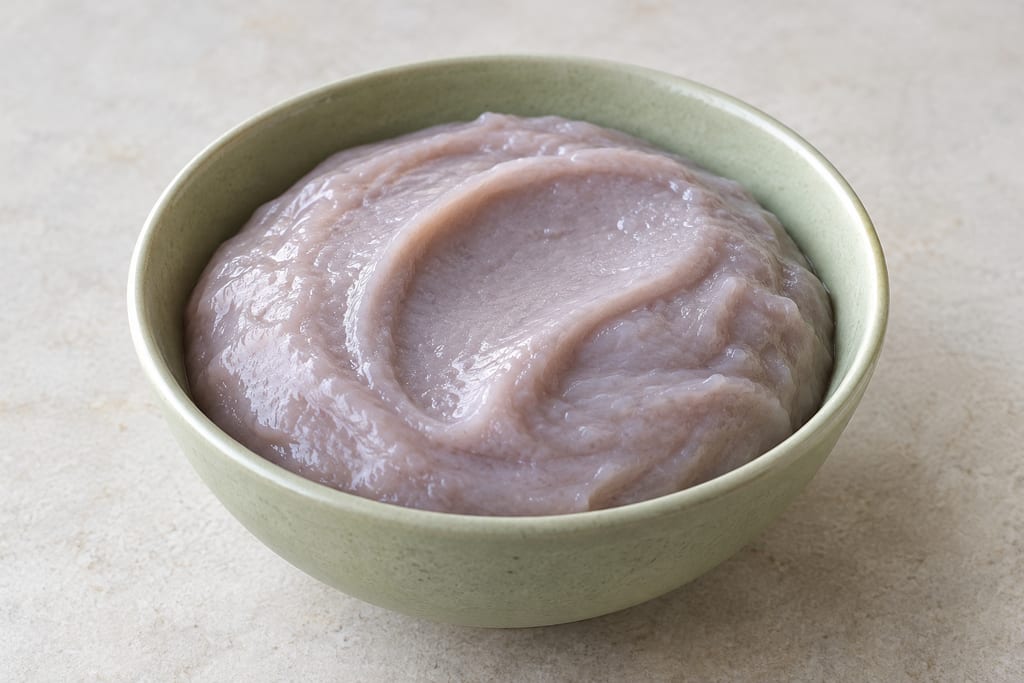
This modern introductory batch boils 500 g edible taro, then pounds it with water into fresh poi. It stops before fermentation and makes no preservation claim.
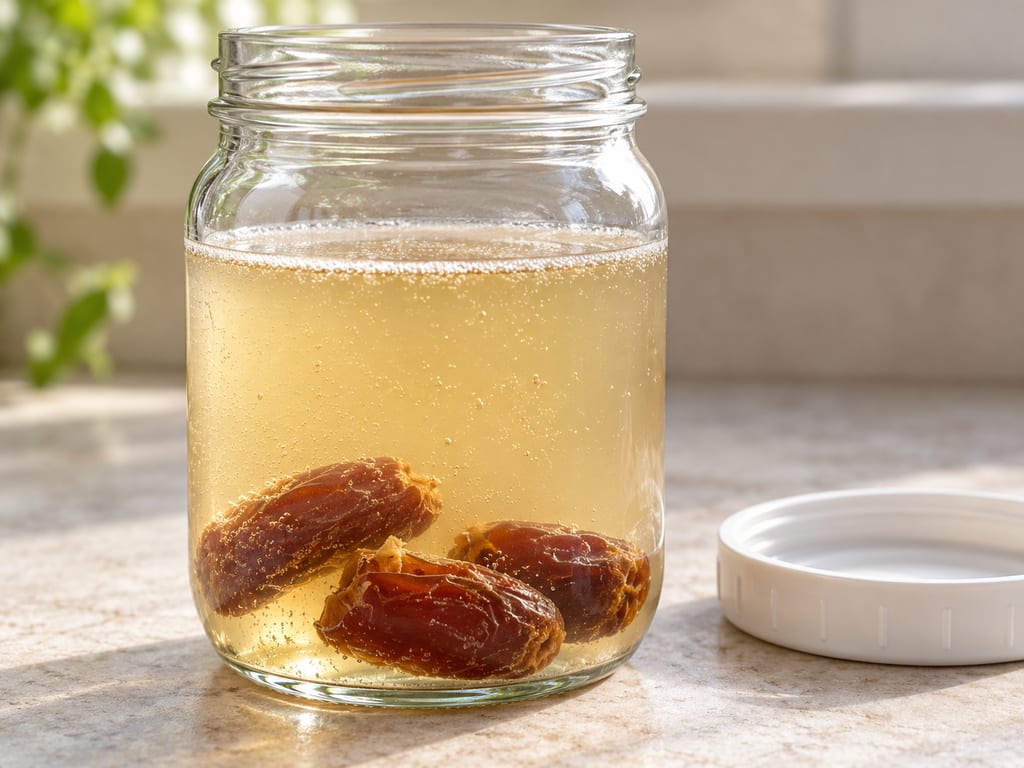
Fruit yeast water is a spontaneously fermented liquid made by soaking fruit in water, with or without sugar, to grow yeast for starting bread dough or a separate flour starter.
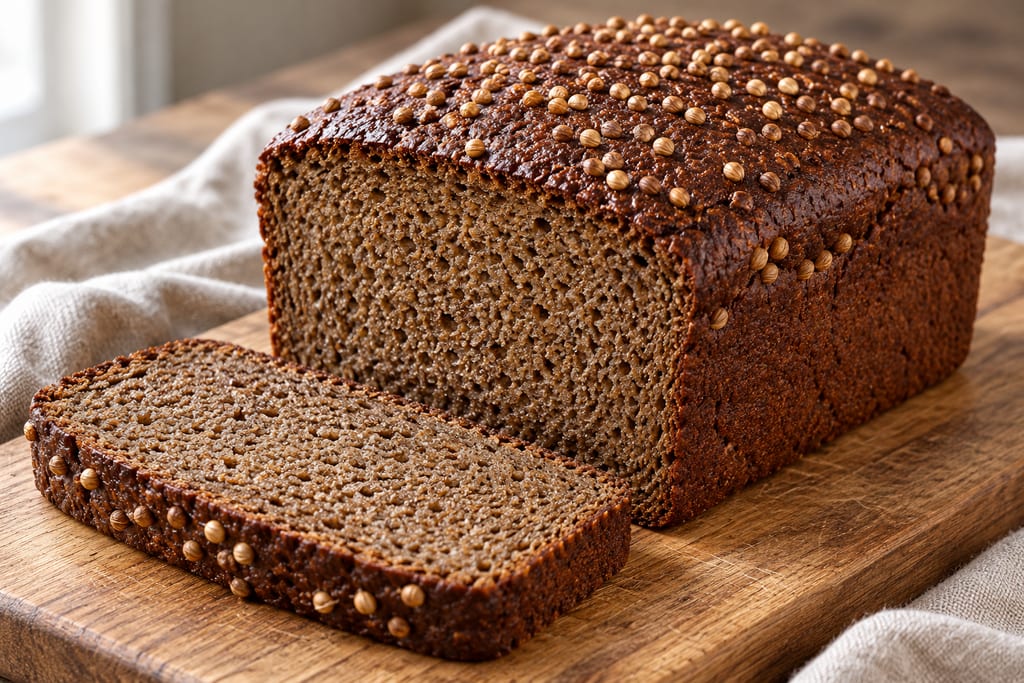
A dark rye sourdough with coriander and roasted barley-malt scald, based on Lily McCann's measured Borodinsk-ish home formula.
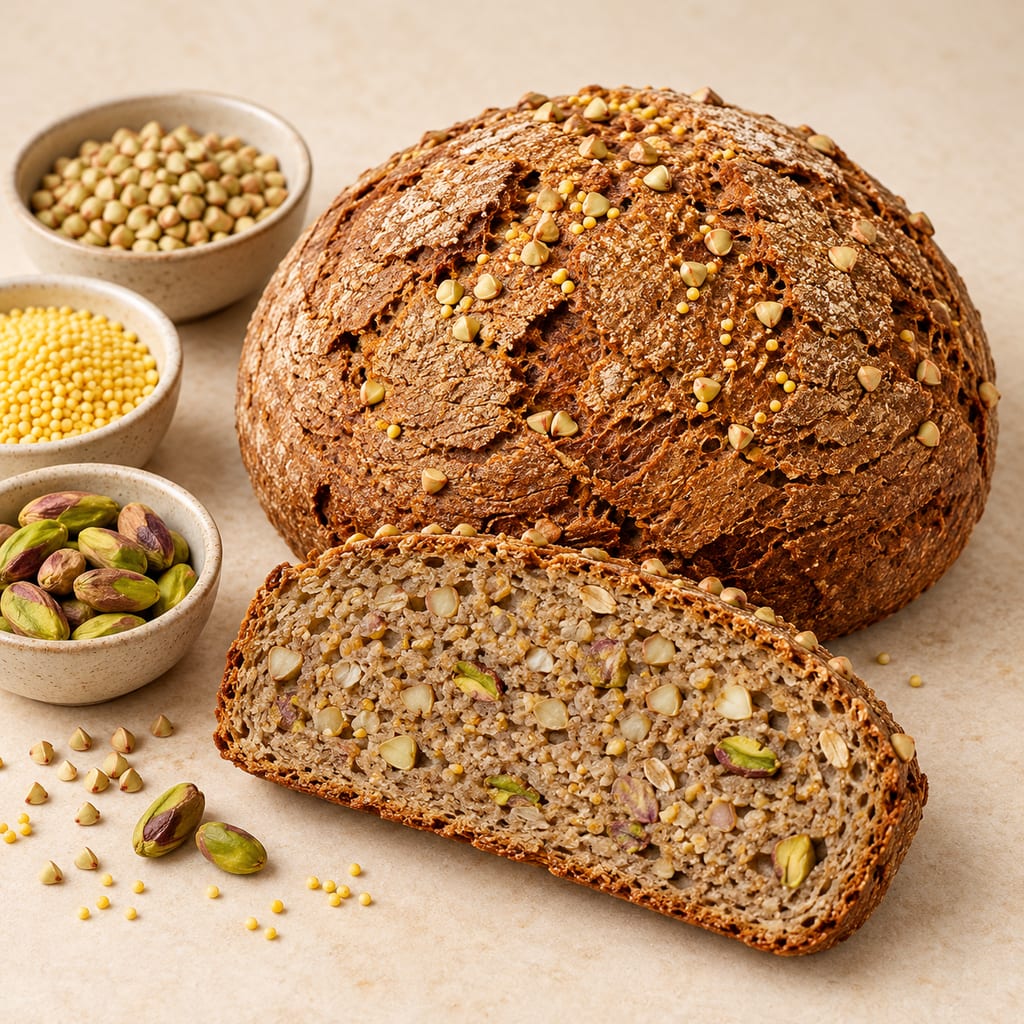
A gluten-free sourdough loaf of about 1 kg. A buckwheat and quinoa starter leavens a dough with cooked whole buckwheat groats, millet and a dark gluten-free bread mix, baked in a lidded pot.
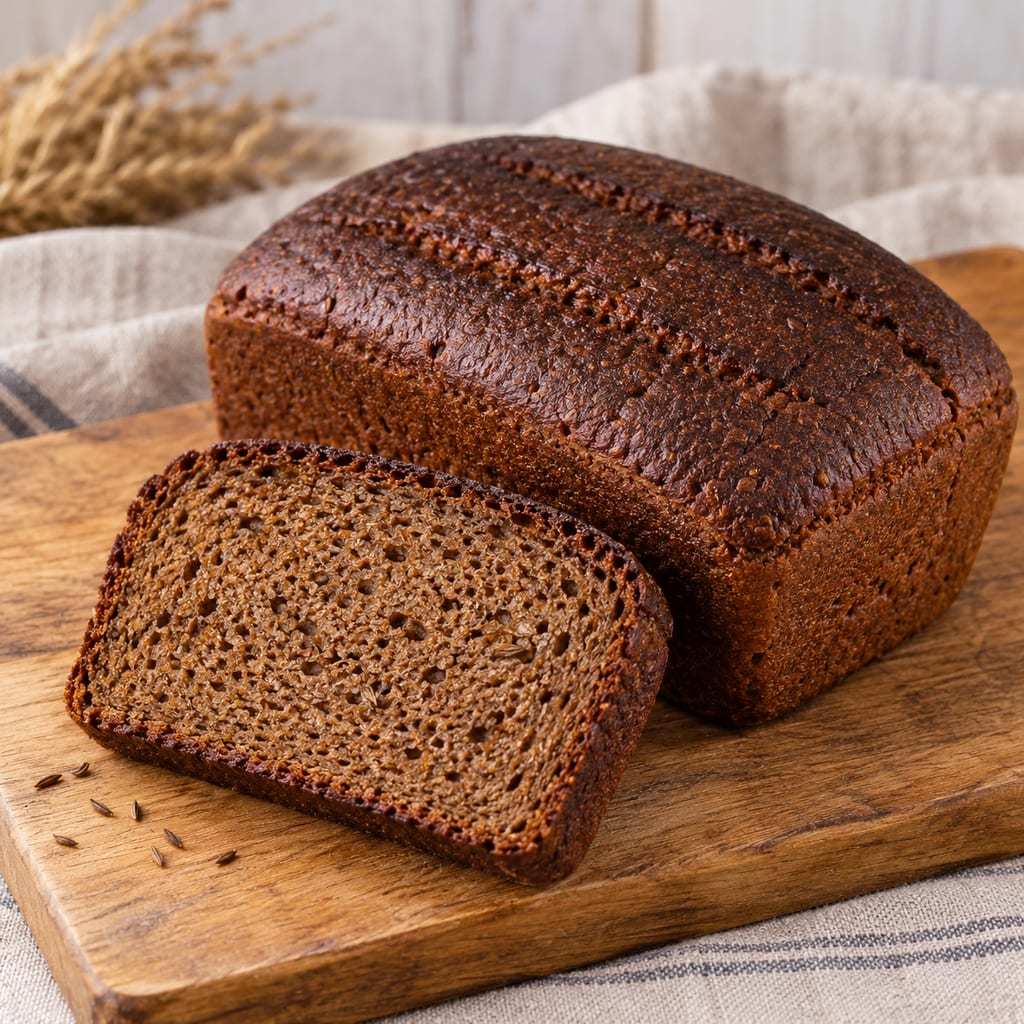
A Lithuanian dark rye loaf made with an overnight rye preferment, caraway, honey and sugar, then proofed in a loaf pan and baked in two stages.
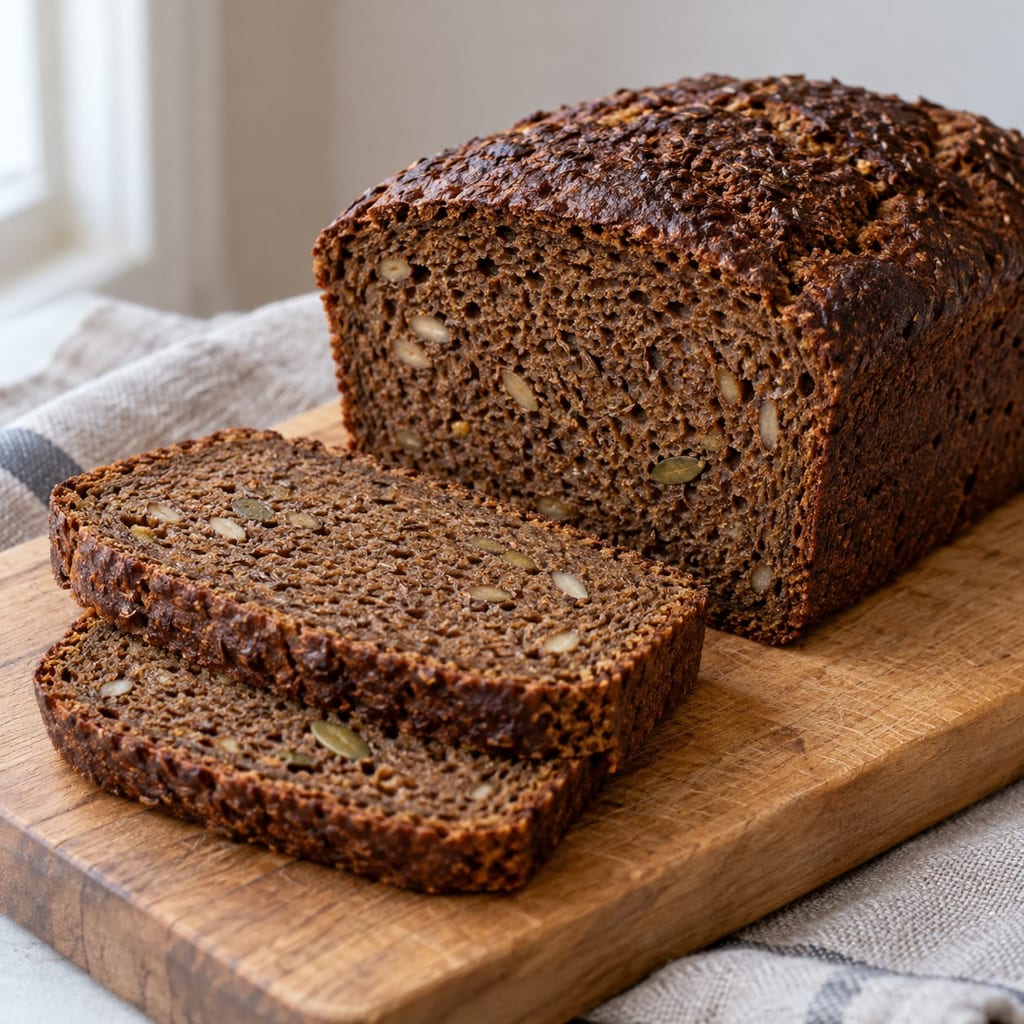
This Estonian rye loaf uses a sourdough preferment, a rye scald and soaked seeds, with a small amount of baker’s yeast. Two tins bake through a staged hot-to-moderate oven schedule.
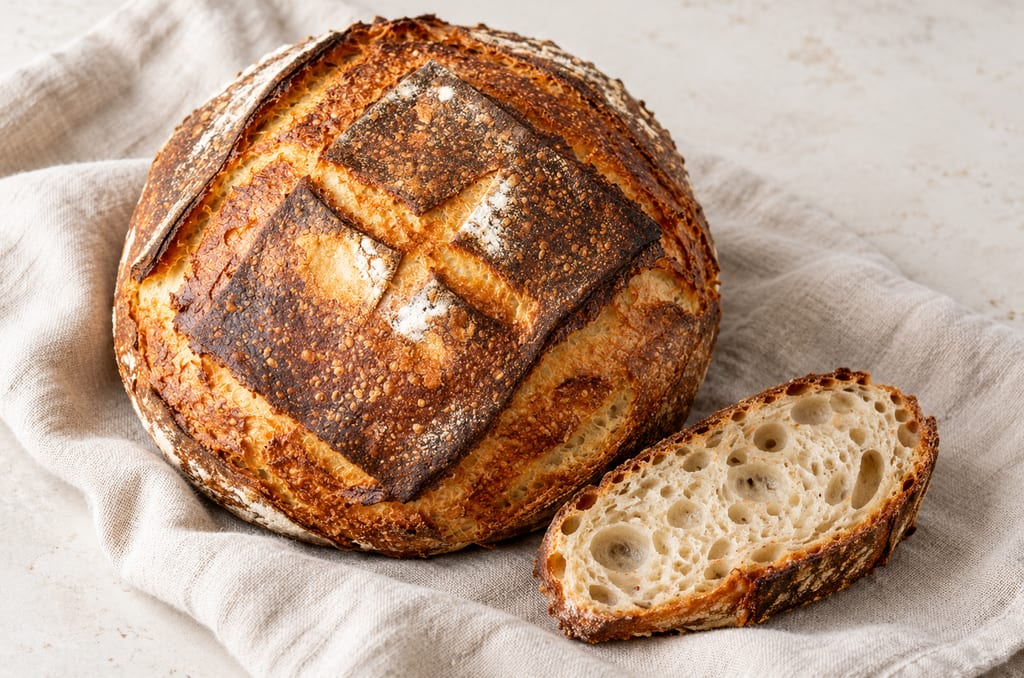
A ripe sourdough starter leavens this modern low-handling loaf. Three hourly folds organize the sticky dough before a long refrigerator rest, final proof and covered bake.
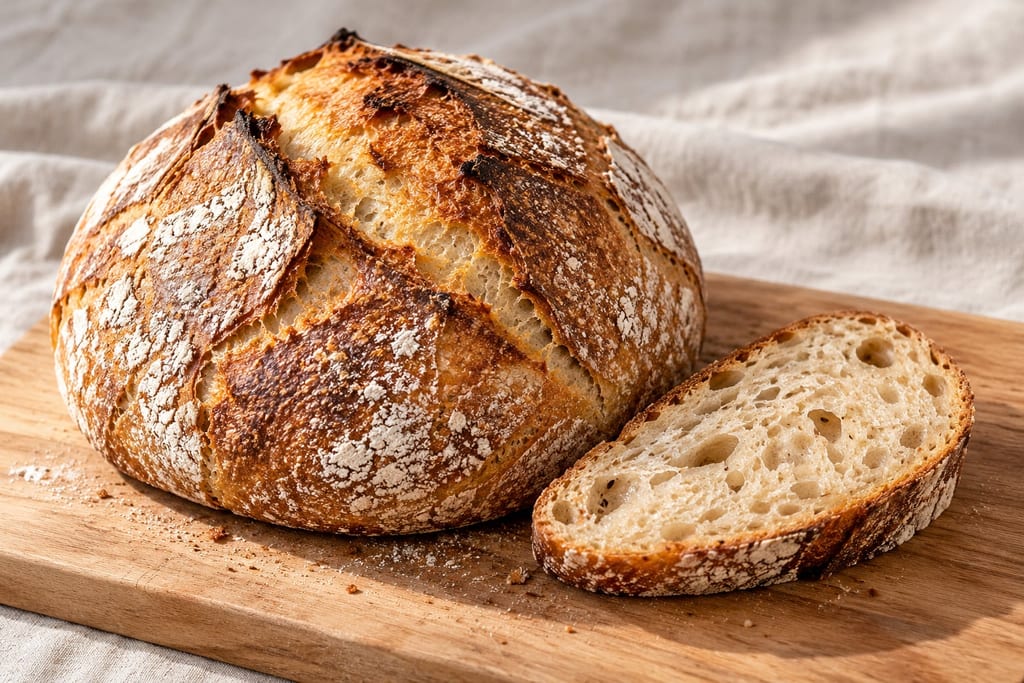
Two large French-style wheat loaves use unfed sourdough starter, whole-wheat flour, long room-temperature fermentation and a covered-pot bake.
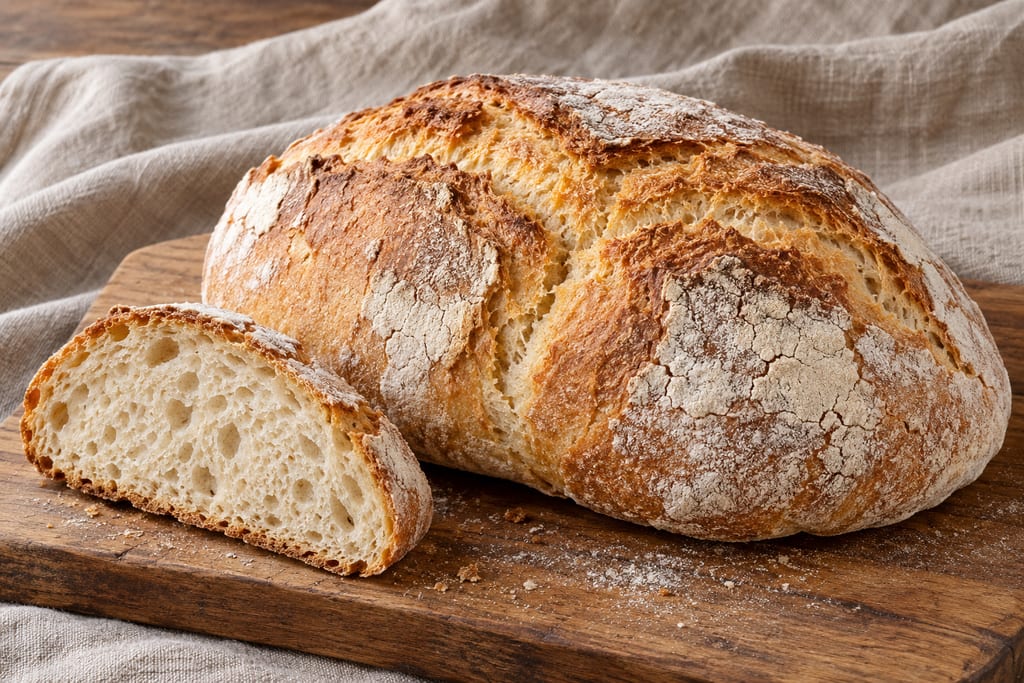
This home sourdough adaptation borrows Pan de Cea’s wheat-forward loaf and central fenda while using a domestic oven and a separately documented modern formula.
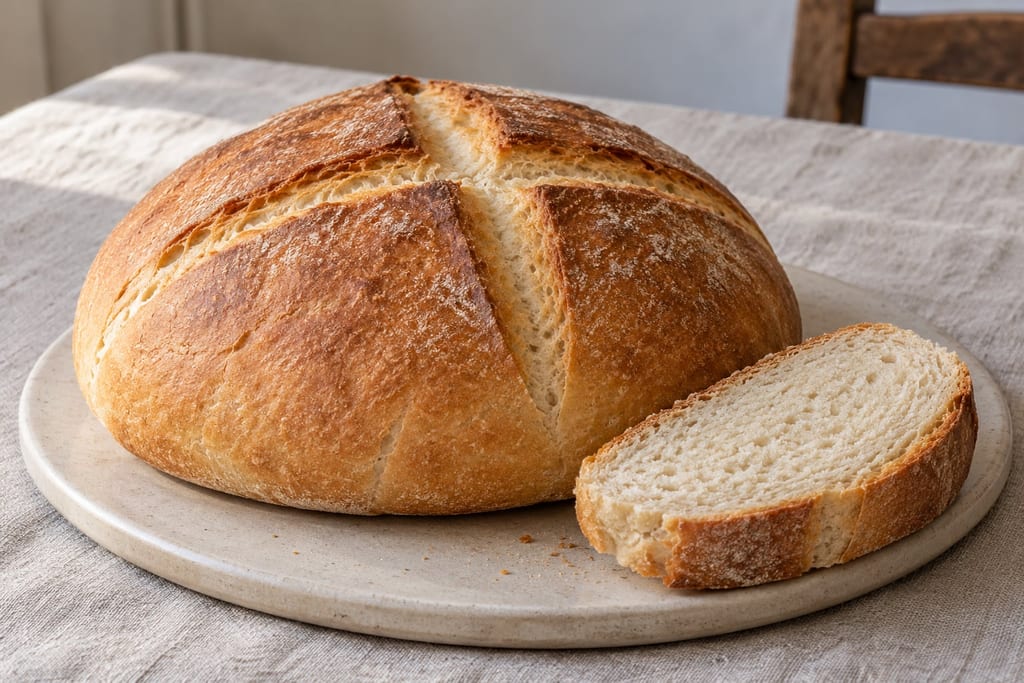
This household Pan de Cruz adaptation uses sourdough and a folded, tight-crumb wheat dough, marked with a cross and baked in a home oven.

Soft, spreadable Calabrian pork sausage made with a great deal of red chilli and fatty pork, stuffed into natural casings, sometimes smoked and matured while staying soft.

A way to add independent temperature logging to an existing food dehydrator without changing its built-in controls or protections. It is a monitoring method, not a rewiring plan.

Pleurotus cystidiosus is the abalone mushroom, a cultivated oyster-type fungus with dark brown caps that grows more slowly and is more demanding than other Pleurotus species.

A dark, balanced vinegar from Emilia-Romagna made by combining cooked or concentrated grape must with wine vinegar, then acetifying and refining it in wood under a protected specification.

A living dairy inoculum that starts controlled cream fermentation, developing acidity and aroma before sour cream or cultured butter is finished.

A small electric incubator holds jars at a selected temperature for yogurt and other documented warm food preparations. Controls, capacity and vessel arrangement vary by model.

Adygean salt is a seasoned table salt associated with Adygea and the wider North Caucasian culinary tradition. Salt is blended with garlic and a variable selection of herbs and spices; the exact mix depends on the named style and maker.

The African Caesar-group mushroom, Amanita masasiensis, is a wild ectomycorrhizal species of central and southern African woodlands, eaten locally. The genus contains deadly poisonous species, so identification needs care.
No community contributions have been published for this entry yet.
Sign in to contribute. Published comments and photos are free to read.
King Arthur BakingMethod · Ingredients · Yield
Vermont SourdoughFormula weights, two-loaf yield, liquid levain schedule, autolyse, folds, proofing, covered bake and cooling.
Cited in: A Vermont loaf with a liquid levain; Flour, water and salt as working parts; Why the stages are arranged this way; A formula is not a sensory stopwatch; From toast to sandwiches
Centers for Disease Control and PreventionSafety
Say No to Raw DoughRaw flour may carry pathogens; bake dough and clean after handling.
Cited in: From toast to sandwiches
King Arthur BakingHistory
About Jeffrey HamelmanHamelman's professional role and work with King Arthur Baking.
Cited in: A Vermont loaf with a liquid levain
King Arthur BakingHistory · Geography
Our historyThe company moved to Vermont in 1984 and opened its bakery and baking school there in 2000.
Cited in: A Vermont loaf with a liquid levain
King Arthur BakingScience · Process
Sourdough BakingSourdough uses yeasts and lactic-acid bacteria to leaven and flavor dough; it does not identify the organisms in this particular levain.
Cited in: What the culture does, and what it cannot tell you
Critical Reviews in Food Science and NutritionScience · Variation
Sourdough production: fermentation strategies, microbial ecology, and use of non-flour ingredientsSourdough communities commonly include lactic-acid bacteria and yeasts; starter management and fermentation conditions vary across sourdough systems.
Cited in: What the culture does, and what it cannot tell you; A formula is not a sensory stopwatch
Annual Review of Food Science and TechnologyScience · Variation
Wheat Sourdough Breadmaking: A Scoping ReviewA review of 253 studies reports substantial variation in starters, fermentation conditions, and resulting bread qualities; broad nutritional claims need caution.
Cited in: What the culture does, and what it cannot tell you; Flour, water and salt as working parts; From toast to sandwiches