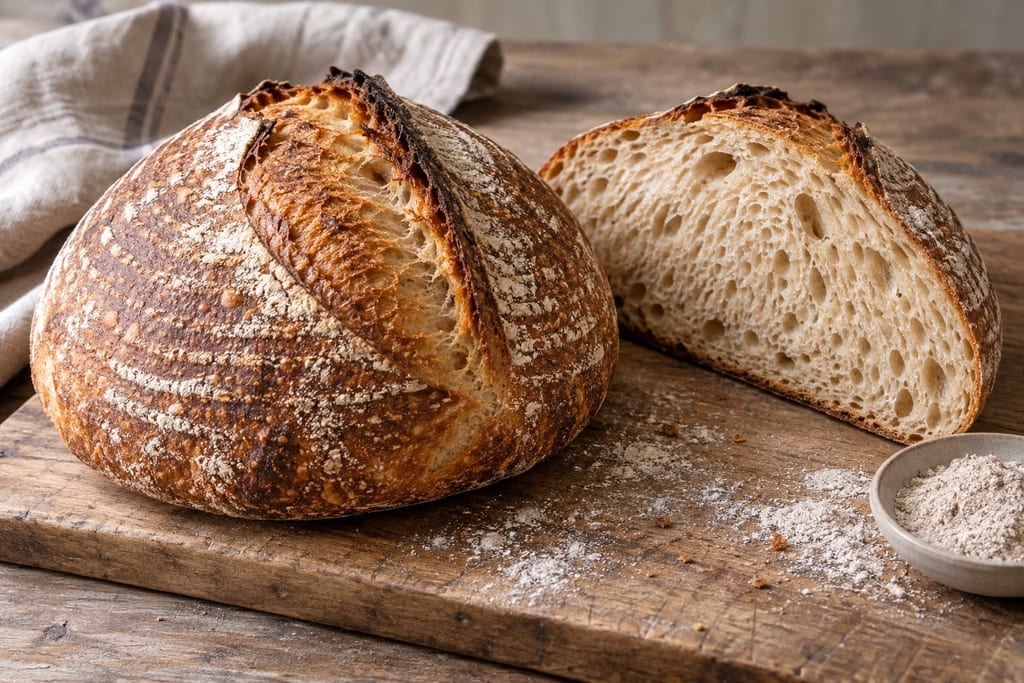
Vermont-style rye levain bread
Jeffrey Hamelman's Vermont sourdough builds a liquid wheat levain before adding a modest measure of rye flour blend. The dough is folded, shaped and baked as two crusty loaves with a tender, open crumb.
 FermenteaWhere food goes to change
Substrates
King Arthur Rye Flour Blend combines rye flours with wheat flour for rye character in a dough with some wheat gluten structure. Its component proportions are undisclosed.
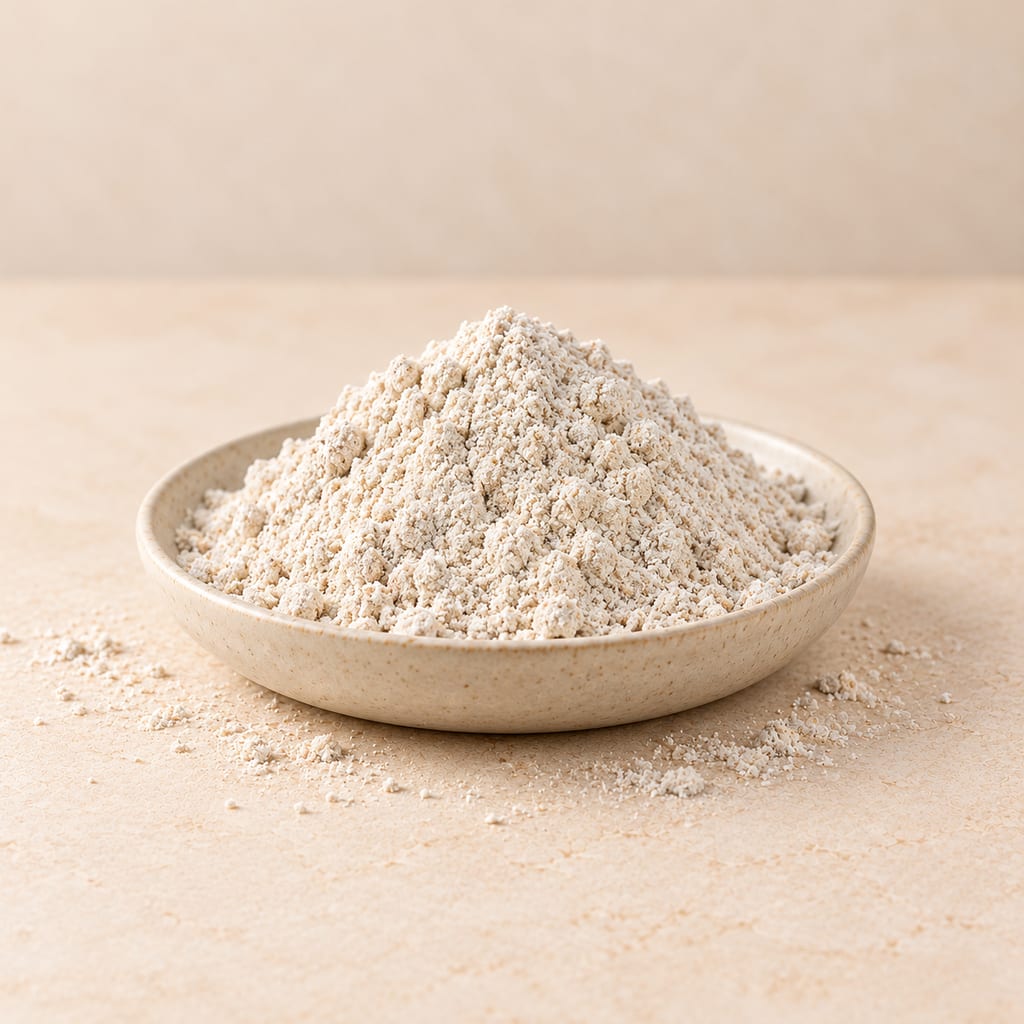
“Rye flour blend” can mean any baker’s mixture of rye and wheat flours, but here it is the exact product named by King Arthur Baking Company, SKU 100188. That distinction matters: pure rye flour is milled rye, while this proprietary blend also includes wheat flour. The maker describes a combination of white and medium rye flours, pumpernickel, and unbleached all-purpose flour. The ingredient declaration on the package lists King Arthur Unbleached Flour (wheat flour, enzyme), organic whole rye flour, white rye flour, and medium rye flour. Those are not identical wordings. The maker does not provide percentages, and the ingredient list does not state the enzyme’s identity. The listed ingredients establish what is present, while the marketing description gives a useful culinary picture. Neither supplies a component ratio or shows that “pumpernickel” is interchangeable with every form of whole rye flour.
That mixture gives the blend a different job from a bag of dark or whole rye. Wheat flour contains gluten-forming proteins that can build an elastic gas-holding network; rye flour contributes rye’s cereal flavor, starch, and water-binding arabinoxylans. The maker positions the blend for rye loaves that are lighter and loftier than breads made with rye alone. This is a product-specific promise, not a guarantee of a particular crumb in every formula. Dough hydration, fermentation, shaping, and baking still determine the result.
The dry blend is flour, not a starter, malt, or ready-made dough. Its color and texture will reflect its multiple flour streams, but a photo or visual inspection cannot establish the proportions or baking performance. “White rye,” “medium rye,” “whole rye,” and “pumpernickel” are not a universal set of standardized proportions. Rye flour grades are classified differently across markets; some millers describe the amount of bran retained or use local ash-content type numbers, while retail products use familiar terms such as light, medium, dark, and wholemeal. The label of this product is more informative than trying to assign it a generic rye grade.
Rye (Secale cereale) is a grass cultivated for its grain. Its domestication story differs from wheat and barley. The exact origin remains unsettled, but archaeobotanical and genetic accounts place wild and early cultivated rye in southwest Asia. Rye appears to have entered European fields among other cereals as a weed or tolerated companion crop, rather than as one of the first deliberately transported founder crops of Neolithic farming. Its grains are scarce in many early archaeological contexts, and a lone rye grain can be difficult to date securely: seed remains may enter older deposits later. Researchers now recheck such finds with direct radiocarbon methods where possible.
Over time, rye’s ability to grow in colder conditions and on less favorable soils made it worth cultivating in its own right in parts of Europe. The evidence does not describe one simple moment of domestication across the continent. Rye became an increasingly important crop during the Iron Age and Roman periods in some regions, then spread as a staple across northern and central Europe during the medieval period. By then, rye was not merely a fallback for places where wheat failed. It was the grain around which local breads, sourdough routines, storage forms, and household expectations had developed.
The northern climate also shaped how rye bread was baked and kept. Finnish traditions include round eastern loaves called limppu and western flat discs with a central hole, reikäleipä, which could be hung on poles for storage. A household leaven could be maintained and passed between generations. These breads are made from distinct regional practices, not King Arthur’s later commercial blend; they show how rye’s agricultural suitability became culinary memory. Baltic rye sourdough traditions likewise include mixing and proofing, with some recipes scalding the flour before fermentation. Such treatments are regional techniques, not required steps for every rye loaf.
The blend itself belongs to a different history: modern packaged baking flour designed for reproducible home baking. The blend is sold for rye loaves, sourdough breads, buns, and rolls. Its use in the company’s Vermont Sourdough recipe shows this modern category in practice. That formula names the branded blend alongside all-purpose wheat flour in the dough. “Vermont” is the recipe’s name and lineage, not evidence that the blend originated in a particular Vermont rye-growing tradition or that all rye sourdough in the state uses it.
Rye and wheat flour do not make dough in the same way. Wheat proteins gliadin and glutenin hydrate and interact to form a viscoelastic network: it stretches as gas cells expand and helps retain them. Rye has storage proteins, including secalins, but these do not form a comparable continuous network that holds fermentation gas. A rye-rich dough can be sticky, dense, or paste-like rather than a smooth elastic wheat dough. In this product the wheat component matters because it supplies gluten-forming proteins; how much structural strength it contributes cannot be calculated without the undisclosed proportions and a formula-specific test.
Rye’s defining structural contributors are largely carbohydrates. Arabinoxylans, also called pentosans in older baking literature, are cell-wall polysaccharides. They absorb water and thicken the surrounding dough. Soluble and insoluble forms influence water retention and crumb structure differently; the type and amount in a particular flour affect its behavior. Rye starch also contributes to the set crumb. During baking, available water and heat gelatinize starch granules, transforming the initially fluid dough into a firming matrix. This is a larger part of the structure in rye bread than in a wheat loaf whose gas cells are principally held by gluten.
Rye flour’s own enzymes matter as well. Amylases break starch into smaller carbohydrates, including sugars used by microorganisms and other reactions. This activity varies with the grain and flour, including whether rye sprouted before harvest and how milling altered the starch. If amylase activity is too high while the rye starch is becoming available during baking, starch can be broken down before it sets. The result can be a damp or gummy crumb that fails to hold a clean slice. This is why rye-baking literature treats starch and enzyme behavior as central flour qualities, not secondary details beneath protein percentage.
Sourdough changes this system through microbial fermentation and acidification. Lactic acid bacteria and yeasts metabolize carbohydrates; cereal enzymes make additional sugars available, and microbial acids lower dough pH. In rye formulas, that acidity can restrain excessive starch-degrading amylase activity and help the starch matrix set into a sliceable crumb. Rye’s arabinoxylans also hydrate and contribute viscosity. A dough’s stickiness is therefore not simply proof of failed gluten development: rye flour does not produce wheat-like gluten in the first place. The right interpretation depends on the proportion of rye and the recipe’s intended structure.
These mechanisms explain why pure rye breads often rely more heavily on sourdough acidification than wheat breads do. They do not mean that every dough containing rye must be sourdough. The King Arthur Vermont recipe is a sourdough example, whereas its product pouch also prints a separate yeast-raised light rye formula. Fermentation strategy belongs to the bread formula, not the flour bag alone. The wheat component can contribute gluten structure, but the rye and wheat proportions are undisclosed; the way this blend behaves must be judged in a specific dough.
Rye grain is softer and its endosperm is more difficult to separate cleanly from bran than wheat’s in some milling systems. Rye’s water-retaining fibre complicates reduction and separation; rye millers commonly use fluted or rough rolls rather than relying on smooth rolls throughout. Even “white” rye flour can retain more bran particles than a comparable white wheat flour. In broad commercial terms, lighter rye flours remove more outer grain material, while darker or wholemeal forms retain more of it. More retained outer layers generally mean more fibre and altered water absorption, but names and grading methods vary among countries and mills.
The branded blend combines several rye descriptions rather than identifying one rye cultivar or one extraction grade. Its whole rye ingredient means it is not simply a refined light rye blend; its white and medium rye flours broaden the milling streams represented. Yet the package supplies no extraction percentage, ash value, particle size, or quantity for any stream. The current product badge does not identify it as wholegrain, while its ingredient declaration does include organic whole rye flour. These facts can coexist: a mixed product can contain a whole-grain ingredient without being a 100% wholegrain flour. The label does not let a baker infer the product’s wholegrain proportion.
This distinction also prevents a common historical confusion. Pumpernickel is often used as a bread name and can also appear as a flour description. King Arthur lists “pumpernickel” in its marketing description for the blend but lists “organic whole rye flour” in the package’s ingredient declaration. Without a manufacturer explanation, the two terms should be reported where the company uses them rather than collapsed into a single exact milling specification. The ingredient name here is a product identity; it is not an invitation to substitute any flour labelled pumpernickel or dark rye and assume the same composition.
The product maker presents its blend as a convenient way to make classic rye bread and suggests mixing it with additional wheat flour for a milder loaf. Its package lists rye loaves, sourdough breads, buns, and rolls as uses. That guidance describes intended use, not an interchangeable ratio for all recipes. In a dough with more rye, starch and arabinoxylans become more important to crumb structure and acidification helps control rye starch breakdown. Additional wheat flour can provide more gluten-forming protein and make shaping more familiar to a wheat-bread baker. Changing the flour balance changes both flavor and structure, so preserve the proportions of a tested formula when possible.
The King Arthur Vermont Sourdough formula is useful as a named example rather than a universal definition. In its dough, 93 grams of Rye Flour Blend accompany 660 grams of all-purpose flour, plus a separate all-purpose-flour levain. The formula uses a long liquid levain, a short rest after initial mixing, salt mixed in later, folds during bulk fermentation, shaping, proofing, and covered baking. Those stages describe that recipe and its sourdough culture; they are not properties of the flour blend. The flour contributes substrate, water-binding material, rye flavor, and some wheat gluten from its wheat component. The levain supplies the active culture and acidity. The bake sets the starch and protein structure after fermentation has expanded the dough.
A pure rye flour substitution would not be a neutral swap for this branded mixture. It would remove the blend’s wheat flour and change the relative amounts of rye flour streams, with consequences for gas retention and dough handling. Likewise, replacing it with all-purpose flour would remove the rye-specific starch, arabinoxylans, flavor, and color. The flour’s exact effect is clearest when a recipe names the blend and the same product is available. If it is not, a baker should choose an explicitly described rye-and-wheat combination, check the recipe’s intended rye strength, and expect to adjust only from observed dough behavior rather than inventing the manufacturer’s secret ratio.
The package directs the user to store the blend cool and dry. Keep it closed against damp air, insects, and nearby odors. Rye and whole-grain ingredients contain more of the grain’s outer layers and germ than refined white flour streams, so their quality can be more vulnerable to oxidation over time; the manufacturer’s printed best-before date and storage guidance are more useful than a universal shelf-life claim. Discard flour that is wet, visibly contaminated, infested, recalled, or has an off smell. A normal smell does not establish that raw flour is free of pathogens.
The package identifies wheat as an allergen and lists wheat flour in the blend. The rye itself is also a gluten-containing cereal. The product is unsuitable for a person with coeliac disease, and the wheat component also matters to people with wheat allergy. King Arthur directs buyers to its allergen and cross-contact program for additional information; people with allergies should consult the current package and manufacturer rather than infer cross-contact status from a recipe.
Like other flour, this blend is raw unless the maker says it has received a treatment that makes it ready to eat; the current package explicitly warns not to eat raw flour, dough, or batter. FDA guidance explains that grain may be exposed to harmful bacteria in the field or during processing and that grinding does not reliably kill them. Do not taste the dry flour or raw dough. Follow the recipe’s cooking directions and clean hands, surfaces, and equipment after handling raw flour.
When baked, the blend can give a loaf a visible rye tint and a cereal character, but final color, aroma, sourness, density, and sliceability come from the complete formula. A sticky raw dough may reflect rye arabinoxylans and water binding; a gummy baked crumb can also point to starch and enzyme behavior, too much available water, or insufficient baking, rather than a simple lack of wheat gluten. A loaf that spreads may involve its hydration, fermentation, shaping, or support as well as flour composition. The blend is a useful starting ingredient with a known maker and intended use, but its undisclosed ratios mean that troubleshooting still belongs to the whole recipe.
wheat, rye (gluten-containing cereal)
A US-published product and recipe; this does not establish the growing or milling origin of every component.
Jeffrey Hamelman's Vermont sourdough builds a liquid wheat levain before adding a modest measure of rye flour blend. The dough is folded, shaped and baked as two crusty loaves with a tender, open crumb.

A refined common-wheat flour blended for a broad range of baking; its protein and behavior vary with wheat, milling and market.

Toasted almonds are whole sweet almond kernels dry-roasted until golden to brown. Heat replaces their marzipan note with a roasted, nutty one; they thicken and flavour romesco.
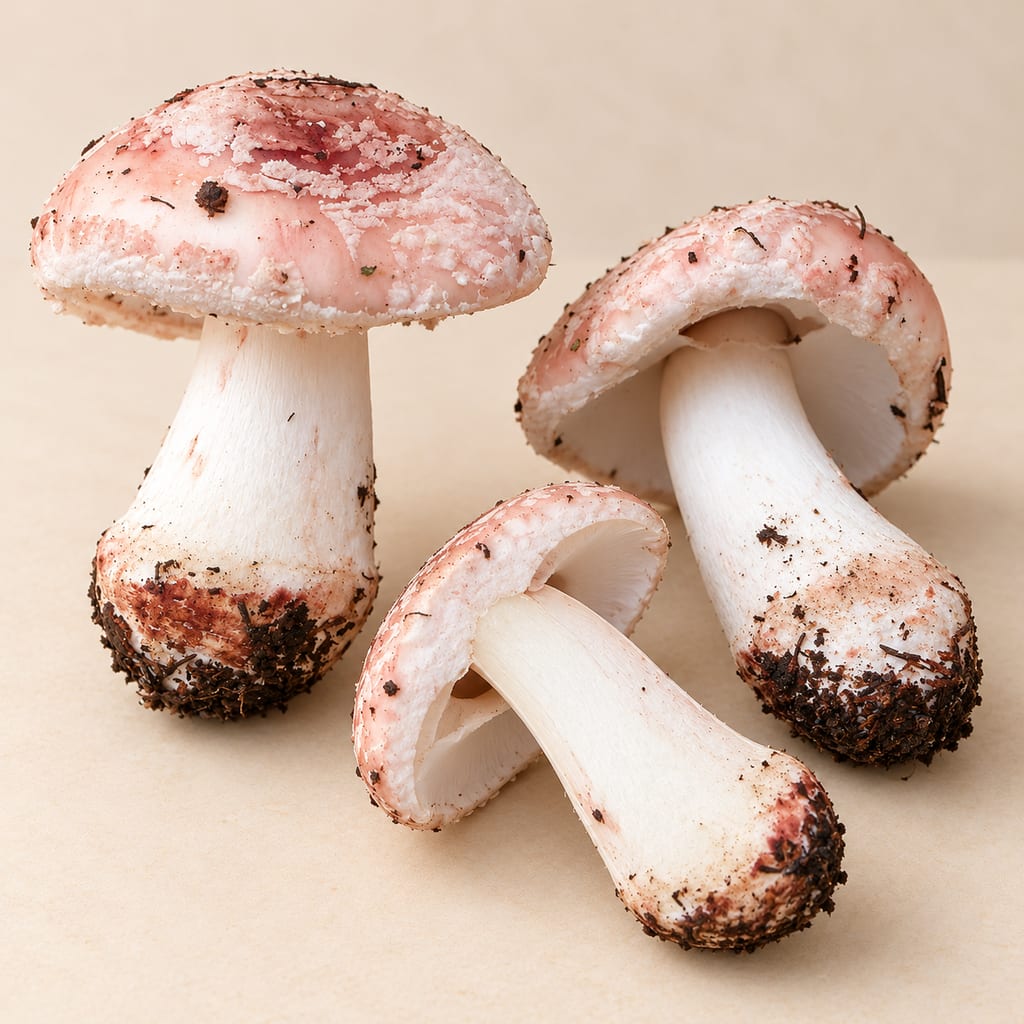
Amanita novinupta is a western North American blusher, a forest mushroom recorded as food in Mexico, and one that must be cooked because its raw flesh is toxic.
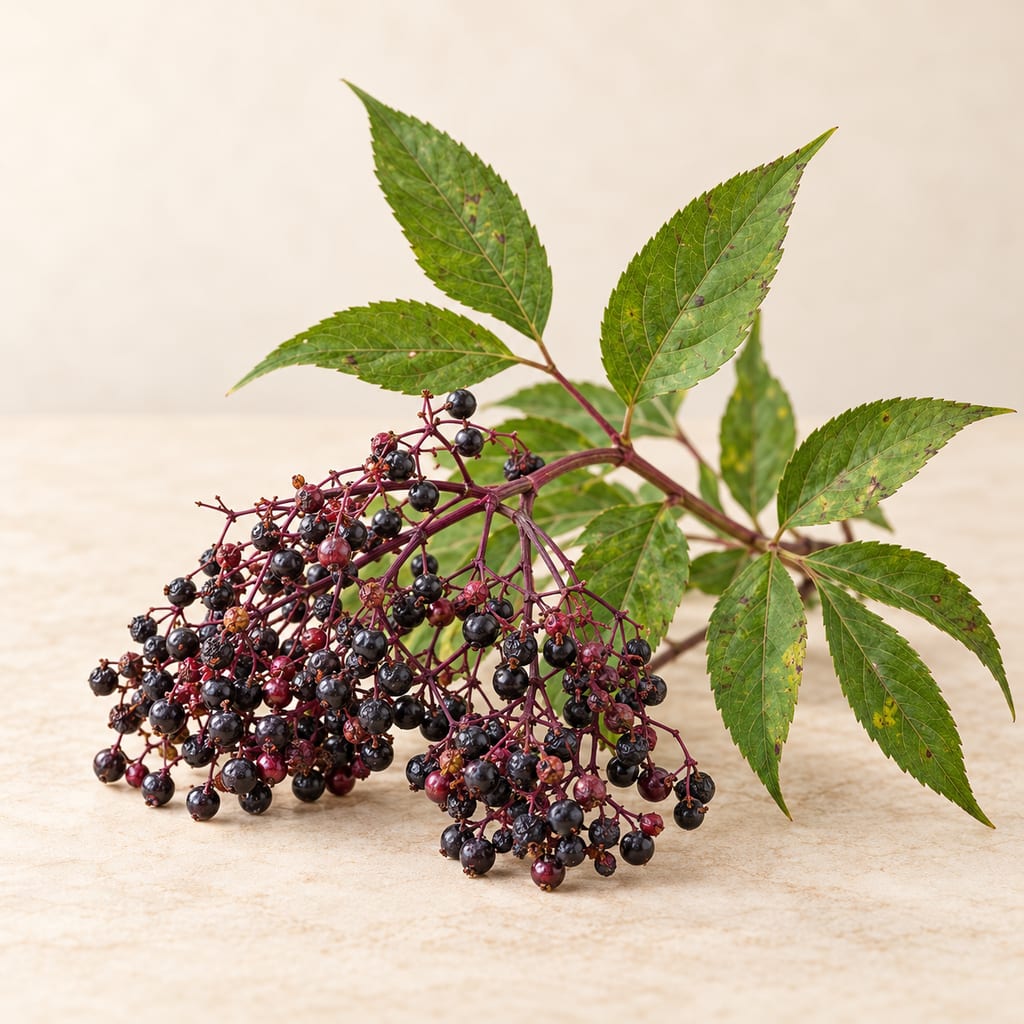
Sambucus canadensis is the accepted name used here for American elderberry. Missouri production guidance and named-cultivar studies give useful regional growing information, while food and analytical sources leave process questions open.
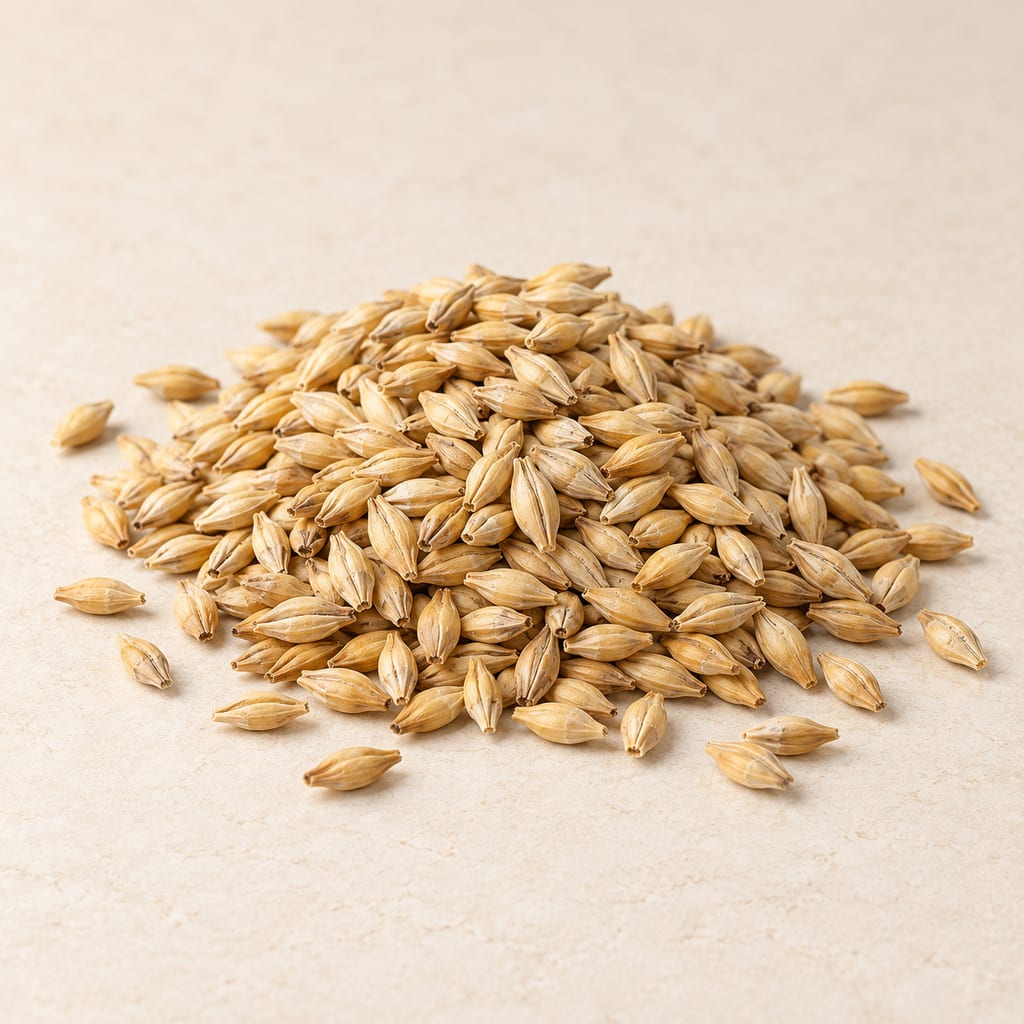
A lightly kilned brewing base made from two-row barley. It supplies starch and enzymes for the mash, with the maltster’s product and lot analysis defining its brewing properties.

Ripe avocado flesh is the soft, buttery, fat-rich pulp of Persea americana, eaten raw. It is low in acid, so it is a fresh ingredient that needs care in chilled dishes.
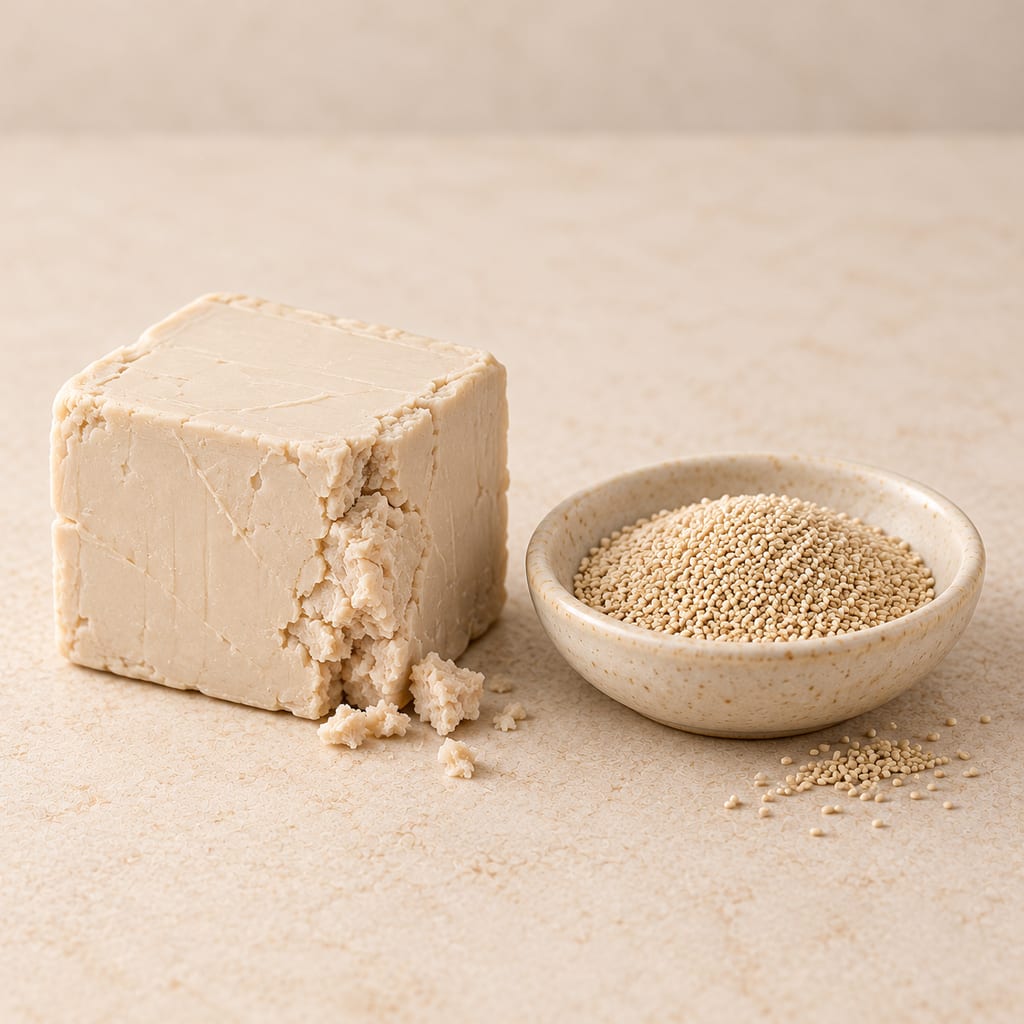
Baker's yeast is a cultivated living leavener, commonly sold fresh or dried. In dough, selected Saccharomyces cerevisiae cells make gas that can raise bread.
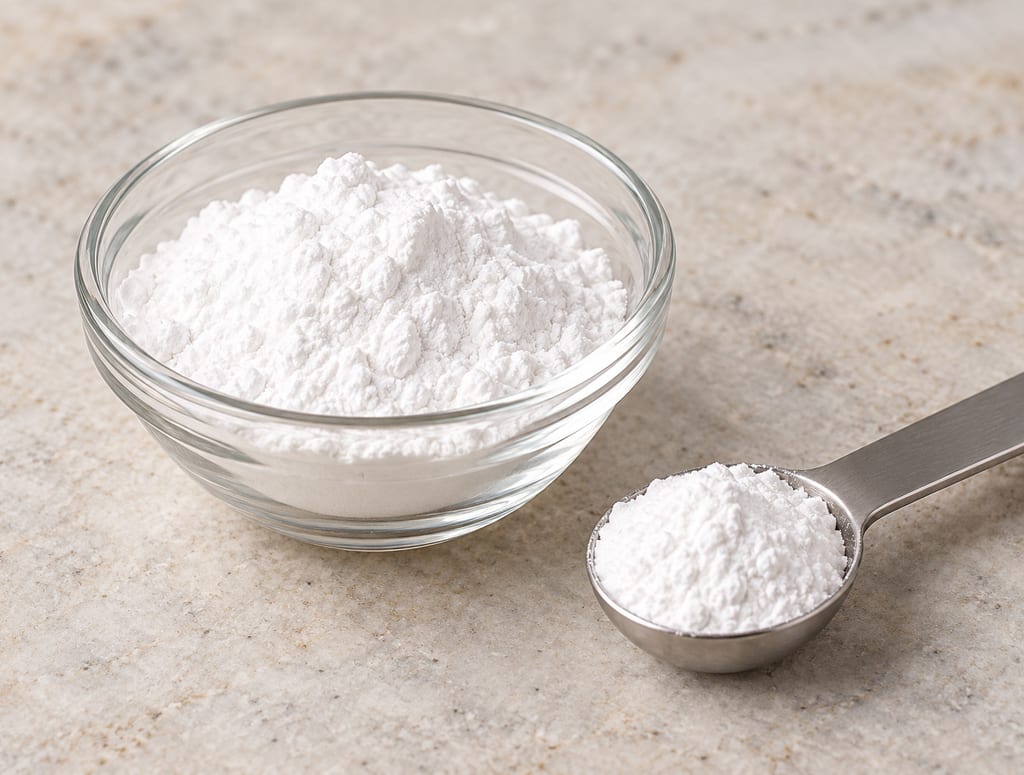
Baking powder is a dry chemical leavener that combines bicarbonate with acid-reacting ingredients and a carrier. Moisture and heat release carbon dioxide for quick breads, batters and griddle cakes.
No community contributions have been published for this entry yet.
Sign in to contribute. Published comments and photos are free to read.
King Arthur Baking CompanyPrimary product source
Rye Flour BlendNamed product and SKU 100188; marketing description of white and medium rye, pumpernickel, and unbleached all-purpose flour; maker-suggested uses; product-gallery image of loose flour.
Cited in: One product name, two useful descriptions; Milling, grades, and the words on the bag; Baking with the blend
King Arthur Baking CompanyPrimary label source
Rye Flour Blend package artwork, item 100188_2Ingredient declaration wheat flour (with enzyme), organic whole rye flour, white rye flour, medium rye flour; wheat allergen; cool/dry storage; raw-flour warning; maker's product description and usage.
Cited in: One product name, two useful descriptions; Milling, grades, and the words on the bag; Baking with the blend; Keeping the flour, reading the result
King Arthur Baking Company; recipe by Jeffrey HamelmanPrimary recipe source
Vermont SourdoughFormula lists 93 g rye flour blend with 660 g all-purpose flour in dough, plus separate all-purpose flour in levain; recipe process and blend-specific use.
Cited in: One product name, two useful descriptions; Baking with the blend
Philosophical Transactions of the Royal Society BPeer reviewed crop history research
Commensal domestication pathways amongst plants: exploring segetal and ruderal crop originsRye domestication origin remains unsettled; weed-to-crop account; some apparent early European rye occurrences may be intrusive, emphasizing direct dating and contextual uncertainty.
Cited in: How rye became a European bread grain
Oxford University Press, Oxford Handbook of the European Bronze AgeAcademic handbook chapter
Plant Cultivation in the Bronze AgeArchaeobotanical context for rye as weed and later regional cultivation; chronology is regionally variable.
Cited in: How rye became a European bread grain
PLOS ONEPeer reviewed regional study
The introduction and spread of rye (Secale cereale) in the Iberian PeninsulaRegion-specific Iberian evidence on introduction and spread; supports avoiding a single Europe-wide timeline.
Cited in: How rye became a European bread grain
ThisisFINLAND, Ministry for Foreign Affairs of FinlandGovernment cultural feature
The root of Finnish rye breadFinnish regional forms limppu and reikäleipä; storage of hole-centered loaves on poles; household leaven traditions.
Cited in: How rye became a European bread grain
Springer, Traditional European BreadsAcademic book chapter; abstract inspected
Traditional Breads from the Baltic Countries (Estonia, Latvia, Lithuania)Baltic rye sourdough traditions and regional variation including flour scalding; chapter abstract used, not full text.
Cited in: How rye became a European bread grain
Cereal ChemistryPeer reviewed review; abstract inspected
The Major Constituents of Rye (Secale cereale L.) Flour and Their Role in the Production of Rye BreadRye protein does not make the wheat-like gas-retaining gluten network; starch and arabinoxylans contribute water binding and rye-bread structure.
Cited in: What rye contributes when the dough gets wet
FoodsPeer reviewed experimental methods paper; full text inspected
Procedures for Breadmaking Quality Assessment of Rye Wholemeal FlourRye wholemeal starch and pentosans/arabinoxylans in bread quality; starch gelatinization and amylase activity overlap in temperature range; evidence concerns tested wholemeal flours.
Cited in: What rye contributes when the dough gets wet
MaterialsPeer reviewed study; abstract/search record inspected
Assessment of the Starch-Amylolytic Complex of Rye Flours by Traditional Methods and Modern OneRye flour amylolytic activity varies; excessive starch breakdown can impair crumb quality.
Cited in: What rye contributes when the dough gets wet
Food MicrobiologyPeer reviewed review
Enzymatic and bacterial conversions during sourdough fermentationCereal enzymes release fermentable carbohydrates; sourdough organisms metabolize sugars and interact with cereal enzymes.
Cited in: What rye contributes when the dough gets wet
IREKS CompendiumMilling/baking industry technical source
Why does rye sourdough have to be acidified?Technical explanation of acidity's role in limiting excessive amylase activity and supporting rye crumb set in rye-rich doughs.
Cited in: What rye contributes when the dough gets wet
Innograin, University of ValladolidUniversity technical explainer
Rye flourRye milling and separation challenges; flour grading/extraction terminology; enzymatic considerations.
Cited in: Milling, grades, and the words on the bag
International Journal of Food PropertiesPeer reviewed review; abstract/metadata inspected
A comprehensive review on biochemical and technological properties of ryeRye grain and flour constituents, milling streams, and technological properties.
Cited in: Milling, grades, and the words on the bag
U.S. Food and Drug AdministrationPrimary public health guidance
Handling Flour Safely: What You Need to KnowRaw flour can carry pathogens; grinding does not reliably kill them; avoid eating raw dough/batter and follow safe handling.
Cited in: Keeping the flour, reading the result
National Health ServicePrimary public health guidance
Coeliac disease: TreatmentRye, wheat, and barley contain gluten and are excluded from gluten-free coeliac treatment.
Cited in: Keeping the flour, reading the result