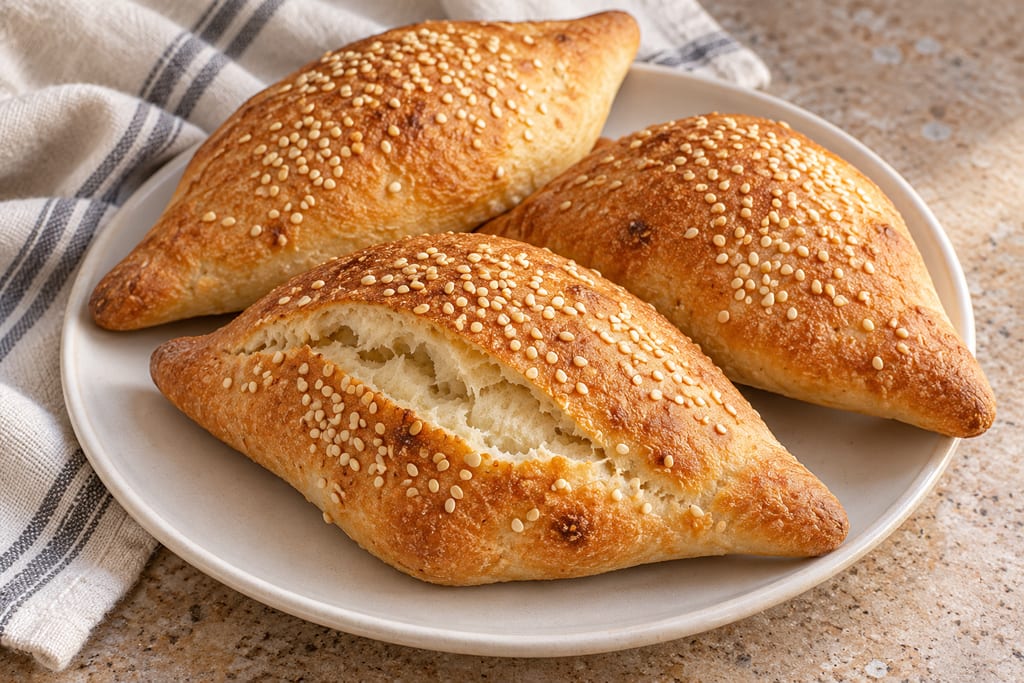
Iraqi samoun
Iraqi diamond-shaped yeast breads topped with sesame and baked in a home oven.
 FermenteaWhere food goes to change
Khubz il-Tannour · Khubuz Mei · Iraqi khubz · Iraqi tannour flatbread
A soft, water-only Iraqi wheat flatbread adapted for a domestic oven with parchment and a preheated baking stone or inverted sheet.
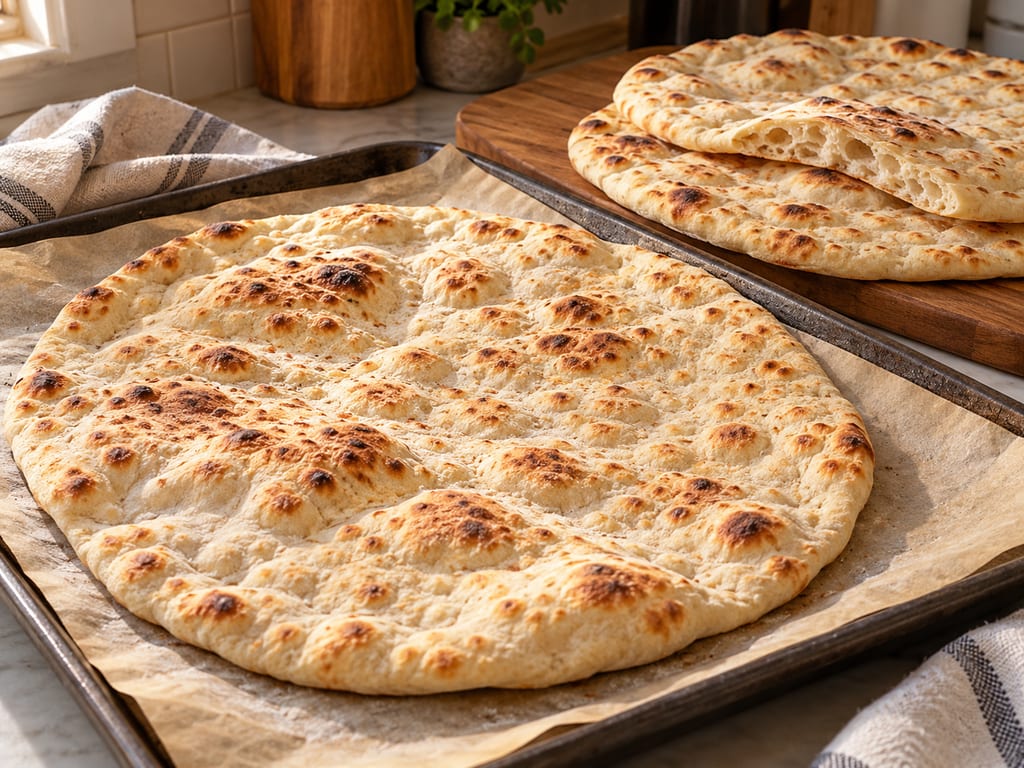
Khubz il-tannour, also called khubuz mei, is a leavened Iraqi flatbread made with wheat flour, water, salt, and yeast. This measured home batch follows Nawal Nasrallah's adaptation in Delights from the Garden of Eden. She developed it for a regular oven using parchment to shape and move the wet dough, with a preheated stone or inverted baking sheet.
A household oven does not reproduce a tannour. In a tannour, dough is slapped onto the hot inner wall, where it bakes against the clay surface in the oven's intense heat. The home method bakes on a horizontal stone or sheet at 450°F (230°C), then moves the bread to an upper shelf to brown. It can make blistered flatbread, but the heat path, contact surface, and speed differ.
The batch uses 20 cups (5 lb/2.27 kg) flour, 9 cups (2.25 L) warm water, 3 tablespoons dried yeast, and 2 tablespoons salt. Nasrallah suggests a flour blend of one part whole-wheat flour to three parts bread flour. The soft, somewhat wet dough is handled with wet hands; do not add extra flour to make it dry.
Dissolve yeast in the warm water for 5 minutes. Mix salt into flour, make a well, and stir the liquid through. Knead lightly for about 6 minutes, wetting hands as needed. Cover and rise in a warm, draft-free place for about 45 minutes; punch down and knead lightly halfway through.
Prepare parchment rounds slightly larger than the breads; use a product specifically rated for at least 450°F (230°C), and trim edges close to the dough. Preheat the oven to 450°F (230°C) for 15 minutes with a stone on the lowest shelf, or use an inverted baking sheet. Follow the oven maker's guidance before putting a stone on the oven floor. An inverted sheet on an upper rack provides a second browning surface.
Divide the dough into 8 portions for 15-inch (38 cm) breads or 15 portions for 9-inch (23 cm) breads. Gather each into a ball on a surface dusted with semolina or wheat bran. With the dough on parchment over a flat support, press it thin with wet fingertips, leaving their marks. Rest each disc 5 minutes. Slide parchment and dough onto the hot lower surface; after about 5 minutes, move the bread on its paper to the upper shelf, where it browns in about 4–5 minutes. Each bread takes less than 10 minutes total. Peel the paper off and cool on a rack without stacking while hot. Keep parchment from touching elements or flame and watch it closely for charring, especially after moving it to the upper rack.
Bake the dough before eating and do not taste it raw. Wash hands and equipment after working with raw flour and dough. Use oven mitts and a stable support when moving the hot rack and parchment-supported bread.
Serve warm. Nasrallah recommends bagging cooled breads to prevent drying and freezing those not used within 2 or 3 days. That is household advice; no validated shelf-life limit is established here. Use parchment rated for the oven temperature and trim its edges; paper ratings vary and exposed edges can char.
Nawal Nasrallah describes khubz il-tannour/khubuz mei as Iraqi flatbread, traditionally baked on a tannour wall, and gives a domestic-oven adaptation. The inspected source does not establish a dated first attestation.
Yield 8 large flatbreads, or 15 smaller flatbreads · Scaling: source batch only
Uncooked flour and dough can carry harmful germs; do not taste the dough before baking.
Hazard sourceMoving a wet dough disc to a hot surface and moving the rack can cause burns.
Hazard sourceParchment temperature ratings vary; some products are rated below the recipe's 450°F oven setting, and exposed edges can char.
Hazard sourceDo not taste raw dough; wash hands and utensils after handling flour and dough, and bake the bread as directed.
Control sourceUse a stable support and oven mitts when moving racks and hot baking surfaces.
Control sourceUse parchment whose manufacturer rating covers at least 450°F, trim exposed edges close to the dough, keep it away from elements or flame, and watch for charring, especially on the upper rack.
Control sourceA horizontal stone or sheet in a domestic oven does not reproduce the tannour's hot inner wall, heat path, or rapid wall-baking cycle.
Only place a stone on an oven floor when the appliance maker permits it.
Do not taste unbaked dough.
Parchment is not interchangeable across brands: use only a product whose stated oven rating covers 450°F, trim its exposed edges, and watch it closely for charring.
Nawal Nasrallah identifies khubuz tannour/mei as Iraqi flatbread and documents an oven adaptation; no narrower location is established.
Iraqi diamond-shaped yeast breads topped with sesame and baked in a home oven.
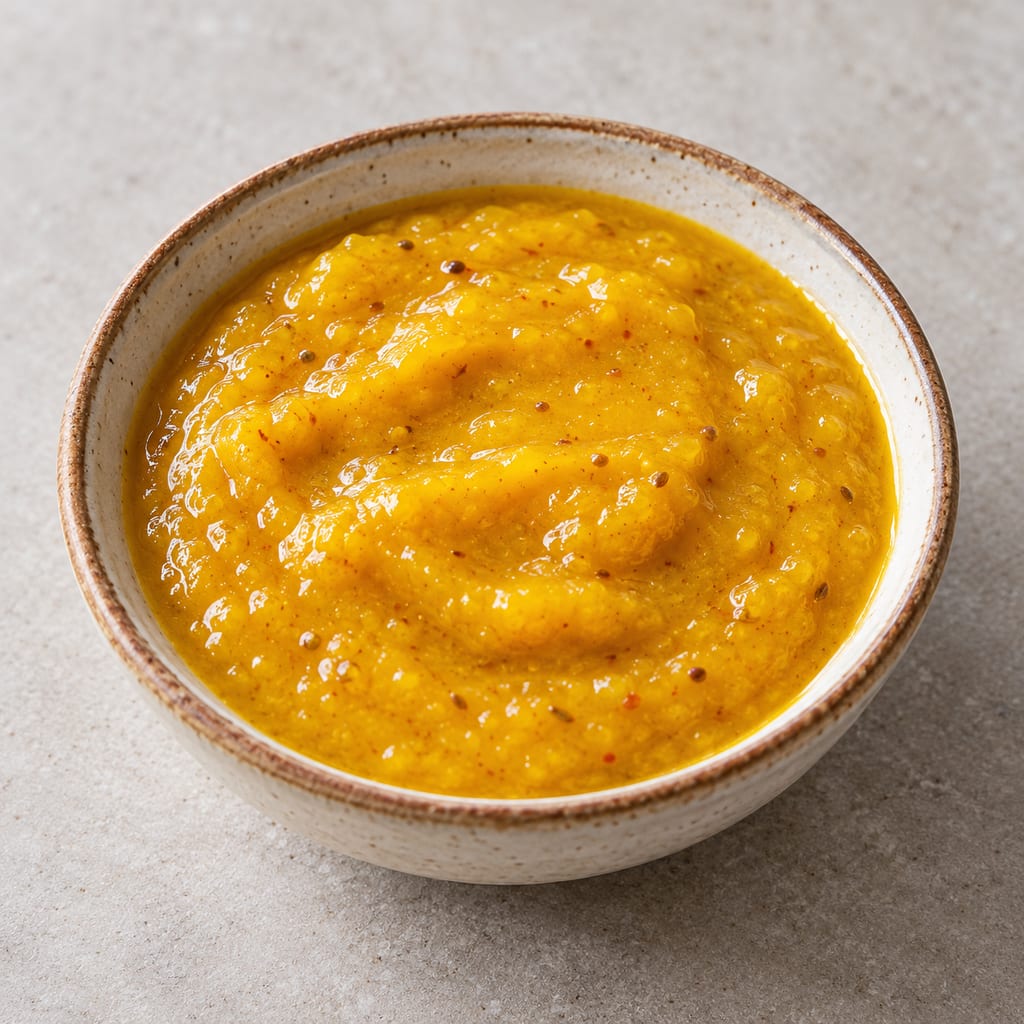
This cooked amba follows a Jewish Food Society recipe that simmers ripe mango with onion, garlic, mustard seed and warm spices into a tangy Middle Eastern condiment.
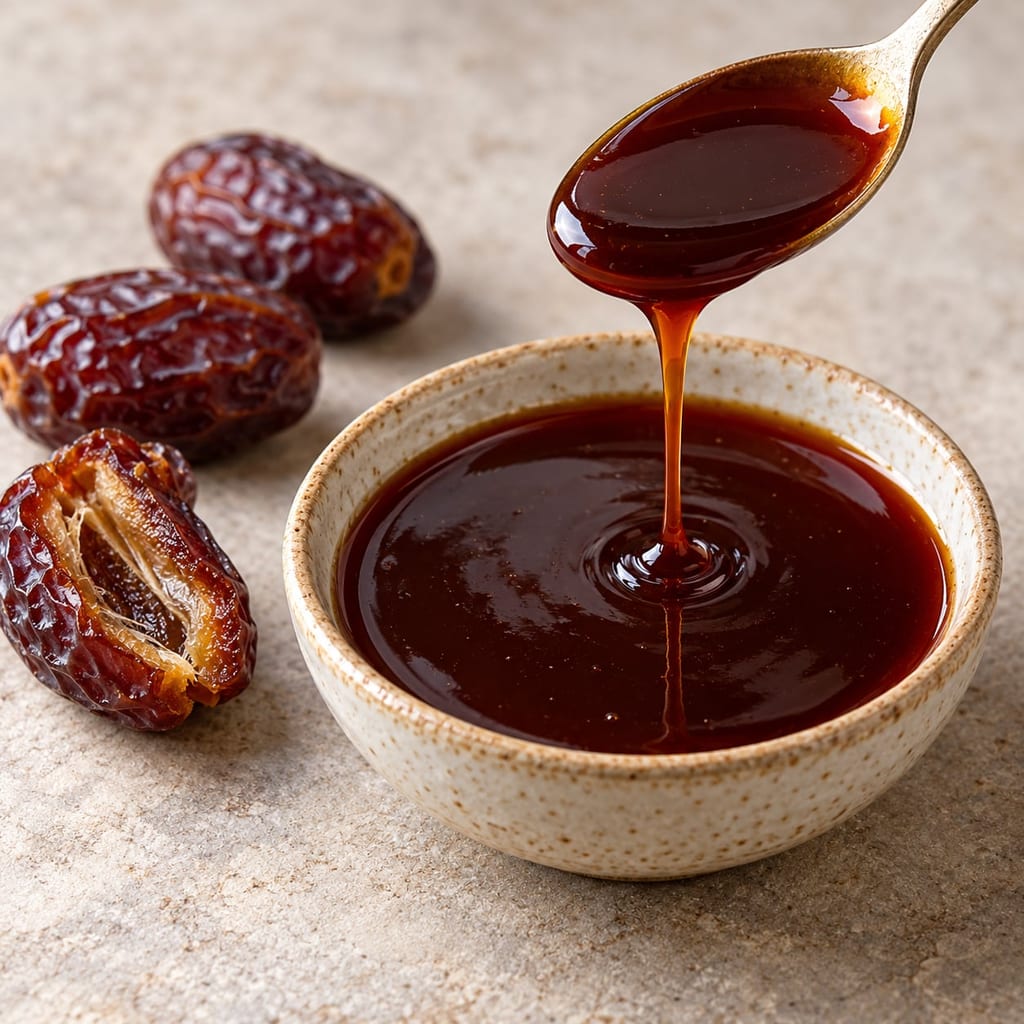
A thick, dark, very sweet syrup made from dates, known as dibs, rub, silan or date molasses. It sweetens tahini and desserts and glazes or sauces savoury dishes across the Middle East and North Africa.
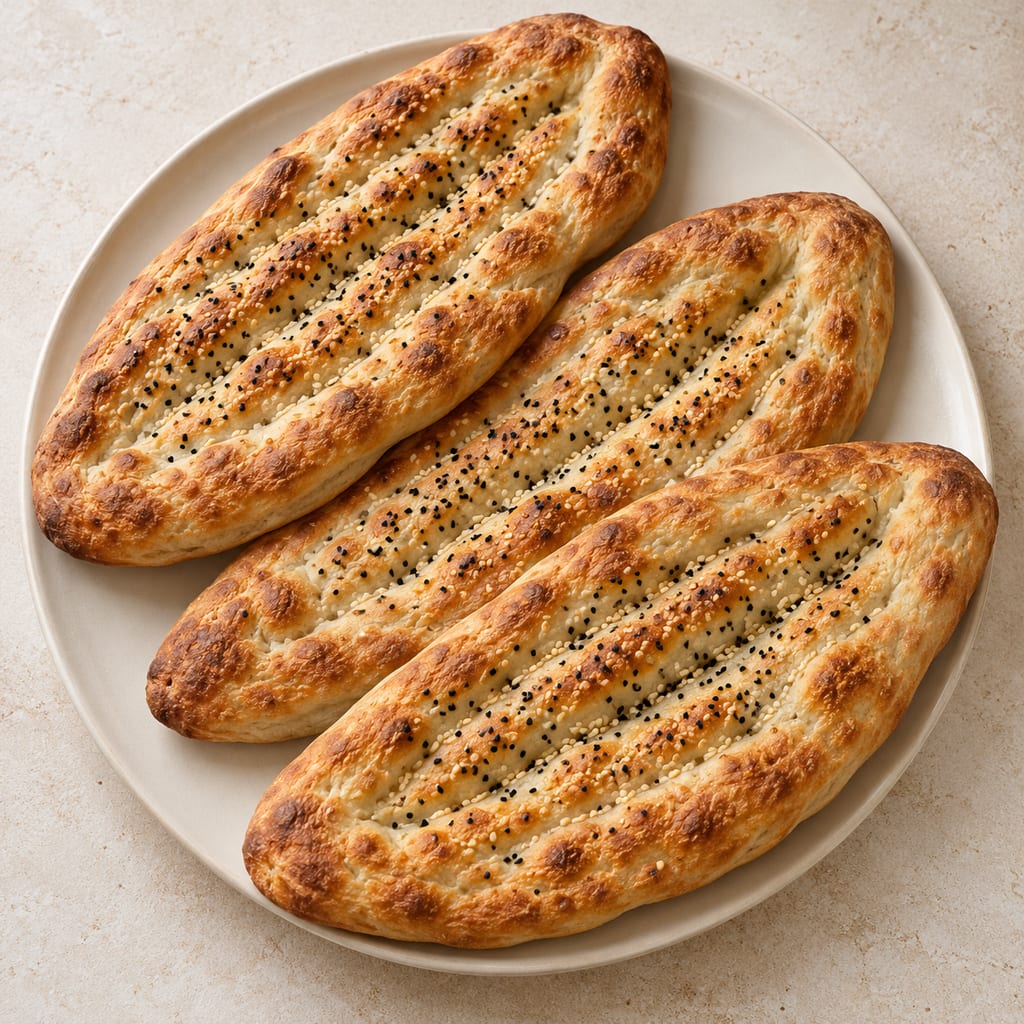
A long oval Afghan wheat bread, leavened with yeast, grooved along its length and baked until crisp outside and chewy within.
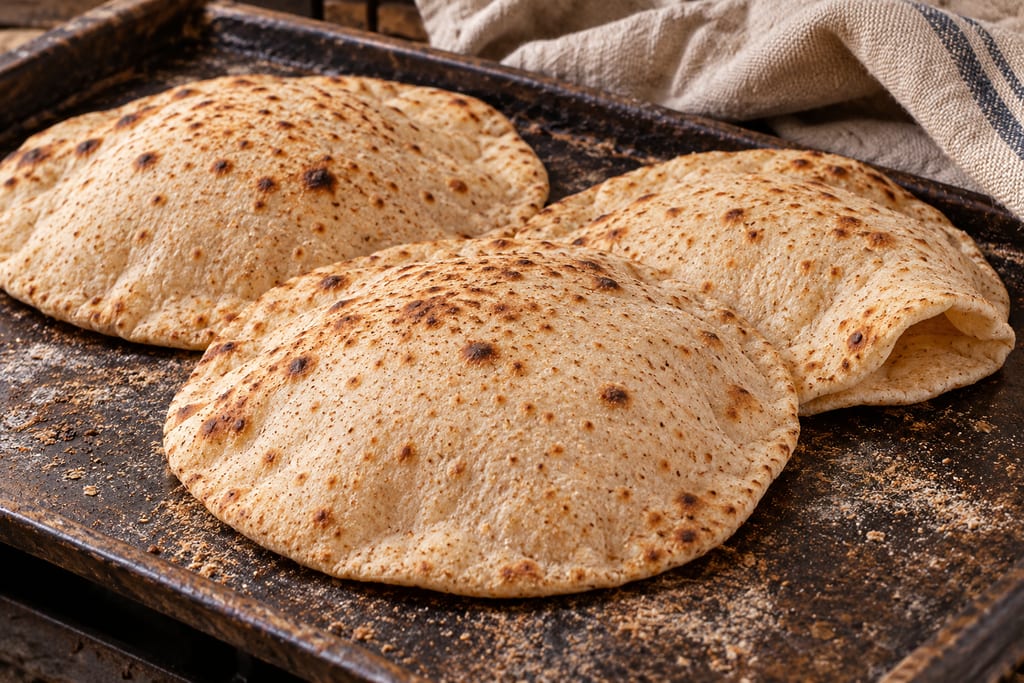
This home adaptation of Egyptian aish baladi uses a refrigerated yeast biga, whole-wheat dough, bran dusting and a very hot baking surface to make 16 pocketed rounds.
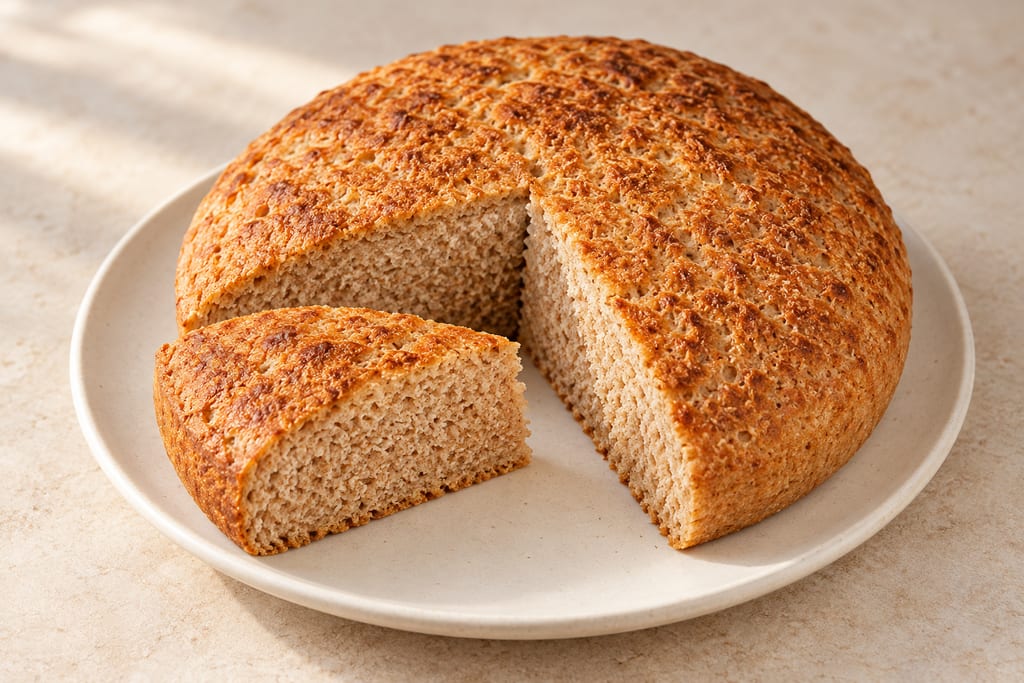
This oven-baked Amdo balep uses yeast, whole-wheat and white flour, a long covered rise and a two-sided bake in a heavy oven-safe pot.
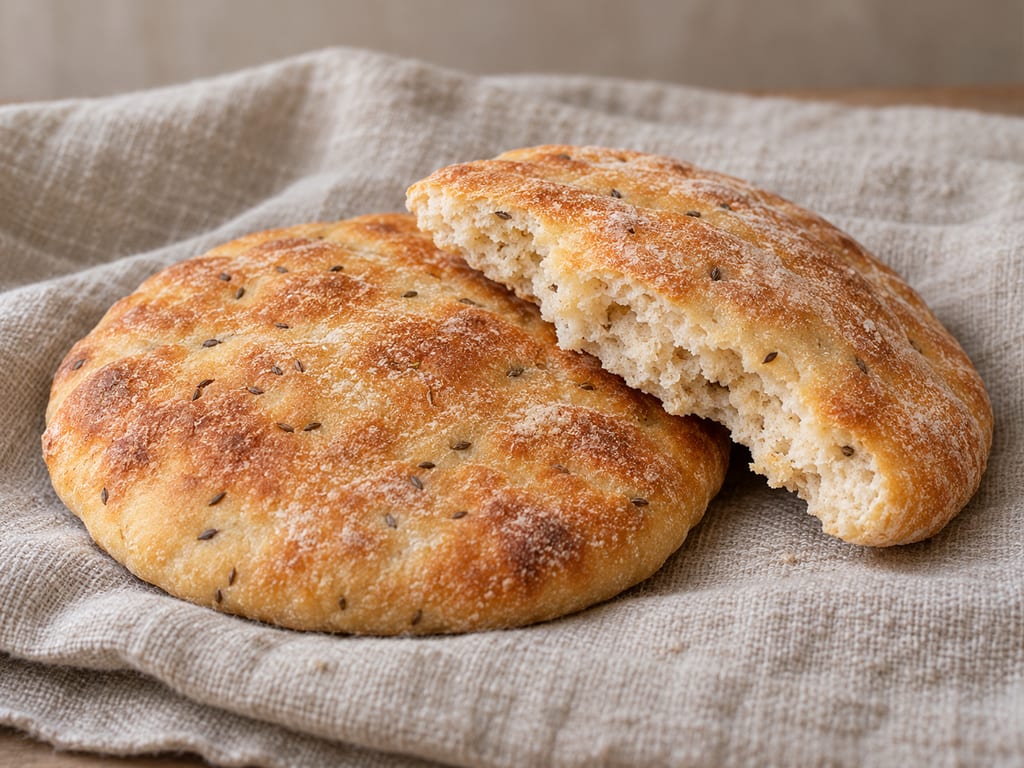
A measured, yeast-raised Ayacucho chapla home method shared by Thermomix Peru presenter Roxanna Salaverry. It makes thin, anise-scented rounds baked at 240°C; the historic qunchu-leavened form is documented separately.
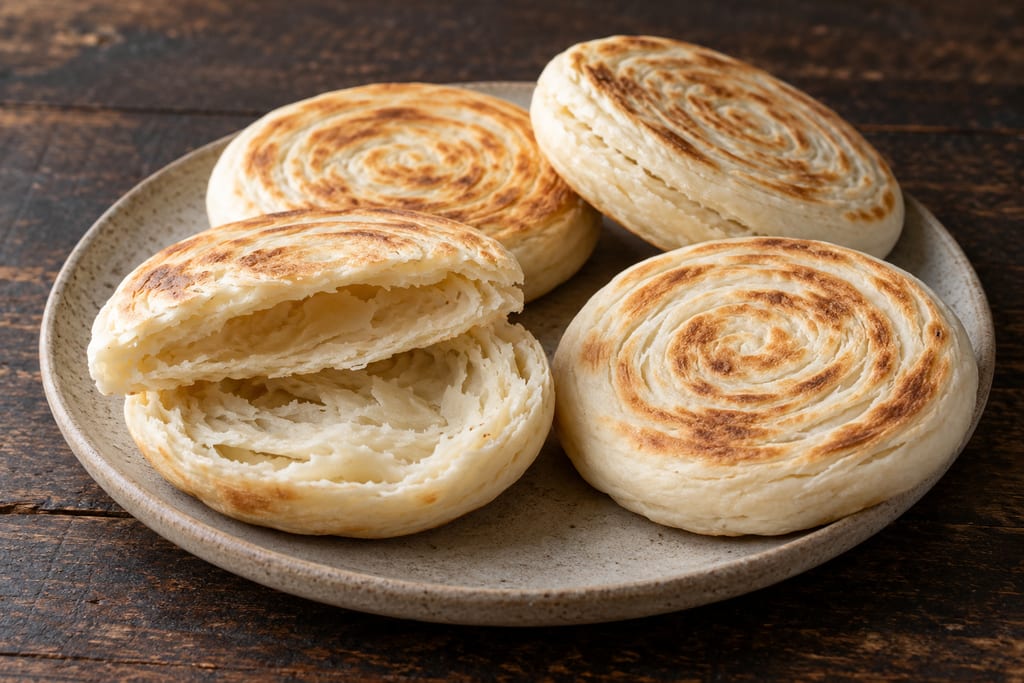
This Shaanxi-associated yeast flatbread uses a simple water dough, coiled shaping and a skillet bake. It is the bread used in roujiamo, not the filled meat dish.
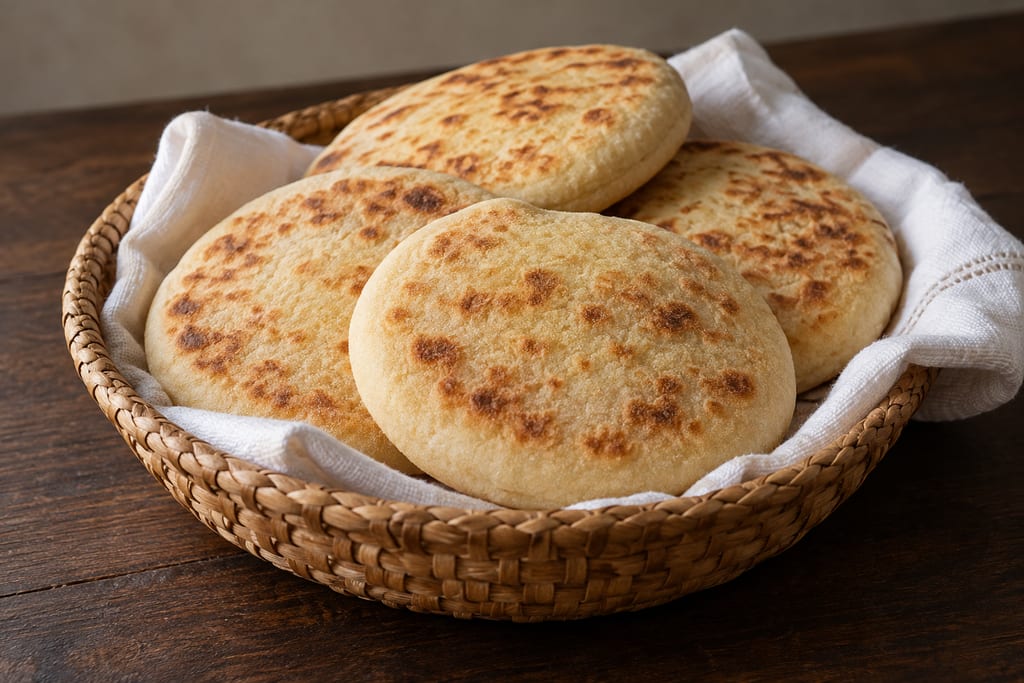
A Moroccan yeast-raised semolina pocket bread cooked on a dry pan or griddle; this measured batch makes about twenty 4-inch rounds.
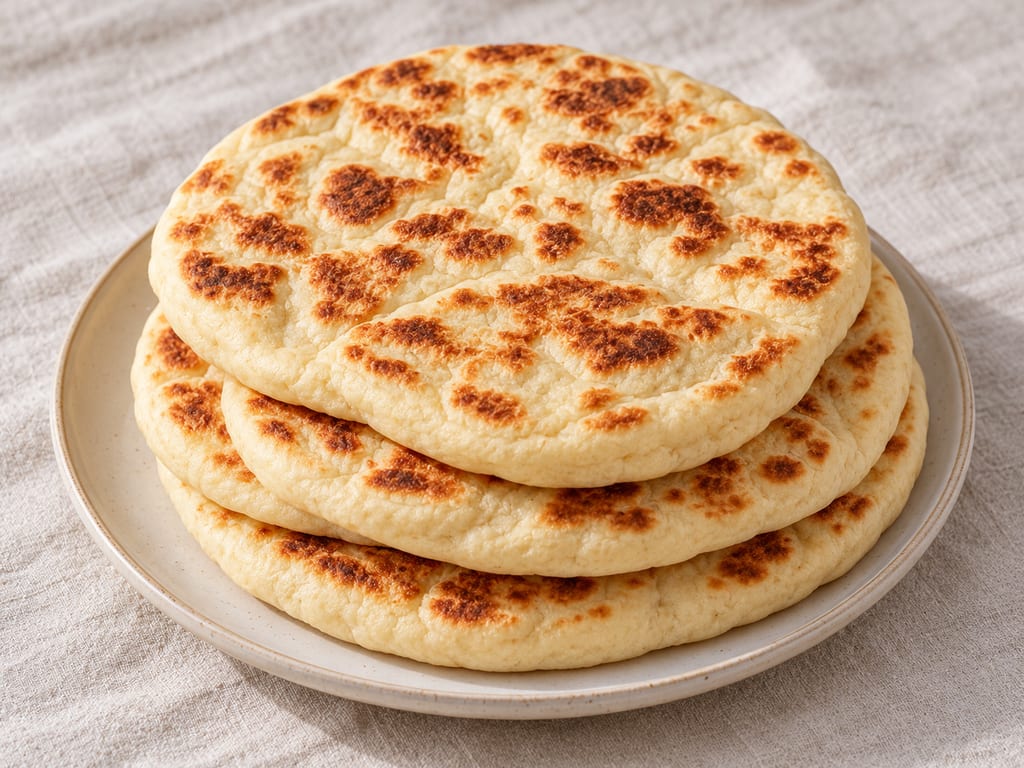
This Turkish bazlama uses yeast, plain yogurt and olive oil for a soft dough cooked in a skillet. Shape it into twelve small or six larger rounds, flip as bubbles appear, and wrap the breads to keep them soft.
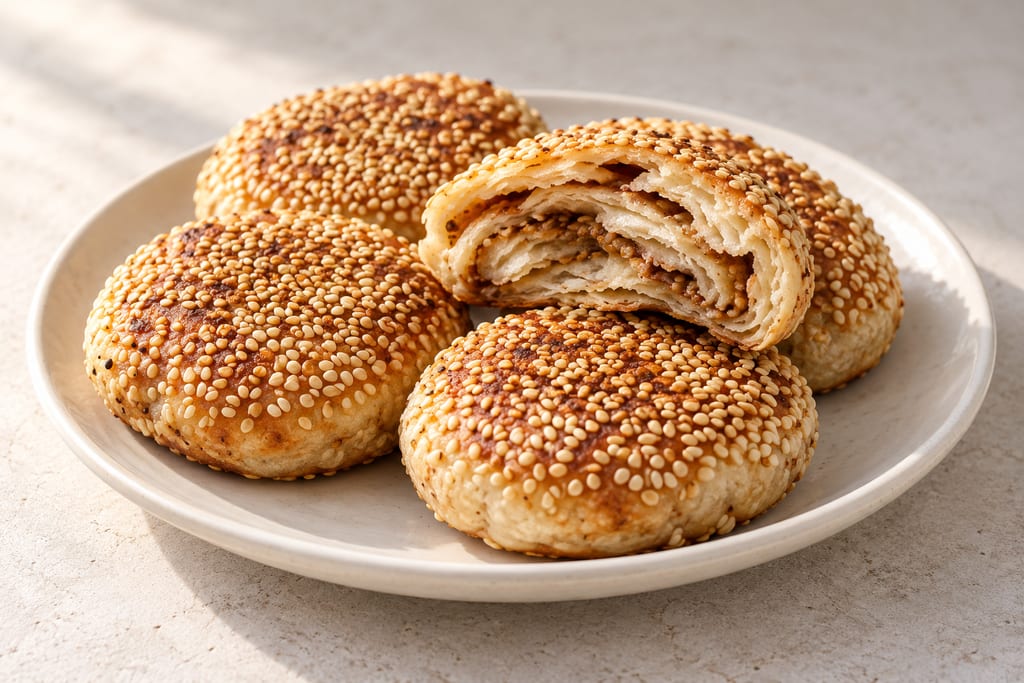
A Beijing-style yeast dough is layered with seasoned sesame paste, sealed into small buns, briefly pan-fried, seeded, and baked.
No community contributions have been published for this entry yet.
Sign in to contribute. Published comments and photos are free to read.
Nawal Nasrallah / Delights from the Garden of EdenRecipe · Method · Geography · History
Delights from the Garden of Eden — BreadNames khubuz tannour/mei as Iraqi flatbread made from flour, salt, yeast and water, traditionally baked against the tannour wall; points to a measured recipe and domestic oven method in the cookbook.
Cited in: Iraqi water bread; Mix and rise; Shape with parchment and bake; Handling and serving
Centers for Disease Control and PreventionFood safety
Raw Flour and DoughUncooked flour and dough can carry germs; do not taste raw dough; clean hands and equipment after handling raw flour and dough.
Cited in: Handling and serving
King Arthur Baking CompanyFood safety · Equipment
Parchment & MatsOne manufacturer's parchment product is rated to 450°F; parchment ratings vary, so the recipe must name a minimum product rating rather than imply any paper is suitable.
Cited in: Shape with parchment and bake; Handling and serving