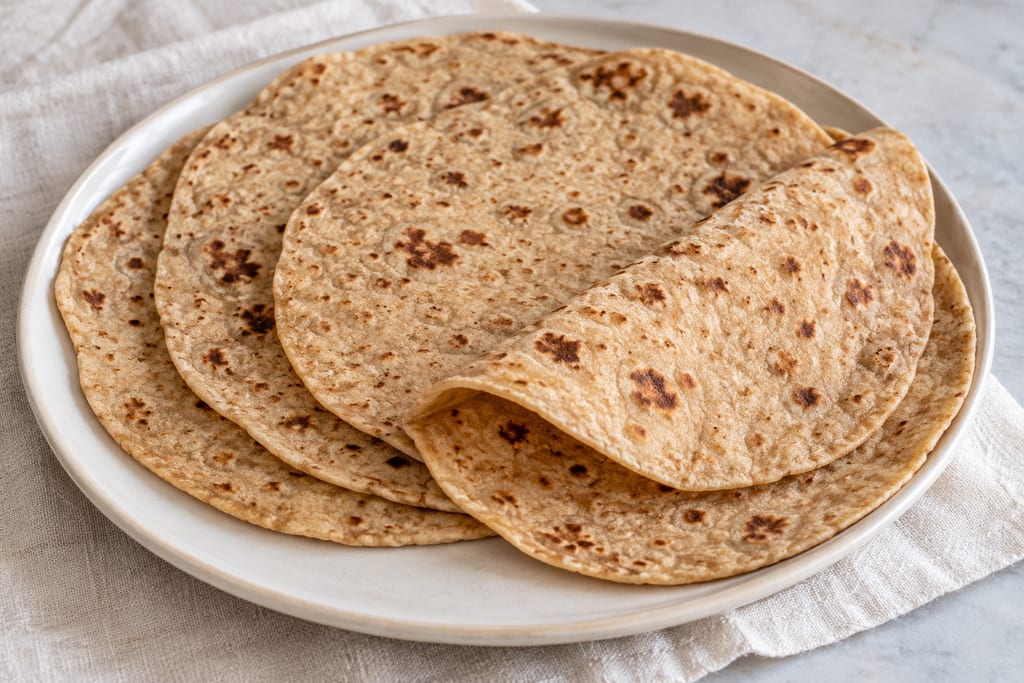
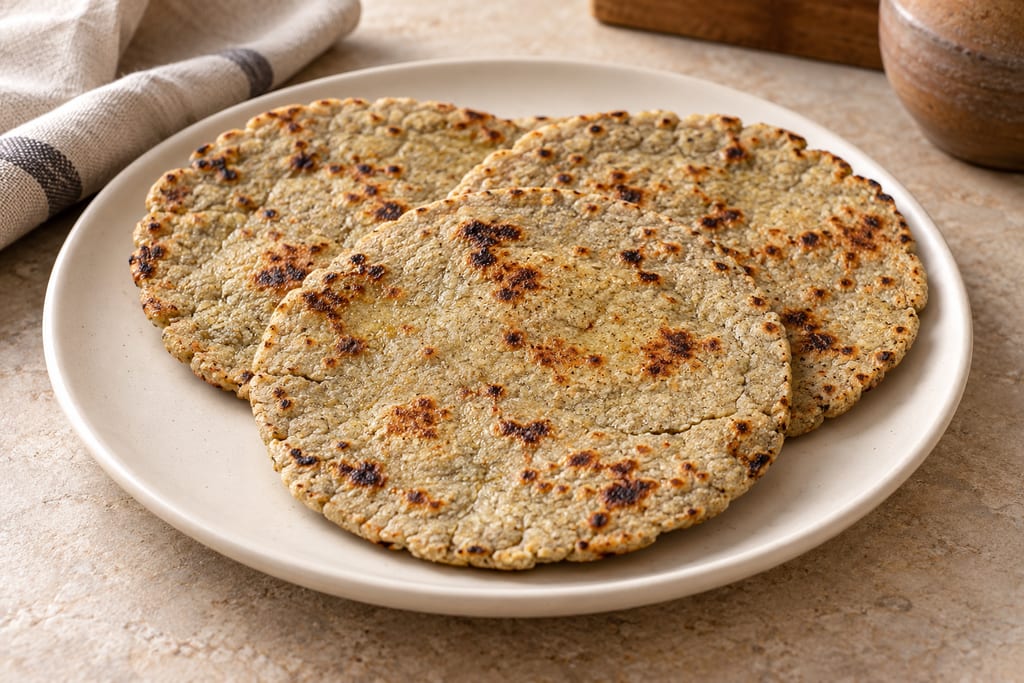
Roshi is a Maldivian flatbread served with savoury dishes at breakfast. This home version uses whole-wheat atta; a white-flour dough is also documented. Huni roshi includes coconut and is a distinct preparation.
Roshi accompanies mas huni, the Maldivian breakfast mixture of tuna, grated coconut, onion, lime and chilli. A World Tourism Organization guide describes versions made with boiled, canned or smoked tuna and additions such as pumpkin, gourd, aubergine or greens. Strong black tea completes the meal. The bread provides a plain wheat accompaniment to a mixture whose fish, coconut and seasonings can vary.
This breakfast sits within a cuisine shaped by the sea and coconut palms. Fish, coconut and rice are central ingredients in the same guide; wheat flatbread takes its place alongside them. These descriptions establish how roshi is eaten in Maldivian food culture, without dating this particular whole-wheat formula.
Plain roshi also carries rihaakuru, the concentrated tuna paste, spread onto it while warm. The serving can include grated green mango and chilli. This is another use for the flatbread, beyond its breakfast pairing with mas huni.
Mas roshi changes the structure of the food: a flour-and-coconut dough encloses a seasoned fish-and-coconut filling before cooking on a griddle. Huni roshi incorporates coconut into the bread itself. Neither is interchangeable with the three-ingredient atta rounds here.
The same bread can appear in a sweet preparation. Huni folhi uses roshi around a cooked coconut-and-honey filling, then shallow-fries the wrapped pieces. Maldivian cafés and island teashops also serve hedhikaa, small snacks with varied doughs and fillings. These dishes show why a shared word in a name does not establish a shared recipe.
Roshi is also served with curry. Visit Maldives documents golha or gulha riha, a reef-fish-ball curry associated with Laamu Atoll, accompanied by rice or roshi. The association belongs to the curry; it does not establish Laamu as the birthplace of the bread. The tourism account stresses variations between islands, so a single breakfast pairing cannot describe every household meal.
Maldivian cuisine developed amid Indian Ocean travel and exchange. The World Tourism Organization guide describes influences from India, Sri Lanka and other regions along those routes. That broad culinary history does not supply a migration date or an inventor for roshi. The earliest attestation of the bread and the history of this atta variation remain unestablished here.
This small batch follows a specific whole-wheat recipe: atta, salt and room-temperature water, with extra flour for rolling. It contains no coconut, filling or added raising agent. The covered rest precedes rolling; it is not a fermentation stage. Four thin rounds cook individually, so each needs attention even though the ingredient list is short.
The source gives high heat and short cooking intervals rather than a measured pan temperature. Watch each round and lower the heat when browning runs ahead of cooking, as directed in the method. The quoted diameter, rest and timing belong to this four-piece batch; they do not establish a universal formula for every bread called roshi.
Mix the atta and salt. Gradually add water and knead for 3–5 minutes to a soft, smooth dough.
Cover with a damp towel and an inverted bowl; rest for 20–30 minutes.
Knead briefly and divide into four balls. Dust the surface and dough with the extra atta and roll each ball into a thin 7–8 inch round.
Heat a pan over high heat for 1–2 minutes. Cook one roshi for 30–40 seconds until small bubbles appear, then turn and cook another 30–40 seconds. Lower the heat if browning too quickly; repeat with the remaining rounds.
Conditions
Yield4 roshi
Places
Maldives
Documented preparation · Country evidence
The sources document a Maldivian preparation; a precise birthplace is not established.
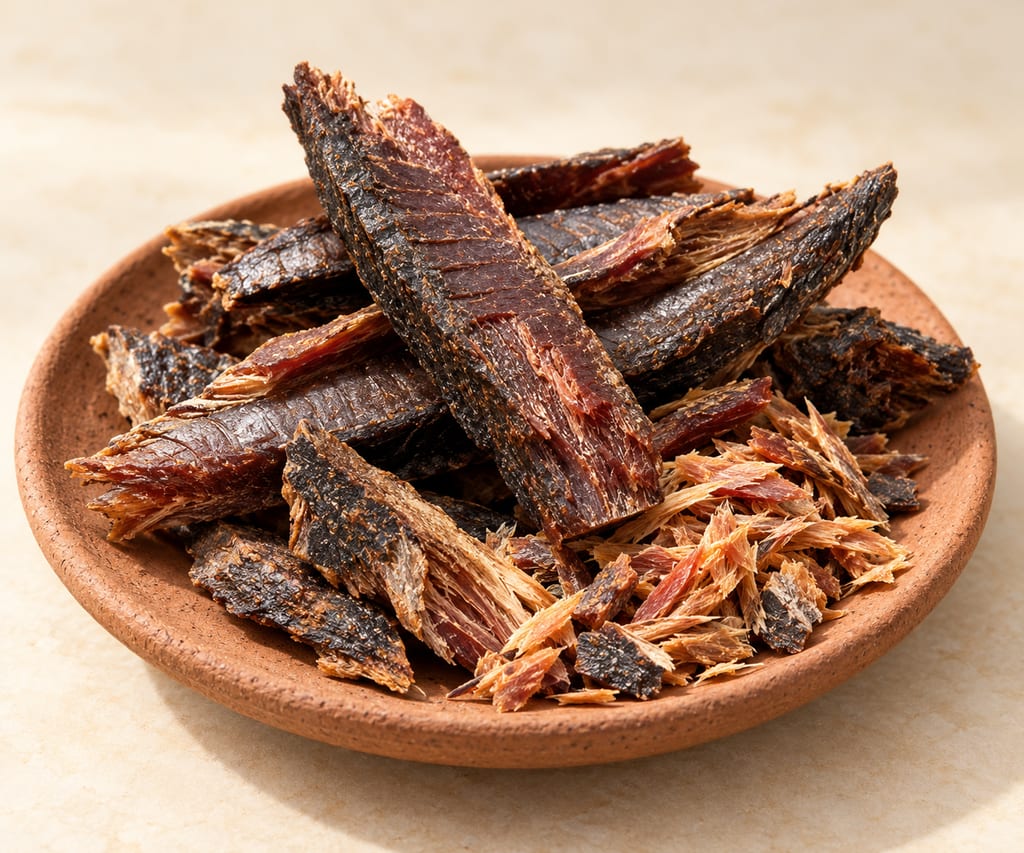
Maldive fish is a hard, smoke-dried tuna product made in the Maldives and traded especially to Sri Lanka, where it is known as umbalakada. Cooks shave or pound it into a concentrated savory seasoning for sambols, curries and other dishes.
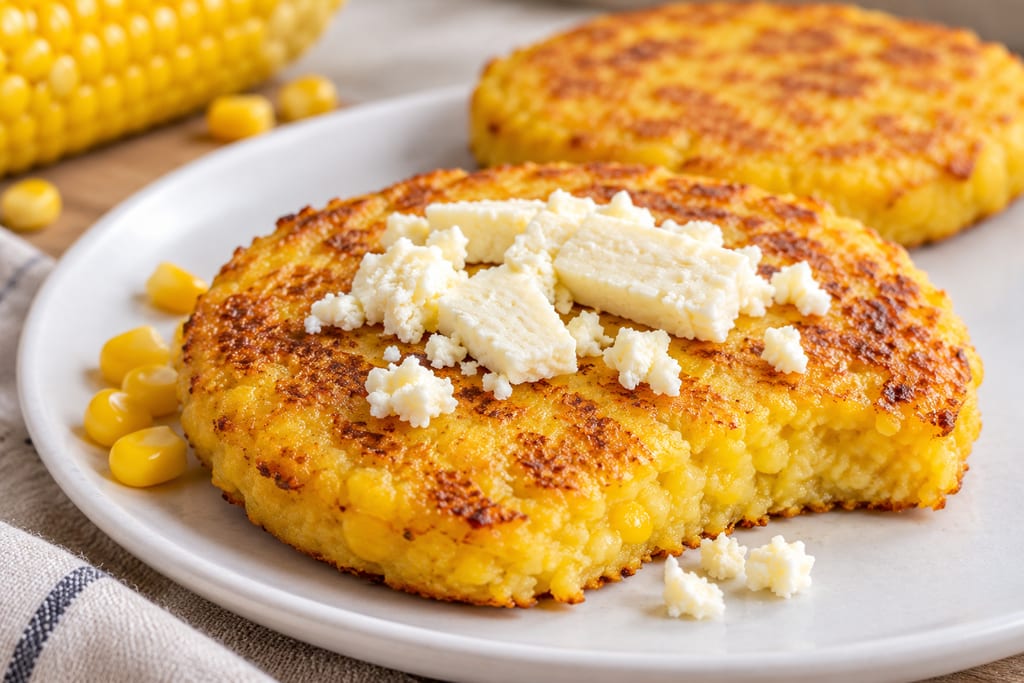
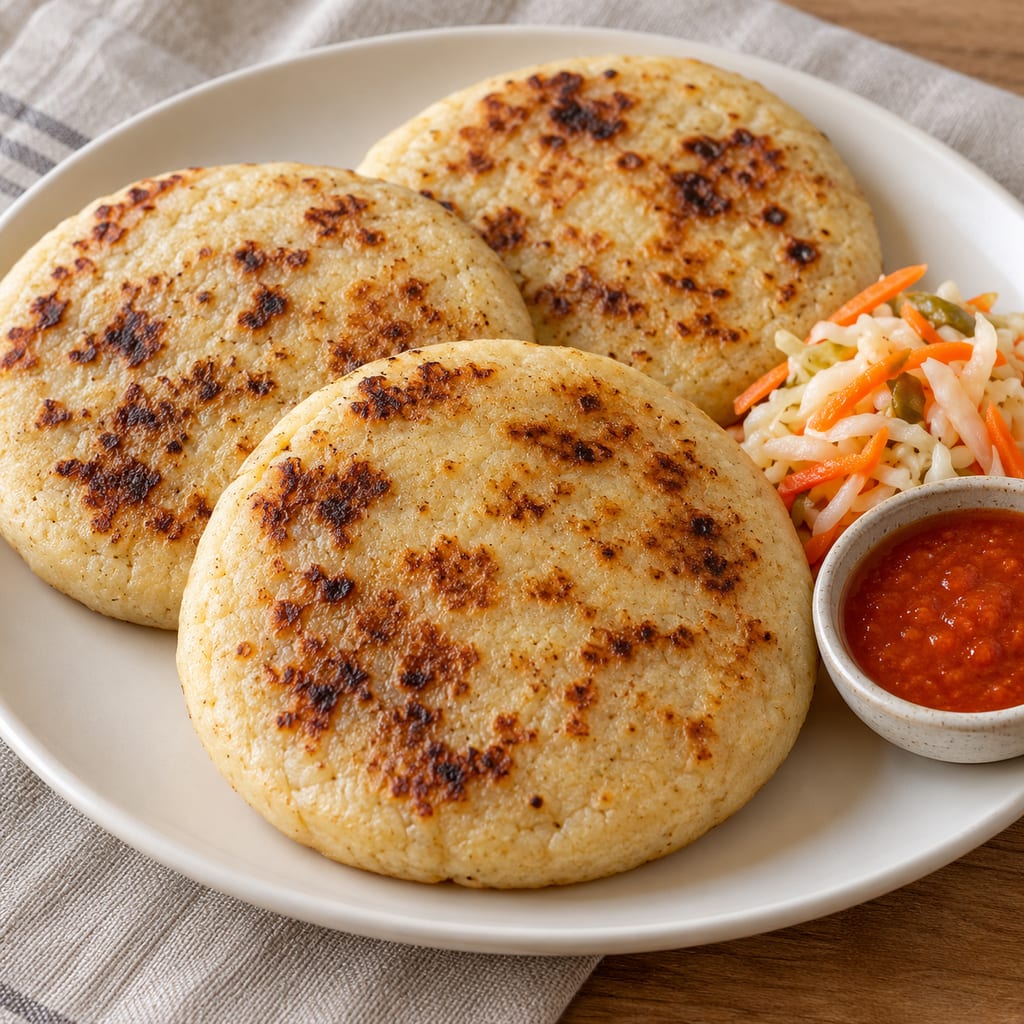
This household version combines precooked corn flour, warm water and salt, then cooks thick rounds on a lightly oiled skillet or griddle. It is one source-specific arepa method, not a universal Colombian or Venezuelan formula.
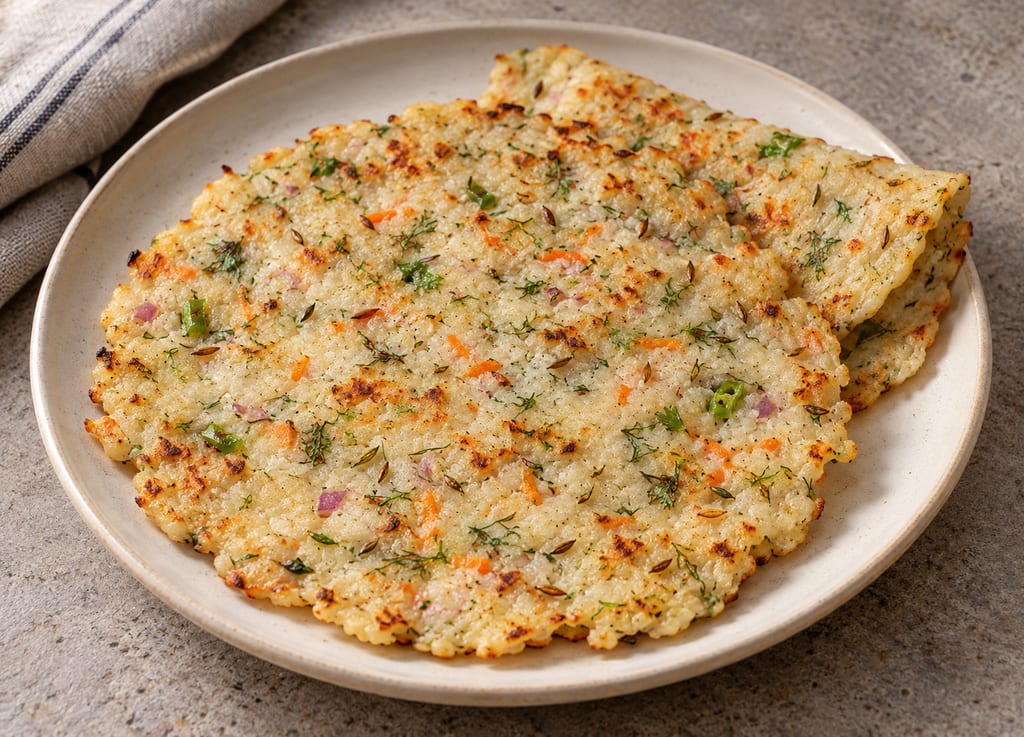
Thin Malabar rice-flour rounds made from roasted rice flour cooked into salted boiling water, kneaded after cooling, and rolled to about 1 mm. They cook on a hot griddle without taking on colour.
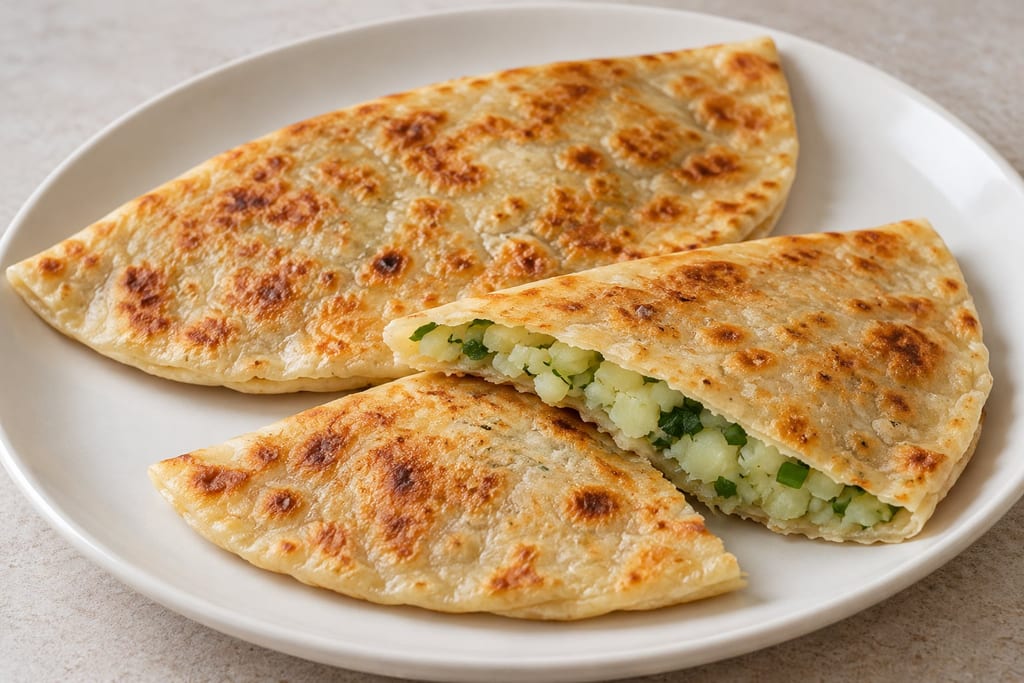
A thin, unleavened Afghan flatbread filled with mashed potato, scallion and cilantro, folded and pan-browned. This version uses a dough made from scratch.
Community
No community contributions have been published for this entry yet.
Share what you made
Sign in to contribute. Published comments and photos are free to read.