Rye sourdough starter
A rye sourdough starter is a refreshed flour-and-water culture used to ferment rye dough. Its microbial community shifts with the flour, feeding routine and bakery environment.
 FermenteaWhere food goes to change
Roggenmischbrot · Rye–wheat mixed bread · 70/30 rye bread · German mixed rye bread
A rye-rich sourdough loaf with wheat flour, a dried-bread soaker and a small addition of baker’s yeast.
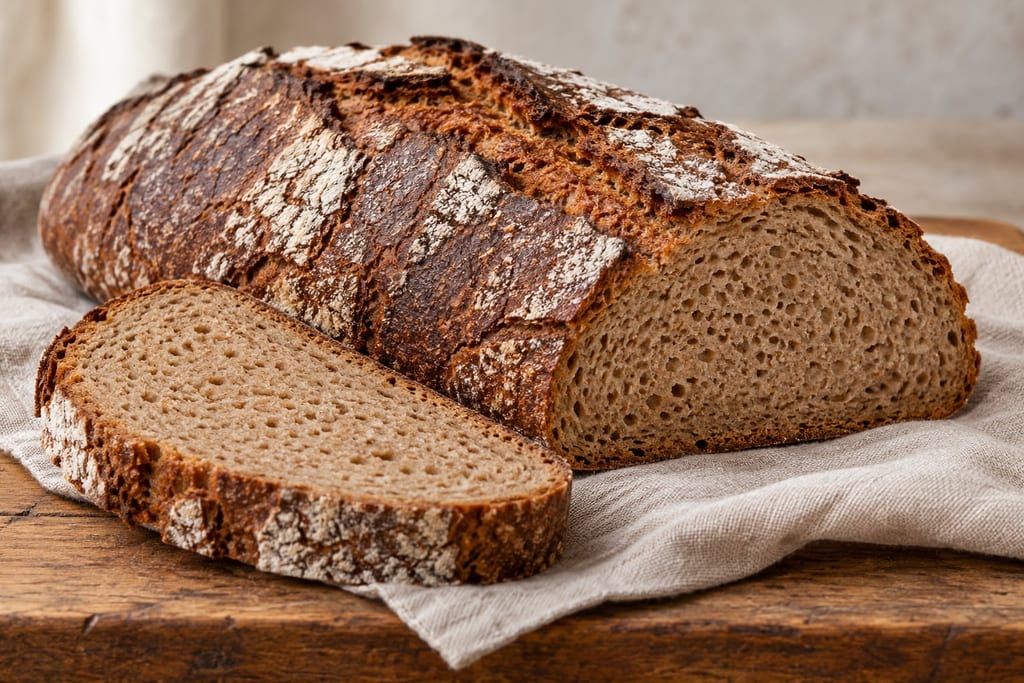
Roggenmischbrot is a mixed rye–wheat bread family associated in the archive with Germany, Austria and nearby traditions. This recipe is one baker's 70/30 example, not a formula for every mixed rye loaf. Lutz Geißler dates the recipe page to 2014 and describes it as his effort to reproduce the kind of bread sold by local bakeries. He says early trials failed when the dough was overmixed and lost strength and water binding.
The formula uses rye flour type 1150 and wheat flour type 1050. A sourdough, dried-bread soaker and wheat autolyse are prepared separately before the final mix. The recipe also adds a small amount of fresh yeast. The source assumes an established, soft rye starter at TA 200; it does not give directions for creating that culture from scratch.
The sourdough and soaker rest for 12 hours at 20°C, while the wheat flour and water rest for an hour as an autolyse. The final mix combines all three with fresh yeast. The author emphasizes gentle mixing: the dough should come together at about 26°C, then ferment for 40 minutes at 24°C. Shape it as a round first and then a long loaf; proof seam-up in a covered basket for 70 minutes at the same temperature.
The source bakes one large loaf on a hot stone. Start the oven at 280°C, or use the stated 250°C alternative; add steam when loading, lower the oven to 200°C and release steam after three minutes. Bake for 70 minutes, then spray the crust with water. The source gives no tested scale-up and cautions that times may need adjustment when changing the loaf count.
Both rye and wheat flour are raw and can carry harmful bacteria. Keep them away from ready-to-eat food, wash hands and equipment after handling, and do not taste the dough before baking. The bake uses a very hot oven and steam; use oven gloves and a suitable board or peel when loading the loaf, and keep clear of the steam.
The archive places Roggenmischbrot among German, Austrian and neighbouring mixed-rye traditions. This recipe is Lutz Geißler's 70/30 rye–wheat sourdough example, published on Plötzblog on 14 June 2014. The page describes the author's local-bakery inspiration and process trials but does not date the wider bread family's earliest attestation.
Yield 1 loaf (about 1500 g dough) · Scaling: source batch only
Flour is raw and may carry harmful bacteria; do not taste the dough before baking.
Hazard sourceThe method uses a 280°C oven and an immediate burst of steam; transfers can cause burns.
Hazard sourceKeep raw flour and dough away from ready-to-eat food, wash hands and tools after handling, and do not taste the unbaked dough.
Control sourceUse oven gloves and a suitable peel or board when moving the loaf; keep hands and face clear of the steam when loading the hot oven.
Control sourceContains rye and wheat (gluten).
The source gives no storage duration or validated preservation claim.
The archive associates Roggenmischbrot with Germany, Austria and neighbouring traditions, but the inspected 70/30 recipe page describes only a baker's local style and does not identify a specific place. This recipe record does not assign a birthplace.
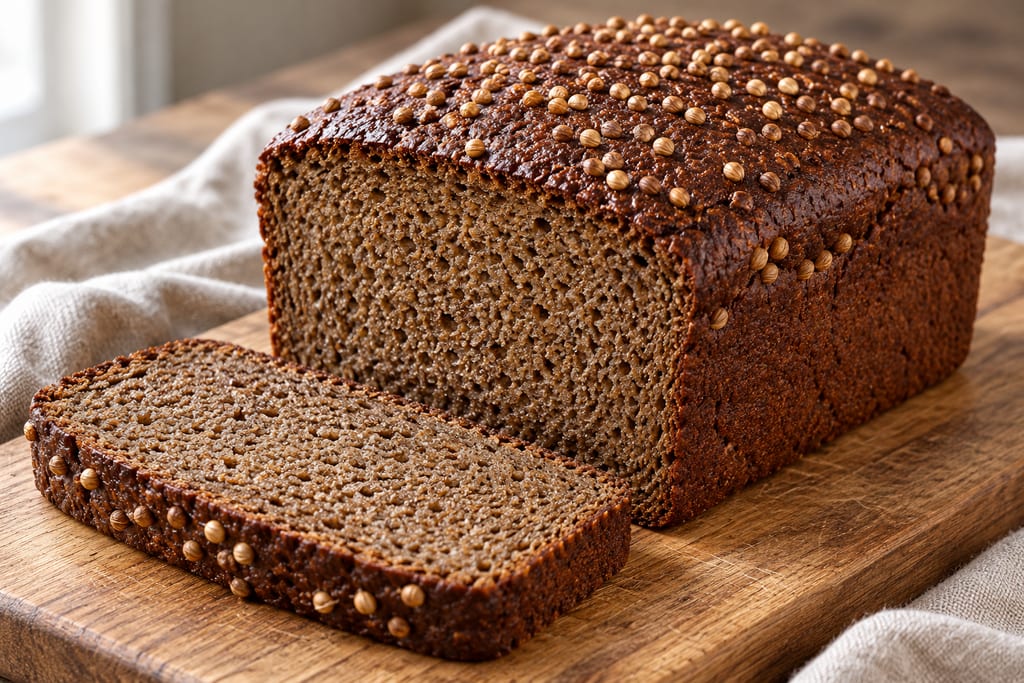
A dark rye sourdough with coriander and roasted barley-malt scald, based on Lily McCann's measured Borodinsk-ish home formula.
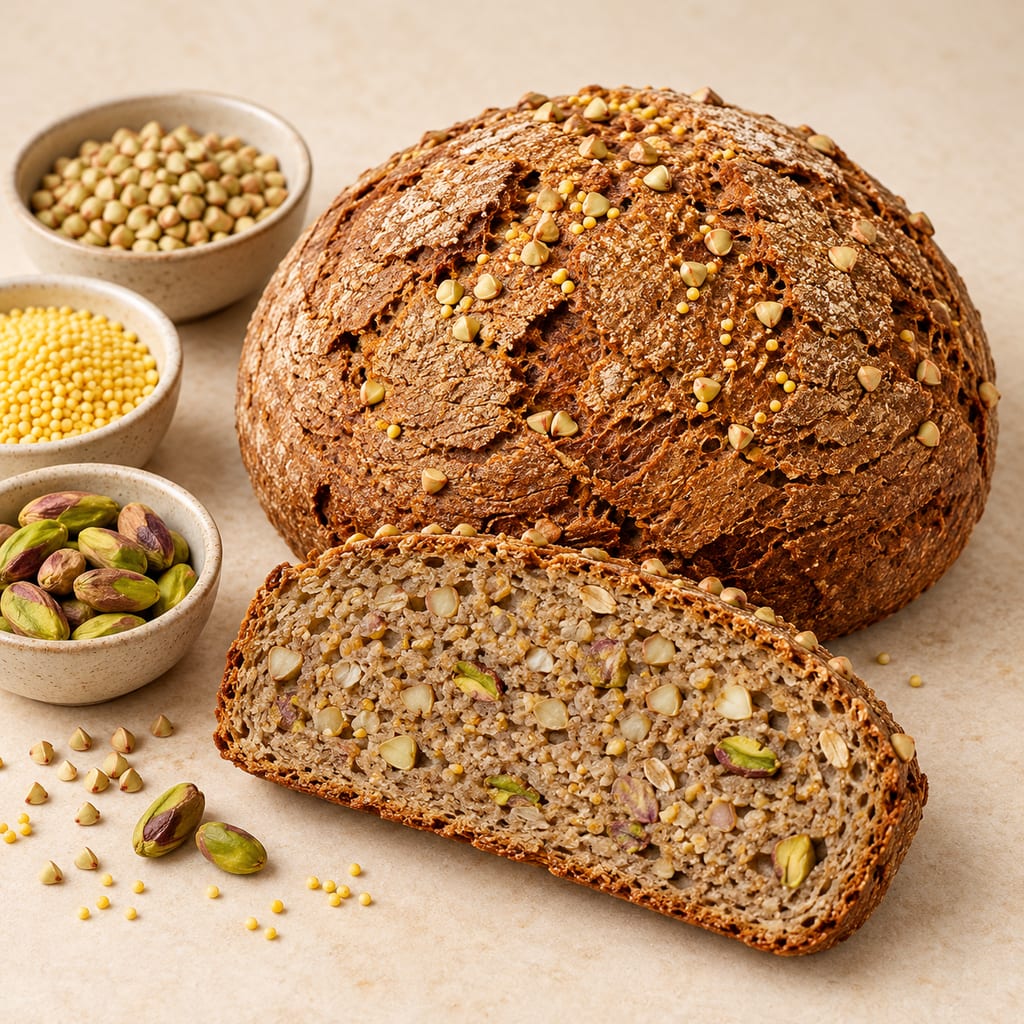
A gluten-free sourdough loaf of about 1 kg. A buckwheat and quinoa starter leavens a dough with cooked whole buckwheat groats, millet and a dark gluten-free bread mix, baked in a lidded pot.
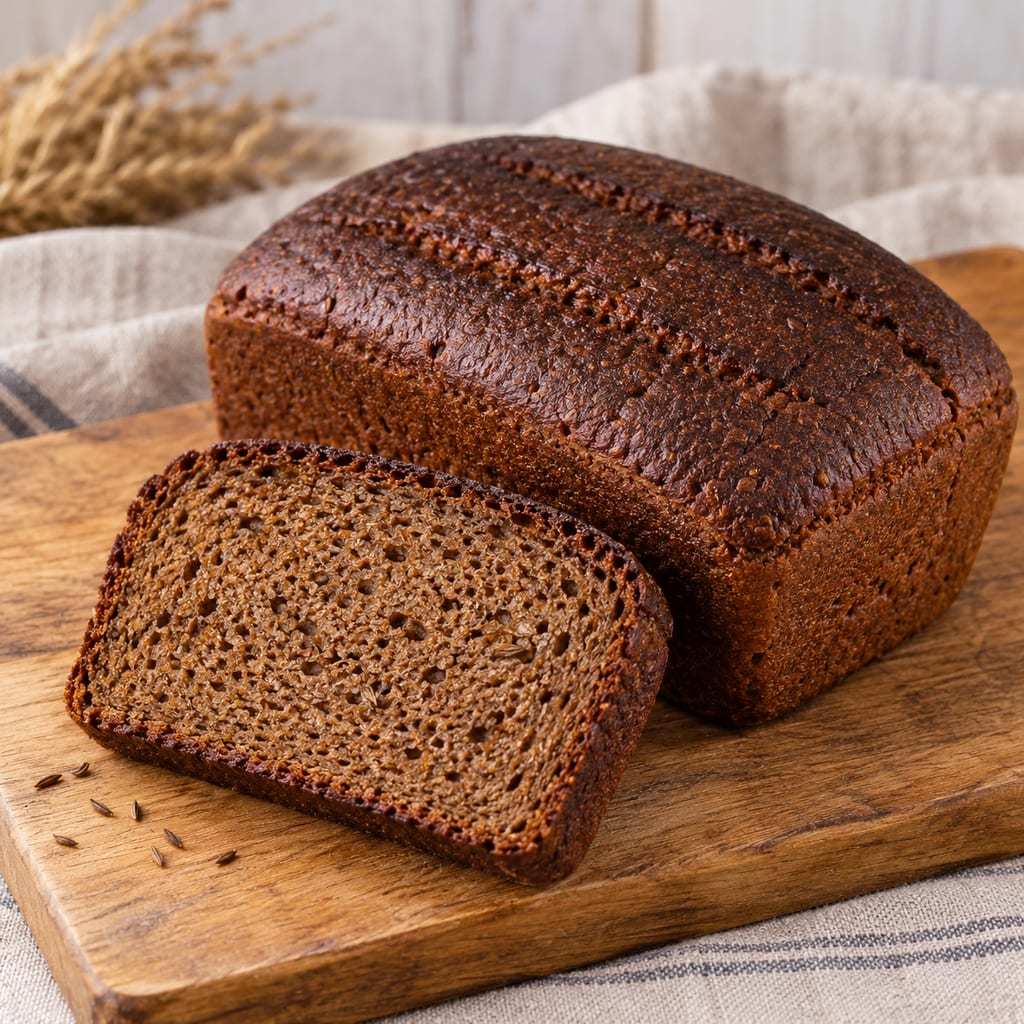
A Lithuanian dark rye loaf made with an overnight rye preferment, caraway, honey and sugar, then proofed in a loaf pan and baked in two stages.
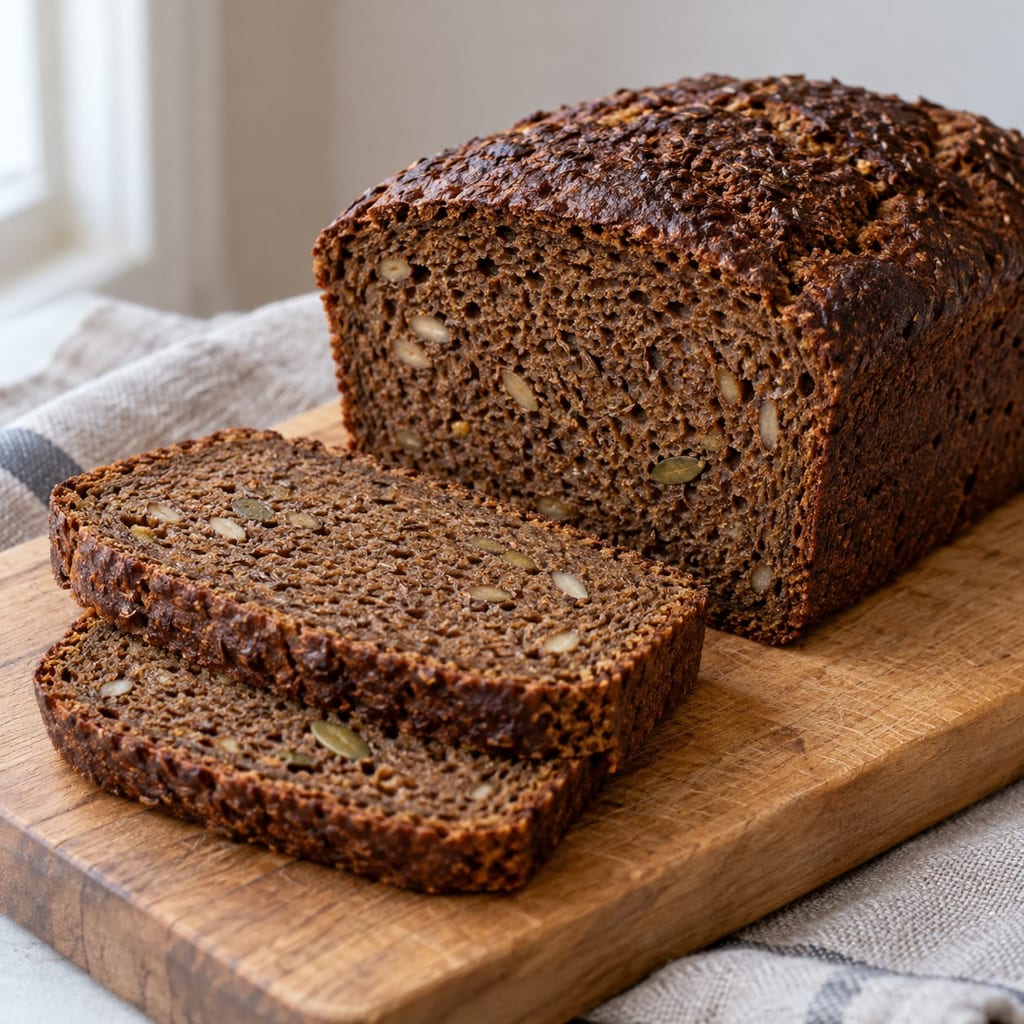
This Estonian rye loaf uses a sourdough preferment, a rye scald and soaked seeds, with a small amount of baker’s yeast. Two tins bake through a staged hot-to-moderate oven schedule.
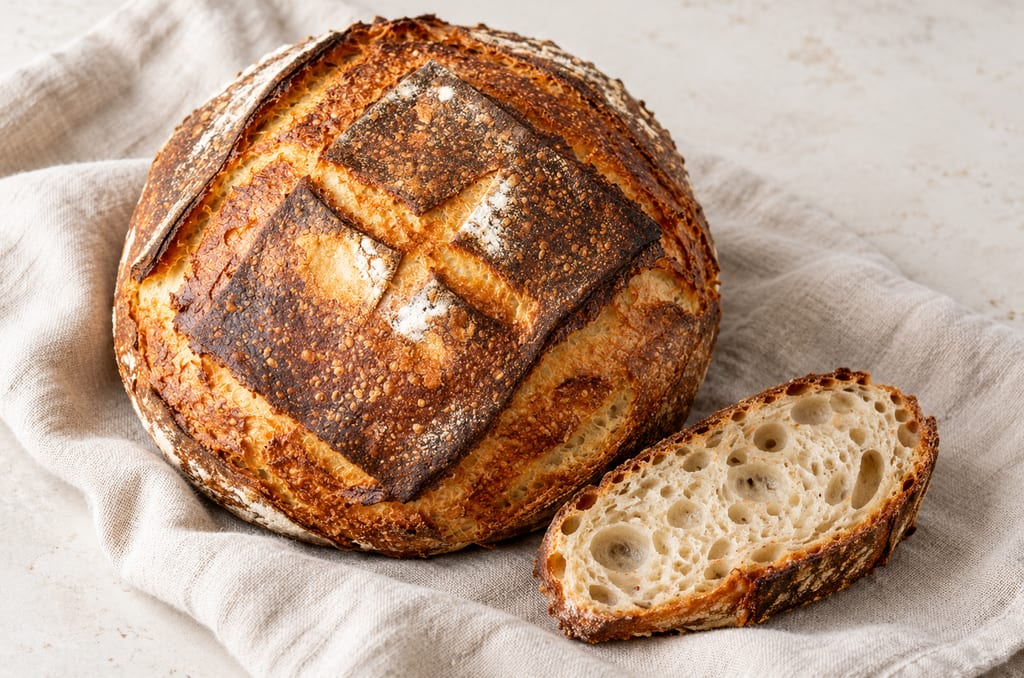
A ripe sourdough starter leavens this modern low-handling loaf. Three hourly folds organize the sticky dough before a long refrigerator rest, final proof and covered bake.
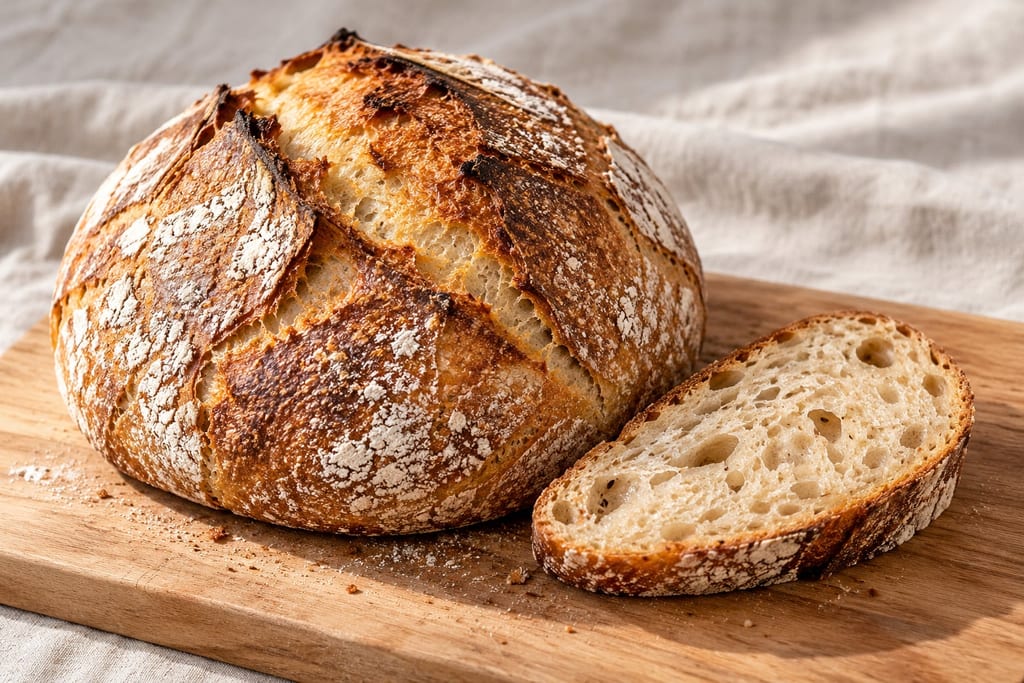
Two large French-style wheat loaves use unfed sourdough starter, whole-wheat flour, long room-temperature fermentation and a covered-pot bake.
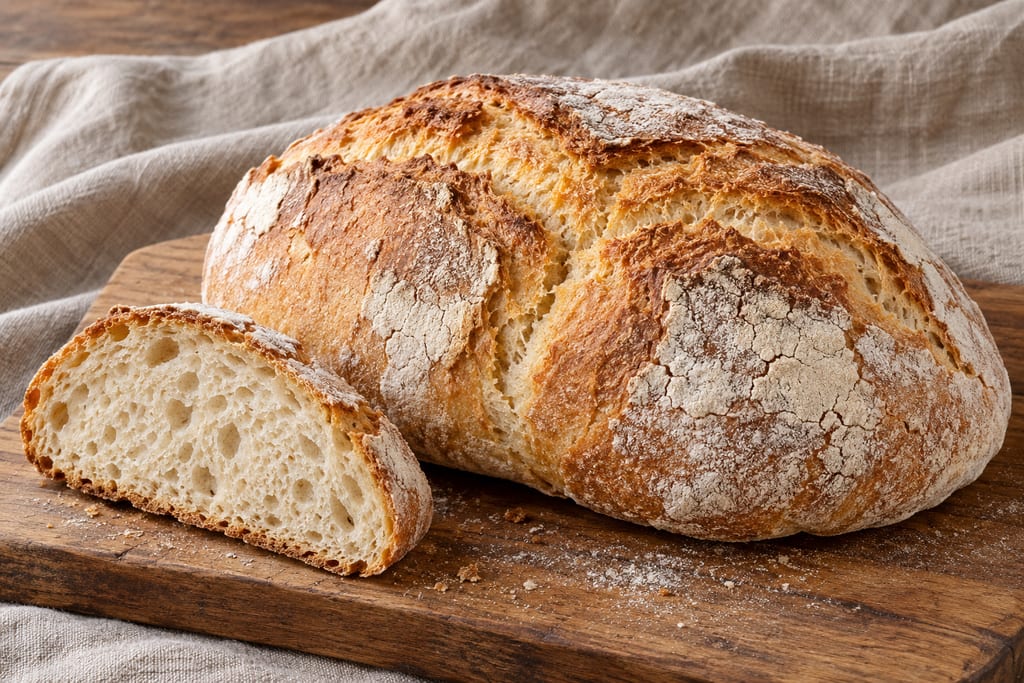
This home sourdough adaptation borrows Pan de Cea’s wheat-forward loaf and central fenda while using a domestic oven and a separately documented modern formula.
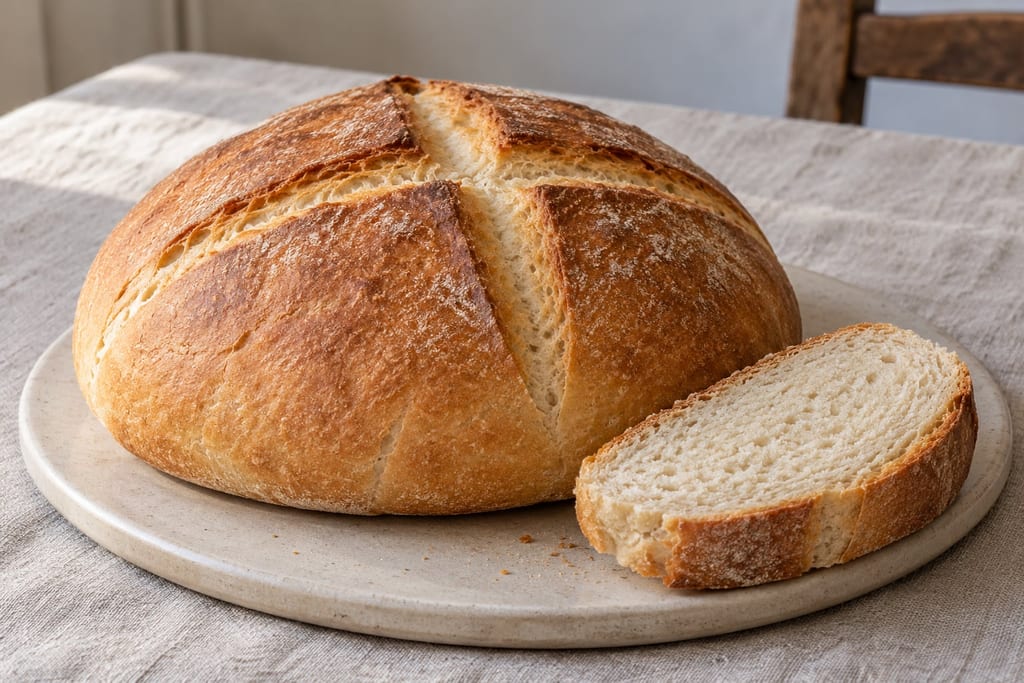
This household Pan de Cruz adaptation uses sourdough and a folded, tight-crumb wheat dough, marked with a cross and baked in a home oven.
No community contributions have been published for this entry yet.
Sign in to contribute. Published comments and photos are free to read.
PlötzblogMethod · History
Roggenmischbrot 70/30The 70/30 rye–wheat formula is a sourdough bread inspired by local bakery examples; the author describes developing it through trials and warns that overmixing reduces dough strength and water binding.
The 1-loaf formula weighs approximately 1500 g and lists 528 g rye flour type 1150, 230 g wheat flour type 1050, 605 g water, 78 g dried ground old bread, 37 g soft rye starter at TA 200, 15 g salt and 7.8 g fresh yeast.
The source specifies a 12-hour rye sourdough at 20°C, a 12-hour soaker at 20°C, a 1-hour autolyse, final dough target about 26°C, a 40-minute bulk ferment and 70-minute proof at 24°C, and a staged 70-minute bake beginning at 280°C (or 250°C) before reducing to 200°C and releasing steam after 3 minutes.
Cited in: A rye and wheat sourdough; Build the dough and bake; Flour handling and oven safety
U.S. Food and Drug AdministrationSafety
Handling Flour Safely: What You Need to KnowFlour is raw and may carry harmful bacteria; cooking is needed; do not taste raw flour or dough; keep it away from ready-to-eat foods and clean hands, utensils and surfaces after handling.
Cited in: Flour handling and oven safety