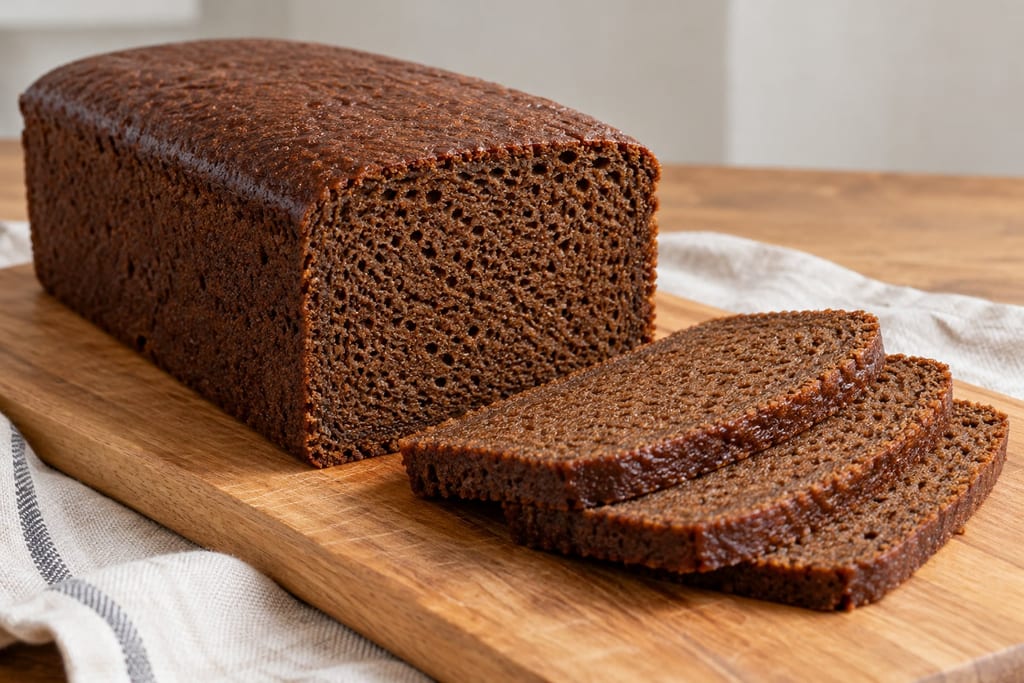
Rúgbrauð (Icelandic rye bread)
A dense, gently sweet Icelandic rye loaf leavened with baking powder and baking soda, mixed with buttermilk, honey and molasses, then baked under a lid in a Pullman pan.
 FermenteaWhere food goes to change
Flatbrauð · flatkaka · flatkökur
Thin Icelandic flatbreads made from rye and whole-wheat flour with boiling water, shaped into rounds, docked and cooked on a hot stovetop or gas grill.
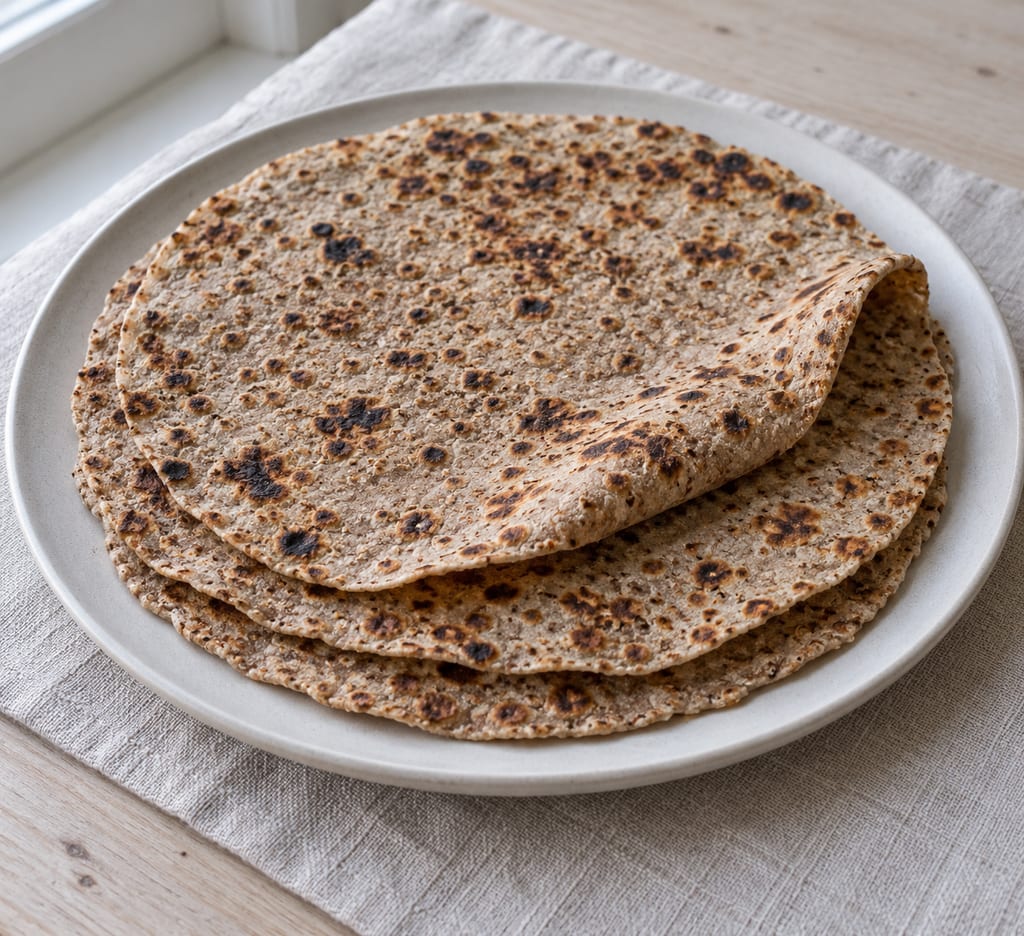
This version follows the 2012 household recipe published by Albert Eiríksson as flatbrauð/flatkökur. It combines rye and whole-wheat flour with salt, sugar and oil, then uses boiling water to make the dough. The writer says he called his mother for baking advice and recalls an aunt describing boiling water as a traditional technique. That family recollection is not a dated origin record, and this measured formula should not stand in for every Icelandic flatbrauð.
The recipe uses 300 g rye flour and 200 g whole-wheat flour. It also calls for extra wheat flour during kneading but gives no amount. The source specifies 300–350 ml boiling water; the ingredient list below preserves that range rather than choosing a precise point within it. It does not state how many rounds the batch makes.
Stir the flours, salt, sugar and oil together before pouring the boiling water over them. The writer lets the mixture cool a little, then kneads in wheat flour and rolls it thin. A plate serves as a cutting guide; a fork docks each round. The source gives no rest, proof, exact thickness, calibrated cooking temperature or time, so those details are left open.
Cook the rounds on a very hot stovetop surface or gas grill. Albert Eiríksson directs cooks to dip each round in cold water immediately after cooking to stop it scorching. His post warns that cooking makes substantial smoke and advises opening windows because smoke alarms may sound. Use ventilation and take care around the boiling water and hot cooking surface.
Flour can carry harmful bacteria. Do not taste the uncooked dough, and wash hands and utensils after mixing. The source gives no validated internal doneness measure; this page does not add one.
Flatbrauð is an Icelandic flatbread name used for multiple formulas. Albert Eiríksson's 2012 page gives a measured household recipe and attributes the boiling-water tip to a relative's recollection; that account is not dated historical evidence for all flatbrauð. The atlas separately records a rye-and-water Mývatn version, which is not the formula used here.
Scaling: source batch only
Boiling water is poured into the flour mixture; splashes can burn hands or skin.
Hazard sourceThe author warns that cooking the rounds on a very hot surface produces substantial smoke and may trigger smoke alarms.
Hazard sourceFlour is a raw agricultural product and should not be tasted before cooking.
Hazard sourcePour the boiling water carefully into the bowl and let the mixture cool enough to handle before kneading.
Control sourceVentilate the kitchen while cooking on the hot surface; the source specifically advises opening windows because substantial smoke can set off smoke alarms.
Control sourceDo not taste raw dough; wash hands and utensils after handling flour.
Control sourceBoiling water enters the dough; allow it to cool enough to handle before kneading.
The source warns of substantial smoke during cooking. Ventilate the room and check that smoke alarms remain functional.
Do not taste the raw dough.
The inspected household recipe is published as Icelandic flatbrauð; its page does not identify a narrower place of preparation.
A dense, gently sweet Icelandic rye loaf leavened with baking powder and baking soda, mixed with buttermilk, honey and molasses, then baked under a lid in a Pullman pan.

A documentary account of Icelandic hákarl, fermented and dried Greenland shark. It describes cultural context and one production study, not a home preparation method.
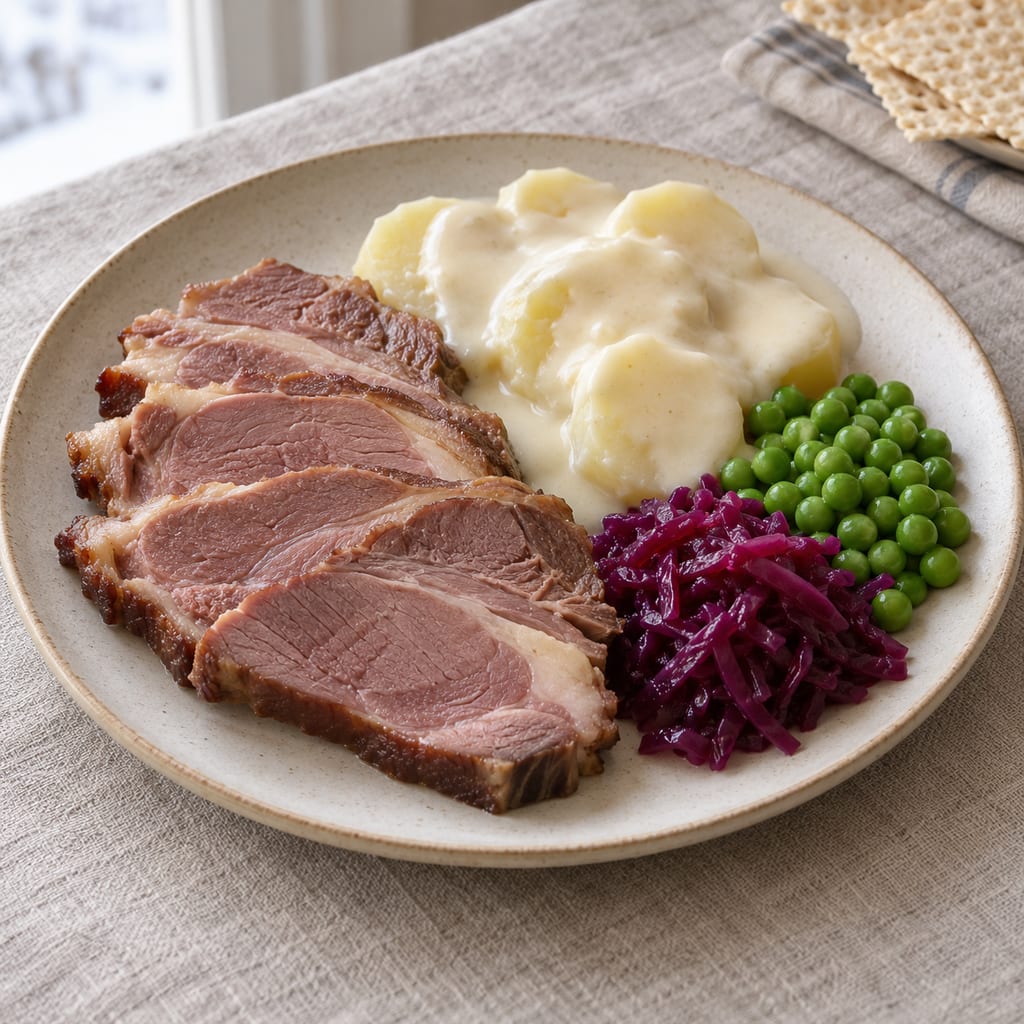
A six-person Icelandic Lamb serving recipe for deboned hangikjöt with potato bechamel, pickled cabbage, peas and laufabrauð. It cooks the product; it does not smoke or cure it.

Skyr is Iceland’s thick, tart fresh cheese. This home method cultures skim milk with fresh skyr and rennet, then drains the curd under refrigeration.
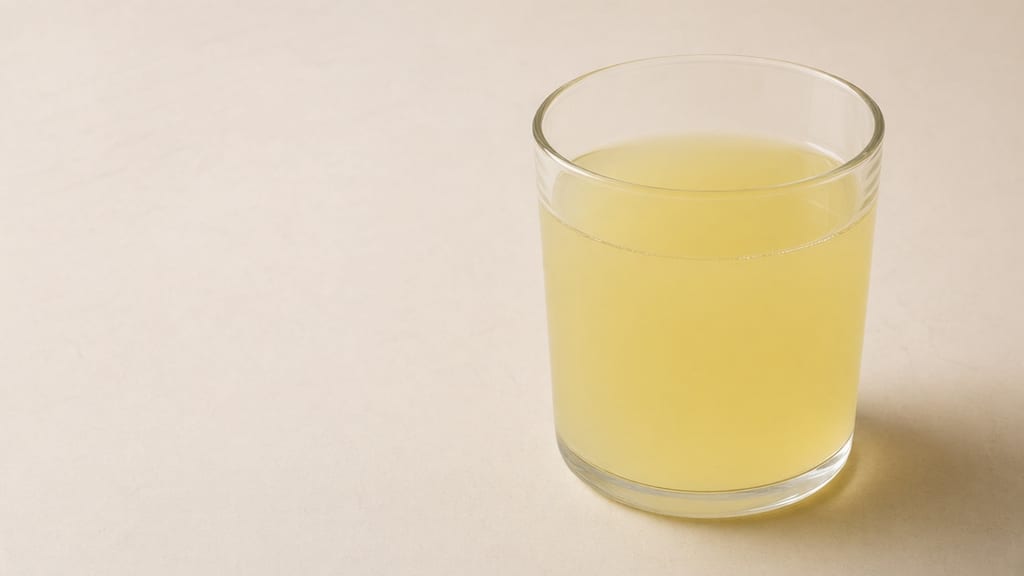
Sýra is Icelandic soured skyr whey kept as a household acid store: a drink when diluted, and historically the medium for súrmatur. Fresh leftover whey is not the same material.
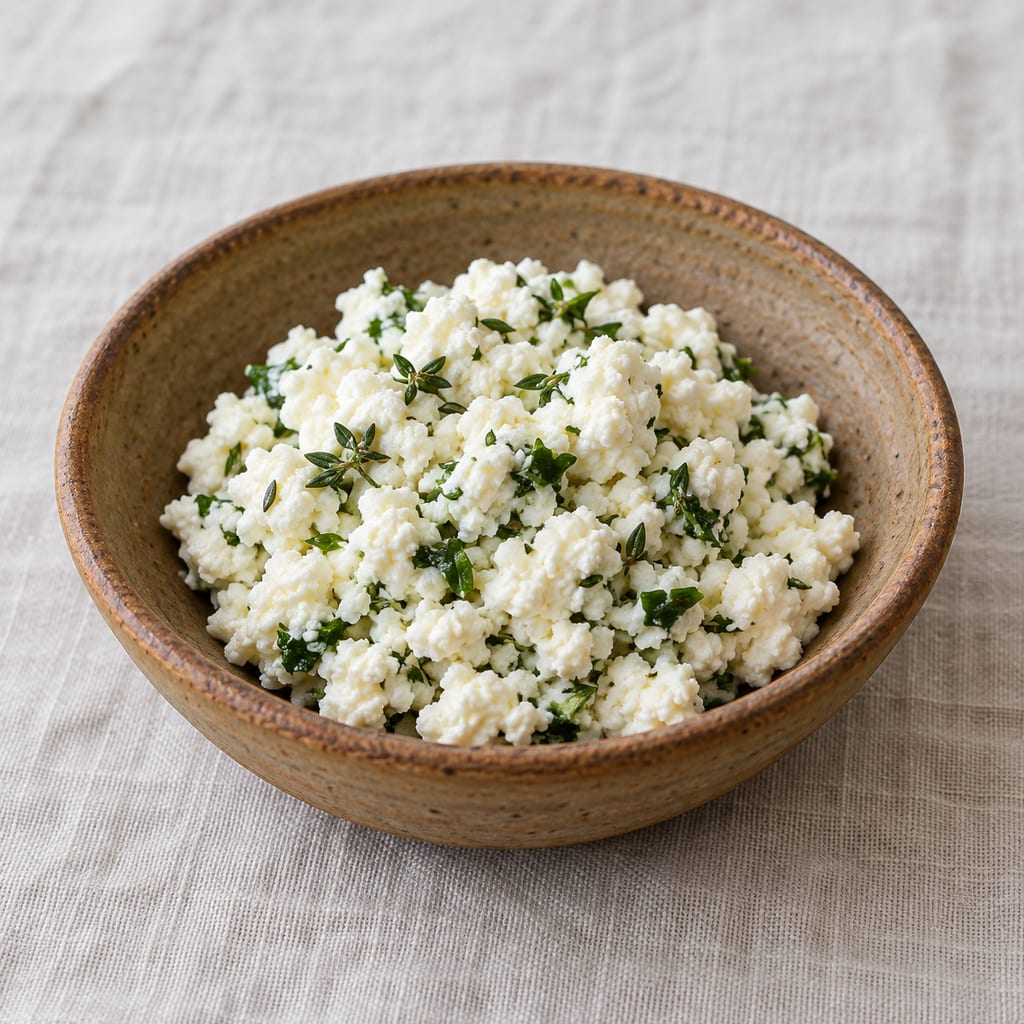
Soft fresh curd made by draining whey from milk already thickened by bacterial acidification, the simplest point in a northern dairy tradition that also produced skyr, ymer and whey itself.
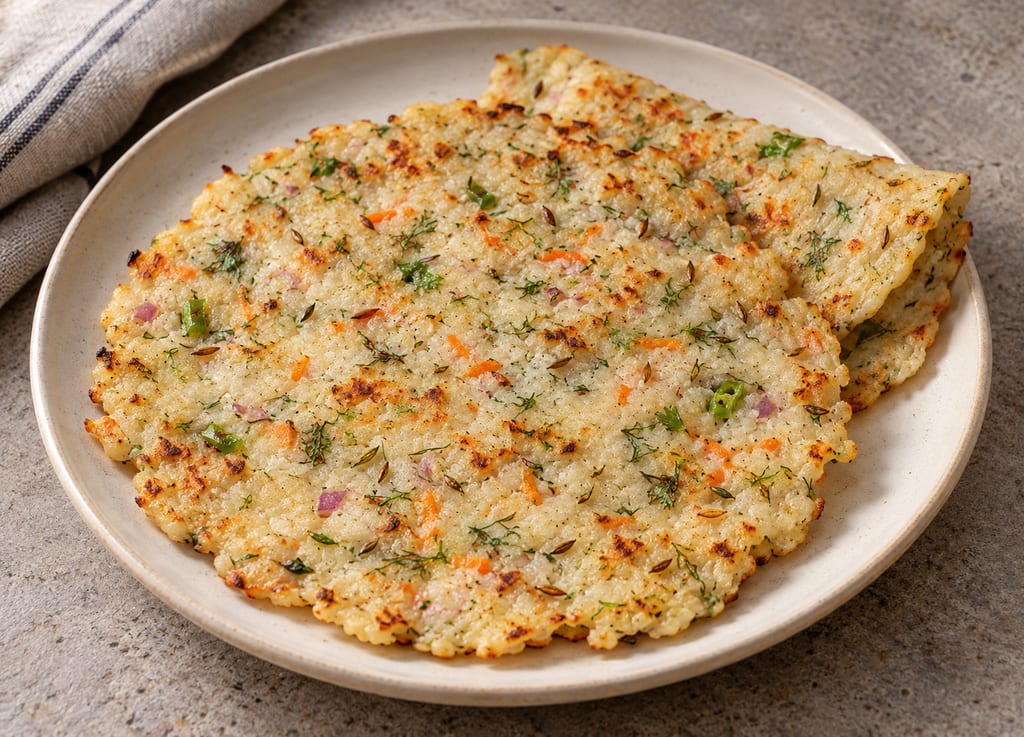
This Karnataka-style akki rotti mixes fine rice flour with vegetables, coconut, herbs and spices, then hand-pats and griddle-cooks the dough.
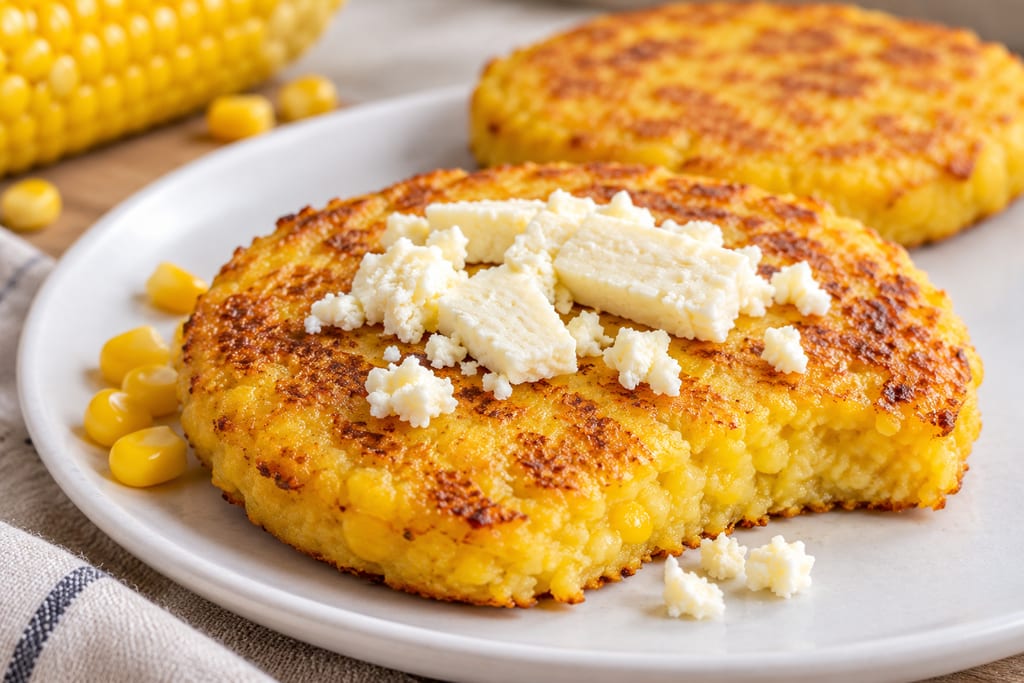
A Colombian Andean griddle cake made from fresh sweet-corn batter, cooked in butter and served with white cheese.
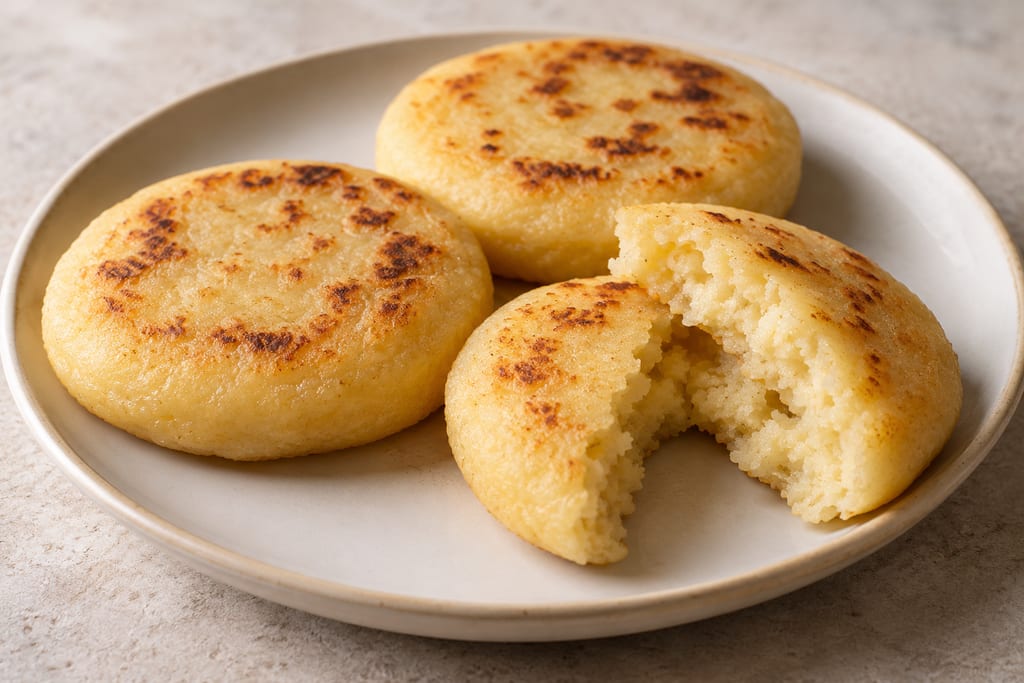
This household version combines precooked corn flour, warm water and salt, then cooks thick rounds on a lightly oiled skillet or griddle. It is one source-specific arepa method, not a universal Colombian or Venezuelan formula.
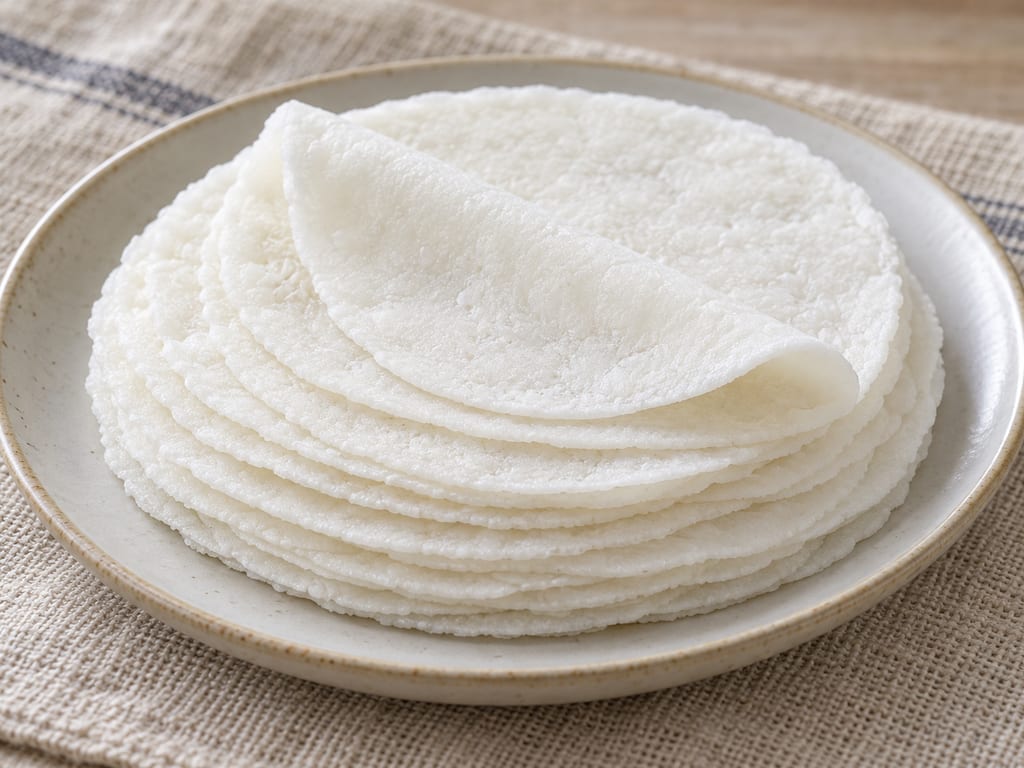
Thin Malabar rice-flour rounds made from roasted rice flour cooked into salted boiling water, kneaded after cooling, and rolled to about 1 mm. They cook on a hot griddle without taking on colour.
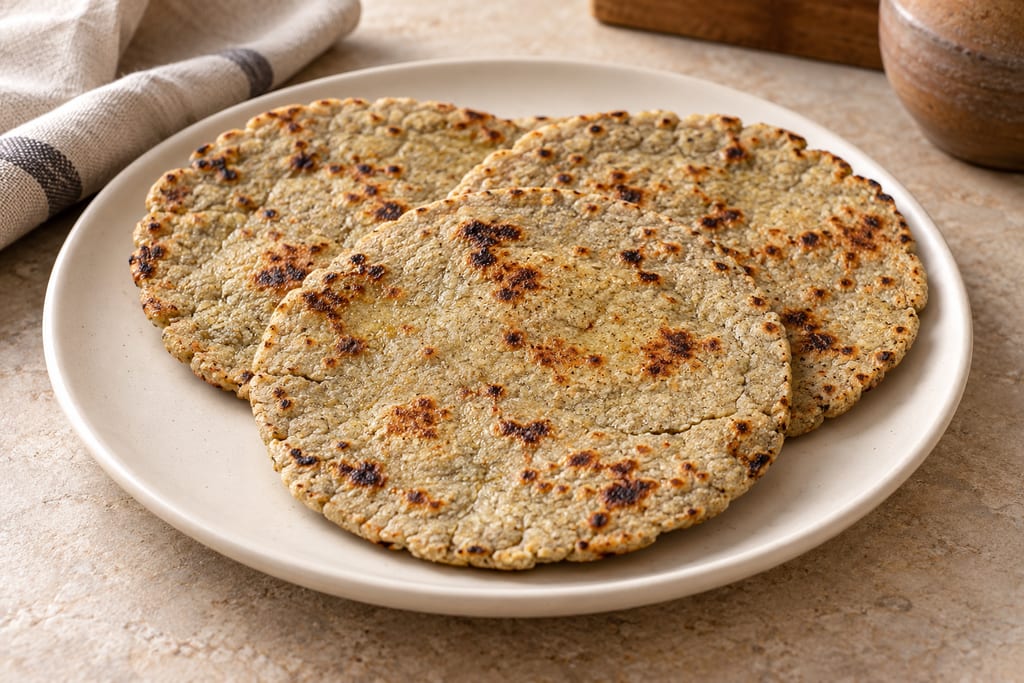
A pearl-millet flatbread shaped between sheets and cooked on a hot tawa. This home batch makes eight.
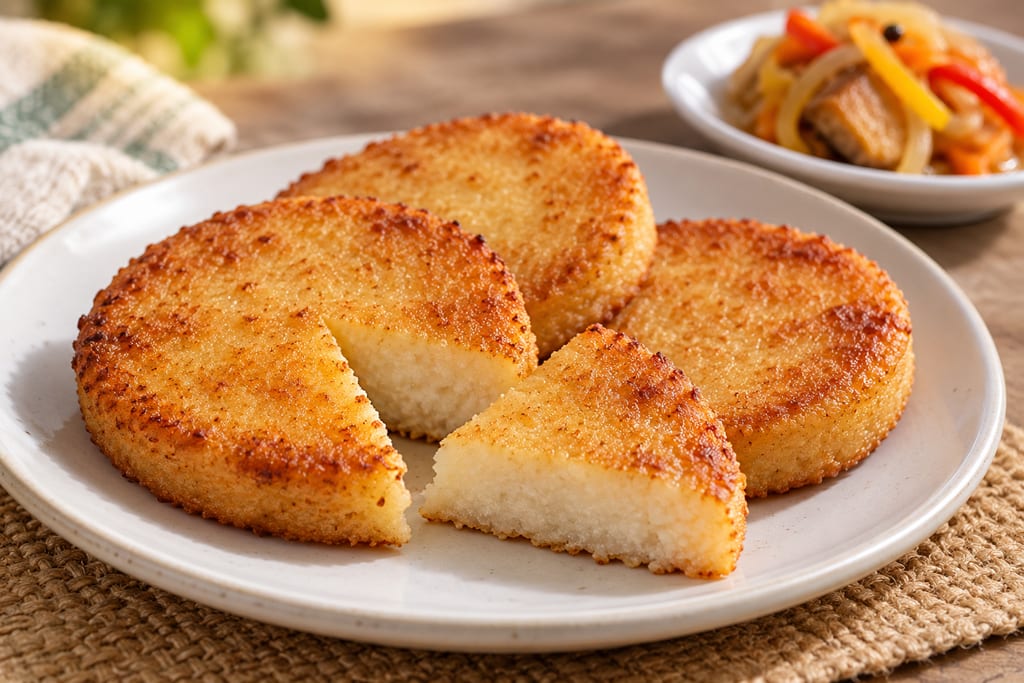
A serving method for approved, prepared bammy rounds: soak them in coconut milk and refry until golden. It does not process raw cassava.
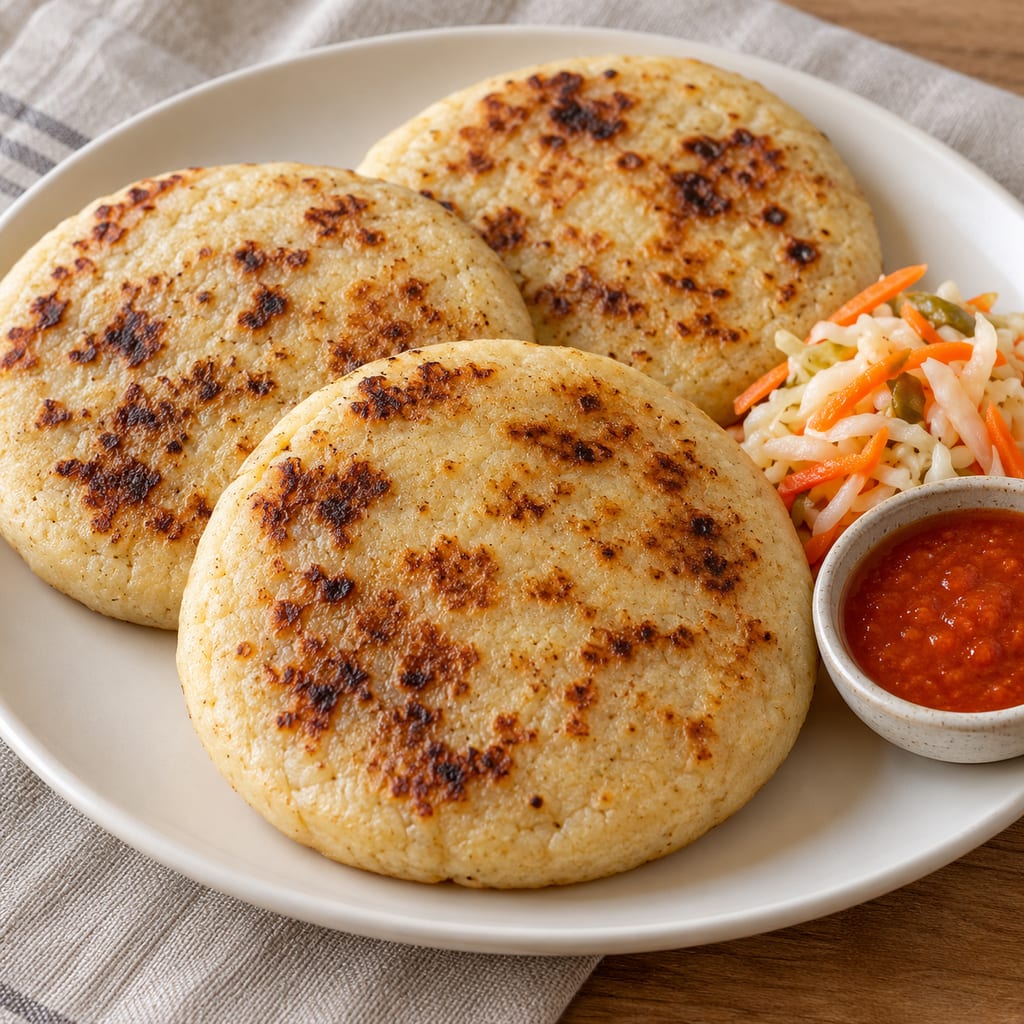
Salvadoran-style masa harina cakes filled with refried beans and cheese, sealed and cooked on an oiled skillet.
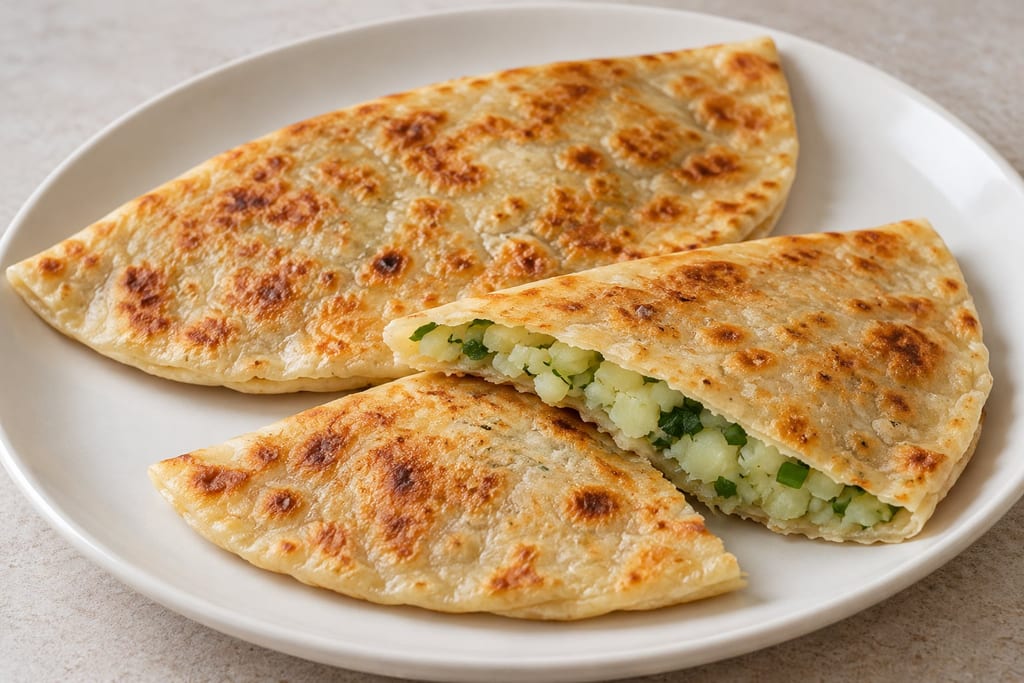
A thin, unleavened Afghan flatbread filled with mashed potato, scallion and cilantro, folded and pan-browned. This version uses a dough made from scratch.
No community contributions have been published for this entry yet.
Sign in to contribute. Published comments and photos are free to read.
Albert eldar (Albert Eiríksson)Inspiration · Method · Food use · History
Flatbrauð/flatkökurThe measured recipe uses 300 g rye flour, 200 g whole-wheat flour, 1 tsp salt, 1 tbsp sugar, 1 tbsp oil and 300–350 ml boiling water, plus unspecified wheat flour for kneading.
The author describes rolling the dough thin, cutting rounds with a plate, docking with a fork and cooking on a very hot stovetop surface or gas grill; the source gives no calibrated heat, cook time or yield.
The author attributes a boiling-water technique to a family recollection and warns that cooking produces substantial smoke; the page suggests opening windows because smoke alarms may activate.
Cited in: A measured home version; Mix, shape and cook
U.S. Food and Drug AdministrationSafety
Handling Flour Safely: What You Need to KnowRaw flour can carry harmful bacteria; do not taste raw dough and wash hands and utensils after handling flour.
Cited in: Flour handling