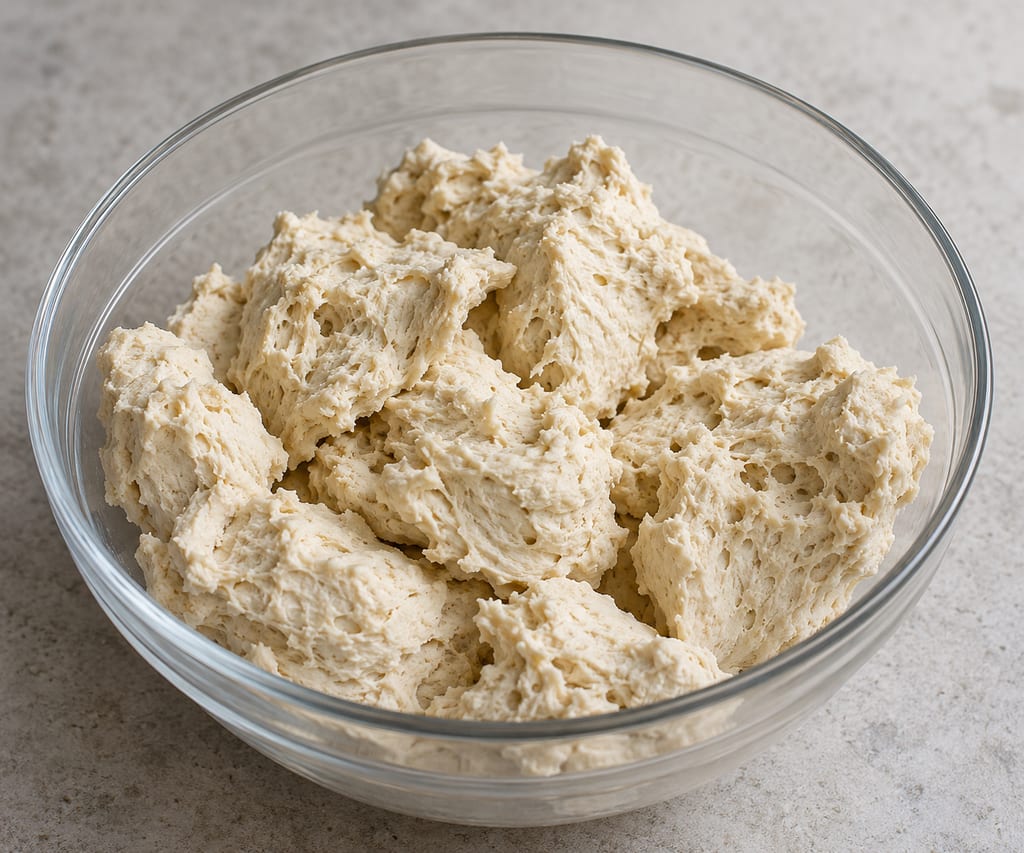
Biga
Biga is an Italian bread preferment of flour, water and a little yeast, usually a stiff unsalted mass of about 45 per cent water, fermented ahead and then mixed into the final dough.
 FermenteaWhere food goes to change
Pane carasau · Carta di musica
Eight thin Sardinian sheets from a yeast dough of semolina, all-purpose flour, salt and water. Bake each round until it inflates, split it while hot, then bake the sheets again until crisp.
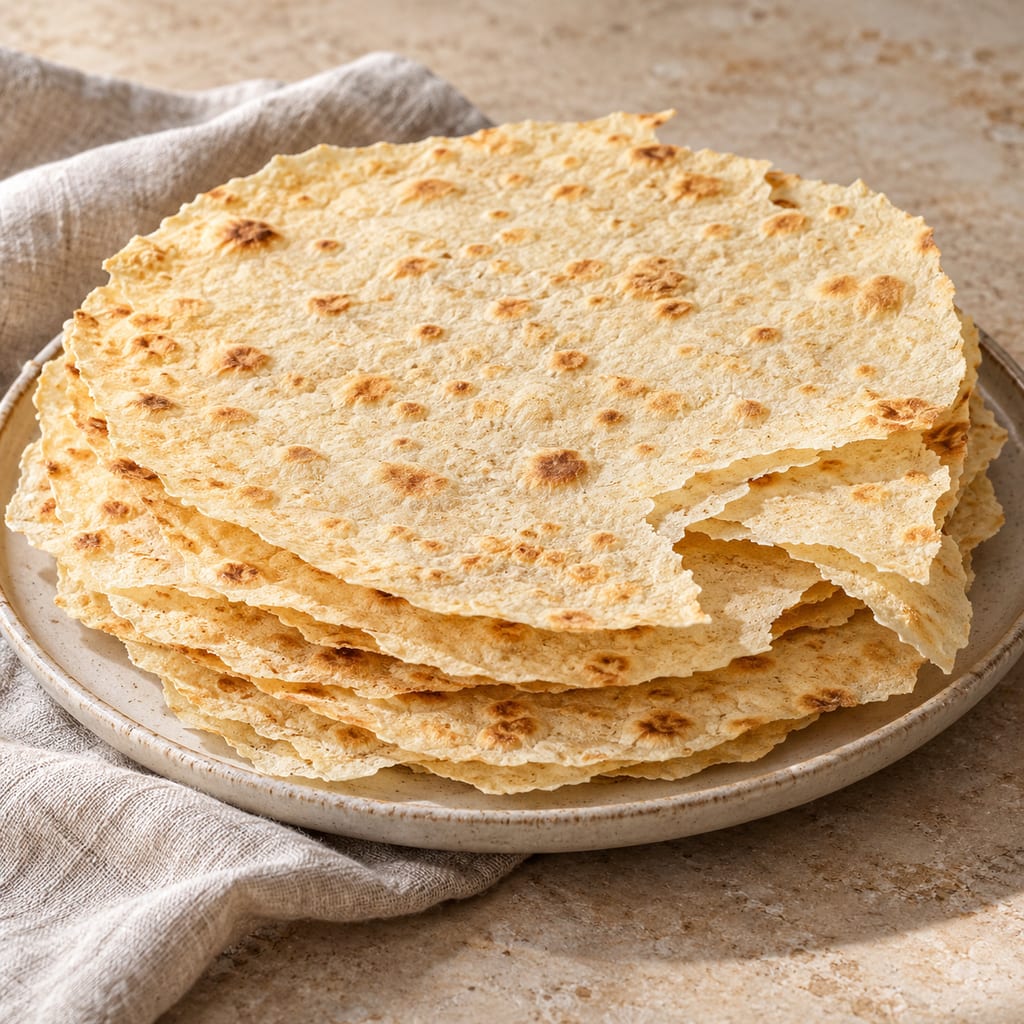
This recipe follows Natalya Syanova's home formula for pane carasau. It makes four dough balls and, after each inflated round is split in two, eight large sheets. The measured ingredients are semolina, all-purpose wheat flour, salt, cold water and instant yeast. Syanova also offers fresh yeast or sourdough starter as alternatives; the directions here follow the instant-yeast branch only.
The recipe describes one baking as a flexible wrap and a second bake as the crisp cracker form. This entry records the twice-baked sheet and notes that the first split sheets can be used before the second bake. Panificio S'Ulaore separately describes carasau seasoned with olive oil as guttiau; that finishing option is not included in this measured dough formula. This entry does not combine Syanova's measured home quantities with the different su framentu recipe on Ricette di Sardegna, which leaves salt and added water unmeasured.
Mix the semolina, all-purpose flour and salt, stir in the instant yeast and gradually add cold water. Knead for 10–15 minutes until smooth and elastic, then cover the dough in a lightly oiled bowl and let it rise for 1–2 hours until doubled. Divide it into four balls, cover and let them rest for 15 minutes.
Preheat a baking stone or inverted baking sheet to 260°C. Roll each ball into a 2–3 mm circle. If the dough springs back or resists, let it rest briefly before rolling further. Bake one circle at a time for 2–3 minutes, until it inflates and is lightly browned, then remove it promptly. The measured method gives a visual puffing cue but no oven-surface or internal temperature beyond the set oven temperature.
While each inflated round is still hot, split it through the edge into two thin layers with a serrated knife. Work carefully around the hot bread and preheated baking surface. For the crisp form, return the separated sheets to the oven for 1–2 minutes per side, until golden and crisp; cool completely on a wire rack.
Panificio S'Ulaore also describes carasau as twice-baked and says its dry, light form helped people carry it while away from home. The bakery's account links the bread to Nuorese and Campidano; it does not date the bread's first use or establish that this home formula is a historic Sardinian recipe.
Flour can carry harmful bacteria. Do not taste the uncooked dough, and wash hands, bowls and utensils after mixing. Syanova recommends cooling the sheets completely before sealing them in an airtight container to preserve crispness. Neither the home recipe nor the inspected producer page gives a validated storage duration or water-activity limit, so this record adds none.
Natasha Syanova's page records a contemporary home method for a Sardinian flatbread and uses the unreferenced description “ancient”; that adjective is not treated here as a dated historical claim. Sardinian bakery S'Ulaore describes carasau as a light, durable bread associated with shepherds who spent months away from home and identifies the bread with Nuorese and Campidano. This producer account explains a use and regional association but provides no first-attestation date.
Yield 8 large sheets · Scaling: source batch only
The dough contains raw semolina and wheat flour; flour can carry harmful bacteria and should not be tasted uncooked.
Hazard sourceThe stone or inverted sheet is preheated to 260°C and the rounds bake for only 2–3 minutes before handling.
Hazard sourceThe recipe calls for splitting each round with a serrated knife while it is still hot.
Hazard sourceDo not taste raw dough; wash hands, bowls and utensils after handling flour.
Control sourceUse suitable oven protection to remove the rounds from the hot stone or sheet. Keep fingers clear of the serrated knife while splitting; the bread is hot at this step.
Control sourceDo not eat or taste the raw dough; the recipe contains raw flour.
The source method uses a 260°C oven and calls for splitting the inflated bread while hot. Protect hands from the stone and dough, and use the serrated knife carefully.
Cool the sheets completely before sealing them. The source gives no validated storage duration or water-activity limit.
Natasha Syanova names this as Sardinian flatbread. Sardinian bakery S'Ulaore describes carasau as typical of Nuorese and Campidano and lists its own address in Bitti. These sources support a Sardinian association, not a precise birthplace for the bread family or this home formula.
Panificio S'Ulaore lists its bakery address in Bitti and describes its carasau product. This is a documented production location for that bakery, not the place where the home batch in this recipe must be made.
Biga is an Italian bread preferment of flour, water and a little yeast, usually a stiff unsalted mass of about 45 per cent water, fermented ahead and then mixed into the final dough.
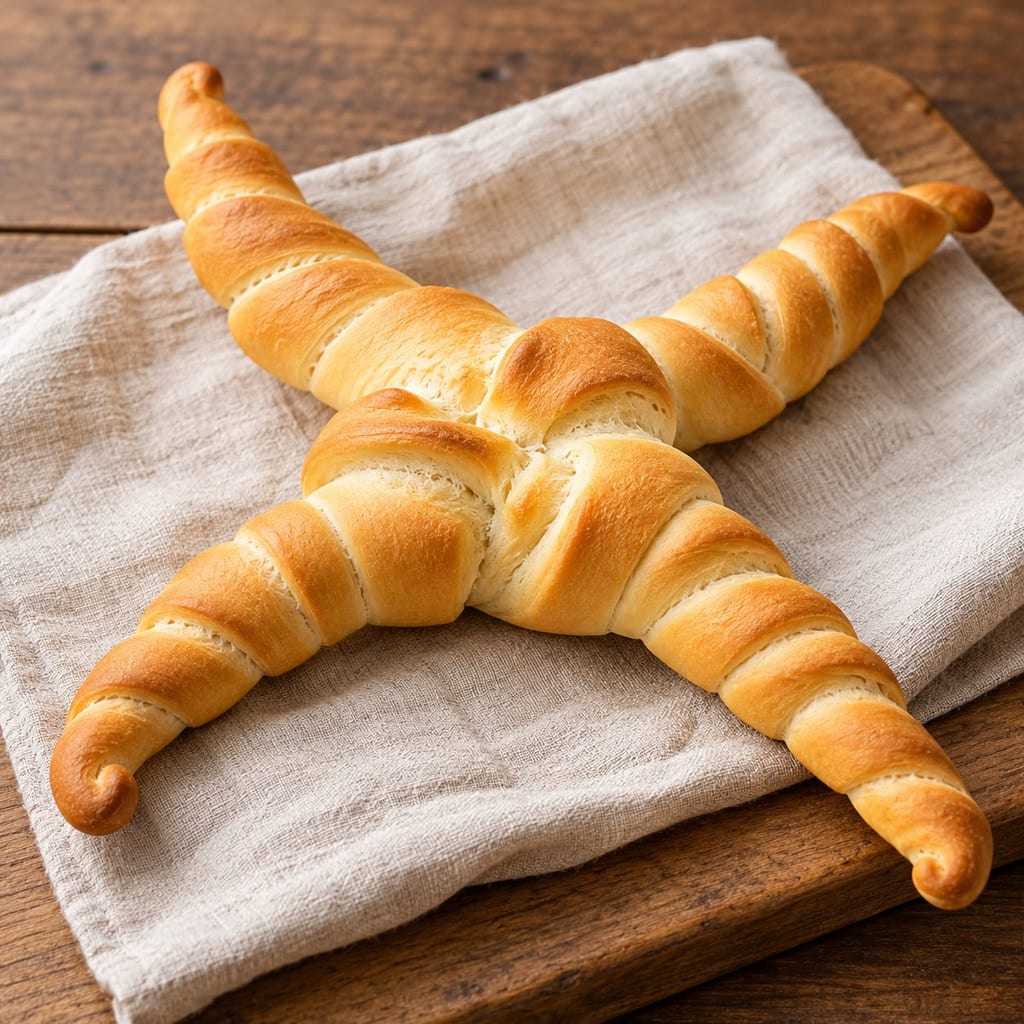
Ferrara’s paired bread twists have four pointed horns joined at a soft centre. This VisitFerrara home recipe uses type 0 flour, water, oil, lard, malt and a choice of sourdough or yeast.
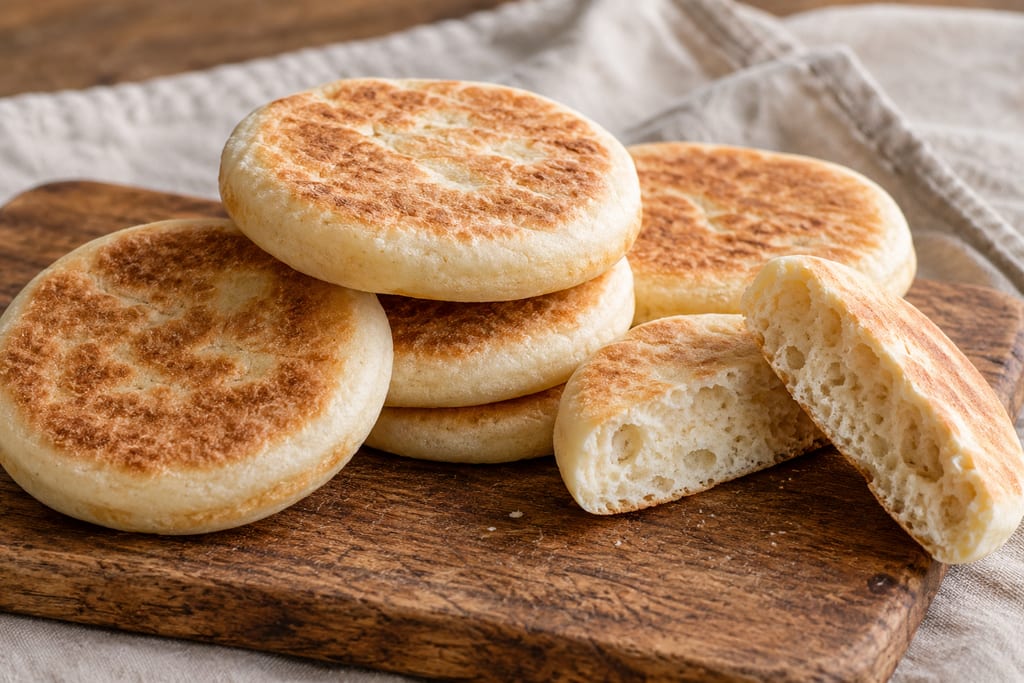
Small Modenese yeast breads cooked between hot plates and served warm.
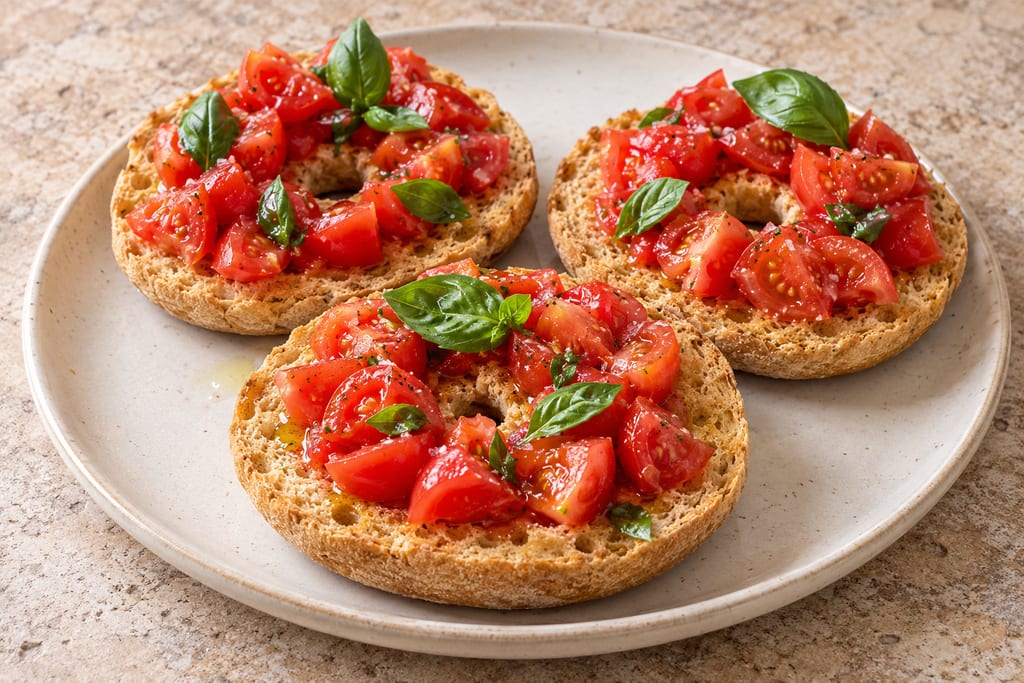
Puglian wheat-and-semolina bread rings are baked, split, then dried in a second bake; briefly moisten and top them before serving.
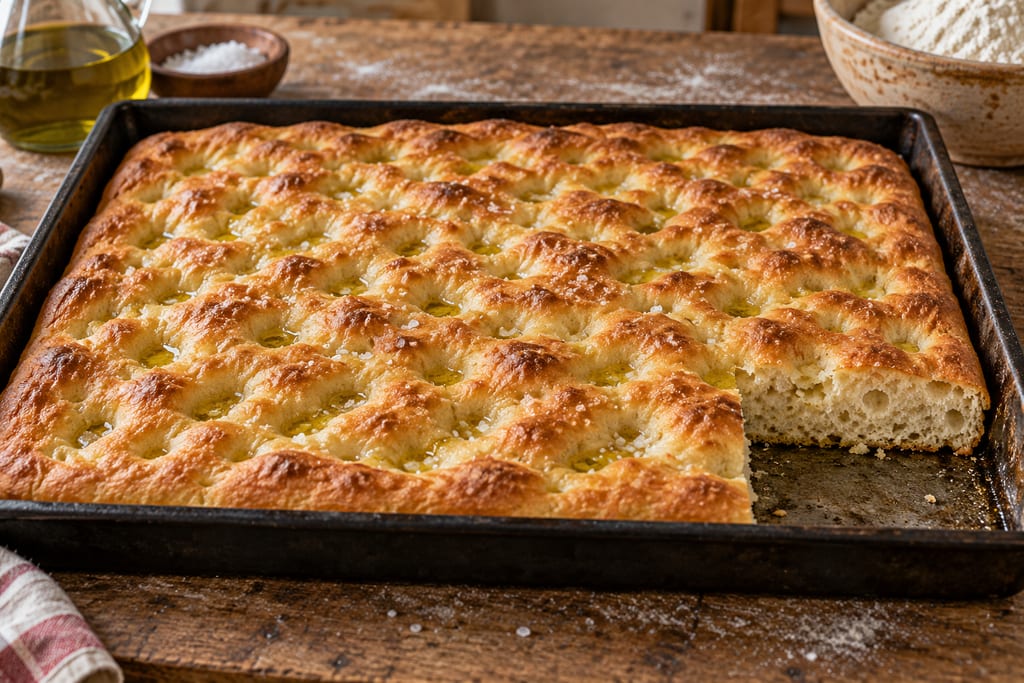
Fresh-yeast focaccia with olive oil and brine in its dimples, made in two 30 × 40 cm trays. It is separate from the sourdough focaccia formula.
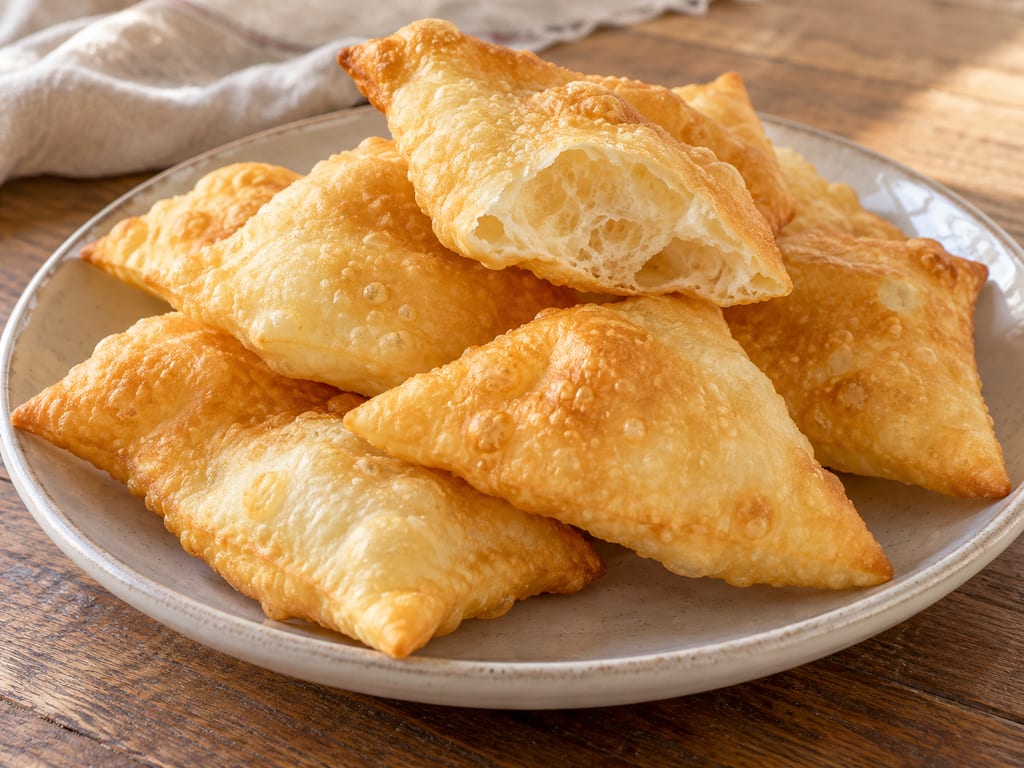
This Emilia-Romagna home version uses a measured flour-and-milk dough with yeast, shapes it into small diamonds or squares, and fries them in peanut oil.
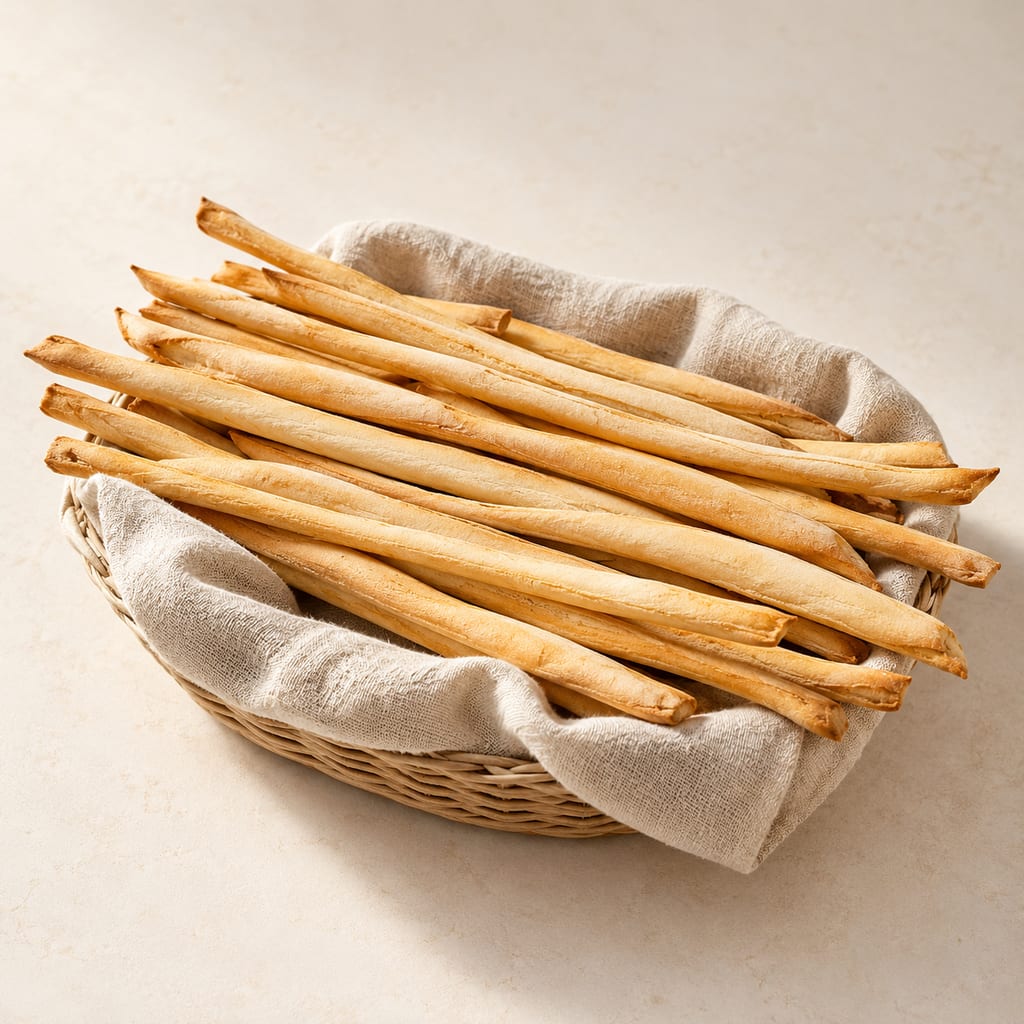
A measured Torino baker’s formula for hand-stretched grissini, baked until crisp and dry.
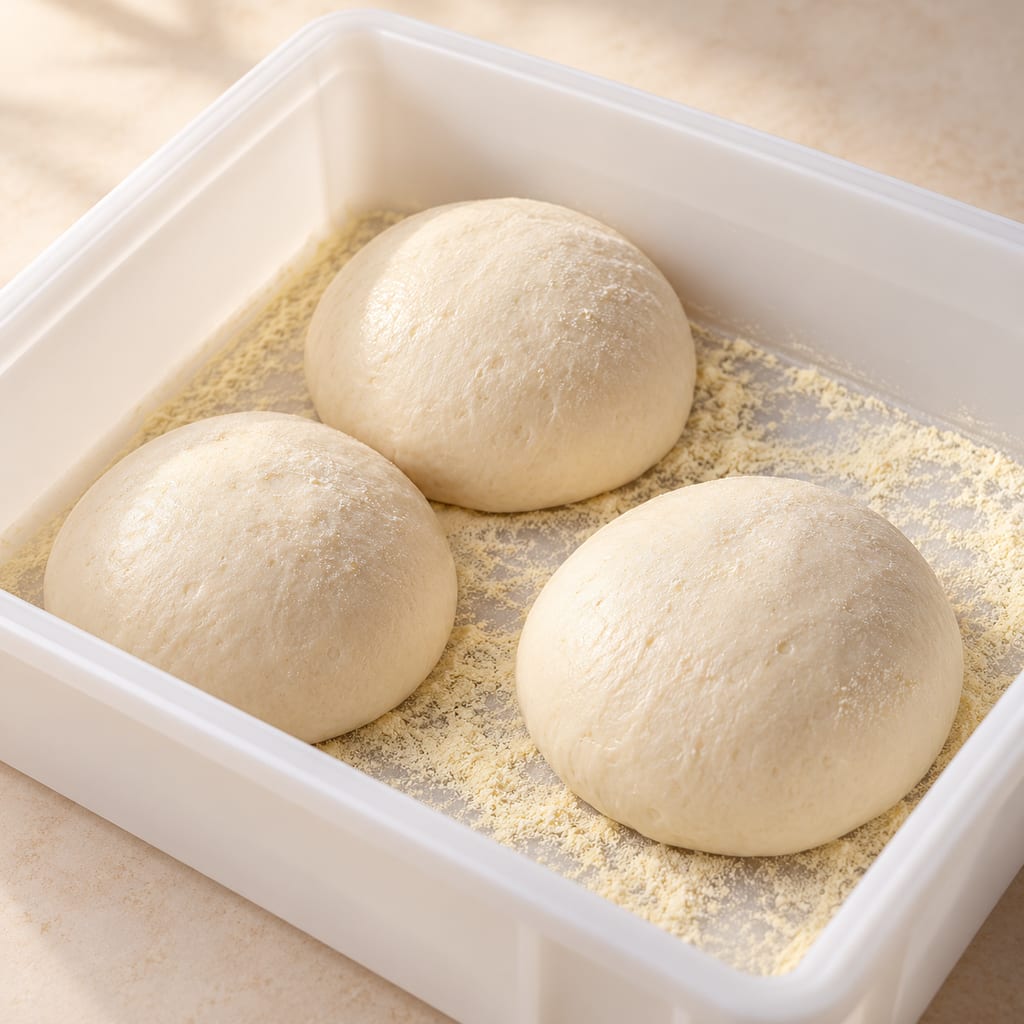
An AVPN regulation formula for Neapolitan pizza dough uses wheat flour, water, salt and fresh brewer’s yeast. Flour absorption and proofing conditions determine the exact dough point and yeast dose.
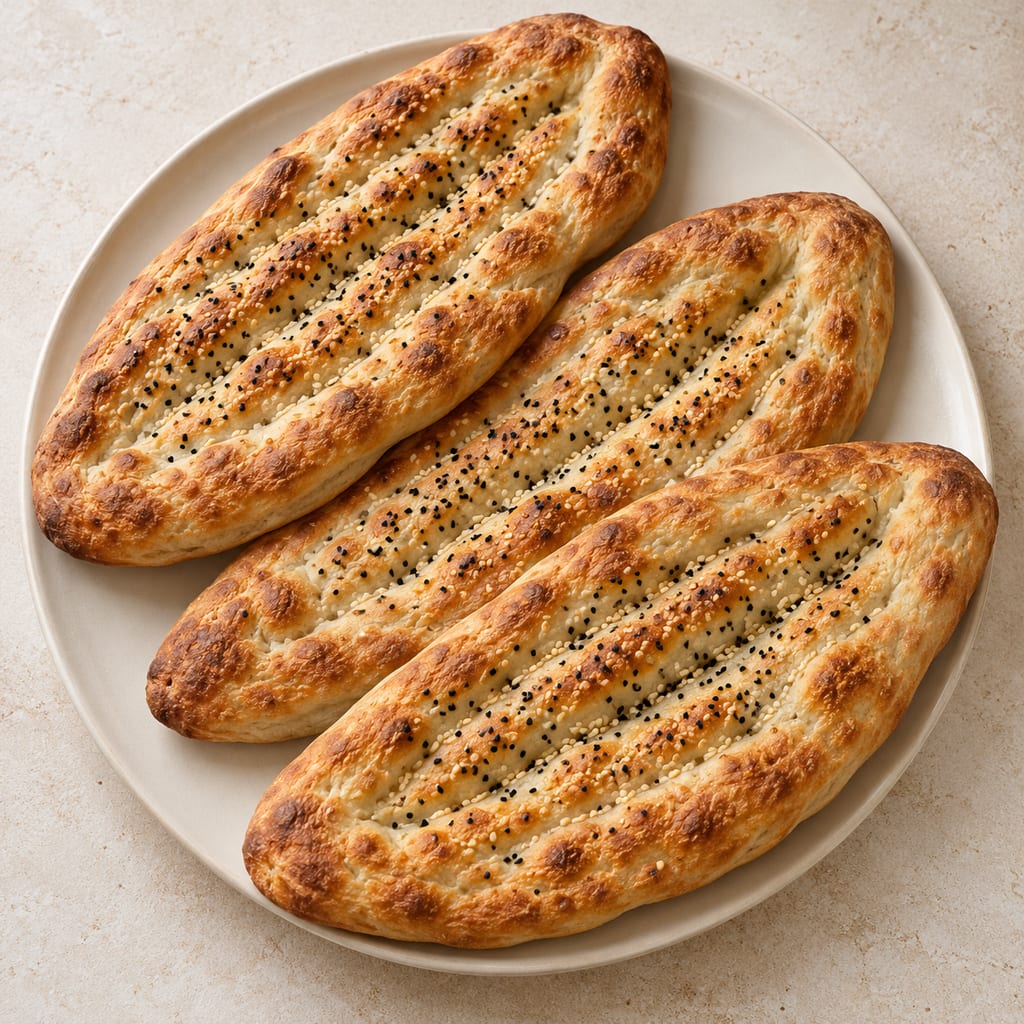
A long oval Afghan wheat bread, leavened with yeast, grooved along its length and baked until crisp outside and chewy within.
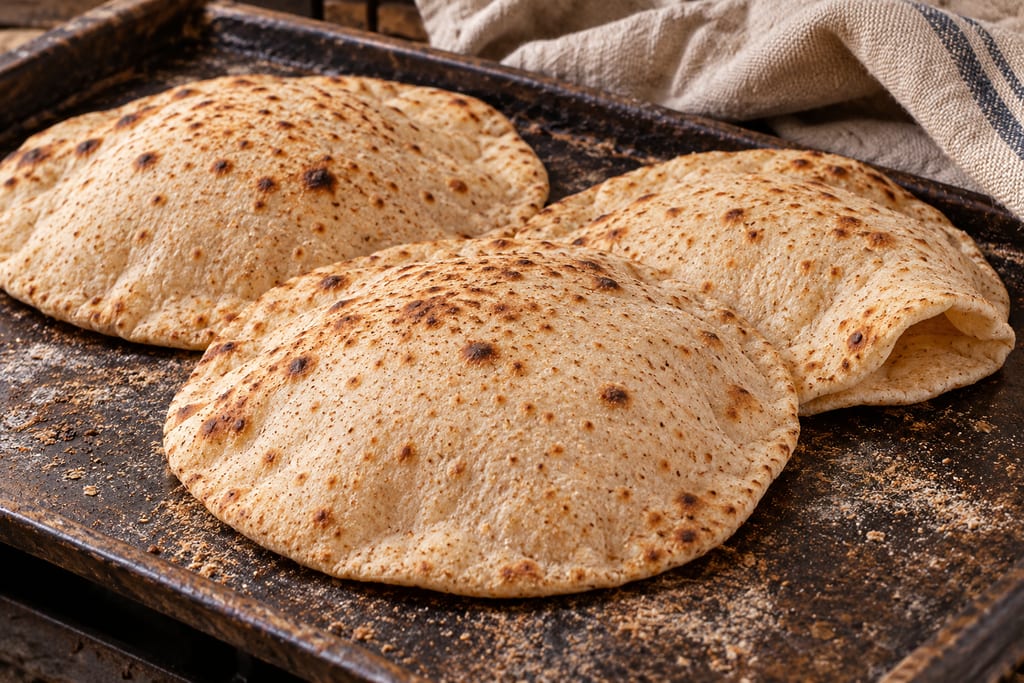
This home adaptation of Egyptian aish baladi uses a refrigerated yeast biga, whole-wheat dough, bran dusting and a very hot baking surface to make 16 pocketed rounds.
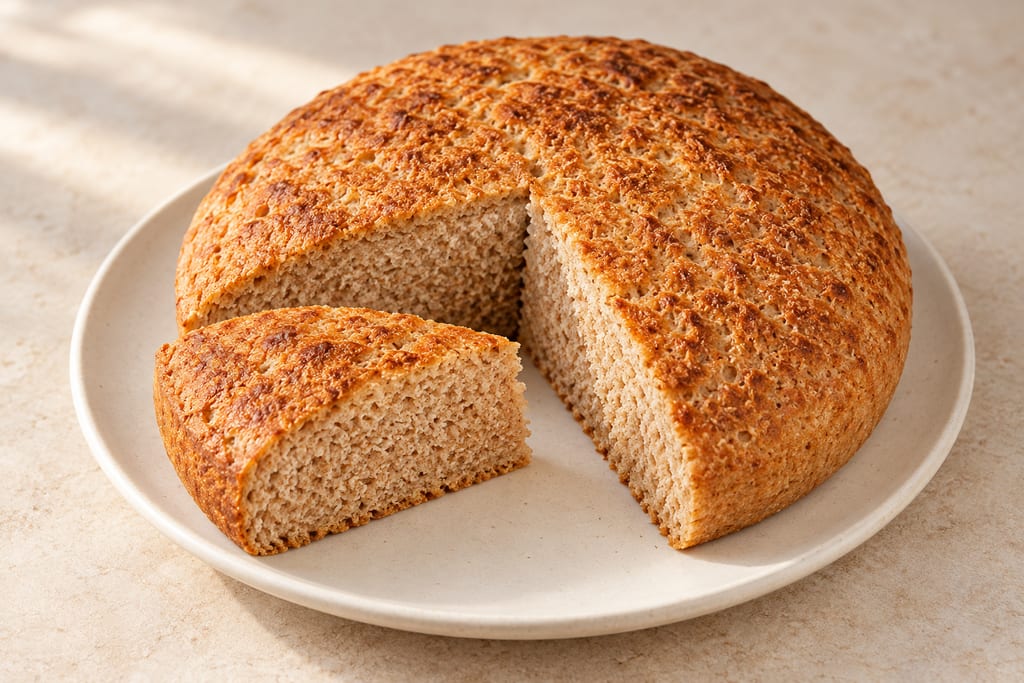
This oven-baked Amdo balep uses yeast, whole-wheat and white flour, a long covered rise and a two-sided bake in a heavy oven-safe pot.
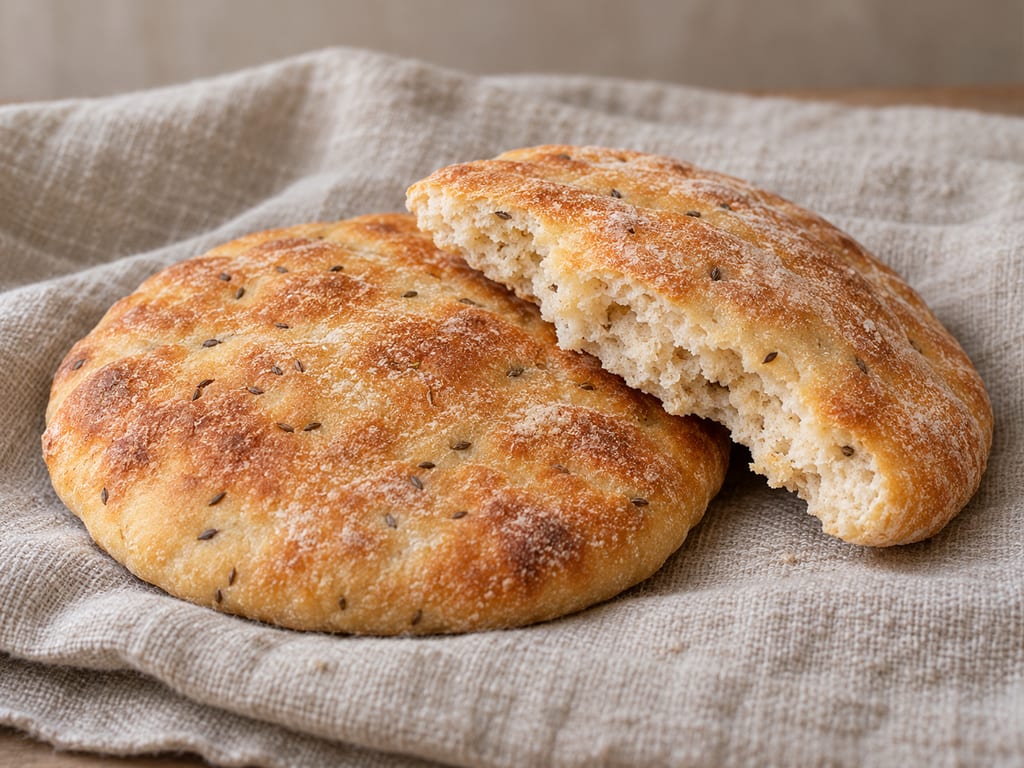
A measured, yeast-raised Ayacucho chapla home method shared by Thermomix Peru presenter Roxanna Salaverry. It makes thin, anise-scented rounds baked at 240°C; the historic qunchu-leavened form is documented separately.
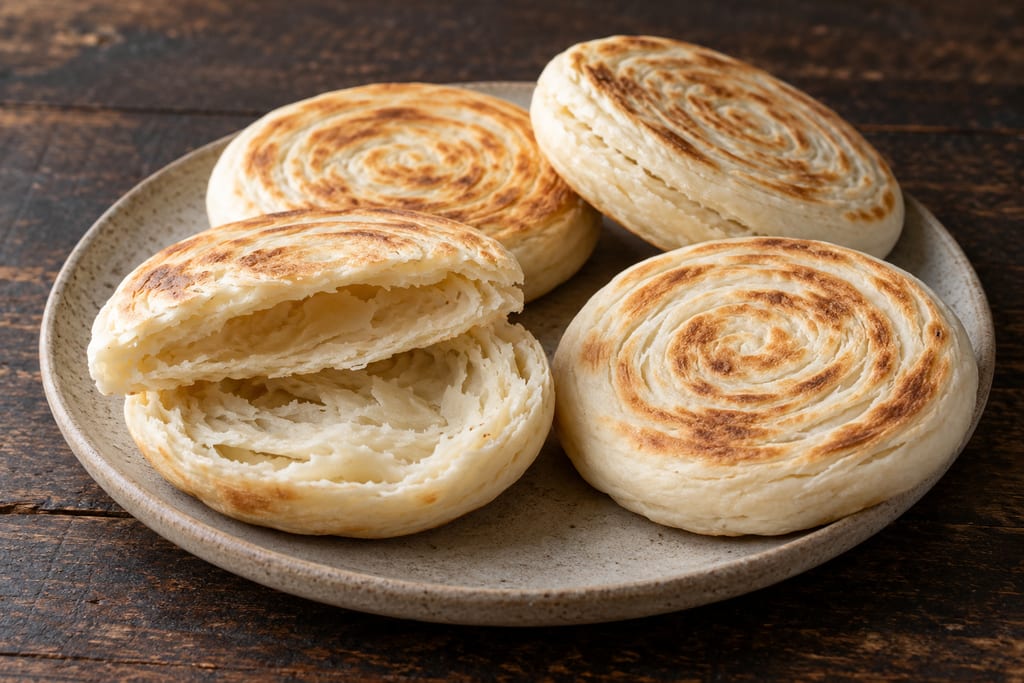
This Shaanxi-associated yeast flatbread uses a simple water dough, coiled shaping and a skillet bake. It is the bread used in roujiamo, not the filled meat dish.
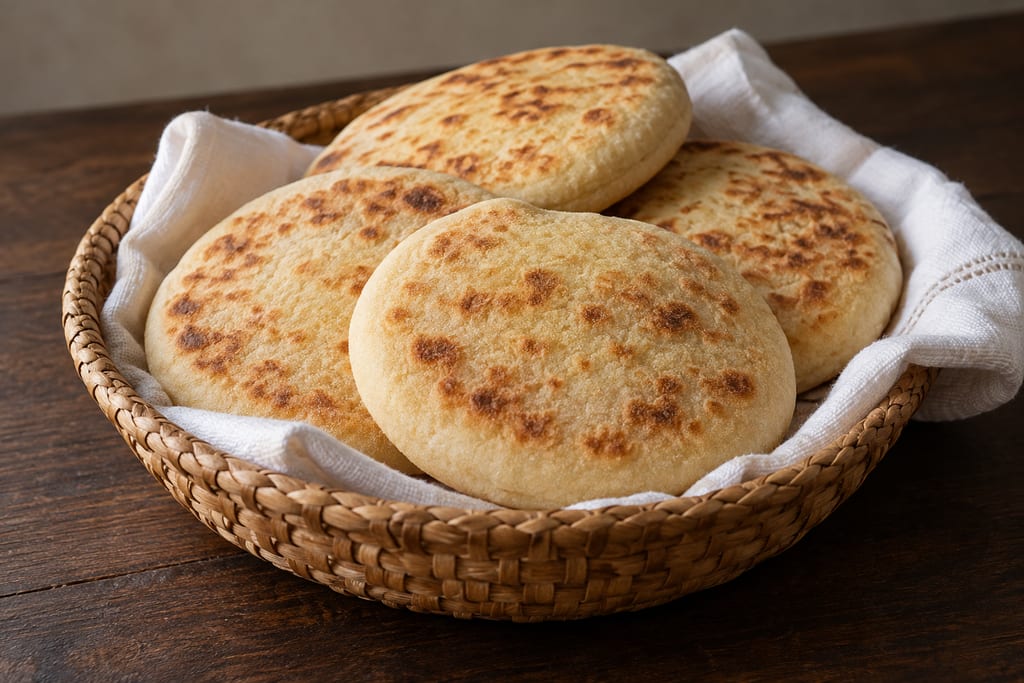
A Moroccan yeast-raised semolina pocket bread cooked on a dry pan or griddle; this measured batch makes about twenty 4-inch rounds.
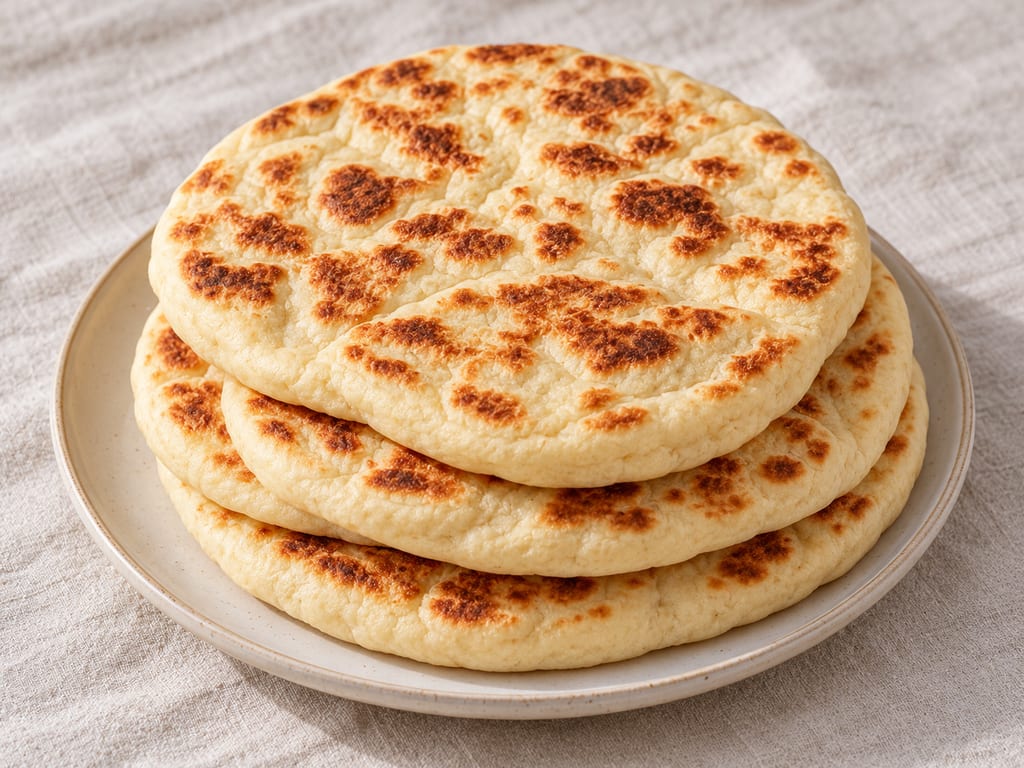
This Turkish bazlama uses yeast, plain yogurt and olive oil for a soft dough cooked in a skillet. Shape it into twelve small or six larger rounds, flip as bubbles appear, and wrap the breads to keep them soft.
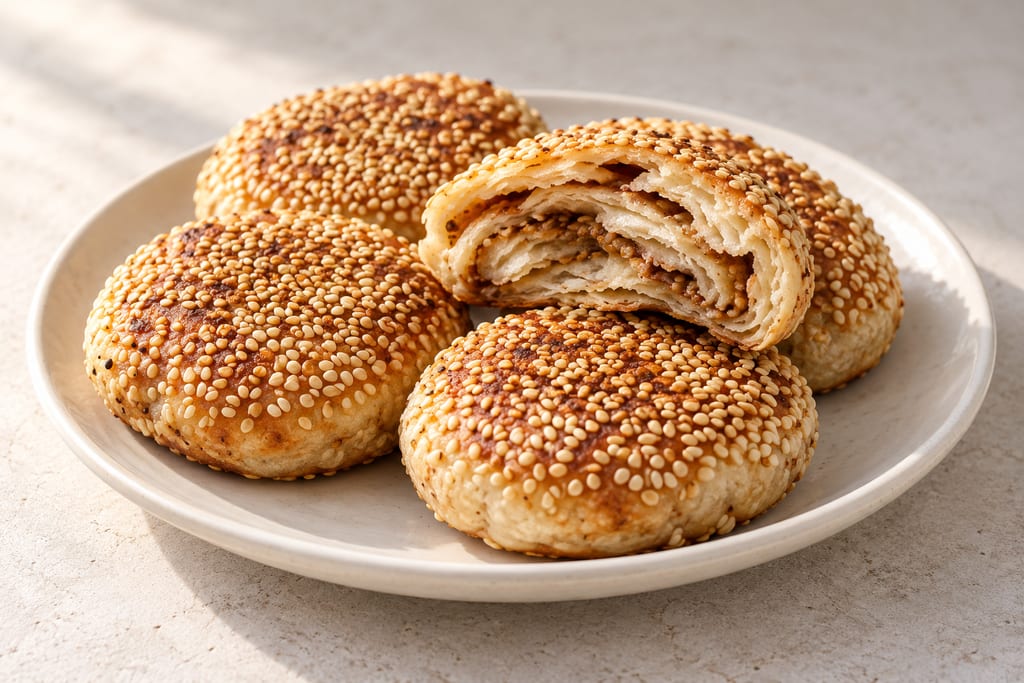
A Beijing-style yeast dough is layered with seasoned sesame paste, sealed into small buns, briefly pan-fried, seeded, and baked.
No community contributions have been published for this entry yet.
Sign in to contribute. Published comments and photos are free to read.
Natasha's BakingInspiration · Method · Food use · Geography
Pane Carasau (Sardinian flatbread)The measured home formula uses 250 g semolina, 250 g all-purpose flour, 12 g salt, 250 g cold water and 1 g instant dry yeast; the author also lists 2 g fresh yeast or 100 g sourdough starter as alternatives.
The method kneads 10–15 minutes, rises 1–2 hours until doubled, divides four ways, rests 15 minutes and rolls 2–3 mm rounds. The first bake is 2–3 minutes at 260°C until puffed, after which each round is split while hot and baked 1–2 minutes per side until crisp.
The recipe-card yield is eight large sheets, with 30 minutes prep, 10 minutes cooking and 2 hours 40 minutes total. It recommends cooling completely before airtight storage and distinguishes flexible once-baked sheets from crisp double-baked ones.
Cited in: A measured home version; Rise, roll and puff; Split and dry; Raw flour and storage
Ricette di SardegnaMethod · History · Geography
Pane carasauThis separate Sardinian home recipe uses 500 g type 00 flour, 500 g semolina and 200 g su framentu; it leaves salt and added water unmeasured.
It describes a long first rise, thin sheets that inflate in a very hot oven, splitting the puffed bread and a second bake to dry and crisp it. Its missing water, salt and heat amounts mean it is not the measured formula used in this record.
Cited in: A measured home version
Panificio S'UlaoreHistory · Geography · Food use
CarasauThe bakery describes carasau as a typical Nuorese and Campidano bread, associates its portability and shelf keeping with shepherds away from home for long periods, and says it is made by baking thin sheets twice.
S'Ulaore identifies its classic packaged bread as durum wheat flour, water, brewer's yeast and salt; its address is Bitti, Sardinia. These product and place facts are distinct from the home formula's measured batch.
Cited in: Split and dry
U.S. Food and Drug AdministrationSafety
Handling Flour Safely: What You Need to KnowFlour is raw and may carry harmful bacteria; do not taste raw flour dough and wash hands and utensils after handling it.
Cited in: Raw flour and storage