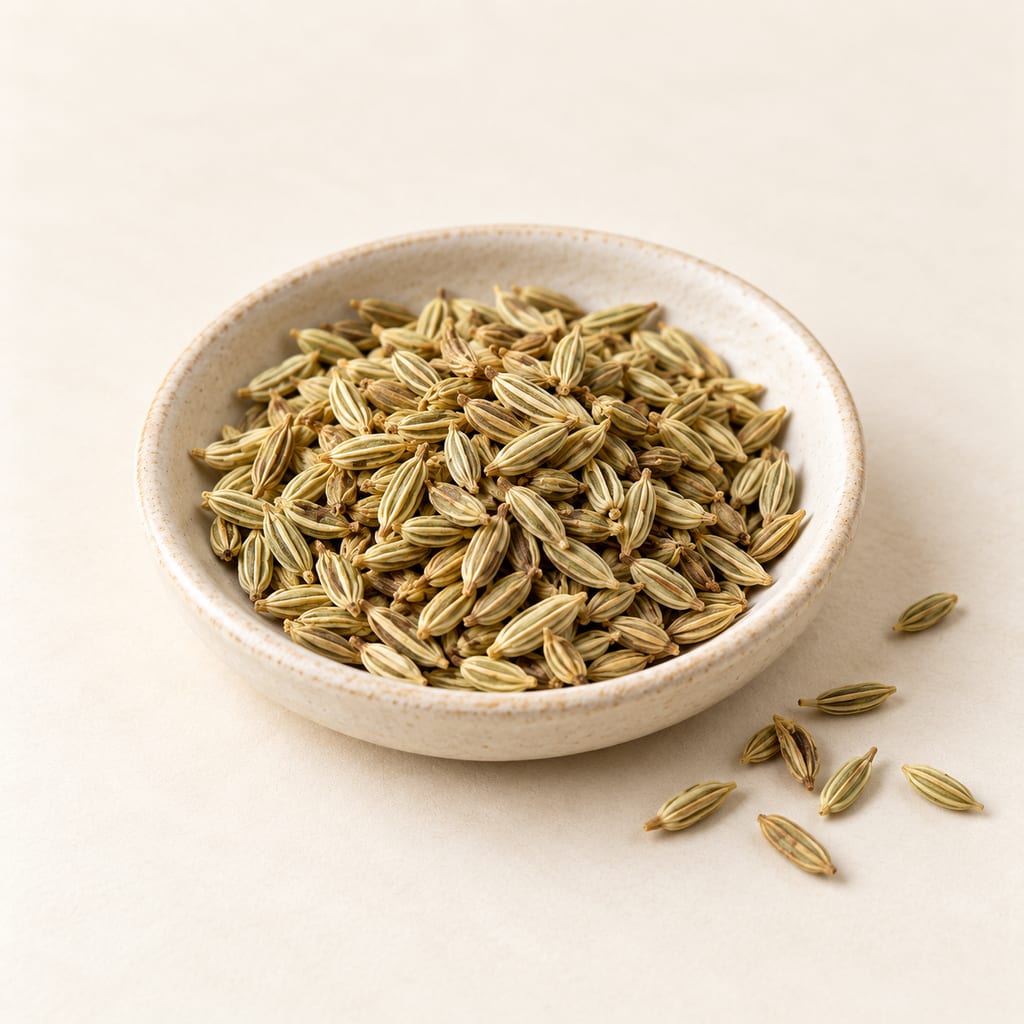
Fennel seed
Fennel seed is the dried aromatic fruit of Foeniculum vulgare; a Himachal Pradesh survey records it among the seasonings of Galgal pickle.
 FermenteaWhere food goes to change
Khobz tabouna · Khobz tabouna · Jerdga (Nefza)
A Tunisian round semolina bread named for the clay oven in which it is traditionally baked, recorded here through one home-oven recipe.
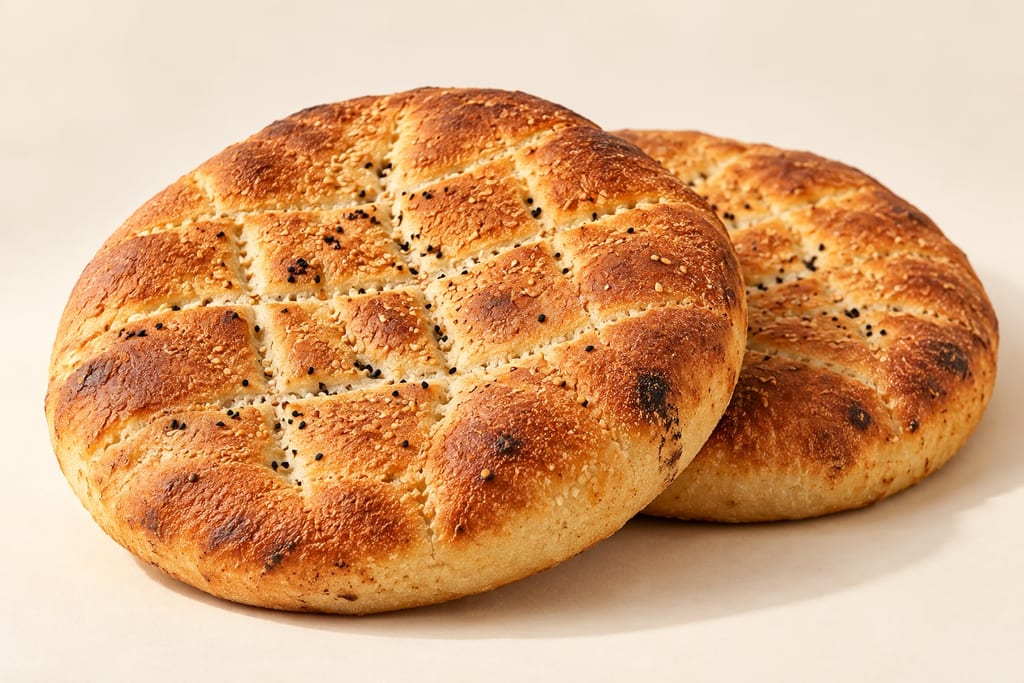
Tabouna names a Tunisian bread and the clay oven associated with it. The home formula recorded here makes two round semolina loaves. In the traditional method, dough is attached to the hot inner wall of a clay oven instead of baked on a flat tray. That pairing of bread and vessel gives the name both culinary and technical meaning. The bread is leavened, but its form also reflects shaping, heat and baking surface.
It should not be collapsed into a generic thin pita. Sources describe a round loaf with an irregular browned surface; wall-baked bread may carry dark patches from contact with hot clay. A domestic oven cannot reproduce the wall, radiant heat or oven environment, so this recipe is an adaptation rather than an exact substitute. The documented formula is one household version, not a single national standard.
The oven is part of the bread's identity because it changes the baker's movements and the loaf's surface. A round placed on a baking sheet receives heat from below and above; a round adhered to a heated wall meets a curved, hot surface and must be handled without collapsing. The available sources document the wall method in words and images, but do not give a standardized oven design, capacity or thermal curve. A description of the general technique should not be mistaken for a construction plan. Where a dedicated oven is unavailable, the household version gives a practical route to a similar bread, while preserving the distinction between the two processes. The appearance of an individual loaf can reflect flour, thickness, proofing, heat and the point at which it is removed.
Related vertical clay baking ovens have a long history across the Mediterranean and Near East. The Monte Sirai archaeological page describes a Phoenician-Punic installation and compares its terracotta form with later tabouna or tannur-type ovens. This is evidence for a broad history of related oven technology, not proof that the current Tunisian recipe, name or community practice has continued unchanged since antiquity.
The sources consulted do not establish a secure first written attestation or date for the present bread formula. It is more accurate to describe tabouna as a traditional Tunisian bread documented by modern culinary and ethnographic sources than to assign it an ancient origin. Archaeological ovens, living practice and a modern home recipe answer different historical questions.
A 2022 study based on 2019 fieldwork records one El Kef woman's account. She describes fine semolina or flour baked against the wall of a clay gōža after firewood heats it until ash remains. This is valuable local testimony, not a national recipe. A northern Tunisia field study also records one tabouna installation among observations of cooking fuels; local timings in such a study are not universal instructions.
The distinction between an old oven form and an old recipe is especially important in food history. A clay structure can survive archaeologically, while a bread recipe may change as cereals, milling, fuel and household equipment change. A name can also travel or shift in meaning. The Sardinian archaeological page is useful because it describes a related installation, but it is geographically and chronologically distinct from the modern Tunisian accounts. It gives context for a family of baking technologies, not direct evidence about the origin of the name in Tunisia. The modern field account, in turn, records a person's memory and practice in a specific place and time. Keeping these scales separate lets the evidence enrich the story without making a continuity claim it cannot carry.
Tabouna is documented in Tunisia, especially in northwestern sources. The Slow Food Foundation records it in Béja and notes jerdga in Nefza. The El Kef account independently locates wall-baked bread in the northwest. These references establish regional presence; they do not show that every bread called tabouna has the same formula or that jerdga is used throughout the country.
Khobz tabouna means bread of the tabouna oven in the culinary source. Latin spellings vary when Arabic terms are transliterated. A local name such as jerdga should remain attached to its place instead of being treated as a universal synonym. The Slow Food account describes traditional makers facing competition from industrial bread. Fuel, access to clay ovens, bakery trade and household routines all affect what people can continue to make. Home baking keeps the bread accessible but differs from wall baking.
The word 'traditional' describes a practice transmitted and valued in a community; it does not mean every household uses an identical formula or that the method never changes. Local names are one form of knowledge. Béja, Nefza and El Kef appear in the cited records for different reasons and should not be compressed into one undifferentiated geographic label. The Slow Food entry speaks about conservation and economic pressure; the El Kef publication records oral knowledge from fieldwork. Together they show why recording specific places and voices matters. Industrial loaves may be easier to obtain, while the traditional clay oven requires access, fuel and skill. Both can be part of contemporary food life, but only one uses the wall-baking process central to this account.
The cited home recipe uses extra-fine durum semolina, salt, baker's yeast, oil and water added as needed. It does not state water volume, oil type, yeast packet weight or a fixed rise time. Semolina absorbs water differently depending on grind and storage, and yeast sachets vary. Judge the dough by feel rather than adding precision that the source does not provide.
The author uses two teaspoons of salt while noting that one teaspoon is usual in her practice. This is her choice, not a national rule. Fennel is optional and unmeasured. The source specifies durum wheat semolina, not couscous. Other descriptions mention wheat flour or barley flour; changing flour changes hydration and texture.
Yeast produces carbon dioxide, while hydrated wheat proteins can form a network that retains gas. This general bread science explains rising, but no source here provides measurements specific to tabouna. The source's long knead and oil added at the end are practical instructions from one cook, not evidence of a unique chemical process.
Fine semolina gives the dough a granular character before hydration and a tender, substantial crumb after baking. The source does not give a brand, protein content or precise grind specification beyond extra-fine durum semolina. Water is therefore a judgment call in the source itself. Add it gradually and give the mixture time to absorb moisture before correcting the texture. The long kneading instruction comes from the author's procedure. It should be understood as a reproducible action in that recipe, not a scientifically validated minimum. Oil quantity is large relative to a small batch, yet the source includes it; changing it would make a different formula. The oil's identity is left open, so naming olive oil as required would go beyond the record.
In the traditional process, fuel heats the clay oven; the El Kef account describes firewood and waiting until ash remains. Rounds are attached to the inner wall. This calls for a suitable oven and practiced handling. Sources describe the method but offer no single safe temperature or timing applicable to every oven.
The domestic adaptation uses a conventional oven at 250°C and bakes for about 15–20 minutes, until golden. These figures belong to the cited author's method. Oven calibration, loaf thickness and tray material affect results, so use the stated color cue. Reader discussion on the recipe page mentions pricking rounds to release air and reduce tearing; it is an optional handling tip, not a required element of the author's main method.
The first rise is untimed; the second takes place while the oven heats. Do not convert these omissions into fixed schedules. Wait for visible aeration and pliability, then bake after shaping. The source supplies no shelf-life or storage limit; cool leftovers safely and use ordinary bread-storage practice.
Proofing is described only in broad terms. Temperature, yeast condition, room warmth and dough hydration all influence how quickly dough rises, so a timer imported from another formula would be unreliable. Look for a dough that has expanded and feels more aerated, while avoiding the assumption that it must double in a specified period. The cited household method places its second rest during oven preheating; that creates a convenient sequence, not a guaranteed proof duration. The available account does not specify whether the dough is covered with cloth, plastic or a lid, nor does it quantify the size of each round. Use a light cover to prevent drying and handle the shaped dough gently.
Flour choices vary across sources: semolina, wheat flour or barley flour in the Slow Food account; fine semolina or flour in the El Kef testimony. This recipe specifically follows the durum semolina version. Flour substitutions may change water needs and texture. Fennel is optional. Shape, thickness, seasoning and browning may also differ, but the available sources do not support one universal authentic form.
The recipe author recommends serving the bread hot. It can accompany a meal, be dipped in olive oil or hold fillings. The El Kef account preserves a serving recollection involving tomato, onion and harissa; that is one documented memory, not a mandatory accompaniment. Round bread is suited to tearing and sharing; let it cool enough to handle before cutting.
Serving practices are similarly plural. Bread may be brought to the table as a shared staple, eaten with savory dishes, or turned into a carrier for a filling. The account of tomato, onion and harissa is valuable precisely because it is remembered by a commenter as a familiar way of eating bread, rather than prescribed by the recipe author. Fennel belongs to the optional branch of this particular formula. A seed-speckled version can taste and look different from a plain loaf, while remaining within the source's own variation. Don't infer from a photograph alone that sesame, fennel or another topping is required; photographs document examples, and written formulas state ingredients.
This rendering follows the published household adaptation. Since the original leaves water amount and rise duration open, use dough feel and visible rise as cues rather than inventing numbers.
1. Combine 2 cups extra-fine durum semolina, 2 teaspoons salt and 1 sachet baker's yeast. Add water gradually and knead into a workable dough. 2. Knead about 15 minutes, then incorporate 1/2 cup oil near the end. 3. Cover and leave to rise; no duration is given. 4. Knead lightly and add fennel if desired. 5. Shape two medium rounds and leave for a second rise while heating a conventional oven to 250°C. 6. Bake about 15–20 minutes, until golden, and serve hot.
The original does not name an oil variety. If the dough seems stiff, add water gradually; if slack, give the semolina time to hydrate before adjusting. These are cautious kitchen cues, not source-measured quantities. The method makes an accessible home version, while traditional tabouna requires a clay oven and wall-baking skill.
For a home baker, the practical goal is a dough that can be shaped into stable rounds without forcing a precise hydration the source never gives. If the semolina remains dry and crumbly, add water in small increments and continue mixing. If it becomes sticky, pause briefly to let the semolina absorb liquid before changing the formula with extra flour. Oil added near the end can make the surface feel slick; work it through instead of adding more flour reflexively. The second rest should occur in a warm enough place for the dough to show activity, but no exact temperature is documented. These sensory cues support a workable adaptation without falsely presenting them as the author's measured specification.
Heat the oven fully before baking. Use a tray or baking surface appropriate for a hot oven and leave room for the rounds to brown evenly. The source's stated 250°C is a household-oven target, and the 15–20 minute range is an approximate bake, not a guarantee across appliances. Begin checking for golden color within that window. A dark patch is expected in a wall-baked bread but is not a requirement for the conventional-oven loaf. If you choose to prick the rounds, follow the reader tip as optional; the main recipe does not depend on it. Serve while warm, and let any remaining bread cool before enclosing it to reduce trapped moisture.
This adaptation has clear limits. It does not specify water mass, yeast weight, proofing schedule or exact loaf diameter, and it cannot reproduce the traditional clay oven. Those are meaningful absences, not gaps to conceal with fabricated precision. A reader who needs a tightly reproducible formula should weigh and record their own successful dough and oven conditions as a separate tested version. Until such measurements are independently established, the source-based account remains intentionally open at those points.
Uncooked flour can contain germs.
Hazard sourceDo not taste raw dough; keep it separate from ready-to-eat food, and wash hands, utensils and work surfaces after handling.
Control sourceBake according to the source recipe; no measured interior-temperature endpoint is supplied.
Control sourceDo not taste raw dough. The cited home method specifies 250°C for 15–20 minutes until golden but gives no measured interior-temperature endpoint.
Fennel seed is the dried aromatic fruit of Foeniculum vulgare; a Himachal Pradesh survey records it among the seasonings of Galgal pickle.
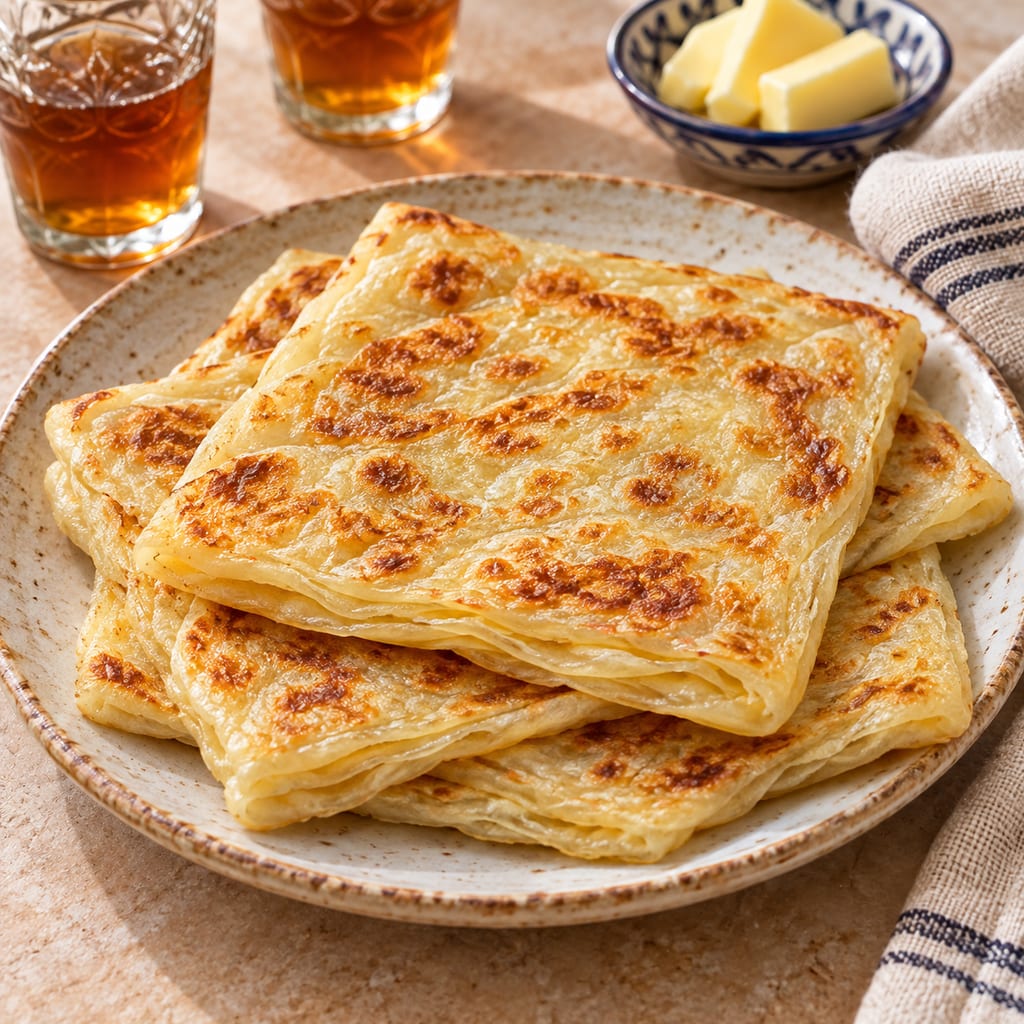
A square Moroccan layered griddle bread made from lightly yeasted wheat dough, stretched thin, folded with semolina and butter, and cooked until crisp and golden.
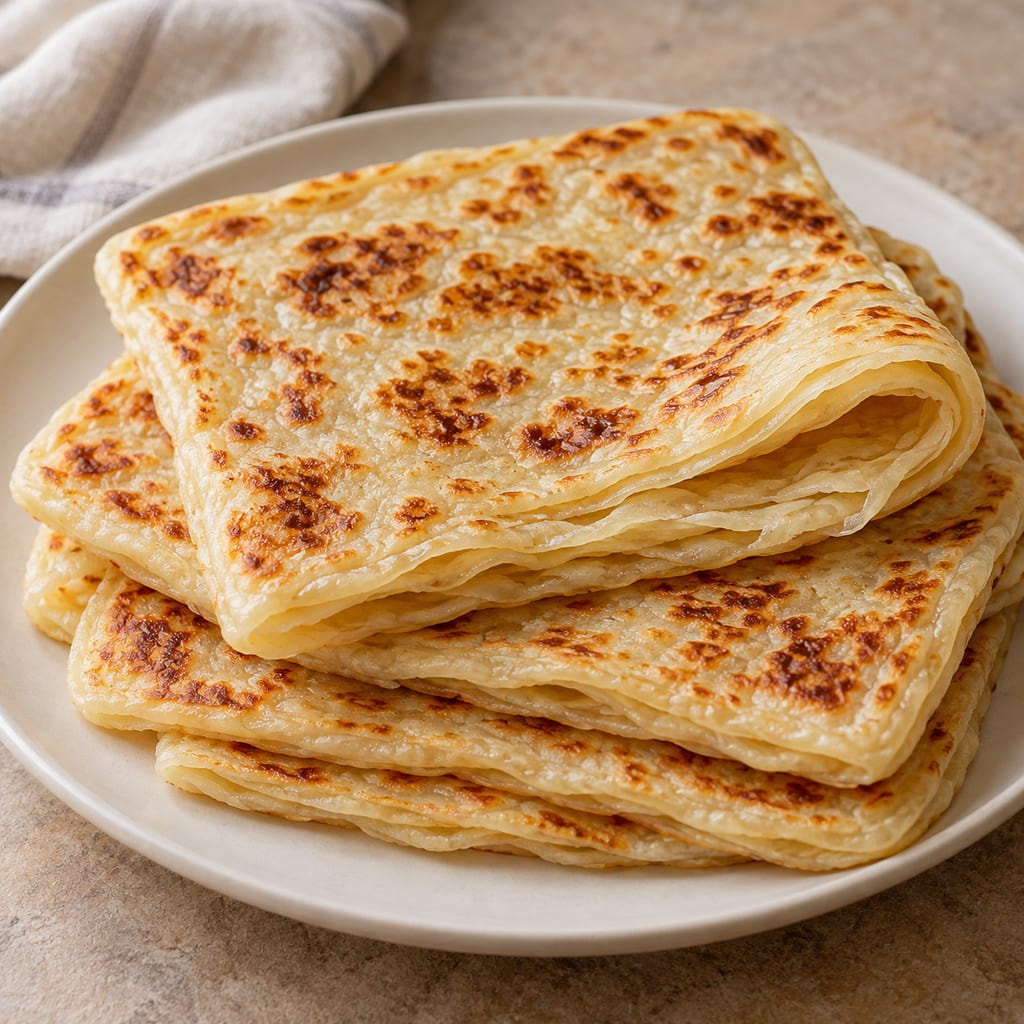
A Tunisian semolina flatbread, stretched with oil, folded into layers and cooked in a pan.
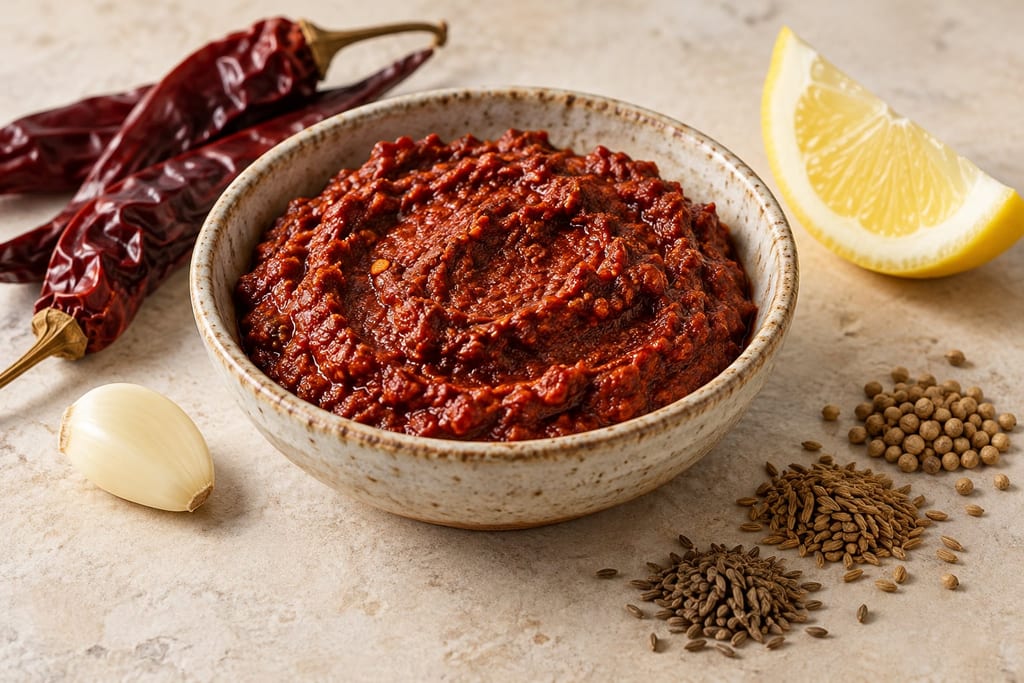
A fresh chilli paste made from rehydrated dried red peppers, garlic, olive oil, lemon and warm spices; this small-batch formula adapts the harissa family rather than reproducing a tested Tunisian method.
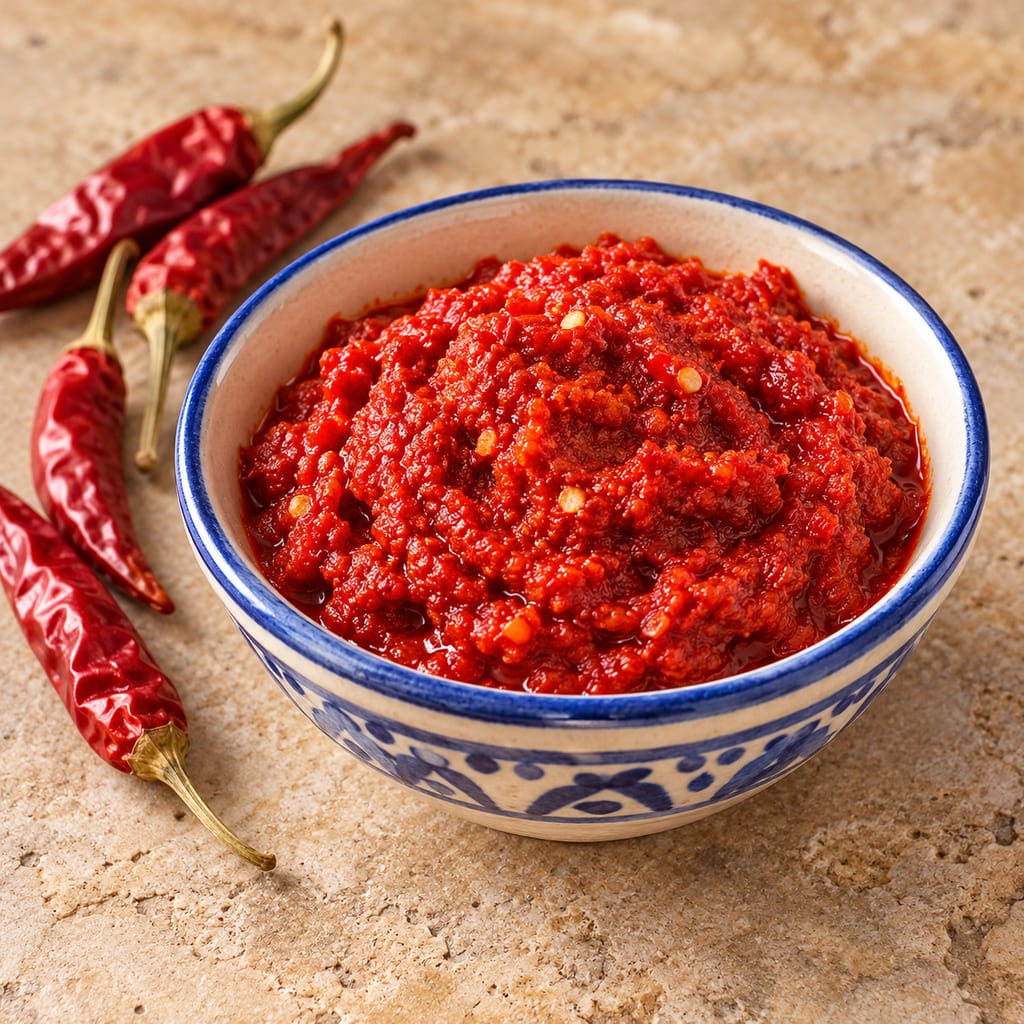
A Tunisian hot chilli paste from Cap Bon and Nabeul: red peppers pounded with garlic, caraway, coriander, cumin and olive oil, with many household and commercial variants.
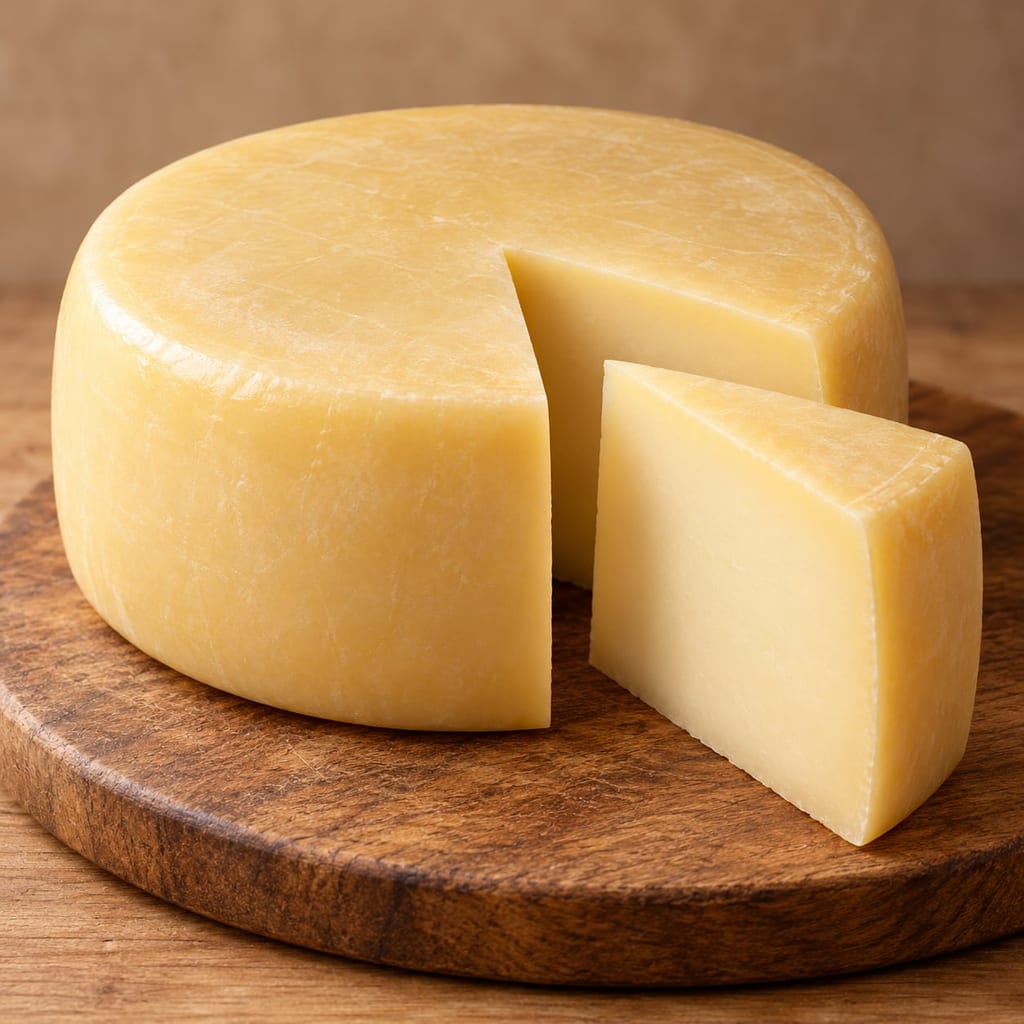
Kashkaval is a firm sheep-milk cheese whose acidified curd is worked in hot brine. This large-batch method finishes with repeated dry salting, wax coating and cool ripening.

In Tunisia chermoula is a cooked sweet-sour dish: floured fried fish returned briefly to a sauce of onions cooked in oil with harissa, vinegar, water, honey and raisins.
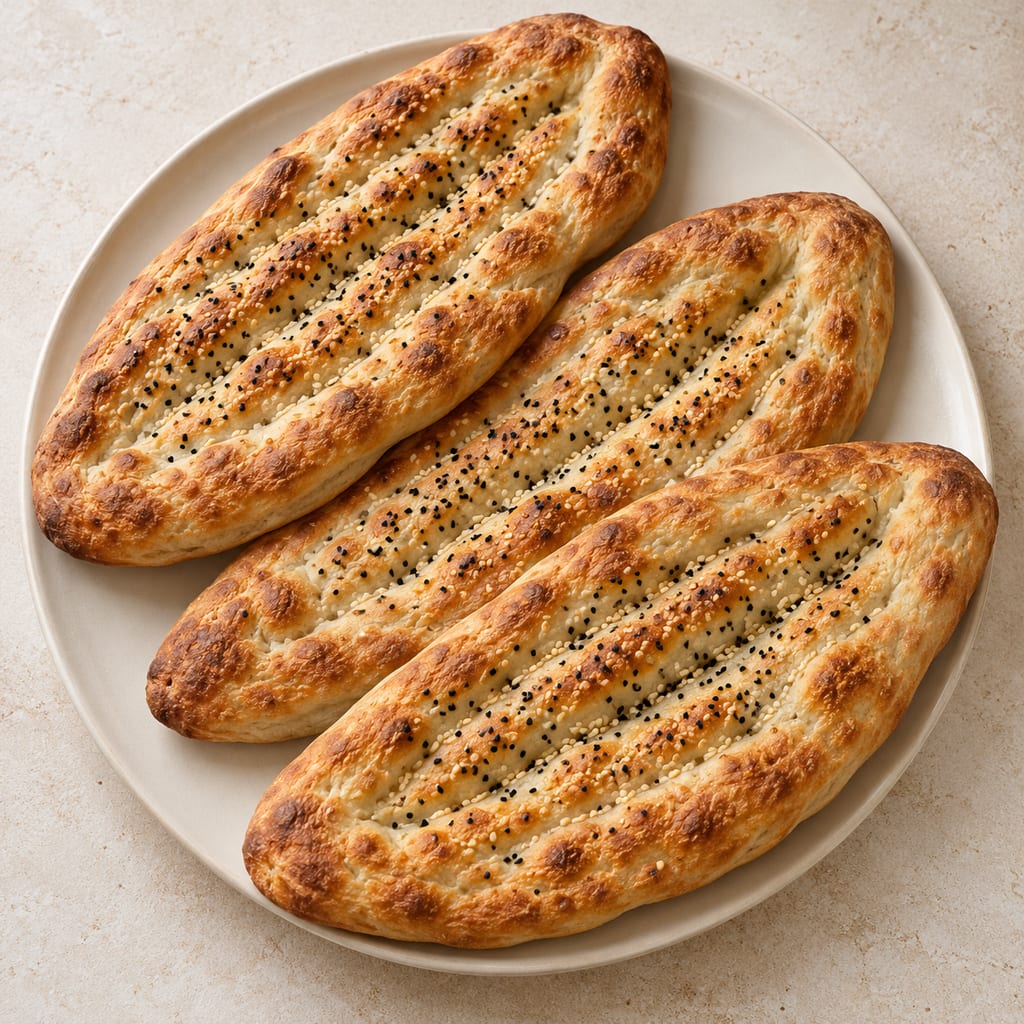
A long oval Afghan wheat bread, leavened with yeast, grooved along its length and baked until crisp outside and chewy within.
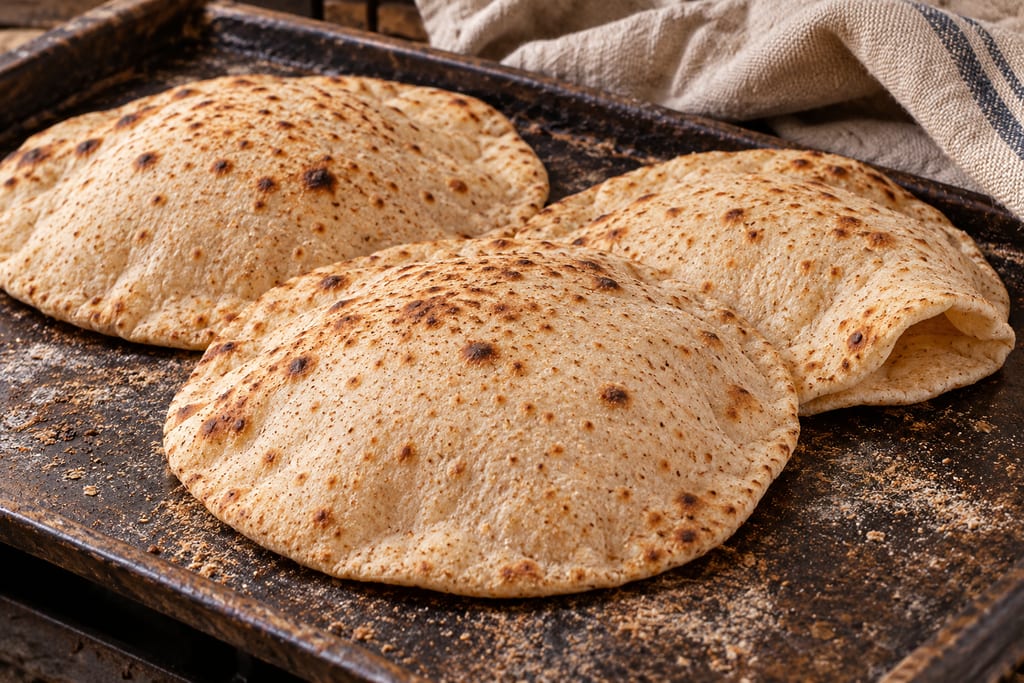
This home adaptation of Egyptian aish baladi uses a refrigerated yeast biga, whole-wheat dough, bran dusting and a very hot baking surface to make 16 pocketed rounds.
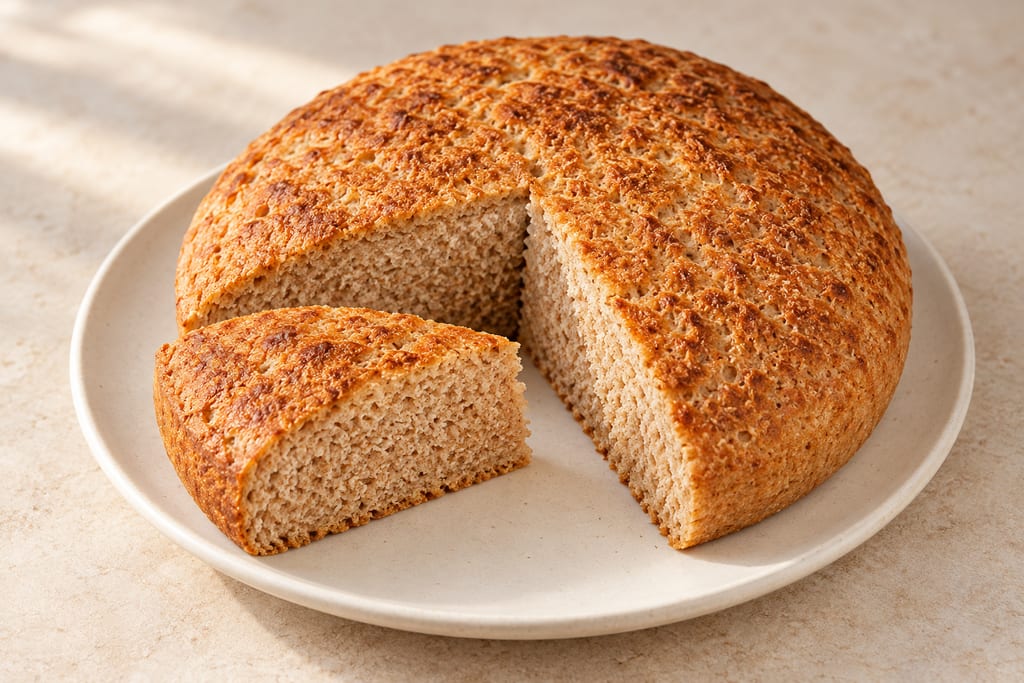
This oven-baked Amdo balep uses yeast, whole-wheat and white flour, a long covered rise and a two-sided bake in a heavy oven-safe pot.
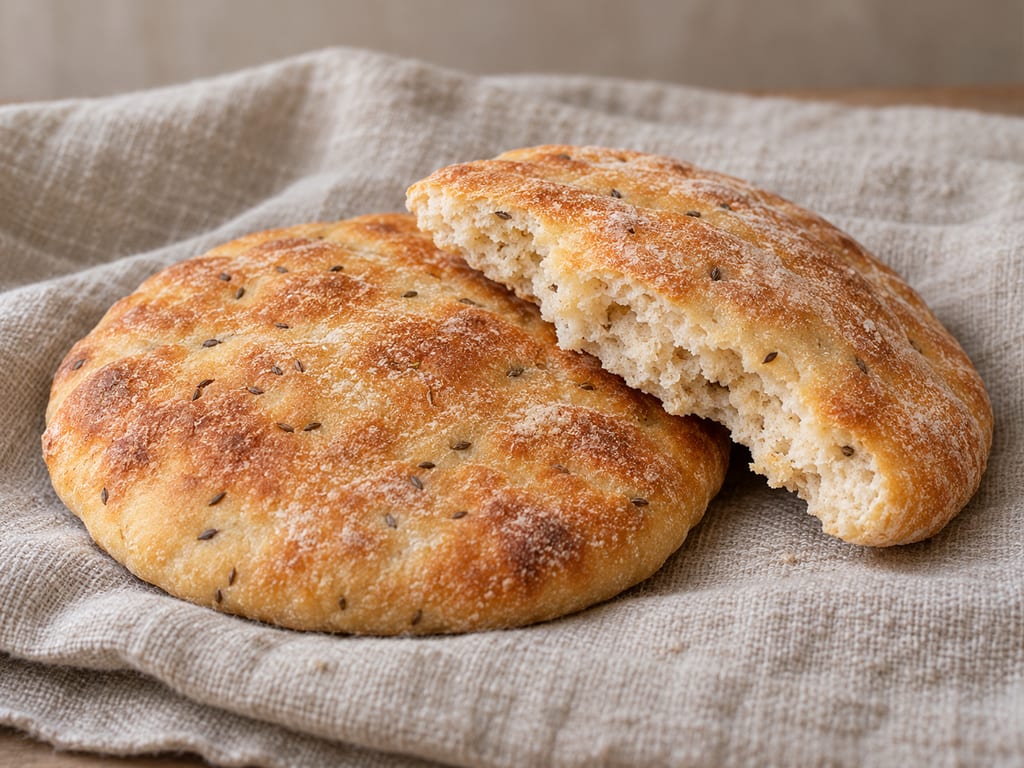
A measured, yeast-raised Ayacucho chapla home method shared by Thermomix Peru presenter Roxanna Salaverry. It makes thin, anise-scented rounds baked at 240°C; the historic qunchu-leavened form is documented separately.
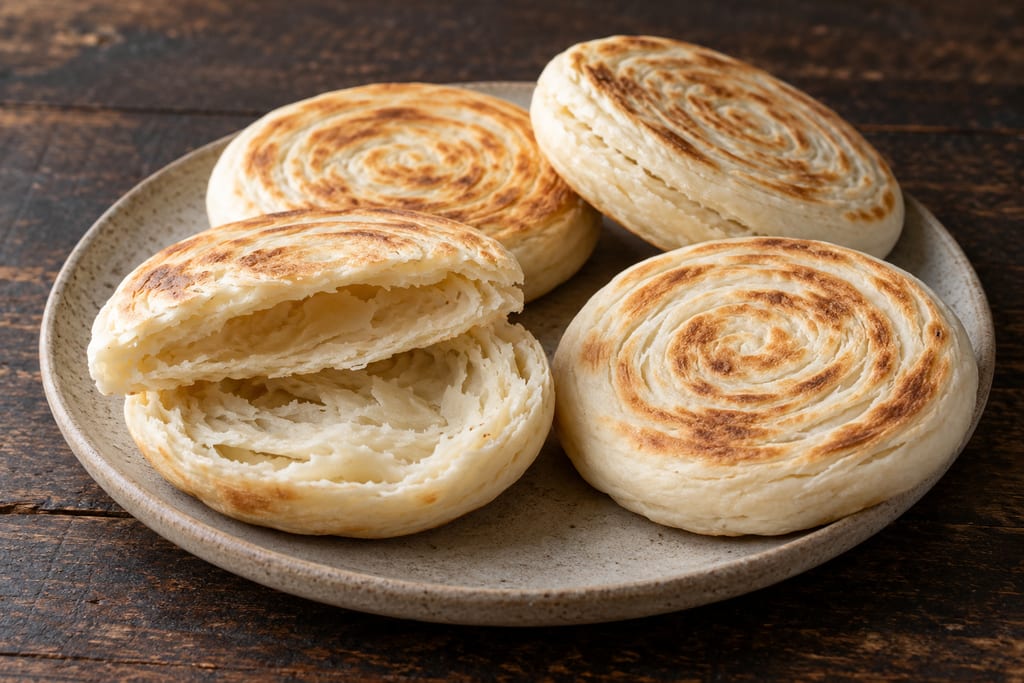
This Shaanxi-associated yeast flatbread uses a simple water dough, coiled shaping and a skillet bake. It is the bread used in roujiamo, not the filled meat dish.
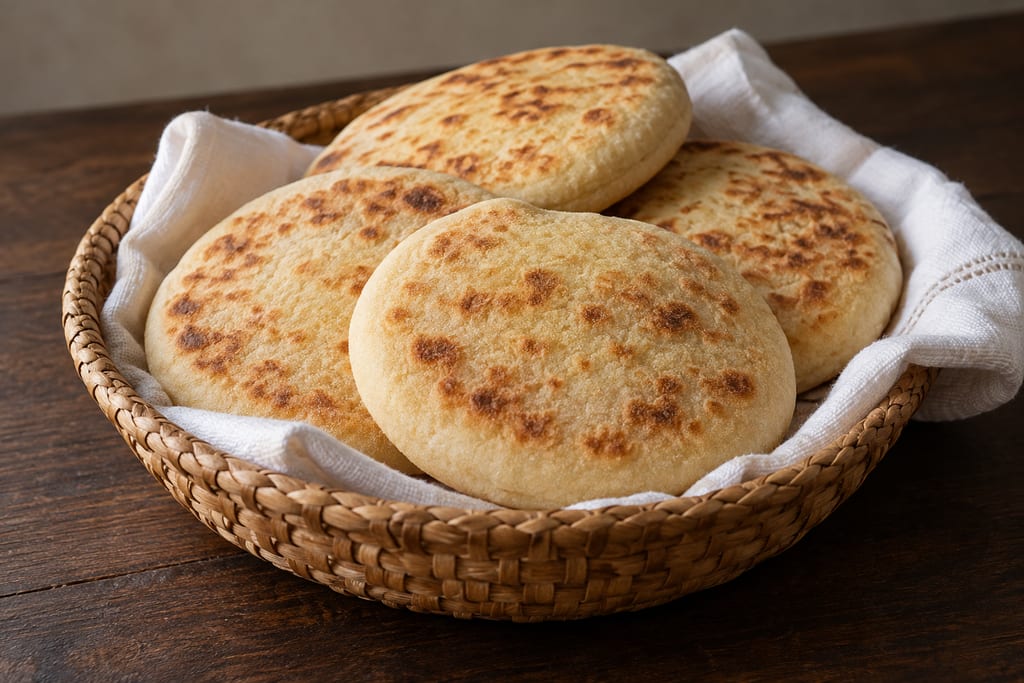
A Moroccan yeast-raised semolina pocket bread cooked on a dry pan or griddle; this measured batch makes about twenty 4-inch rounds.
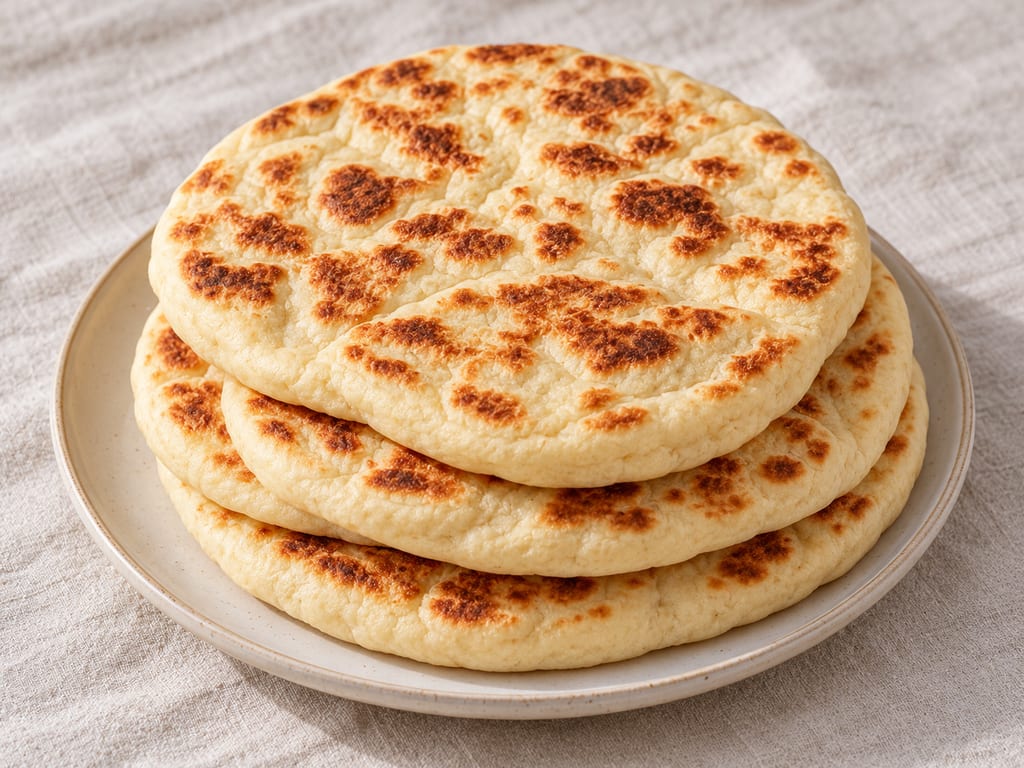
This Turkish bazlama uses yeast, plain yogurt and olive oil for a soft dough cooked in a skillet. Shape it into twelve small or six larger rounds, flip as bubbles appear, and wrap the breads to keep them soft.
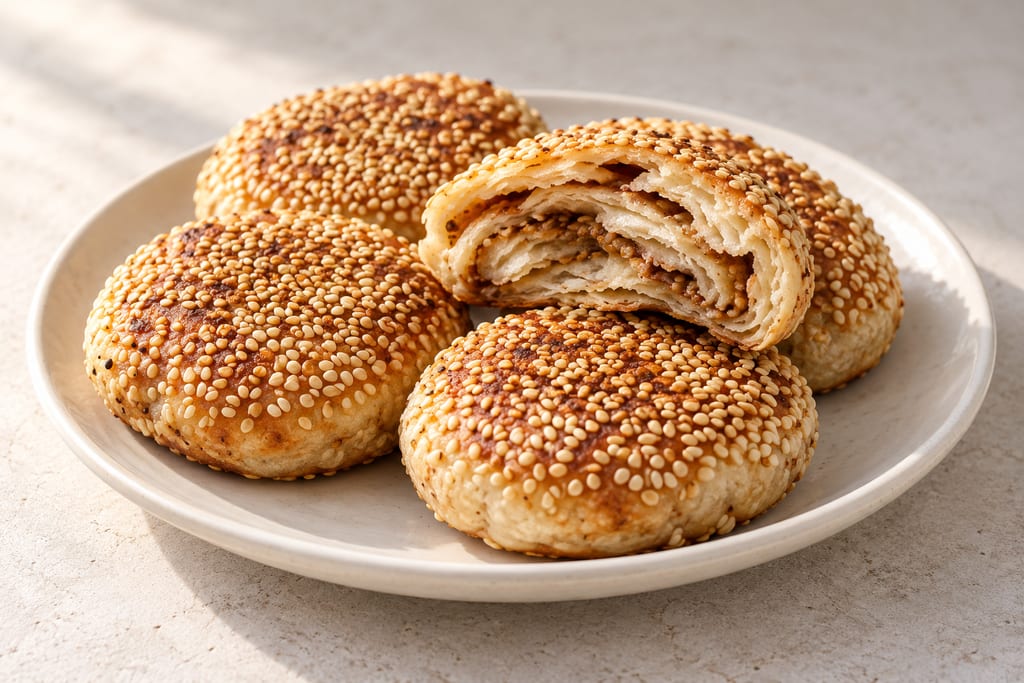
A Beijing-style yeast dough is layered with seasoned sesame paste, sealed into small buns, briefly pan-fried, seeded, and baked.
No community contributions have been published for this entry yet.
Sign in to contribute. Published comments and photos are free to read.
Slow Food Foundation for BiodiversityHistory · Geography · Uses
TabounaTunisian round bread and clay oven association
Béja and jerdga in Nefza
traditional makers face industrial bread pressure
semolina, wheat or barley flour described
Cited in: The bread and its oven; Place, names and changing practice; Semolina and fermentation; Variations and serving
Heidelberg University PublishingHistory · Geography · Method
Traditional Recipes from il-Kǟf (Northwestern Tunisia)2019 fieldwork published in 2022, one El Kef woman's account
fine semolina or flour; firewood-heated clay gōža and wall baking
Cited in: The bread and its oven; A history with limits; Place, names and changing practice; Semolina and fermentation; Traditional wall baking and home adaptation; Variations and serving
Journal of Ethnic FoodsHistory · Method
Traditional flat breads spread from the Fertile Crescent: Production process and history of baking systemsReview of traditional flatbread production and baking systems
Cited in: A history with limits; Traditional wall baking and home adaptation
Regione Autonoma della SardegnaHistory
Impianto di panificazione della Casa di Talco: forno tabounaArchaeological page describes Phoenician-Punic baking installation and related wall-baking oven form
Cited in: A history with limits
La TunisienneMethod · Ingredients · Uses
Khobz tabouna de semoule (pain traditionnel tunisien à la semoule)Durum semolina, salt, baker's yeast, oil, water as needed, optional fennel
15-minute knead, oil at end, two rounds, 250°C, 15–20 minutes
Optional fennel and hot serving
Cited in: The bread and its oven; Semolina and fermentation; Traditional wall baking and home adaptation; Variations and serving; Home-oven method
New Mexico State University Cooperative ExtensionMethod
Breadmaking (Guide E-206)General yeast, gluten and gas retention explanation
Cited in: Semolina and fermentation
Centers for Disease Control and PreventionSafety
Raw Flour and DoughRaw flour and uncooked dough can contain germs; do not taste raw dough, keep it separate from ready-to-eat food, and wash hands, utensils and surfaces after handling.