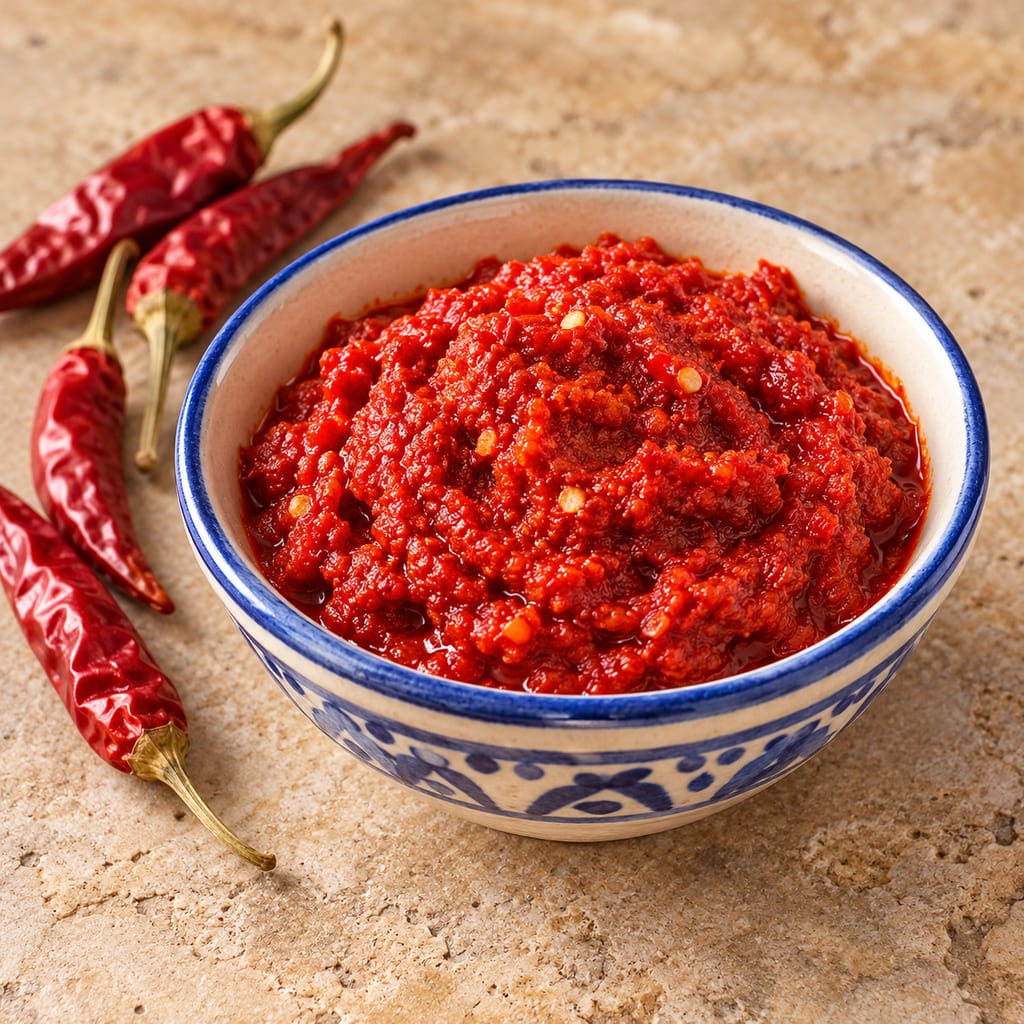
Harissa
A Tunisian hot chilli paste from Cap Bon and Nabeul: red peppers pounded with garlic, caraway, coriander, cumin and olive oil, with many household and commercial variants.
 FermenteaWhere food goes to change
chermoula · Tunisian chermoula · Chermoula tunisienne · Charmoula of Sfax
In Tunisia chermoula is a cooked sweet-sour dish: floured fried fish returned briefly to a sauce of onions cooked in oil with harissa, vinegar, water, honey and raisins.

In Morocco chermoula is a raw herb marinade: crushed cilantro, coarse salt and garlic with paprika, chilli, cumin, lemon, olive oil and tomato paste, in which fish rests before cooking. In Tunisia the same name belongs to something quite different, a cooked sweet-sour fish dish. Gobert's entry in the Encyclopedie berbere records forms in Bizerte, Tunis and Sfax, and this page follows the version in which fried fish is finished in an onion and raisin sauce.
The fish is seasoned with harissa, cumin and salt and left to rest, then floured and fried. Onions are cooked in oil with harissa, vinegar and water, honey and raisins go in, and the fried fish goes back into the sauce briefly. The vinegar and honey give the sweet-sour balance, the raisins sweetness and body, and harissa the heat.
Gobert records an Eid al-Fitr context in Sfax and the dish's use as provisioning for pilgrims. The same entry compares chermoula with a dish in Apicius, but explicitly treats the link as uncertain, so no ancient Roman origin can be claimed. The historical remark that the dish kept for long days has no modern temperature or packaging conditions attached.
The account states no mass of fish or onion, no oil volume and no timings, and measures honey in an unstandardised glass. Nothing validates storage of the cooked sauce. Treat Moroccan fish marinade, cooked Moroccan tagine and this Tunisian dish as related named preparations rather than one recipe.
Gobert records Bizerte, Tunis and Sfax forms, an Eid al-Fitr context in Sfax and provisioning for pilgrims. The entry compares chermoula with Apicius but treats the connection as uncertain, and it establishes no ancient Roman origin.
Scaling: not established
Fish is a major allergen.
The source gives no storage conditions; Gobert's historical remark that the dish kept for long days has no modern temperature or packaging conditions and is not a storage guide. Cook the fish thoroughly and refrigerate leftovers.
Gobert records forms in Bizerte, Tunis and Sfax and an Eid al-Fitr context in Sfax; the entry names no single place of origin.
A Tunisian hot chilli paste from Cap Bon and Nabeul: red peppers pounded with garlic, caraway, coriander, cumin and olive oil, with many household and commercial variants.
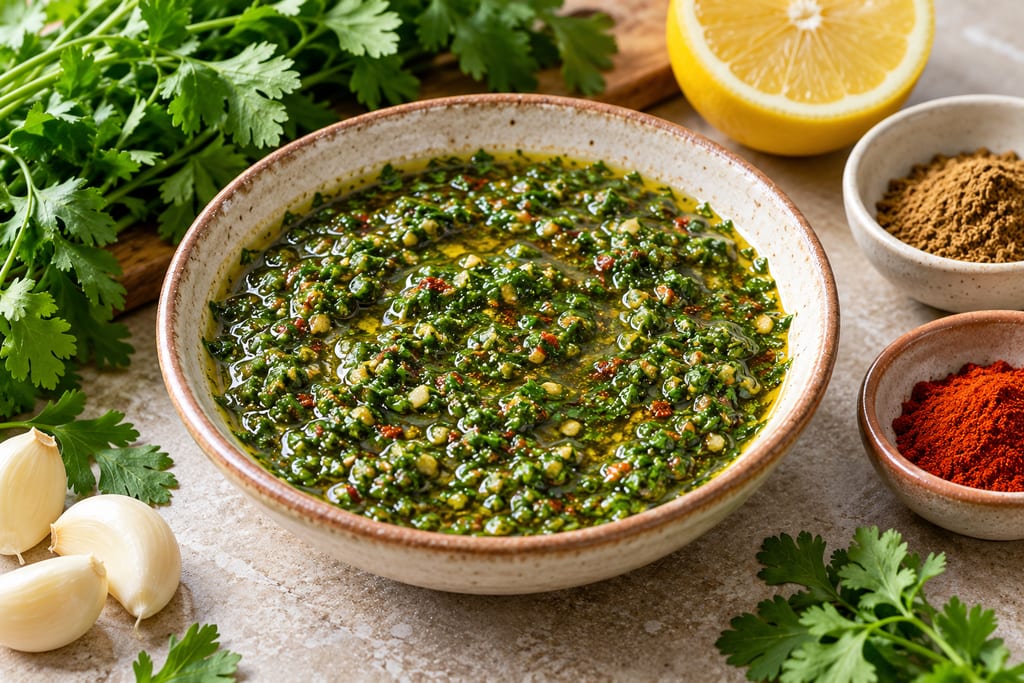
Fresh chermoula is a chopped-herb Moroccan-style sauce of coriander, parsley, garlic, lemon, olive oil and warm spices, made here as an explicitly untested development formula.
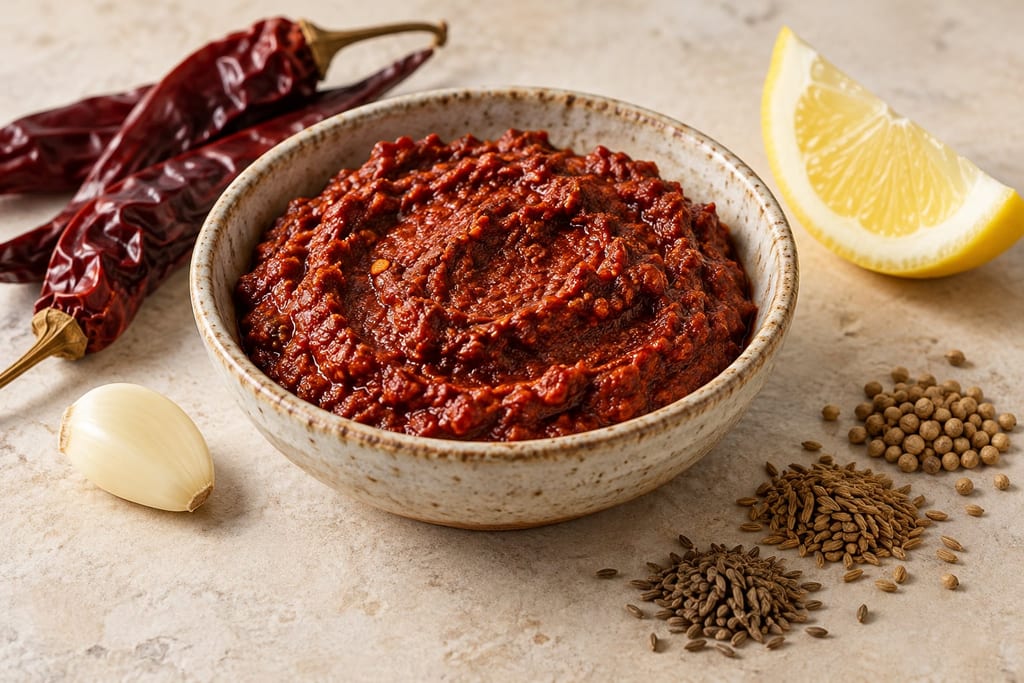
A fresh chilli paste made from rehydrated dried red peppers, garlic, olive oil, lemon and warm spices; this small-batch formula adapts the harissa family rather than reproducing a tested Tunisian method.
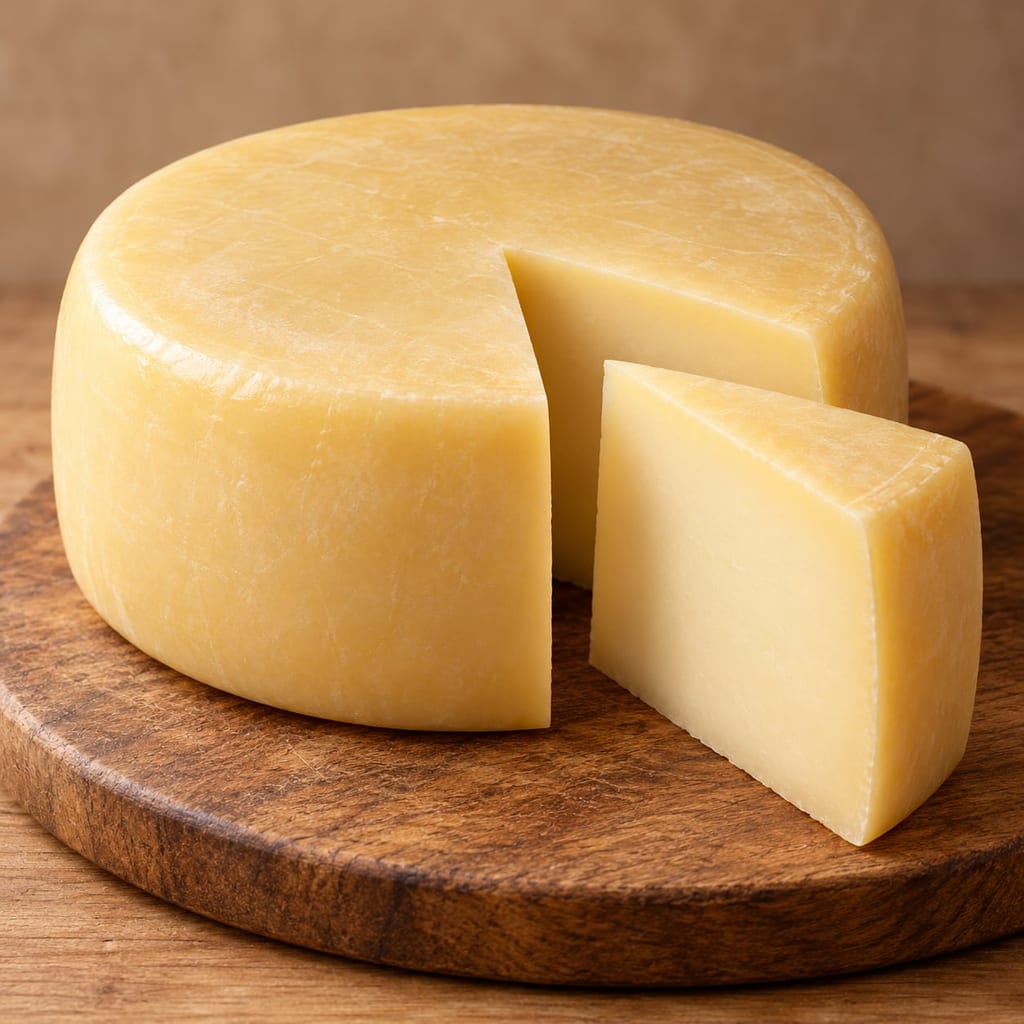
Kashkaval is a firm sheep-milk cheese whose acidified curd is worked in hot brine. This large-batch method finishes with repeated dry salting, wax coating and cool ripening.
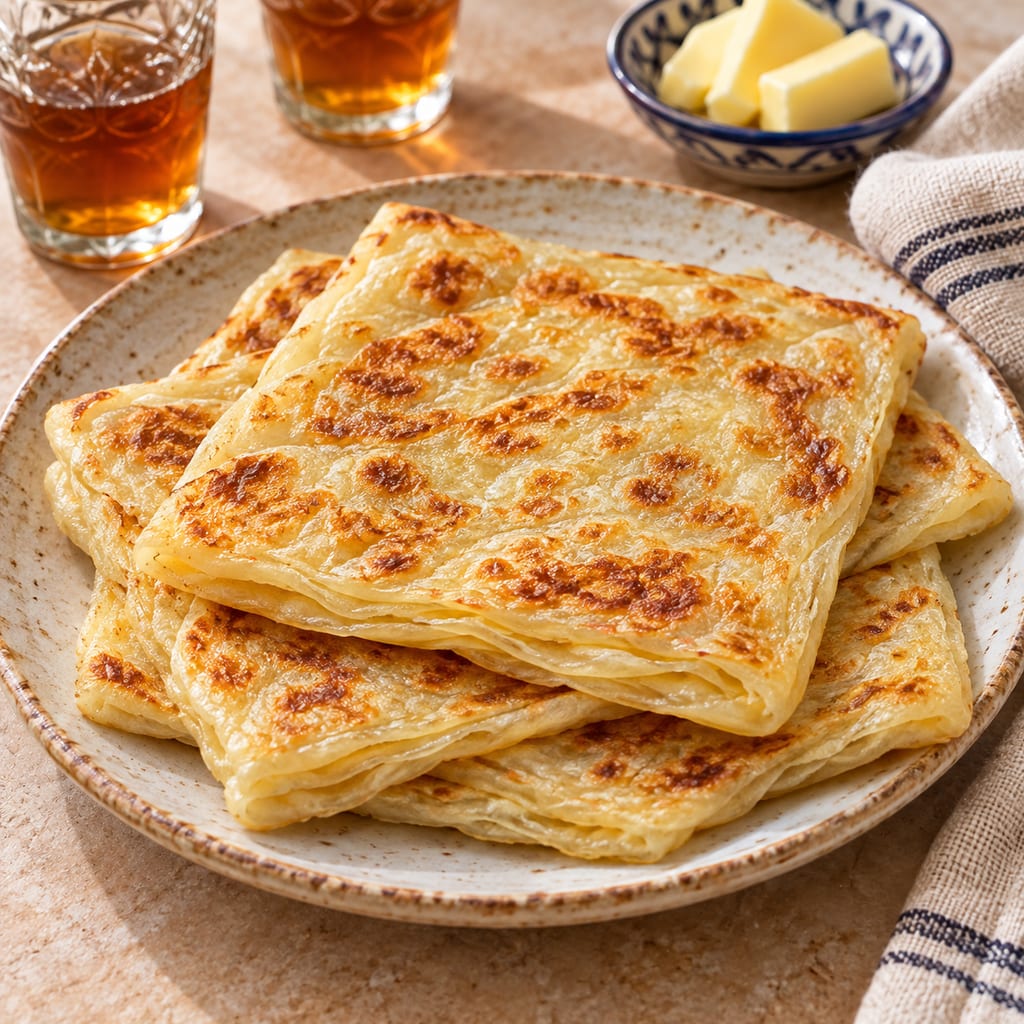
A square Moroccan layered griddle bread made from lightly yeasted wheat dough, stretched thin, folded with semolina and butter, and cooked until crisp and golden.
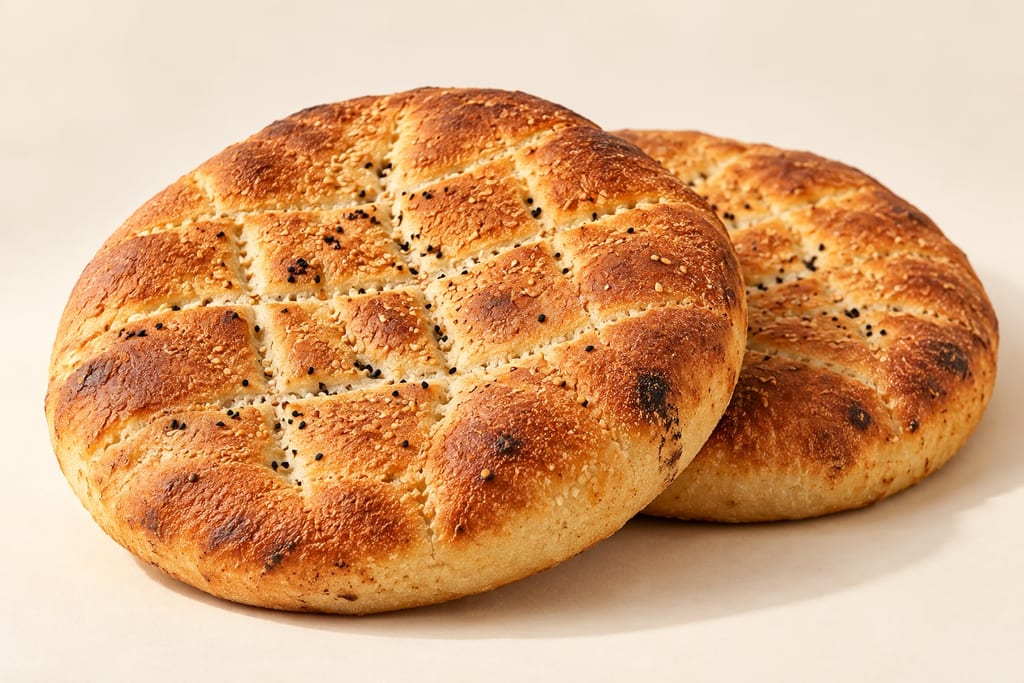
A Tunisian round semolina bread named for the clay oven in which it is traditionally baked, recorded here through one home-oven recipe.
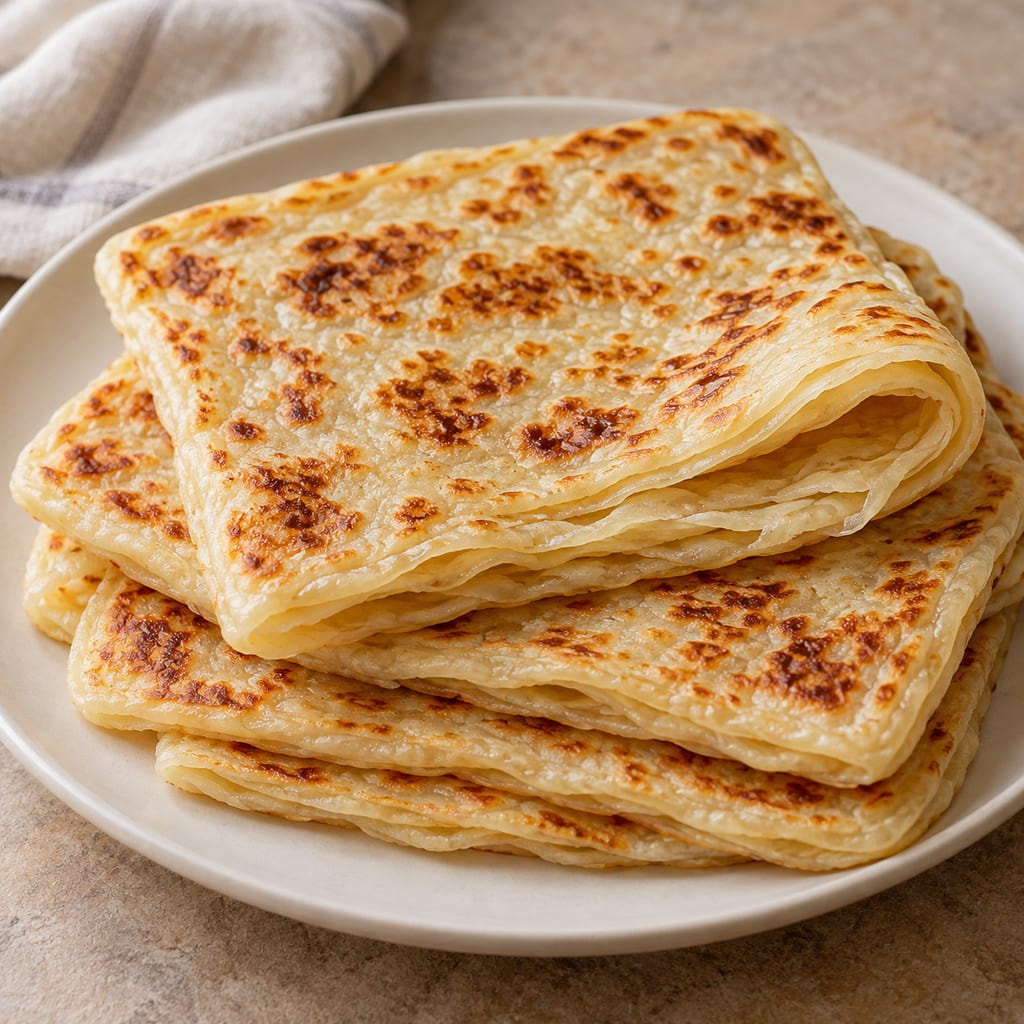
A Tunisian semolina flatbread, stretched with oil, folded into layers and cooked in a pan.
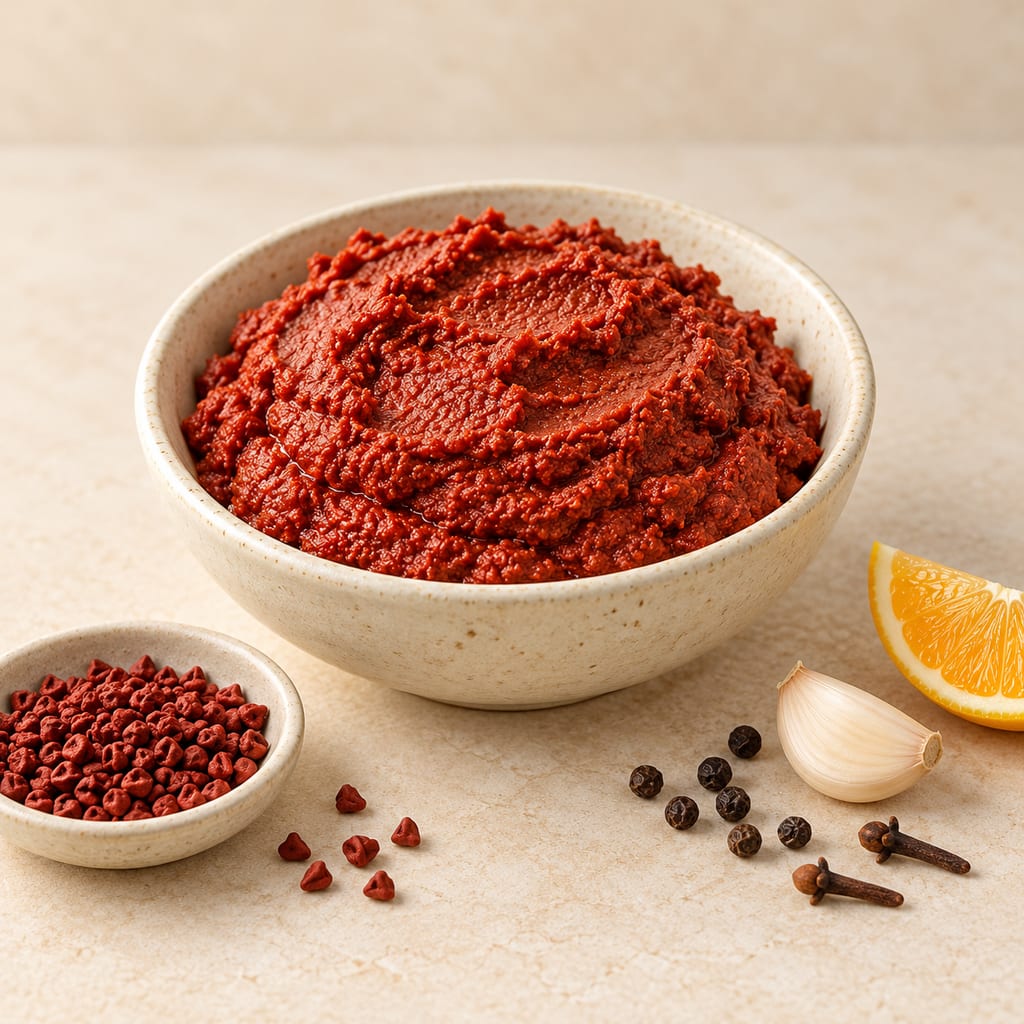
A Yucatecan recado rojo is a brick-red seasoning paste built on annatto seed, garlic and sour orange. This measured home version shows one route into a much wider family of market and household recados.
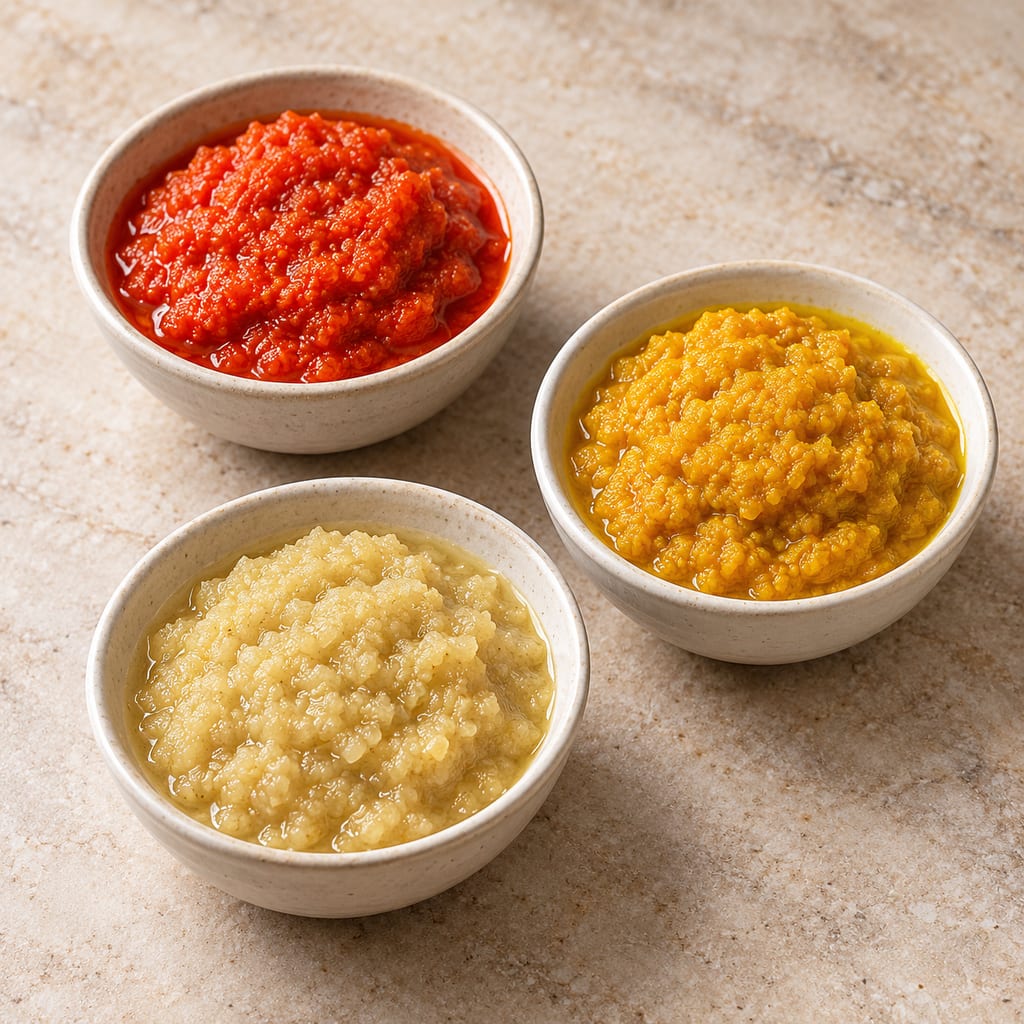
Bumbu dasar are the ground spice bases of Indonesian cooking: a white paste of shallot, garlic and salt, with chile added for red and turmeric for yellow, cooked into dishes.
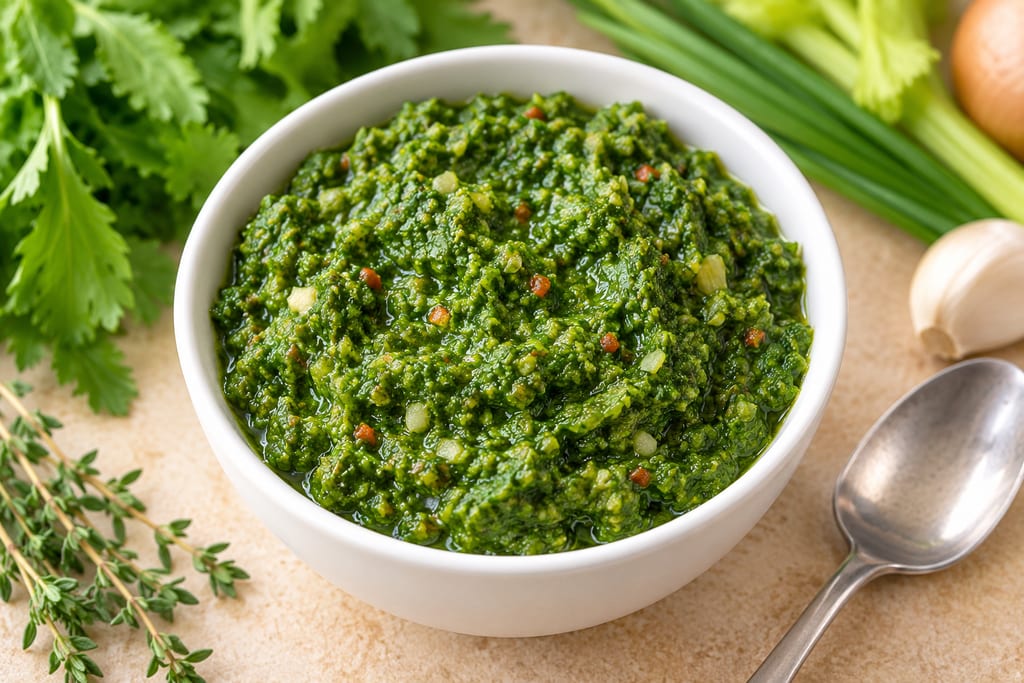
A fresh herb and aromatic paste of chadon beni (culantro), thyme, chives, celery, onion, garlic and peppers, blended with vinegar and water and used as the base for Trinidadian cooking.
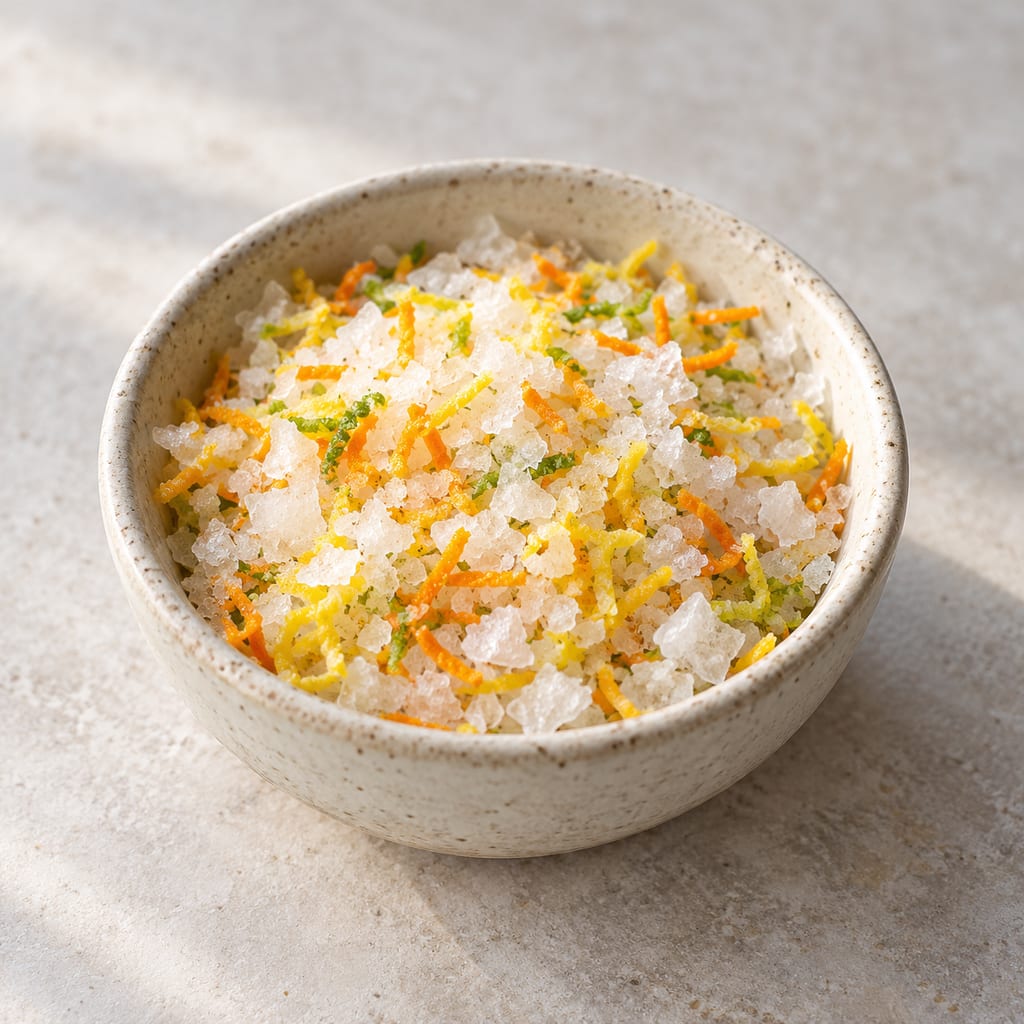
Citrus zest is rubbed into coarse or flake salt and dried on a tray. This peel-based seasoning preserves the chosen citrus aroma without adding juice.
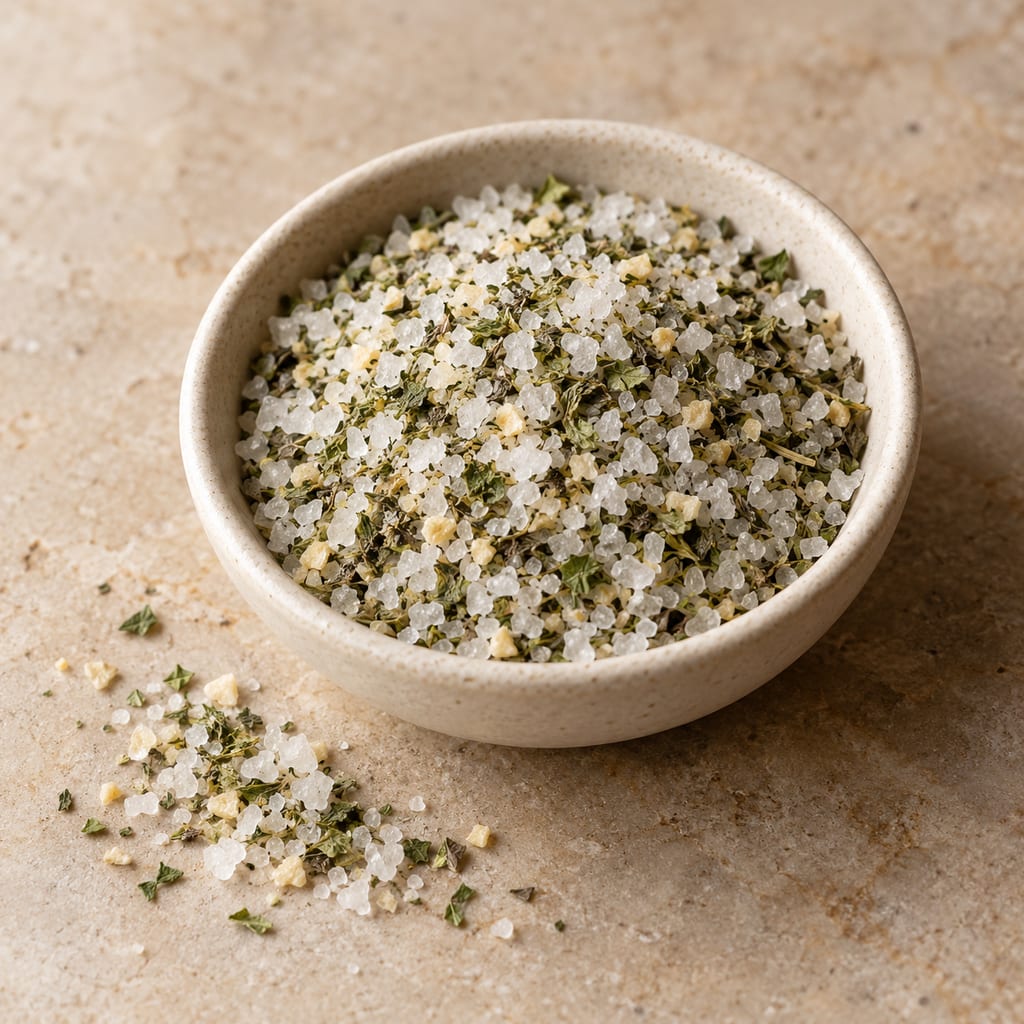
Fresh garlic and pungent herbs are chopped with kosher salt, then dried in the warmth of a switched-off oven. The blend keeps the selected herbs together in one seasoning.
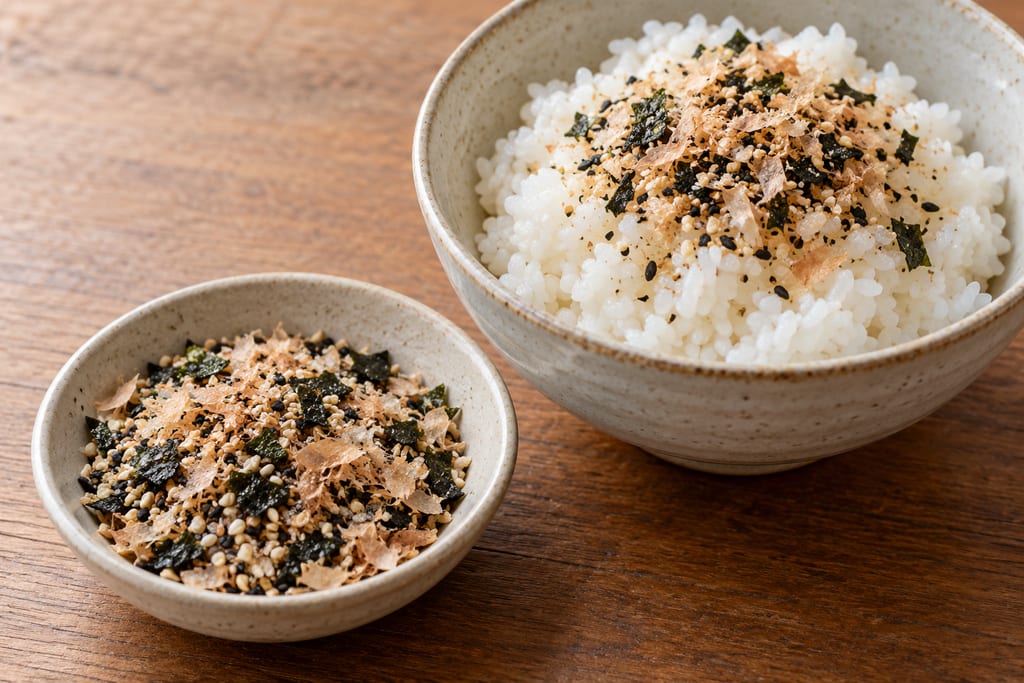
A dry Japanese rice seasoning of sesame, bonito, nori, sugar and salt. This documented home blend is one specific formula within a varied category with several early product histories.
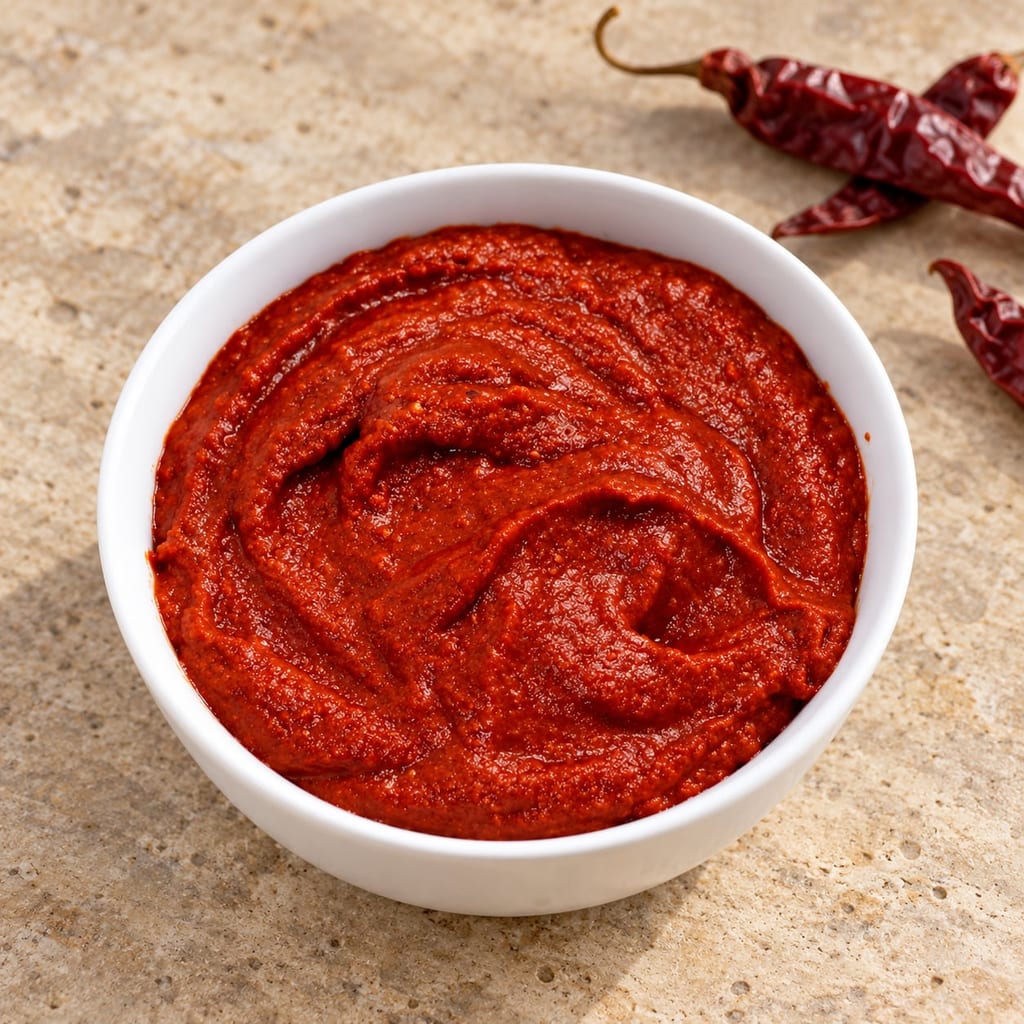
Recheado is a red Goan spice paste of Kashmiri chillies, garlic and spices ground in vinegar, best known as the stuffing for fried fish such as mackerel.
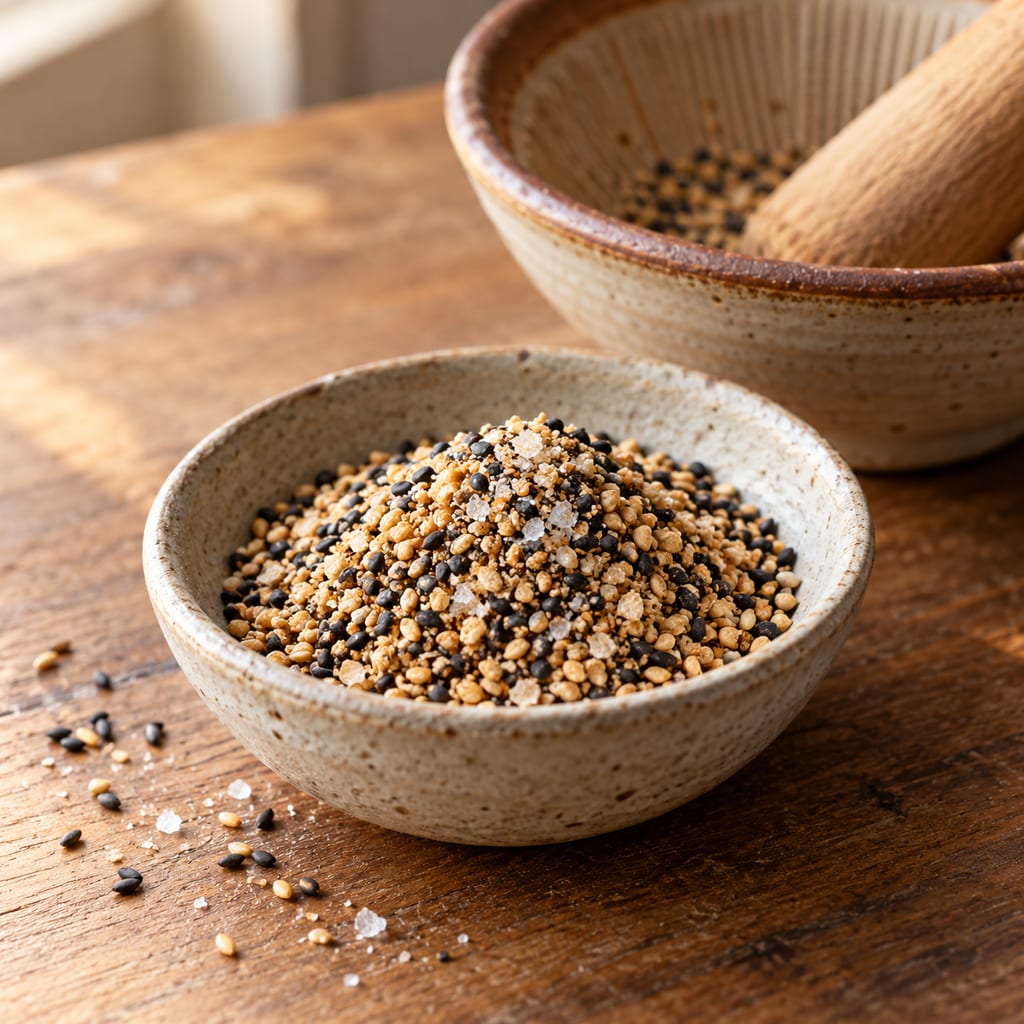
Toasted sesame seeds and sea salt are ground together into a coarse seasoning for rice. This small pan-roasted batch keeps most of the seed texture.
No community contributions have been published for this entry yet.
Sign in to contribute. Published comments and photos are free to read.
Encyclopedie berbere / OpenEdition (Gobert, 1993)Method · History · Regional variation
ChermoulaBizerte, Tunis and Sfax forms; fish seasoned with harissa, cumin and salt, rested, floured and fried; onions cooked in oil with harissa, vinegar and water, then honey and raisins, and the fried fish returned briefly to the sauce.
Eid al-Fitr context in Sfax and provisioning for pilgrims; comparison with Apicius treated as uncertain.
The article's reading was inherited from an earlier review; the page itself returned a verification challenge on the latest attempt.
Cited in: A sauce named like a marinade; Occasions and history; What the sources do not give
World Intellectual Property OrganizationComparison
Scoping study on the gastronomic tourism sector in MoroccoThe Moroccan chermoula is a different preparation: Houari Hossin's fresh herb marinade of crushed cilantro, coarse salt and garlic with paprika, chilli, cumin, lemon, olive oil, water and tomato paste for fish.
Cited in: A sauce named like a marinade