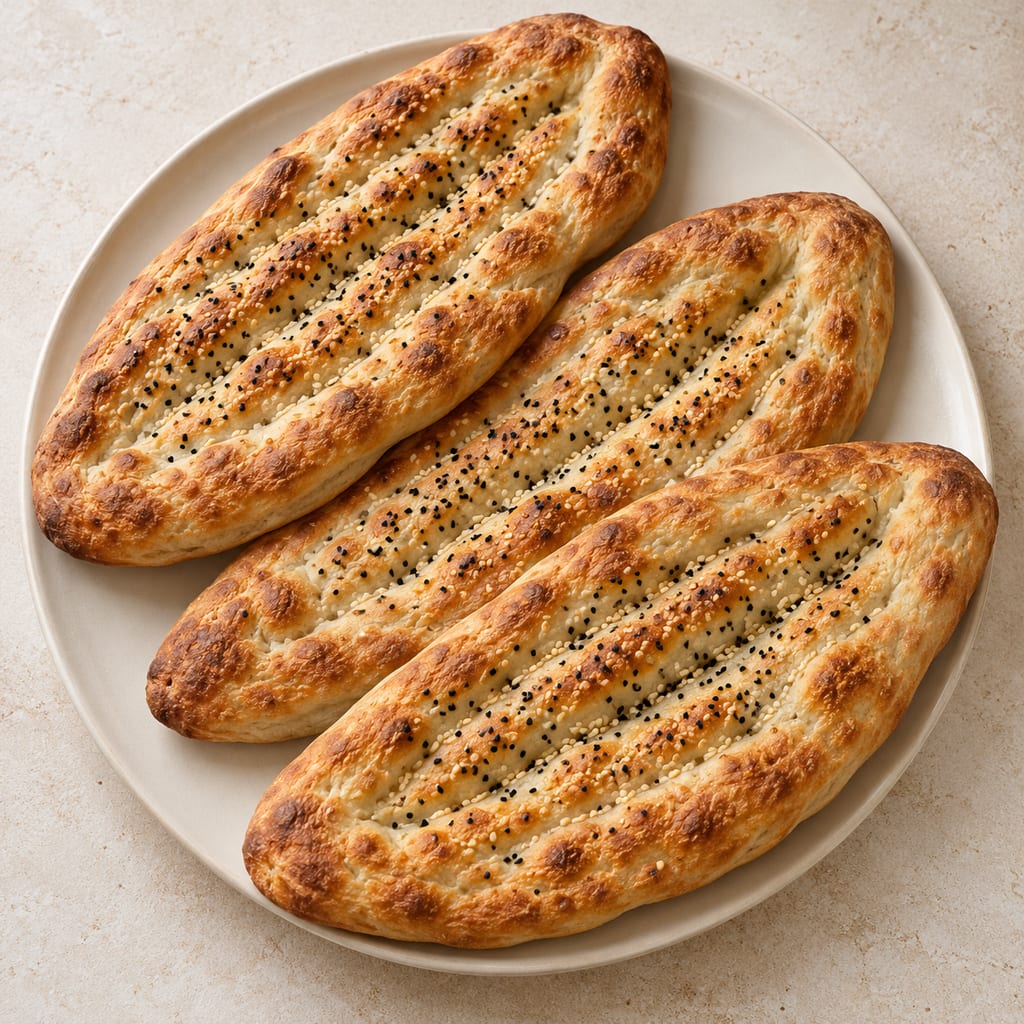
Afghan naan
A long oval Afghan wheat bread, leavened with yeast, grooved along its length and baked until crisp outside and chewy within.
 FermenteaWhere food goes to change
Naan bread
Naan is a South Asian wheat flatbread; this eight-piece home version uses a yogurt-enriched yeasted dough cooked on a hot skillet or griddle.
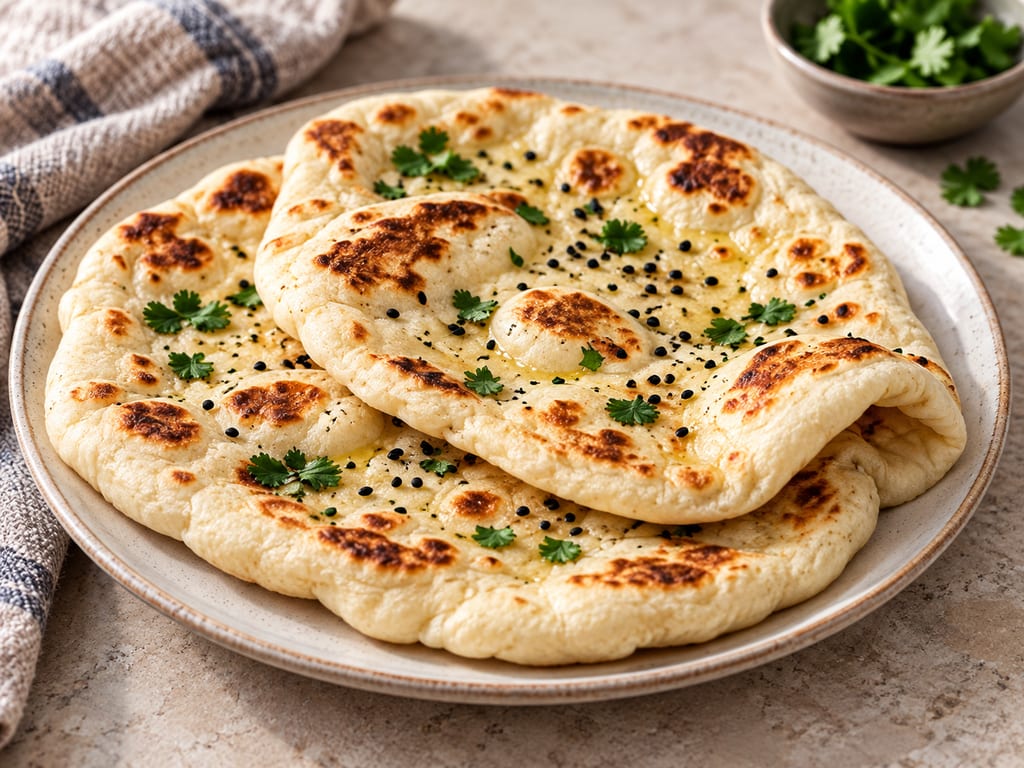
Naan names a range of wheat flatbreads associated with South Asia. This recipe is one defined home version: yeasted dough enriched with full-fat yogurt and a little melted fat, shaped into individual breads and cooked on a skillet or griddle. It is not a composite of every bread that carries the name. Afghan, Burmese, Uyghur and other named breads have their own records and methods.
Tandoor baking is a familiar method for naan, but this formula is adapted to household equipment. A cast-iron skillet or electric griddle supplies the cooking surface. The recipe's medium-high setting is qualitative; it does not establish a surface temperature or reproduce a tandoor's heat, airflow or wall-baking conditions.
A 2021 study of early modern South Asian food writing reports a reference to naan tunuk, described through a later cookbook as a wheat flatbread cooked on an iron griddle in Delhi royal kitchens. This is historical context for griddle-cooked bread, not proof of a first naan, a single place of invention, or continuity with the measured formula below.
The two wheat flours make up the dough structure. King Arthur Baking explains that bread flour adds strength and chew; the all-purpose flour balances it in this formula. Water hydrates the flour, while yogurt and melted ghee or butter enrich the dough. The source gives warm water without a numeric temperature, so warmth is not a measured fermentation control.
Instant yeast leavens the dough during the covered rise. Sugar and salt are included in measured amounts. The recipe's instruction to wait until the dough doubles is the observable endpoint; 50–60 minutes is guidance for the source's conditions, not a universal clock. The separate 20-minute rest after dividing gives pieces time to relax before shaping.
The optional nigella and cilantro are toppings. They do not define the dough or leavening. Other naan formulas use different flour blends, dairy, fats or raising agents; changing those ingredients would make a different formula.
The source divides the risen dough into eight portions of about 65 g each. Keep unused balls covered while rolling each one. The listed sizes offer a choice between thicker and thinner breads; they are alternatives for shaping the same batch, not extra yield.
The hot, dry cooking surface quickly forms bubbles and browned patches. The source gives 30–40 seconds for the first side and 40–50 seconds after turning, with visual checking. These short times depend on the pan, burner, dough thickness and heat. If the underside browns before the top bubbles, or the bread remains pale after the suggested interval, attend to the surface and adjust the burner rather than relying on a fixed timer.
Brush cooked naan with the 28 g melted fat reserved for topping. Nigella seeds and cilantro are optional. To serve the breads together, King Arthur suggests keeping them warm in a 200°F oven or wrapped in foil; that oven setting is for holding finished naan, not a dough-rise temperature.
Naan can accompany a meal or be used to scoop food. These recorded amounts and steps make one eight-bread batch. The dough and topping each use 28 g ghee or butter. The source does not establish a general scale-up ratio, numeric dough temperature, skillet-surface temperature or validated storage period; this record leaves those limits explicit instead of supplying guessed values. King Arthur Baking recommends storing the finished naan well wrapped at room temperature for two days or freezing it for longer storage; this is publisher advice, not a validated safety limit.
Flour is a raw agricultural ingredient and may contain harmful bacteria. Do not taste uncooked dough. Cook the naan before eating, wash hands after handling dough, and clean surfaces and utensils that touched it. The skillet or griddle is hot during cooking, so handle the equipment carefully.
Naan is associated with South Asia. A 2021 study of early modern South Asian food writing reports a historical reference to naan tunuk, a wheat flatbread cooked on an iron griddle in Delhi royal kitchens; this context does not date the full naan family or this modern formula.
Yield 8 flatbreads · Scaling: source batch only
Uncooked flour and dough can carry pathogens.
Hazard sourceCook naan on both sides as directed; wash hands and clean surfaces that contacted raw dough.
Control sourceDo not taste raw dough; raw flour is not ready-to-eat. Use care around the hot skillet or griddle.
King Arthur Baking calls naan South Asia's classic yeasted flatbread; this broad association does not claim one birthplace.
A long oval Afghan wheat bread, leavened with yeast, grooved along its length and baked until crisp outside and chewy within.
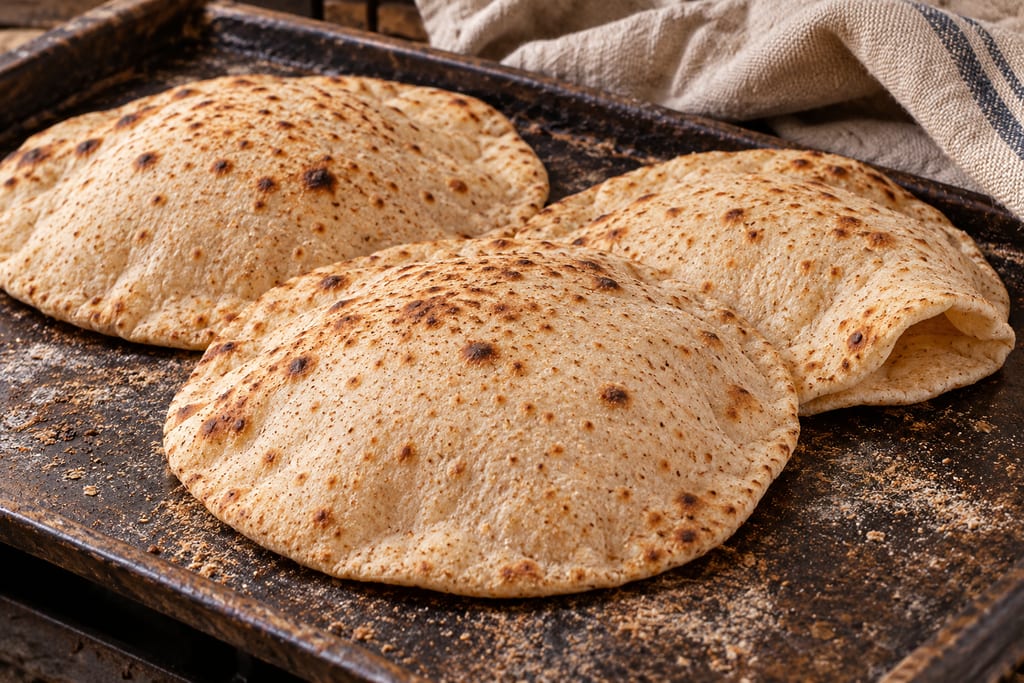
This home adaptation of Egyptian aish baladi uses a refrigerated yeast biga, whole-wheat dough, bran dusting and a very hot baking surface to make 16 pocketed rounds.
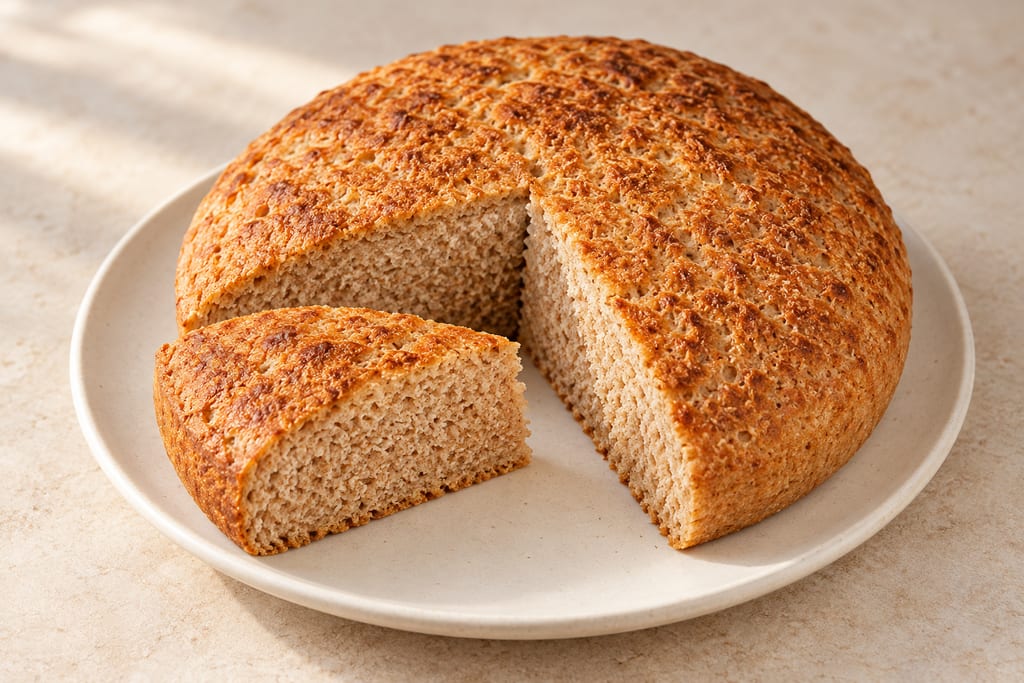
This oven-baked Amdo balep uses yeast, whole-wheat and white flour, a long covered rise and a two-sided bake in a heavy oven-safe pot.
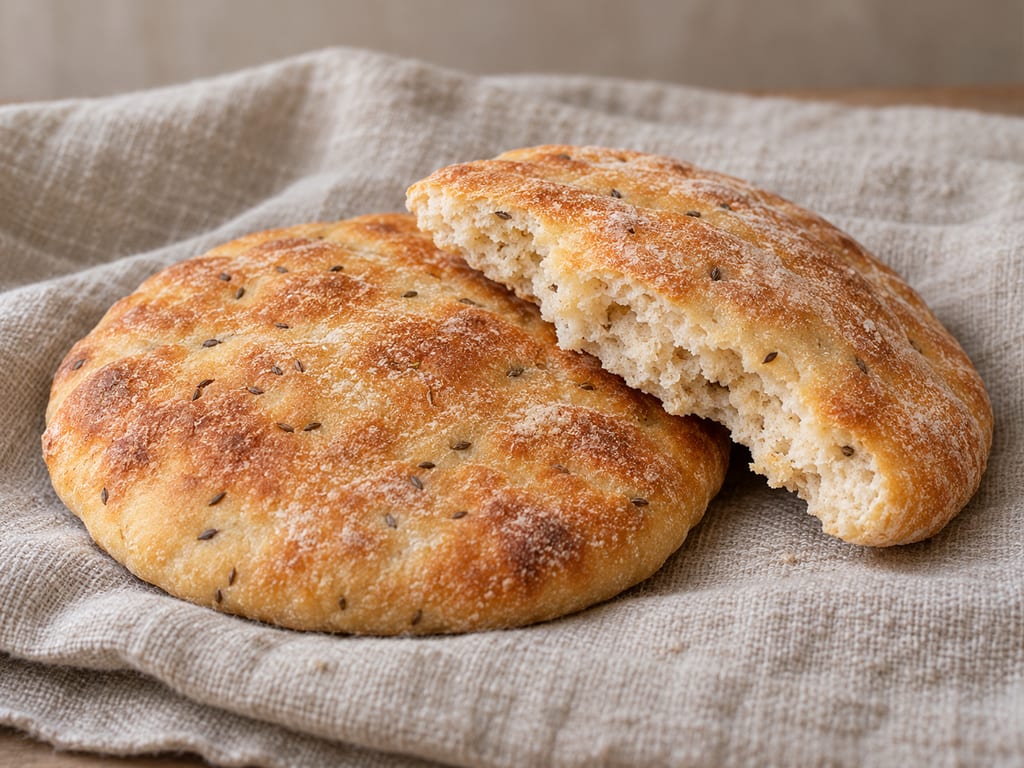
A measured, yeast-raised Ayacucho chapla home method shared by Thermomix Peru presenter Roxanna Salaverry. It makes thin, anise-scented rounds baked at 240°C; the historic qunchu-leavened form is documented separately.
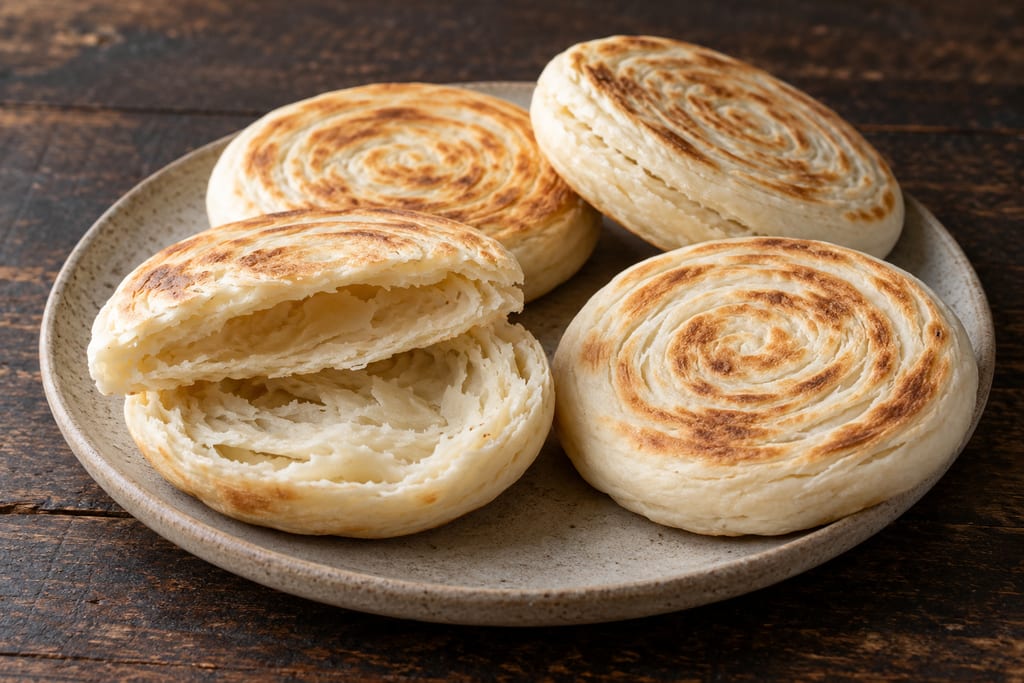
This Shaanxi-associated yeast flatbread uses a simple water dough, coiled shaping and a skillet bake. It is the bread used in roujiamo, not the filled meat dish.
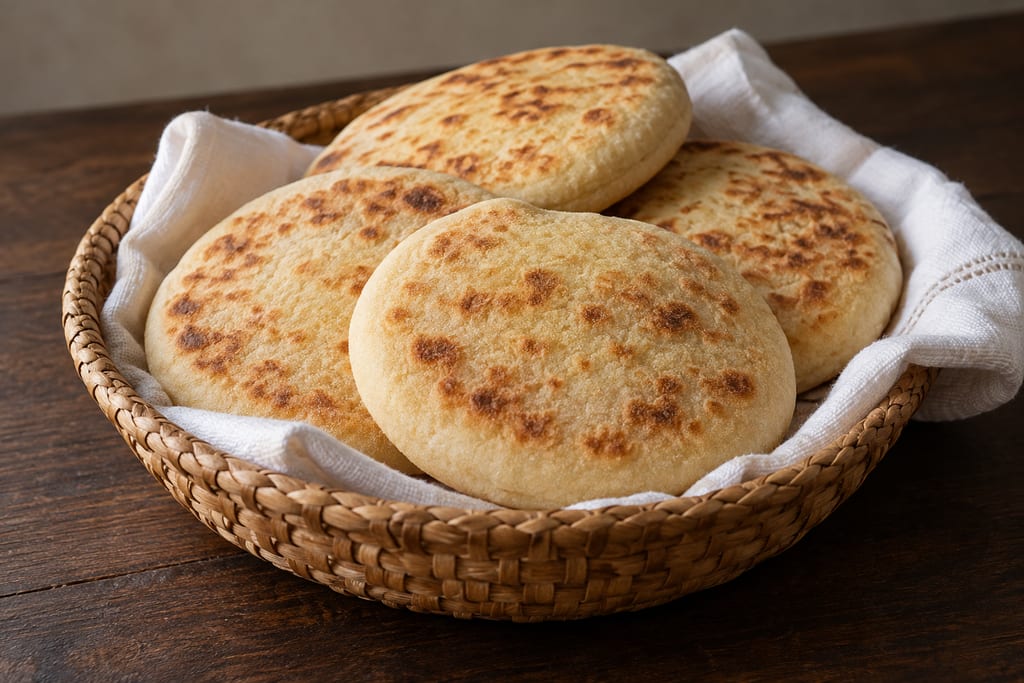
A Moroccan yeast-raised semolina pocket bread cooked on a dry pan or griddle; this measured batch makes about twenty 4-inch rounds.
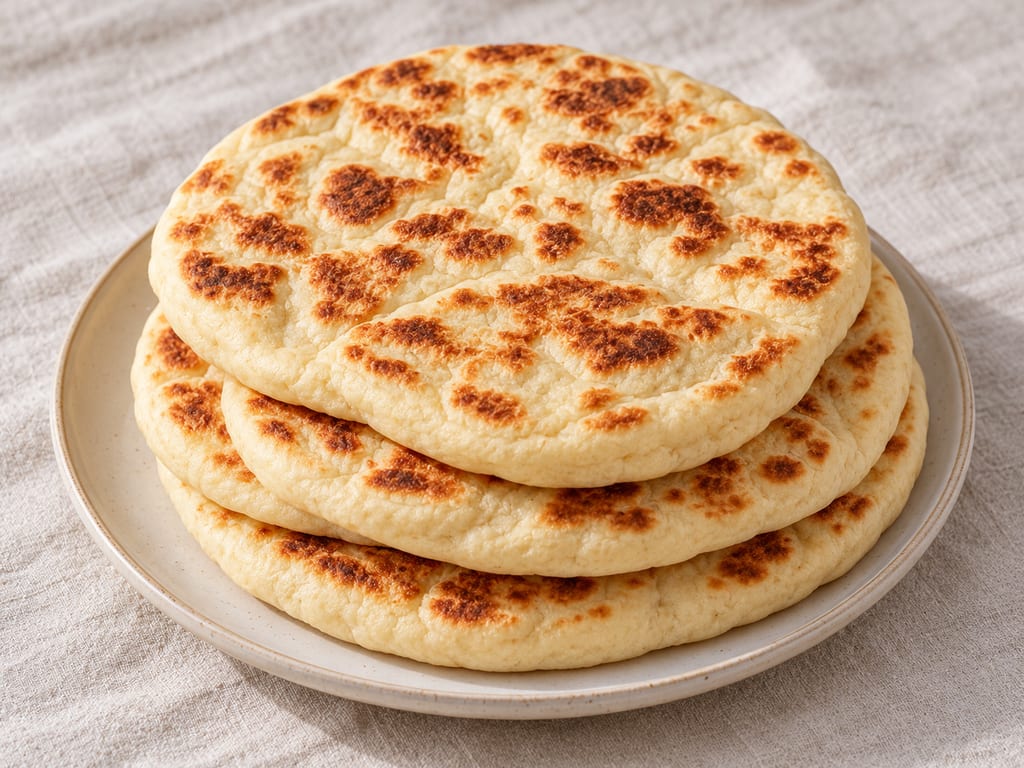
This Turkish bazlama uses yeast, plain yogurt and olive oil for a soft dough cooked in a skillet. Shape it into twelve small or six larger rounds, flip as bubbles appear, and wrap the breads to keep them soft.
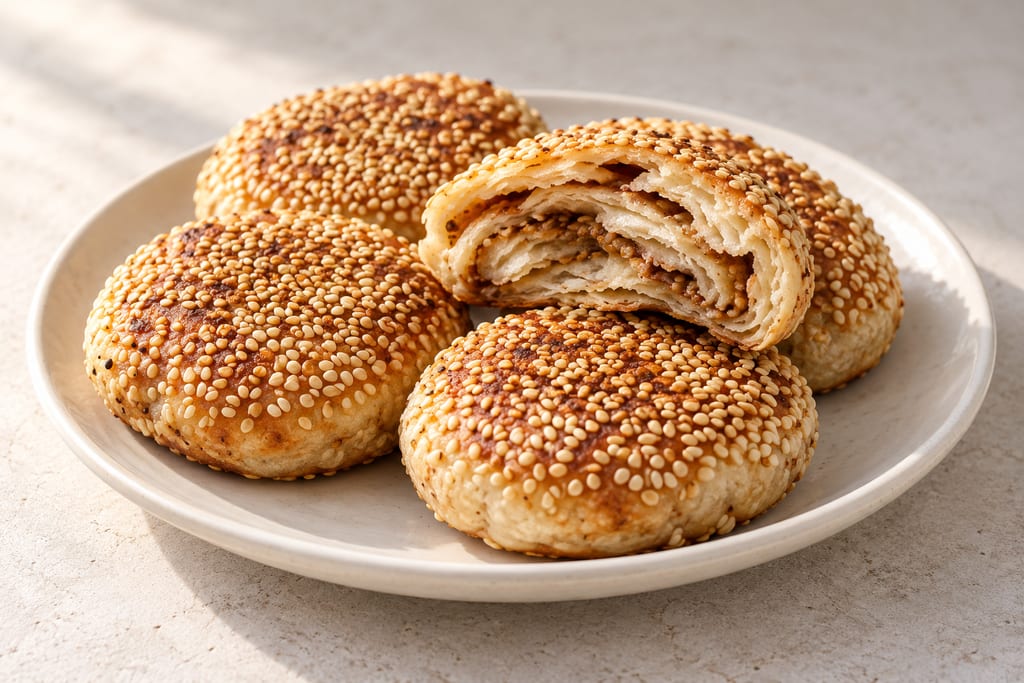
A Beijing-style yeast dough is layered with seasoned sesame paste, sealed into small buns, briefly pan-fried, seeded, and baked.
No community contributions have been published for this entry yet.
Sign in to contribute. Published comments and photos are free to read.
King Arthur BakingRecipe · Home method · Storage · Regional context
NaanEight-piece formula, amounts, rise/rest, shaping, skillet/griddle method, holding, South Asian association, and tandoor context.
The page also recommends keeping naan well wrapped at room temperature for two days and freezing it for longer storage; this is publisher advice, not a validated safety limit.
Cited in: A broad bread family; What the dough ingredients do; Shaping and skillet cooking; Serving and evidence limits
International Journal of South Asian StudiesHistorical context
Gastronomy, Household and State Formation in Early Modern South Asia: Representation of Food and Feasts in Indo-Persian SourcesEarly modern South Asian food and court settings; reports a historical mention of naan tunuk and iron-griddle cooking.
Cited in: A broad bread family
U.S. Food and Drug AdministrationSafety
Handling Flour Safely: What You Need to KnowRaw flour and dough are not ready-to-eat; cook and clean after handling.
Cited in: Serving and evidence limits