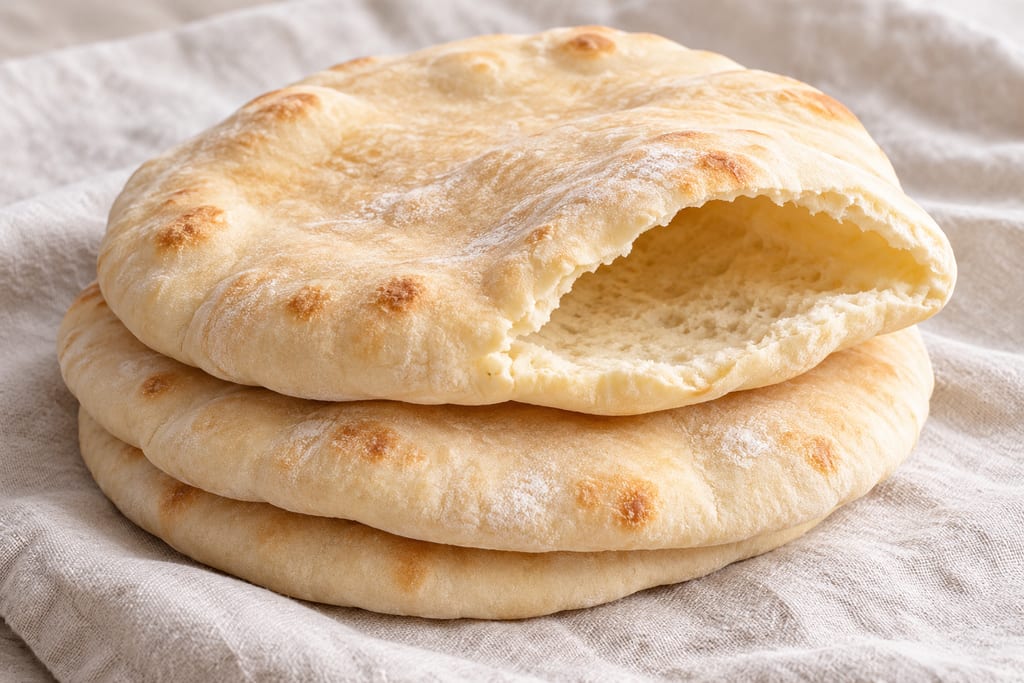
Pita
A yeast-raised wheat pocket bread; this measured oven version bakes eight soft rounds on a preheated stone or steel.
 FermenteaWhere food goes to change
manakish
Lebanese za’atar flatbread made from yeast dough, baked on a heated stone or heavy sheet pan until its rim is golden.
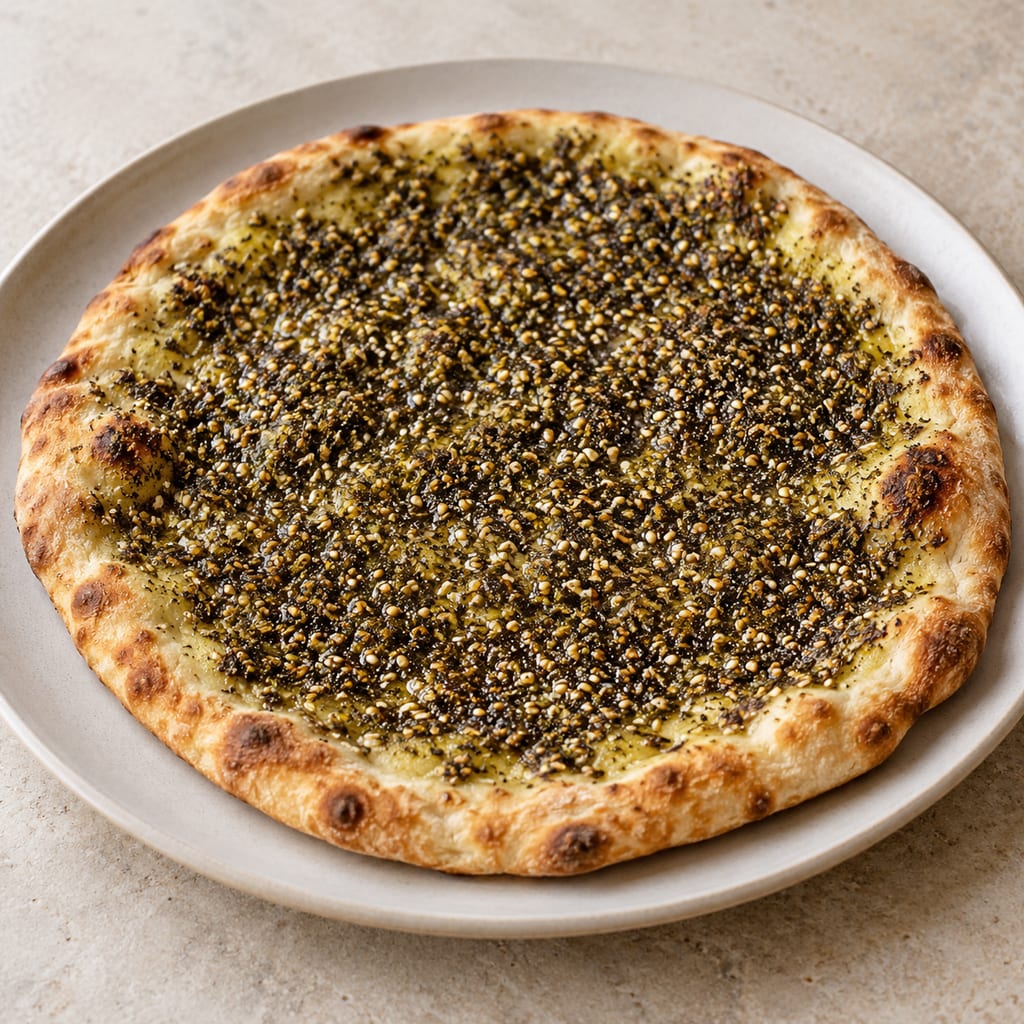
Man’oushe is a Lebanese flatbread commonly topped with za’atar mixed into olive oil. The recipe author describes it as breakfast food and recalls eating it in Beirut; she also recounts a very flat example in El Mtein. Other toppings and accompaniments appear in the account, but this formula is the za’atar version and does not include filled or cheese-topped variations. The page's total cook-time entry is 15 minutes, though it directs 7–10 minutes per loaf and says to repeat the bake for all four; it does not explain whether the loaves bake simultaneously.
The dough combines all-purpose and cake flours with yeast, sugar, salt, water and a little neutral oil. The author notes that cake flour contributes to a softer dough. After a first rise until doubled, the dough is divided into four balls and rested again, then rolled thin and spread with the za’atar mixture. A preheated baking stone or overturned heavy sheet pan gives the bread a hot surface; a peel or overturned pan helps transfer the dough safely.
The instructions give 400°F for a conventional oven, or 425°F for convection, and 7–10 minutes per loaf. Watch the edges for golden colour and use care around the heated stone or pan. Wheat flour is raw and can carry harmful bacteria: keep it away from ready-to-eat food, wash hands and tools after handling, and do not taste uncooked dough. This measured version makes four loaves; no tested scaling formula or storage duration is established. The source lists a half-cup each of za’atar and olive oil but calls for about 3 teaspoons of the mixture per loaf, so the stated batch makes more topping than the directions use; the remainder is not explained.
The modern recipe identifies man’oushe as Lebanese and traditionally eaten for breakfast. Its author recounts eating examples in Beirut and El Mtein. This source does not establish the bread's earliest attestation or a precise birthplace.
Yield 4 loaves · Scaling: source batch only
Flour can carry harmful bacteria; raw dough should not be tasted.
Hazard sourceThe method heats a stone or heavy pan in a hot oven; contact can burn.
Hazard sourceKeep raw flour and dough away from ready-to-eat food, wash hands and utensils after handling, and do not taste uncooked dough.
Control sourceUse a peel or overturned pan to move dough onto and off the hot baking surface, and protect hands from the hot oven and stone or pan.
Control sourceContains wheat (gluten). Check the za’atar blend's package for its ingredients and allergen statement.
Do not taste raw dough. The source gives no validated storage duration.
The source identifies the food as Lebanese and describes eating it in Beirut and El Mtein; not an origin claim.
A yeast-raised wheat pocket bread; this measured oven version bakes eight soft rounds on a preheated stone or steel.
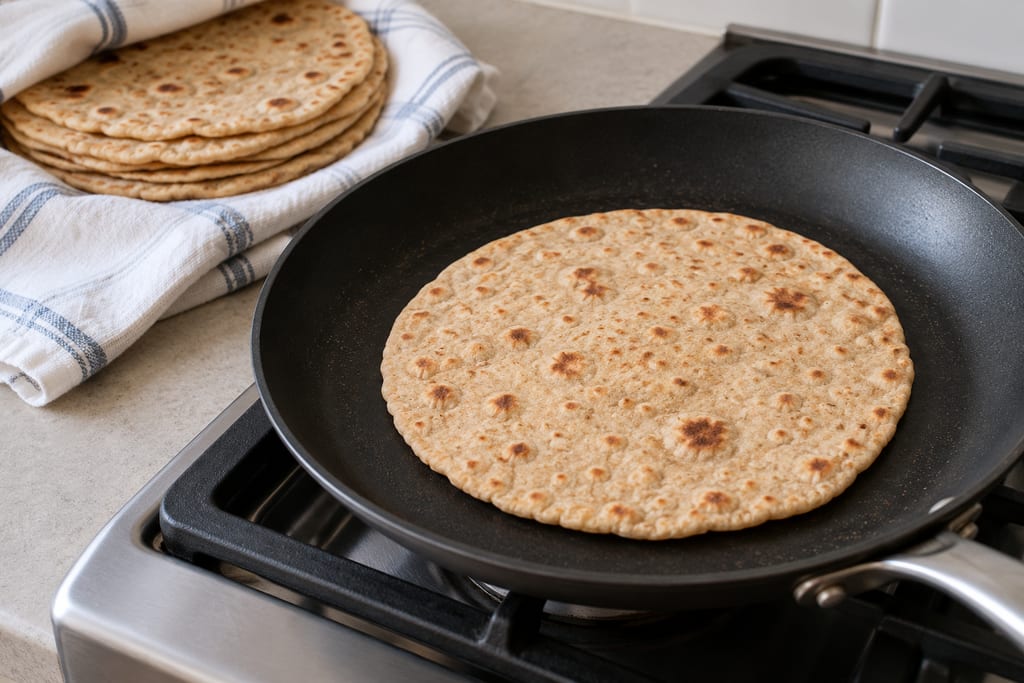
A small home-pan adaptation of Levantine markouk: rested wheat dough rolled into small rounds and cooked quickly on a hot flat pan. It is thicker and smaller than the hand-stretched sheets made on a saj.
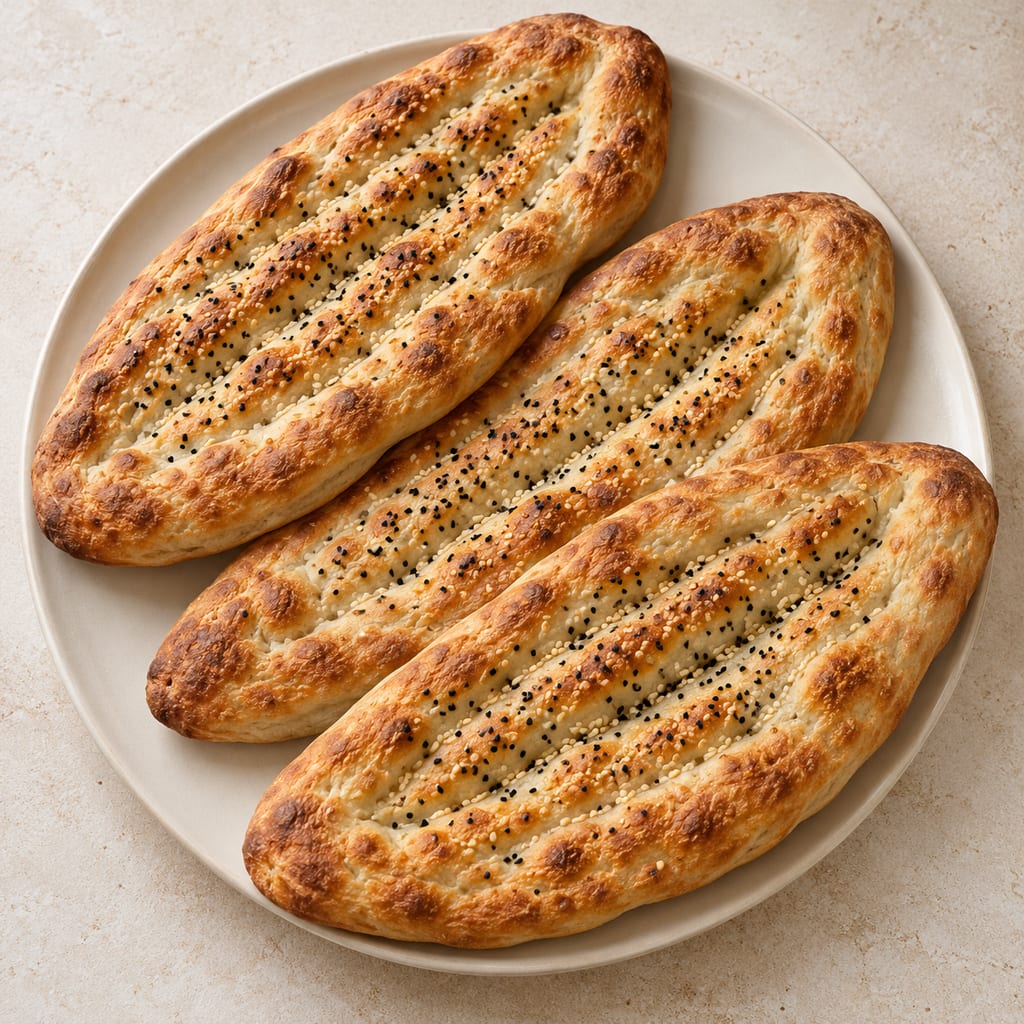
A long oval Afghan wheat bread, leavened with yeast, grooved along its length and baked until crisp outside and chewy within.
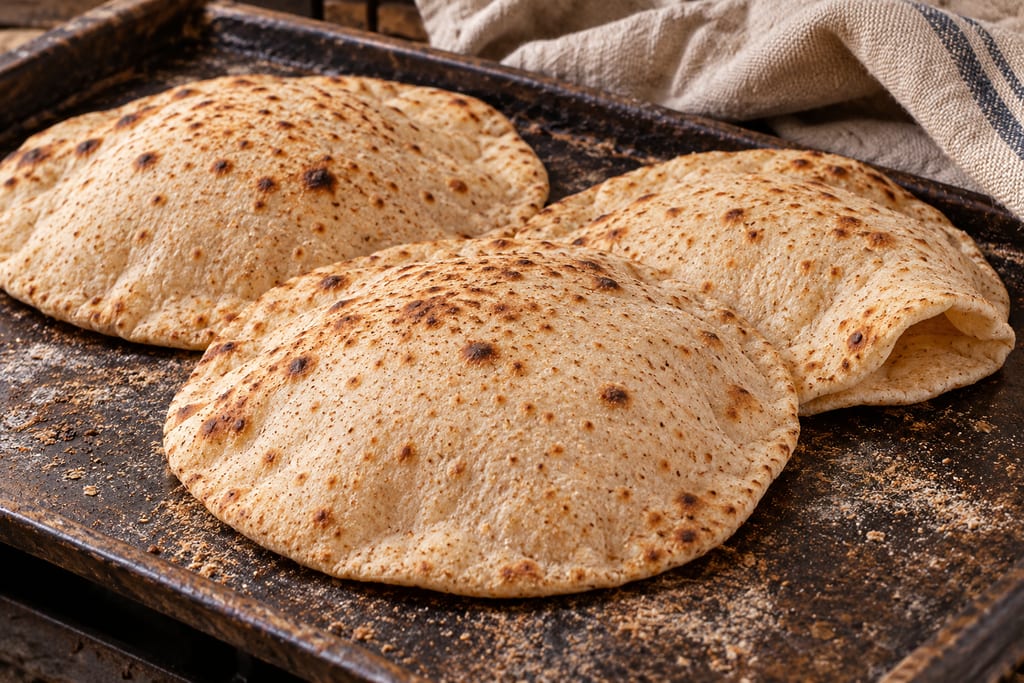
This home adaptation of Egyptian aish baladi uses a refrigerated yeast biga, whole-wheat dough, bran dusting and a very hot baking surface to make 16 pocketed rounds.
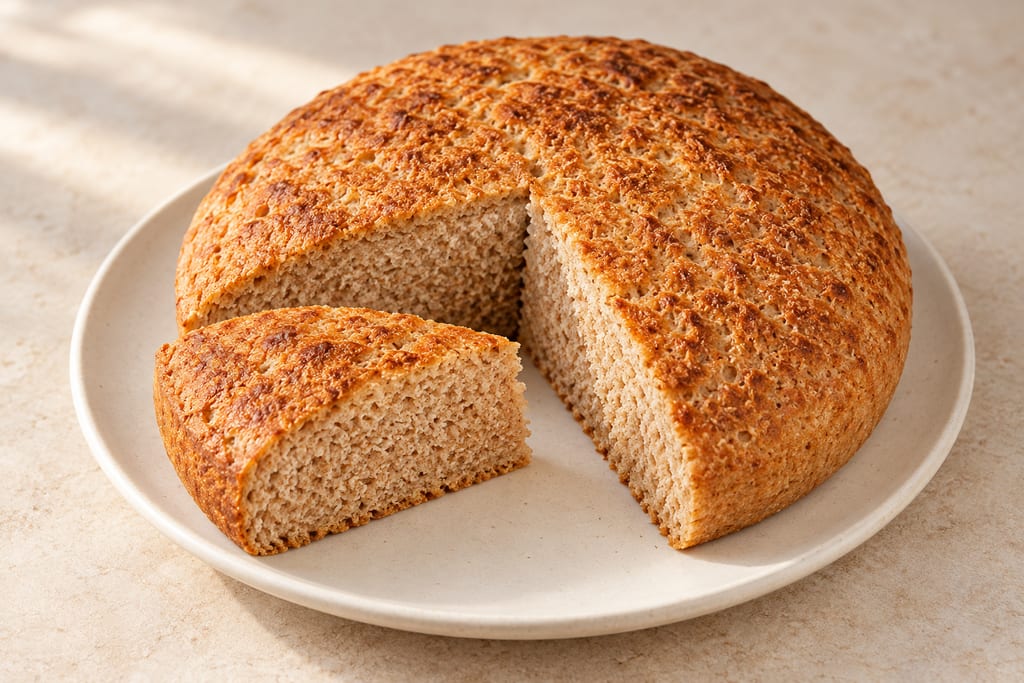
This oven-baked Amdo balep uses yeast, whole-wheat and white flour, a long covered rise and a two-sided bake in a heavy oven-safe pot.
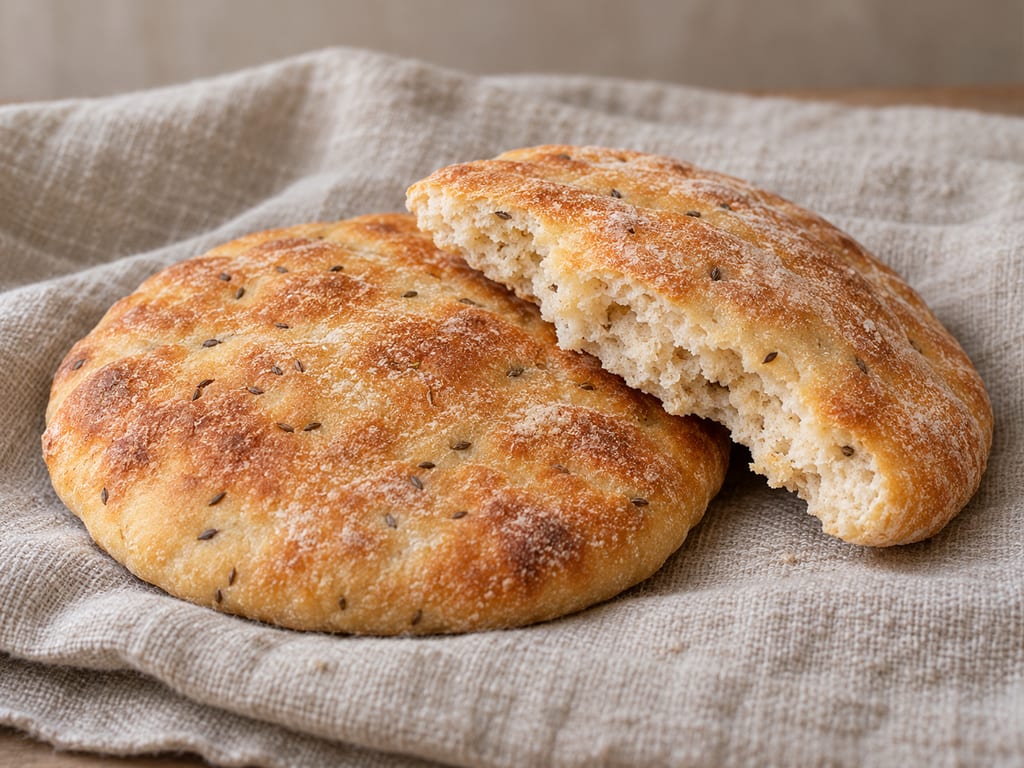
A measured, yeast-raised Ayacucho chapla home method shared by Thermomix Peru presenter Roxanna Salaverry. It makes thin, anise-scented rounds baked at 240°C; the historic qunchu-leavened form is documented separately.
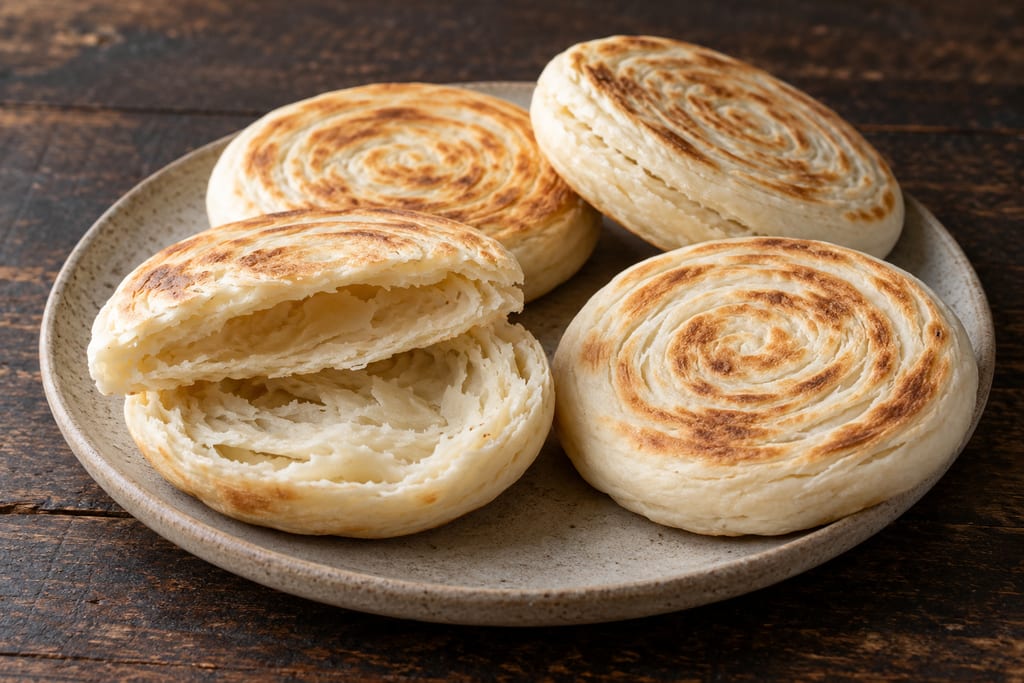
This Shaanxi-associated yeast flatbread uses a simple water dough, coiled shaping and a skillet bake. It is the bread used in roujiamo, not the filled meat dish.
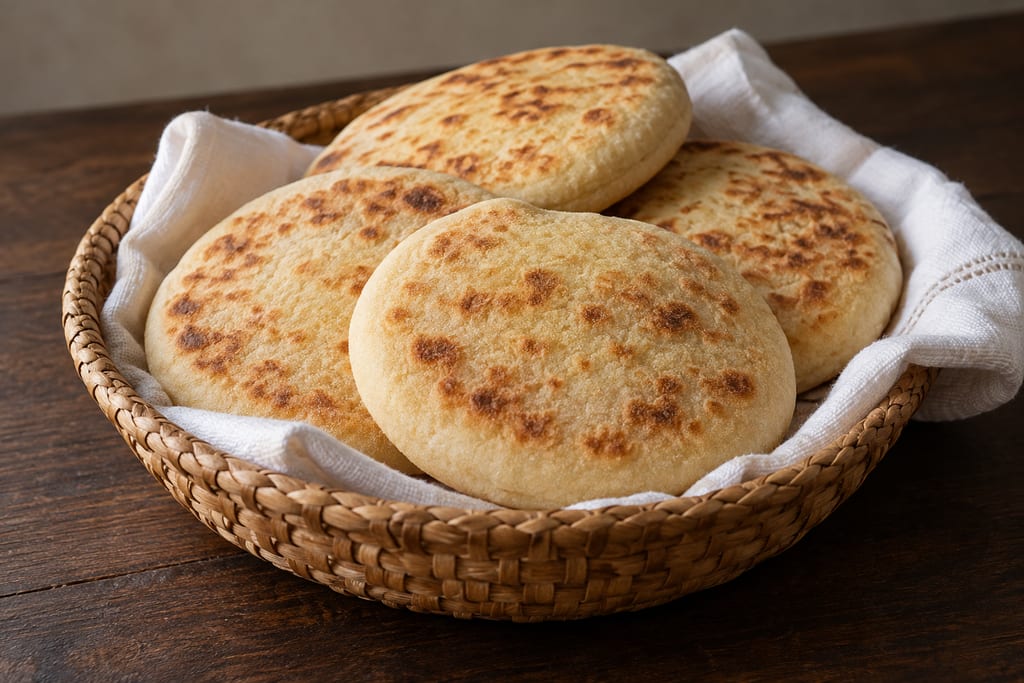
A Moroccan yeast-raised semolina pocket bread cooked on a dry pan or griddle; this measured batch makes about twenty 4-inch rounds.
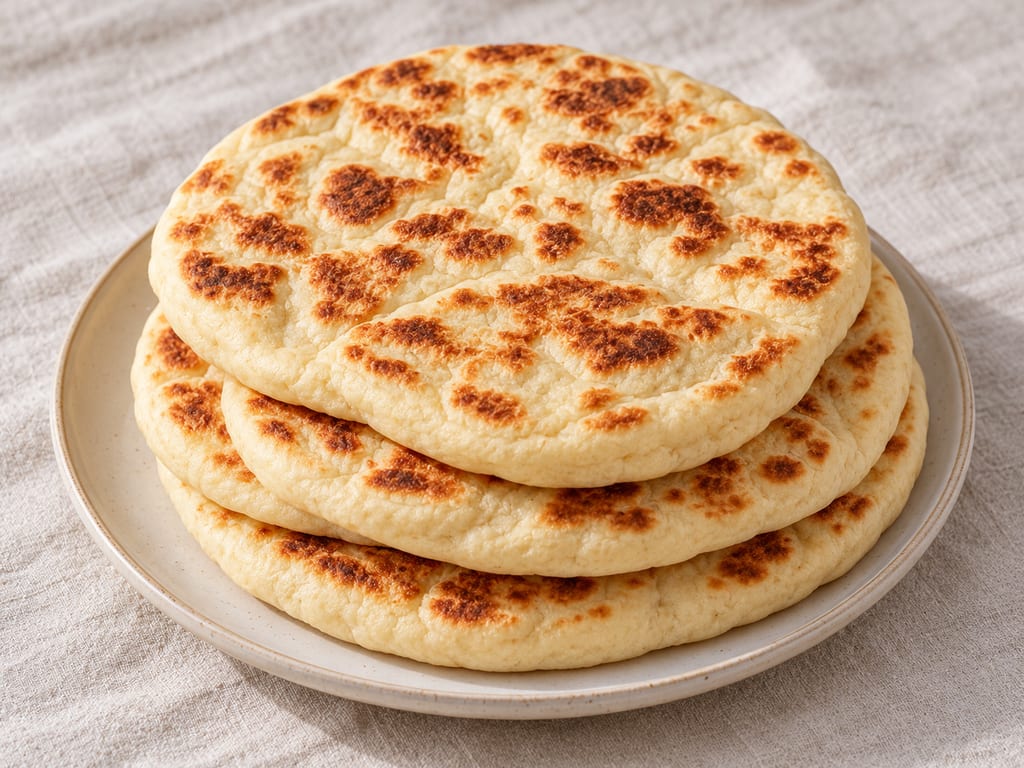
This Turkish bazlama uses yeast, plain yogurt and olive oil for a soft dough cooked in a skillet. Shape it into twelve small or six larger rounds, flip as bubbles appear, and wrap the breads to keep them soft.
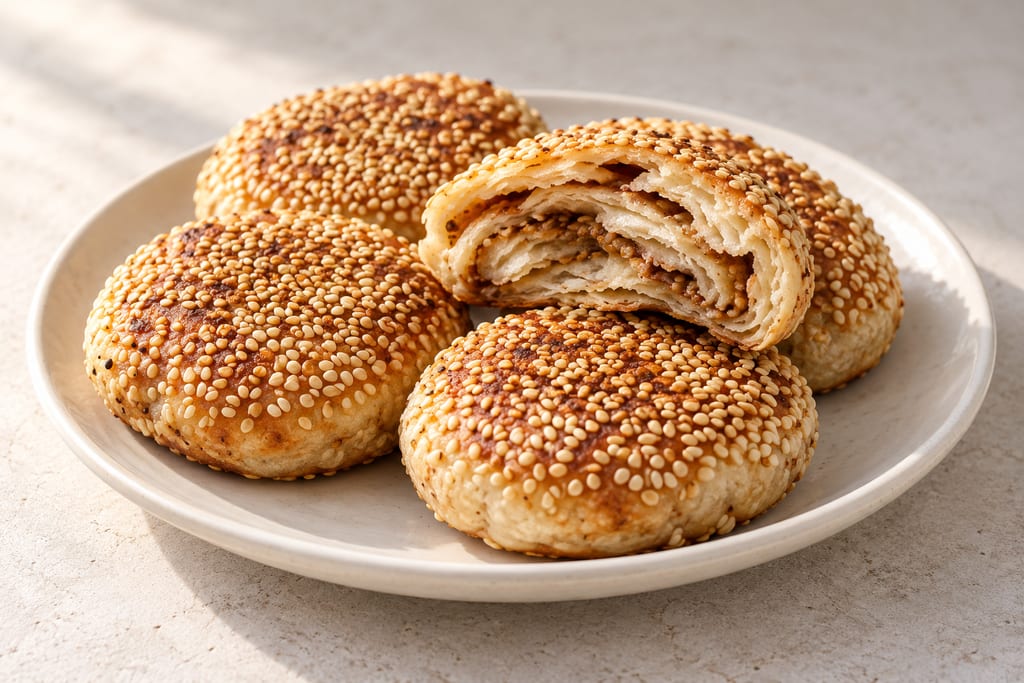
A Beijing-style yeast dough is layered with seasoned sesame paste, sealed into small buns, briefly pan-fried, seeded, and baked.
No community contributions have been published for this entry yet.
Sign in to contribute. Published comments and photos are free to read.
Maureen AboodInspiration · Method · Geography
Lebanese man’oushe, za’atar flatbreadThe measured formula makes four loaves with all-purpose flour, cake flour, salt, warm water, active dry yeast, sugar, neutral oil, za’atar and extra-virgin olive oil.
The dough is proofed, kneaded, risen until doubled for 1½–2 hours, divided and rested 20 minutes, then rolled to ¼ inch and topped.
The oven is heated to 400°F for 20–30 minutes with a baking stone or overturned heavy sheet pan; convection is set to 425°F. Each loaf bakes 7–10 minutes until the edges are golden brown.
The article describes man’oushe as Lebanese and traditionally eaten for breakfast, and recounts eating it in Beirut and El Mtein.
Cited in: Lebanese breakfast flatbread
U.S. Food and Drug AdministrationSafety
Handling Flour Safely: What You Need to KnowRaw flour can carry harmful bacteria; do not taste uncooked dough and keep flour separate from ready-to-eat food.
Wash hands, utensils and surfaces after handling flour.