Saj
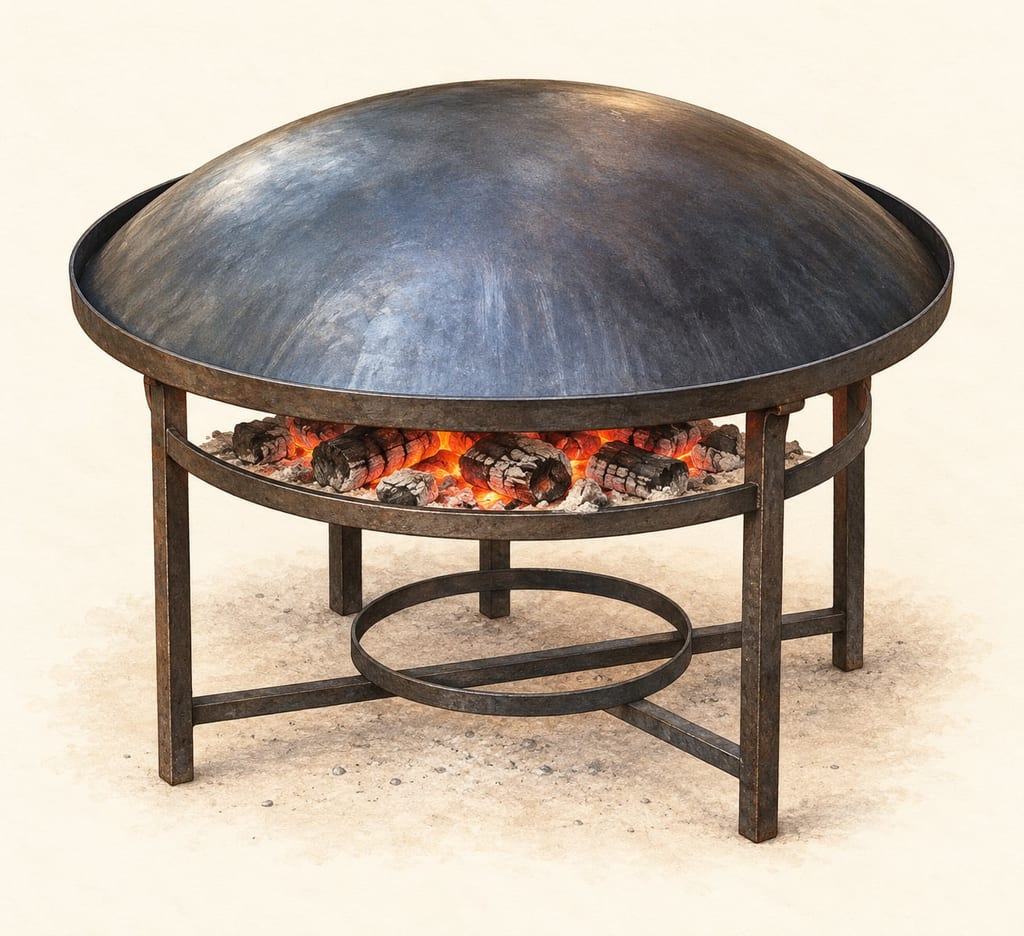
A portable convex metal griddle used for thin flatbreads. Surveyed forms are about 50 cm across and set over embers; regional names and modern heat sources vary.
 FermenteaWhere food goes to change
Modern adaptation
Markouk · markook · saj bread · small-pan markouk
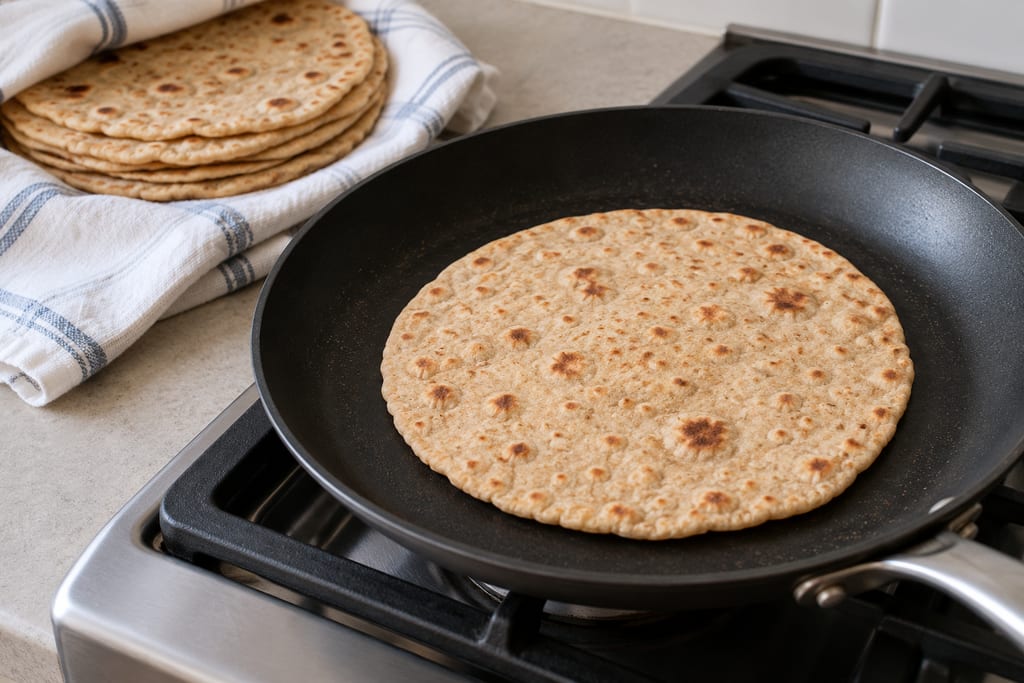
A small home-pan adaptation of Levantine markouk: rested wheat dough rolled into small rounds and cooked quickly on a hot flat pan. It is thicker and smaller than the hand-stretched sheets made on a saj.
Markouk belongs to a family of very thin wheat breads cooked on a heated metal surface. In the Levant, the name and the method are tied to the saj: a broad convex griddle that can be heated over a fire or by gas or electricity. Skilled makers stretch a rested dough by hand until it forms a large, nearly transparent sheet, then transfer it to the hot surface. That scale and hand technique are part of the bread’s identity.
This recipe records a smaller household route. It makes ten rounds only 17.5 to 20 centimetres wide and cooks them in a flat nonstick pan. The Los Angeles Times authors explain that their home bread does not reach the thinness achieved by experienced makers in Lebanon. The difference is meaningful: the little rounds are a practical adaptation for ordinary cookware, not a claim to reproduce a full-sized saj sheet or the skill of stretching dough across a cushion.
Names also follow regional use. The cited account calls the thin bread markouk in Lebanon and Syria, while it uses shraaq for the somewhat thicker bread in Jordan and Palestine. Those names overlap in everyday usage, but a single home-pan formula should not be presented as a universal recipe for every bread called saj, markouk, markook or shrak.
The measured dough has three ingredients: all-purpose flour, fine salt and water. It has no yeast or other leavener, so resting the dough is not a fermentation step. Kneading first brings the flour and water together into a firm mass; the covered rest then gives the dough time to relax before it is worked again. A second short knead smooths it. The source does not specify a target dough temperature, hydration adjustment or windowpane test, so none is needed to interpret this particular method.
Dividing the dough into ten small balls turns the stretching work into repeatable portions. Sealing each ball’s seam against an unfloured work surface helps it hold its shape while resting. The damp towel limits surface drying as the balls relax. Roll each portion with flour as needed to the stated diameter, then keep the thin rounds separated by floured cloth or towels. This protects the layers from sticking together while the remaining dough is rolled.
The Lebanese heritage description gives a different sequence for full-sized saj bread: makers first widen and rotate the dough on a broad surface, pass it between the arms, and use a cushion to shape and transfer the sheet. That method depends on room, equipment and practiced handling. The small rolling-pin rounds in this recipe are explicitly a domestic approximation; increasing their diameter or substituting an improvised convex griddle would change the method and is not tested here.
The pan is heated over medium heat until very hot, then each round cooks for about a minute on each side. The dough is thin enough that the recipe uses a short cook rather than a long bake. Small dark marks where bubbles rise are the source’s visual description of the finished surface, not a temperature reading. The source gives no measured pan temperature, so the control remains qualitative and the maker must stay near the pan and watch each round.
Stack the cooked breads between clean towels. This keeps the batch together while the remaining rounds cook. If a softer, foldable bread is wanted, sprinkle each cooked round with a little water, fold it in half and wrap it in a clean towel for 30 minutes. This optional final rest is a softening step after cooking. It is not the dough’s initial rest, and it should not be used as an excuse to shorten the cooking step.
Once flour is mixed with water, the dough is not ready to eat raw. Raw flour can carry germs; cook every round before eating and wash hands, bowls, utensils and work surfaces after handling the dough. The hot pan can also burn, especially during repeated turns and transfers. Use a safe grip and keep the towels away from the heating surface.
The thin bread is useful folded around food or torn into pieces for scooping. The Lebanese heritage account describes markouk used as an edible scoop and as a base for sandwiches; the home recipe also suggests wraps. Its optional water-and-towel treatment makes the cooked rounds more pliable before serving.
Storage notes differ with the preparation. One account mentions keeping the dry, stacked home breads in a dry place for weeks; the Lebanese heritage description says traditional saj sheets dry quickly and may keep under cloth for nearly fifteen days. Neither is a tested storage schedule for this home adaptation. This recipe therefore supplies no guaranteed shelf life: protect the bread from contamination and discard it if its condition is doubtful.
Markouk is associated with Lebanon and Syria in the cited account. The recorded formula and flat-pan method are a modern small domestic adaptation; they are not the full-sized hand-stretched saj method described by the Lebanese heritage account.
Yield 10 small breads · Scaling: source batch only
The dough contains uncooked flour and should not be tasted before the rounds are cooked.
Hazard sourceThe pan is heated until very hot and can burn during repeated cooking.
Hazard sourceCook every round according to the source method before eating; do not taste raw dough.
Control sourceUse suitable tools and keep hands clear of the hot pan while cooking.
Control sourceDo not eat raw dough. Handle the hot pan carefully.
Markouk is identified with Lebanon; this row does not claim an origin locality or that the small-pan adaptation reproduces traditional saj production.
The source identifies markouk as a Syrian name; this row does not claim a precise origin or full saj technique for the small-pan adaptation.
A portable convex metal griddle used for thin flatbreads. Surveyed forms are about 50 cm across and set over embers; regional names and modern heat sources vary.
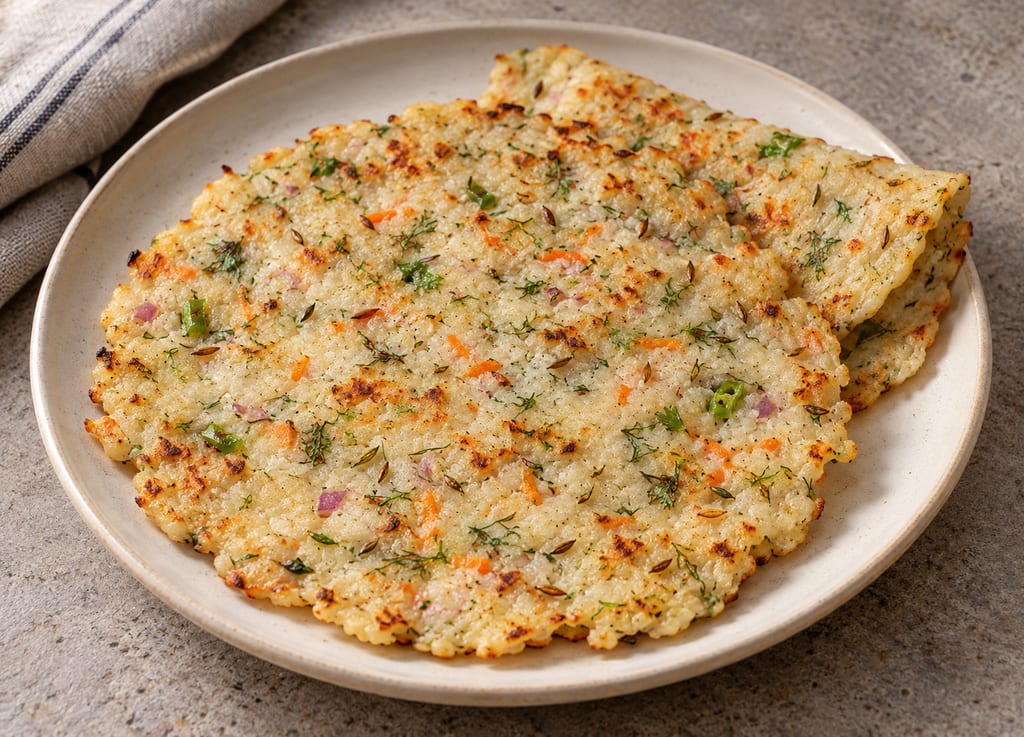
This Karnataka-style akki rotti mixes fine rice flour with vegetables, coconut, herbs and spices, then hand-pats and griddle-cooks the dough.
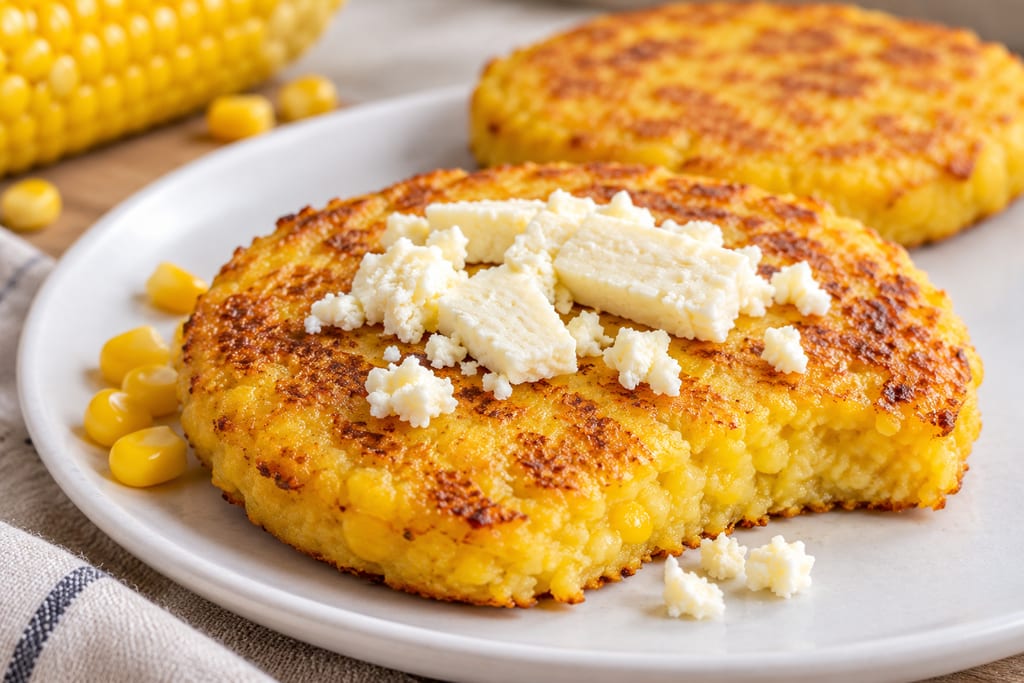
A Colombian Andean griddle cake made from fresh sweet-corn batter, cooked in butter and served with white cheese.
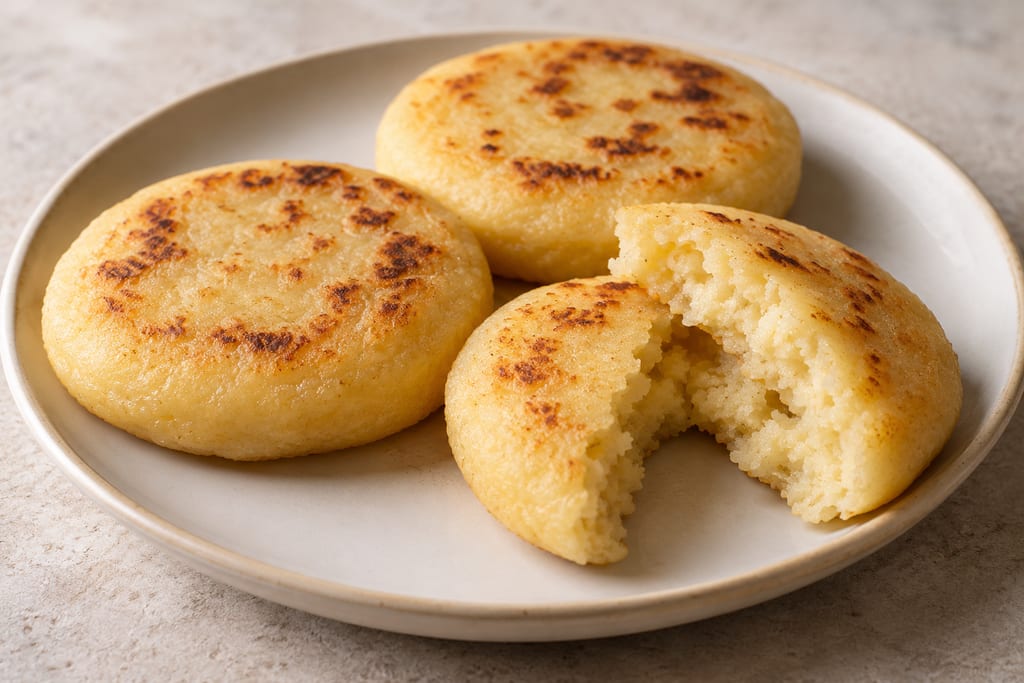
This household version combines precooked corn flour, warm water and salt, then cooks thick rounds on a lightly oiled skillet or griddle. It is one source-specific arepa method, not a universal Colombian or Venezuelan formula.
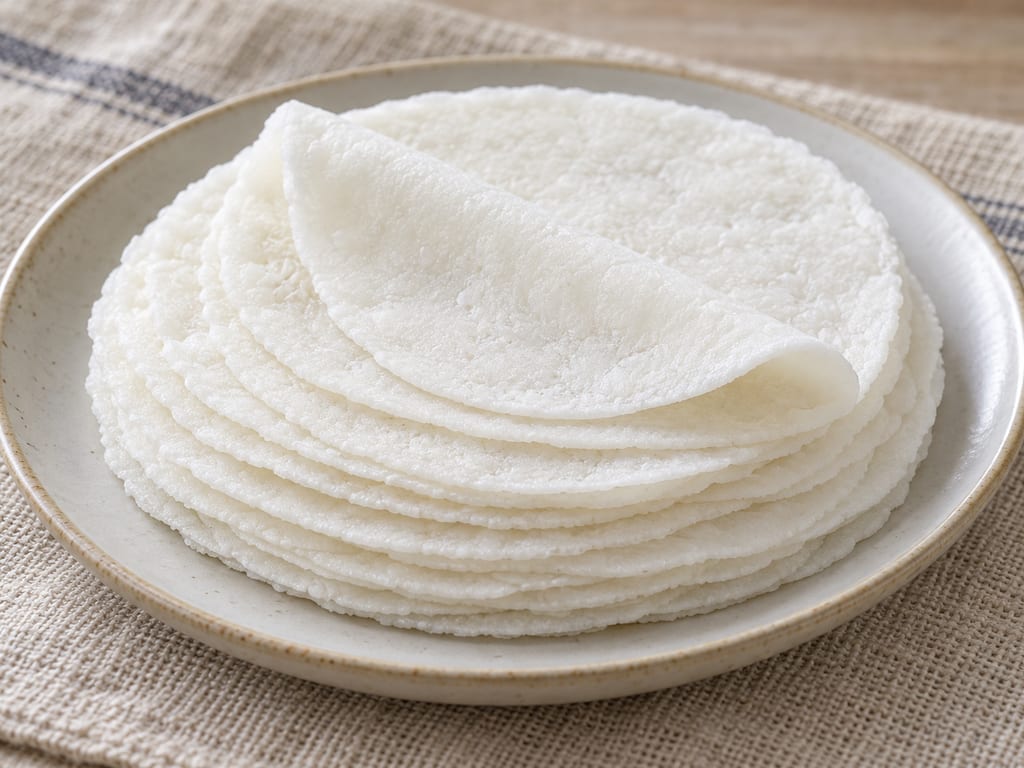
Thin Malabar rice-flour rounds made from roasted rice flour cooked into salted boiling water, kneaded after cooling, and rolled to about 1 mm. They cook on a hot griddle without taking on colour.
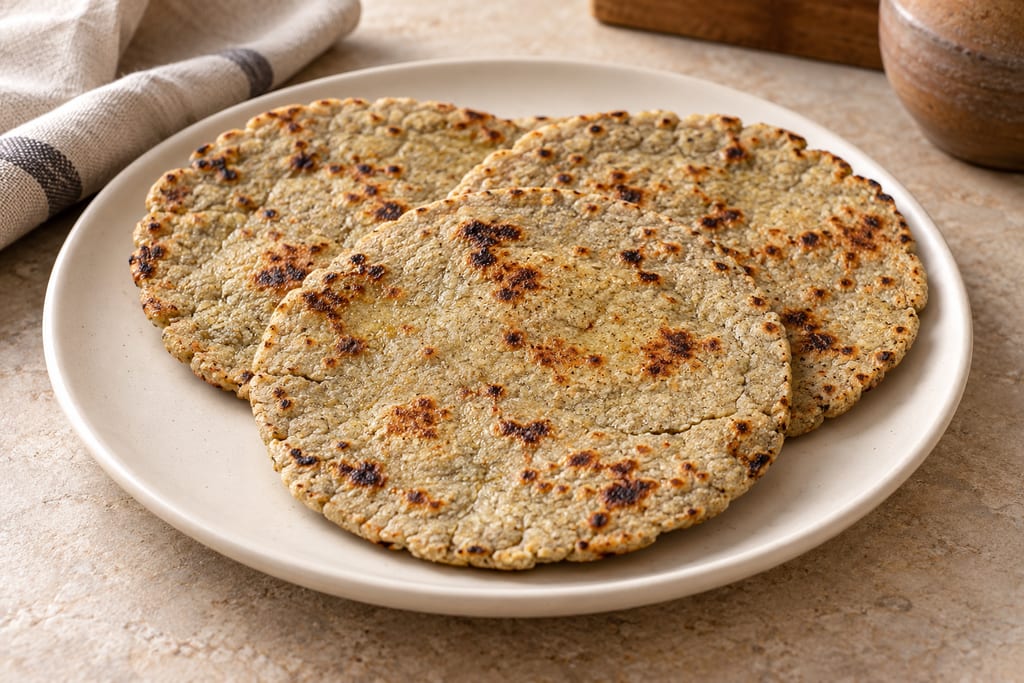
A pearl-millet flatbread shaped between sheets and cooked on a hot tawa. This home batch makes eight.
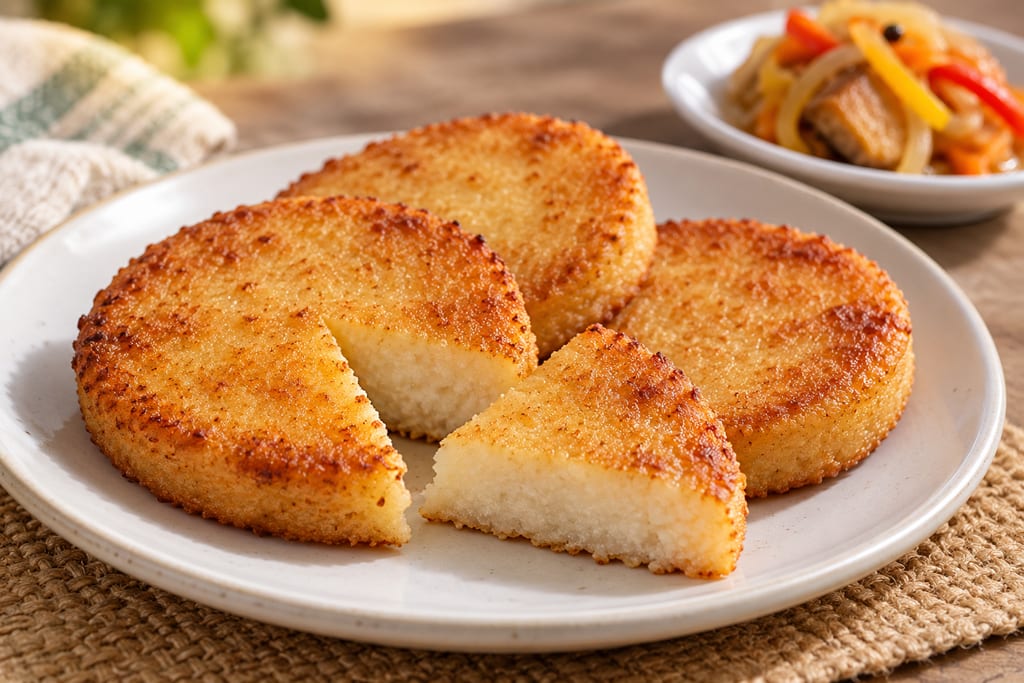
A serving method for approved, prepared bammy rounds: soak them in coconut milk and refry until golden. It does not process raw cassava.
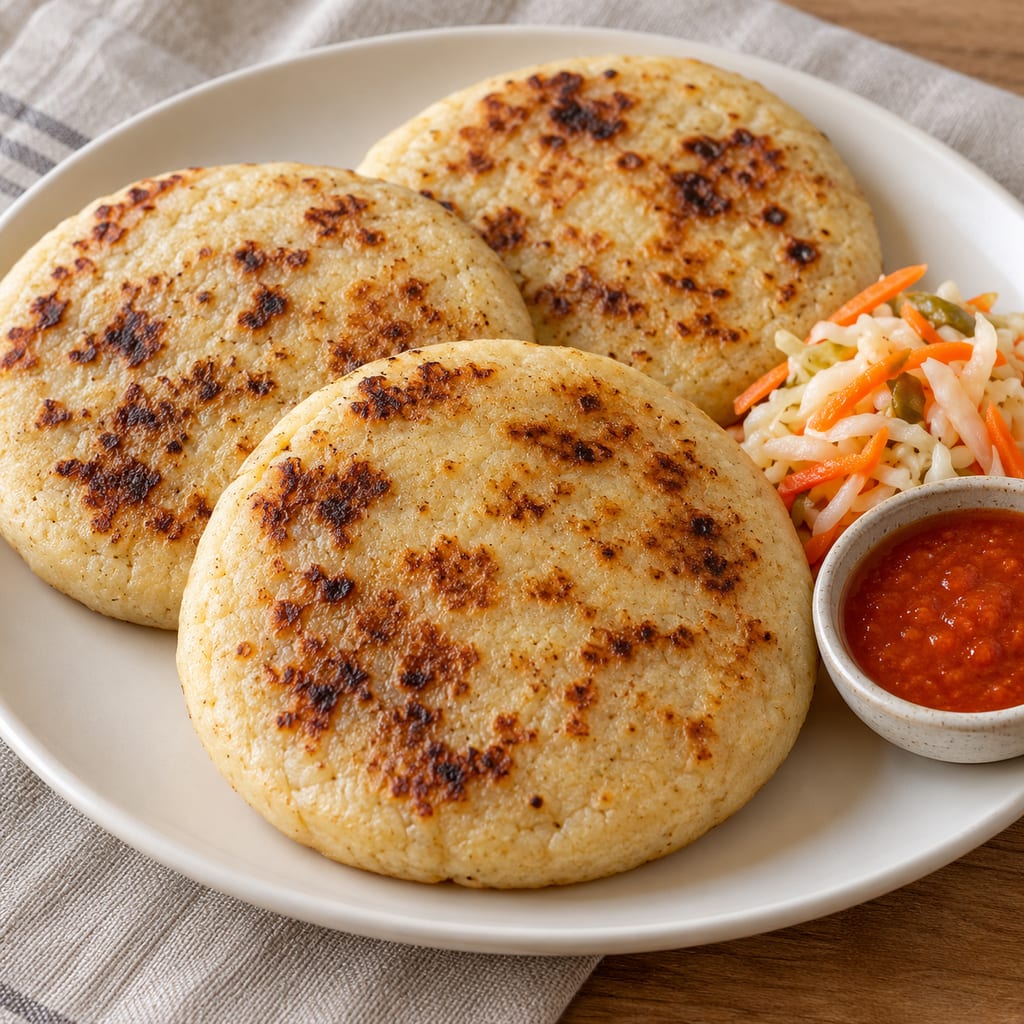
Salvadoran-style masa harina cakes filled with refried beans and cheese, sealed and cooked on an oiled skillet.
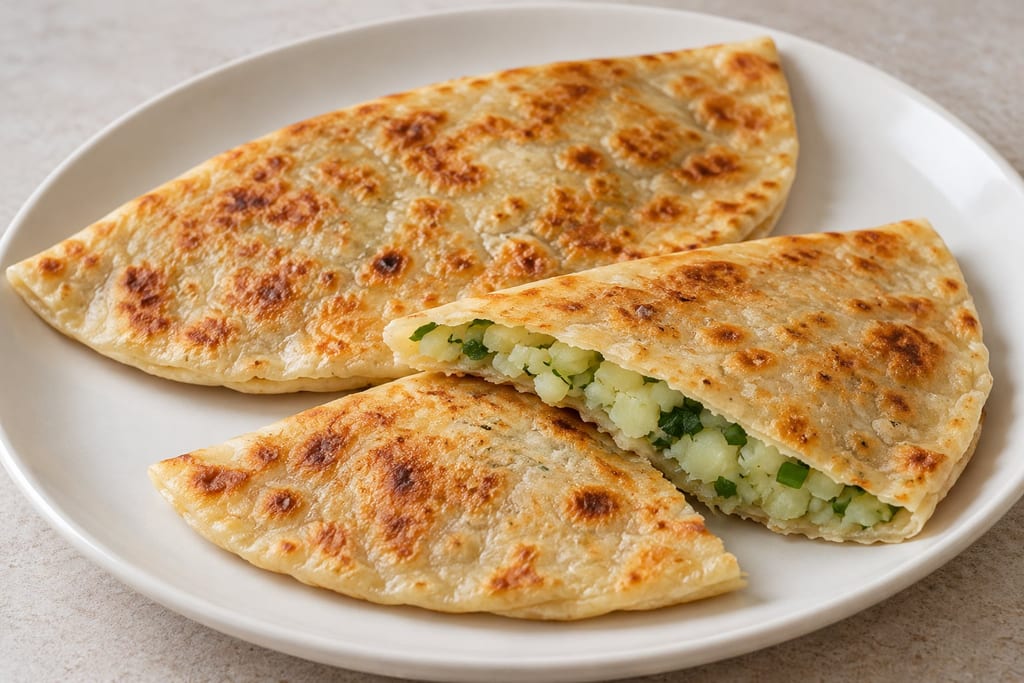
A thin, unleavened Afghan flatbread filled with mashed potato, scallion and cilantro, folded and pan-browned. This version uses a dough made from scratch.
No community contributions have been published for this entry yet.
Sign in to contribute. Published comments and photos are free to read.
Los Angeles TimesInspiration · Method · Geography
Saj BreadHome recipe yields ten small breads from 240 g all-purpose flour, 1 teaspoon fine sea salt and 200 mL water.
Dough is kneaded 3 minutes, rested 15 minutes, kneaded 3 minutes more, divided into ten portions of about 40 g, rested 30 minutes and rolled to 17.5–20 cm rounds.
Rounds cook on a very hot nonstick pan over medium heat for about one minute per side and are stacked between clean towels.
The authors distinguish this home version from the thinner hand-stretched Lebanese markouk prepared on a saj; they identify markouk with Lebanon and Syria.
Cited in: A small round of a much larger bread; From firm dough to thin rounds; A hot pan and a short cook; Serving and keeping the bread
iHeritageHistory · Geography · Method
Markouk or Saj breadThe Lebanese heritage account associates markouk with Lebanon and describes traditional sheets about 50–65 cm wide and 0.5–2 mm thin cooked on a heated metal dome saj.
Its described traditional method stretches dough over a cushion and transfers it onto the saj; this differs in scale and shaping from the Los Angeles Times small-pan home adaptation.
Cited in: A small round of a much larger bread; From firm dough to thin rounds; Serving and keeping the bread
Centers for Disease Control and PreventionSafety
Raw Flour and DoughRaw flour can carry germs; cook dough before eating and wash hands, bowls, utensils and counters after handling raw flour or dough.
Cited in: A hot pan and a short cook
NHSSafety
Burns and scaldsHot cookware can cause burns; avoid contact with the heated pan.
Cited in: A hot pan and a short cook