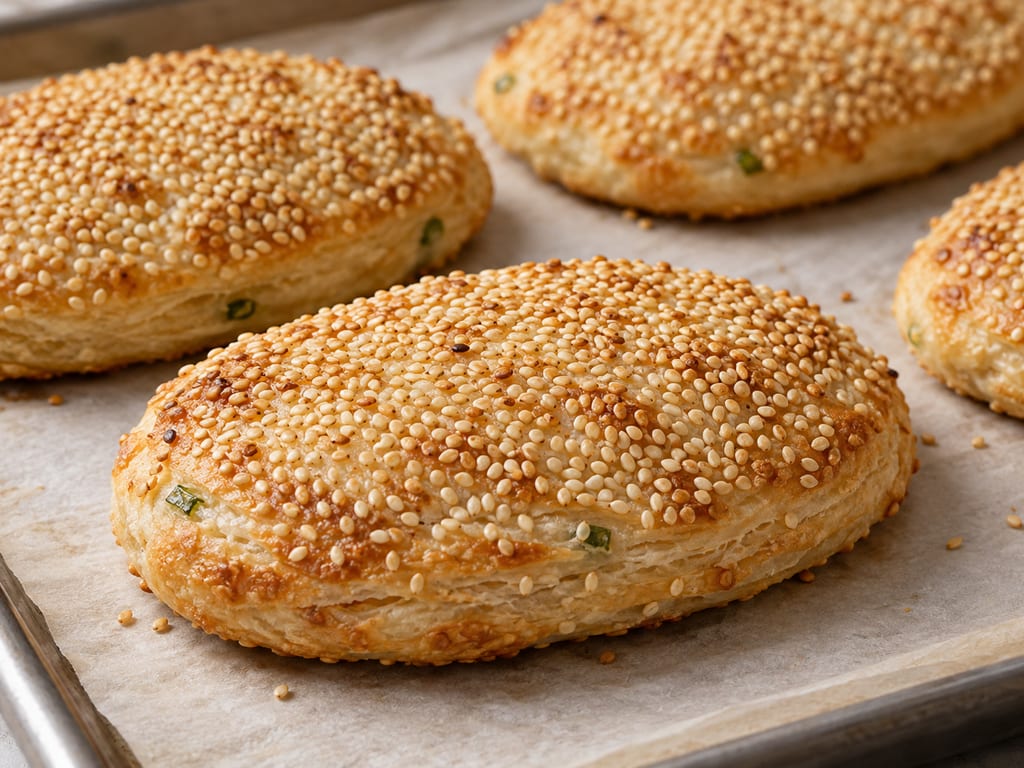
Shanghai da bing
Shanghai breakfast flatbreads layered with butter, scallion and pepper, then topped with sesame and baked.
 FermenteaWhere food goes to change
Modern adaptation
Cong you bing (葱油饼) · scallion pancakes · Shanghai scallion pancakes
Bill Leung’s Shanghai-style scallion pancakes layer soft wheat dough with scallions and an oil-flour paste, then fry and finish in the oven.
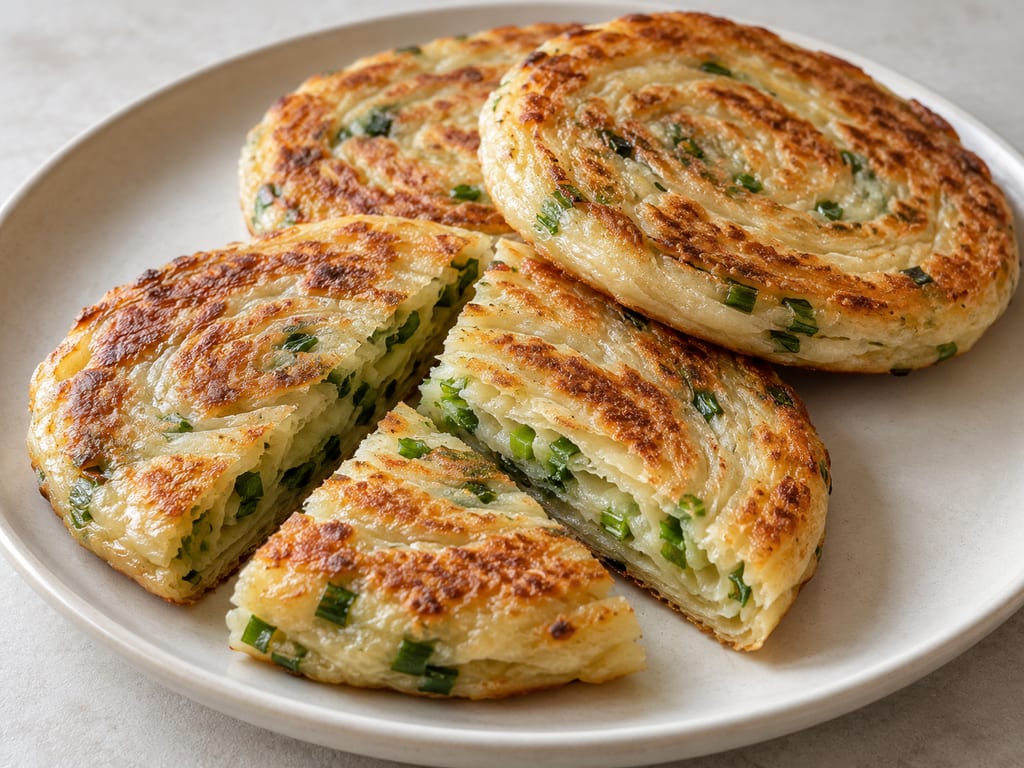
This recipe records one modern home version of cong you bing, or scallion pancakes. Bill Leung bases it on pancakes he encountered at a Shanghai breakfast stall. His description distinguishes the stall style from what he considers an average scallion pancake: it was thicker, moister, and rich with scallions and pork fat. The home formula intentionally leaves the pork suet out. This entry keeps that adaptation intact; it does not add an animal fat ingredient or a meat preparation.
The source is an account of a specific food encounter and a home recipe, not an origin history for cong you bing as a whole. The author describes a morning queue at a Shanghai stall and says the vendor had learned from an older Shanghai master. In the same account, the vendor's dough and scallion paste process differs from the home method. The recipe remains an adaptation, not a transcript of a vendor's batch.
The method makes four large rounds according to its instructions and note, while the online recipe card says it serves eight. The entry preserves that discrepancy: the batch is four pancakes, and the source does not define the serving size. It does not assign a historical date or a precise birthplace to all scallion pancakes.
The page gives a second clue about the adaptation: the stall vendor kneaded pork fat into each pancake and used a clump of scallion and fat, while the home version omits the extra suet and spreads scallions across the flour-oil paste. That difference changes both the ingredient list and how the filling is placed in the layers. The entry follows the home instructions rather than trying to reproduce the vendor's version from a short description. It records the vendor's method only as context, not as a second set of steps.
The Woks of Life page itself distinguishes this Shanghai-inspired pancake from two other recipes on the same site. Bill Leung's nine-layer version begins with a kneaded dough and rests it about an hour. It lays scallions and seasonings onto an oiled sheet, cuts slits along the sides and folds the sheet repeatedly to build a stack of layers. It then cooks covered in a pan for about five minutes per side. That sequence is not the strip, coil, thick round and oven finish used here.
Sarah Leung's simple cong you bing is another distinct method. It combines 1½ cups flour and ½ cup hot water, kneads for five minutes, rests for thirty minutes, and divides the dough into three pieces. Each piece is rolled into a circle, brushed with oil, seasoned and topped with scallions, rolled into a cigar, coiled into a spiral, then flattened again before frying. It cooks about three minutes per side and can be served with a separate garlic-soy-vinegar dip.
Those examples share flour, scallions, fat and a hot pan, but the dough hydration, number and thickness of pancakes, layering action, rest, and cooking sequence differ. A cook should not substitute one set of directions for another and assume the same texture or timing. This record follows the Shanghai-style source's four portions, uncooked flour-oil paste, coiled bundles and oven finish. The comparison explains the variation without blending quantities.
Other recipes can use hot or boiling water, sesame seeds, dipping sauces or several ways of folding the dough. They are not part of Bill Leung's Shanghai formula unless listed in this entry's ingredients. The source's formula does not call for a dipping sauce, sugar, five-spice, sesame seeds or yeast.
The work can be staged while the dough rests. Chop the scallions and stir together the paste during the one-to-two-hour covered rest; this is an efficient order, not a change to the measured formula. Keep the four portions covered as they wait, because the author specifically warns against allowing them to dry. Lightly oil the work surface and hands as needed instead of adding flour beyond the source's small allowance for a very wet dough. The source does not provide a precise kneading time for this dough, so none is added here.
Mix 2¼ cups all-purpose flour, ¼ teaspoon salt and 1 cup warm water until a sticky dough forms. Leung describes a useful tactile target: sticky, but not wet. The page allows no more than 2 tablespoons extra flour if the dough seems very wet, and notes that humidity and measuring errors can change how the mixture feels. Treat that flour as a small correction, not an invitation to turn the dough dry and firm.
Coat the top of the dough with 1 teaspoon peanut oil, cover the bowl and leave it for one to two hours. The source does not use yeast or ask for fermentation. The long rest is part of this unyeasted method; the page presents the rested dough as very soft and pliable and uses oil on hands and the work surface to manage sticking. Do not read the rest as a proof or a microbial process.
The paste is made by combining 3 tablespoons vegetable or peanut oil with ⅓ cup all-purpose flour and ¼ teaspoon salt. It is mixed cold; no stove step cooks it. Keep this distinction clear from a cooked roux. Chop about two bunches of scallions, approximately two cups by the recipe's measure. Each of the four dough strips will receive a portion of the paste and about half a cup of scallions.
The ingredients work in separate stages. Flour and water form the wrapper; salt seasons both dough and paste. Oil prevents sticking on the dough surface, carries the paste and helps the layers separate during cooking. Scallions are the aromatic center of each layer. Peanut oil is an option in the original page, not a required flavor; the vegetable oil option is given for the paste and pan. A peanut allergy calls for choosing a suitable non-peanut oil and checking cross-contact.
Lightly oil the worktop before removing the rested dough. Divide it into four equal pieces and leave the portions covered while working so their surfaces do not dry. Roll each piece lengthwise into a long strip. The source does not provide a strip length or thickness, so this record does not invent one.
Spread one quarter of the flour-and-oil paste over the strip. Scatter roughly half a cup of finely chopped scallions evenly over the paste. Roll the strip up, folding and tucking the edges along the way so the scallions do not spill from the sides. The resulting bundle shows the spiral on top; preserve that side when flattening. Cover it before moving to the next portion.
Leung allows an additional thirty-minute rest after forming the bundles to make them easier to roll. It is optional in the source. If the dough springs back or is difficult to flatten, that rest is the method's available adjustment; adding more flour or changing the hydration would alter the recipe. Flatten a bundle to about one inch thick before it enters the pan, then press it thinner during frying.
The source's use of a long strip, tucked edges and a spiral bundle makes it possible to keep the scallions enclosed before the round is flattened. If scallions protrude, they can fall out during rolling or pan-frying; folding the edges as the strip is rolled is the author's stated way to keep them inside. The specified thickness changes in two stages: the bundle begins about one inch thick, then the press reduces it to one-quarter to one-half inch in the pan. Keep those measurements tied to their stage rather than rolling every piece to the final thickness before frying.
Heat a cast-iron pan over medium heat and add four tablespoons of oil. Flatten a bundle with its spiral facing up to about one inch thick, and place it carefully into the pan. The source's cue is a steady sizzle with gradual browning. It does not give a numerical pan temperature, and the recipe should not be rewritten with an invented one.
After the bottom is lightly browned, about two minutes, turn the pancake gently. The source explicitly cautions against splashing oil. Press it to between one quarter and one half inch thick with a cast-iron grill press or a heavy pot and fry about two minutes more. Turn again if needed to brown the other side. The cook has to watch the rate of browning: the source wants slow color, not a rapidly darkening surface.
Move the pancake to an oven preheated to 350°F (177°C) and bake for five minutes for additional crisping. The oven is an extra stage in this Shanghai recipe; it is not used in the linked simple scallion pancake method. Serve hot, cut into wedges. The page recommends eating them the same day and notes toaster-oven reheating, without giving a holding time or reheating endpoint.
The author describes the finished pancakes as crisp and layered and presents them as a breakfast street-food style, but the home recipe omits one source-described source of richness. Leung serves the pancakes plain or suggests a soy dipping sauce from the separate nine-layer recipe. That sauce is optional serving context, not an ingredient in this four-pancake formula. The record does not add that sauce or its quantities, and it does not add sesame seeds from other versions.
The method needs a mixing bowl, wooden spoon or flexible spatula, a covered resting bowl, a lightly oiled work surface, a rolling pin or hands, a cast-iron pan, a grill press or heavy pot, and an oven. The source's video and photographs show the vendor flattening dough by hand, but the home recipe expressly allows a rolling pin. A countertop toaster oven was used by the authors for the final bake; the recipe does not require a full-size oven.
The source gives preparation, cooking and total times of two hours thirty minutes, thirty minutes and three hours, respectively. These are planning figures, not a guarantee: the dough rest alone varies between one and two hours, and an optional thirty-minute rest follows shaping. It makes one batch; no tested scaling rule is provided. Its card says eight servings although the directions form four pancakes, so the number of portions per pancake remains unspecified.
Raw flour can carry germs. CDC says not to taste raw dough, to cook flour-containing foods according to the recipe, and to wash hands, bowls, utensils and surfaces after handling flour. The dough is uncooked during mixing and resting, so keep it away from ready-to-eat food and clean the work area when finished. The pancake is not ready to eat until the pan and oven stages are complete.
Hot oil can splash while the thick rounds are turned and pressed. Keep your hands and tools clear of the oil and turn each pancake gently, as the source instructs. No separate temperature limit or food-safety test is provided for the pan fry; the given medium heat, gradual browning and five-minute oven finish are presented as the recipe's cooking method, not as a validated internal-temperature standard.
Bill Leung describes the recipe as a home adaptation inspired by a Shanghai breakfast stall and notes that it omits the pork suet used by the stall master. It is evidence for this modern recipe variant, not a date or origin for all scallion pancakes.
Yield 4 large pancakes · Scaling: source batch only
The dough contains uncooked flour until the pan and oven stages; the recipe is not ready to eat before cooking.
Hazard sourceThe source uses several tablespoons of oil and cautions against splashing while turning the pancake.
Hazard sourceDo not taste the raw dough. Cook it through using the source's pan and oven directions, and wash hands, bowls, utensils and surfaces after handling flour.
Control sourceTurn pancakes gently and keep clear of splashing oil.
Control sourceContains wheat; the source recipe uses peanut oil as an option in the dough and paste, so check ingredient choices and cross-contact if peanut allergy is a concern.
The source's home adaptation omits pork suet from the version observed at a Shanghai stall; this record contains no pork or meat preparation.
The author discusses this recipe as inspired by Shanghai breakfast street food; the country row is contextual, not an origin claim.
The author describes the stall food he saw in Shanghai; this locates the source-specific inspiration, not every cong you bing style.
Shanghai breakfast flatbreads layered with butter, scallion and pepper, then topped with sesame and baked.
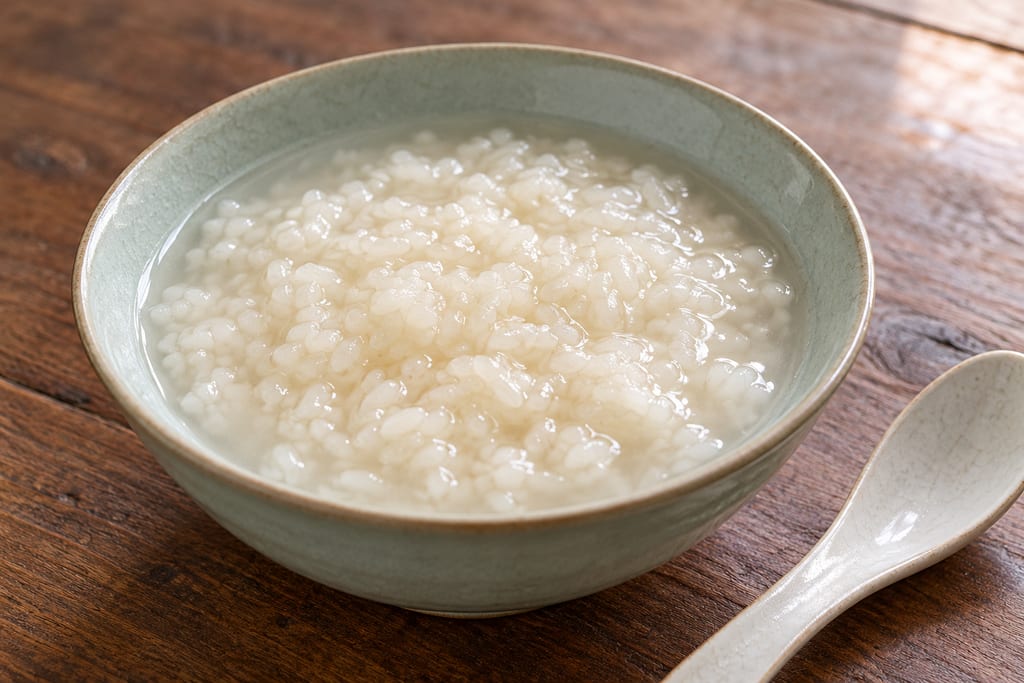
Chinese sweet fermented glutinous rice: steamed rice and a mixed jiuqu starter, where mould enzymes release sugar and yeast makes a little alcohol, eaten with its sweet liquid.
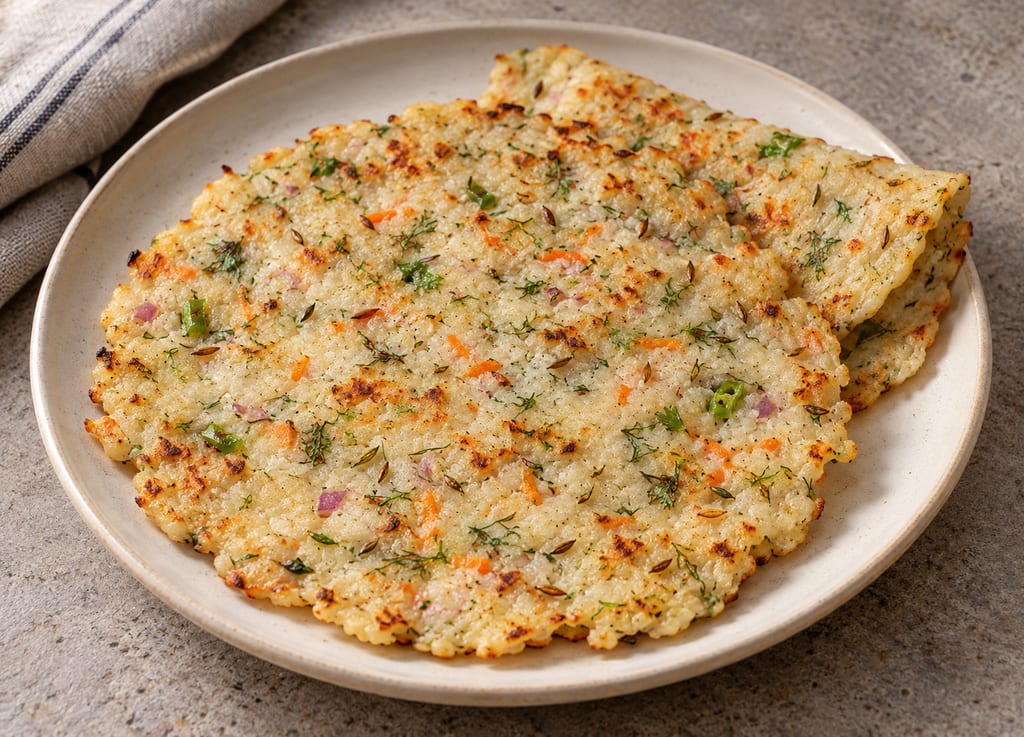
This Karnataka-style akki rotti mixes fine rice flour with vegetables, coconut, herbs and spices, then hand-pats and griddle-cooks the dough.
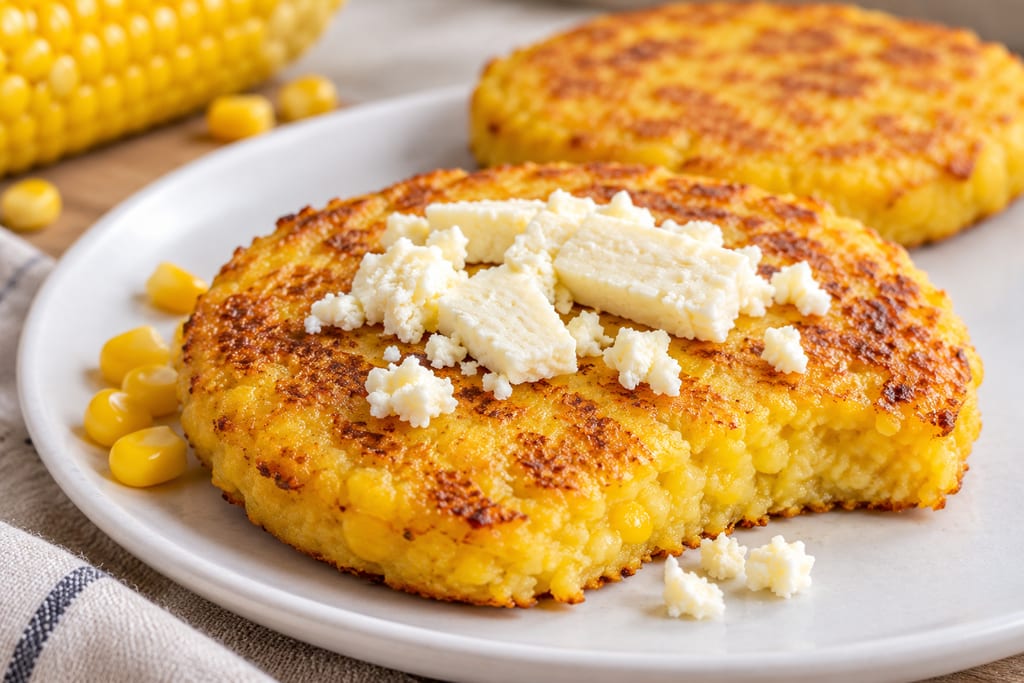
A Colombian Andean griddle cake made from fresh sweet-corn batter, cooked in butter and served with white cheese.
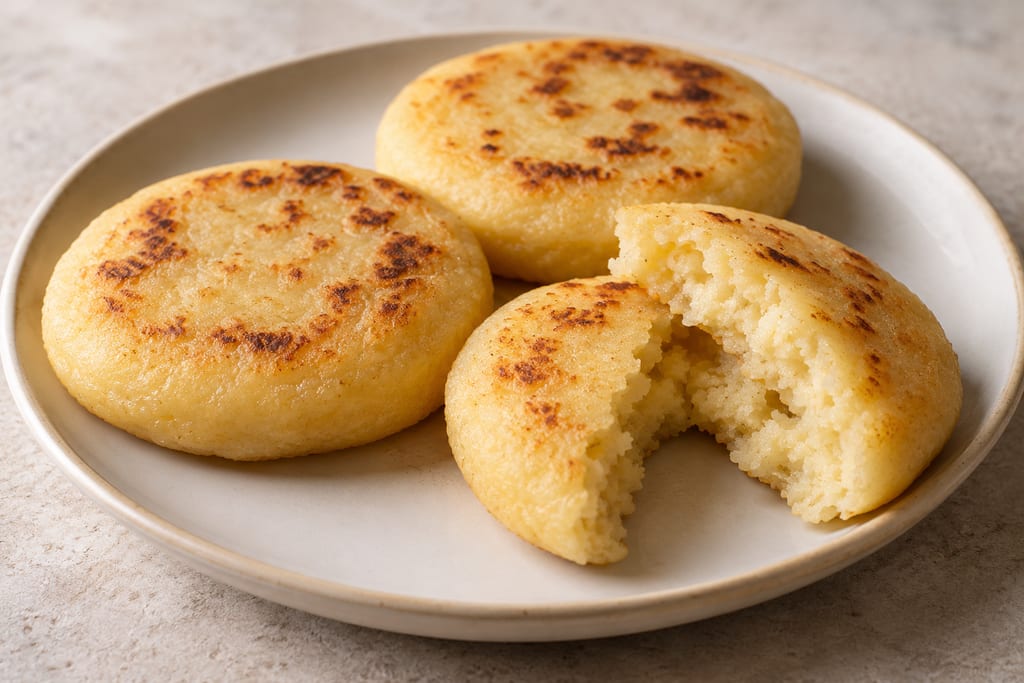
This household version combines precooked corn flour, warm water and salt, then cooks thick rounds on a lightly oiled skillet or griddle. It is one source-specific arepa method, not a universal Colombian or Venezuelan formula.
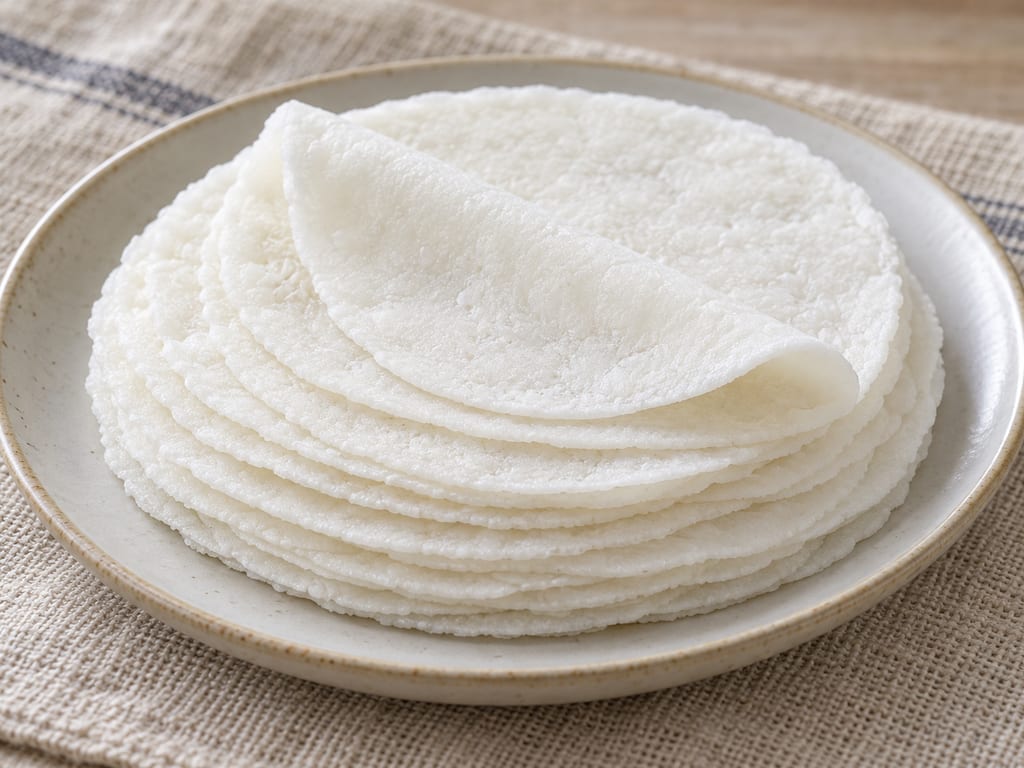
Thin Malabar rice-flour rounds made from roasted rice flour cooked into salted boiling water, kneaded after cooling, and rolled to about 1 mm. They cook on a hot griddle without taking on colour.
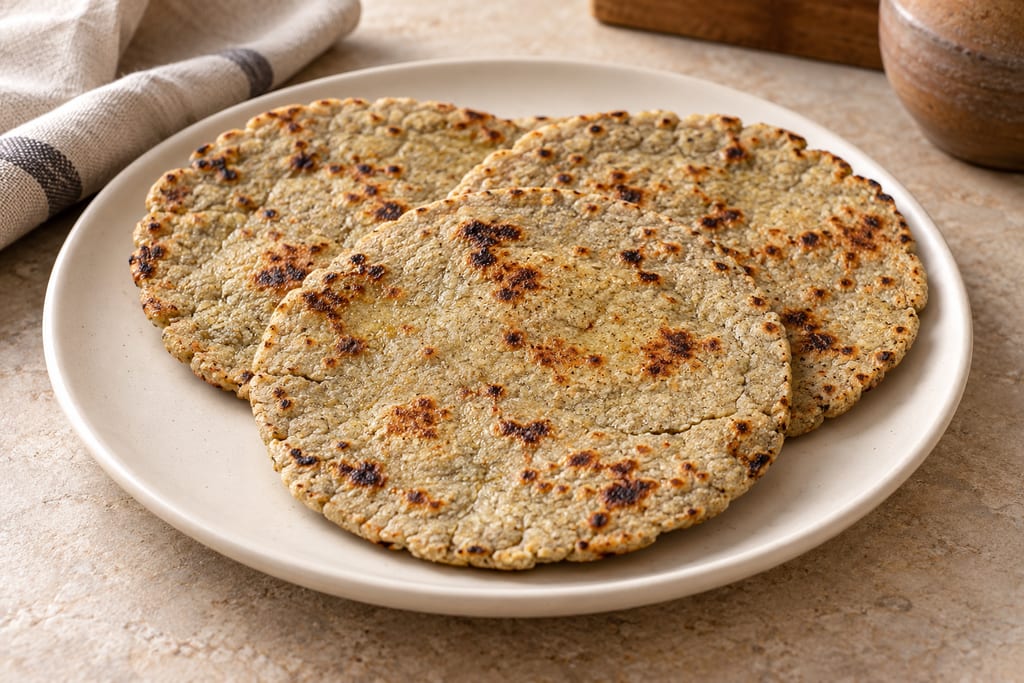
A pearl-millet flatbread shaped between sheets and cooked on a hot tawa. This home batch makes eight.
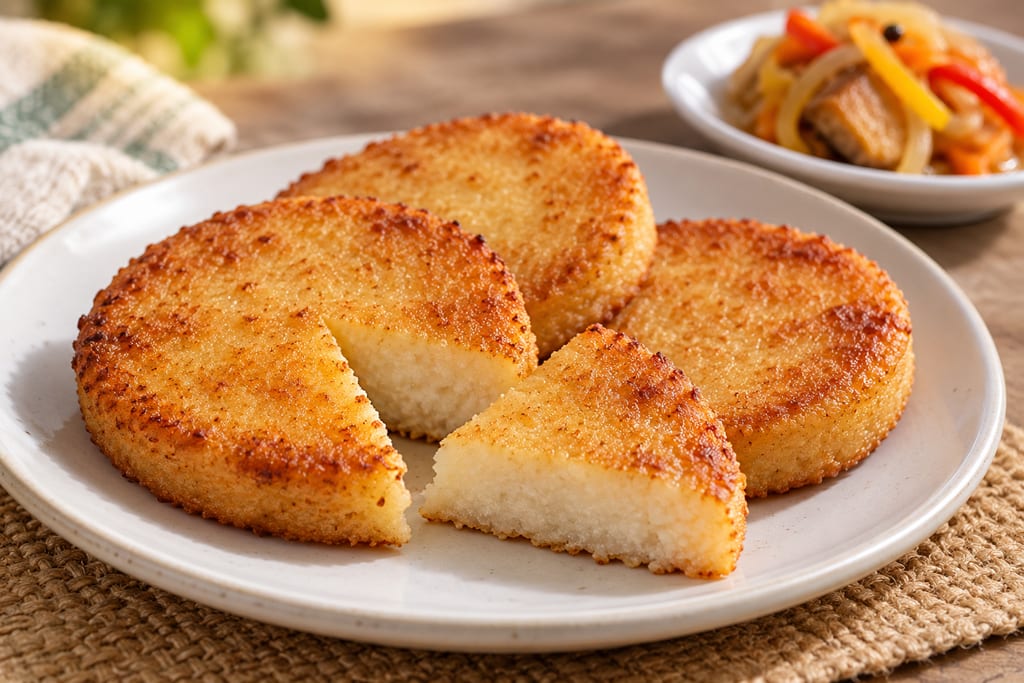
A serving method for approved, prepared bammy rounds: soak them in coconut milk and refry until golden. It does not process raw cassava.
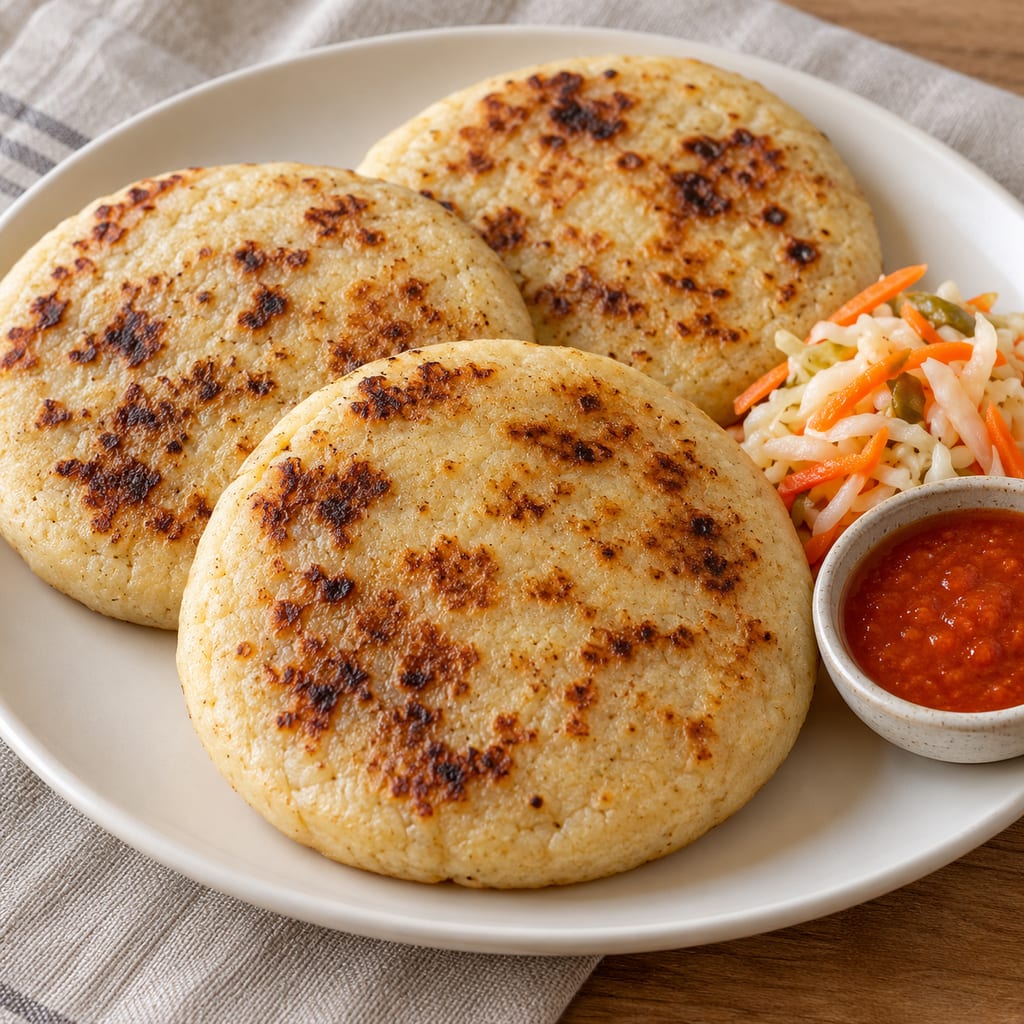
Salvadoran-style masa harina cakes filled with refried beans and cheese, sealed and cooked on an oiled skillet.
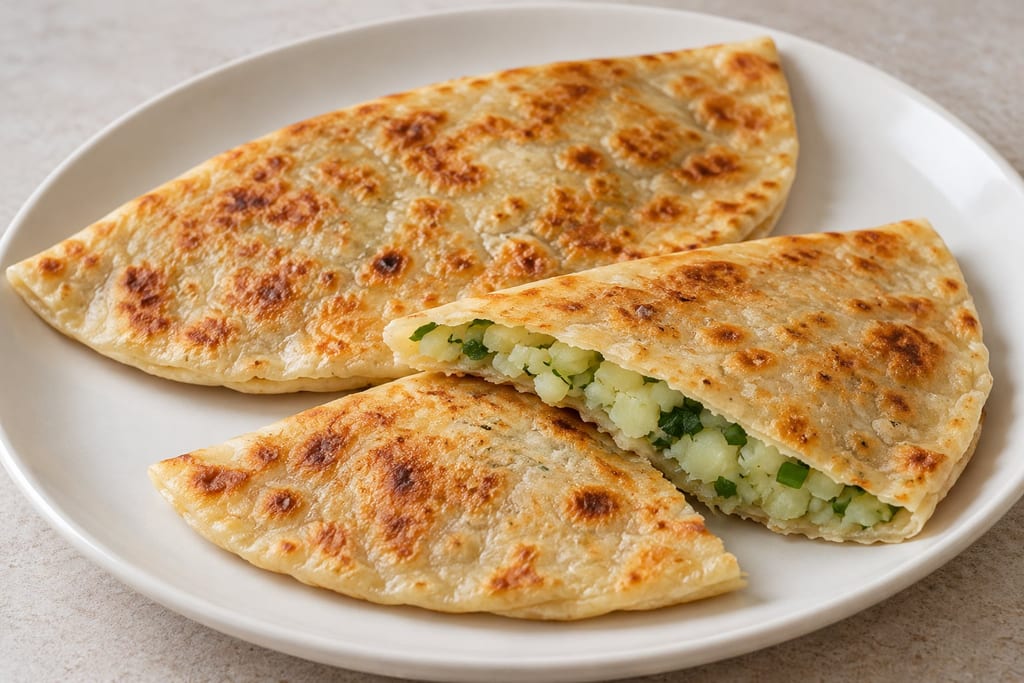
A thin, unleavened Afghan flatbread filled with mashed potato, scallion and cilantro, folded and pan-browned. This version uses a dough made from scratch.
No community contributions have been published for this entry yet.
Sign in to contribute. Published comments and photos are free to read.
The Woks of LifeRecipe · Geographic context · History
Shanghai Scallion PancakesRecipe card lists 2¼ cups all-purpose flour, ¼ tsp salt and 1 cup warm water for dough; 1 tsp peanut oil to coat; 3 tbsp oil, ⅓ cup flour and ¼ tsp salt for paste; 2 bunches scallions, about 2 cups; and vegetable or peanut oil for frying.
Instructions divide the rested dough into four pieces, layer paste and scallions, roll and tuck the strips, fry in a cast-iron pan with 4 tbsp oil, press to ¼–½ inch, and finish at 350°F for five minutes.
The source describes the version as inspired by Shanghai breakfast street food and says the home recipe omits pork suet used by the stall master.
Cited in: A Shanghai-inspired breakfast pancake; A family of doughs, not one interchangeable formula; Mix the soft dough and the uncooked paste; Roll, fill with scallions, and coil; Pan-fry slowly and finish in the oven; Practical limits and food safety
Centers for Disease Control and PreventionFood safety guidance
Raw Flour and DoughUncooked flour can carry germs; do not eat raw flour dough; cook according to recipe directions and clean hands, bowls, utensils and surfaces after handling flour.
Cited in: Mix the soft dough and the uncooked paste; Practical limits and food safety
The Woks of LifeComparison
9-Layer Chinese Scallion PancakesA separate Bill Leung scallion pancake uses kneaded flour dough resting about an hour, an oil-brushed and scallion-covered sheet folded through slits into layers, and a covered medium-heat pan cook of about five minutes per side. It is a separate formula and folding pattern.
Cited in: A family of doughs, not one interchangeable formula
The Woks of LifeComparison
Cong You Bing Scallion Pancakes with Dipping SauceSarah Leung's separate recipe uses 1½ cups flour and ½ cup hot water, a five-minute knead and 30-minute rest; it shapes three circles by rolling, coiling and flattening, then fries each about three minutes per side. It is a distinct formula and process.
Cited in: A family of doughs, not one interchangeable formula; Pan-fry slowly and finish in the oven