← Recipes

Sticky-rice baguette for khao jee pâté (Saeng's Kitchen version)

Loading ratings…

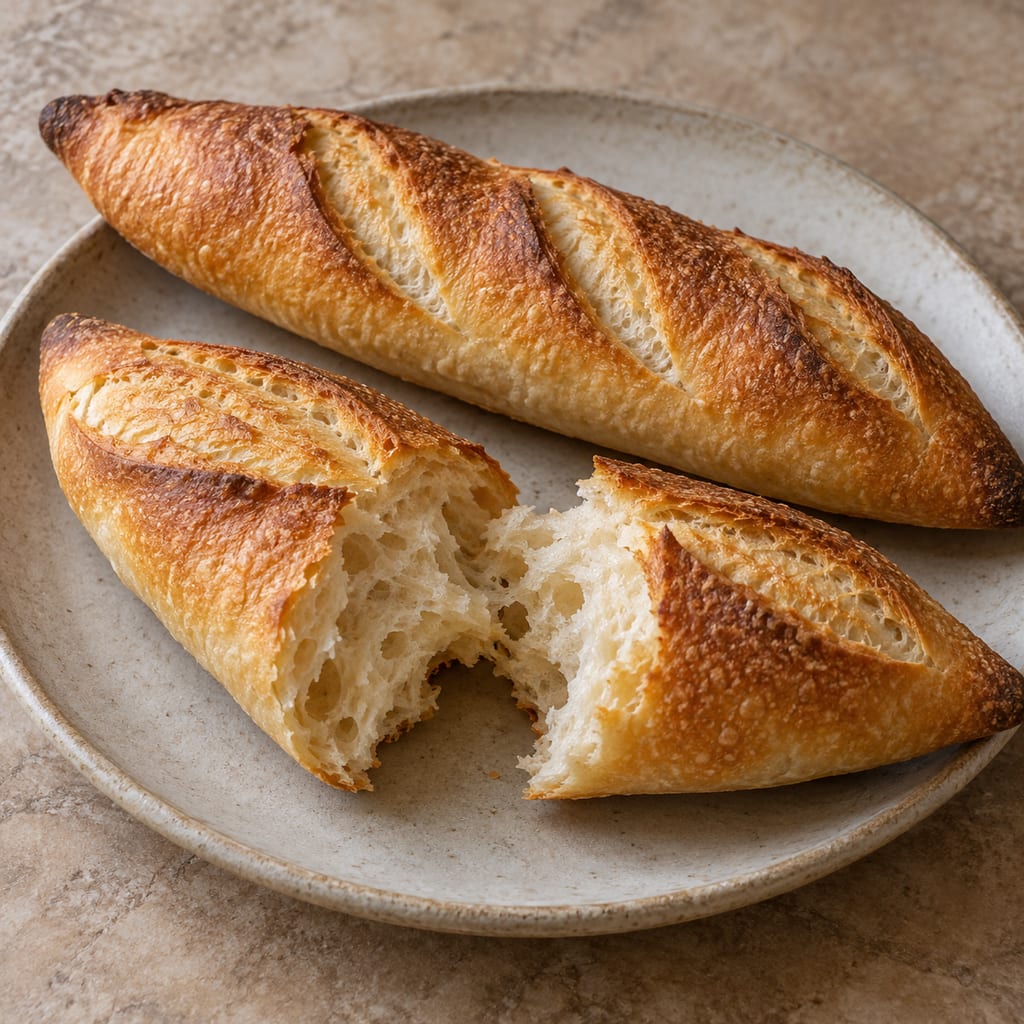
This four-baguette sticky-rice dough is the bread component of Saeng Douangdara’s khao jee pâté recipe. She presents the sticky-rice addition as her own variation; it is not a universal or traditional Lao baguette formula.

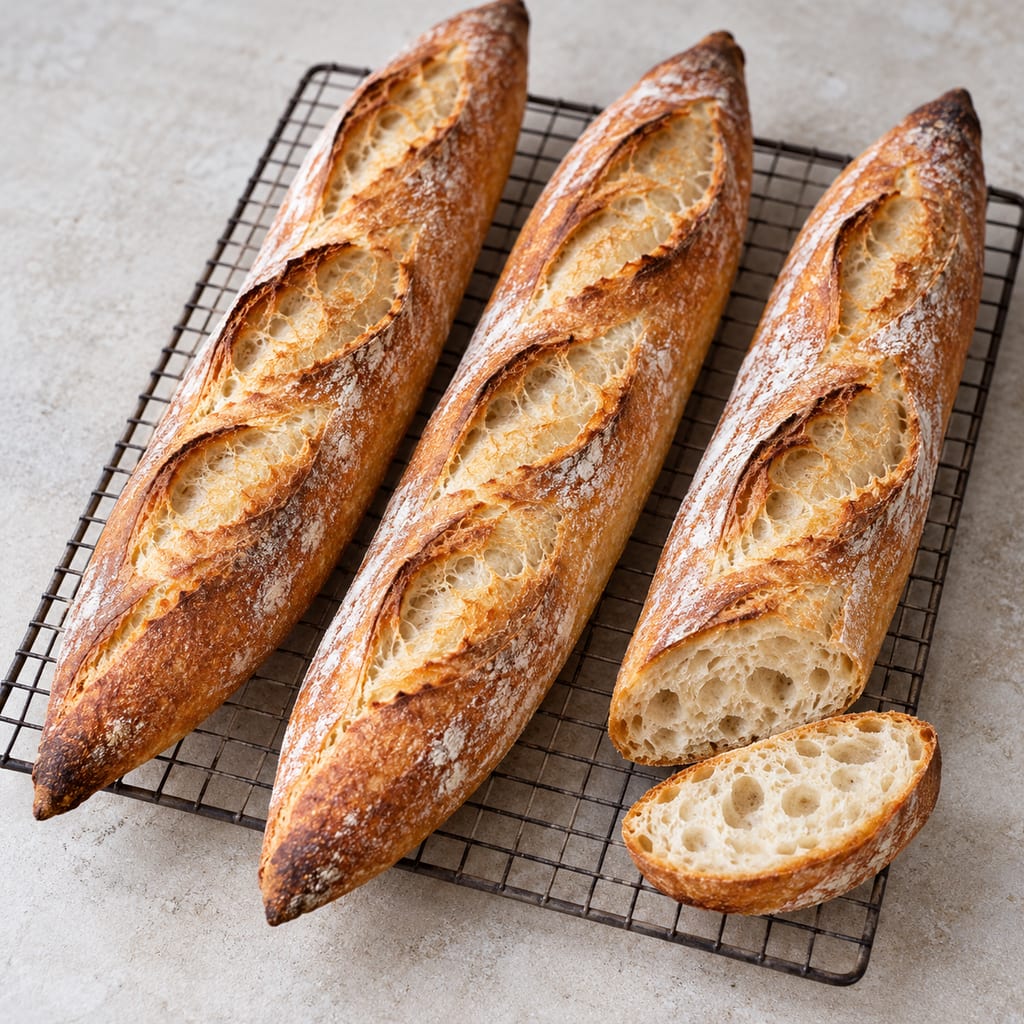
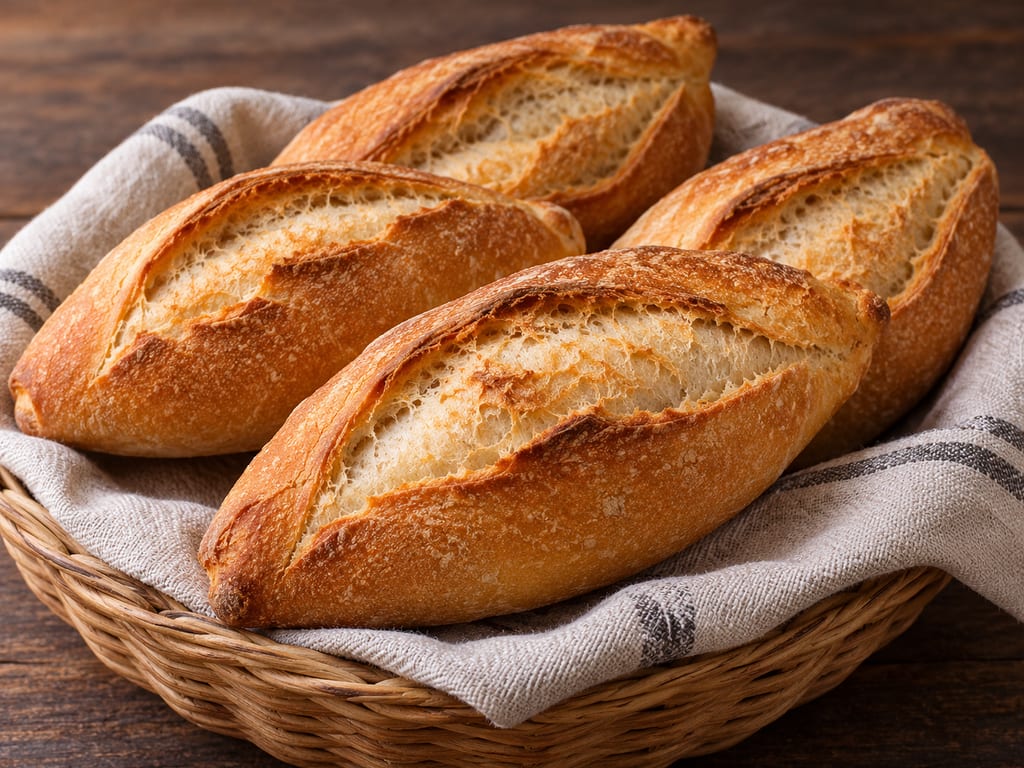
Illustrative pair of slender Lao sticky-rice baguettes from Saeng Douangdara’s personal recipe variation, showing a golden scored crust and soft pale crumb.

One modern Lao sandwich bread

Saeng Douangdara presents khao jee pâté as a Lao sandwich with its own identity, distinct from neighboring bánh mì. Her recipe makes the baguette from scratch and adds a cooked sticky-rice-flour paste to the wheat dough. She explicitly frames that addition as her own variation. This entry follows that one measured formula; it does not define every Lao baguette or khao chi.

The 2008 Chulalongkorn University thesis describes baguette as khao chi in Laos and discusses how it became part of Lao foodways. The research includes fieldwork in Vientiane and treats Lao, Vietnamese and Cambodian baguette cultures as distinct contexts. It supplies cultural history, not a bread formula or proof that the sticky-rice version is a longstanding tradition.

Sources for this section

Bread, not the filled sandwich

The dough method ends with four baked baguettes. Pâté, Lao sausage, pickled papaya, ham, sauces and fresh toppings belong to the separate assembled khao jee pâté sandwich and are not included in this bread recipe. The author describes sticky rice as a deliberate personal addition to the baguette; it should not be generalized as a required ingredient in all Lao baguettes. The source's narrative and recipe card also disagree on whether to make one score or three diagonal slashes, and the recipe card's approximate portion weight is not clearly reconciled with its ingredient amounts.

Sources for this section

Names that need their food context

Laos's tourism department includes khao jee pa-tay among Lao foods and describes it as French-inspired baguettes. Its festival account uses Khao Chi for a different preparation: sticky rice coated with egg, grilled and offered to monks. The food description matters alongside the transliterated name.

The grilled offering is not this wheat baguette. Nor does that rice tradition establish an older origin for Saeng's sticky-rice-flour paste, which the recipe author identifies as a personal addition. This loaf remains one modern Lao variation, separate from both the festival food and Vietnamese bánh mì.

Sources for this section

History

Saeng Douangdara identifies khao jee pâté as a Lao sandwich distinct from neighboring bánh mì and explains that the sticky-rice addition is her own variation. A 2008 Chulalongkorn University thesis documents baguette as khao chi in Laos and describes its adaptation into Lao foodways, with field research including Vientiane. Neither source establishes this particular sticky-rice formula as canonical or dates the first Lao baguette.

Ingredients

Yield 4 baguettes · Scaling: source batch only

80 g
Source gives 2/3 cup (80 g).
237 mL1 cup as recorded
For the sticky-rice paste.
15 mL1 tbsp as recorded
For the sticky-rice paste.
9.9 mL2 tsp as recorded
158 mL⅔ cup as recorded
For the yeast mixture.
500 g
Source gives 3 cups plus 2 tbsp (500 g).
4.9 mL1 tsp as recorded

Method

Risks and precautions · Standard risk
Raw flour in dough

Flour is raw and may carry harmful bacteria. Do not taste uncooked dough.

Hazard source

Do not taste raw flour or dough. Wash hands, bowls, tools, pans and work surfaces after handling raw flour or dough.

Control source

Bake the baguettes using the source's complete oven method. The source's time, temperature and color cue are recipe guidance, not independently validated safety limits.

Control source

The source does not provide a dough-proof temperature, internal bake endpoint or bread storage period.

The dough uses no egg, dairy or sandwich filling; this entry covers bread only. Use heat protection when removing the pan of water.

  1. Make the sticky-rice paste: whisk the sticky rice flour, 1 cup water and oil in a saucepan until smooth. Cook over medium heat, whisking constantly, for 4–5 minutes until thick and paste-like.
  2. Transfer the paste to an oiled bowl and freeze for about 30 minutes, until completely cool.
  3. Combine the instant yeast and 2/3 cup warm water; let stand for 5 minutes until foamy.
  4. Whisk the bread flour and salt in a stand-mixer bowl. Add the yeast mixture and stir until a rough dough forms.
  5. Add the cooled sticky-rice paste. Knead with a dough hook on speed 4 for 5 minutes, stopping after 3 minutes to scrape down the bowl, then knead for the remaining 2 minutes.
  6. Lightly oil a large bowl. Put in the dough, cover tightly and let rest for 20 minutes.
  7. With wet hands, fold the dough over itself four times. Cover and rest for 30 minutes. Repeat for four folding sessions total, leaving about 30 minutes between sessions.
  8. Lightly flour the work surface and dough. Divide into four portions of about 230 g each. Shape into balls, cover with a towel and rest for 15 minutes.
  9. Flatten one ball and gently press out large air pockets. Stretch it into a rectangle, roll it tightly into a baguette, seal the seam and taper the ends. Repeat with the remaining portions.
  10. Place the shaped baguettes on a tray, cover and proof for about 2 hours, until puffy. The source gives no proofing temperature.
  11. Heat a convection oven to 425°F and place a pan of water on the bottom rack. Score each loaf; the recipe card says one score per loaf, while the page’s narrative says three diagonal slits, so the source is inconsistent about the score count.
  12. Bake for 10 minutes with the water pan in the oven. Carefully remove the hot pan, then bake for 12 minutes more or until golden brown. Serve fresh; the source gives no storage period.

Conditions

Yield4 baguettes

Places

Laos

Modern adaptation · Country evidence

The source presents this specific sticky-rice baguette as the bread in a Lao khao jee pâté recipe. It is Saeng Douangdara's own variation, not a claim about all Lao baguettes or a locality where she developed it.

Related

Community

No community contributions have been published for this entry yet.

Share what you made

Sign in to contribute. Published comments and photos are free to read.

Sources