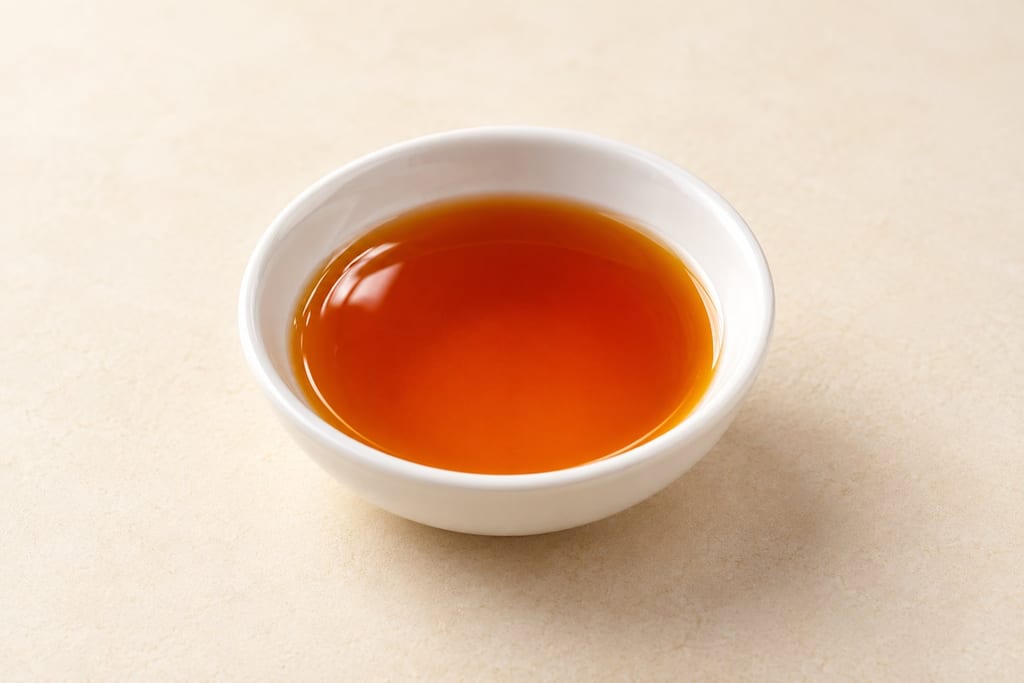
Fish sauce
Fish sauce is a clear, salty seasoning made by maturing fish with salt and drawing off the liquid. The broad family includes distinct regional sauces rather than one interchangeable method.
 FermenteaWhere food goes to change
Jeow mak len · Jeow mak len · Jaew mak len · tomato jeow
A Lao tomato-and-chile dip made by roasting tomatoes, chiles, garlic and shallots over gentle coals, then pounding and seasoning them. This four-person serving batch has no measured ingredient quantities or validated storage period.
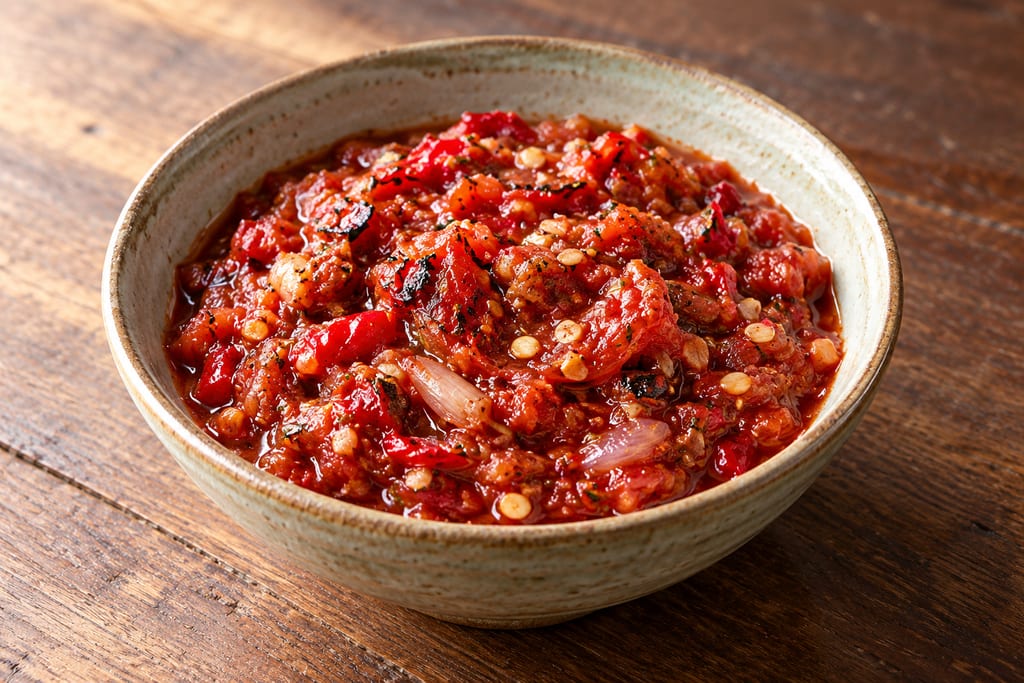
Jeow mak len (Lao: ແຈ່ວຫມາກເລັ່ນ) is a Lao dip of grilled tomato and chile, one of the family of jeow, the dipping pastes and relishes eaten with sticky rice and grilled food. In a Lao food feature by Champa Meuanglao it is a spicy dip placed within a meal of several shared dishes: fried Mekong riverweed, sun-dried fish and fried meats. That describes one contemporary table, not how often the dip appears across Laos.
The feature names a charcoal stove and a large ceramic mortar and pestle. Tomatoes, chiles, garlic and shallots are roasted on a rack over gentle coals, and each is taken off when cooked and soft. Garlic and shallots need roughly fifteen minutes, chiles only a minute or two, and tomatoes less time than the garlic and shallots. Tending the vegetables separately matters because they cook at such different speeds.
Roasting softens the vegetables, concentrates their flavour and chars their skins lightly, which gives the dip a smoky edge that raw pounding would not. The roasted vegetables are then pounded in the mortar into a coarse dip. This is one published cooking method; it does not show that every household uses the same fuel or surface.
The batch for four people uses ripe tomatoes, fresh mak phet hai chiles, whole garlic, red Asian shallots, salt, pa daek and fish sauce. Pa daek, a Lao salt-fermented fish paste, and fish sauce are prepared ingredients added at the end to season the pounded mash; the dip itself is not fermented. Quantities belong to that feature's batch, which gives none, and should not be merged with other jeow variants. A separate measured adaptation of the same roast-and-pound style on this site uses fish sauce without pa daek.
No source establishes the earliest history, regional spread, seasonal use or a tested storage period of jeow mak len. A page of a 2019 northern Lao cookbook that may carry a related recipe was not inspected, so no quantities or stages are borrowed from it. Treat the dip as a fresh preparation, and note that it contains fish-derived seasonings.
A contemporary Champa Meuanglao feature documents a jeow mak len recipe and shared-meal context. No source establishes earliest history or regional distribution.
Yield 4 people sharing · Scaling: source batch only
Pa daek and fish sauce are fish-derived seasonings in this preparation.
Hazard sourceNo validated storage period or preservation process exists for this dip. Do not treat the finished dip as shelf-stable.
Ingredient quantities are not supplied, so this cannot be scaled as a preservation formula.
A contemporary Lao food feature documents this preparation; it does not establish a more precise place or origin.
Fish sauce is a clear, salty seasoning made by maturing fish with salt and drawing off the liquid. The broad family includes distinct regional sauces rather than one interchangeable method.

Padaek is a Lao salt-fermented freshwater fish paste used as a seasoning and preserved food. This record covers documented uses and safety gaps; it does not offer an unvalidated home method.
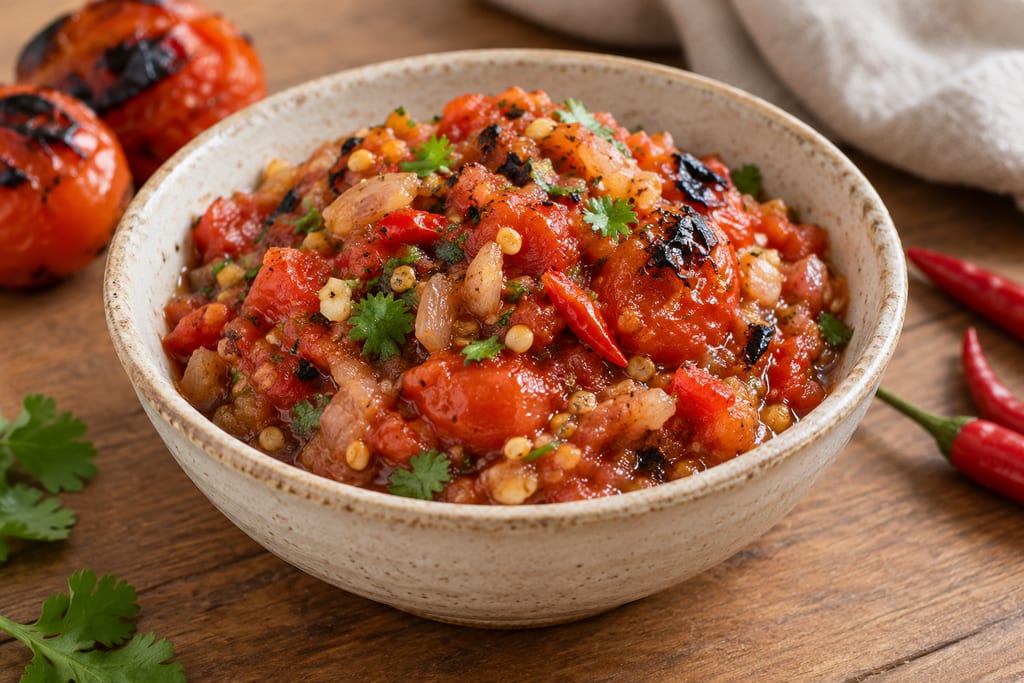
Roasted tomatoes, shallots, garlic and chillies are pounded into a coarse Lao-style dip, then seasoned with fish sauce, optional lime and coriander.
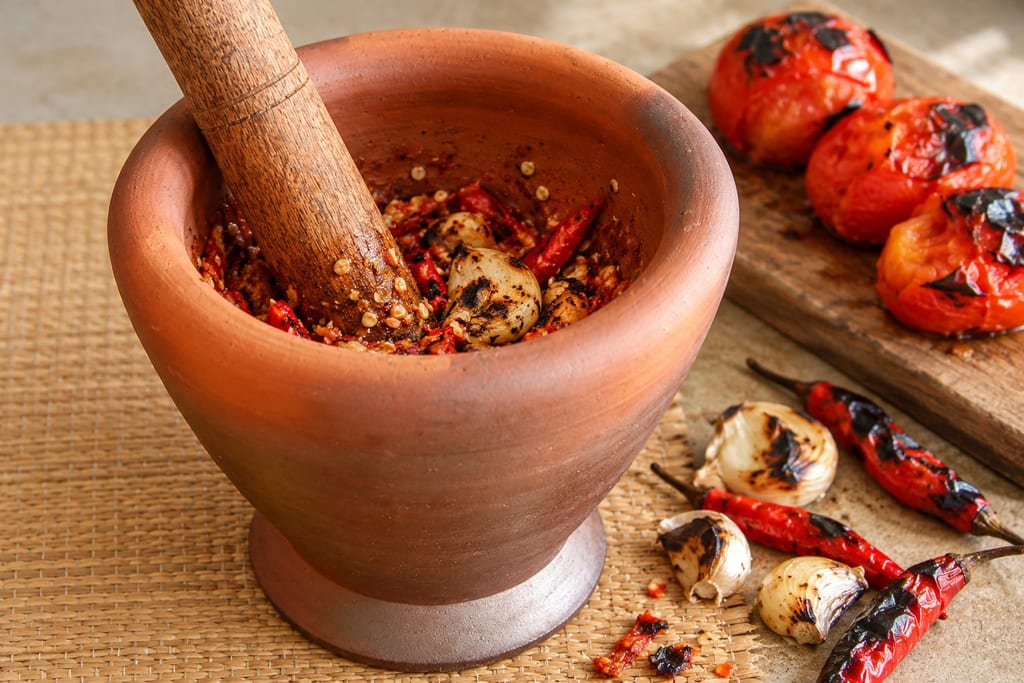
A mortar and pestle pairs a hollow bowl with a hand-held striker; Lao kitchens and Malay and Singaporean sambal traditions show how pounding shapes sauces and spice pastes.
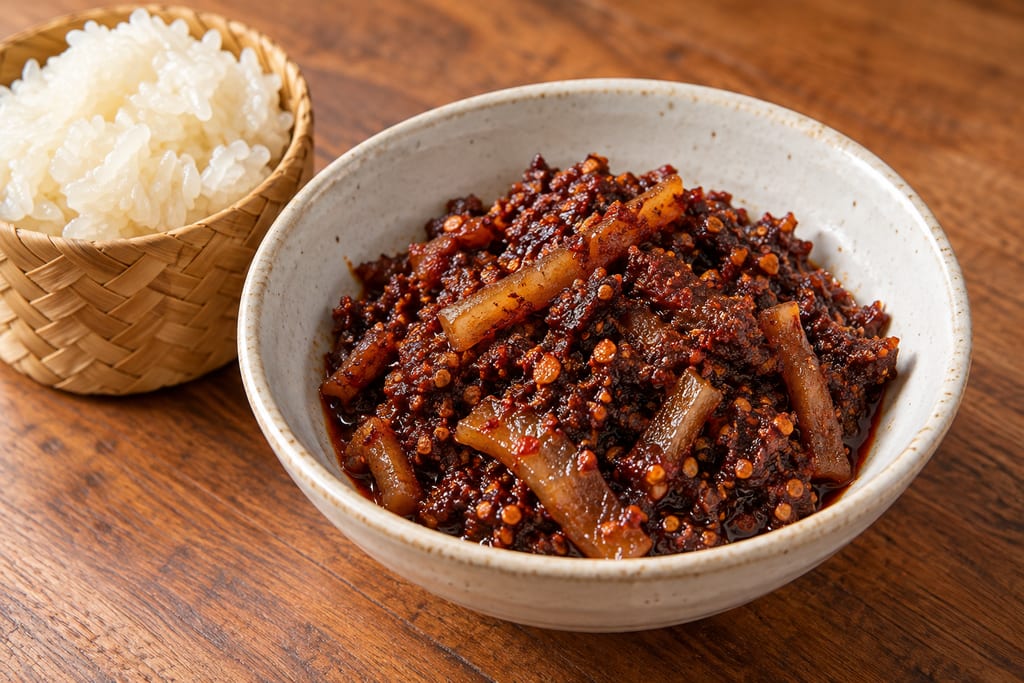
Jeow bong is a Lao paste of dried chilli, shallot, garlic and galangal cooked with buffalo or cow skin, a Luang Prabang specialty eaten with sticky rice and grilled meat.
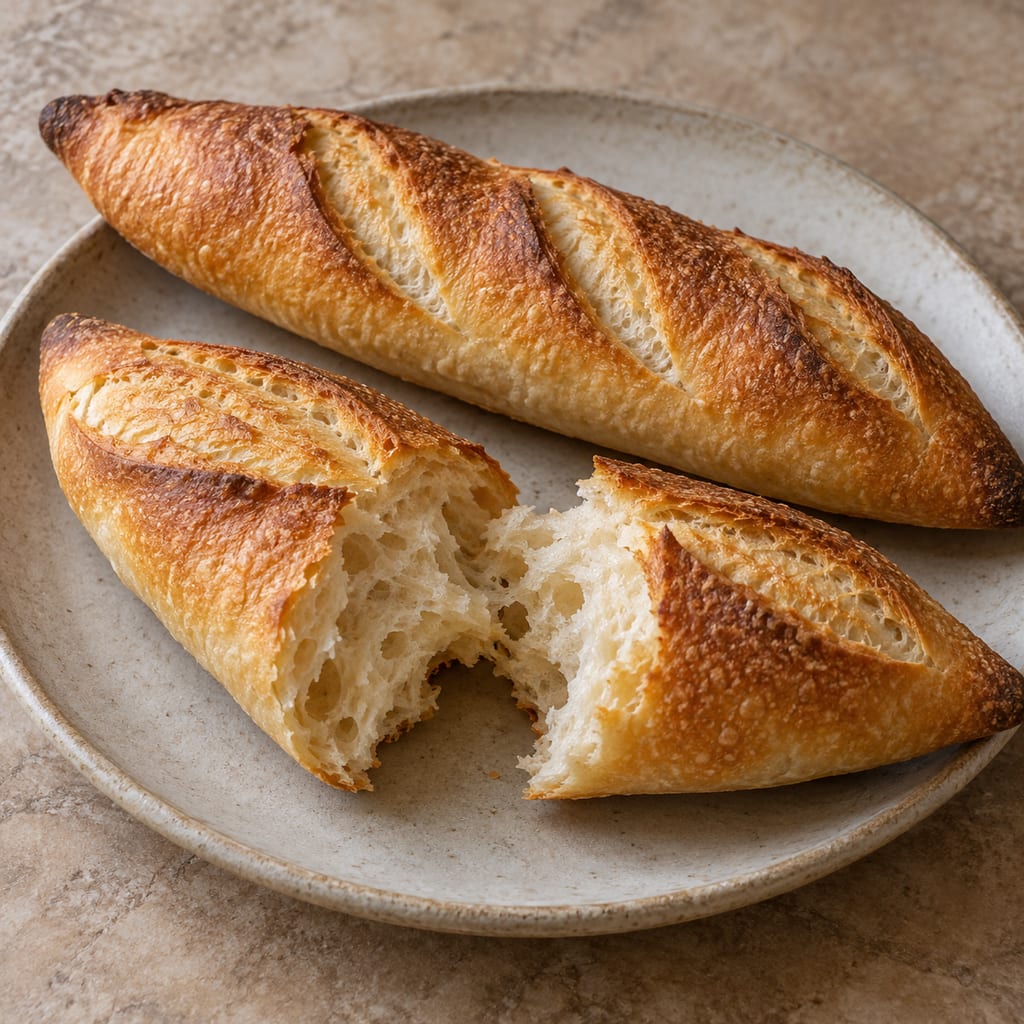
This four-baguette sticky-rice dough is the bread component of Saeng Douangdara’s khao jee pâté recipe. She presents the sticky-rice addition as her own variation; it is not a universal or traditional Lao baguette formula.
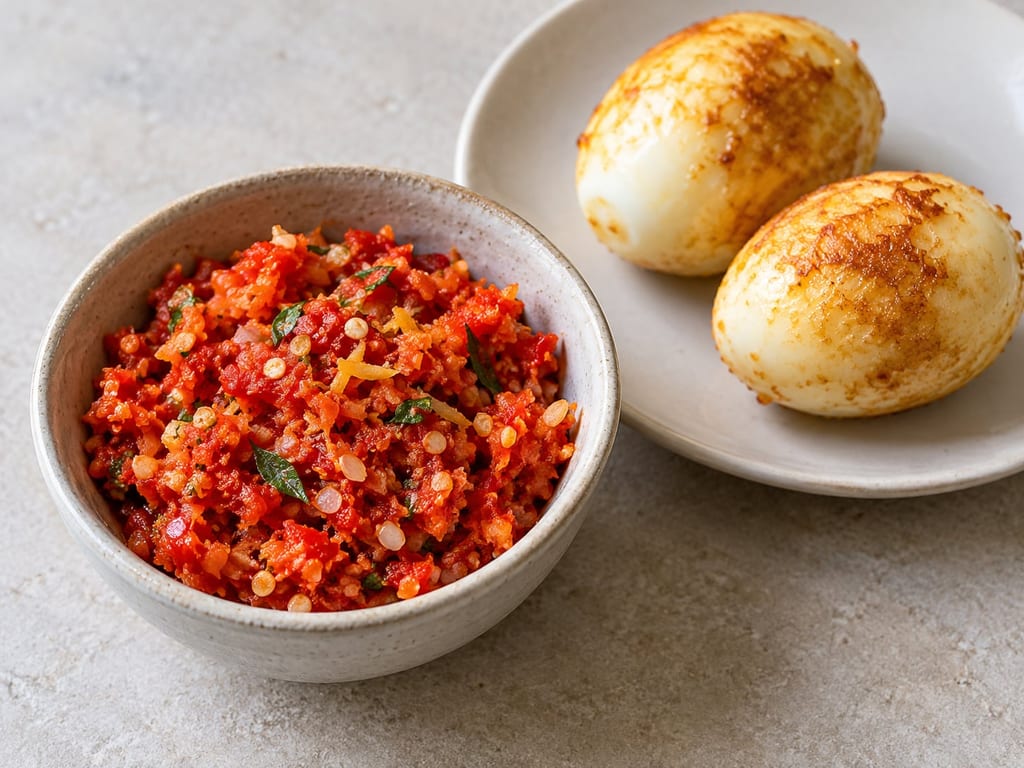
Ai-manas is described as a very hot chilli paste served with Timorese meals. One published version blends fresh chillies, shallots, garlic, Thai basil, ginger, lemon and salt, and serves it with eggs. Sources do not establish a standard formula, precise birthplace or earliest date.
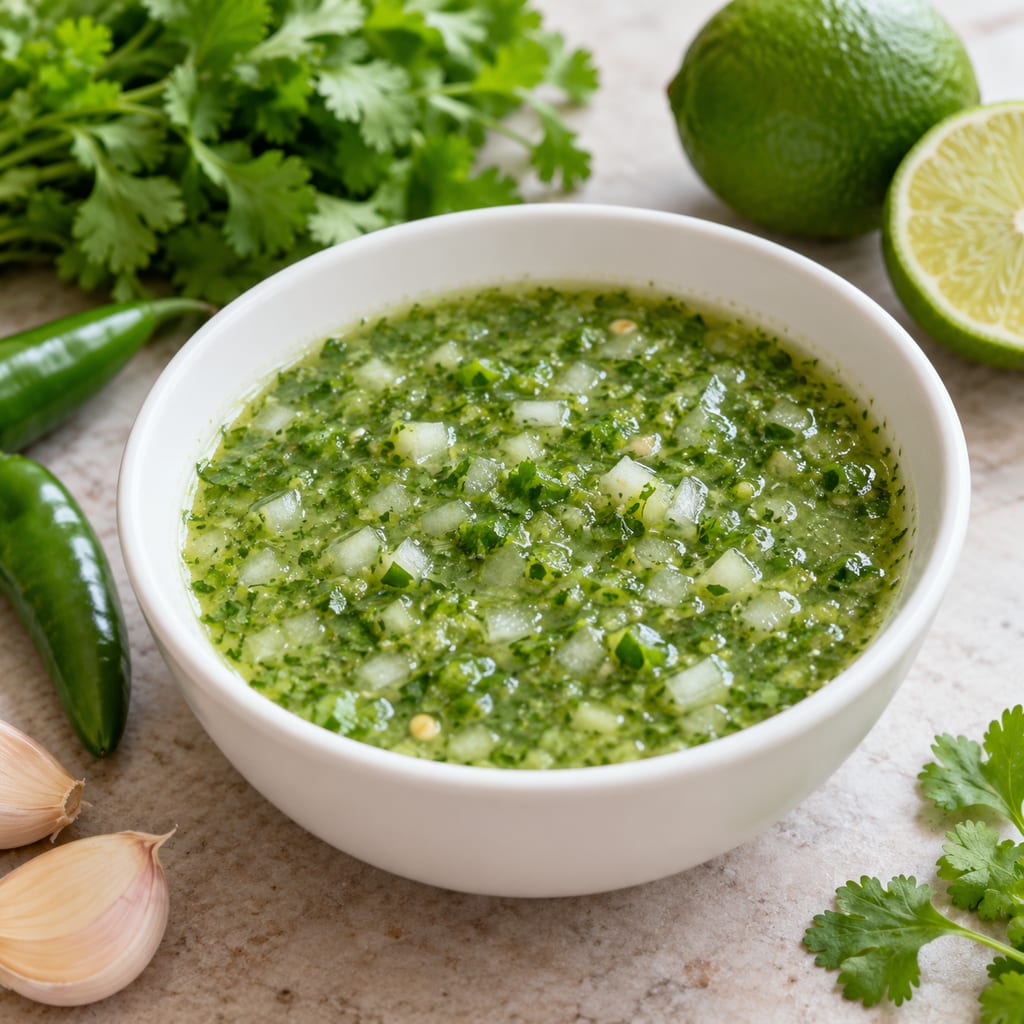
A fresh, uncooked Ecuadorian table sauce of hot pepper, cilantro, garlic and lime, served with most everyday dishes.
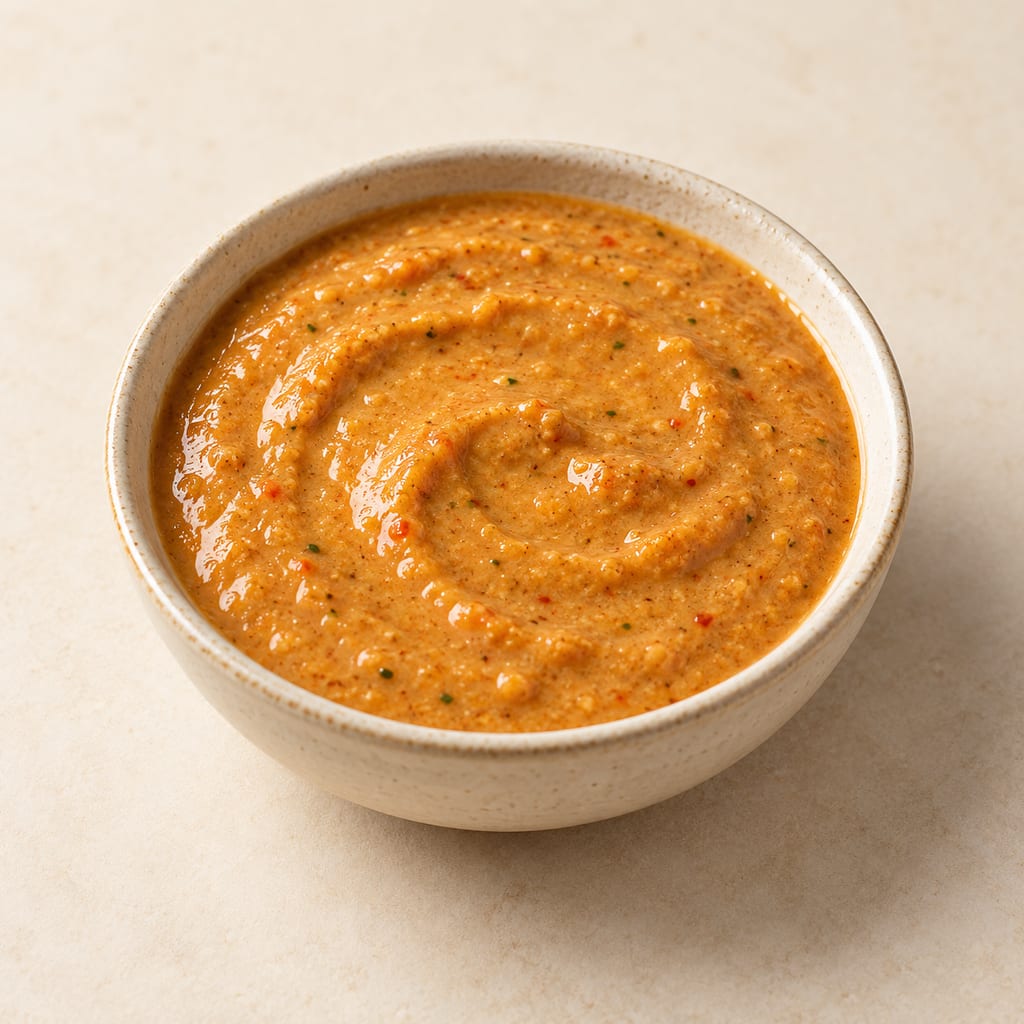
A spicy peanut hot sauce from the Popayán and Cauca region of Colombia, traditionally served with pipián empanadas and tamales.
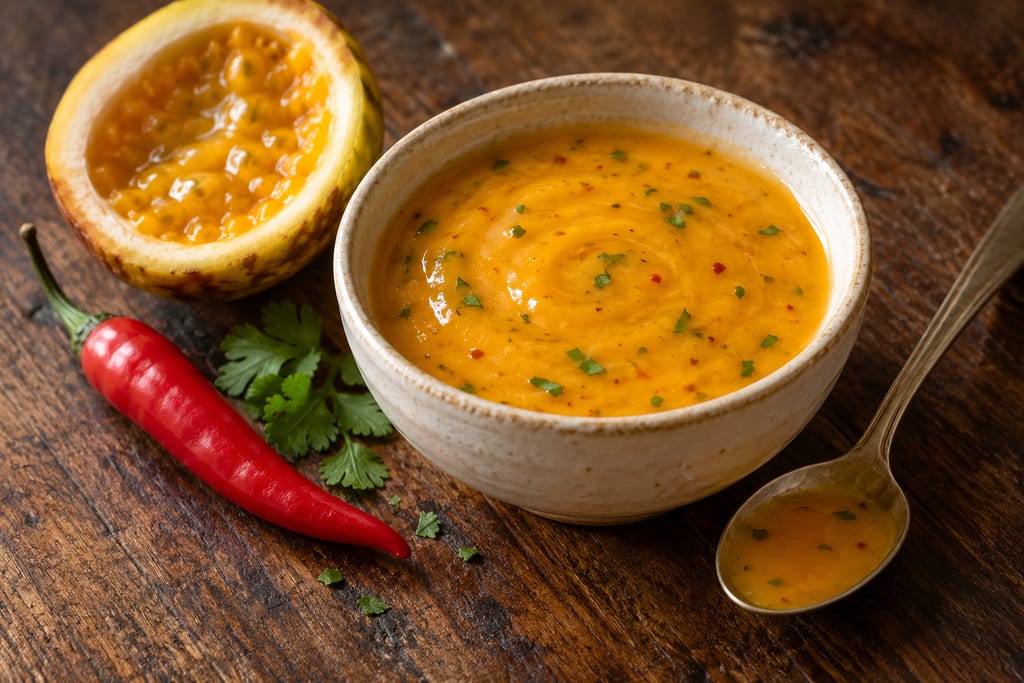
A contemporary Ecuadorian hot sauce that pairs passion fruit juice with boiled chile peppers, oil and lime.
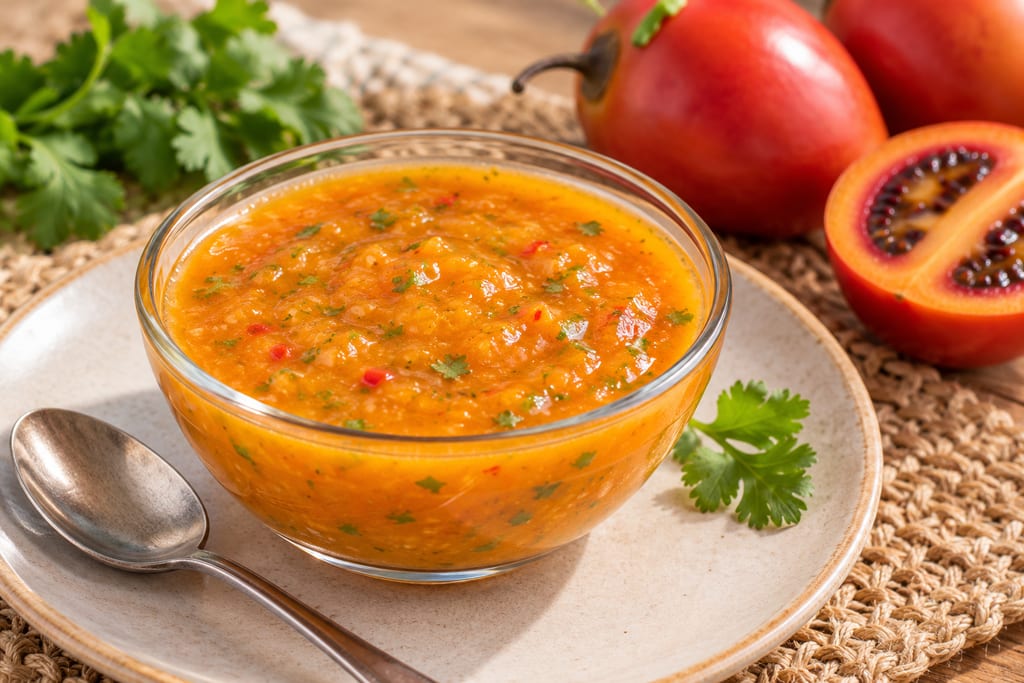
An Ecuadorian hot sauce built on tamarillo, a tart fruit that gives a sharper, fleshier base than ordinary tomato salsa.
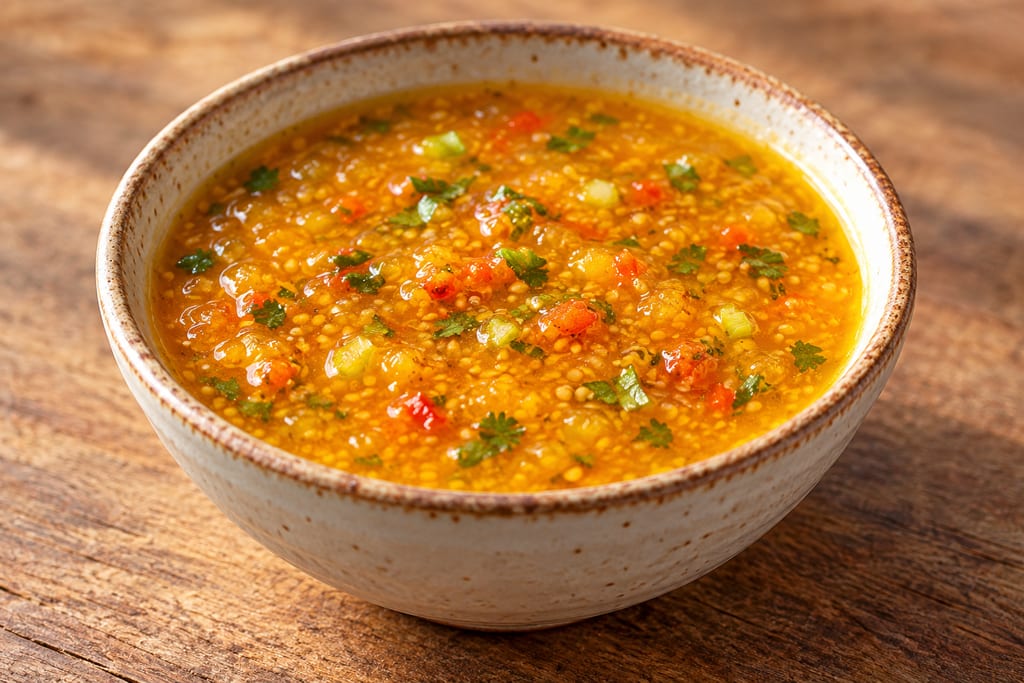
A sweet, tart and spicy Colombian sauce of uchuva, the yellow physalis fruit, with hot pepper, scallion, cilantro and lime.
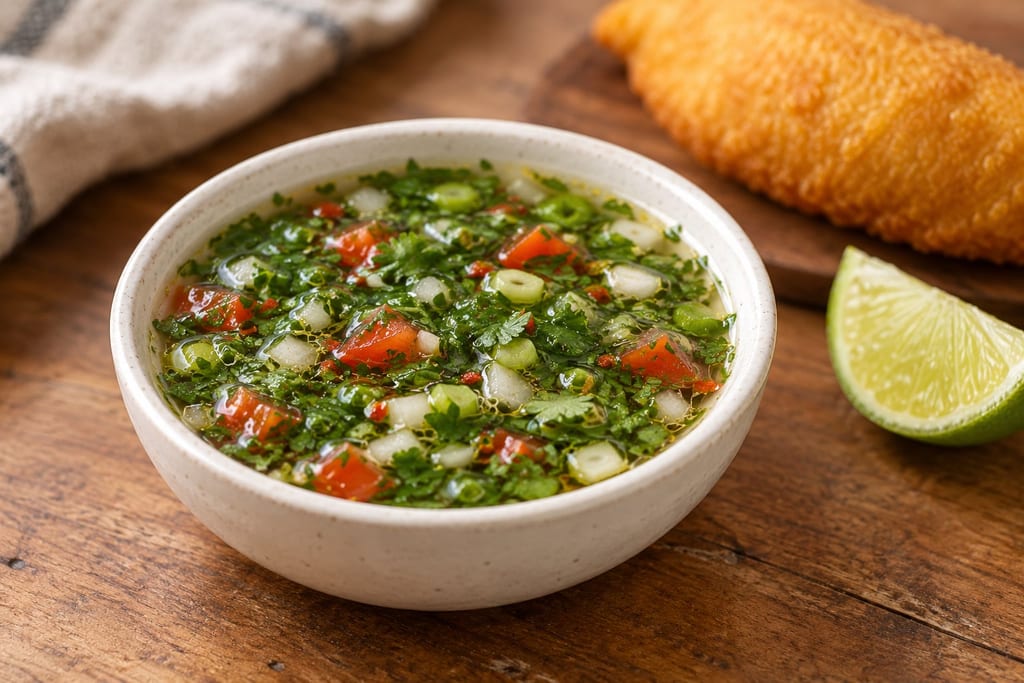
A fresh Colombian table condiment of chopped herbs, scallion and tomato in a vinegar and chile base, served beside fried and filled dishes.
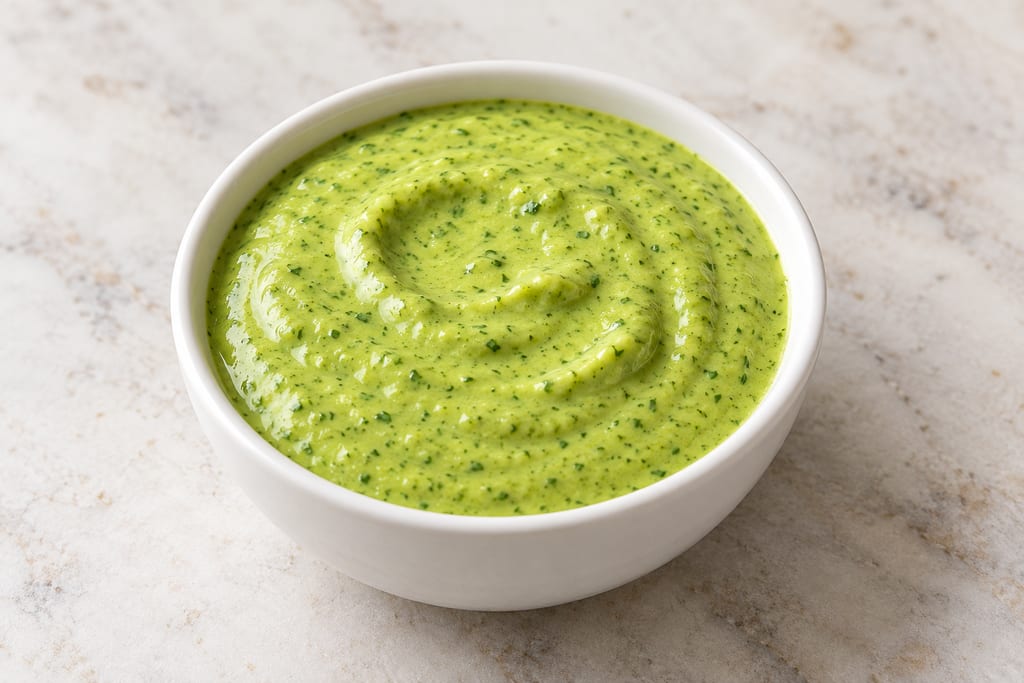
Ají verde is a Peruvian green sauce of coriander, chilli, onion and garlic in a mayonnaise or cheese base. It is best known through Peruvian restaurant cooking abroad.
No community contributions have been published for this entry yet.
Sign in to contribute. Published comments and photos are free to read.
Champa MeuanglaoInspiration · Method · Geography
The Tastes of LaosThe batch is framed for four people sharing.
The method roasts ripe tomatoes, mak phet hai chiles, garlic and red Asian shallots over gentle charcoal, then pounds them in a large ceramic mortar and pestle.
About fifteen minutes for garlic and shallots, about one to two minutes for chiles; tomatoes take less time without a fixed time.
Salt, pa daek and fish sauce are listed as seasonings, without amounts.
Shared service with fried Mekong riverweed, sun-dried fish and fried meats.
Cited in: A grilled tomato jeow; Roasting and pounding; Fish seasoning and variation; What is not known
U.S. Food and Drug AdministrationSafety
Food Allergies: What You Need to KnowFish is a major food allergen; this preparation includes fish-derived pa daek and fish sauce.
Cited in: What is not known