One tool family, several working forms
A mortar is a bowl or hollowed vessel; its pestle is the hand-held tool that strikes, crushes or grinds what sits inside. The pair is not one universal design. Materials and proportions vary with the work, and names differ by place. In a Singapore Malay context, the National Library Board distinguishes portable batu lesung or batu tumbuk (mortar and pestle) from batu giling, a roller used across a rectangular stone slab. They are related crushing tools, not the same apparatus.
Food from Northern Laos describes pottery or metal mortars with wooden pestles as the most commonly used form in Laos. It also records wooden mortars and pestles and a less common granite type. These are regional examples, not a catalogue of every kitchen or a universal Southeast Asian design.
Sources for this section
Pounding for Lao jeow and other preparations
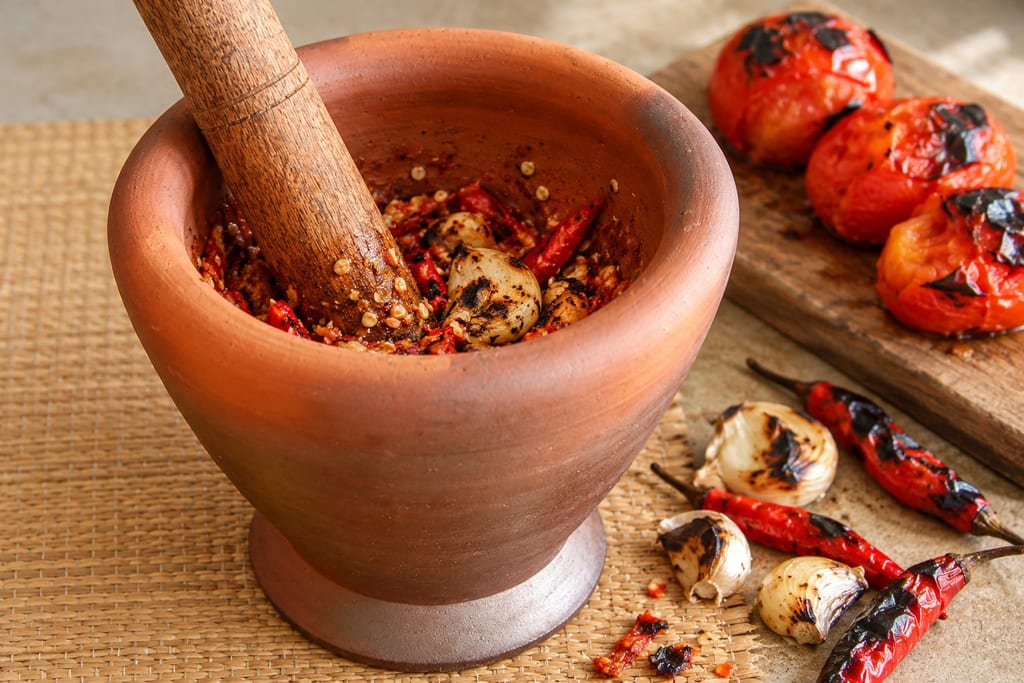
The bowl contains the ingredients while the pestle delivers repeated impacts. Changing the force and movement lets a cook crush, pound or mix, leaving ingredients coarse or bringing them into a more integrated paste. In northern Lao cooking, roasted garlic, eggplant and chillies are pounded for jeow, a family of dipping sauces; the cookbook values the smoky character of the roasted skins. It also describes mortars used to prepare stew ingredients, pound soaked sticky rice for moke, crush dry-fried rice for lahp and prepare tam mak hoong in a large pottery mortar.
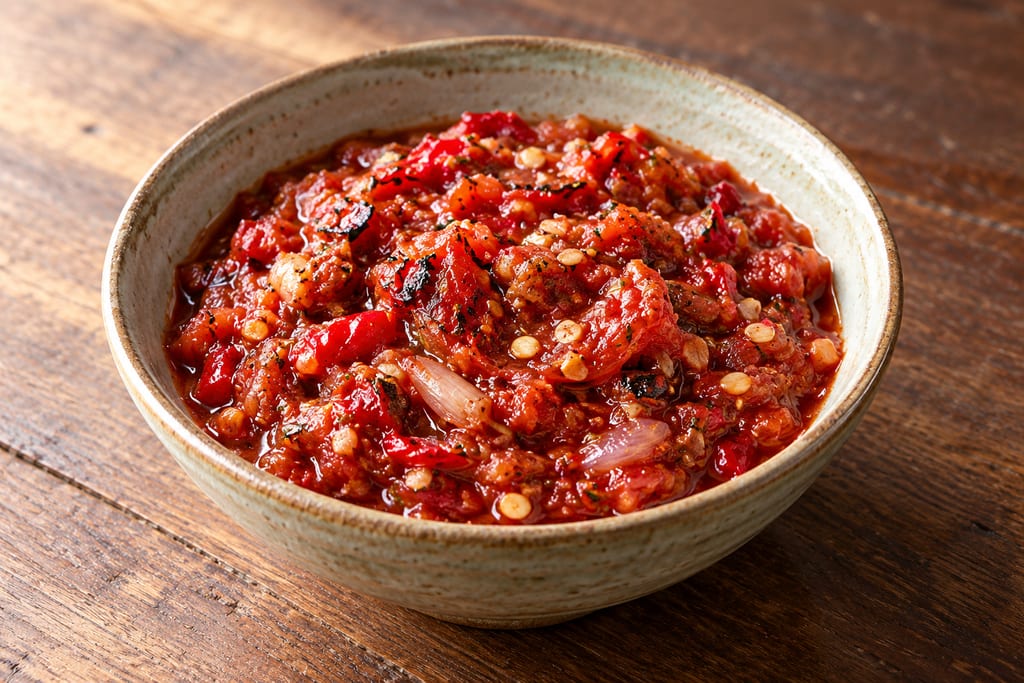
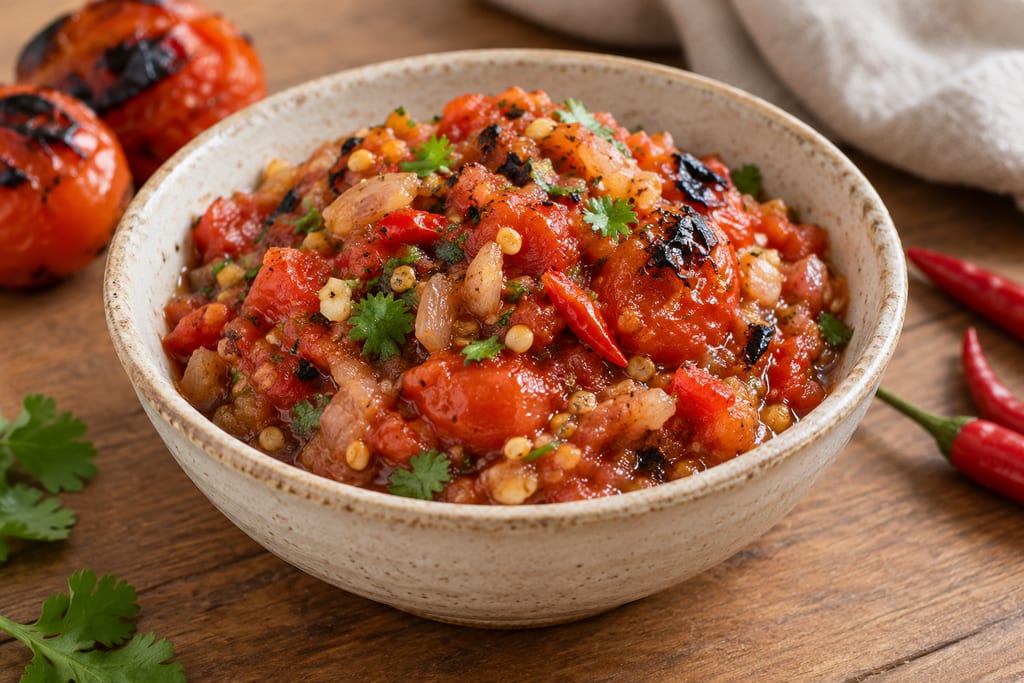
Saeng Douangdara's jeow mak len recipe offers a first-hand example: roast tomatoes, shallots, garlic and chillies; pound garlic and chillies first, add shallots, then tomatoes, and season with padaek and fish sauce. The order breaks down firmer aromatics before the softer tomatoes. This documents one cook's method, not a universal recipe.
Sources for this section
Batu lesung and sambal belacan
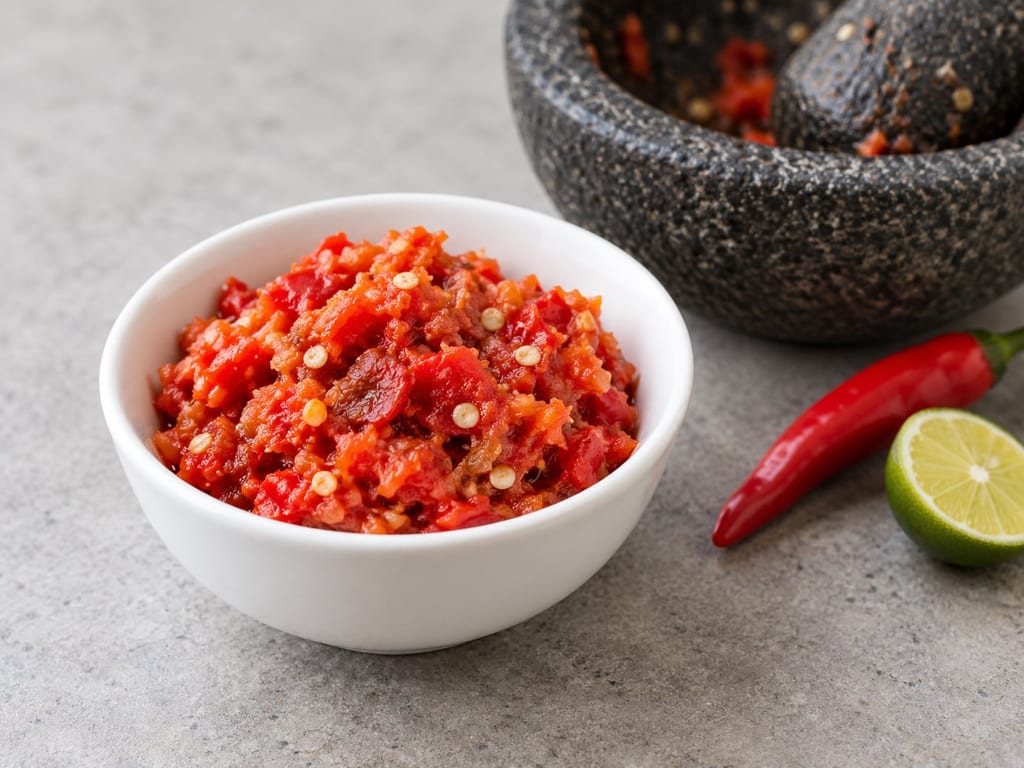
In Singapore, batu lesung remains in use in some kitchens, and the National Library Board notes its association with sambal belacan. Toffa Abdul Wahed describes sambal belacan as a regular rice accompaniment in Malay, Eurasian and Peranakan meals: toasted belacan is pounded with chillies, then calamansi juice, salt and sugar are added. Pounding combines the ingredients into a coarse relish; it is a preparation step, not a preservation process.
The same BiblioAsia account describes crushing hard spices between two surfaces as a way to release fragrant oils. This is a practical comparison with electric grinding, not a claim that one tool is always better: texture, ingredient and batch size matter. The source accounts give two particular recipe examples: fresh sambal belacan and Lao roasted tomato jeow.
Sources for this section
Choosing a form and reading its limits
A pottery mortar with wooden pestle is a documented Lao combination; a wooden mortar is another documented option. The cited book says granite mortars are less common there and heavy. It distinguishes tasks such as pounding grilled aromatics, sticky rice, dry-fried rice and papaya salad rather than presenting them as identical work. The sources give no universal dimensions, capacity, vessel preparation, cleaning routine or general purchase route, so none should be inferred for every set.
Retail listings may call an item “Laos style,” but a product listing does not prove that one shape is used everywhere or that a particular set was made in Laos. The linked gallery identifies one such listing as a visual reference, not proof of origin or customary use. For a specific set, follow material-specific guidance from its maker.
Sources for this section
Pounding cassava for Burundian Inyange
A Burundian food review describes dried fermented cassava pieces for Inyange being pounded in a wooden mortar with a pestle before the flour is sieved. The linked recipe record is Inyange; this equipment example is one documented use of the tool, not a claim about every mortar or Ubuswage preparation.
Sources for this section
History
The sources document ongoing Lao and Singaporean uses and describe older forms, but do not establish the practice's first date.
Equipment details
PowerHand or animal power Culinary examples use a handheld pestle to pound or crush.
How you get oneNot established The sources describe materials and forms but do not establish how local kitchen mortars are generally acquired.
CareThe sources consulted do not give a cleaning or seasoning routine; care depends on the material and maker's guidance for the specific set.
Made of
- Pottery or metal — mortar
Described as the most commonly used Lao form. - Wood — pestle
Paired with pottery or metal mortars in the common Lao form. - Wood — mortar and pestle
A separate Lao type used for salt, spices, betel-nut chew and papaya salad depending on size. - Granite — mortar and pestle
Described as uncommon in Laos; used for dry-fried spices or rice, jeow and curry pastes.
Places
Laos
Traditional use · Country evidenceThe cookbook documents forms and uses in northern Lao cooking, not a sole origin.
Singapore
Traditional use · Country evidenceThe article says batu lesung remains in many Singapore kitchens and associates it with sambal belacan.
Malaysia
Documented use · Country evidenceThe source discusses sambal belacan as a Malay condiment and describes pounding its ingredients; it does not locate manufacture.