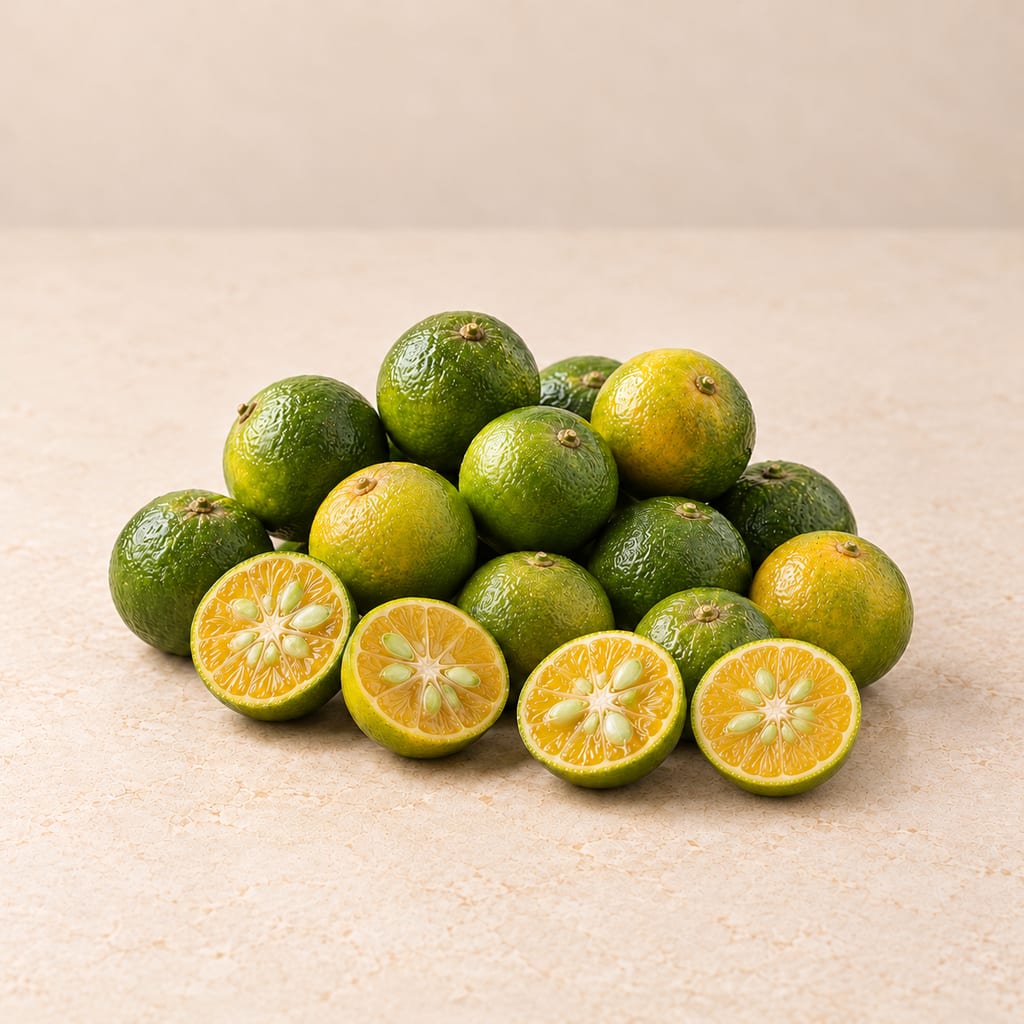
Calamansi
Calamansi is a small, very sour kumquat-mandarin hybrid, Philippine cooking’s all-purpose citrus, squeezed into soy sauce, fish sauce, broths and dips.
 FermenteaWhere food goes to change
Modern adaptation
Sambal belacan · Fresh sambal belacan · Chilli, lime and shrimp paste relish
Red chillies pounded with belacan shrimp paste, then mixed with lime or calamansi and sugar for a fresh relish. Contains crustacean shellfish.
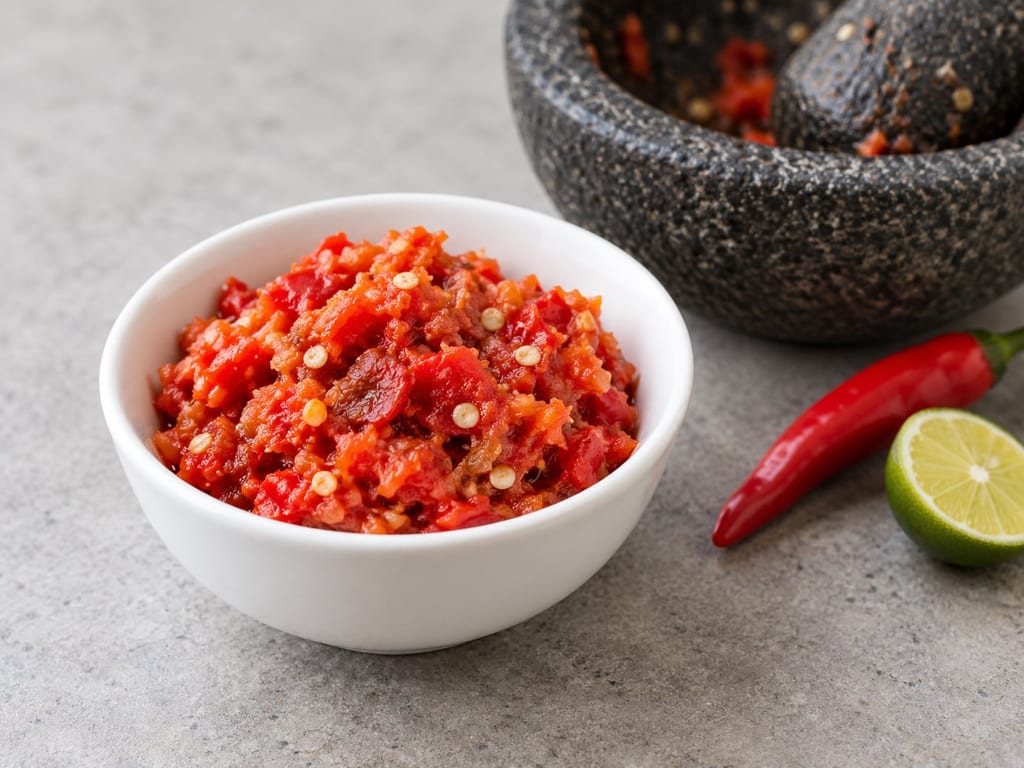
Sambal belacan is a fresh chilli relish from the Malaysian and Singaporean table, made with belacan, a fermented shrimp paste: red chillies pounded with the paste and sharpened with citrus. Belacan supplies the fermented shrimp flavour. In Malaysia it sits beside kicap, chilli sauces and peanut sauces, and a raw chilli and lime sambal and a cooked, oily sambal are different preparations. This formula is the raw kind, made for the table rather than the pan, and keeps to 90 g red chillies, 10 g prepared belacan, 35 g lime or calamansi juice and 10 g sugar. A National Library Board Singapore account describes it as a regular accompaniment in Malay, Eurasian and Peranakan meals.
Belacan is one of many fermented shrimp pastes. Belacan, terasi, kapi, bagoong alamang and their relatives share a broad family resemblance but differ in raw material, fermentation, consistency and culinary treatment, so use the paste the recipe names and follow its cooking instructions. Some products are sold ready to eat; others are meant to be cooked before use. If yours needs cooking, cook it before it meets the chillies, and never assume that every block is ready to eat. A cooked, ready-to-eat paste and one intended for cooking are not interchangeable without that step.
The proportions explain the taste. Belacan is only 10 g of the 145 g relish, about 7%, but it carries much of the savoury depth and much of the salt, which is why the formula adds none: taste first, then season. The chillies are the body. A blend of mild and hot lets the cook set the heat without changing the 90 g that gives the relish its bulk. Lime or calamansi juice, 35 g, sharpens it, and 10 g sugar rounds the citrus. Pounding rather than blending bruises the chillies into a textured relish, with juice drawn out to bind it.
The library article gives a different sambal belacan formula, attributed to a cookbook: it dry-fries the paste, pounds it with red and bird's-eye chillies, then adds lime, salt and sugar. This report's formula does not copy those amounts or steps. It uses a mild-and-hot chilli blend, lime or calamansi, sugar and no added salt, and directs the cook to follow the chosen belacan label. The shared name and pounding method do not make the formulations interchangeable.
Singapore shows why it pays to think in terms of the dish and the community rather than one national sauce: sambal belacan sits beside chilli and ginger sauces made for particular dishes and soy-based dips. In Myanmar, ngapi, the fermented fish and shrimp pastes, are not one uniform substance. Ngapi yay is a watery dip, while balachaung adds fried seafood and aromatics for texture, and a prepared watery dip and a concentrated base keep differently. Jaclyn Bond's first-person account of her family's balachaung describes it, though its informal storage language is not adopted here.
In Brunei, cacah is the sour, spicy dip served with ambuyat, and the dip is fundamental to that combination; ambuyat itself is the starch, not the condiment. Sambal families run through Brunei's cooking too. In Timor-Leste, ai-manas names a family of chilli, aromatic and citrus preparations whose exact formulas vary; AMCarmen's Kitchen documents one cook's version, which is evidence of that version, not of a fixed national formula. Sambal belacan belongs in this wider landscape as one specific relish, not a stand-in for all of it.
Newly mixed, it is a fresh food. Neither the salt, nor the acid, nor the fermentation that made the shrimp paste can be relied on to preserve the relish once chilli and citrus are added, so freeze what will not be eaten soon. The quantities are untested: the relish has not been trialled in a kitchen, tasted against a Malaysian or Singaporean version or checked for keeping. In the fridge it is kept at 4°C or colder where practical and used within 48 hours, a convention borrowed from general leftovers advice and not a shelf life, or sooner if the shrimp paste's own after-opening instruction is shorter. It contains shellfish.
The sources document a present-day style or product, not the earliest attestation of this separate home adaptation.
Yield 145 g · Scaling: source batch only
The newly mixed formula has no measured keeping period; general leftovers advice is used as a conservative handling convention, not as process validation.
Hazard sourceBelacan is fermented shrimp paste.
Hazard sourceKeep the refrigerator at 0–5°C; cool and refrigerate promptly; eat within 48 hours or freeze. This general guidance does not validate the formula's shelf life.
Control sourceIdentify belacan as shrimp paste and do not serve to someone avoiding crustacean shellfish.
Control sourceThe reported 48-hour handling period is general leftovers guidance, not a measured shelf life for this formula. Refrigerate promptly or freeze; do not store at room temperature or can.
Contains crustacean shellfish. Follow the chosen belacan product's label; some products require cooking before use.
The source documents sambal belacan in the regional food tradition; these proportions are a separate modern development formula.
The source documents sambal belacan in Malay, Eurasian and Peranakan meals; this formula is an untested adaptation.
Calamansi is a small, very sour kumquat-mandarin hybrid, Philippine cooking’s all-purpose citrus, squeezed into soy sauce, fish sauce, broths and dips.
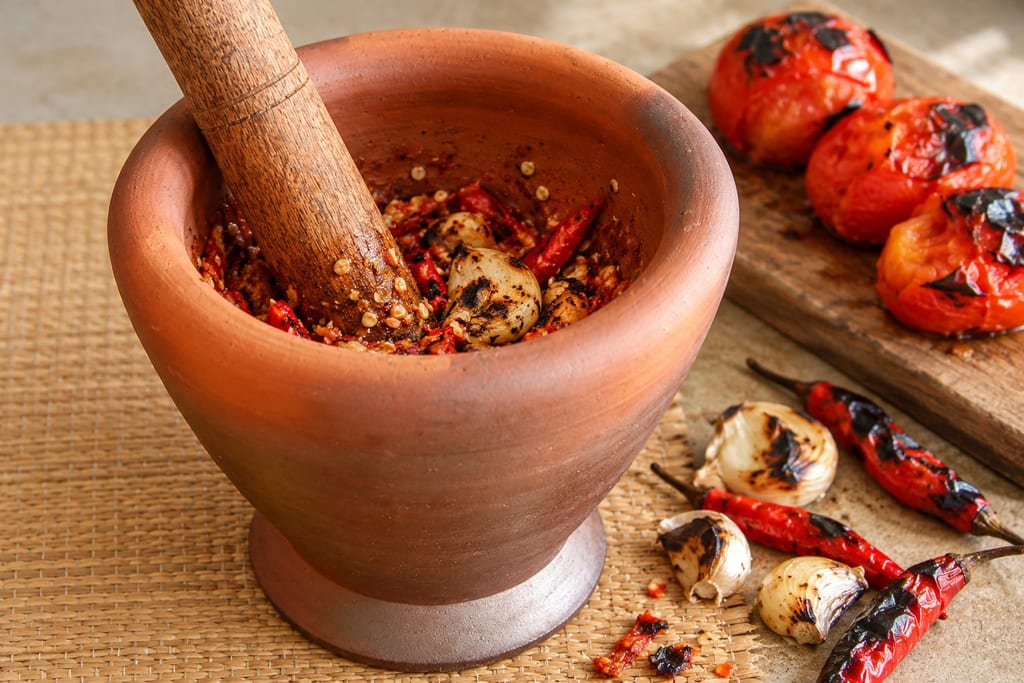
A mortar and pestle pairs a hollow bowl with a hand-held striker; Lao kitchens and Malay and Singaporean sambal traditions show how pounding shapes sauces and spice pastes.
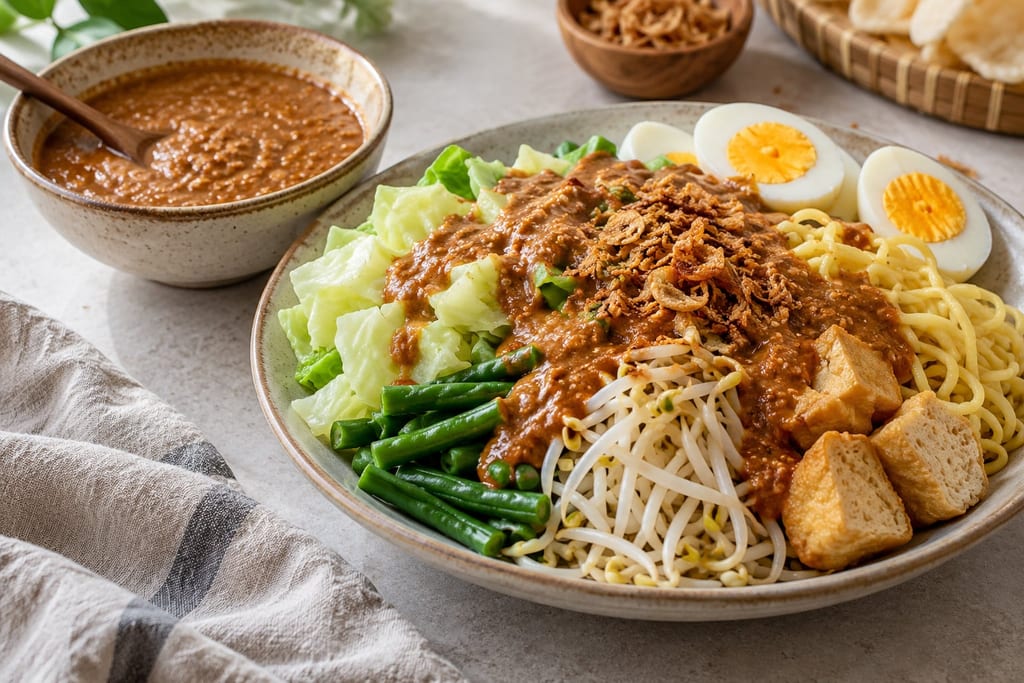
A cooked peanut sauce of ground roasted peanuts, aromatics, shrimp paste and coconut cream, as made for gado-gado; pecel and Malaysian satay sauces are close relatives with different formulas.
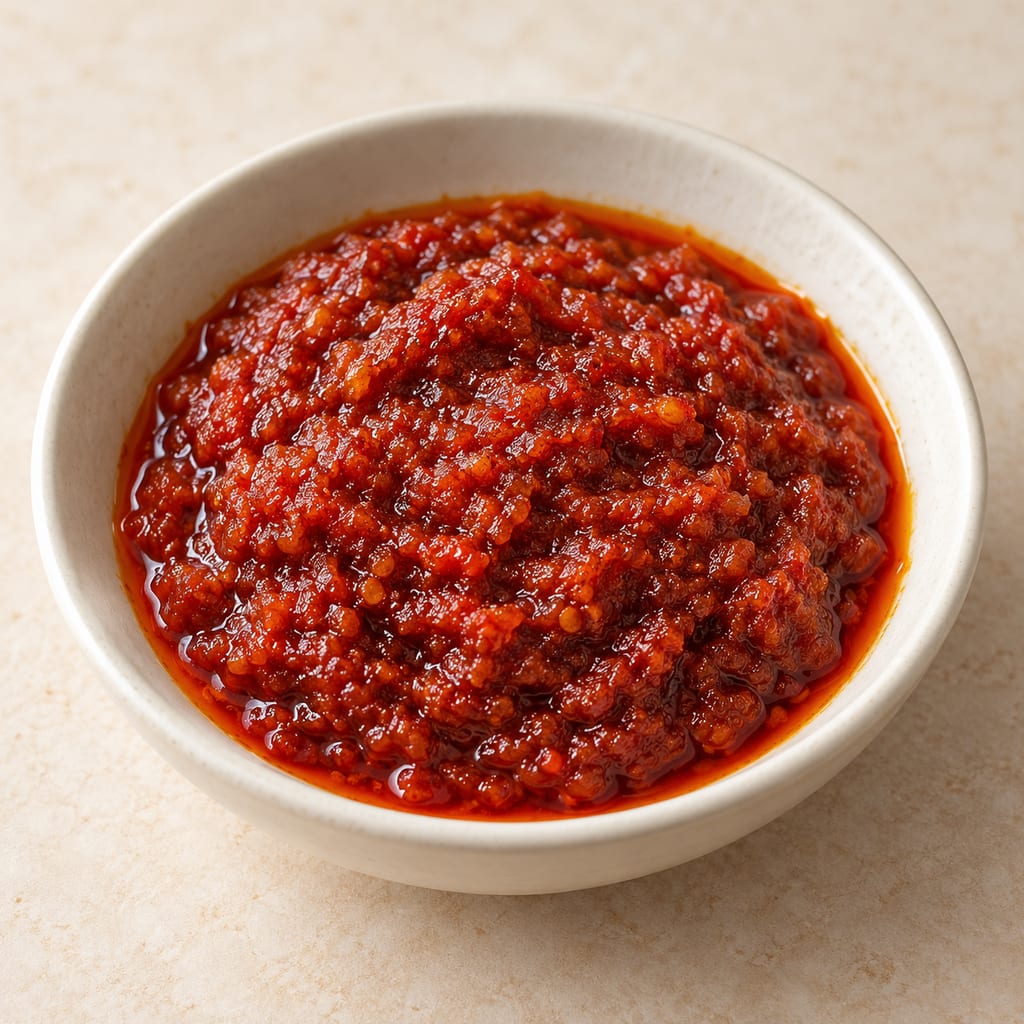
Sambal tumis is a Malaysian chilli paste fried in oil until it breaks, then simmered with tamarind and sugar, used as a condiment and as a cooking base.
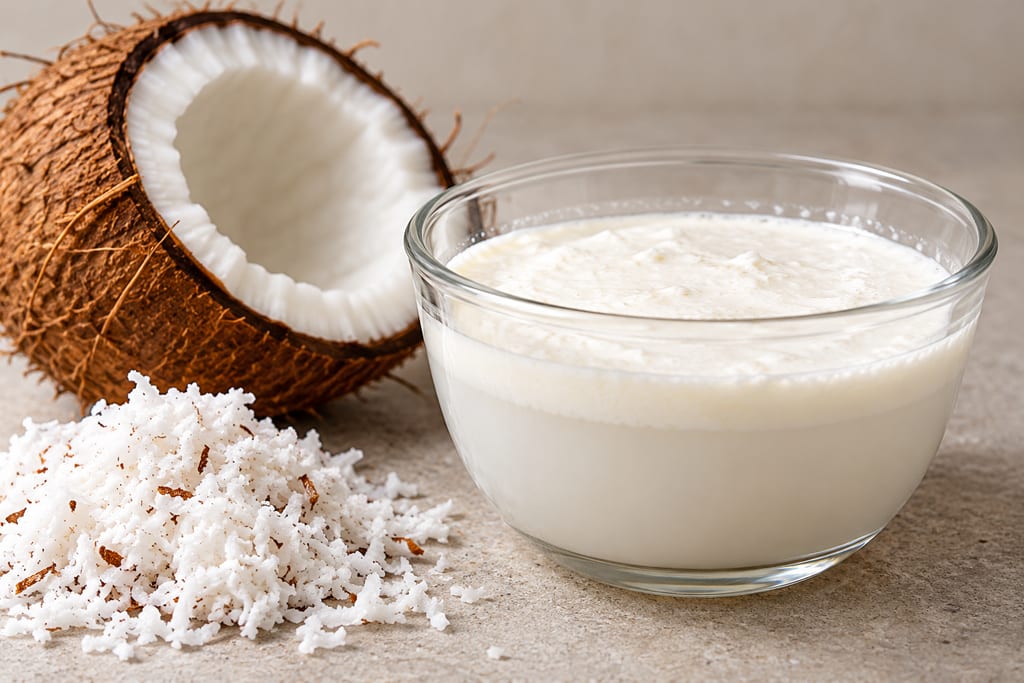
Grated or shredded coconut extracted with water and squeezed or strained into a milky emulsion; left to stand, it separates into cream and a watery layer.

A 2024 Ranau account describes Kadazan-Dusun Lihing as glutinous rice fermented with sasad for two to three months or longer. Starter quantity and a validated safety endpoint are not established.
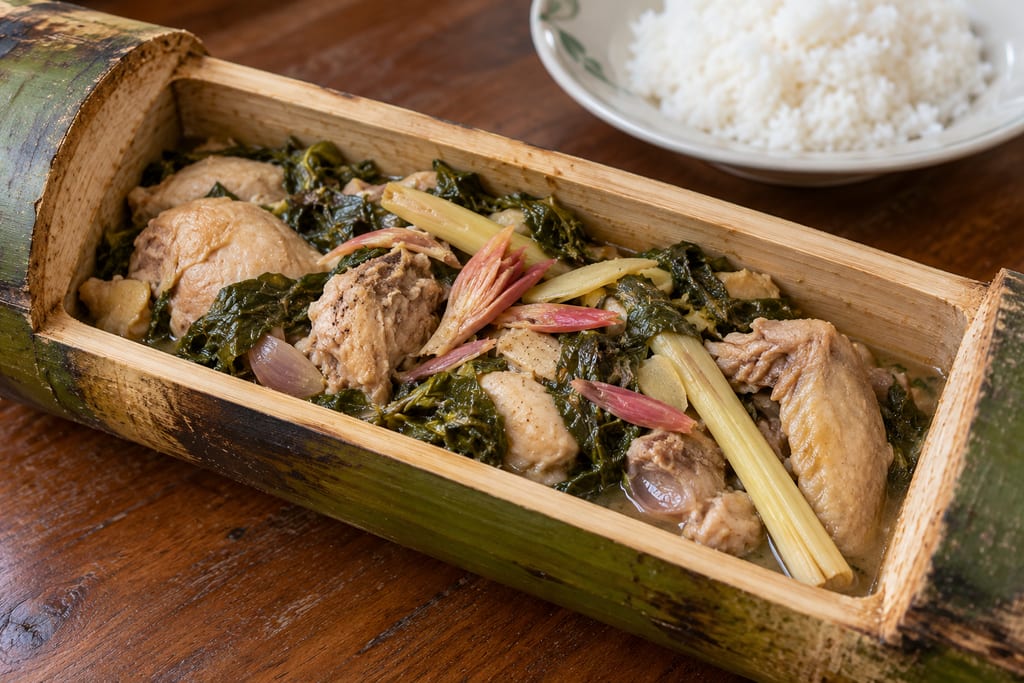
Manuk pansuh is Iban chicken cooked slowly inside a fresh bamboo tube with aromatics and leafy greens. The bamboo holds the food and shapes the steamy, fragrant cooking environment; recipes vary by household and locality.
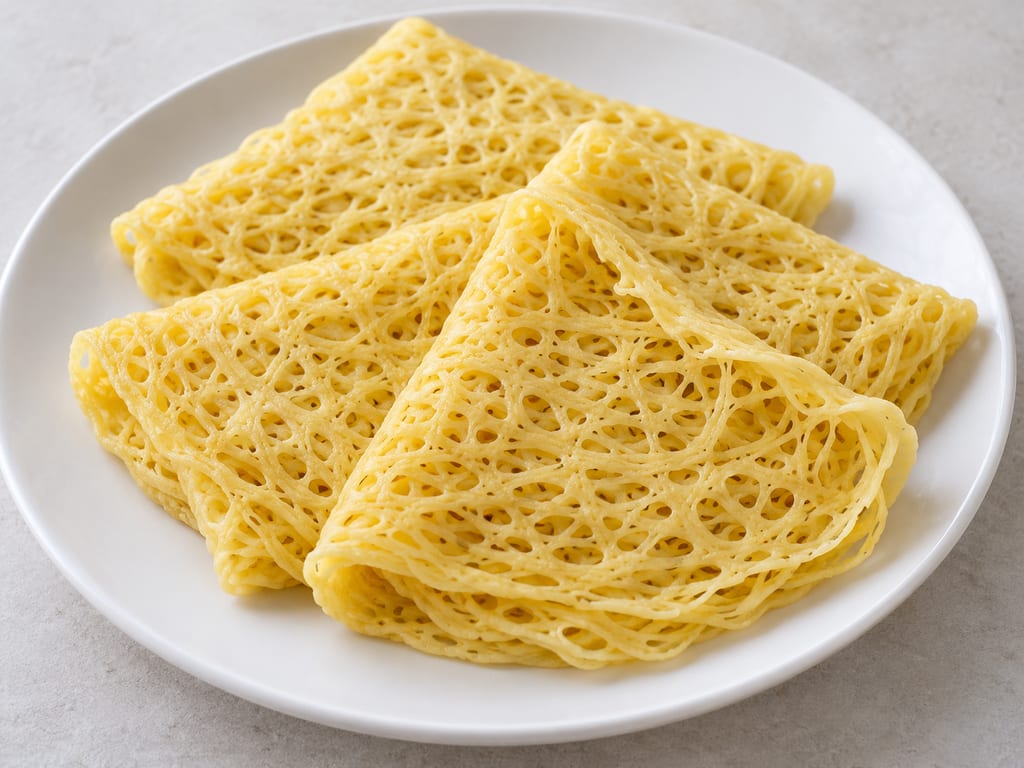
Malaysian lacy pancakes made by pouring coconut-milk batter in a net on a hot pan.
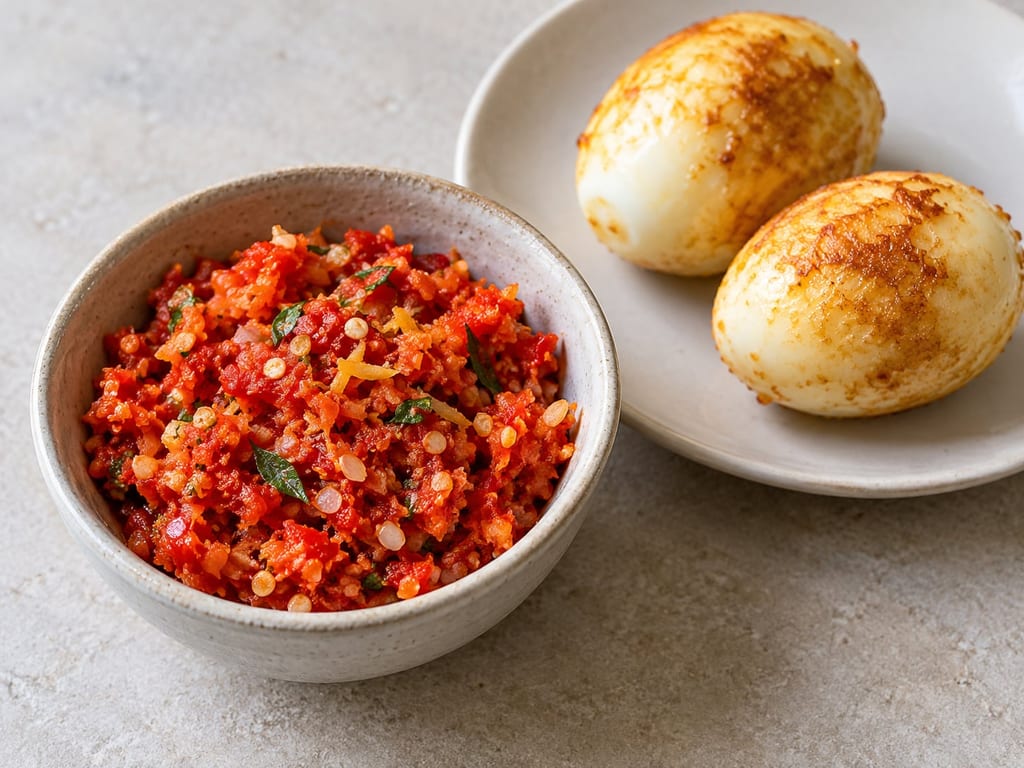
Ai-manas is described as a very hot chilli paste served with Timorese meals. One published version blends fresh chillies, shallots, garlic, Thai basil, ginger, lemon and salt, and serves it with eggs. Sources do not establish a standard formula, precise birthplace or earliest date.
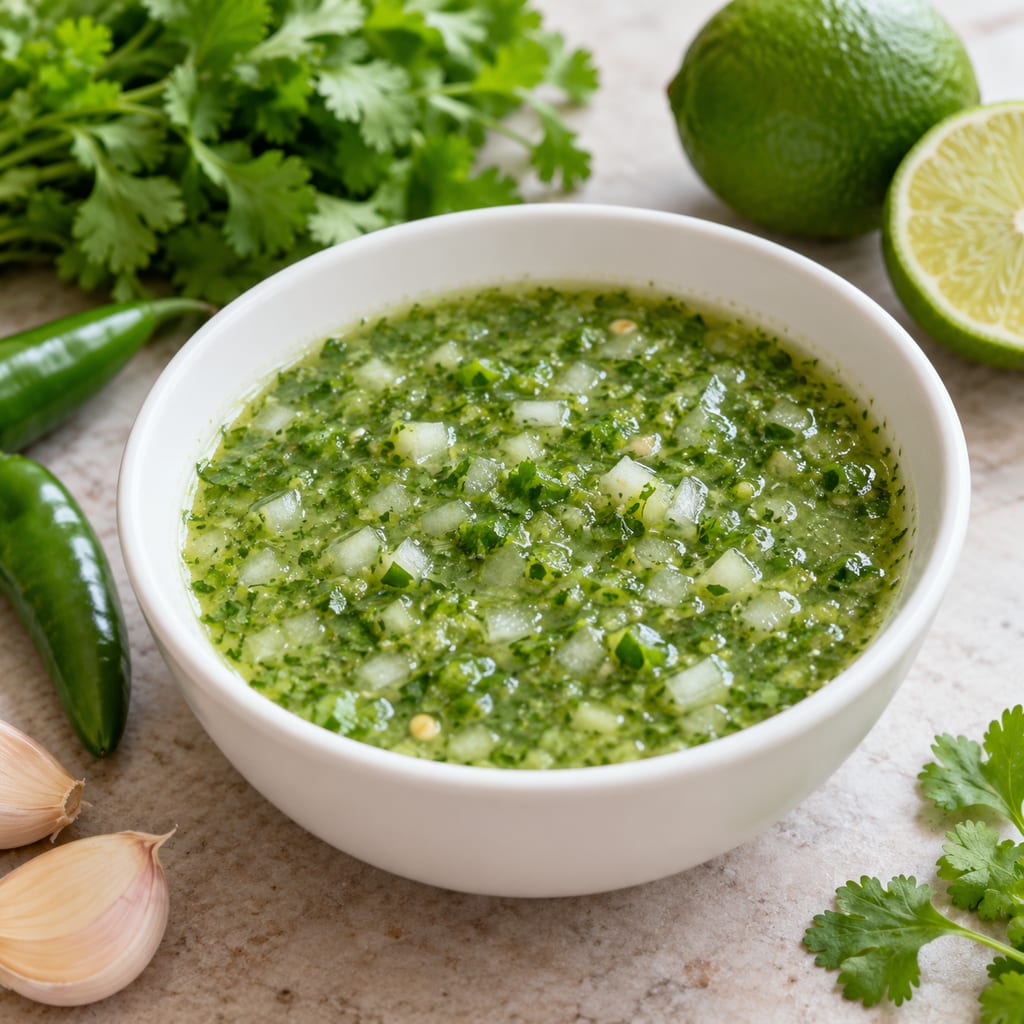
A fresh, uncooked Ecuadorian table sauce of hot pepper, cilantro, garlic and lime, served with most everyday dishes.
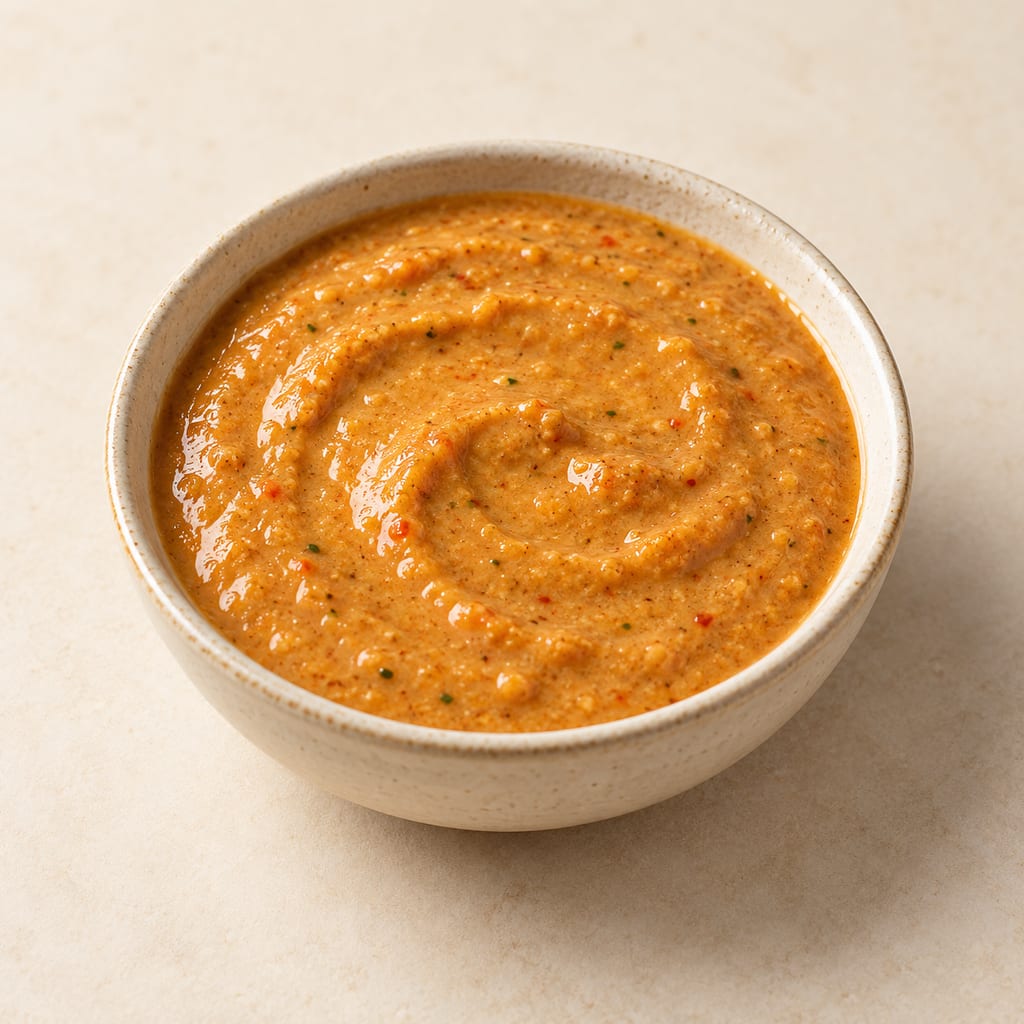
A spicy peanut hot sauce from the Popayán and Cauca region of Colombia, traditionally served with pipián empanadas and tamales.
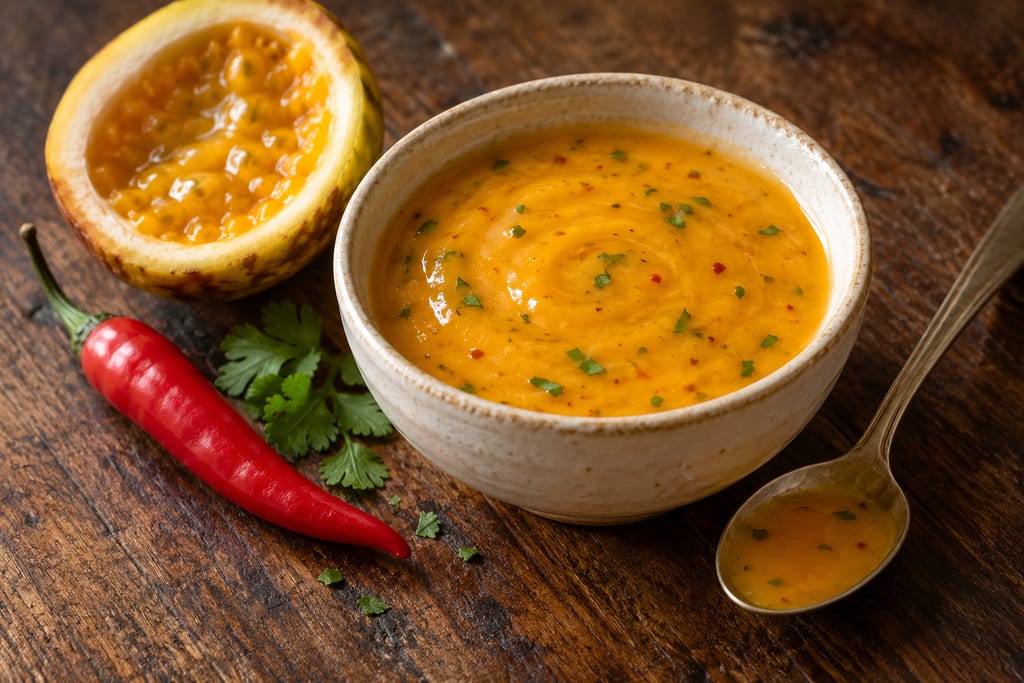
A contemporary Ecuadorian hot sauce that pairs passion fruit juice with boiled chile peppers, oil and lime.
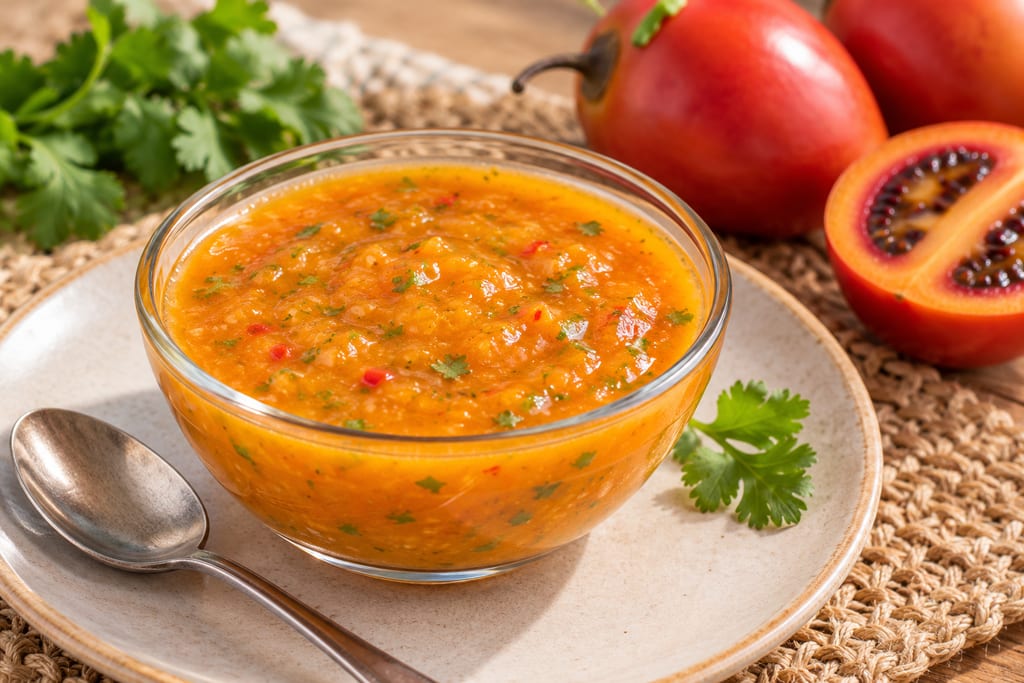
An Ecuadorian hot sauce built on tamarillo, a tart fruit that gives a sharper, fleshier base than ordinary tomato salsa.
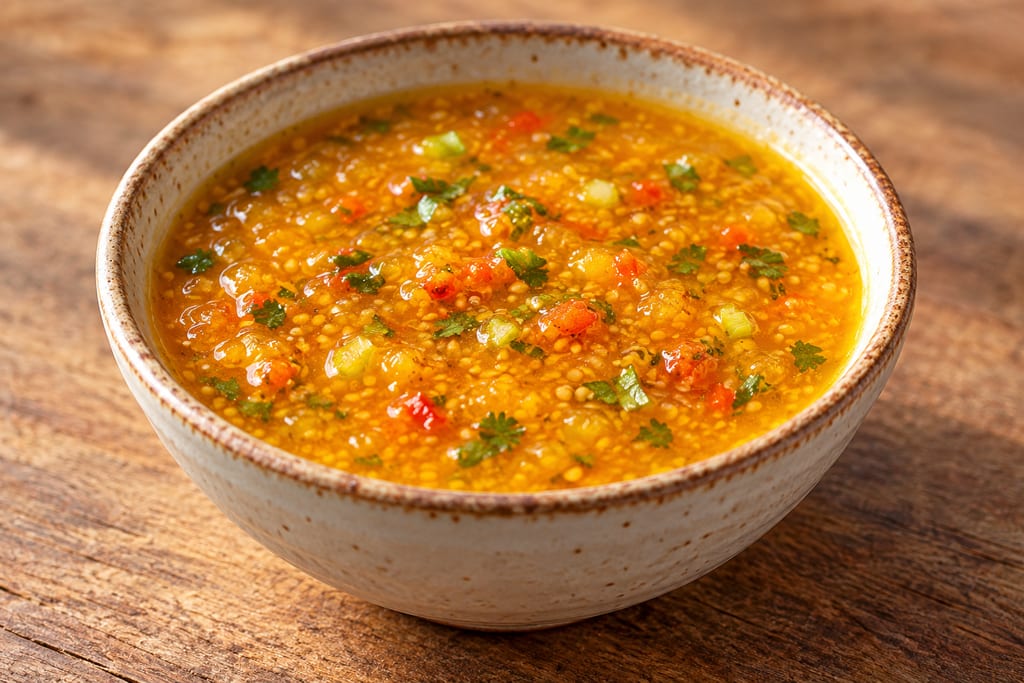
A sweet, tart and spicy Colombian sauce of uchuva, the yellow physalis fruit, with hot pepper, scallion, cilantro and lime.
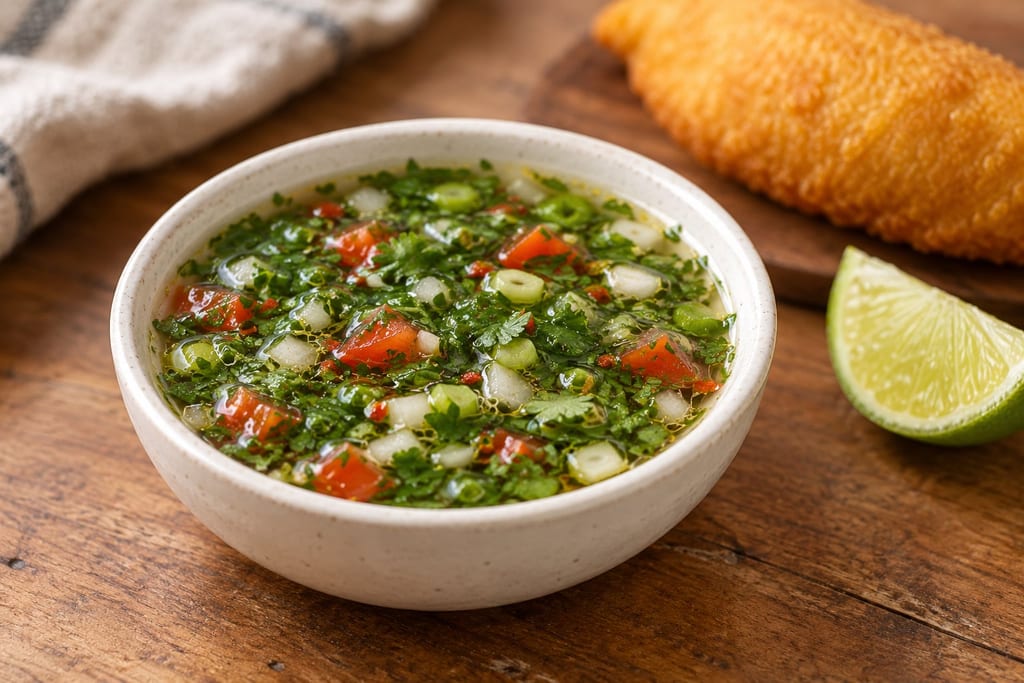
A fresh Colombian table condiment of chopped herbs, scallion and tomato in a vinegar and chile base, served beside fried and filled dishes.
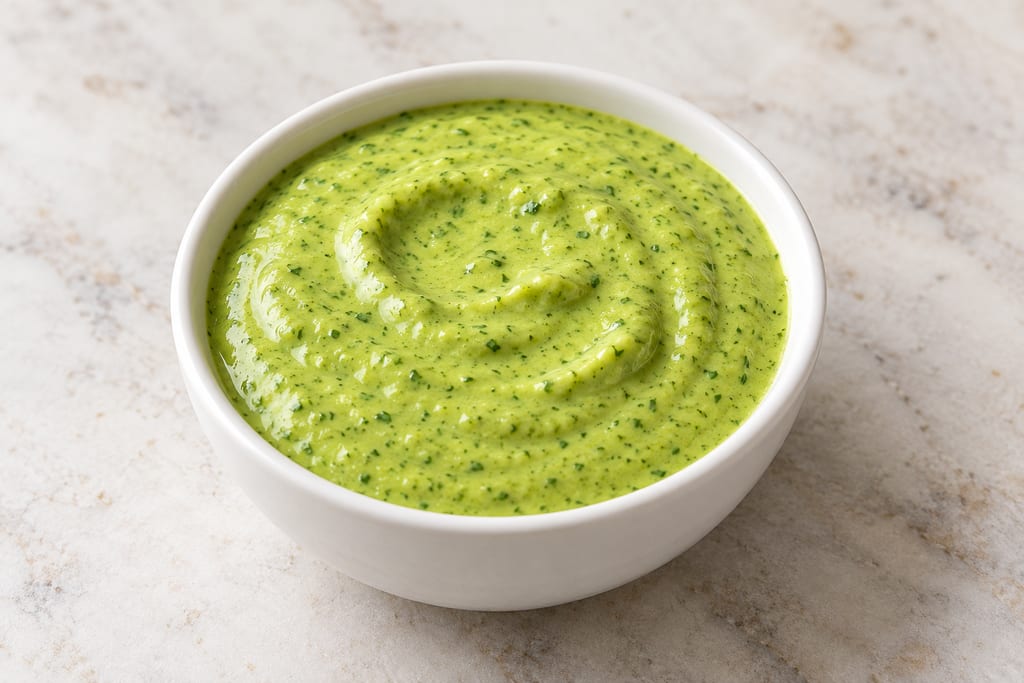
Ají verde is a Peruvian green sauce of coriander, chilli, onion and garlic in a mayonnaise or cheese base. It is best known through Peruvian restaurant cooking abroad.
No community contributions have been published for this entry yet.
Sign in to contribute. Published comments and photos are free to read.
BiblioAsia, National Library Board SingaporeHistory · Inspiration · Safety
Belacan: Caviar? Or Vile and Disgusting?Describes sambal belacan as a chilli relish made with shrimp paste and as a regular accompaniment in Malay, Eurasian and Peranakan meals.
Reproduces a separately attributed sambal recipe that dry-fries belacan, pounds it with chillies, then seasons with lime, salt and sugar; those quantities and steps differ from this archive formula.
Belacan is shrimp paste; crustacean shellfish is an allergen.
Cited in: A fresh relish built on shrimp paste; Shrimp paste and sambal across the region; Keeping a fresh sambal
Food Standards Agency (published on GOV.UK)Safety
How to chill, freeze and defrost food safelyGeneral refrigerator range and leftovers guidance; not a measured life for this recipe.