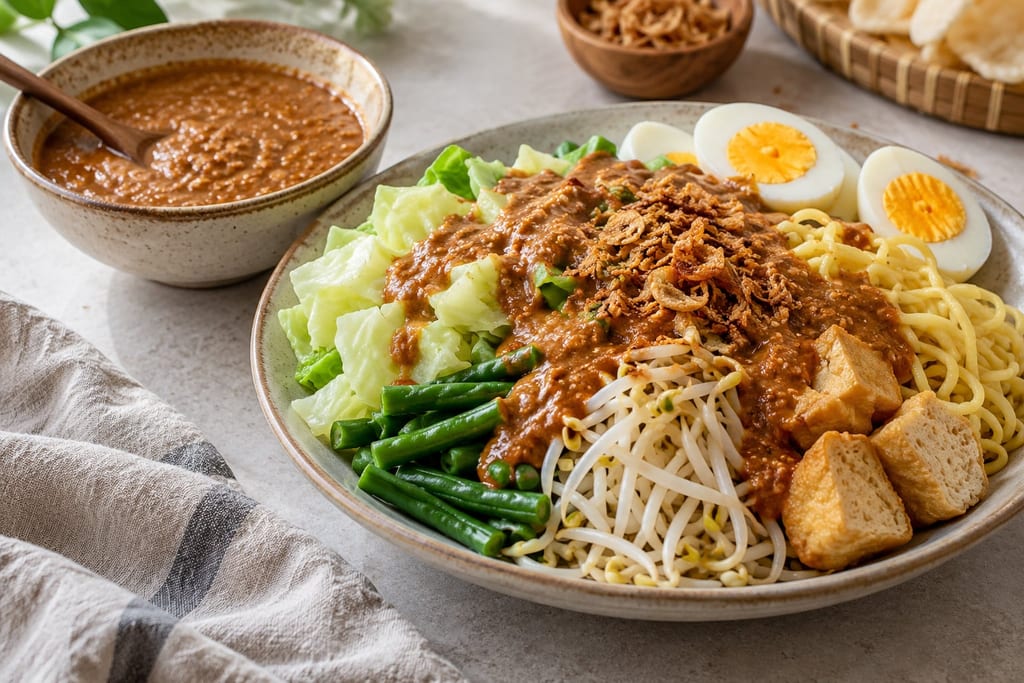
Indonesian peanut sauce
A cooked peanut sauce of ground roasted peanuts, aromatics, shrimp paste and coconut cream, as made for gado-gado; pecel and Malaysian satay sauces are close relatives with different formulas.
 FermenteaWhere food goes to change
sambal tumis · sambal tumis ikan bilis · Malaysian fried chilli paste
Sambal tumis is a Malaysian chilli paste fried in oil until it breaks, then simmered with tamarind and sugar, used as a condiment and as a cooking base.
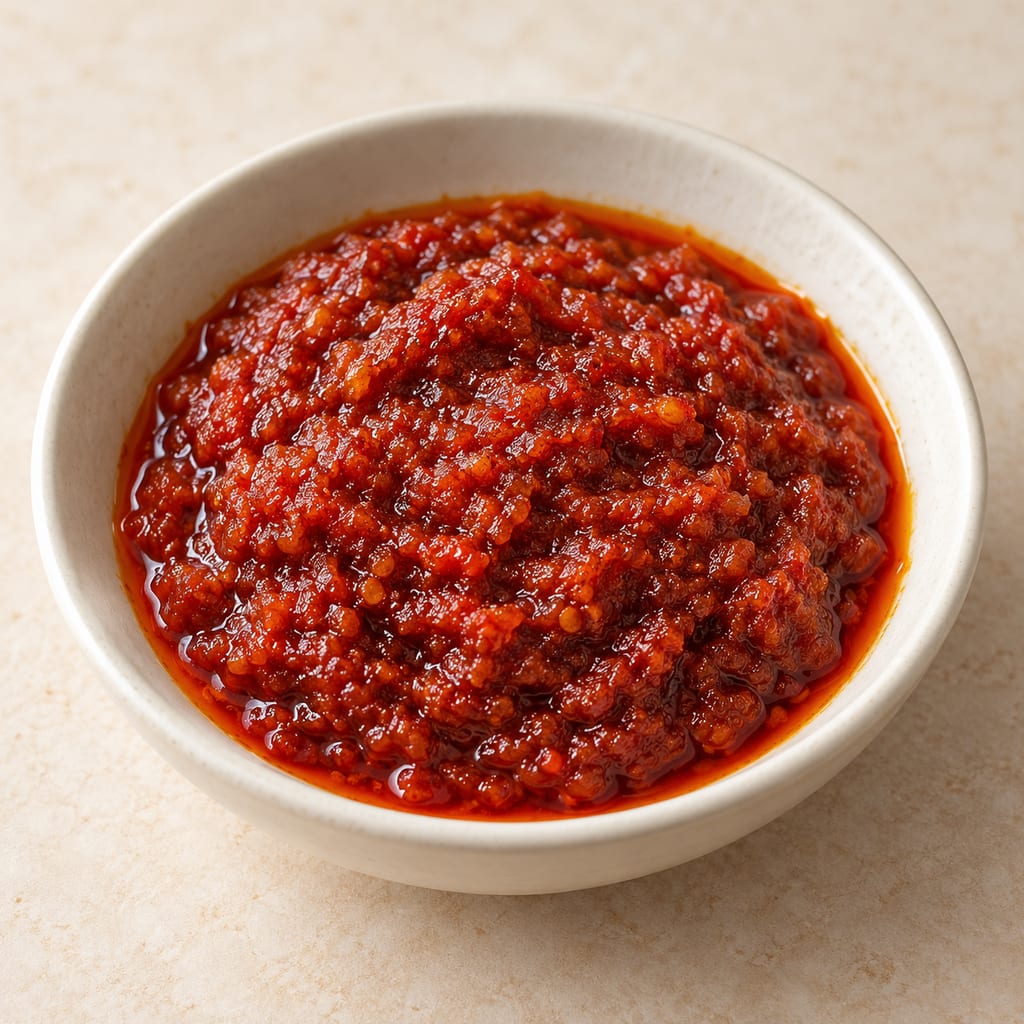
Sambal tumis is a Malaysian chilli sambal made by frying a blended paste in oil until it breaks. The Malay word tumis means to fry in hot oil or fat, and the verb names the method: unlike sambal belacan, a fresh pounded relish, sambal tumis is cooked. A Malaysian focus-group study keeps the two apart and records varied uses and ingredients for both.
It works as a condiment and as a cooking base. It sits beside nasi lemak, the coconut rice dish, and is cooked into dishes of anchovy, petai (stink bean) and other ingredients.
Ajinomoto's Malaysian recipe page gives the clearest small-batch method, for four to five servings. Dried chillies are cut, seeded and boiled, then blended with onions, shallots, garlic and a little shrimp paste. The blend is fried in a generous 3/4 cup of oil until it is fragrant and the oil rises to the top. Tamarind paste diluted in 300 mL of hot water goes in, followed by salt, sugar and a seasoning powder, and the sambal simmers for 15 minutes.
Frying the paste in oil drives off water, softens the raw edge of the onion and garlic and extracts colour and flavour from the chillies into the fat, which is why a visible layer of oil is the cue to move on. Tamarind adds sourness and sugar balances it and the chilli. The belacan is a fermented ingredient, but it is only one in the pan: the sambal is cooked, not fermented.
A household version credited to Iedaa Jahaya on RASA Malaysia adds anchovies and petai. Dried anchovies (ikan bilis) are fried first and set aside, dried chillies are blended with belacan, garlic and shallots, and the paste is fried until the oil separates. Sugar, tamarind water, the anchovies and the petai follow, with sweet soy sauce at the end. It is served with nasi lemak or bubur nasi. Its quantities use handfuls, spoons and bunches, with no defined weights.
Malaysia's Ministry of Education menu book includes sambal tumis in two 50-portion hostel meals: nasi lemak, with dried chilli, belacan, ikan bilis, candlenut and oil, and a cassava meal, with onion, belacan, chilli, dried anchovy and asam keping. Neither gives a standalone yield, and the nasi lemak table is ambiguous about whether the anchovy and candlenut are blended or added later. These are large-batch menu formulas, not household instructions.
None of the recipes gives a cooling method, a finished weight or a storage time. The oil rising or the paste breaking is a cue for the cook, not a measure of water activity or pH, and nothing shows how long the sambal keeps. Dried anchovy and shrimp paste also bring a fish-derived histamine concern that cooking does not remove, so treat the sambal as a perishable prepared food.
The sources describe current cooking and menus. They do not date the sambal, compare states or give a seasonal pattern.
The sources describe current Malaysian cooking and menu practice. They give no first attestation, no early history and no regional or seasonal pattern.
Yield 5 servings · Scaling: source batch only
The recipes give no cooling method, pH, water activity or storage period. Frying until the oil separates is a cooking cue, not a preservation endpoint.
Hazard sourceVariants with dried anchovy or shrimp paste carry a fish-derived histamine risk that cooking does not remove.
Hazard sourceCool and refrigerate the sambal as a perishable prepared food; no tested storage period exists.
Control sourceNo source gives a shelf life or a safe storage method. Cues such as the oil separating do not show that the sambal will keep, and smell or taste does not establish safety.
A country-level association from current Malaysian recipes and institutional menus; no region of origin or date is established.
A cooked peanut sauce of ground roasted peanuts, aromatics, shrimp paste and coconut cream, as made for gado-gado; pecel and Malaysian satay sauces are close relatives with different formulas.
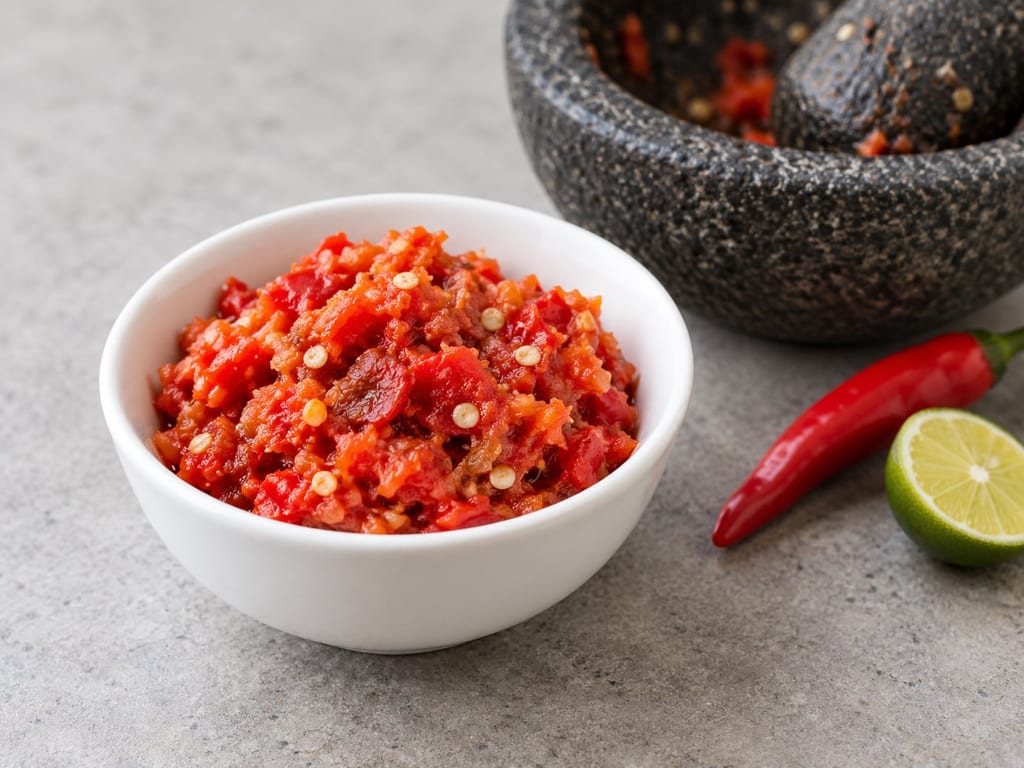
Red chillies pounded with belacan shrimp paste, then mixed with lime or calamansi and sugar for a fresh relish. Contains crustacean shellfish.
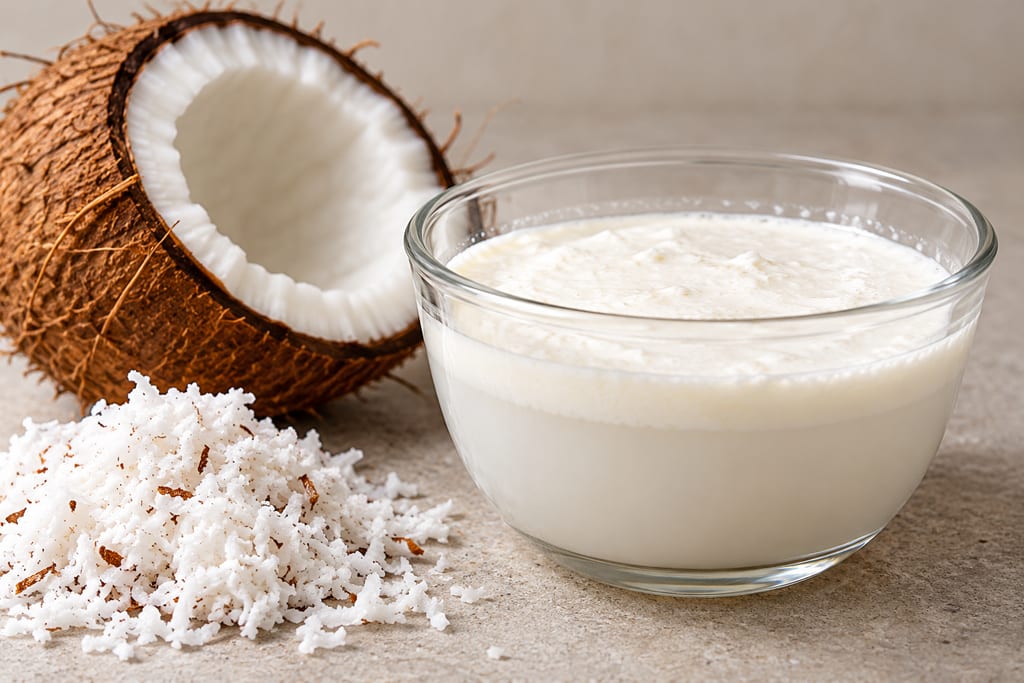
Grated or shredded coconut extracted with water and squeezed or strained into a milky emulsion; left to stand, it separates into cream and a watery layer.
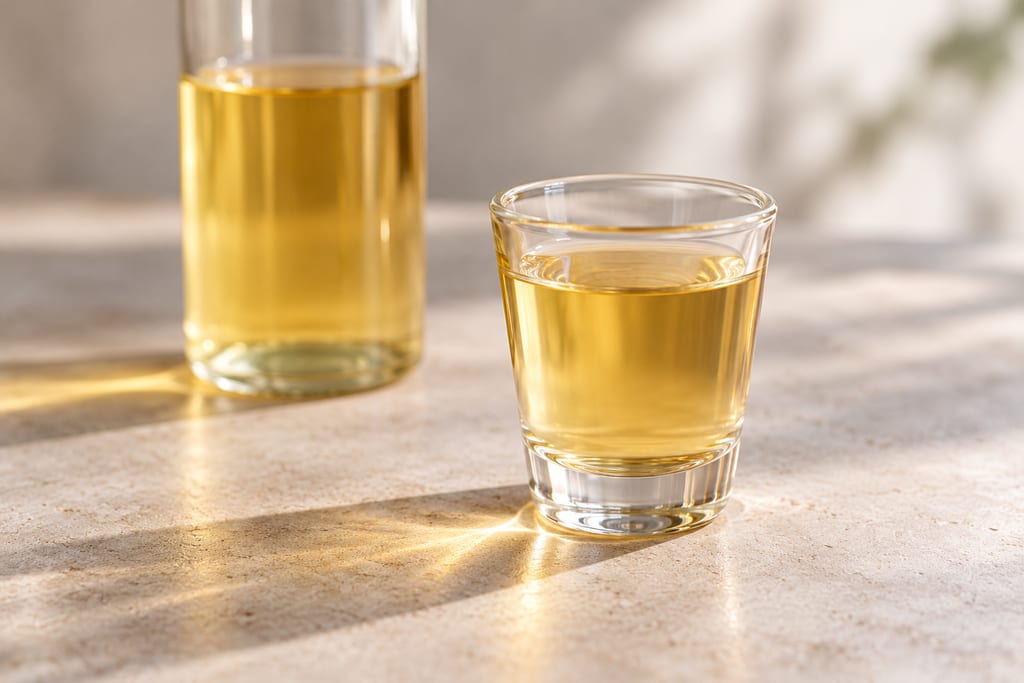
A 2024 Ranau account describes Kadazan-Dusun Lihing as glutinous rice fermented with sasad for two to three months or longer. Starter quantity and a validated safety endpoint are not established.
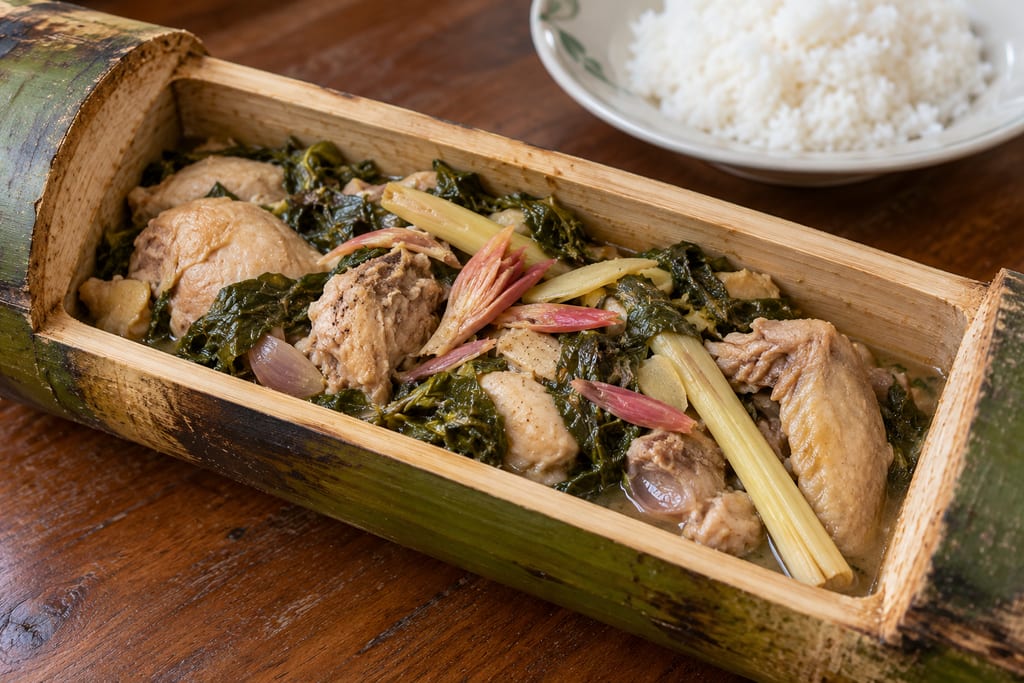
Manuk pansuh is Iban chicken cooked slowly inside a fresh bamboo tube with aromatics and leafy greens. The bamboo holds the food and shapes the steamy, fragrant cooking environment; recipes vary by household and locality.
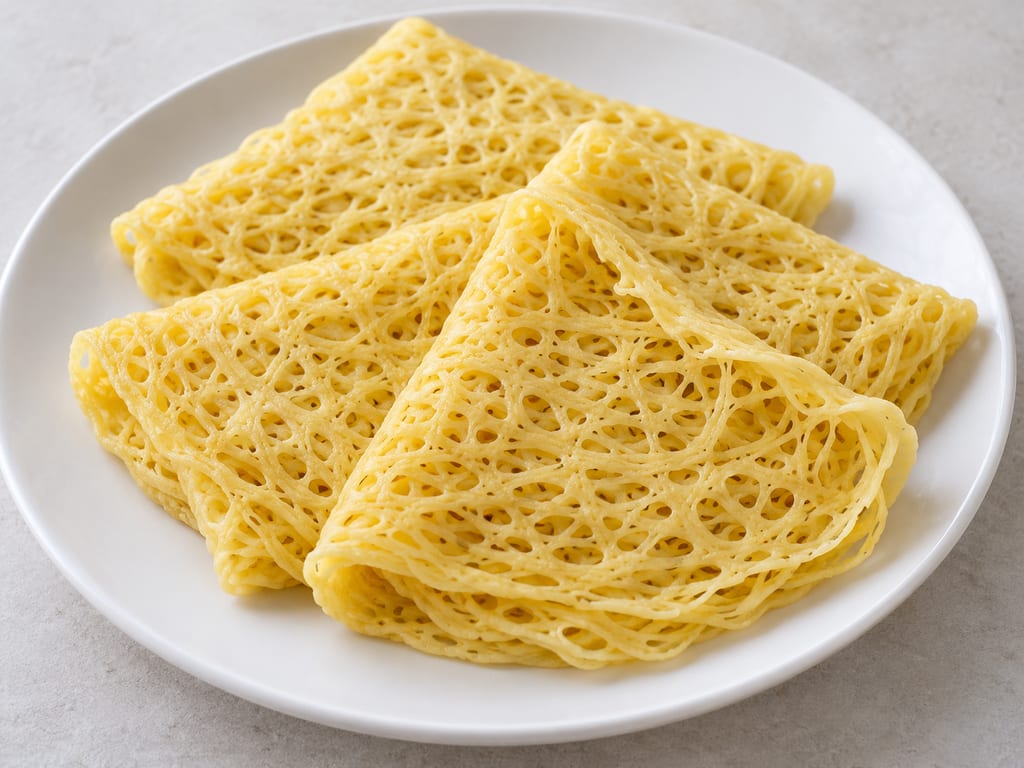
Malaysian lacy pancakes made by pouring coconut-milk batter in a net on a hot pan.
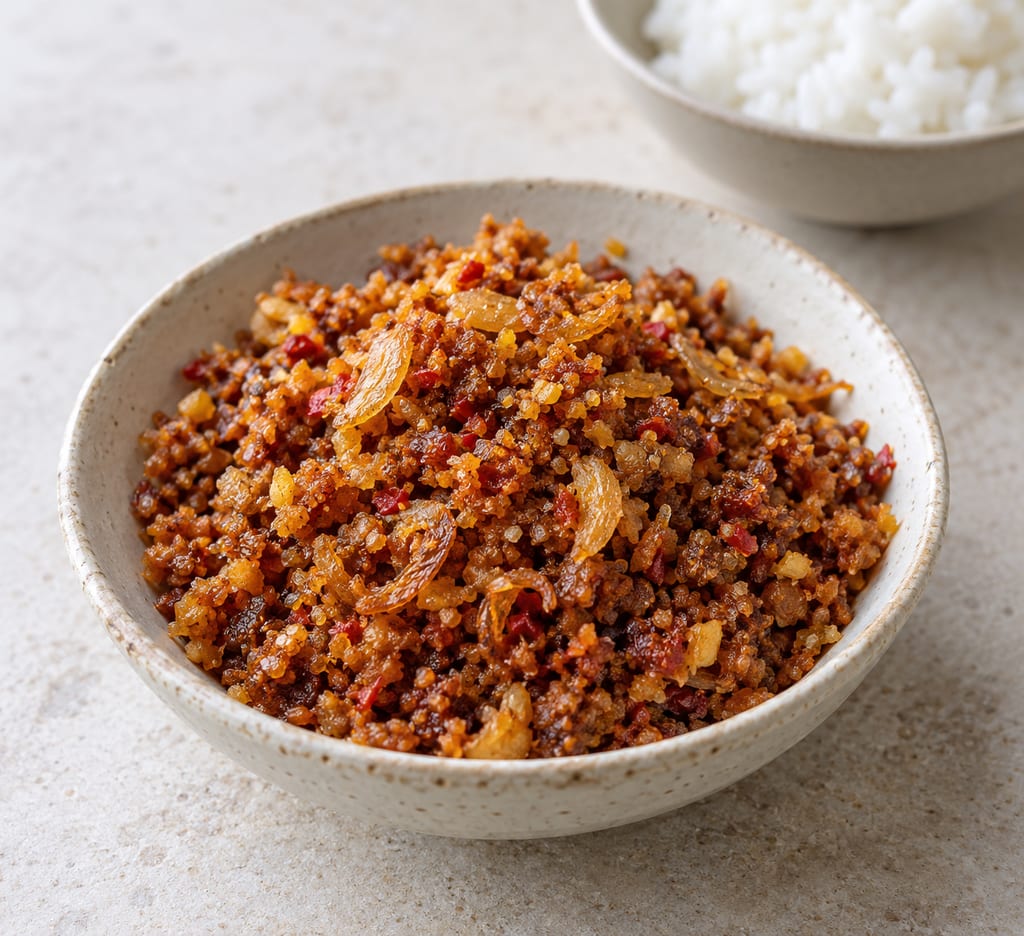
A Myanmar relish of dried shrimp, fried eschalot and garlic, chilli, turmeric, tamarind and ngapi. Naomi Duguid’s published recipe makes about 1 cup; it contains crustacean shellfish.
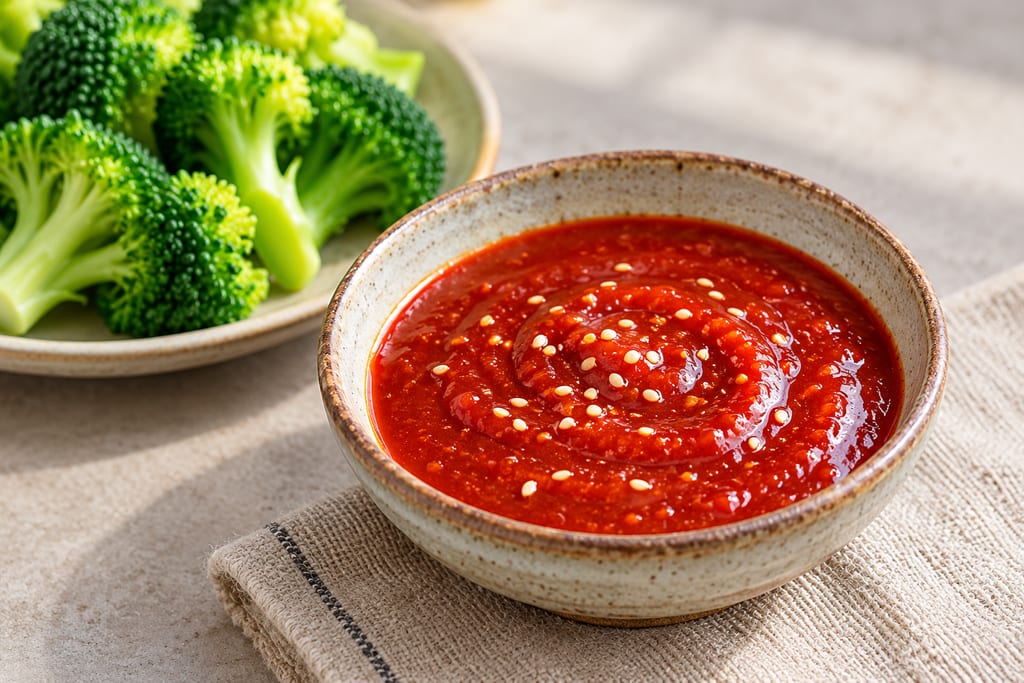
Chogochujang is a Korean sweet-sour sauce made by seasoning gochujang with vinegar and sugar. This development batch adds water and toasted sesame seeds, with optional garlic for the portion being served.
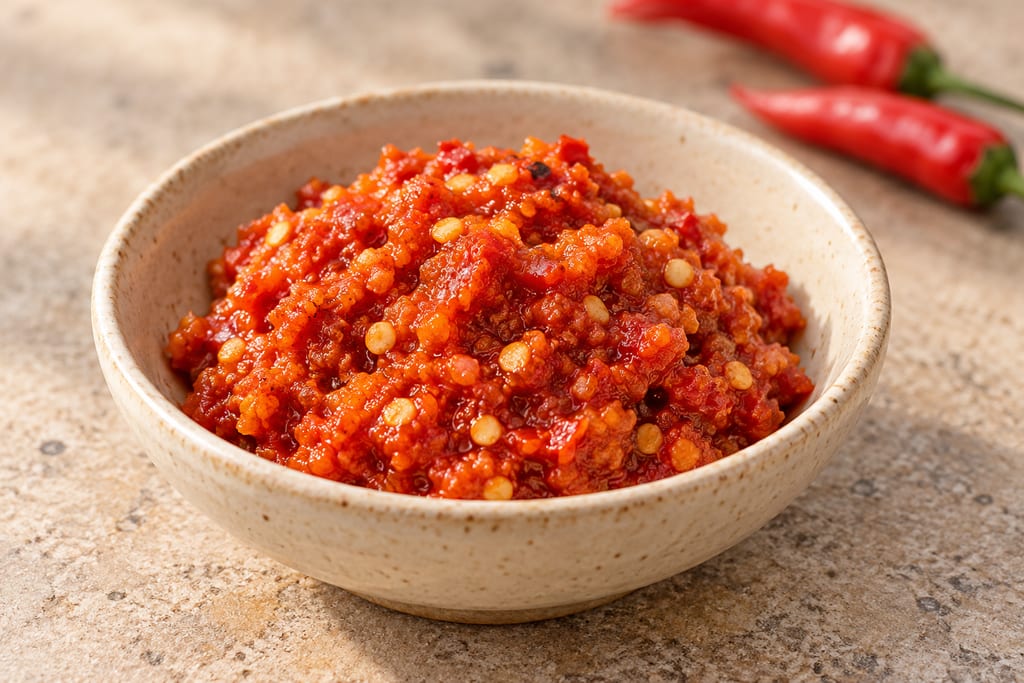
Dinanche, or donne' dinanche, is a Chamorro hot pepper paste of crushed chillies that Guam cooks use on its own or stir into fina'denne'. Its versions range from pepper alone to ones with eggplant, miso or coconut milk.
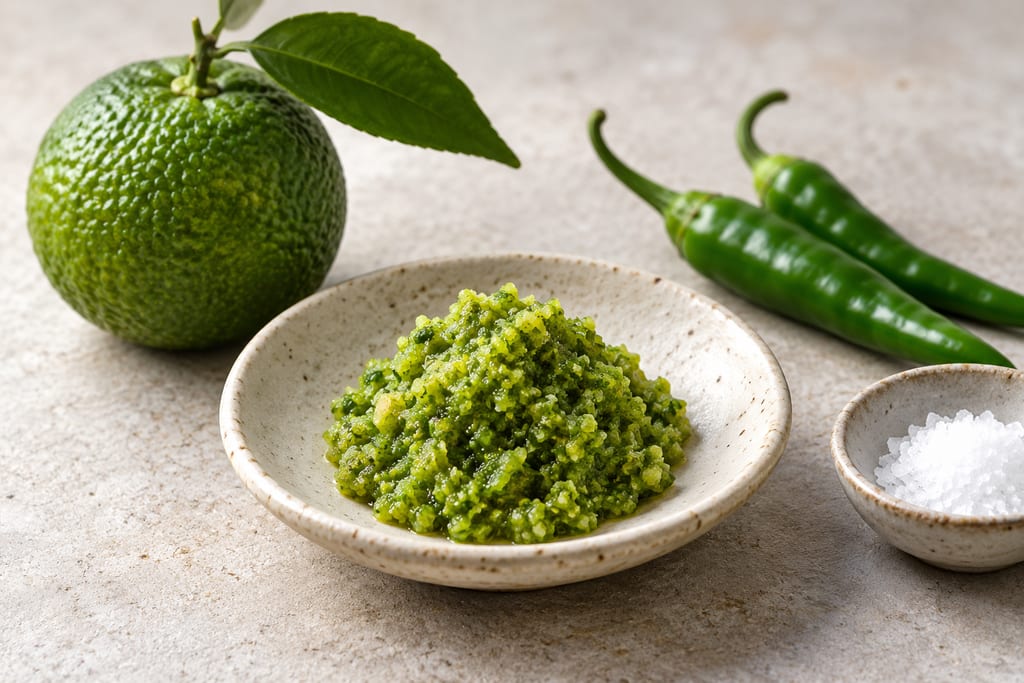
A fresh, uncooked yuzu and green chilli paste inspired by Kyushu’s yuzu kosho, made here as an untested small-batch seasoning rather than a preservation formula.
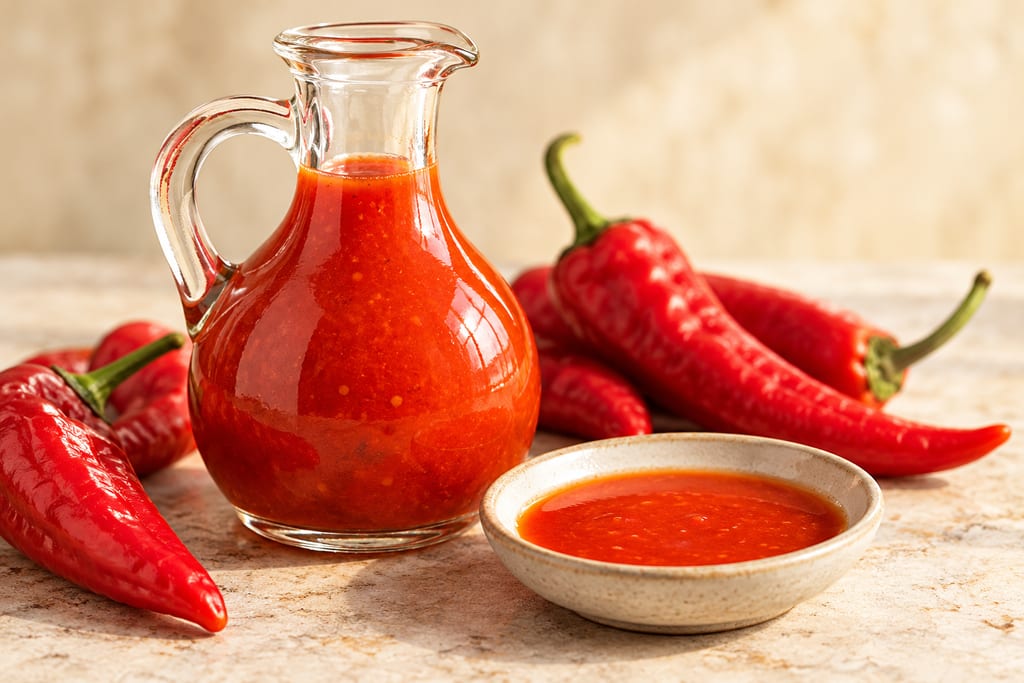
Fresh hot peppers ferment beneath a measured salt brine, then become a bright, tangy sauce blended from the peppers and their liquor.
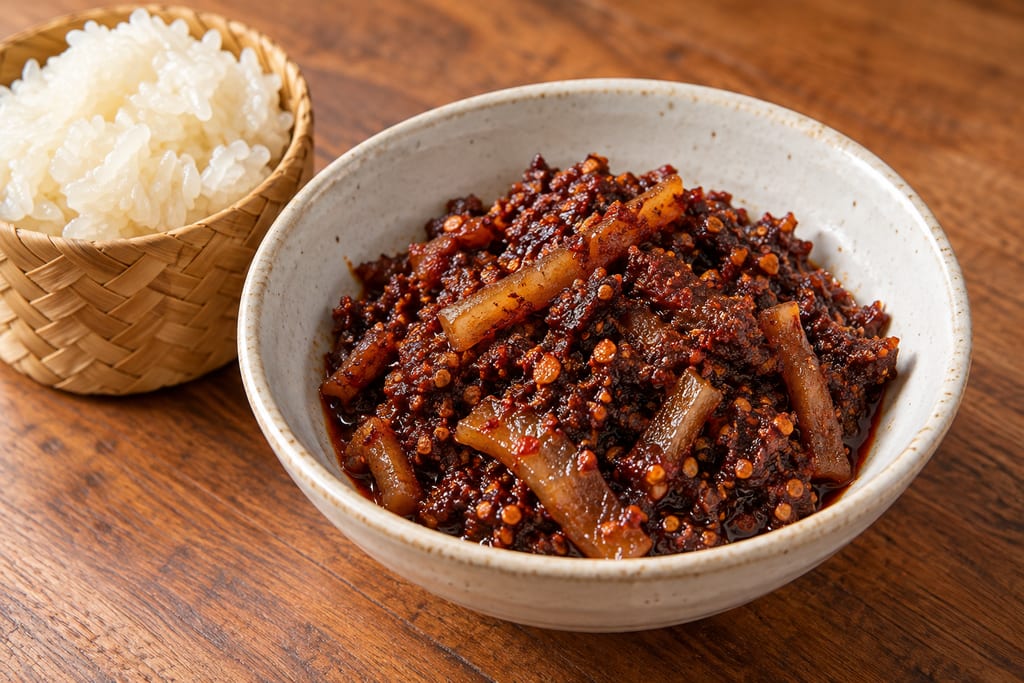
Jeow bong is a Lao paste of dried chilli, shallot, garlic and galangal cooked with buffalo or cow skin, a Luang Prabang specialty eaten with sticky rice and grilled meat.
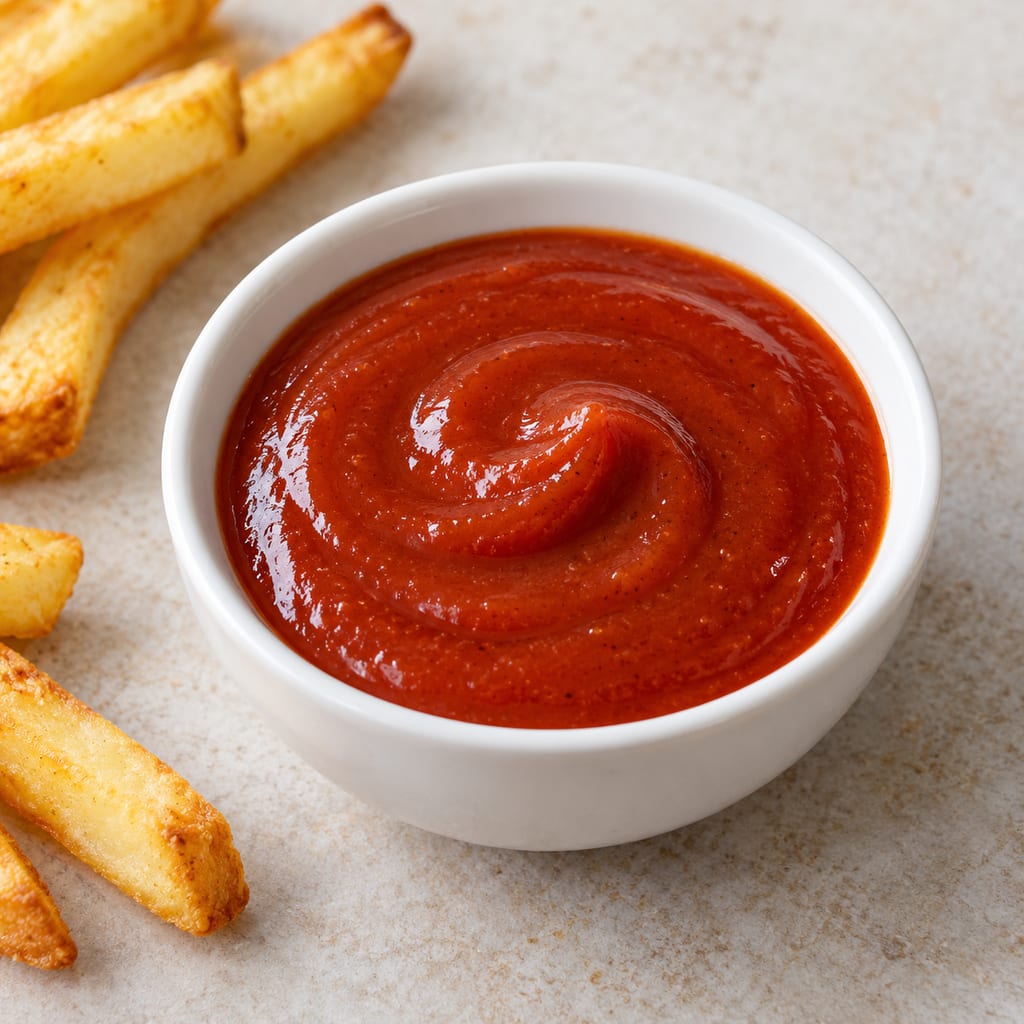
A modern tomato condiment sharpened with the spicy, savoury tang associated with kimchi; this measured version whisk-mixes prepared ketchup and commercial kimchi seasoning.
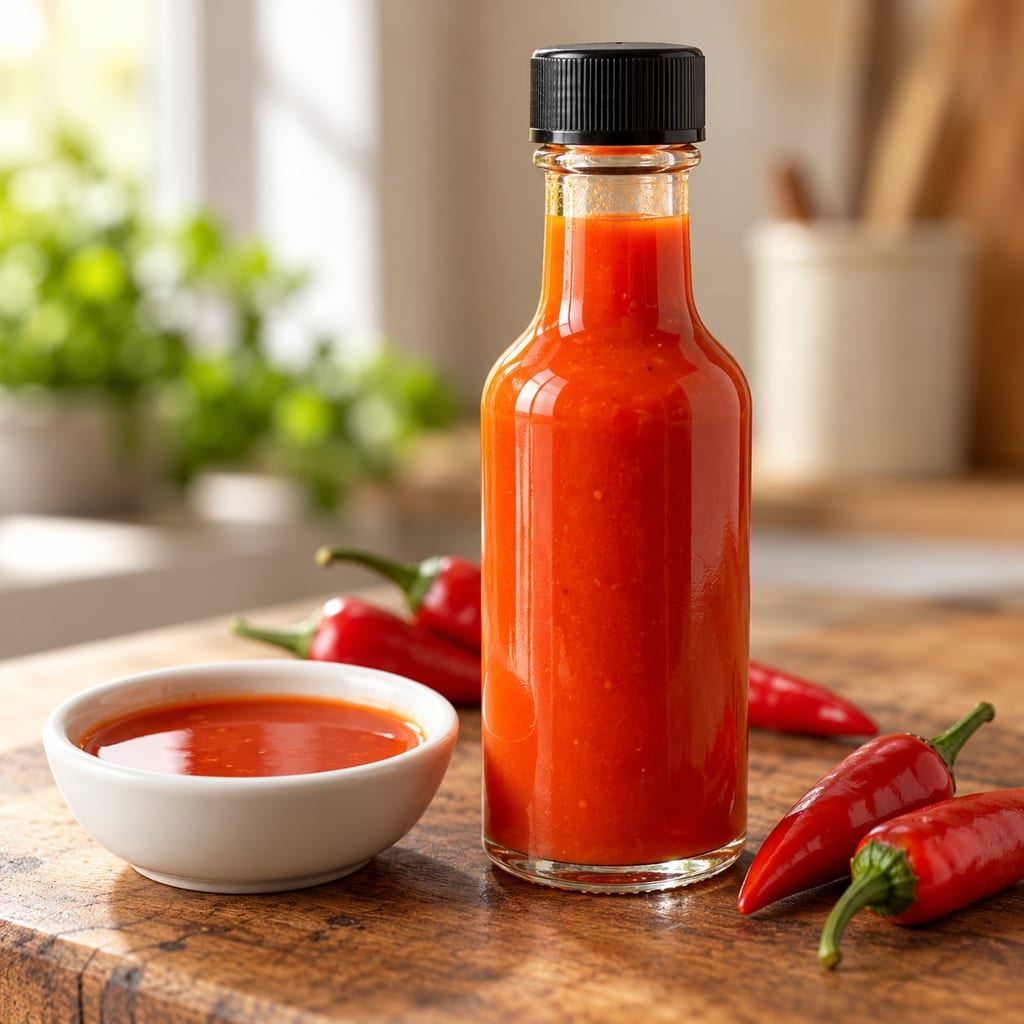
Documentary account of Louisiana pepper sauces, using TABASCO's published barrel-aged commercial process as one specific example; the source does not provide a validated home recipe.
No community contributions have been published for this entry yet.
Sign in to contribute. Published comments and photos are free to read.
Ajinomoto Food Biz Partner MalaysiaMethod
Sambal Tumis RecipeServes 4 to 5. Blended paste of cooking oil (3/4 cup), dried chillies (40 g), onions (150 g), shallots (60 g), garlic (30 g) and shrimp paste (5 g), fried until fragrant and the oil rises; tamarind paste in 300 mL hot water, salt (2 tsp), sugar (4 tbsp) and seasoning (1 tsp); simmered 15 minutes.
Cited in: A small commercial batch; Keeping it, and what is unknown
RASA MalaysiaVariations · Uses
Resipi Sambal Tumis Ikan Bilis Petai Yang Gerenti Puas HatiHousehold variant credited to Iedaa Jahaya: fried ikan bilis, dried chillies blended with belacan, garlic and shallots, paste fried until the oil separates, then sugar, tamarind water, the anchovies, petai and sweet soy sauce; served with nasi lemak or bubur nasi; no times, yield or storage advice.
Cited in: Household and institutional versions
Ministry of Education MalaysiaVariations · Uses
Menu Makanan Asrama & Resepi Standard 2018Sambal tumis appears in a 50-portion nasi lemak meal (dried chilli, belacan, ikan bilis, candlenut, oil) and in a separate cassava meal (onion, belacan, chilli, dried anchovy, asam keping); neither gives a standalone yield, and the sequence of anchovy and candlenut is ambiguous.
Cited in: Household and institutional versions
Journal of Agribusiness Marketing; hosted by FAMA, MalaysiaContext
Consumers' Perspective Towards Malaysian Traditional Food: Sambal Belacan (Chilli Shrimp Paste), A Preliminary InvestigationA focus-group study distinguishes fried sambal tumis from fresh sambal belacan and records varied uses and ingredients.
Cited in: Chilli paste, fried
Dewan Bahasa dan Pustaka MalaysiaContext
Kamus Dewan/PRPM: tumisTumis means frying in hot oil or fat.
Cited in: Chilli paste, fried
U.S. Food and Drug AdministrationSafety
CPG Sec. 540.525 Scombrotoxin (Histamine)-forming Fish and Fishery ProductsHistamine formed in susceptible fish is not removed by cooking.
Cited in: Keeping it, and what is unknown