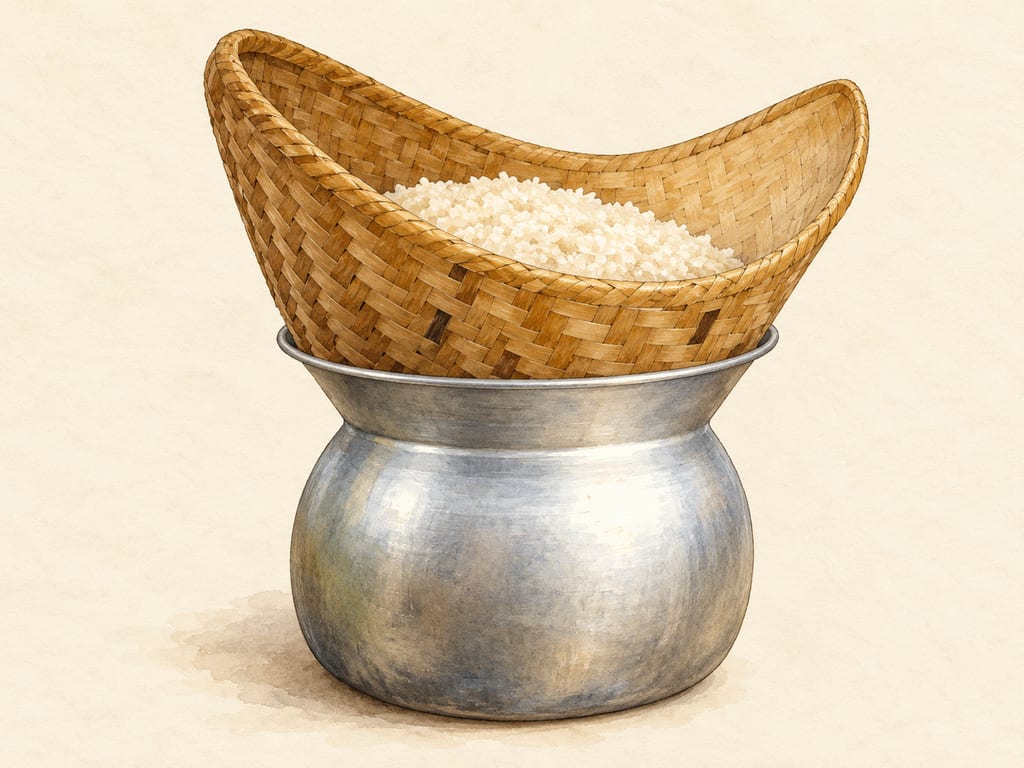
Huad
A woven upper basket used to steam Lao glutinous rice over a separate water pot. It holds the drained rice above the water; a different lidded basket, the katip khao, is used to carry and serve the cooked rice.
 FermenteaWhere food goes to change
Equipment · Baskets, trays and beds
A lidded woven bamboo or rattan basket used in Laos to hold steamed sticky rice and keep it warm and soft for serving.
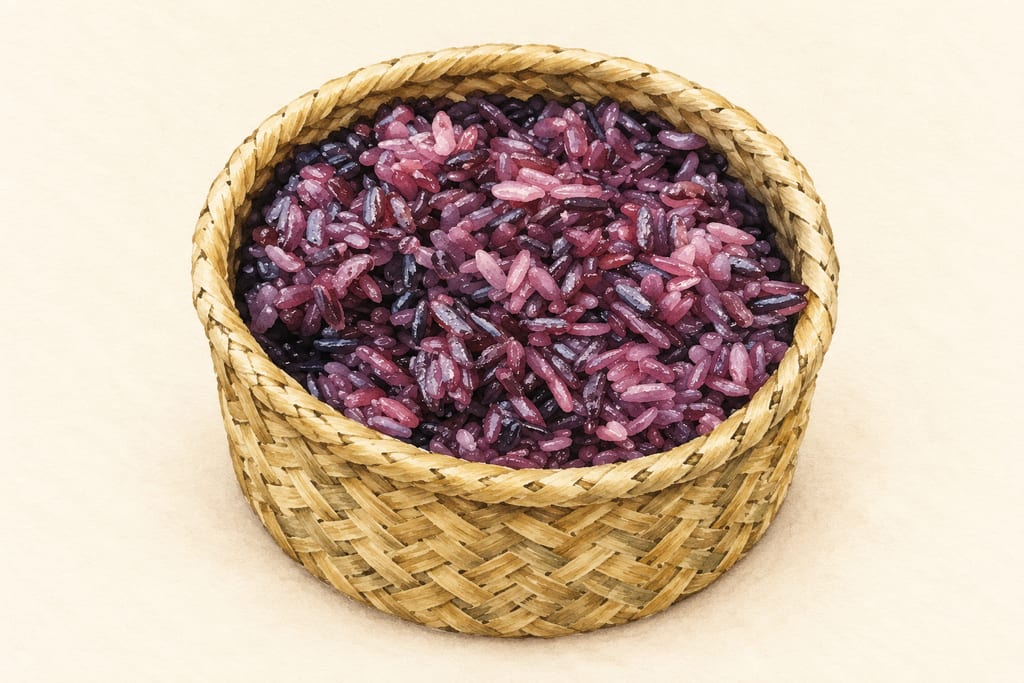
Katip khao, presented in the English source as a rice basket, is a covered serving and holding container for cooked sticky rice. Tourism Laos describes it as woven from bamboo or rattan and fitted with a lid. The guide says the closed basket keeps steamed rice warm and soft. It does not describe one standard dimension, weave, capacity or lid design, so those details should not be assumed for every example.
The katip khao is distinct from the huad. The huad is the cone-shaped woven-bamboo basket in which glutinous rice is steamed over a water pot; the katip khao receives the rice after cooking. Keeping the names and functions separate prevents the serving basket from being mistaken for the steaming equipment.
The documented sequence begins with glutinous rice washed, soaked and drained for steaming in the huad. After the rice has cooked, it is spread and gently tossed on a tray so surface steam can escape. While still warm, it is packed into the katip khao and the lid is closed. In this sequence the basket holds and serves the finished rice; it is not placed over the boiling pot and does not cook the grain.
Sticky rice, or khao niew, is described as a staple of Lao cuisine. A lidded basket gives the cooked rice a dedicated place at the meal and helps it remain warm and soft during service. This quality claim does not establish a safe holding period; no duration is specified here.
A northern Lao cookbook also describes a special woven bamboo basket for storing and serving sticky rice after steaming. It notes that diners press the rice by hand into small balls to scoop up accompanying foods. This account confirms the basket's place in serving, while describing the rice practice broadly rather than specifying one maker or basket size.
The national tourism guide places the katip khao in Laos but does not narrow its use to a particular province, community or historical period. It names bamboo and rattan as possible woven materials without assigning a single material to every basket. The sources give no measured dimensions, capacity, maker, acquisition route or cleaning instructions, so this entry leaves those particulars open rather than turning one photographed example into a universal pattern.
A Wikimedia Commons photograph documents cooked sticky rice in a woven basket at Kualao Restaurant in Vientiane. Its purple rice and open basket show one served example in a restaurant setting; the photograph does not establish that color, shape or setting as typical of all Lao katip khao.
A Laos basketry account describes round lidded bamboo containers called ka-dip for steamed sticky rice. It says their size varies with whether the basket serves one person, a family or a larger gathering, and that artisans sell baskets locally. The spelling differs from katip khao, so the related term is recorded as a documented basketry form rather than assumed to be an exact equivalent.
The katip khao is described in a Lao food guide as the lidded woven basket used to keep cooked sticky rice warm and soft. The source distinguishes it from the huad, a conical bamboo steamer, and from the water pot beneath that steamer. The available sources do not date the basket's first use or establish one standard form.
Tourism Laos places the katip khao in Lao sticky-rice service; this country-level evidence does not identify a province or birthplace.
A woven upper basket used to steam Lao glutinous rice over a separate water pot. It holds the drained rice above the water; a different lidded basket, the katip khao, is used to carry and serve the cooked rice.
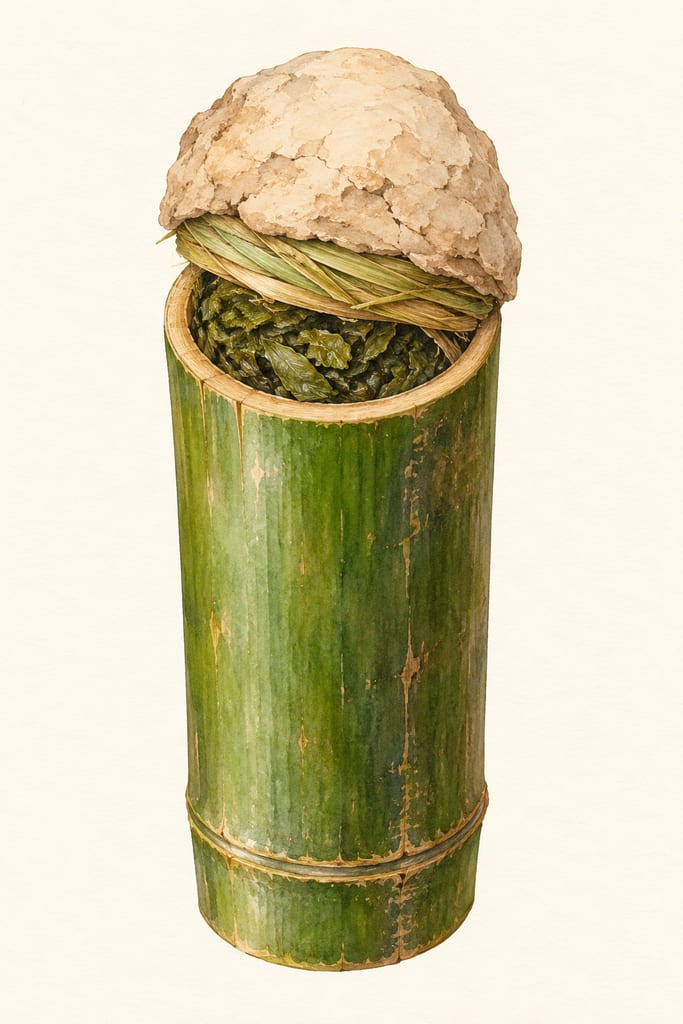
A cleaned bamboo internode holds compressed steamed tea leaves during the Luar miang fermentation practiced in north-western Laos.
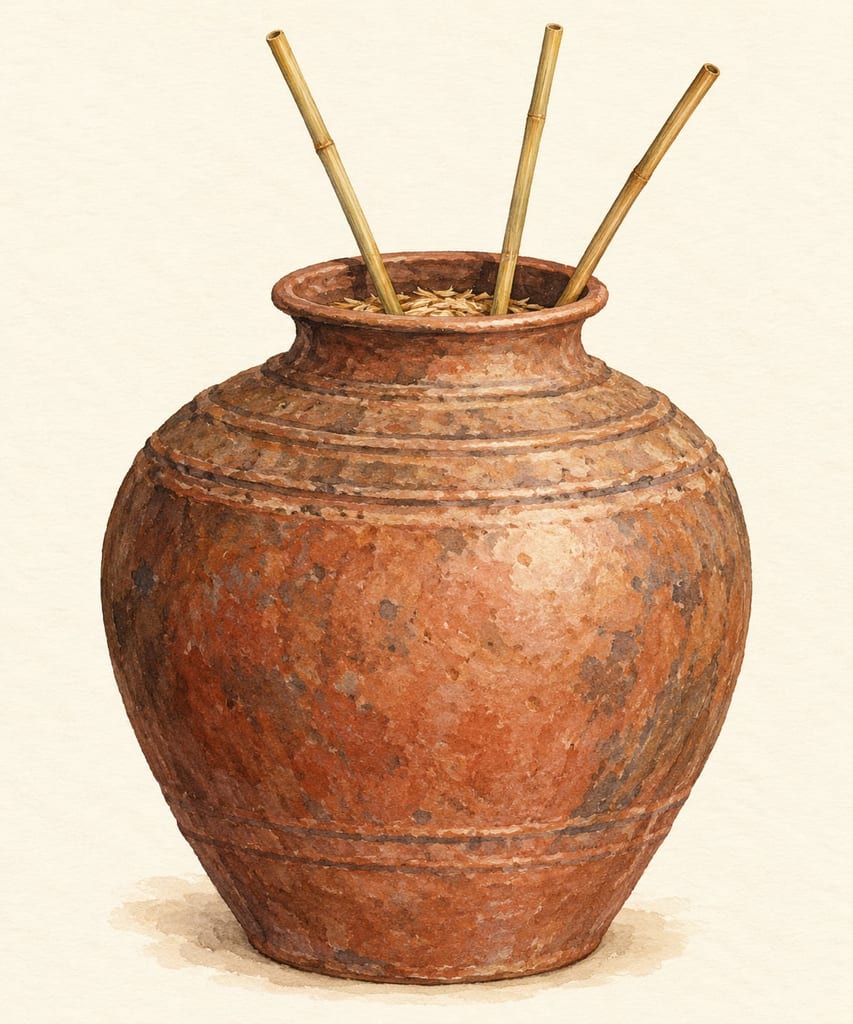
A large earthenware jar in which lao hai ferments and from which it is shared through long reeds. In northern Laos, documented communities include Kmhmu’, Hmong and Tai groups; the jar does both fermentation and table service.
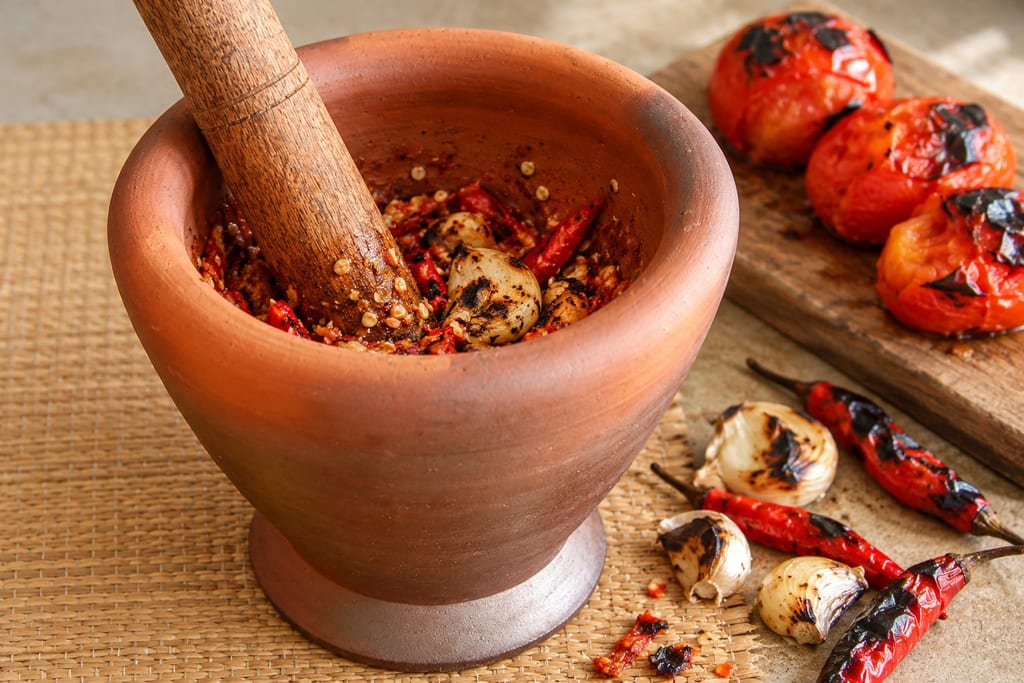
A mortar and pestle pairs a hollow bowl with a hand-held striker; Lao kitchens and Malay and Singaporean sambal traditions show how pounding shapes sauces and spice pastes.
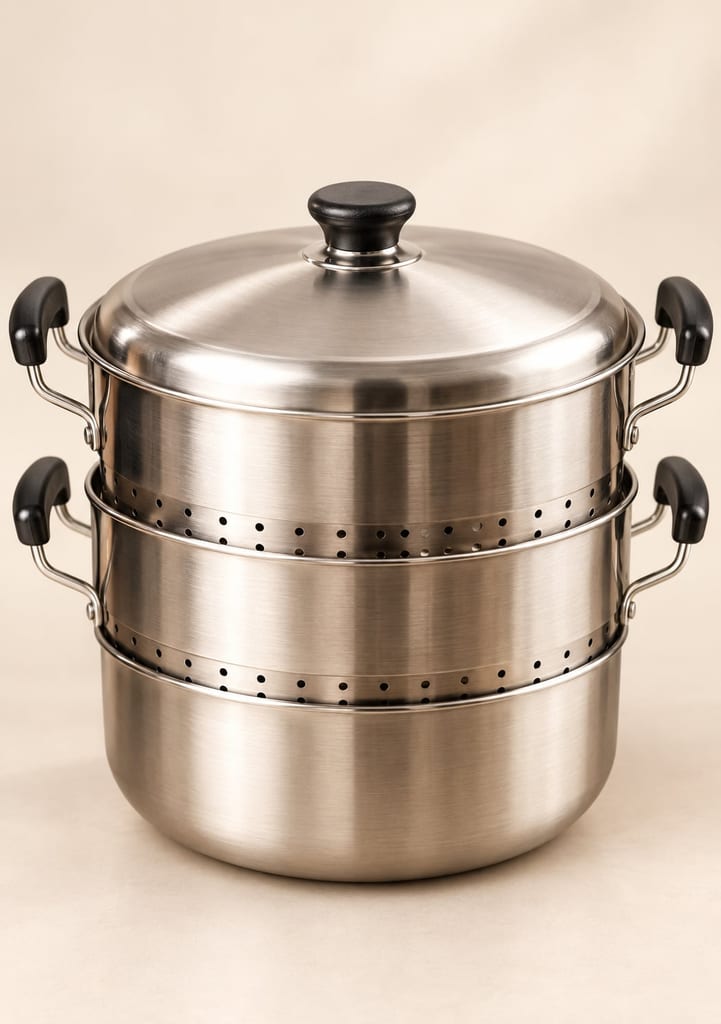
A steamer cooks food above heated water under a cover. The broad term includes improvised pot-and-rack setups, metal tiers and basket steamers; individual forms have different designs and uses.
No community contributions have been published for this entry yet.
Sign in to contribute. Published comments and photos are free to read.
Tourism LaosForm · Material · Use · Geography
Food & FlavoursDescribes katip khao as a lidded woven bamboo or rattan container used to keep steamed sticky rice warm and soft.
Distinguishes the katip khao serving basket from the huad cone-shaped woven-bamboo steamer and the water pot used for cooking.
Places sticky rice in Lao cuisine and describes it as a staple.
Cited in: A serving basket, not a steamer; From steaming to service; Place and documented variation
Wikimedia CommonsVisual reference · Geography · Image rights
File:Sticky rice at Kualao Restaurant.jpgThe file description identifies sticky rice at Kualao Restaurant in Vientiane, Laos; the photograph shows cooked purple rice in an open woven basket.
The file page identifies Mx. Granger as author and states that the image is dedicated under CC0 1.0.
Cited in: Place and documented variation
Pha Khao LaoUse · Material · Geography
Food from Northern Laos (The Boat Landing Cookbook)Describes a special woven bamboo basket for storing and serving sticky rice after steaming in northern Laos.
Describes turning the cooked rice with a wooden paddle and eating it by hand with accompanying foods.
Cited in: From steaming to service
The Encyclopedia of Crafts in WCC-Asia Pacific RegionForm · Material · Variation · Geography
BasketryDescribes Lao round lidded bamboo containers called ka-dip for steamed sticky rice.
Says size varies by single-serving, family and large-party use and that makers sell baskets in local villages and markets.
Cited in: Place and documented variation