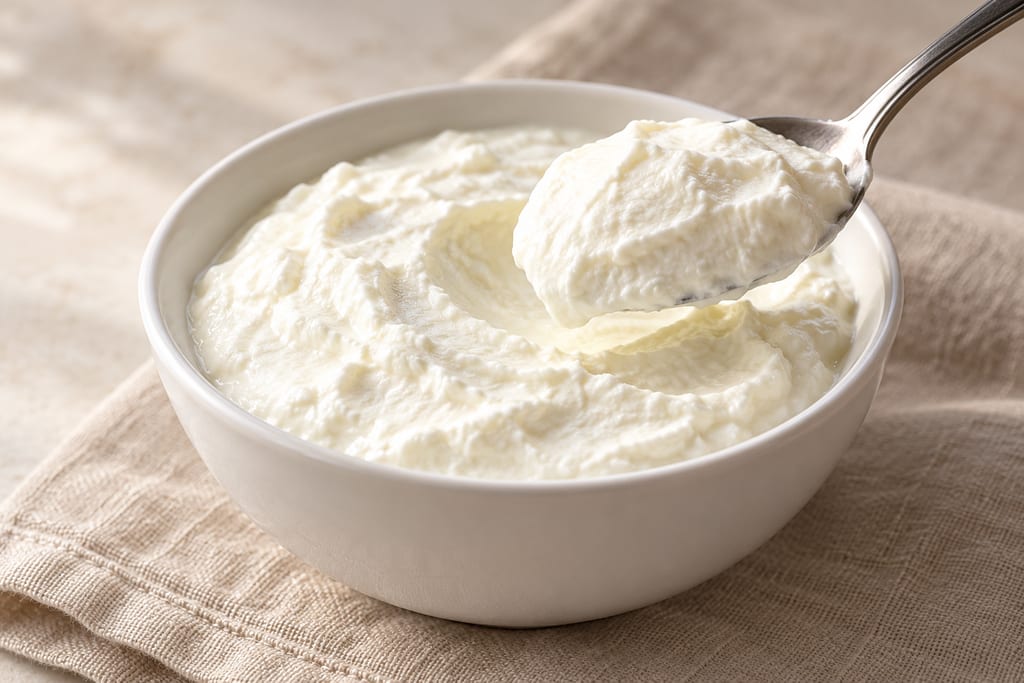
Greek-style strained yogurt
Greek-style strained yogurt is cultured whole milk drained through cloth to remove whey. This modern Utah home method makes a thick yogurt from a gallon batch.
 FermenteaWhere food goes to change
Equipment · Strainers, moulds and hoops
Cheesecloth strainer
A kitchen strainer lined with cloth holds soft curd while whey passes through into a bowl. It is a modern, general-purpose setup; Sakha sources record strained suorat but do not specify this tool or its materials.
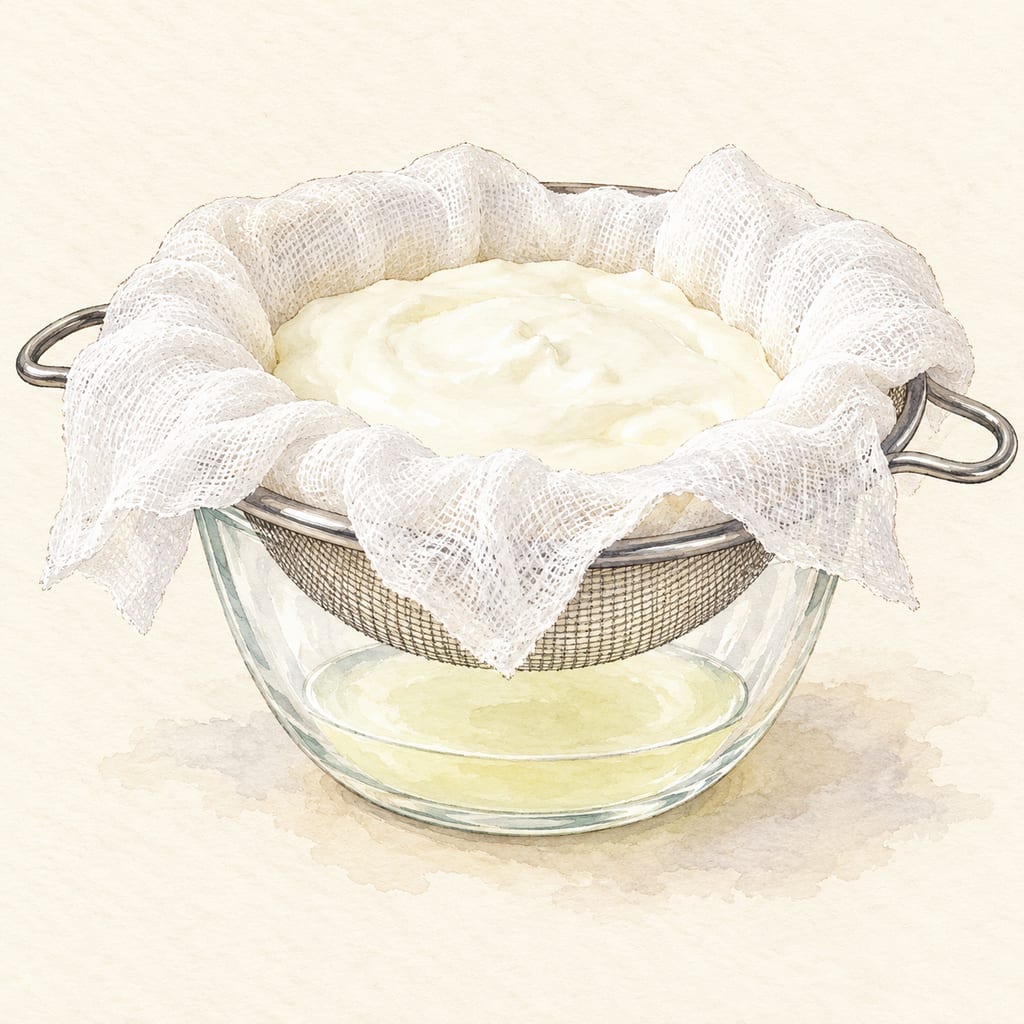
A cheesecloth-lined strainer is a simple draining assembly: cloth sits inside a mesh strainer, which rests over a bowl. Soft curd or cultured dairy stays in the cloth while liquid whey drains into the vessel below. The setup is portable, passive, and assembled from ordinary kitchen tools; the sources do not describe a single standard shape, material, or size.
In Sakha food vocabulary, süümekh suorat is recorded as thick suorat after whey has been strained off. This identifies a drained form of the cultured milk, not the exact tool used to make it. The records do not say that cheesecloth, a metal sieve, or a glass bowl belongs to the traditional Sakha equipment set.
Modern kitchen guidance gives a clear example of the cloth-and-strainer arrangement for yogurt: line a strainer with several layers of cheesecloth, place it over a bowl or measuring cup, then transfer the cooled yogurt to the liner. The bowl catches whey, while the fabric keeps the thickened dairy from sitting in the drained liquid. Muslin, a cotton bag, or another tight-weave cloth can perform a similar filtering role.
This is an adaptable household tool, not a recipe or a controlled maturation chamber. A contemporary method keeps the filled strainer covered and refrigerated as it drains. The time and result depend on the dairy and the desired thickness; equipment alone does not define a traditional recipe or guarantee a particular texture.
The connection to Sakha practice is the physical act of removing whey from suorat. The modern illustrated assembly makes that action legible, but it should not be read as an ethnographic image of Sakha household tools. No inspected source establishes the strainer's age, local construction, or whether cloth was used for the documented food.
Sakha lexical and food writing document süümekh suorat as thick suorat after whey is strained off. They do not identify a cheesecloth-lined strainer or establish its material or historical use there; this place row identifies the associated food context, not the exact modern equipment.
Greek-style strained yogurt is cultured whole milk drained through cloth to remove whey. This modern Utah home method makes a thick yogurt from a gallon batch.
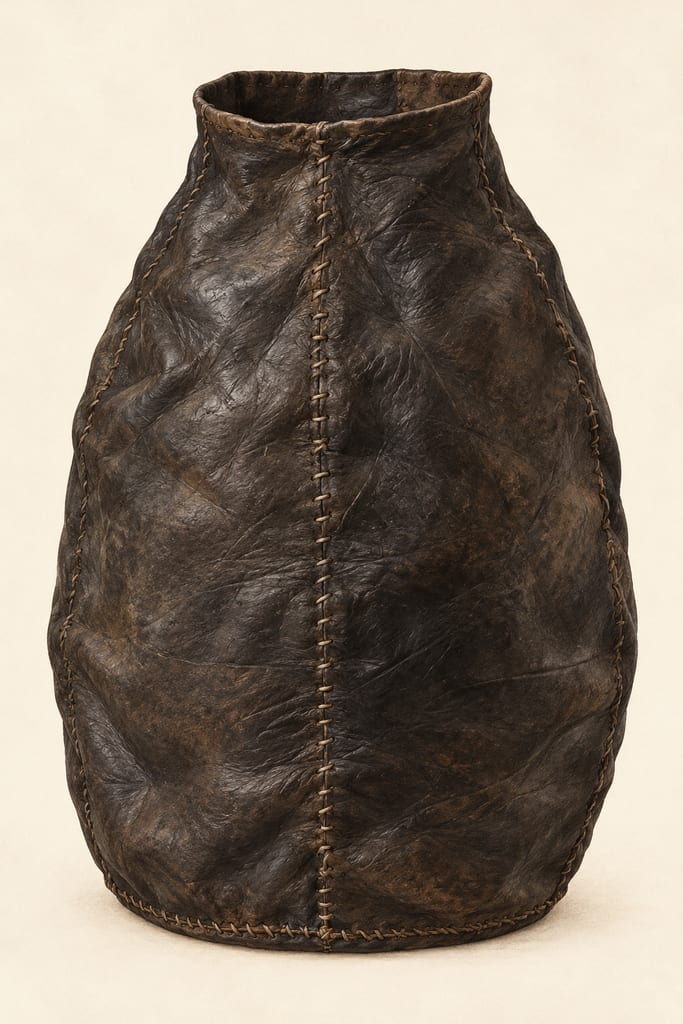
Arkhyt is a traditional Altai sewn-hide vessel used to hold and periodically mix chegen. Sources describe a very large vessel, but do not establish one standard shape, measured capacity, or dimensions.
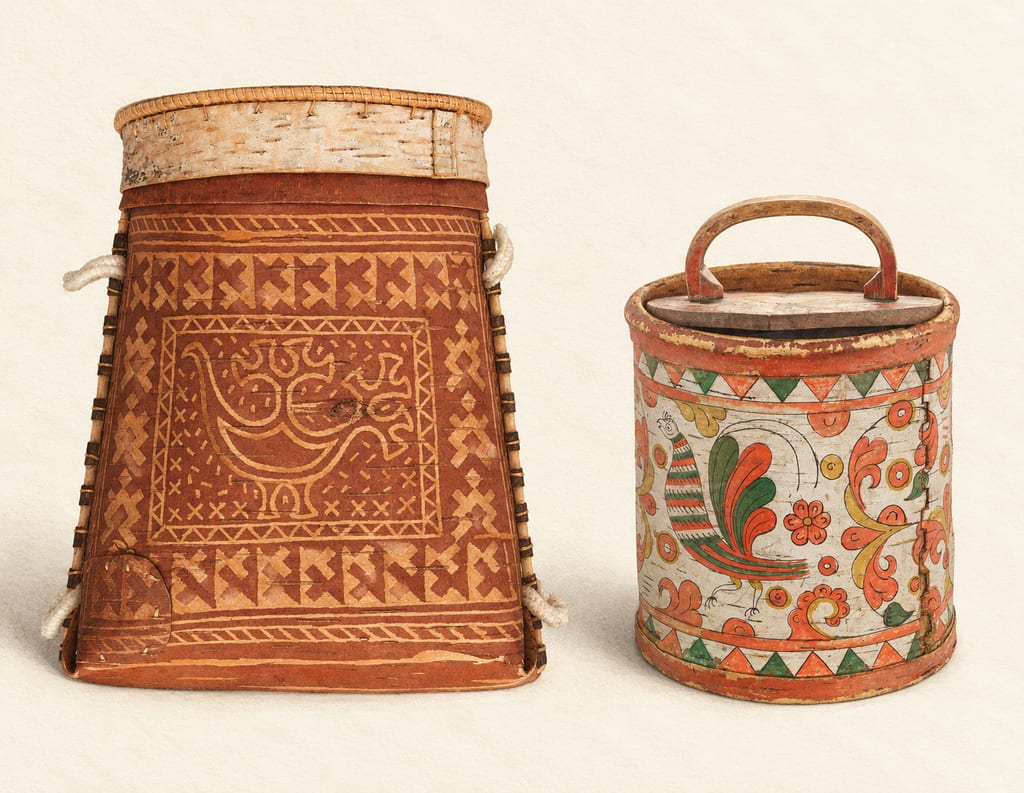
Ket sources describe frozen lingonberries in birch-bark containers; Shor sources describe salted wild garlic in birch-bark tuyes. Their exact forms are not documented.
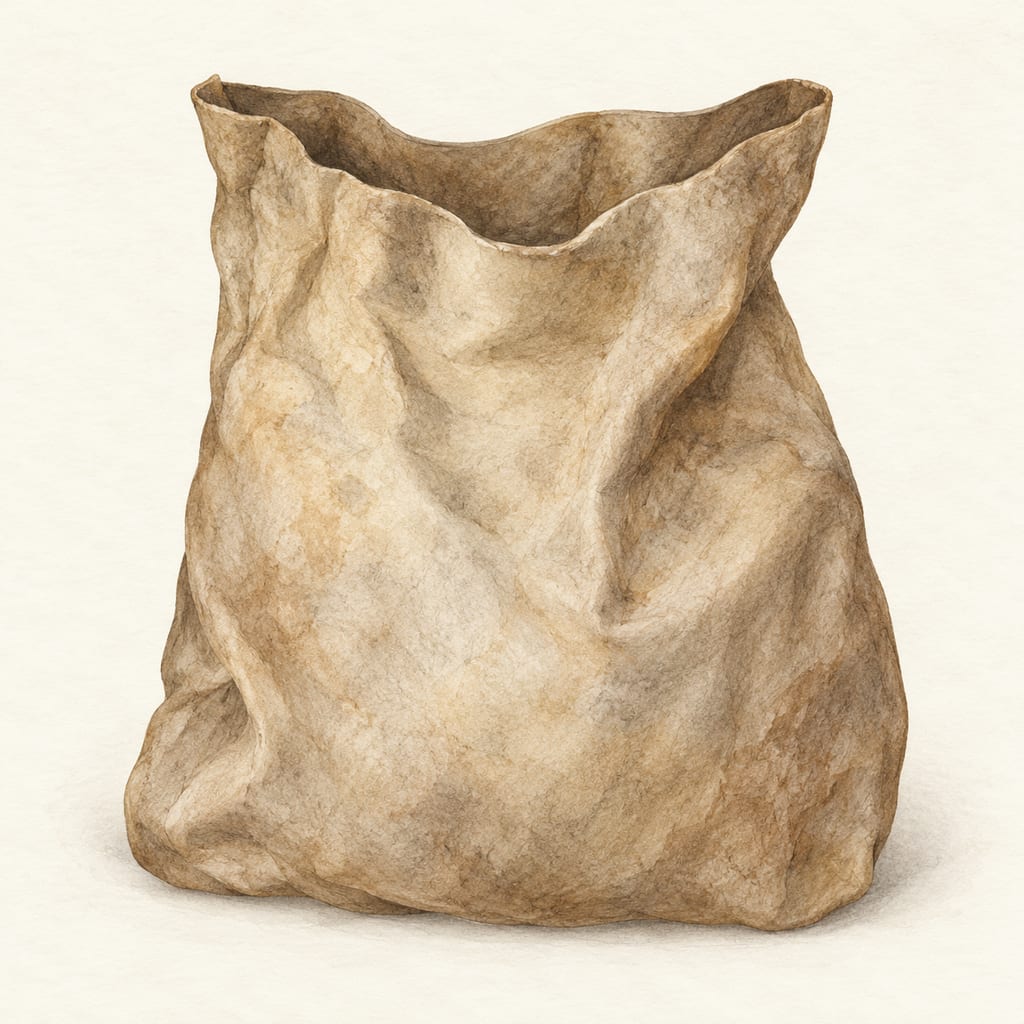
A Kalmyk interview describes dried sheep meat packed into calfskin bags for winter. The account identifies the material and storage use, but not the bag’s construction or dimensions.
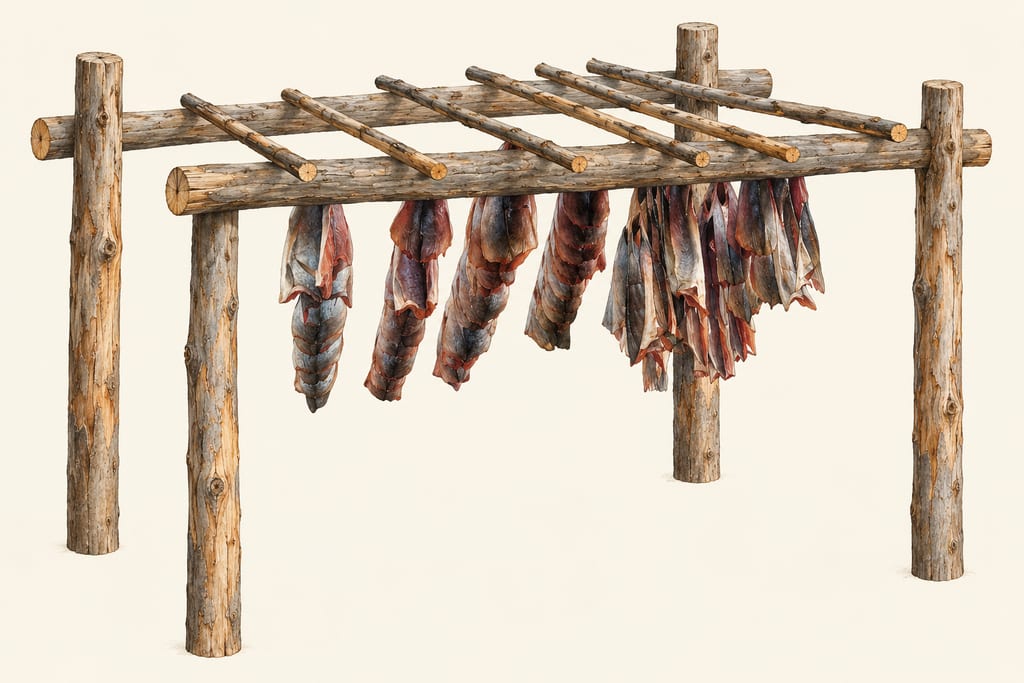
Daguma is an Udege open-air rack for hanging fish to dry, including yukola. The documented frame has four upright posts, two rails and cross-poles; its dimensions are not recorded.
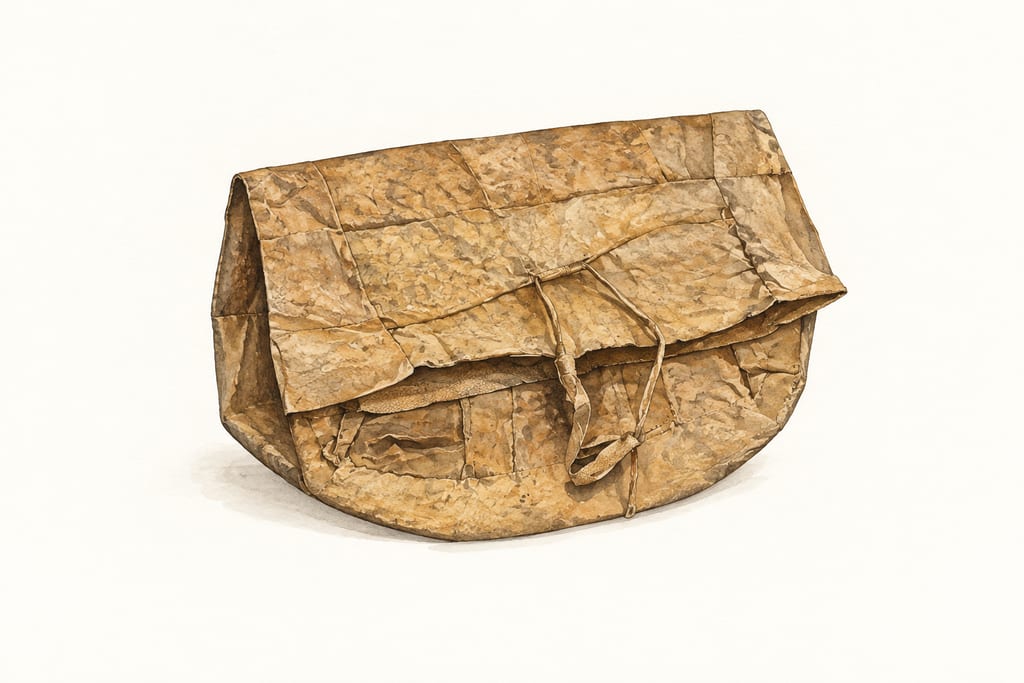
An Enets account records fish meal called porsa stored in burbot-skin bags. Museum records from the Yenisei and Ob regions document related fish-skin sacks, while keeping each community’s object and use distinct.
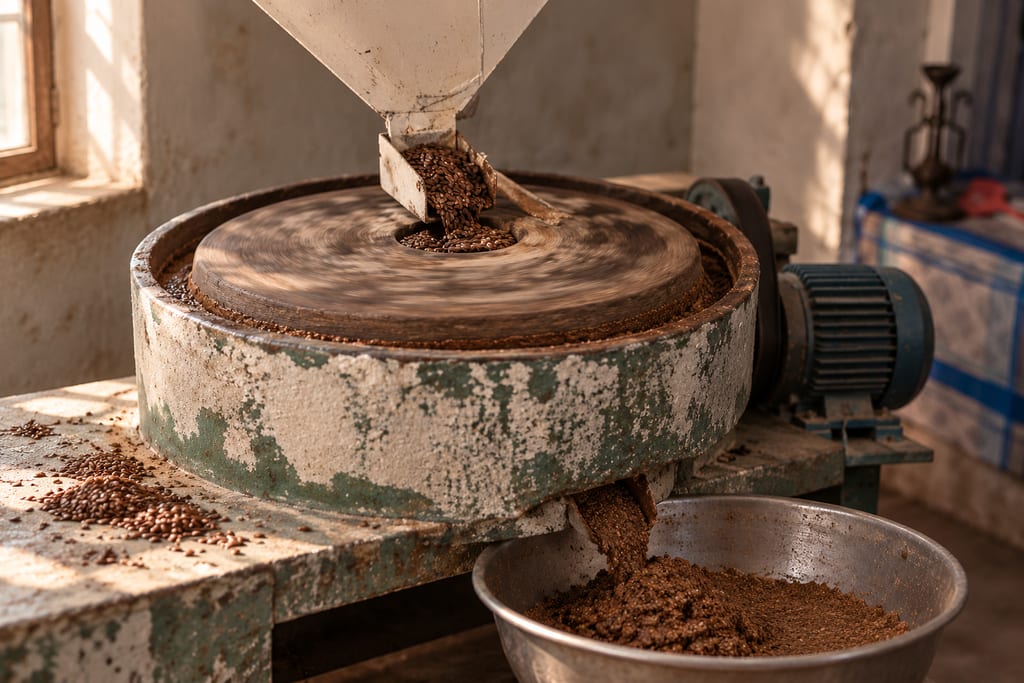
Mills grind seeds, nuts and grain into flour, meal or oil-rich paste. Stone, feed and power arrangements differ by tradition and model; the Dagestani example is one documented form, not a universal design.
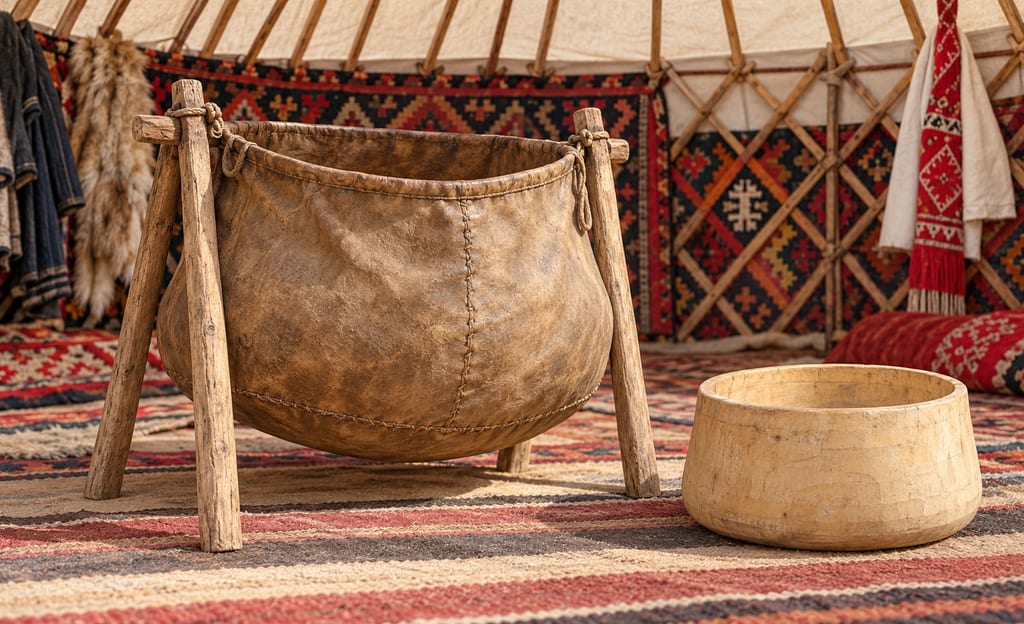
A Bashkir household account describes a large leather һаба for kumys, with one or two limewood tubs as alternatives; exact vessel dimensions and schedule are unspecified.
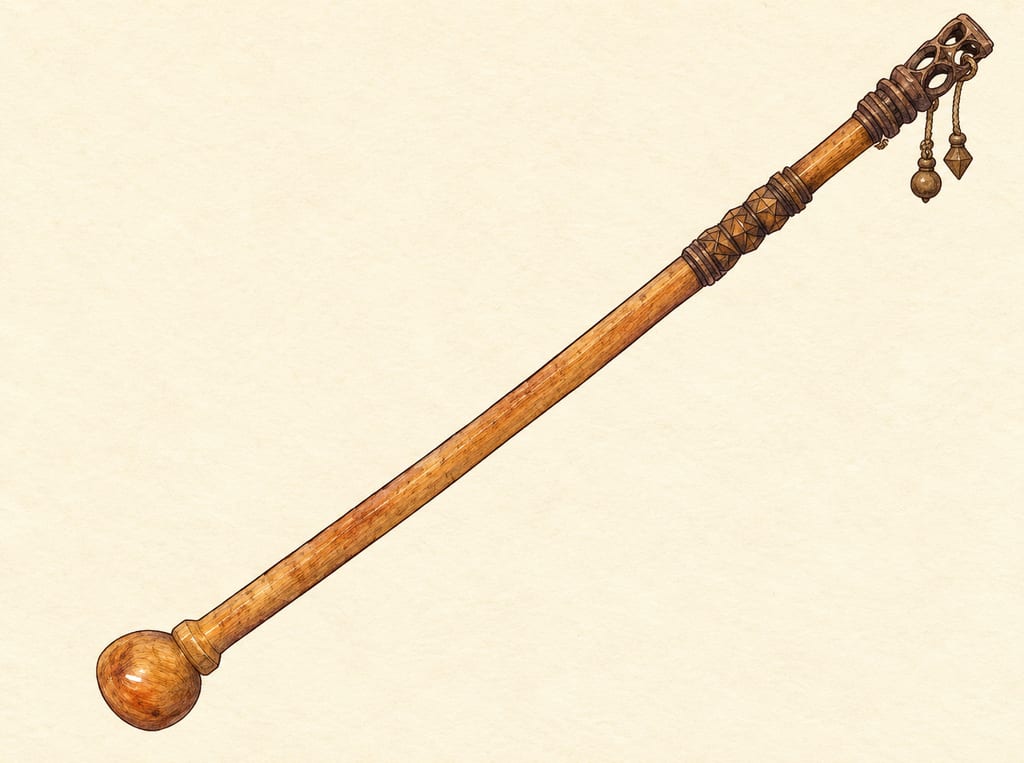
The Sakha hamnatar (хамнатар), also called bülüür (бүлүүр), is a two-part wooden implement for agitating kumys: a carved handle joined to an openwork cap, used through a funnel into the vessel.
No community contributions have been published for this entry yet.
Sign in to contribute. Published comments and photos are free to read.
Institute for Humanities Research and Indigenous Studies of the North, Siberian Branch of the Russian Academy of SciencesRegional food vocabulary · Geography
Dialects in Language and Culture: Conference ProceedingsThe 2024 conference volume records süümekh suorat as thick suorat after whey is strained off.
The lexical entry identifies a drained food form but does not specify the strainer or cloth used.
Cited in: A cloth filter for soft dairy; A useful distinction
YSIA (Sakha Information Agency)Regional food context · Traditional preparation
ТӨРҮТАС.САХАСИРЭ: СуоратThe article describes suorat as a Sakha cultured milk food and gives a household method involving whey drained from suorat.
The article's historical and medical claims are not used here.
Cited in: A cloth filter for soft dairy; A useful distinction
Utah State University ExtensionContemporary method · Materials
Homemade Fermented YogurtThe page names cotton bags, muslin cloth and tight-weave cloth as straining materials for yogurt.
Straining removes excess whey and thickens yogurt.
Cited in: The contemporary kitchen arrangement
Little Home in the MakingContemporary form · Method · Image
How to Strain Yogurt (and Collect Whey)A modern home method lines a kitchen strainer with two or three layers of cheesecloth over a bowl or measuring vessel.
The page instructs readers to cover the setup and refrigerate while draining.
Cited in: The contemporary kitchen arrangement; A useful distinction