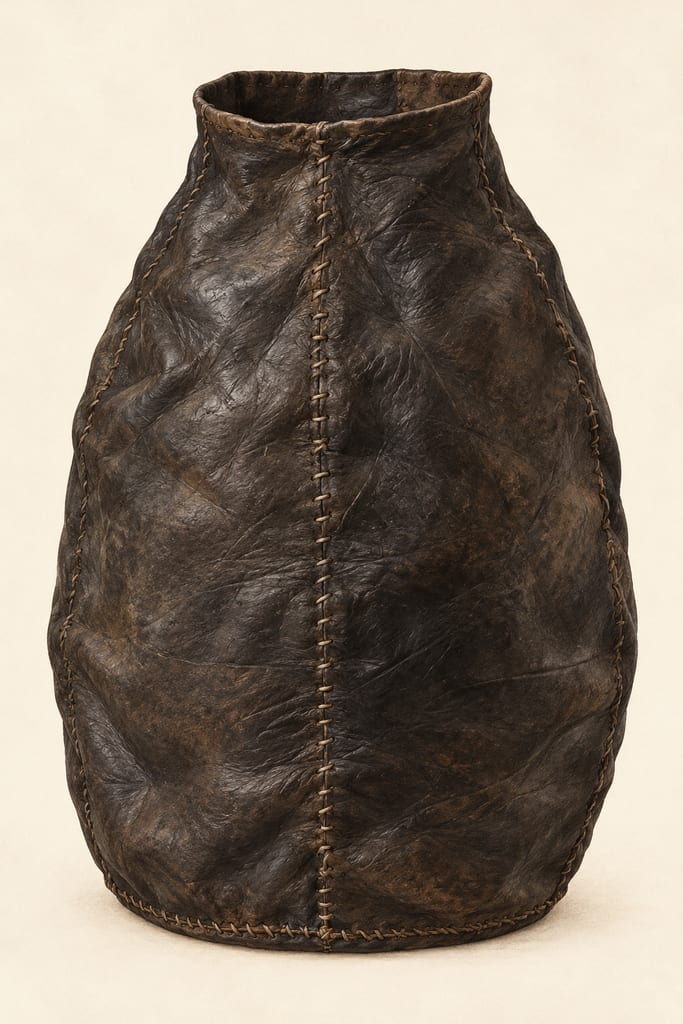
Altai arkhyt (chegen vessel)
Arkhyt is a traditional Altai sewn-hide vessel used to hold and periodically mix chegen. Sources describe a very large vessel, but do not establish one standard shape, measured capacity, or dimensions.
 FermenteaWhere food goes to change
Equipment · Drying poles and racks
Daguma is an Udege open-air rack for hanging fish to dry, including yukola. The documented frame has four upright posts, two rails and cross-poles; its dimensions are not recorded.
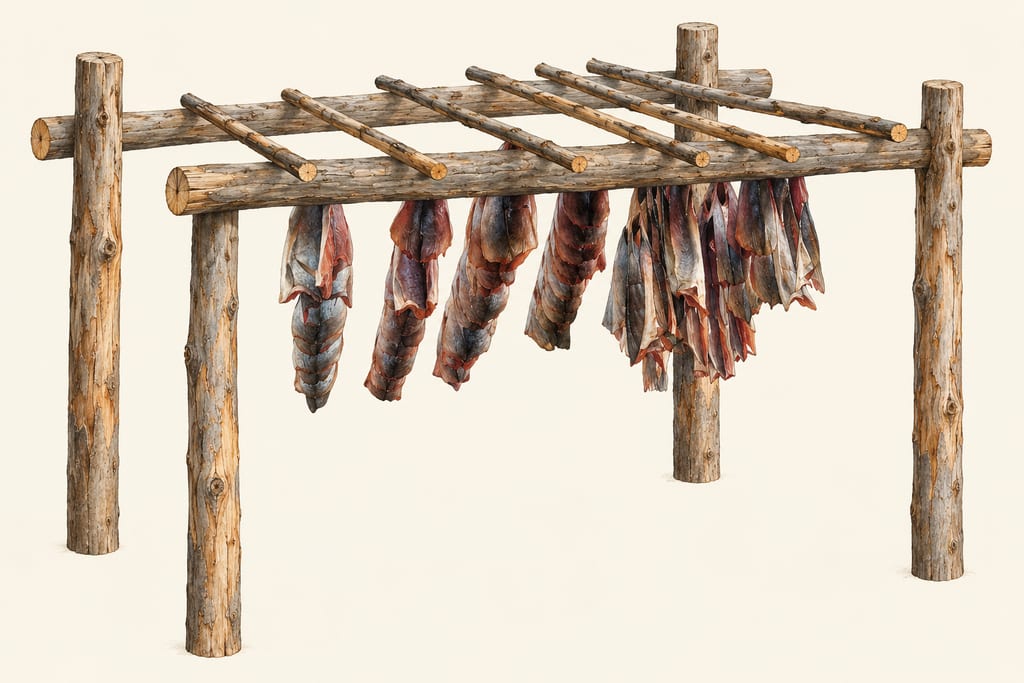
Daguma is the Udege name recorded for a kind of fish-drying rack. In traditional summer settlements, these open hanging frames served for drying fishing nets and suspending yukola, dried fish kept as food stores. The rack belongs to a settlement life shaped by rivers: Udege communities used river basins as fishing grounds and routes between places. An ethnographic account lists the Bikin, Iman and Khor among rivers where Udege caught fish, and describes chum and pink salmon as especially important during the autumn runs on Ussuri tributaries. The sources do not tie Daguma to one named river, village or fish species.
The rack is one part of a larger set of settlement structures. Ethnographic accounts distinguish fish-drying frames from raised storage barns, platforms and smokehouses. Daguma therefore refers to a hanging rack used outdoors, not to an enclosed fish house or smoke chamber.
The 2005 ethnographic description gives a clear outline: two pairs of upright posts carry two horizontal rails, with cross-poles between them. Nets could be dried and yukola hung from the rack. The text lists these parts but does not explain how the fish were split, tied or spaced, or how the joints were made. It gives no standard height, length or carrying load.
A second form is recorded alongside the constructed frame: a dead tree with spreading branches could serve as a hanging rack. This is an attested alternative, not a claim that every Daguma was simply a natural tree. A separate illustrated account compares Daguma with three other named Udege hanging-rack forms, making clear that a photograph of fish on rails cannot by itself identify every rack as Daguma.
A 2018 photograph in the Udege life and subsistence account shows fish drying as yukola on an open timber frame. It documents a real drying stage in an Udege context, but the caption does not name that frame as Daguma. The separate line drawing is the source that explicitly labels one of several rack forms Daguma. Together, these references support an illustration of the rack and its use without claiming that the photograph shows the named type.
The surviving descriptions give the frame's principal members and two ways of providing a hanging support; they do not record a single standardized design, wood species, measurements, capacity, purchase route or construction sequence. The exact age of Daguma and whether this named form remains in use are also not dated. The page therefore describes the documented structure rather than prescribing a modern build or drying method.
Daguma is named among the fish-drying racks of Udege summer settlements. The exact first and last dates of the named rack form are not given.
The atlas places Udege communities in Primorsky Krai; the ethnographic description gives Daguma for Udege summer settlements generally, not a specific settlement in this krai.
The atlas places Udege communities in Khabarovsk Krai; the ethnographic description gives Daguma for Udege summer settlements generally, not a specific settlement in this krai.
Arkhyt is a traditional Altai sewn-hide vessel used to hold and periodically mix chegen. Sources describe a very large vessel, but do not establish one standard shape, measured capacity, or dimensions.
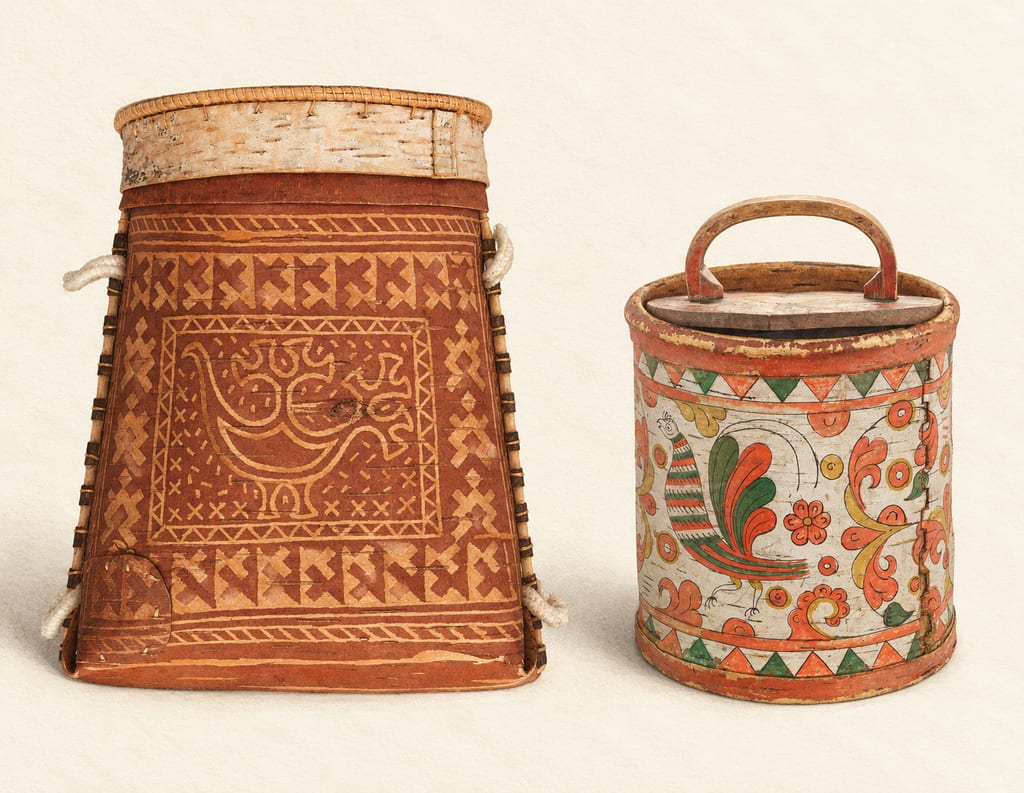
Ket sources describe frozen lingonberries in birch-bark containers; Shor sources describe salted wild garlic in birch-bark tuyes. Their exact forms are not documented.
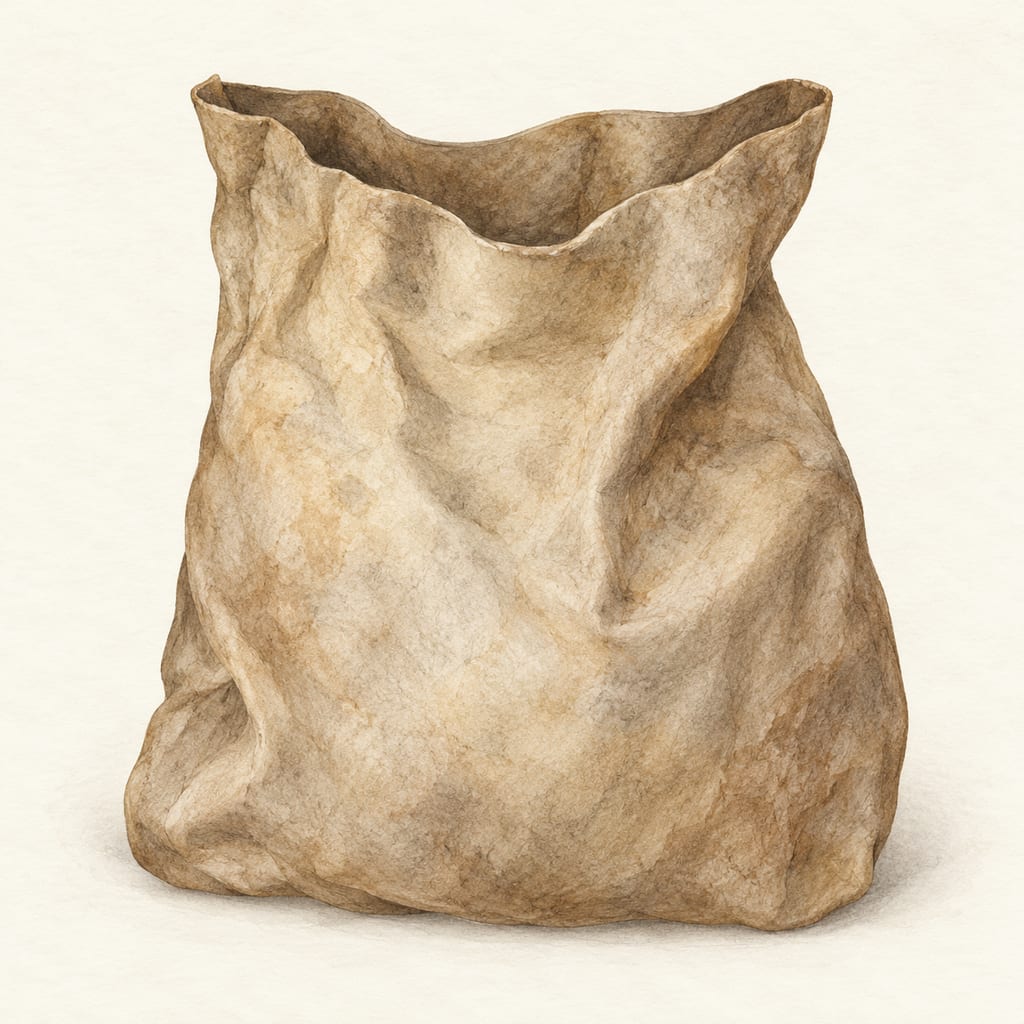
A Kalmyk interview describes dried sheep meat packed into calfskin bags for winter. The account identifies the material and storage use, but not the bag’s construction or dimensions.
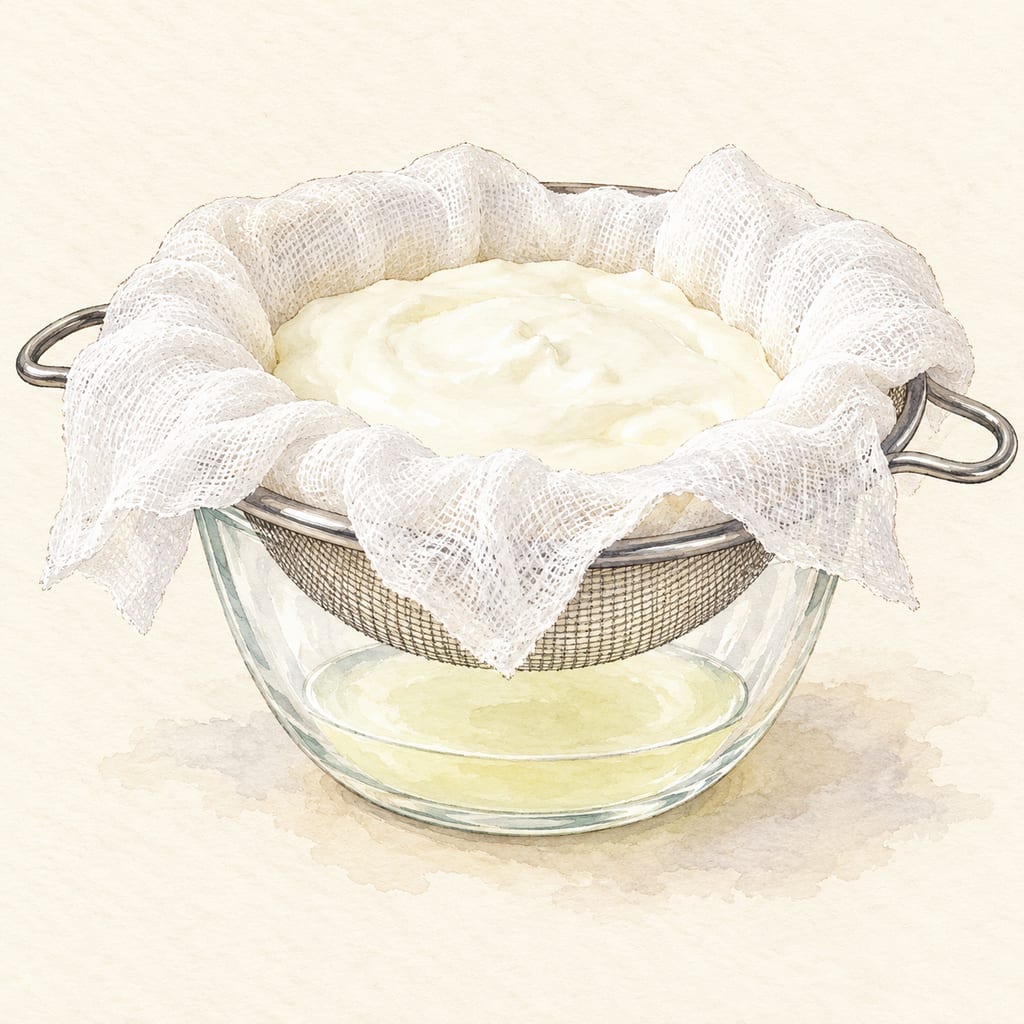
A kitchen strainer lined with cloth holds soft curd while whey passes through into a bowl. It is a modern, general-purpose setup; Sakha sources record strained suorat but do not specify this tool or its materials.
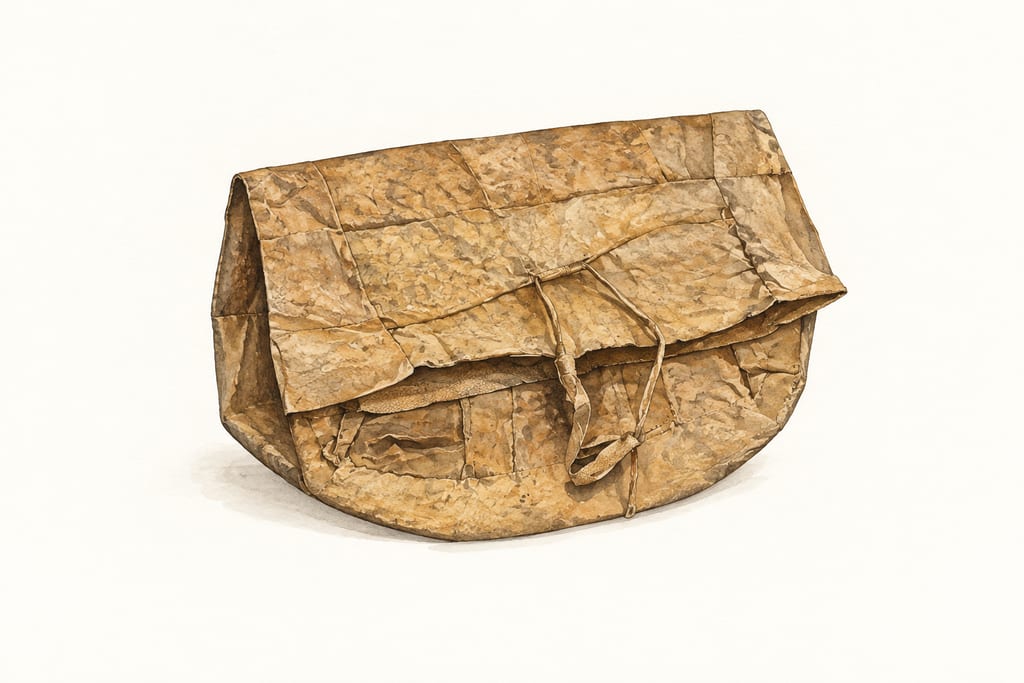
An Enets account records fish meal called porsa stored in burbot-skin bags. Museum records from the Yenisei and Ob regions document related fish-skin sacks, while keeping each community’s object and use distinct.
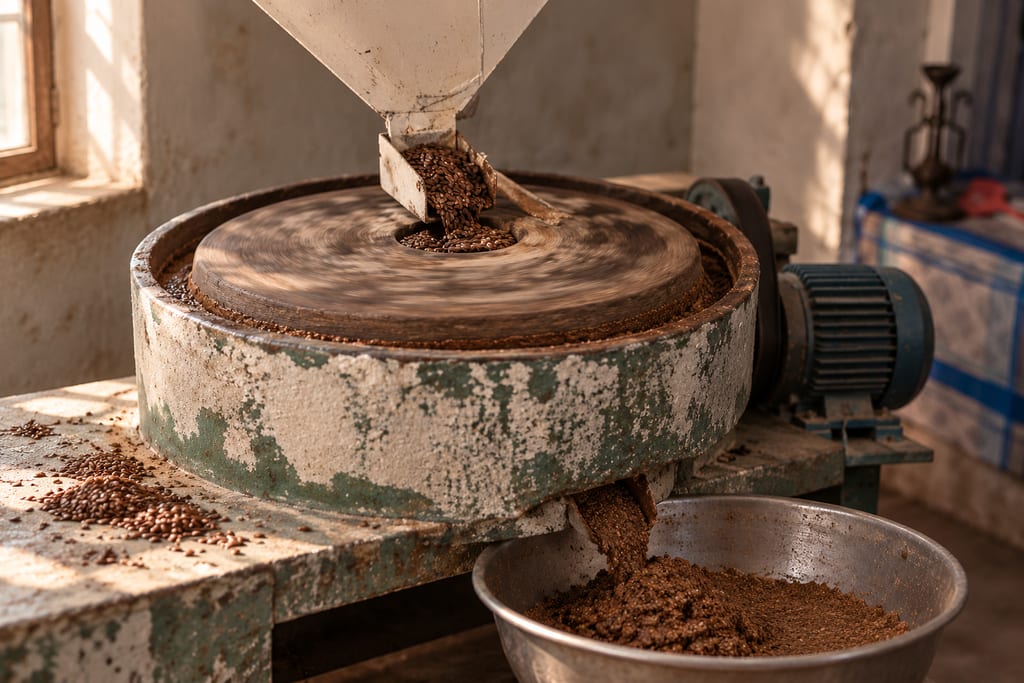
Mills grind seeds, nuts and grain into flour, meal or oil-rich paste. Stone, feed and power arrangements differ by tradition and model; the Dagestani example is one documented form, not a universal design.
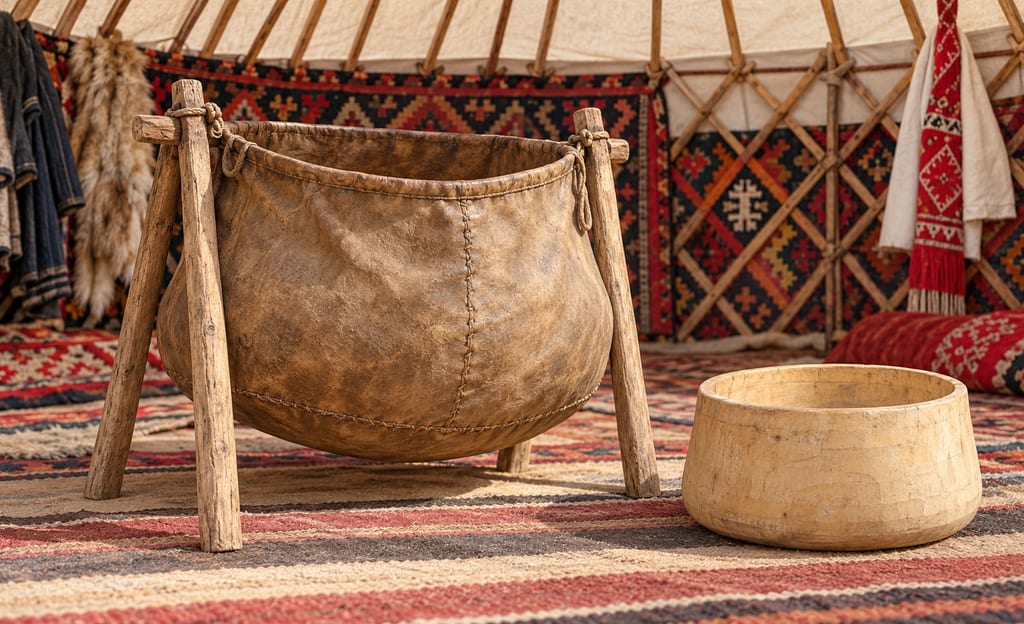
A Bashkir household account describes a large leather һаба for kumys, with one or two limewood tubs as alternatives; exact vessel dimensions and schedule are unspecified.
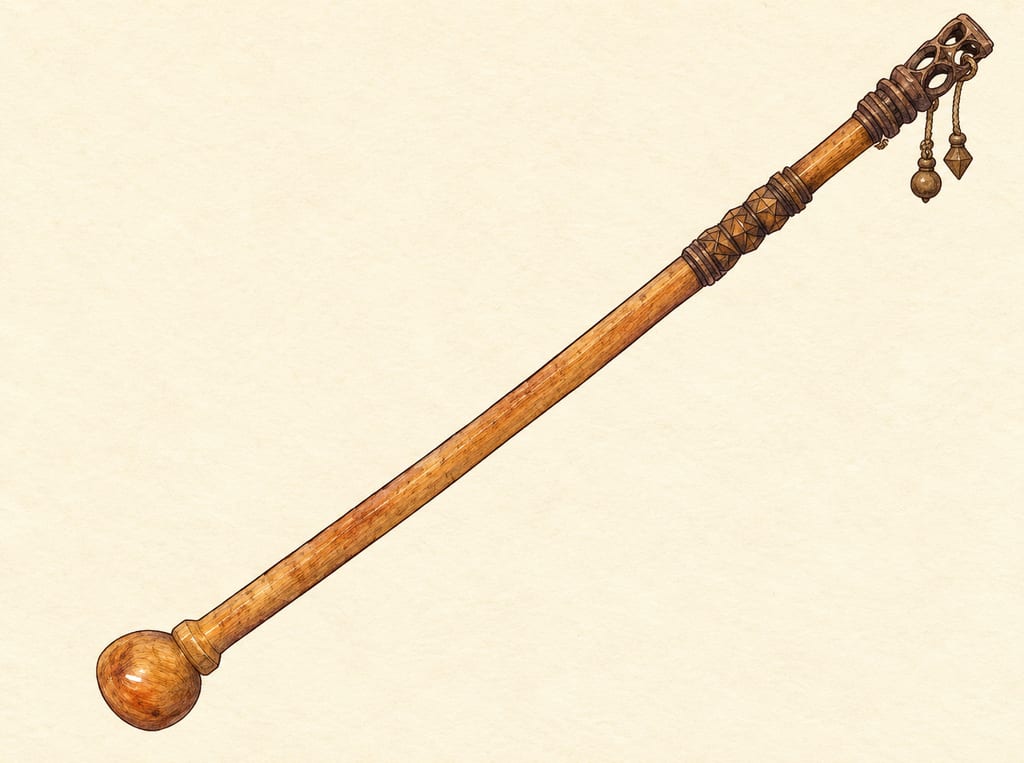
The Sakha hamnatar (хамнатар), also called bülüür (бүлүүр), is a two-part wooden implement for agitating kumys: a carved handle joined to an openwork cap, used through a funnel into the vessel.
No community contributions have been published for this entry yet.
Sign in to contribute. Published comments and photos are free to read.
Center for Support of Indigenous Minorities of the North / Russian Training Center for Indigenous Peoples; Association of Indigenous Peoples of the North, Siberia and Far East of the Russian FederationForm · Materials · Use · Traditional context
Encyclopedia of Indigenous Small Peoples of the North, Siberia and Far East of the Russian FederationPage 301 describes Daguma in Udege summer settlements as a hanging rack for drying nets and suspending yukola.
The described frame has two pairs of vertical posts, two horizontal crossbars and cross-poles; a dead tree with spreading branches could also be used as a rack.
The text does not give dimensions, a named village, a first-use date or a current construction method.
Cited in: A rack in Udege summer settlements; The documented frame; Evidence and limits
Interactive Atlas of Indigenous Peoples of the North, Siberia and the Far East; Institute of Ethnology and Anthropology, Russian Academy of SciencesSettlement context · Related structures
Удэгейцы. Материальная культура [Udege: Material Culture]The page identifies Daguma as a fish-drying rack in Udege settlements and distinguishes it from shelters and smokehouses.
The page describes settlement placement along rivers and in mountain valleys.
Cited in: A rack in Udege summer settlements
Interactive Atlas of Indigenous Peoples of the North, Siberia and the Far East; Institute of Ethnology and Anthropology, Russian Academy of SciencesFish use · Seasonal context · Image reference
Удэгейцы. Образ жизни и система жизнеобеспечения [Udege: Life and Subsistence System]The page describes river fishing among Udege communities, including the autumn chum salmon run and drying fish as yukola for stores.
Its 2018 photograph is captioned as fish drying (yukola), but it does not identify the frame as Daguma.
Cited in: A rack in Udege summer settlements; Evidence and limits
Arctic Multilingual Portal / Arctic MegapediaComparative rack illustration · Visual reference
Устройство жилища удэгейцев [Udege Dwelling Structure]The article labels the first of four illustrated Udege hanging-rack forms Daguma and distinguishes three other forms; it identifies A. F. Startsev's 1996 monograph in its adjacent dwelling-image captions.
Cited in: The documented frame; Evidence and limits
Interactive Atlas of Indigenous Peoples of the North, Siberia and the Far East; Institute of Ethnology and Anthropology, Russian Academy of SciencesGeography
Удэгейцы [Udege]The atlas places Udege communities in Primorsky and Khabarovsk Krais and describes the southern Russian Far East homeland.