
Milk
Milk is the fluid produced by dairy animals. Its species, fat level, heat treatment and handling shape the way it can be drunk, cultured or turned into curd.
 FermenteaWhere food goes to change
Equipment · Skins and bladders
arkhyt · leather vessel for chegen · arkyt
Arkhyt is a traditional Altai sewn-hide vessel used to hold and periodically mix chegen. Sources describe a very large vessel, but do not establish one standard shape, measured capacity, or dimensions.
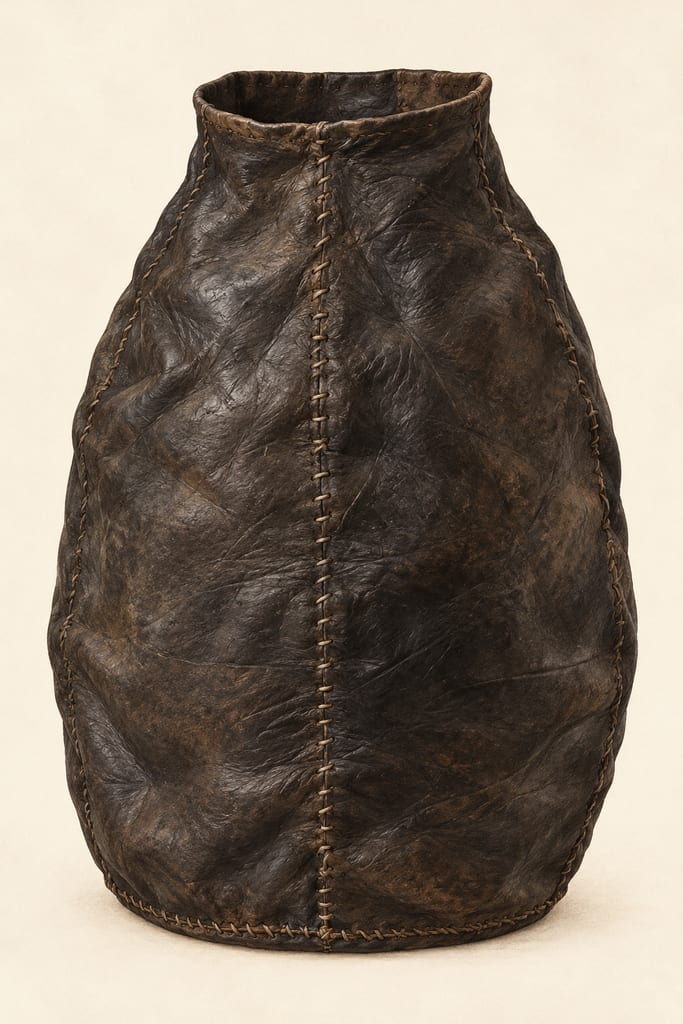
Arkhyt is the Altai leather vessel named in accounts of chegen, a fermented-milk drink. The Altai Biosphere Reserve’s cultural account says that an inoculated sour-milk mixture was combined with fresh milk, poured into an arkhyt and periodically agitated. It describes a long wooden bishky with a perforated round end as the mixing implement. The account records several historical starter materials: smoked horse-tail bone or tendon, sometimes smoked kurut; Telengit preparations could also include young willow bark. These variations belong to the reported cultural record and should not be treated as instructions for establishing a safe starter.
The vessel’s documented job is to contain the milk mixture while it is moved or shaken. The sources do not specify an arkhyt lid, liner, opening closure, or fixed fermentation schedule. They also do not establish that every Altai household used the same vessel or starter.
The 2025 Altai Ethnographic Dictionary defines arkhyt as a leather vessel for preparing chegen and kumys, sewn with sinew. It quotes an older description of a vessel almost the height of a person and holding about ten buckets. That gives a sense of scale, not a measured specification for all arkhyts; neither standard capacity nor a specimen’s dimensions are established here. The dictionary places the vessel in the women’s side of the Altai dwelling, a household arrangement recorded in that account rather than a universal rule for every home.
Altai sources also document tazhuur or tashaour flasks for storing and carrying drinks. A Tomsk State University museum story describes a tashaour used for araka, kumis and ayran and shows its sewn leather construction; the Russian Ethnographic Museum catalog records another Altai tazhuur made of leather and wood. Those are related Altai vessels, but they are flasks, not photographs of the larger chegen arkhyt. Their shape and decoration should not be transferred to this item as though the forms were interchangeable.
The sources identify hide and sinew, but do not name the animal used for this specific arkhyt or describe a single pattern, seam, neck shape, closure or lining. A tashaour photograph is useful for comparing traditional Altai leatherwork; it cannot establish the arkhyt’s silhouette. The generated illustration is therefore interpretive and keeps the vessel plain, sewn and large, without copying a flask’s narrow neck, straps or embossed motifs.
No inspected account supplies a care routine, current maker, market route, or food-contact assessment. A traditional hide vessel’s cultural role does not establish that any surviving example is clean, intact or suitable for present-day fermentation.
A 2014 Altai cultural account describes chegen being transferred to a leather vessel called arkhyt and periodically agitated; the 2025 Altai ethnographic dictionary defines arkhyt as a sewn-skin vessel for chegen and kumys. Neither source establishes the first date of use.
The sources identify Altaians and Altai but do not locate this vessel to a specific district or community. This is a use association, not a manufacturing or origin claim.
Milk is the fluid produced by dairy animals. Its species, fat level, heat treatment and handling shape the way it can be drunk, cultured or turned into curd.
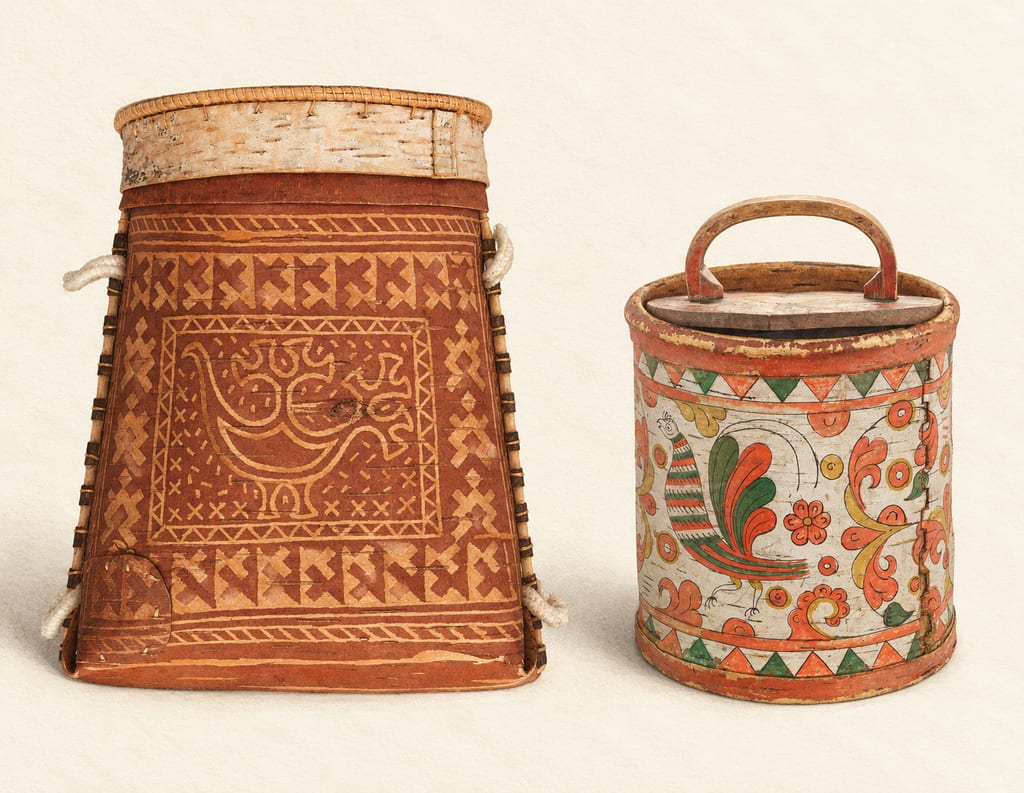
Ket sources describe frozen lingonberries in birch-bark containers; Shor sources describe salted wild garlic in birch-bark tuyes. Their exact forms are not documented.
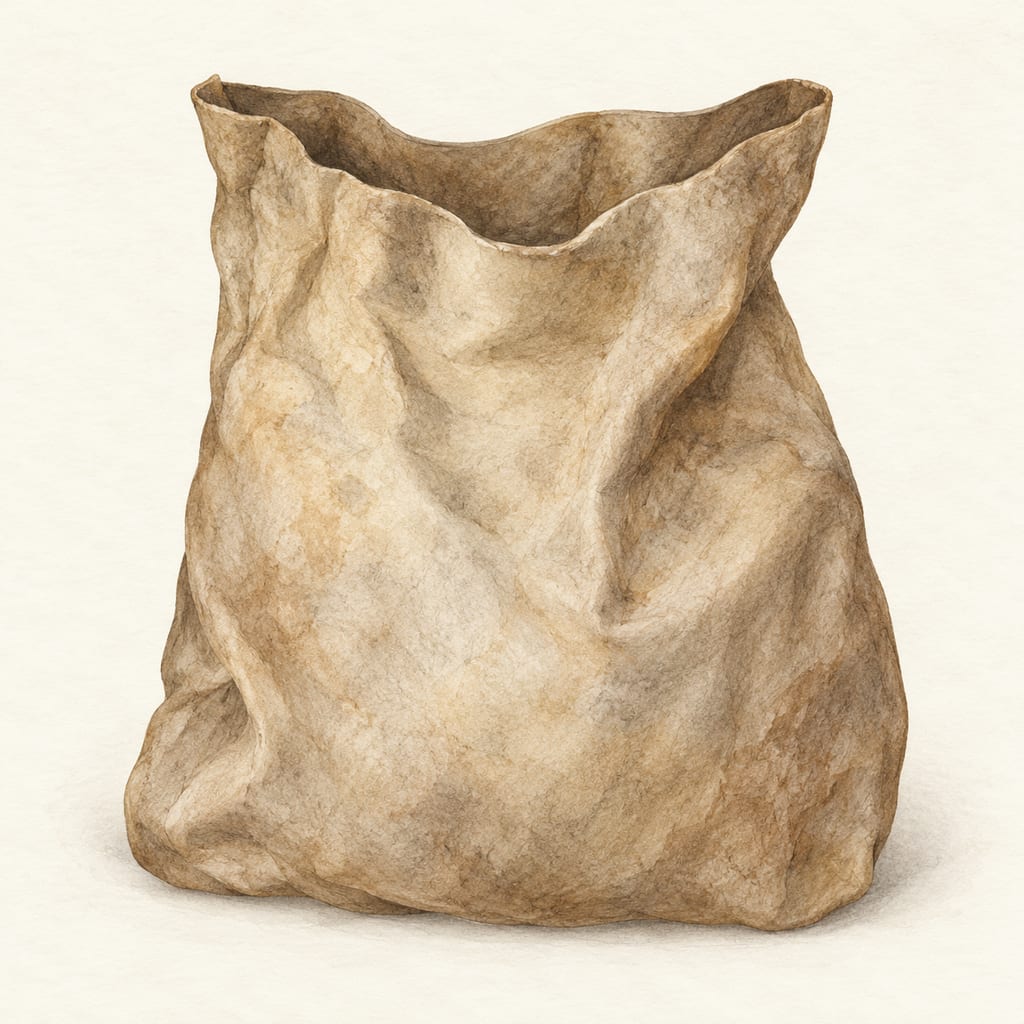
A Kalmyk interview describes dried sheep meat packed into calfskin bags for winter. The account identifies the material and storage use, but not the bag’s construction or dimensions.
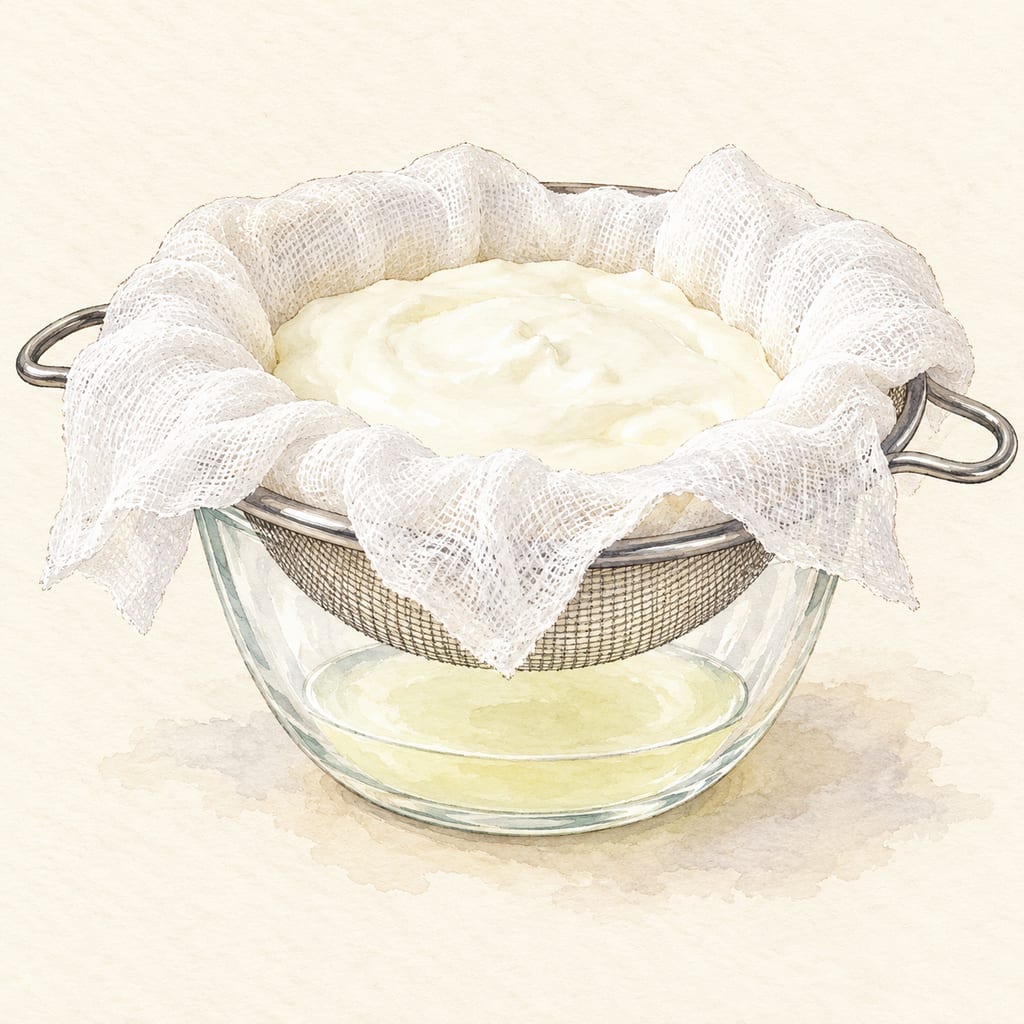
A kitchen strainer lined with cloth holds soft curd while whey passes through into a bowl. It is a modern, general-purpose setup; Sakha sources record strained suorat but do not specify this tool or its materials.
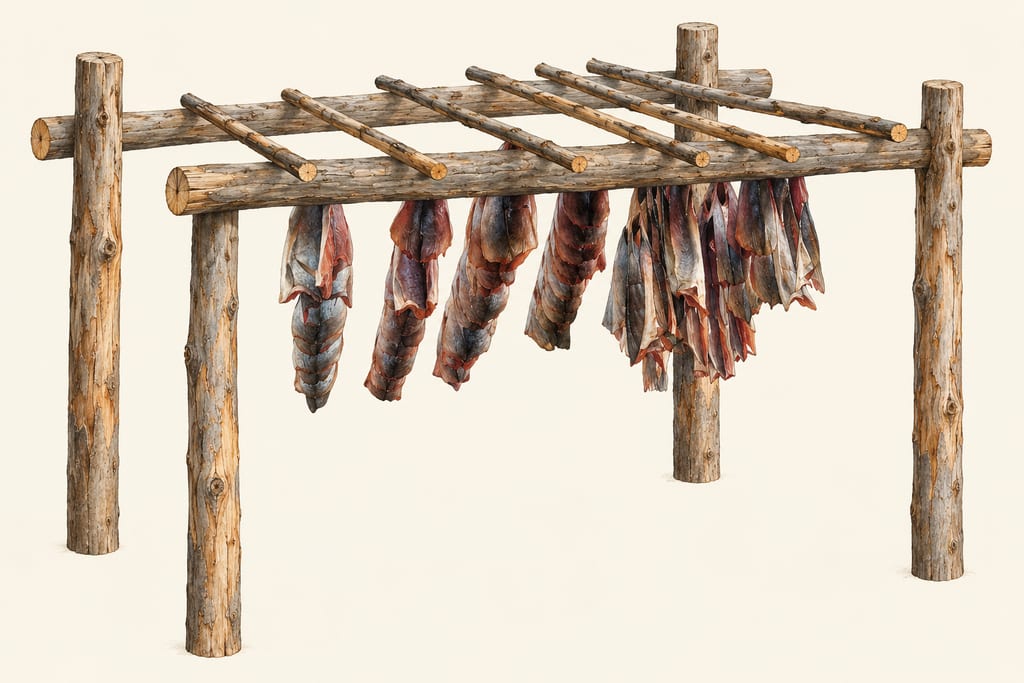
Daguma is an Udege open-air rack for hanging fish to dry, including yukola. The documented frame has four upright posts, two rails and cross-poles; its dimensions are not recorded.
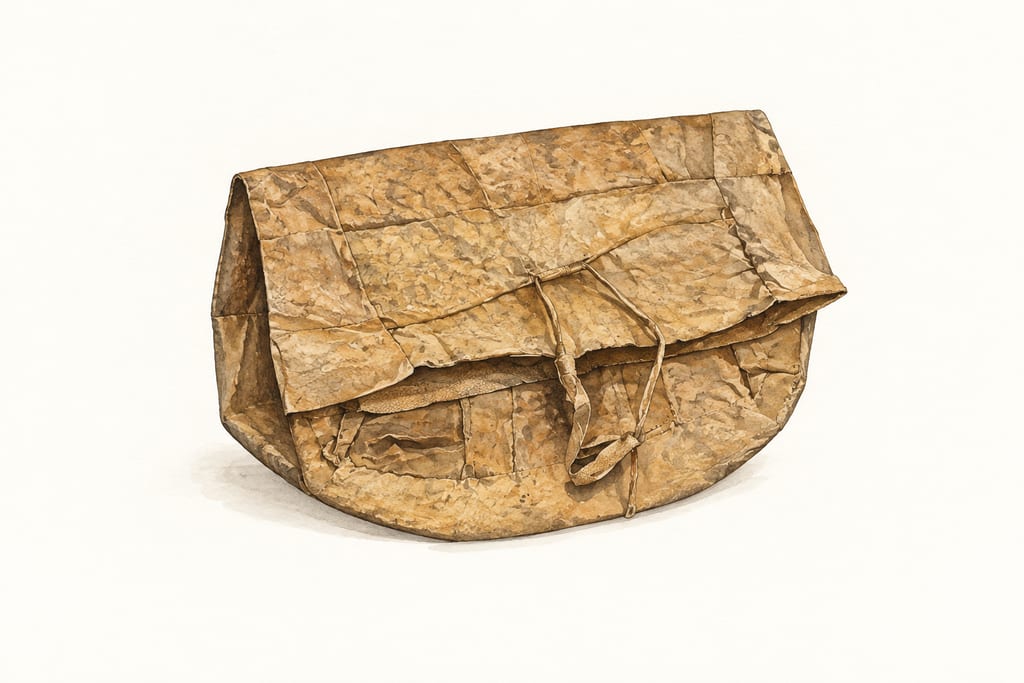
An Enets account records fish meal called porsa stored in burbot-skin bags. Museum records from the Yenisei and Ob regions document related fish-skin sacks, while keeping each community’s object and use distinct.
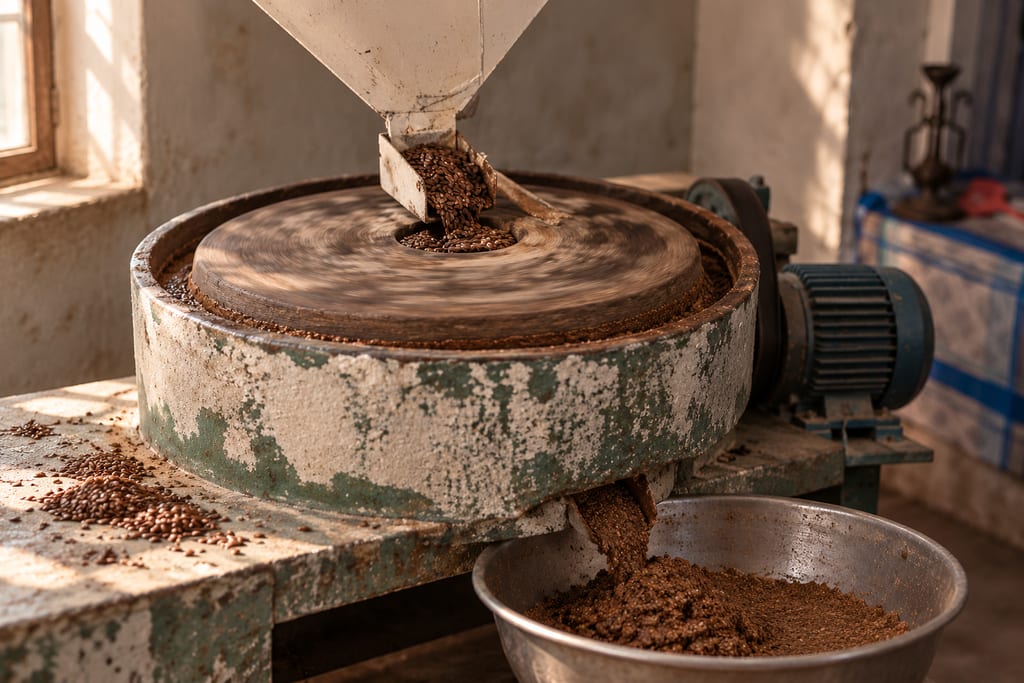
Mills grind seeds, nuts and grain into flour, meal or oil-rich paste. Stone, feed and power arrangements differ by tradition and model; the Dagestani example is one documented form, not a universal design.
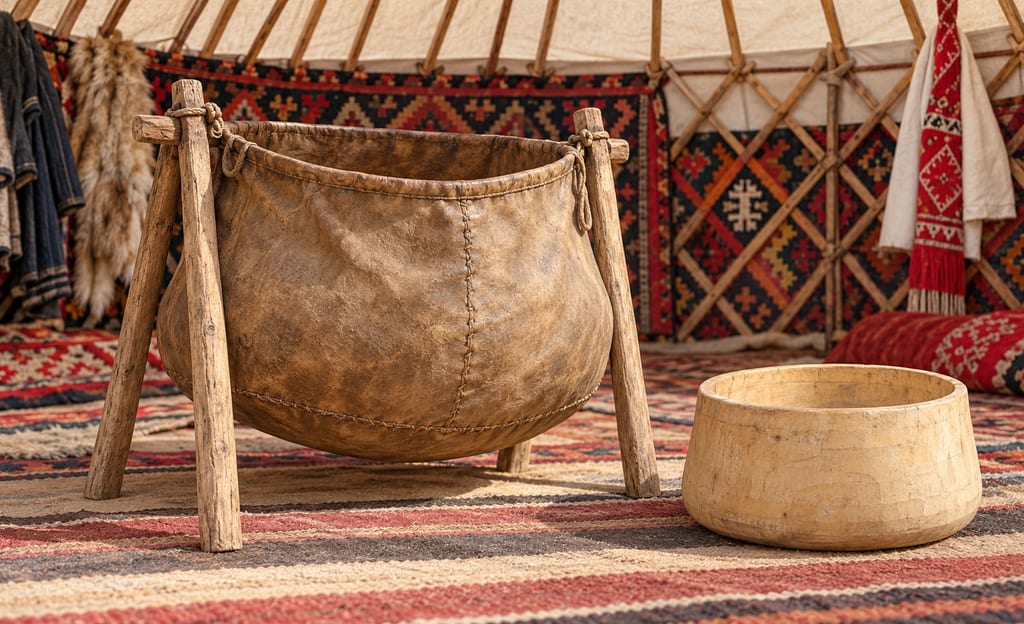
A Bashkir household account describes a large leather һаба for kumys, with one or two limewood tubs as alternatives; exact vessel dimensions and schedule are unspecified.
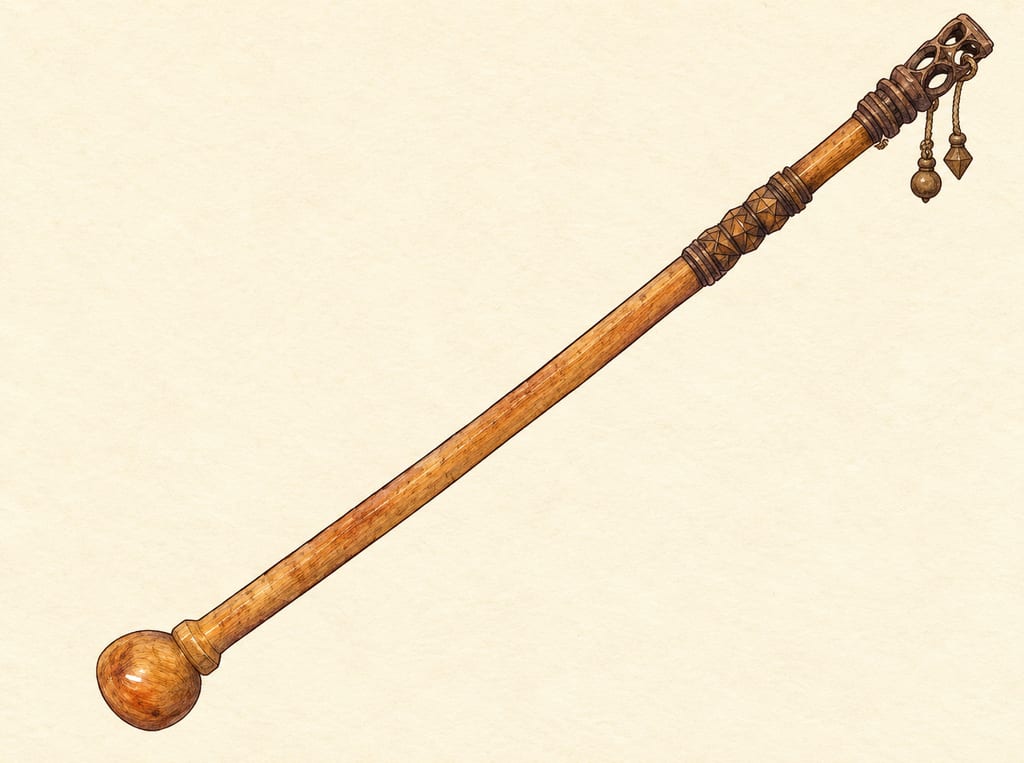
The Sakha hamnatar (хамнатар), also called bülüür (бүлүүр), is a two-part wooden implement for agitating kumys: a carved handle joined to an openwork cap, used through a funnel into the vessel.
No community contributions have been published for this entry yet.
Sign in to contribute. Published comments and photos are free to read.
Altai Biosphere ReserveNomenclature · Use · Process · Geography
ЧЕГЕН – кисломолочный напитокA cultural account based on a 2014 Altai ethnographic publication names the leather vessel used for chegen as arkhyt.
It describes transferring inoculated milk to the arkhyt and periodically agitating it with a perforated wooden bishky.
It records historical starter variations and hospitality context without giving a standard vessel shape or dimensions.
Cited in: A vessel made for chegen
S. S. Surazakov Institute of AltaisticsNomenclature · Form · Materials · Capacity · Geography
Алтайский этнографический словарьThe dictionary defines arkhyt as a leather vessel for making chegen and kumys, sewn with sinew.
It quotes a description of nearly human height and roughly ten buckets, not a standardized measurement.
It places arkhyt in the women's side of an Altai dwelling; it distinguishes the arkhyt from other leather containers.
Cited in: A vessel made for chegen; A large sewn-hide vessel; What the evidence leaves open
Tomsk State UniversityComparative form · Materials · Context
«Открытие недели»: фляга из Горного Алтая для арака и кумысаA Tomsk State University museum story identifies a displayed Altai tashaour flask transferred to the museum in 1924.
The story says tashaour were used for araka, kumis and ayran and sewn from several kinds of animal hide.
The accompanying photograph shows a related flask, not an arkhyt for chegen.
Cited in: A large sewn-hide vessel; What the evidence leaves open
Russian Ethnographic MuseumComparative form · Materials · Geography
Сосуд - фляга. Алтай-кижи (алтайцы)The museum catalog records a 2006 Altai-kiži tazhuur as a food vessel made of leather and wood; territorial documentation identifies the Altai Republic.
It is a related flask, not evidence for the exact dimensions or form of an arkhyt used to prepare chegen.
Cited in: A large sewn-hide vessel