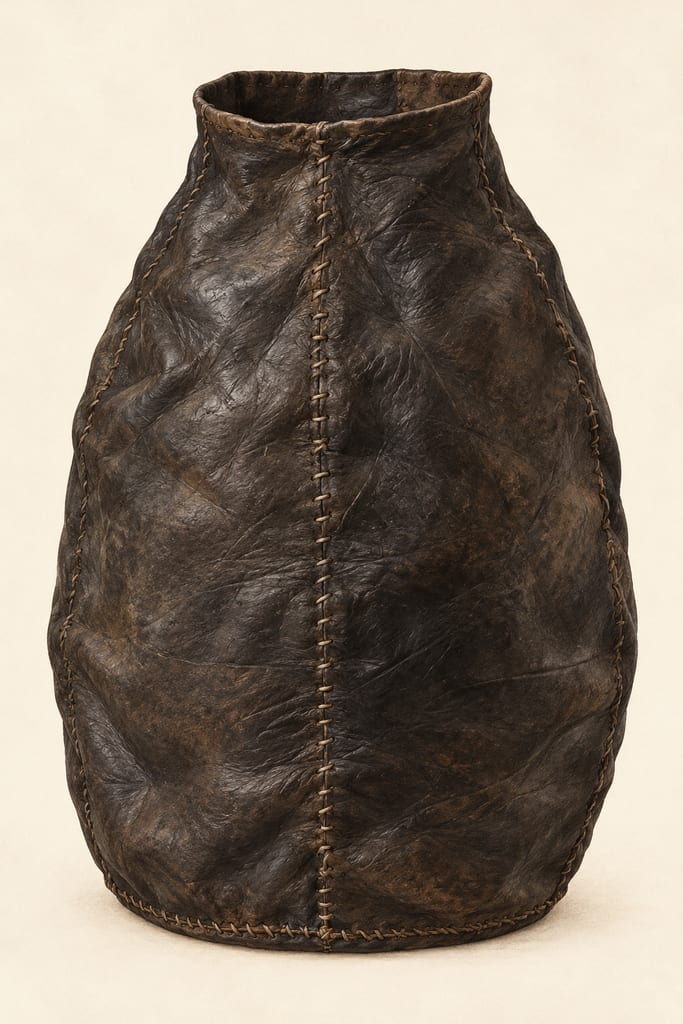
Altai arkhyt (chegen vessel)
Arkhyt is a traditional Altai sewn-hide vessel used to hold and periodically mix chegen. Sources describe a very large vessel, but do not establish one standard shape, measured capacity, or dimensions.
 FermenteaWhere food goes to change
Equipment · Bags, sacks and casings
A Kalmyk interview describes dried sheep meat packed into calfskin bags for winter. The account identifies the material and storage use, but not the bag’s construction or dimensions.
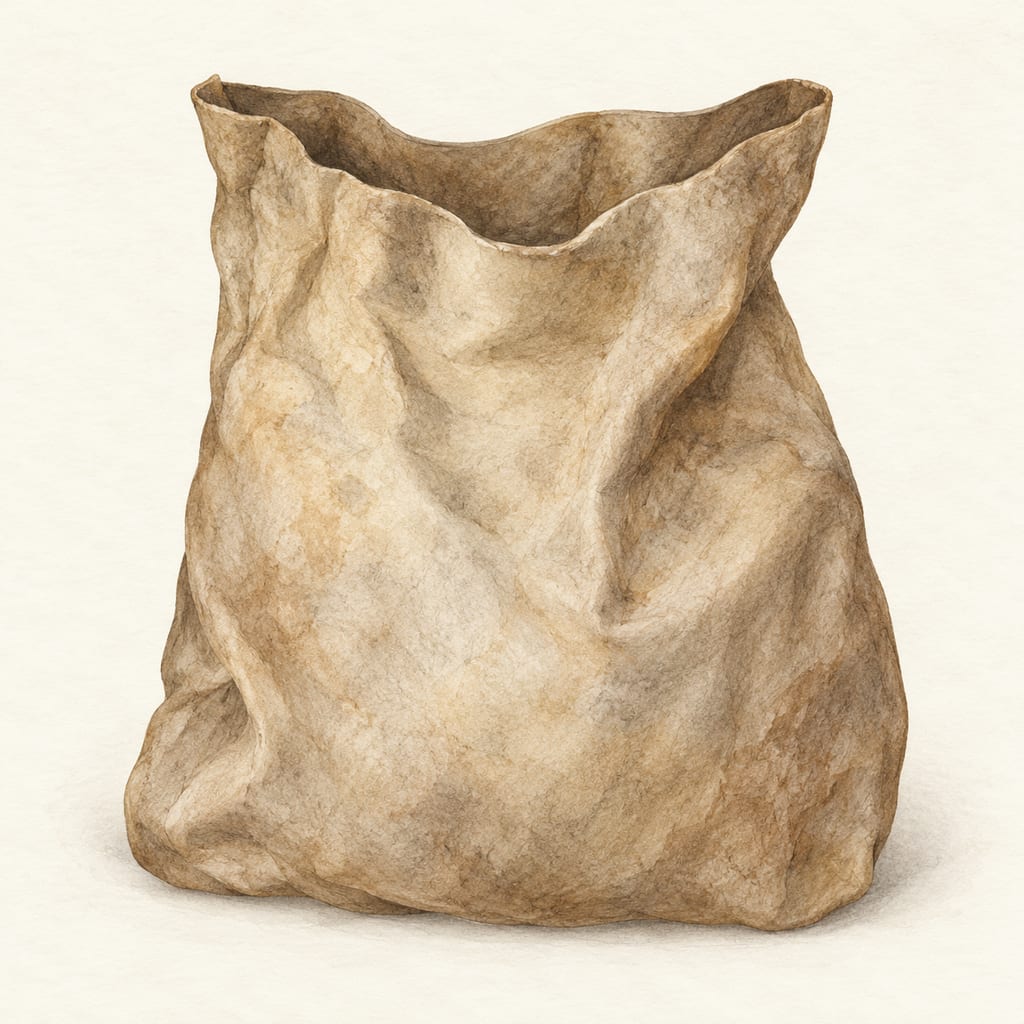
In Alena Lidzhieva’s Kalmyk cuisine interview, sheep are slaughtered in summer and the meat is cut into long strips. The strips are dipped in salty water, dried on a rope, and, once dry, put into bags made of calfskin. The dried meat is then consumed in winter. The bag belongs to a seasonal storage sequence: the source does not call it a fermenting vessel or say that fermentation takes place in it.
The interview was recorded on 12 June 2015 and looks back on past practice, but it does not date when the method began or ended. It is one account, not proof that every Kalmyk household used the same equipment or followed an identical routine.
The interview names calfskin as the material, but gives no dimensions, capacity, pattern, closure, seams, tanning method, or instructions for making, cleaning, or repairing the bag. Those details should remain open rather than being supplied from a visually similar object.
A separate Cambridge project account describes Kalmyk leatherworking more broadly. It discusses cleaning and drying hides, treatment with salty liquid and sour whey, further cleaning and softening, and the use of parts of large-animal skins for bags and containers. That is regional context only: the account does not say that the same preparation was used for Lidzhieva’s calfskin bag.
A Field Museum catalogue offers a comparison, not a substitute identification: it describes an Assiniboine dried-meat bag made from a whole buffalo-fetus skin. The pictured object is from a different people and material context, so its shape and construction cannot be assigned to the Kalmyk bags.
The same interview also describes kyur, a separate dish in which salted meat is put into a sheep skin, sewn up, and cooked in a fire-heated pit. That sewn cooking skin is not the calfskin bag used to hold dried meat for winter. The distinction matters: the interview gives no buried use for the storage bags and no basis for illustrating them as pit equipment.
The available account does not say how long the meat kept, how much a bag held, or how a reader could obtain or care for one. It documents a material and a use, while leaving those practical specifications unknown.
The source documents a storage bag for dried meat; it does not describe fermentation or give a preservation duration.
Source →The interview identifies a Kalmyk cuisine account, not an exact locality or a complete distribution.
Arkhyt is a traditional Altai sewn-hide vessel used to hold and periodically mix chegen. Sources describe a very large vessel, but do not establish one standard shape, measured capacity, or dimensions.
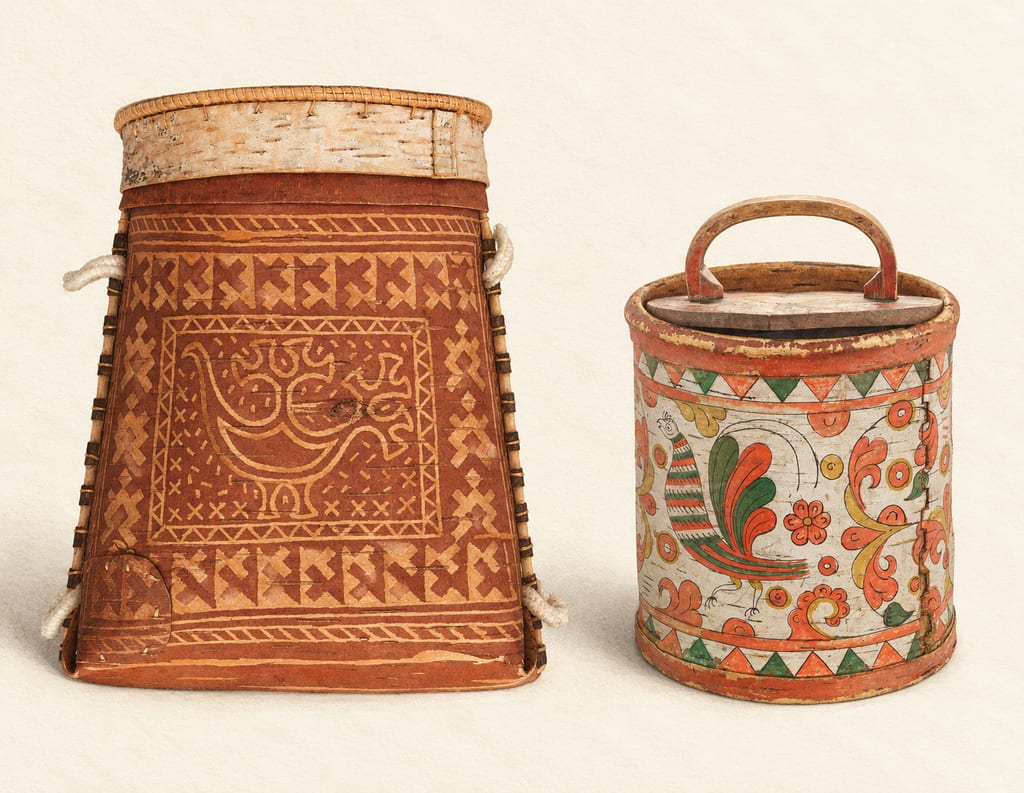
Ket sources describe frozen lingonberries in birch-bark containers; Shor sources describe salted wild garlic in birch-bark tuyes. Their exact forms are not documented.
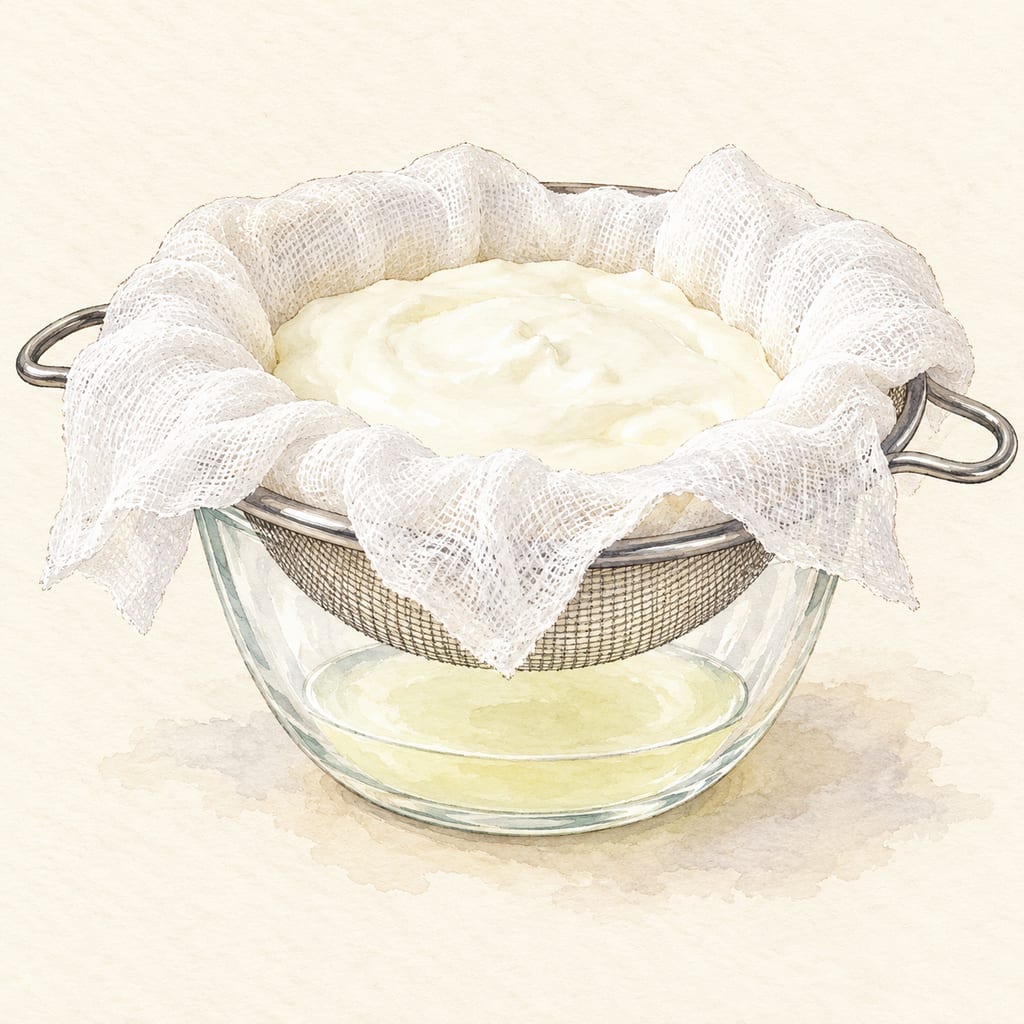
A kitchen strainer lined with cloth holds soft curd while whey passes through into a bowl. It is a modern, general-purpose setup; Sakha sources record strained suorat but do not specify this tool or its materials.
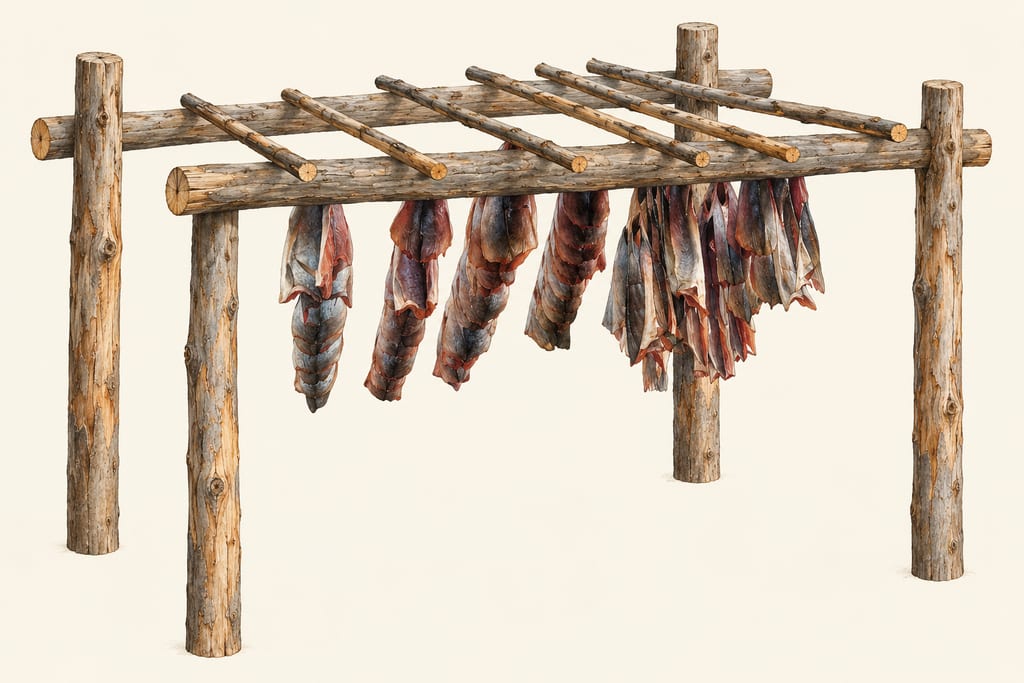
Daguma is an Udege open-air rack for hanging fish to dry, including yukola. The documented frame has four upright posts, two rails and cross-poles; its dimensions are not recorded.
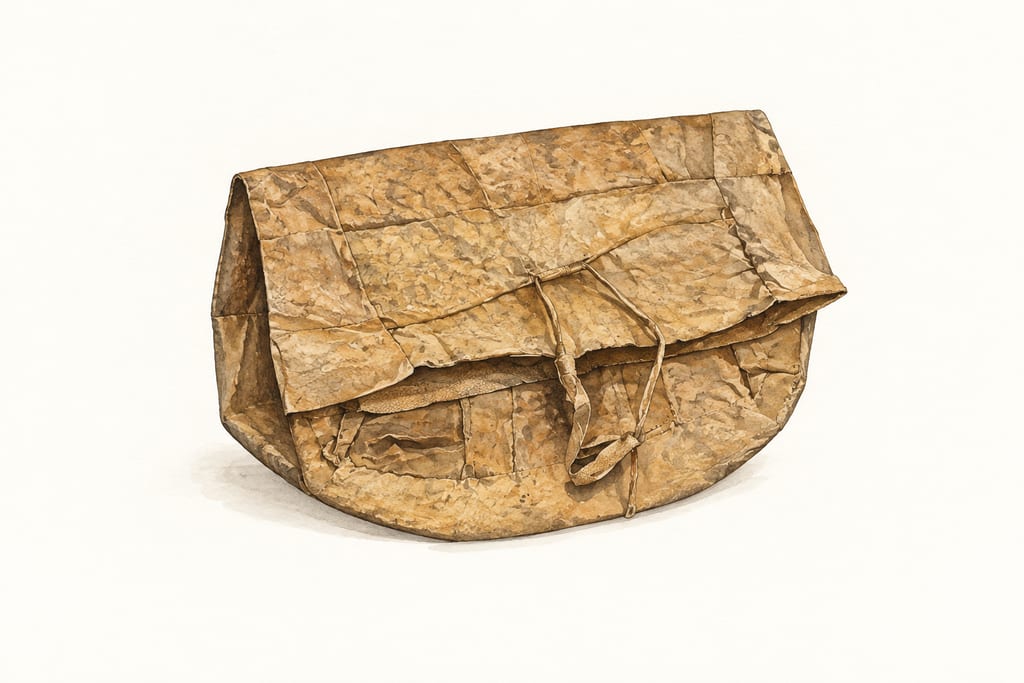
An Enets account records fish meal called porsa stored in burbot-skin bags. Museum records from the Yenisei and Ob regions document related fish-skin sacks, while keeping each community’s object and use distinct.
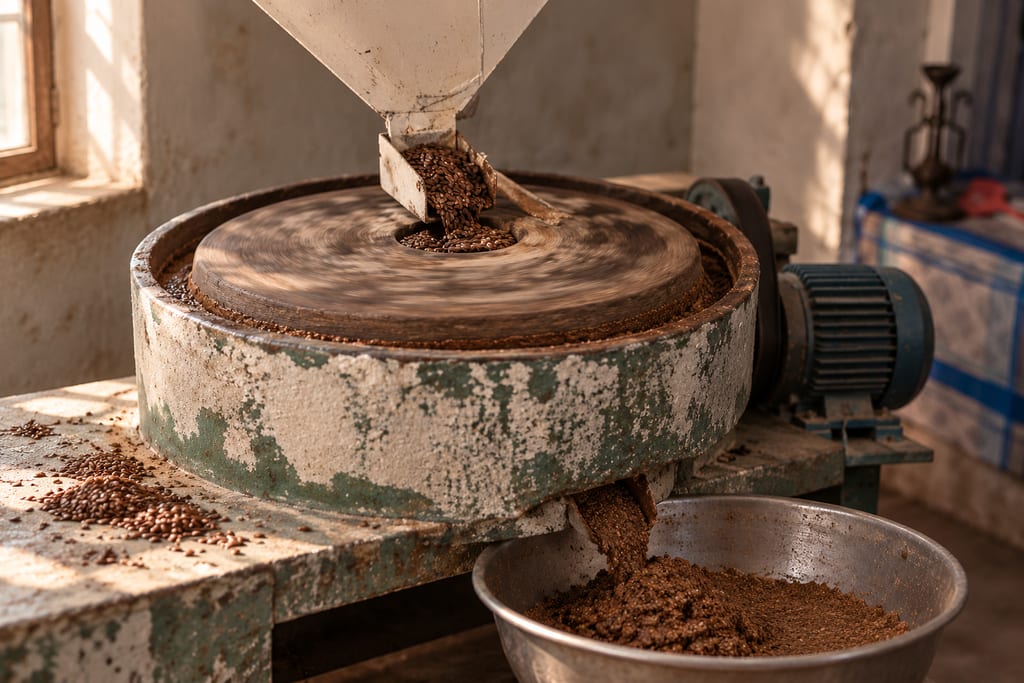
Mills grind seeds, nuts and grain into flour, meal or oil-rich paste. Stone, feed and power arrangements differ by tradition and model; the Dagestani example is one documented form, not a universal design.
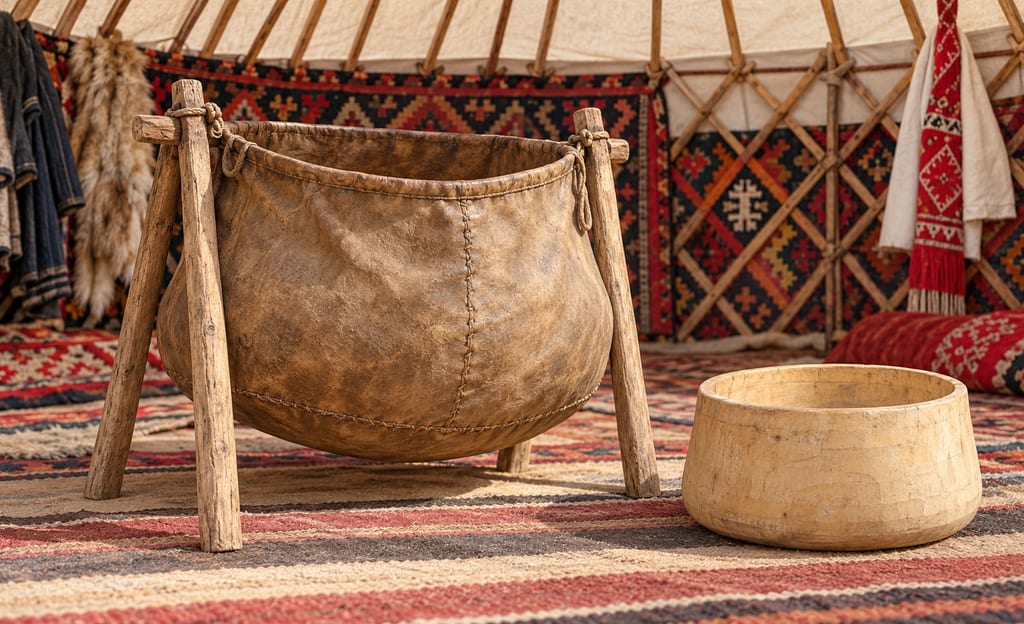
A Bashkir household account describes a large leather һаба for kumys, with one or two limewood tubs as alternatives; exact vessel dimensions and schedule are unspecified.
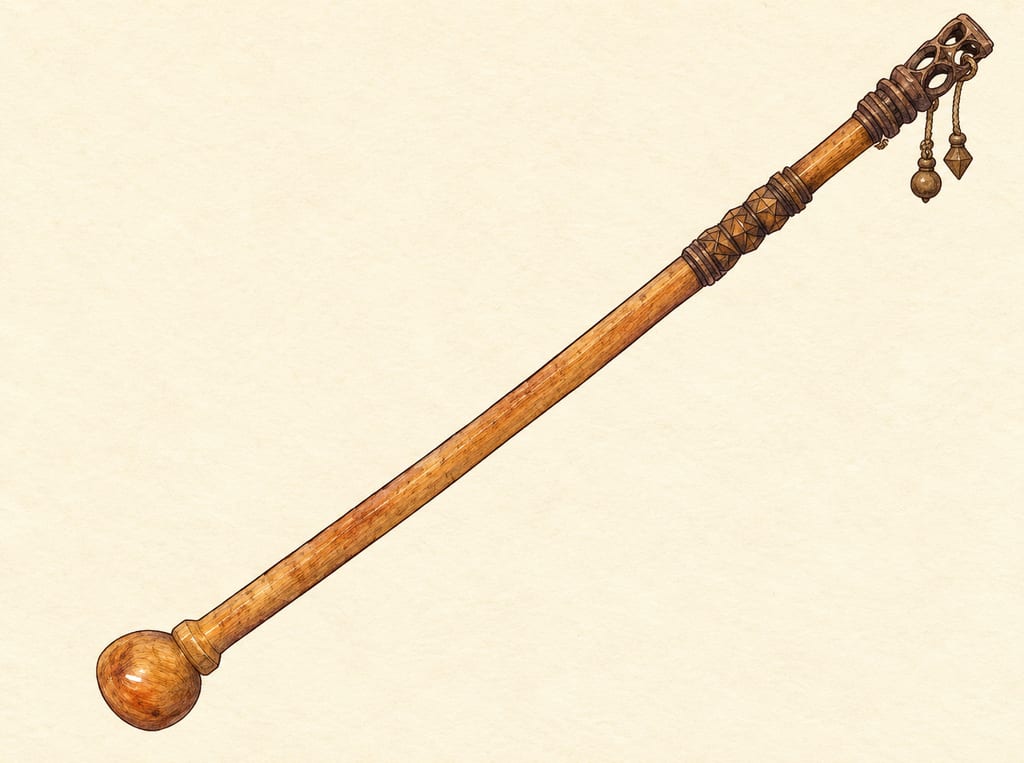
The Sakha hamnatar (хамнатар), also called bülüür (бүлүүр), is a two-part wooden implement for agitating kumys: a carved handle joined to an openwork cap, used through a funnel into the vessel.
No community contributions have been published for this entry yet.
Sign in to contribute. Published comments and photos are free to read.
Cambridge University LibraryUse · History · Materials
Alena Lidzhieva, Kalmyk CuisineA 2015 interview recalls sheep slaughtered in summer; meat cut into long strips, dipped in salty water, dried on a rope, packed into calfskin bags, and eaten in winter.
The interview gives no bag dimensions, capacity, construction, maintenance, or dated start/end for this practice.
The same interview separately describes kyur using salted meat inside a sewn sheep skin, cooked in a fire-heated pit; that cooking skin is distinct from the calfskin storage bag.
Cited in: A winter store for dried meat; What the material record does and does not establish; Storage bag, not the cooking skin
Kalmyk Cultural Heritage Documentation Project, University of CambridgeMaterials · History
Kalmyk: LeatherworkThe project describes Kalmyk leatherworking broadly, including pelt cleaning, drying, treatment with salty liquid and sour whey for several days, further cleaning, drying and softening.
It says parts of large livestock skins were used for various bags and containers; it does not identify the treatment or construction of the calfskin meat-storage bags in Lidzhieva’s interview.
Cited in: What the material record does and does not establish
Field Museum of Natural HistoryComparison · Visual reference
Ethnographic Collections from the Assiniboine and Yanktonai Sioux in the Field Museum of Natural HistoryA Field Museum catalogue documents two Assiniboine bags made from whole buffalo-fetus skins; a handwritten accession list identifies one as a dried-meat storage bag, illustrated as figure 3b.
This is a different people and material context from the Kalmyk calfskin bags; it does not establish their form or construction.
Cited in: What the material record does and does not establish