A Sakha tool for agitating kumys
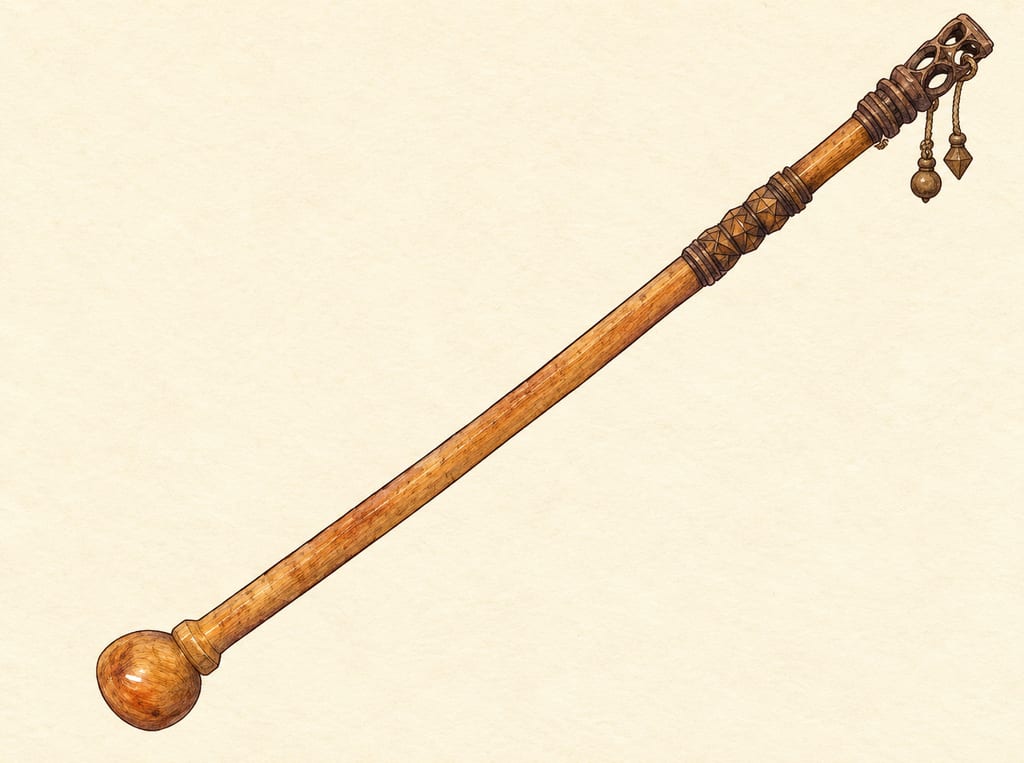
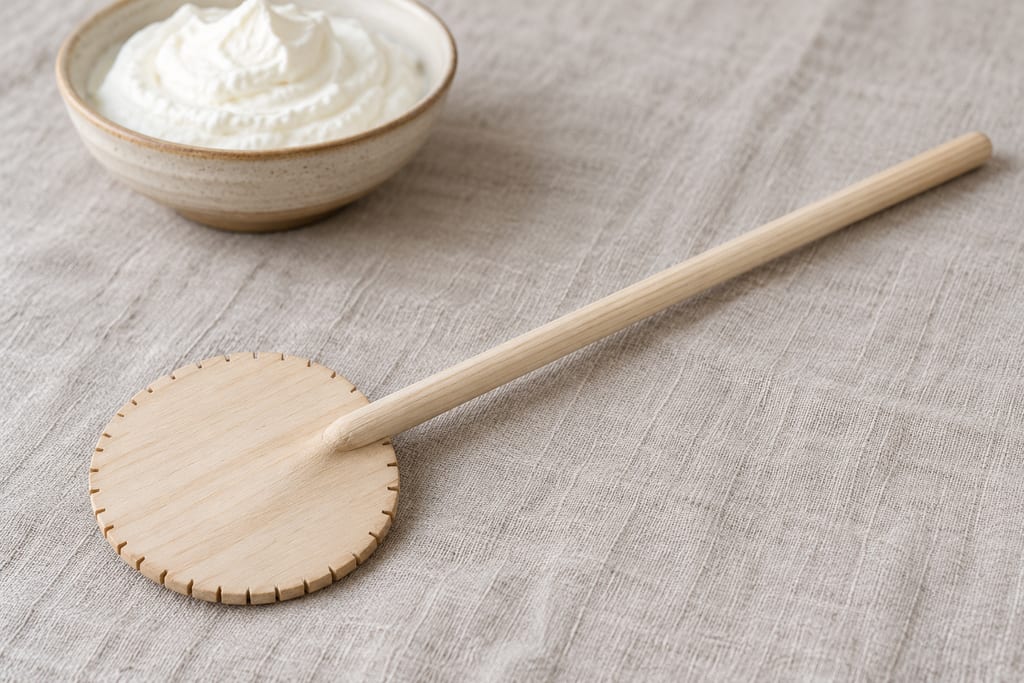
The hamnatar (хамнатар), also named bülüür (бүлүүр) in the Yakut State Museum's account, is a wooden implement used to agitate kumys. Its form sets it apart from the flat round ytyk used to aerate kuorchekh: the museum describes a carved handle joined to a cap with pierced figurative openings. The named tool is specific to kumys work in the Sakha record, rather than a generic whisk or cream-beating paddle.
The museum's image of the hamnatar is a visual record of a particular artifact, while its text gives the name and construction details. The article does not supply dimensions, species of wood, an inventory number or a date for this implement. It is best read as a documented Sakha form, not a universal design for all kumys stirring tools.
Sources for this section
Handle, openwork cap and ornament
The hamnatar has two named components: a carved handle and a cap pierced with figured openings. The handle is described as richly decorated with geometric patterns and hung with copper or silver pendants. These details make the utensil visibly different from a plain wooden paddle; they belong to the museum's description of the Sakha object, not a template for all historical dairy tools.
The museum also describes a funnel, köŋkölöy, inserted at the mouth of a leather kumys vessel and says the hamnatar was put through that funnel. The funnel could be made from birch wood or birch bark and shaped like a horse hoof, with an ornamented flared rim. This explains how the long implement and vessel opening worked together in the described setup. The funnel is separate equipment, not part of the hamnatar.
Sources for this section
Agitation during kumys preparation
Agitating milk is a repeated physical action within kumys preparation. The museum directly describes the hamnatar as a tool for shaking kumys. A 2005 presentation of A. A. Savvin's ethnographic work also reproduces a historical account by G. F. Miller: horse milk and old kumys starter were put into a leather vessel and stirred frequently with a wooden paddle while fermentation developed. Savvin's article separately describes strong repeated agitation with a special mutovka in Yakut kumys making.
These passages support the importance of movement in the historical process, but do not establish that Miller's generic paddle was the same named artifact as the hamnatar. Nor do they specify a number of strokes, a fixed rhythm or one universal vessel-and-tool combination. This page records the implement and documented function; the recipe remains the place for method details.
Sources for this section
Regional record and limits of the evidence
The named hamnatar/bülüür belongs to a Sakha account of kumys vessels and implements. The museum article places its description alongside historical research and images of Sakha household and ceremonial dairy objects, but does not date the surviving figure-5 artifact or identify a first written mention of the whisk. The 2005 article based on Savvin places repeated agitation in a longer account of Yakut kumys while keeping the named hamnatar's exact construction tied to the museum description.
No source consulted identifies a contemporary maker, present-day price, purchase route, cleaning method or storage protocol for this particular implement. It would be speculation to assign timber species or dimensions from the photograph. Its supported identity is narrower and clearer: a two-part wooden Sakha kumys agitator with a carved handle, openwork cap and documented geometric ornament.
Sources for this section
History
The Yakut State Museum documents the hamnatar/bülüür in Sakha kumys preparation and describes its carved two-part form. A. A. Savvin's 2005 ethnography presentation reproduces an older account of a wooden paddle used to stir horse milk, but does not name that paddle hamnatar.
Equipment details
How you get oneNot established The sources provide historical and museum documentation, but do not establish a current maker, market availability or a method for commissioning a hamnatar.
CareThe museum and historical sources consulted do not give a cleaning, drying, repair or storage protocol. No particular treatment can be recommended from those descriptions.
Made of
- Wood — Carved handle and openwork cap
The museum describes a two-part carved wooden utensil; it does not identify the wood species. - Copper or silver — Small pendants on the handle
The museum names copper or silver pendants as ornament; it does not specify one metal for every specimen.
Limits
The museum describes hamnatar for kumys agitation through a funnel. Its two-part openwork form distinguishes it from the flat round notched ytyk used to whip kuorchekh.
Source →Places
Sakha Republic (Yakutia)
Traditional use · Region evidenceThe museum documents the named hamnatar in Sakha kumys production; the Savvin-based historical account provides wider stirring context but does not identify its wooden paddle as a hamnatar.