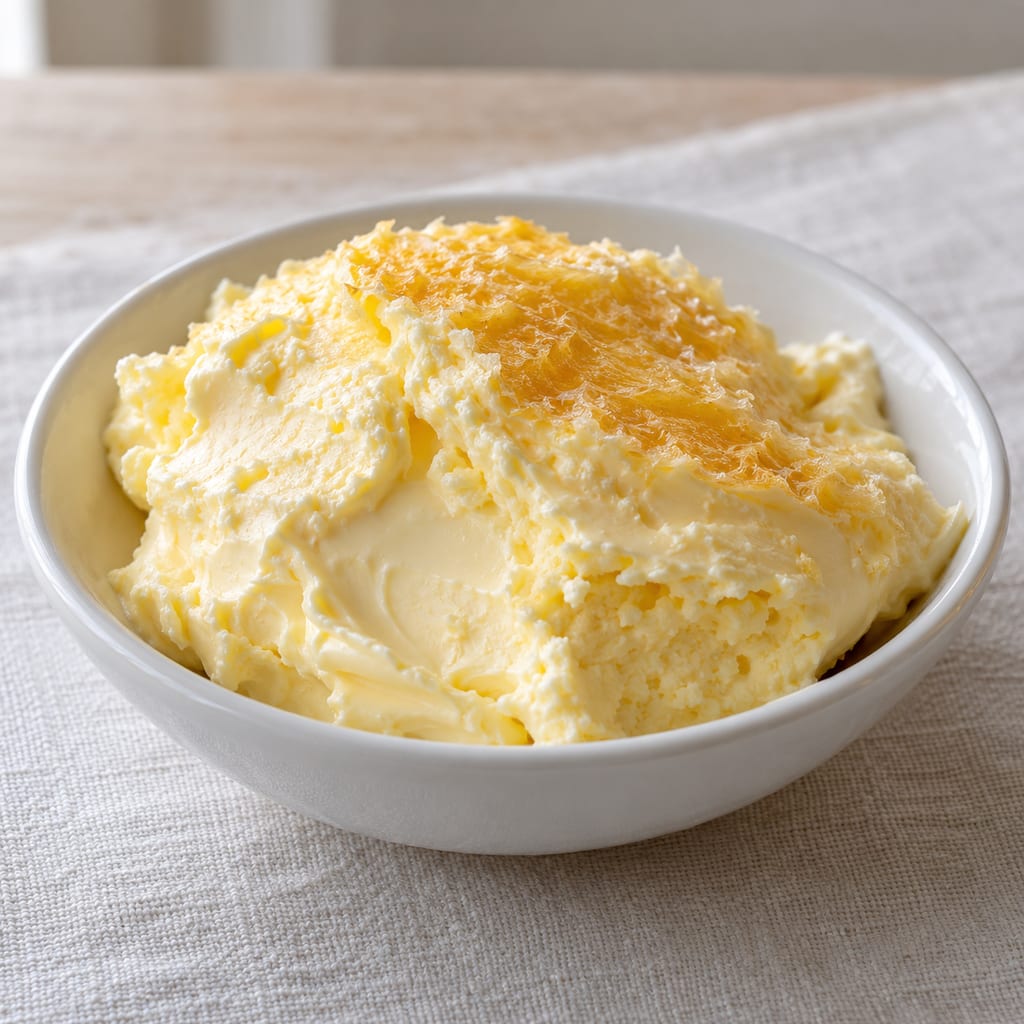
Clotted cream (Cornish style)
High-fat cream scalded below boiling for at least an hour until a thick crust forms, then cooled hard so the crust sets and the cream beneath thickens.
 FermenteaWhere food goes to change
Built structures · All-in-one appliances
slow-cooker double boiler
Water in the crock with a smaller stainless pot or heat-safe jar supported inside it, so the food never touches the hot ceramic and can be lifted out to stop heating.
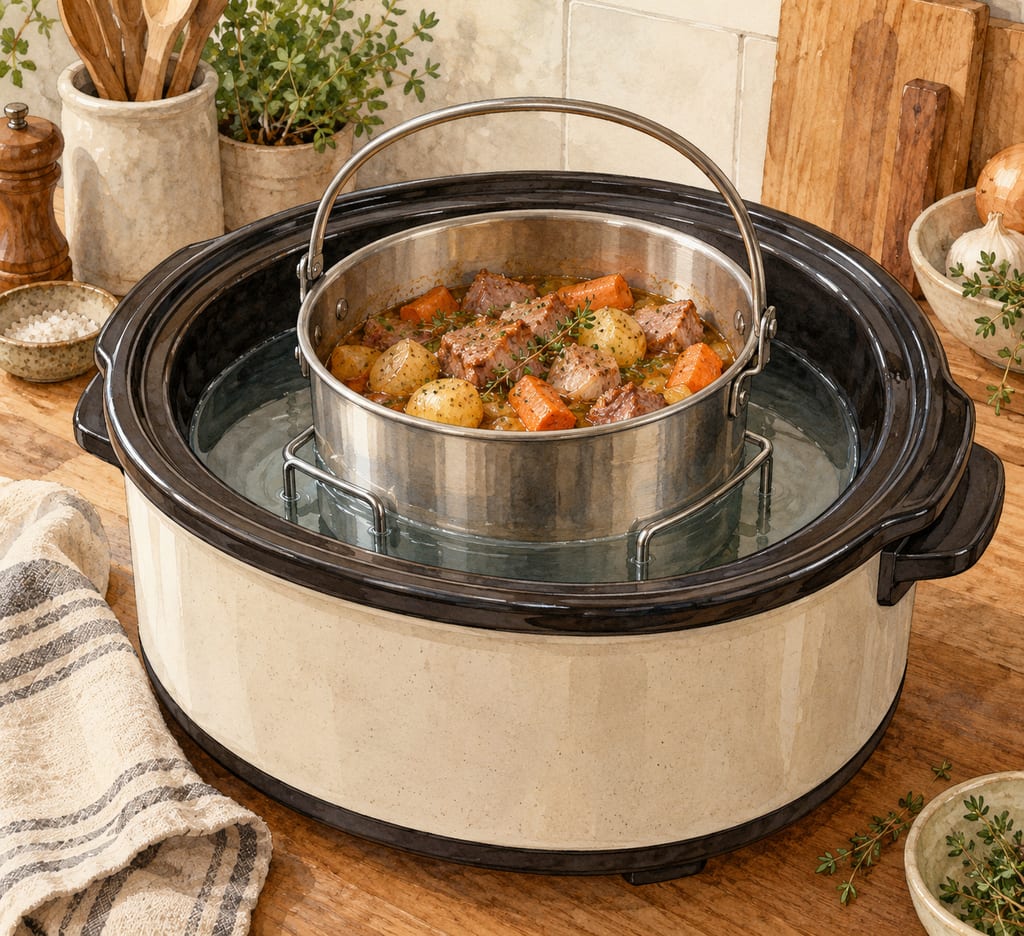
The crock becomes a double boiler. The water spreads heat around the inner pot and buffers the hot wall, and the pot can be lifted out in one move.
Food in a water bath cannot exceed the water temperature, and it approaches that temperature more slowly as the gap closes. The bath must run above the food's target, and the food must be lifted out when it arrives.
The extra water adds thermal mass. Heating is slower, but stored heat stays behind when the pot is lifted.
Precedents: Jim Wallace's Cheddar recipe calls a water bath in the sink the most stable way to warm milk. O'Connor's scamorza heats milk indirectly. Wallace's mascarpone uses a bowl over 2 to 3 inches of water. Tony Hamblyn's brewery uses the same principle at scale.
Mascarpone: replaces the pot of simmering water under the bowl; the bath must run above 185 to 190 °F.
Quark: initial warm-up to 86 °F, then the pot is lifted out to cool.
Ayib: holds buttermilk at a measured temperature.
Clotted cream: an open shallow dish warmed from below. Its surface behaviour is untested.
Run a water-only trial first, with the intended volumes: both temperatures against time on High, after switching off and after lifting the pot. Then measure the food temperature in a real batch.
This set-up is untested on any slow cooker. Whether a crock of water can bring an inner pot of milk to 85 to 90 °C is unknown, so paneer is a poor fit.
It is slower than direct heating. A float-free, stable support is required. A brewing false bottom or an improvised stand is not a rated support (reasoned).
The water-bath principle is documented in cheesemaking recipes and in a New Zealand brewery's scale version. The slow-cooker use is an adaptation, and no source tests it.
A build is made where it stands: moving it means building it again.
The booklet says stoneware will not withstand sudden temperature changes.
Hazard sourcePut water in the removable stoneware, never in the base, and keep the base out of the water.
Control sourceKeep the water within the manufacturer's fill range. Do not let the inner pot float, tip or rise.
Documented for international use, with no single place of origin assigned.
High-fat cream scalded below boiling for at least an hour until a thick crust forms, then cooled hard so the crust sets and the cream beneath thickens.
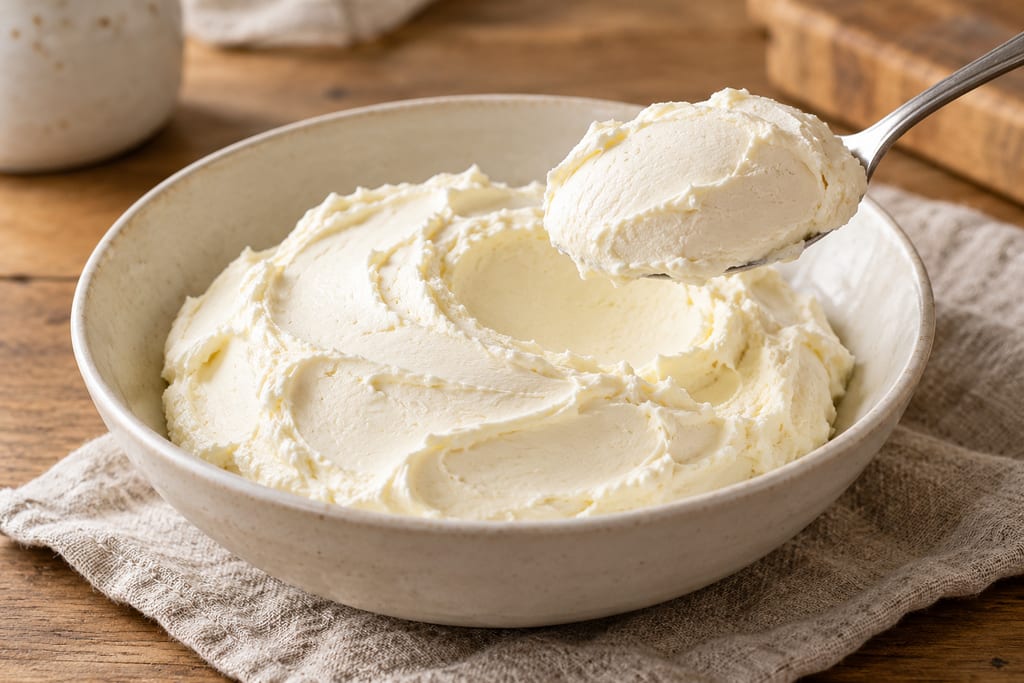
A rich fresh cheese made by heating milk and cream in a double boiler and setting them with tartaric acid, or by culturing them with a crème fraîche culture.
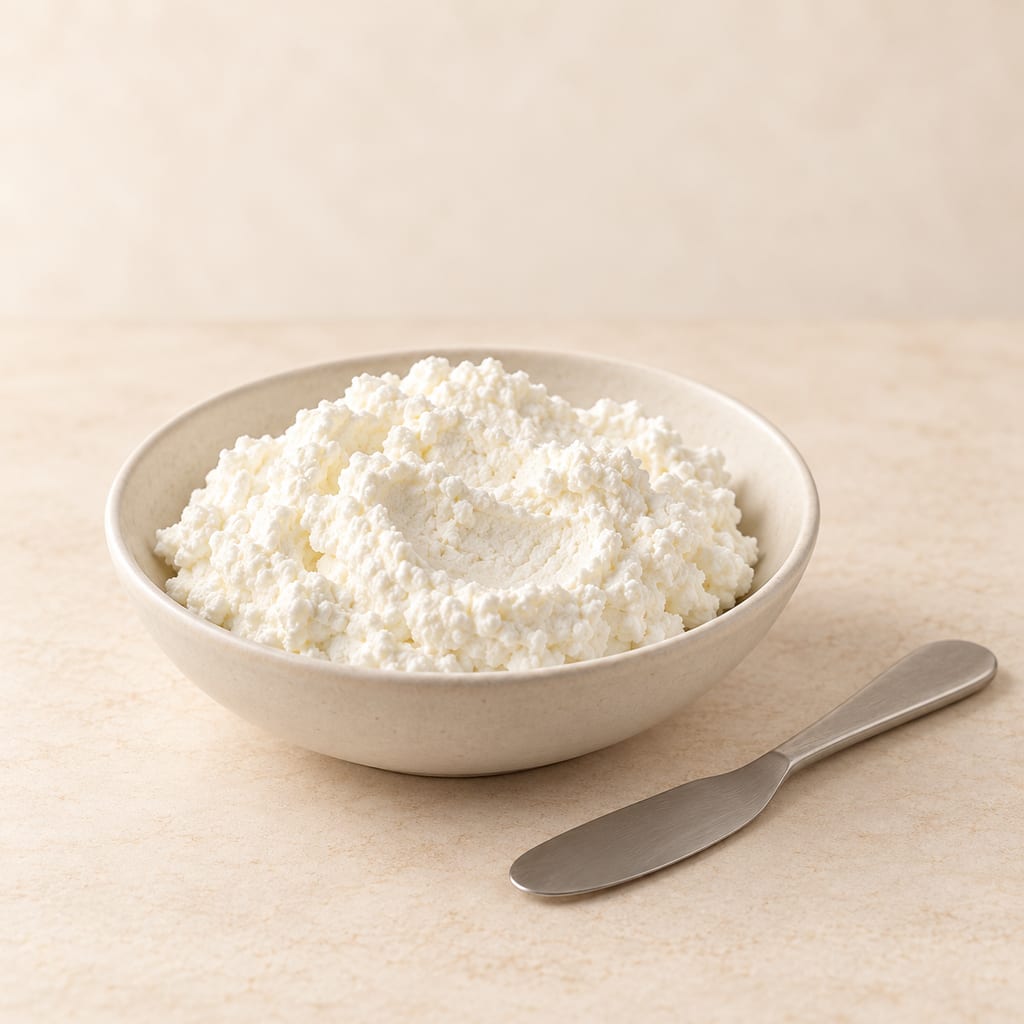
Quark is a soft, fresh curd cheese used in spreads and desserts. This small home batch sets milk with mesophilic culture and rennet before refrigerated drainage.
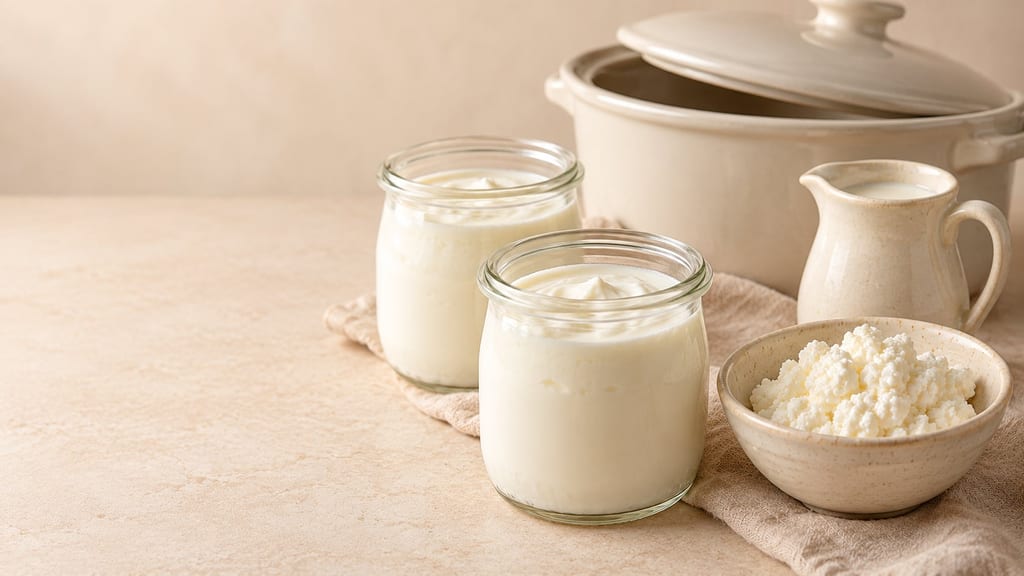
A slow cooker can heat milk for mozzarella, paneer, ricotta, mascarpone, quark and yogurt, but its heavy crock keeps heating after it is switched off. This is what each fresh cheese needs from it.

Soft, spreadable Calabrian pork sausage made with a great deal of red chilli and fatty pork, stuffed into natural casings, sometimes smoked and matured while staying soft.

A way to add independent temperature logging to an existing food dehydrator without changing its built-in controls or protections. It is a monitoring method, not a rewiring plan.

Pleurotus cystidiosus is the abalone mushroom, a cultivated oyster-type fungus with dark brown caps that grows more slowly and is more demanding than other Pleurotus species.

A dark, balanced vinegar from Emilia-Romagna made by combining cooked or concentrated grape must with wine vinegar, then acetifying and refining it in wood under a protected specification.

A living dairy inoculum that starts controlled cream fermentation, developing acidity and aroma before sour cream or cultured butter is finished.

A small electric incubator holds jars at a selected temperature for yogurt and other documented warm food preparations. Controls, capacity and vessel arrangement vary by model.

Adygean salt is a seasoned table salt associated with Adygea and the wider North Caucasian culinary tradition. Salt is blended with garlic and a variable selection of herbs and spices; the exact mix depends on the named style and maker.

The African Caesar-group mushroom, Amanita masasiensis, is a wild ectomycorrhizal species of central and southern African woodlands, eaten locally. The genus contains deadly poisonous species, so identification needs care.
No community contributions have been published for this entry yet.
Sign in to contribute. Published comments and photos are free to read.
Crock-Pot (Newell Brands)Method
Crock-Pot SCV400RD 3.5L Slow Cooker instruction bookletCited in: Measuring; Limits
New England Cheesemaking Supply CompanyDocumented use
Tony Hamblyn Cheesemaker in New ZealandCited in: How it works
New England Cheesemaking Supply CompanyMethod
Mascarpone Cheese Making RecipeCited in: Overview; How it works; Documented and proposed uses
New England Cheesemaking Supply CompanyMethod
Quark Cheese Making RecipeCited in: Documented and proposed uses
Defra / GOV.UKMethod
Cornish Clotted Cream product specificationCited in: Documented and proposed uses