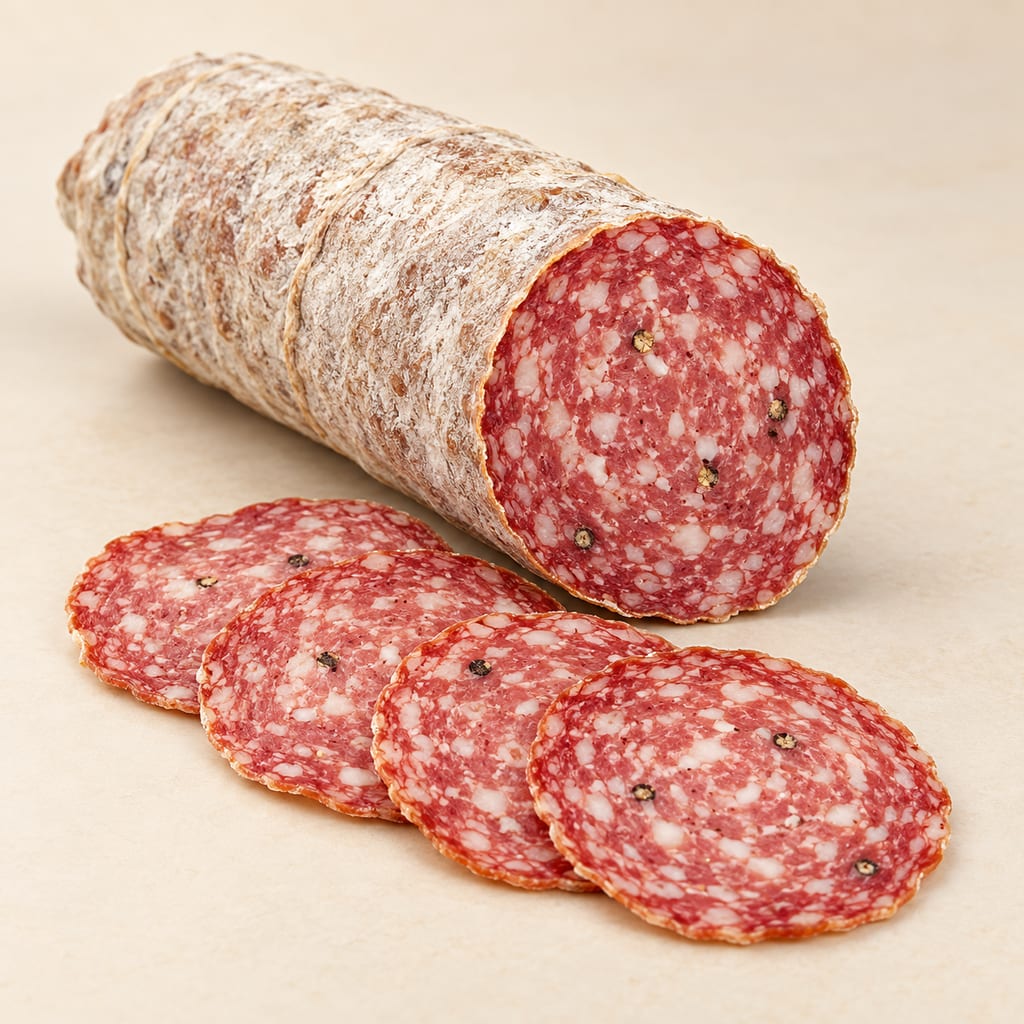
Genoa-style salami, red-wine method
Pork, beef and back fat ferment with a named starter, cure and red wine before the sausages dry in casings. This contemporary formula uses no wood-smoke stage.
 FermenteaWhere food goes to change
Substrates
Nonfat dry milk is pasteurized skim milk dried to a pale powder. It supplies milk solids in the linked salami recipe, which names it as a binder but does not establish a measured effect.
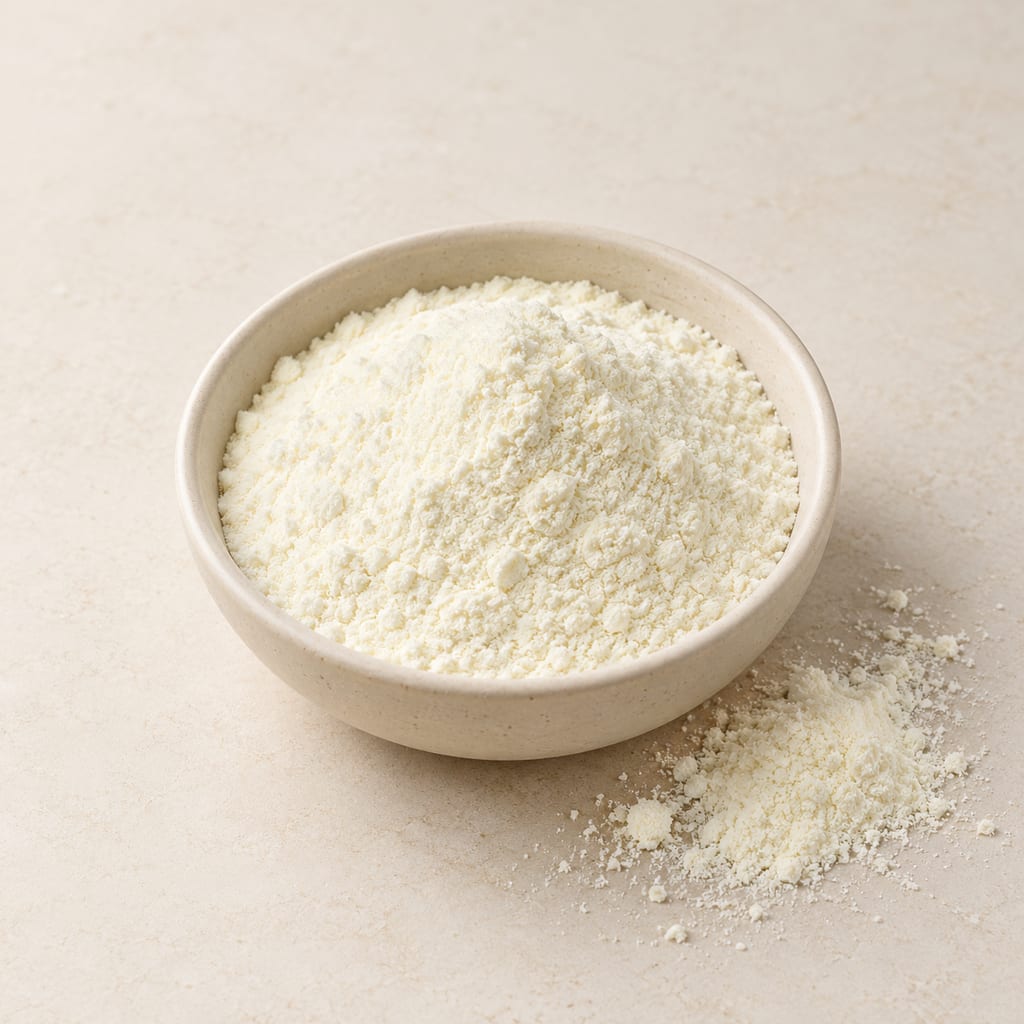
Nonfat dry milk is skim milk with most of its water removed. The result is a pale, fine powder that carries much of skim milk’s protein, milk sugar and minerals in a lighter, more compact form. It is often reconstituted as milk, but food makers also blend it straight into doughs, sauces, sweets and meat mixtures. In sausage making, the words “milk powder” can cover several different dairy ingredients; nonfat dry milk has a specific identity of its own.
The starting material is pasteurized skim milk. In the United States, the standard of identity defines nonfat dry milk as the product made by removing water from pasteurized skim milk. It may contain no more than 5 percent moisture and 1.5 percent milkfat. The definition matters: a bag labelled nonfat dry milk is not simply any white dairy powder. Whey powder comes from whey; caseinate is a concentrated milk protein ingredient; lactose is milk sugar isolated from dairy streams. They can all be powders and may each serve useful food functions, but they are not interchangeable identities.
Most skim-milk powder is spray-dried. Cream is first separated from milk, and the remaining skim milk is standardized and pasteurized. Manufacturers apply a further heat treatment, concentrate the milk by evaporation, and then dry the concentrate. In a spray dryer, the liquid is broken into very small droplets that meet hot air. Water evaporates rapidly; dry particles are separated from the outgoing air and receive any finishing treatment needed for the target moisture, flow and solubility. The rapid evaporation and small droplets allow continuous powder production, while concentration beforehand reduces the energy required to remove the remaining water in the dryer.
Drying serves two linked purposes. It reduces the water available for microbial growth, helping preserve the ingredient, and it reduces weight and volume for storage and transport. Low moisture does not mean sterile, nor does a dry powder stay unchanged under every condition. Water can be taken up again if the powder is exposed to damp air or liquid; dampness can cause clumping and spoilage. For storage, keep the package closed, cool and dry, and follow the supplier’s directions. A current sausage-making supplier recommends temperatures below 80°F and relative humidity below 65 percent for its particular product; those are supplier instructions for that SKU, not universal shelf-life limits.
Spray drying also shapes how the powder behaves when used. Regular, non-instant powder has smaller particles that can wet and disperse less readily; instant powder is agglomerated into larger clusters designed to wet more readily during reconstitution. These forms are chiefly practical differences in how easily powder mixes with liquid. A recipe that incorporates the dry powder directly into a meat mixture, as the Genoa salami recipe does, does not specify reconstitution or a required instant form.
The difference between regular and instant powder is easiest to see in a drink. One may float or leave dry pockets until it is stirred thoroughly; the other is made to wet readily. A dough or sausage mince distributes powder by mixing it with other ingredients instead. The form on the label should be read against that method of use, rather than treated as a different source of milk or an automatic reason to alter a recipe amount.
Removing water concentrates the milk’s solids rather than converting the powder into one purified component. Nonfat dry milk retains lactose, milk proteins and minerals in approximately the relative proportions found in the source milk. Typical skim-milk powders contain roughly one-half lactose, about one-third protein, mineral ash, a small amount of milkfat and a few percent moisture; exact composition varies by standard and product. The protein includes casein and whey proteins. This mix distinguishes the ingredient from sodium caseinate, which is mainly a particular milk protein salt, and from whey powder, which is made from the liquid left after milk coagulates during cheese making.
The powder’s production history can alter its functional properties. Low-, medium- and high-heat categories describe how much heat the skim milk received before or during concentration and drying. Heat can denature whey proteins: their structure changes, affecting how well they dissolve and how they behave in later food processes. Lower-heat powders tend to be more soluble; high-heat powders are less soluble but can be useful where greater water absorption is wanted. Instantization changes wetting behavior rather than changing the basic fact that the product is milk solids. These categories help manufacturers choose a powder for a particular use; they do not by themselves prescribe a choice for every recipe.
Reconstituted, nonfat dry milk can stand in for liquid skim milk when a process needs milk solids without transporting or storing the water. Powder is also added directly to foods. In baking it can add milk solids and contribute to browning, crumb texture and flavor. In desserts, sauces and formulated foods, it supplies a dairy base in a storable form. Dairy-industry references describe proteins and lactose as able to hold water or contribute to thickening in some systems. Milk proteins can also help stabilize fat-and-water mixtures by gathering at their interface. Such properties explain why dairy powders appear in many processed foods, but their effect depends on the specific formula, treatment and conditions.
The same mixture of lactose and protein gives the powder several distinct jobs in sweets. In a nougat center, milk proteins can help surround and hold air bubbles while milk solids lend a soft dairy flavour; lactose and proteins also help determine how water and sugar behave as the center sets. In a caramel, lactose and amino groups in the proteins take part in browning reactions during cooking. In milk chocolate, the powder supplies a dairy taste and contributes to the smooth body expected of that food. These are different roles in different systems, even though the bag of powder may look the same at the start.
Fermented dairy foods use it differently again. Adding skim-milk powder to yogurt or cultured skim milk increases milk solids before the culture grows; the extra casein and whey proteins become part of the finished body. Frozen dairy desserts use the powder to set a ratio of milk solids to fat and to help stabilize air introduced during freezing. A dry cocoa mix relies instead on easy storage and a creamy drink after water is added. These examples explain why a cook should think of the powder as milk solids with several working components, not as an anonymous white thickener. They do not establish the same effect in the uncooked salami below.
References for cooked sausages and meat emulsions are narrower than a general claim that powder “binds” any sausage. In a heated meat emulsion, proteins, fat and water are comminuted and then cooked; heat changes the proteins and sets the structure. Functional results from that system cannot simply be carried across to a raw, fermented sausage that acidifies and dries. A supplier may describe a particular high-heat nonfat dry milk as improving moisture retention in sausage, but that is a product claim, not a controlled finding for every formulation.
In the Genoa salami formula by 2 Guys & A Cooler, 15 g of non-fat dry milk is included for each kilogram of meat and fat. The author calls it a “binder” and adds it with the seasonings, curing salt, wine and starter culture to the chilled ground meat, mixing until the mince becomes tacky. The recipe links its ingredient name to a supplier listing that currently describes a Grade A high-heat nonfat dry milk; that page can change over time and does not establish the exact batch of powder the author used. The recipe-specific evidence identifies the amount and where it enters the method. It does not quantify a water-binding effect, compare the finished sausage with a version made without milk powder, or establish a fermentation outcome.
Milk powder contains lactose, a sugar that some microorganisms can use, but the presence of lactose alone does not show that a particular sausage culture will consume it. The recipe also supplies dextrose and names a starter culture. Without a study of that culture in this formulation, it would be guesswork to credit the milk powder with feeding fermentation, slowing acidification or changing the final pH. Similarly, the fact that the dry sausage loses water during drying does not prove the powder controls water activity or makes the finished meat safe. The recipe’s reported process is not a substitute for validated controls for producing ready-to-eat fermented meat.
Drying milk solids makes dairy easier to transport and store, but accounts of early dried milk and the origins of modern milk powder vary in reliability. The evidence reviewed here does not support a confident single inventor or a precise start date for the product. A more specific, dated trace comes from British sausage regulation: in a 1951 House of Commons debate, a government minister said manufacturers had requested restoration of a prewar practice of adding milk powder to some meat products. The debate also discussed what counted as milk powder and the rules for how it affected declared meat content.
That record shows that some British sausage makers used milk powder before the war and that its use remained a live commercial and regulatory question in 1951. It does not show that the practice was universal, that the sausage was fermented or air-dried, or that modern Genoa salami descended from that use. A speaker in the same debate referred second-hand to 1933–34 work at the Smithfield Institute on pork sausages, but the original study was not located here. Its reported finding should not be repeated as established science, especially not as a claim about dry-fermented salami.
Look for a product actually identified as nonfat dry milk or, in markets using international terminology, skim milk powder, and check its ingredient declaration. Products sold under broader names can include standardized milk ingredients or blends, while a sausage recipe may intend one specific powder. High-heat and low-heat descriptions signal different prior heat treatment and solubility, not a guarantee that one will improve every sausage. A current U.S. sausage-supply listing identifies its item as Grade A high-heat nonfat dry milk and notes that it is made from cow’s milk; this describes that item only and does not establish what the Genoa recipe’s author used.
Keep powder protected from moisture in a closed container and use the product within its own packaging guidance. If reconstituting it as milk, use clean water and follow directions for the intended food. Once mixed with water, it is no longer a dry shelf-stable powder and should be handled as a perishable dairy food. Do not assign a universal storage duration from the ingredient name alone: packaging, processing and storage conditions differ.
Nonfat dry milk contains milk proteins and is a milk allergen. It is unsuitable for a person with a milk allergy. Milk allergy and lactose intolerance are different conditions; this ingredient still contains lactose, and individual dietary needs require their own guidance. In the salami recipe, the milk ingredient should remain explicit so readers can see it before preparing or serving the food.
milk
The source recipe does not identify the milk origin or exact powder producer; a currently linked supplier SKU is not proof of its batch.
Pork, beef and back fat ferment with a named starter, cure and red wine before the sausages dry in casings. This contemporary formula uses no wood-smoke stage.
No community contributions have been published for this entry yet.
Sign in to contribute. Published comments and photos are free to read.
U.S. Electronic Code of Federal RegulationsIngredient context · Process
21 CFR §131.125: Nonfat dry milkCurrent U.S. standard: water removed from pasteurized skim milk, moisture and fat limits.
Cited in: From skim milk to powder; What remains in the ingredient; Choosing, storing and handling
U.S. House Office of Law Revision CounselIngredient context · Process
21 U.S.C. §321c: Nonfat dry milkLactose, proteins and minerals retained in source-milk proportions.
Cited in: From skim milk to powder
Tetra Pak Dairy Processing HandbookIngredient context · Process
Milk and Whey Powdered IngredientsMilk separation, concentration, spray drying, heat classes, instantization and storage principles.
Cited in: What remains in the ingredient; A versatile dairy ingredient, with limits
Canadian Dairy CommissionIngredient context · Process
Skim Milk PowderTypical composition, food uses, functional roles and storage; Canadian context.
Cited in: From skim milk to powder; What remains in the ingredient; A versatile dairy ingredient, with limits; Choosing, storing and handling
USDA Agricultural Marketing ServiceIngredient context · Process
Nonfat Dry Milk (Spray Process) Grades and StandardsSpray-process grades and quality distinctions.
2 Guys & A CoolerIngredient context · Process
Genoa Salami15 g nonfat dry milk per 1 kg meat/fat and mixing stage; recipe calls it binder.
Cited in: Choosing, storing and handling
The Sausage MakerIngredient context · Process
Non-Fat Dry Milk, 1 lb. 8 oz.Current linked SKU claims Grade A high-heat nonfat dry milk, storage directions and milk allergen; not proof of exact recipe lot.
Cited in: What remains in the ingredient; Choosing, storing and handling
UK Parliament HansardIngredient context · Process
Sausages (Meat Content), House of Commons debate1951 debate describes some prewar sausage use of milk powder, not a fermented-salami origin.
Cited in: A short historical record
U.S. Food and Drug AdministrationIngredient context · Process
Food Allergies: What You Need to KnowMilk is a major allergen; not a complete sausage-label determination.
Cited in: Choosing, storing and handling