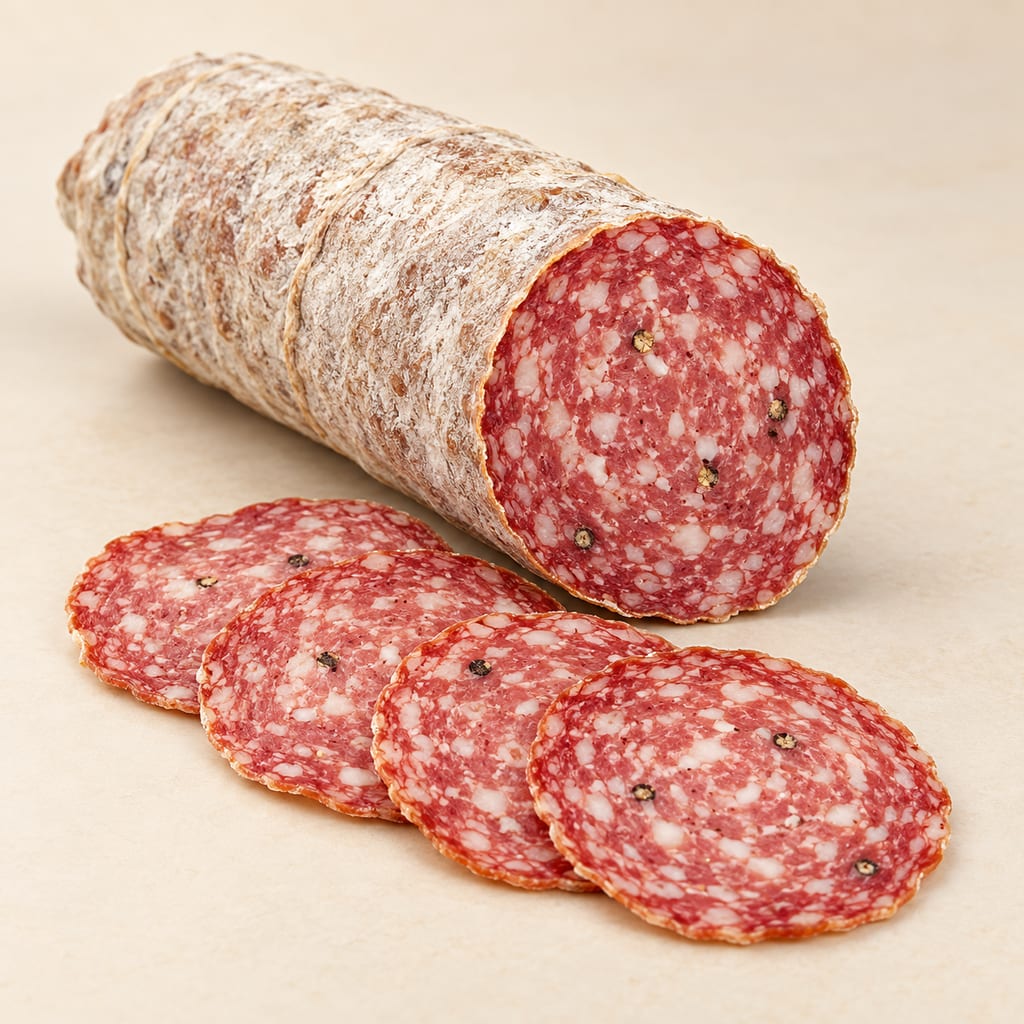
Genoa-style salami, red-wine method
Pork, beef and back fat ferment with a named starter, cure and red wine before the sausages dry in casings. This contemporary formula uses no wood-smoke stage.
 FermenteaWhere food goes to change
Substrates
Lean beef is the trimmed muscle of cattle, Bos taurus and Bos indicus. In Genoa-style salami it is the second lean meat beside pork, ground fine, with pork back fat added separately.
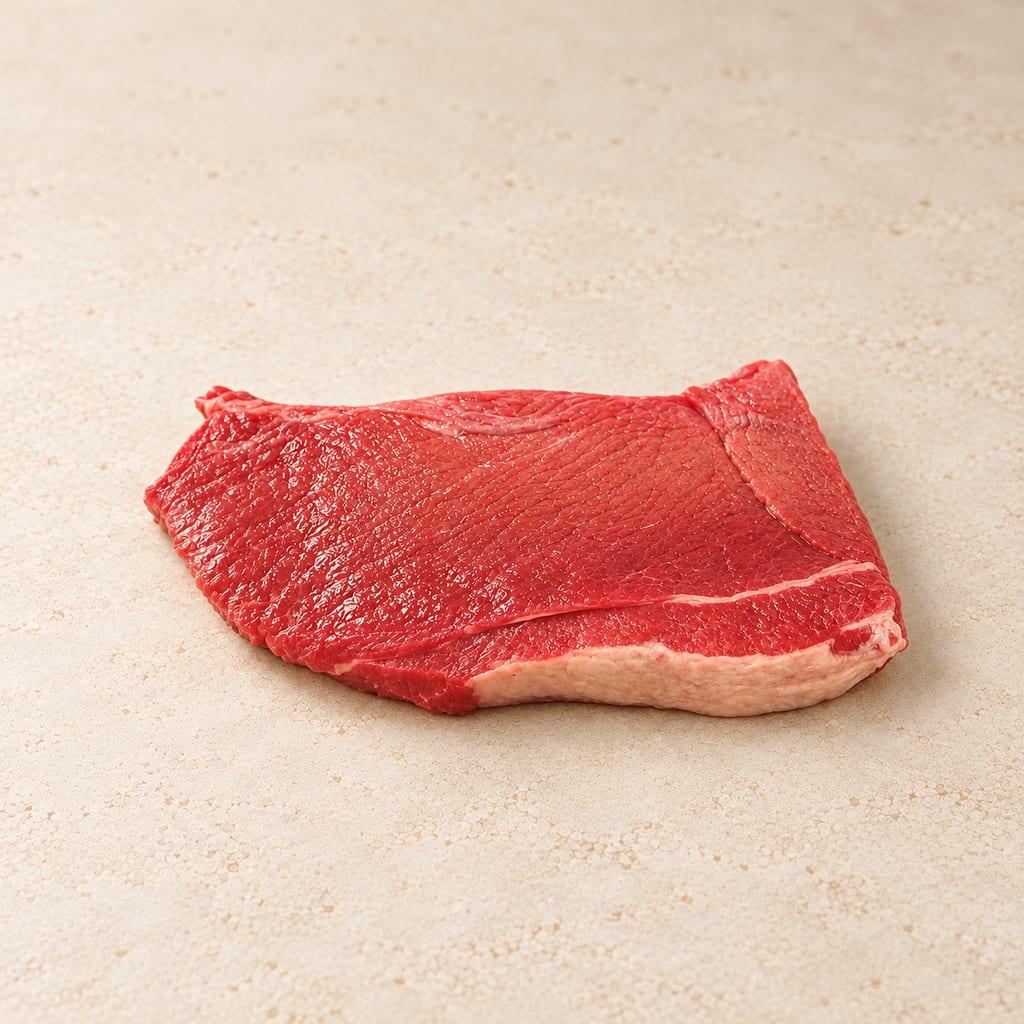
Beef is the meat of domestic cattle, and cattle are two animals under one name. The taurine cattle, Bos taurus, were domesticated in the Fertile Crescent; the humped zebu or indicine cattle, Bos indicus (treated by geneticists as Bos taurus indicus), come from a separate domestication in the Indus valley. The split between the two is the largest source of variation in the genomes of cattle today. A third group, the African taurines, carry a large share of ancestry from wild African aurochs, the wild ancestor of cattle. Early farmers took their herds with them as they spread, and the breeds of the world are a record of those journeys: Shorthorn cattle shaped many European breeds, Iberian and Italian cattle carry African taurine ancestry, and the Criollo cattle of the Americas came from Iberia, with indicine blood added later in the Americas.
Beef is now a major commodity. FAOSTAT records 69.7 million tonnes of cattle meat in 2024, up from 27.7 million tonnes in 1961, with the United States producing 12.3 million tonnes, Brazil 10.2 million, China 7.0 million, Argentina 3.2 million and Australia 2.6 million. What a cook buys as lean beef is a small part of that carcass: the trimmed muscle from the large cuts, with the fat and sinew taken away.
Dry sausage is a pork tradition with a beef side. In the hills behind Genoa, the salame di Sant’Olcese is made from coarsely ground pork and beef in equal proportions and aged for two to three months. It was first produced at Orero, which belonged to Sant’Olcese until 1877, and industrial production began in the early nineteenth century. The Parodi salumificio at Sant’Olcese traces its history to the middle of the nineteenth century, when Luigi Parodi, born in 1830, began making the salami; his son Federico founded the present business in 1908, and the firm works with pork and beef and also sells an all-pork variant.
The Genoa-style formula behind this ingredient is 400 grams of lean pork, 400 grams of lean beef and 200 grams of pork back fat to the kilogram, a 40/40/20 split in which the beef is half of the lean meat. Beef also anchors entirely different sausage traditions: all-beef dry sausages and the beef soujouk are made with beef as the only lean meat and beef fat or the fat of the zebu hump as the fat.
In the mix beef is the second lean meat: its muscle proteins bind the sausage as pork’s do, and it brings little fat of its own, so the maker sets the fat separately with pork back fat. The beef in the Genoa-style recipe is ground through a finer plate than the pork and fat, 3 or 4.5 millimetres against 10, with the sinew and silver skin trimmed away first, so the beef ends up as the fine part of a coarse salami.
Lean beef is cattle muscle with most of its fat trimmed away. The word names a condition, not a cut: round, a trimmed shoulder or the lean part of a carcass can all be lean. Meat processors work with practical grades. Meat I is fairly uniform pieces trimmed of connective tissue with about 8 percent visible fatty tissue, cut from the large primal cuts, mostly of the hindquarter. Meat II is irregular pieces partly trimmed of connective tissue with about 15 percent visible fat, mostly from the forequarter. Lean trimmings, small irregular pieces with about 25 percent fatty and connective tissue, and fatty trimmings, with about 50 percent, come after them. Beef for a recipe that asks for lean beef is, in these terms, something near Meat I or Meat II.
A beef carcass is divided into large primal cuts. The forequarter yields the chuck, shank, brisket, plate and rib, and the hindquarter the flank, loin and round. The hindquarter holds more of the tender cuts and so is in greater demand and returns higher prices. Poor-quality meat is normally kept for further processing, while thicker-fleshed, higher-quality carcasses go to the shop as steaks and roasts. Good beef is bright cherry-red, firm to the touch and fine in texture, with a little marbling; a cut for sausage is taken from the same carcass but chosen for its lean content.
Meat is mostly three soft tissues of the carcass: muscle, mainly skeletal and between 30 and 65 percent of the carcass, fatty tissue, between 10 and 45 percent, and connective tissue. The structural unit of muscle is the fibre, a long cell that makes up 72 to 92 percent of the muscle’s volume and is built from bundles of myofibrils. The filaments inside them consist almost wholly of two proteins, actin (the thin filament, 20 to 25 percent) and myosin (the thick filament, 50 to 55 percent). Although they make up only about 7 percent of the weight of the muscle, they largely decide one of the most important properties of meat in processing: its ability to hold water and to bind added water.
Connective tissue runs through everything, from tendons to the sheaths around muscle bundles. Its fibres are collagen, reticulin and elastin, and collagen makes up 20 to 25 percent of the total protein and has the main, negative, influence on tenderness. That is why a recipe asks for the sinew and the silver skin, the thin tough membrane on the surface of many cuts, to be cut away: they do not mince into a tender bite. Fat sits between the bundles of a muscle (intramuscular), in the spaces between muscles (intermuscular) and under the skin. Lean beef, in practice, is muscle from which the outer and intermuscular fat has been trimmed, leaving the fine intramuscular fat that cannot be separated.
Fat takes the place of water in beef. Raw top round roast, boneless, separable lean only and trimmed of fat, is 73.3 grams of water, 23.7 grams of protein and 2.41 grams of fat per 100 grams, with 123 kilocalories, 63 milligrams of cholesterol, 2.34 milligrams of iron, 3.54 milligrams of zinc and 1.62 micrograms of vitamin B12. Raw ground beef sold as 95 percent lean is 73.2 grams of water, 21.4 grams of protein and 5.0 grams of fat; the same raw product sold as 80 percent lean is 61.9 grams of water, 17.2 grams of protein and 20.0 grams of fat. Each step up in fat is a step down in water and protein. Beef contains no carbohydrate to speak of.
The raw materials of sausage show the same pattern. Meat I contains about 71 percent water, 10 percent fat and 19 percent protein; Meat II 63 percent water, 20 percent fat and 17 percent protein; lean trimmings 53 percent water, 33 percent fat and 12 percent protein. Pork back fat is 8 percent water and 90 percent fat, and external beef fat is 27 percent water and 67 percent fat. The proportions matter in a sausage because the water and protein of the lean meat carry the binding, the acidification and the drying, while the fat gives richness and a soft slice.
In a dry sausage the meat is the substrate. A dry sausage is coarsely chopped, depends on bacterial fermentation and is never cooked; in general it is two-thirds meat and one-third fatty tissue, with curing agents and spices added. Salt, at 28 to 37 grams per kilogram, keeps down many unwanted aerobic bacteria, favours salt-tolerant ones and extracts the salt-soluble proteins, actin and myosin among them, which form a protein gel that binds the pieces and gives the finished sausage its sliceability. Sugar, most commonly dextrose at 8 to 10 grams per kilogram, speeds acidification by lactic acid bacteria, and the pH usually falls to between 4.8 and 5.4. Nitrite is indispensable for the cured colour, and low pH, low water and high salt together extend the shelf-life of a product that is never cooked.
The raw meat has to be in good condition to begin with. Beef for dry sausage should start at pH 6.0 or lower (pork at 5.8 or lower), be well chilled at -1 to 0°C or frozen, with fat colder still. Soft trimmings are not used. Frozen meat is thawed for 48 hours on slanting racks so that the drip runs off, and meat and fat are held at -2 to 5°C during chopping so that fat does not smear on the knives and the filler. Smeared fat coats the inside of the casing, lowers its porosity and makes smoking, drying and ripening harder.
Where beef is the principal meat, a separate fat is added to it. A dry beef sausage in the standard composition table is 74 percent beef of first and second quality with 10.5 percent external beef fat and 10 percent zebu hump fat; a beef soujouk is 86 percent beef with 5 percent each of external fat and hump. A salami in the same table is 67 percent pork with 28 percent pork back fat. In every case the lean beef is the muscle and the fat is chosen on its own.
In the United States, a meat product may be called lean on its label when it contains less than 10 grams of fat, 4.5 grams or less of saturated fat and less than 95 milligrams of cholesterol per 100 grams, and extra lean when it contains less than 5 grams of fat, less than 2 grams of saturated fat and less than 95 milligrams of cholesterol per 100 grams. Ground or chopped beef may not contain more than 30 percent fat and may not contain added water, phosphates, binders or extenders, and a package of ground beef may carry a lean-percentage statement provided a fat-percentage statement appears with it. These are labelling and standard-of-identity rules for products sold to consumers; they do not say how much fat a sausage maker should leave in a raw mix, and a butcher’s lean on a cut is not covered by them.
For sausage, choose beef from a source that can say what the meat is: pieces of uniform size and shape, trimmed of sinew and most visible fat, firm to the touch and a bright, even red. Colour is an ordinary guide to freshness and quality; it does not establish safety. Meat from an animal that was exhausted or stressed before slaughter can be dark, firm and dry, a condition called DFD, found in beef and pork. It holds water well but spoils very quickly because its high pH and dry surface favour bacterial growth.
Cold is the second most important requirement after cleanliness. Lean beef stored at 0°C reaches the slime stage after 8 days when the starting bacterial count is 100,000 organisms per square centimetre, 10 days at 10,000, 13 days at 1,000, 15 days at 100 and 18 days at 10. Storage temperature matters as much: slime develops after about 10 days at 0°C, 7 at 1°C, 4 at 3°C, 3 at 5°C, 2 at 10°C and 1 at 16°C. Meat spoils on the surface first, with off-odours at around a million bacteria per square centimetre and slime at a hundred million, and the spoilage bacteria that grow at refrigerator temperatures are mainly aerobic Pseudomonas species. The bacteria that cause food poisoning grow best at warmer temperatures, so keeping meat below 10°C offers good protection; under ideal conditions they can double every 20 minutes, and a single cell becomes a million in under seven hours.
Vacuum packaging gives an oxygen-free atmosphere and can extend the refrigerated shelf-life of a primal cut by as much as two or three months. Spoilage bacteria that need oxygen grow on the surface of meat, and minced meat exposes far more surface than a joint. Beef is not among the major food allergens in US law, which are milk, egg, fish, crustacean shellfish, tree nuts, wheat, peanuts, soybeans and sesame.
The breed, cut and origin of the beef in the Genoa-style recipe are not recorded, and the date when beef first entered Ligurian salami is not documented; the earliest evidence is of nineteenth-century production at Sant’Olcese.
Home of the pork-and-beef salame genovese di Sant’Olcese; the beef’s own origin is not recorded.
One of the two centres of cattle domestication, for taurine cattle, Bos taurus.
The second centre of cattle domestication, for zebu or indicine cattle, Bos indicus.
Pork, beef and back fat ferment with a named starter, cure and red wine before the sausages dry in casings. This contemporary formula uses no wood-smoke stage.
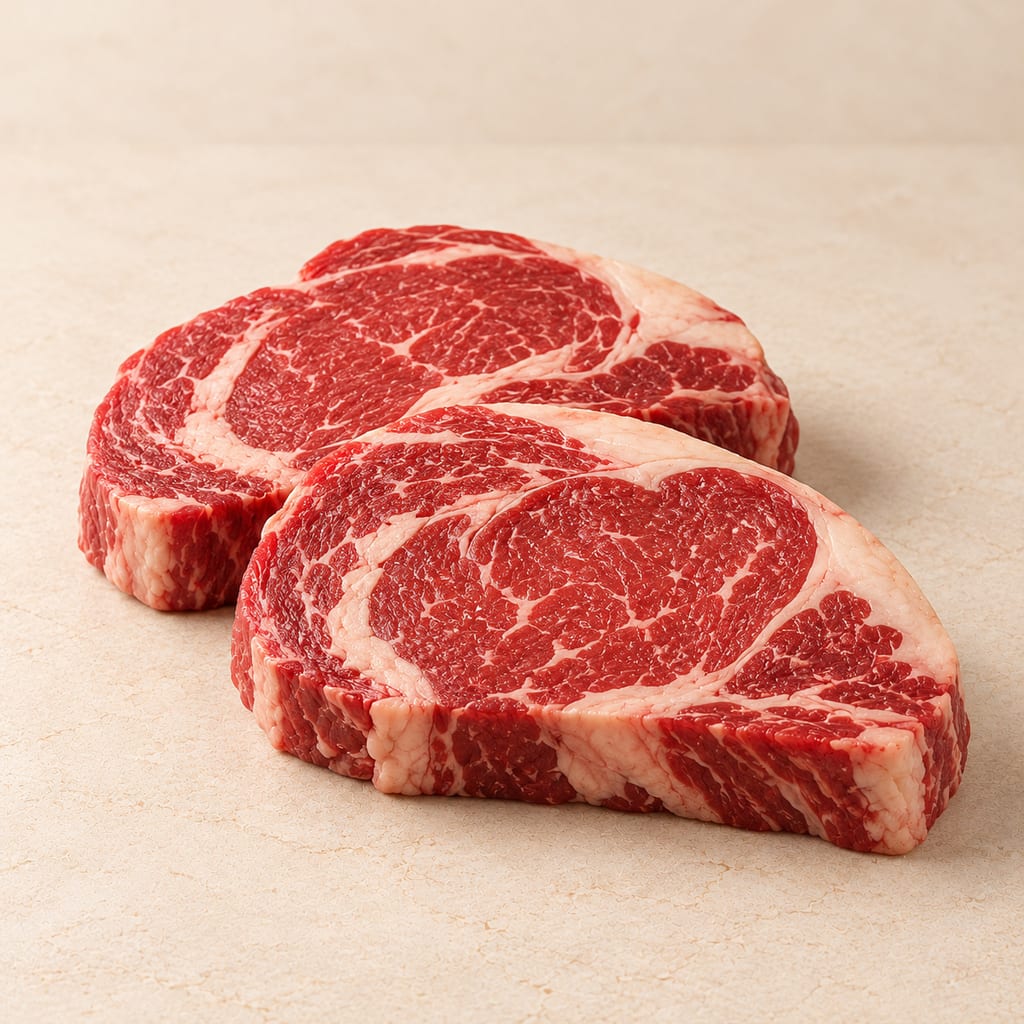
Beef is the meat of domestic cattle, Bos taurus and Bos indicus, sold as steaks, roasts, ground meat and cured products, and used in broths, salami and koji seasonings.
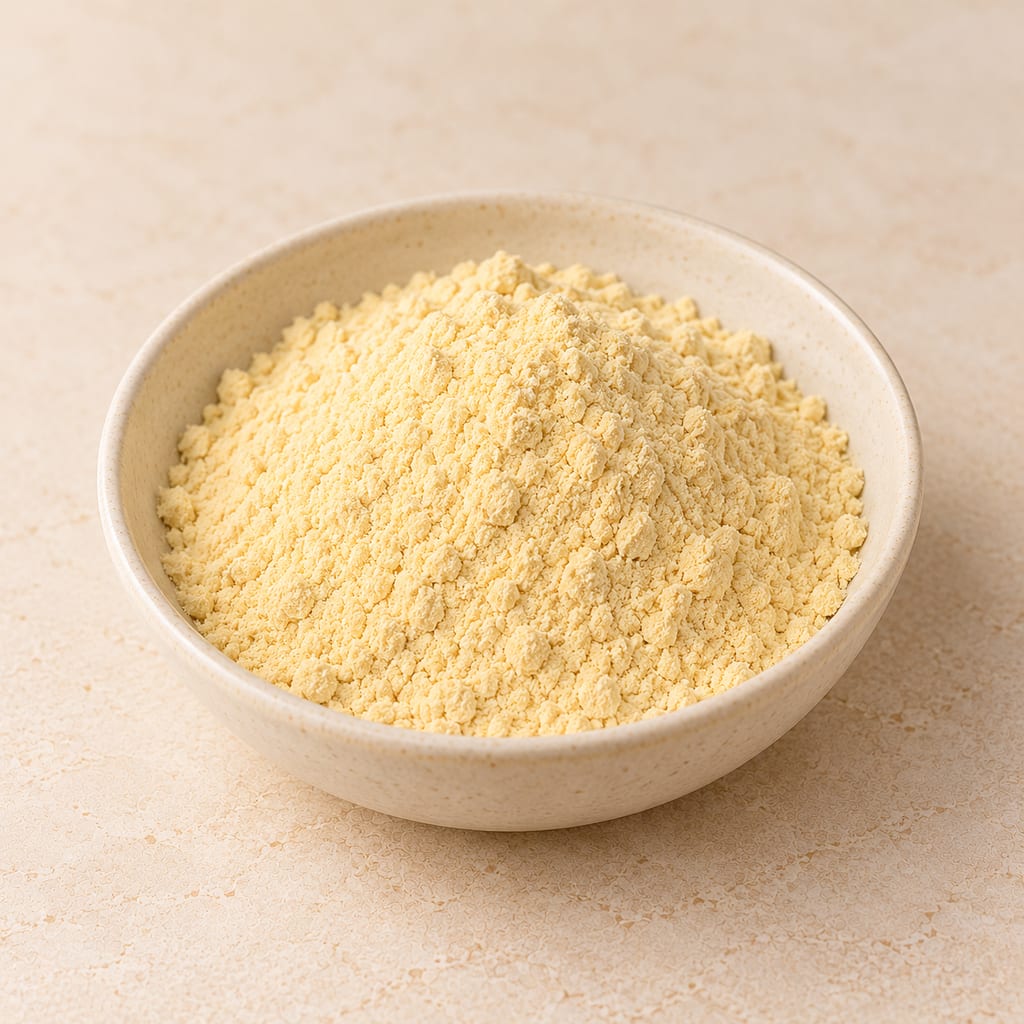
Chickpea flour is milled Cicer arietinum, used as besan in many Indian dishes and as the base of breads such as socca and farinata.
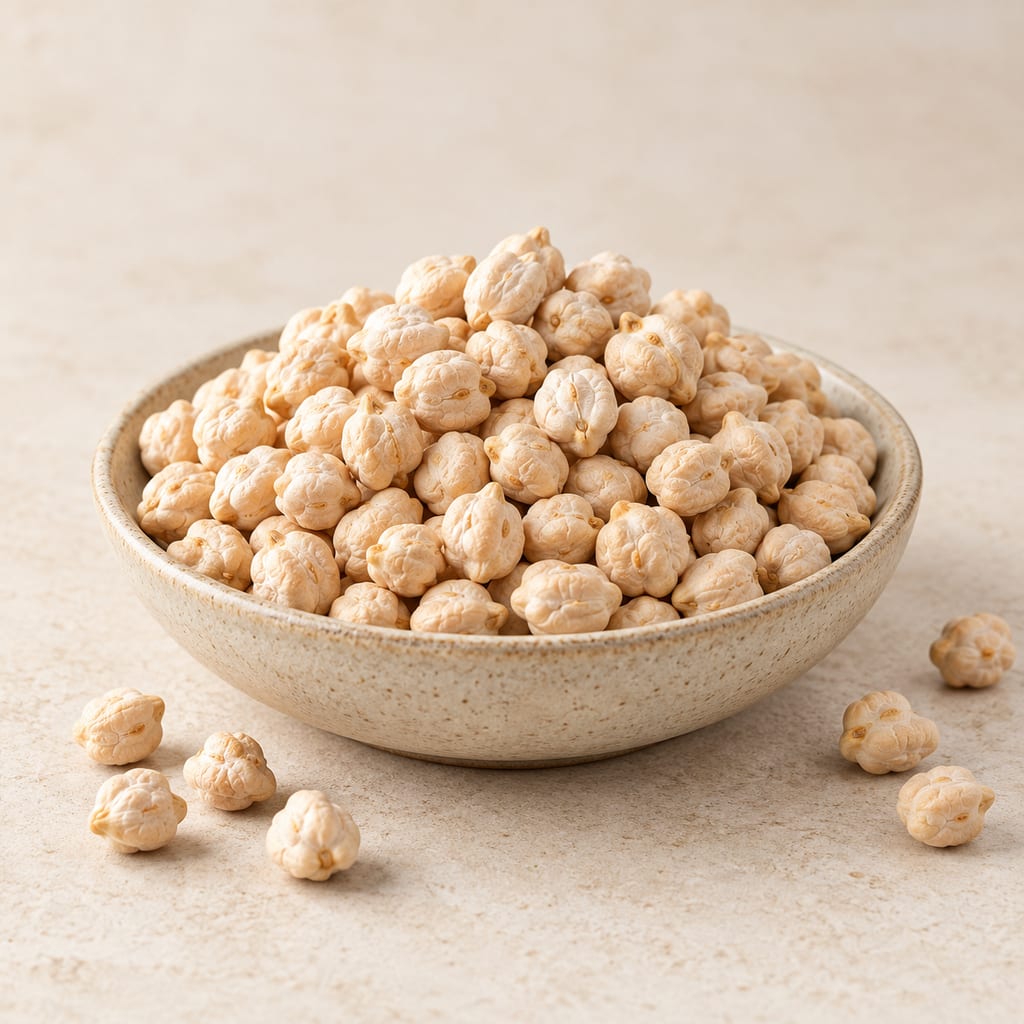
Chickpeas (Cicer arietinum) are dry pulses eaten whole or milled into flour, which gives socca, farinata and other breads a dense, nutty batter or dough.
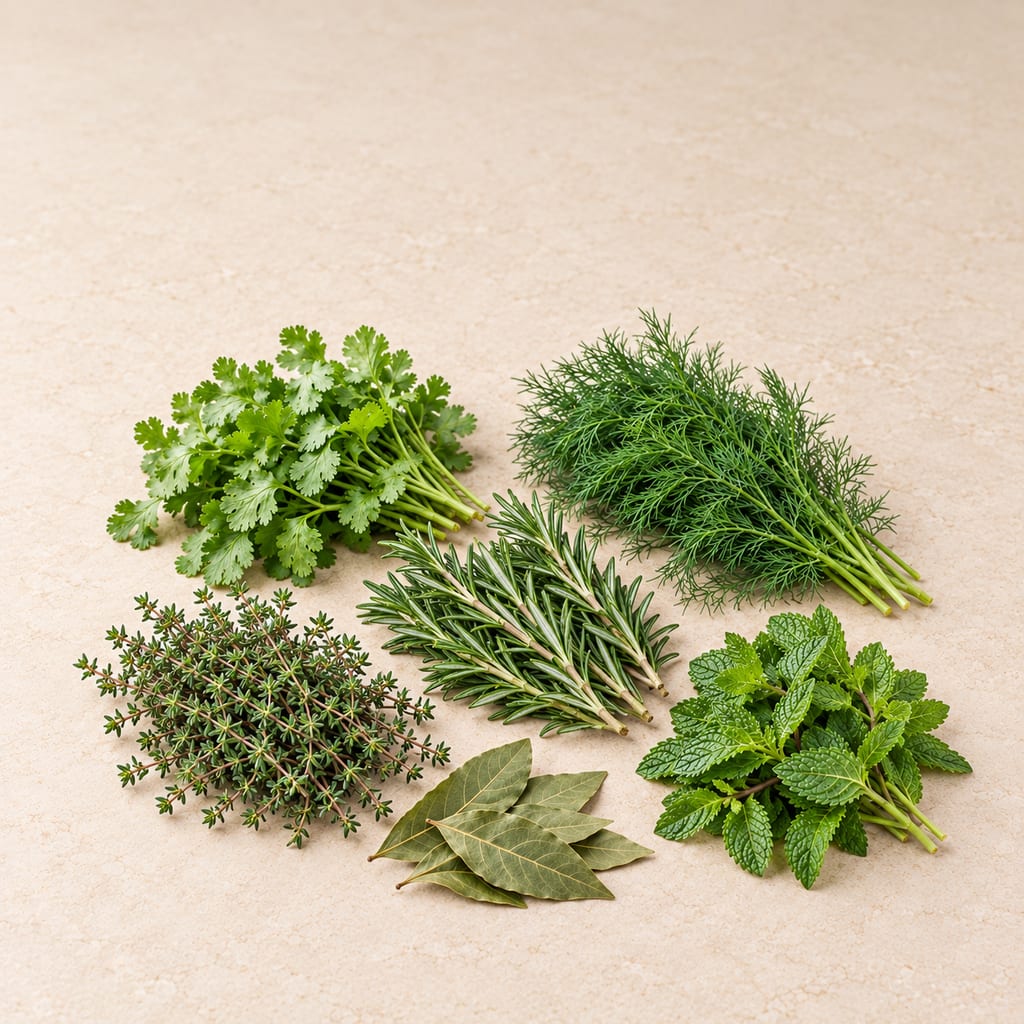
Culinary herbs are the leaves and tender shoots of aromatic plants, used for flavour and aroma. The plant and its fresh, dried or extracted form decide what a cook is handling.

A Cap-Pelé boucanière is an Acadian herring-smoking building. The documented Willie Niles example is a one-storey wood-frame structure with a ridge smoke vent and interior bays for hanging fish-bearing cannes.

Achcharu is a family of Sri Lankan vinegar pickles made with mixed vegetables or seasonal fruit and a piquant spice dressing. This version is a quick, refrigerated, non-fermented mixed-vegetable pickle.

The acocote is a long, hollowed and dried gourd used to draw aguamiel from a mature maguey. It is a harvesting tool: the sap is transferred to a separate vessel before it ferments into pulque.

Adrak murabba preserves young ginger in sugar syrup, a sweet South Asian preparation recorded in Indian cookery and food-processing sources.

Parkia biglobosa seeds are fermented into regional West African seasonings, including nététou, iru, dawadawa and soumbala. The yellow fruit pulp is a separate food, and names and methods vary by place.

Japanese reddish-brown vinegar from sake lees matured about three years, turned to vinegar by acetic bacteria; the vinegar of Handa and Edomae sushi rice.

A refined common-wheat flour blended for a broad range of baking; its protein and behavior vary with wheat, milling and market.

The almond mushroom, Agaricus subrufescens, was cultivated in eastern North America in the 1800s, lost its market, and returned as a cultivated mushroom from Brazil, where it is grown under several names.
No community contributions have been published for this entry yet.
Sign in to contribute. Published comments and photos are free to read.
Food and Agriculture Organization of the United NationsMethod · Identity · Safety
Guidelines for slaughtering, meat cutting and further processing (FAO Animal Production and Health Paper 91)Tissues of meat; muscle, connective tissue and fat; simple quality standards (Meat I and II, trimmings); table of raw-material composition
Dry sausage: two-thirds meat, one-third fat; salt, dextrose and nitrite; pH falls to 4.8 to 5.4; beef pH 6.0 or lower; chilled and frozen meat, thawing for 48 hours; chopping at -2 to 5 C; composition table of dry sausages
Beef cutting, primals, vacuum packaging; shelf-life of lean beef at 0 C and effect of temperature; DFD meat
Food and Agriculture Organization of the United NationsMethod
Meat as raw material, non-meat ingredients and basic techniques in further processing of meat (FAO Paper 91, chapter 6)Muscle fibre, actin and myosin, water-holding capacity, collagen; fat deposits; Meat I and II; tables 4, 15 and 16
Cited in: Beef in the salami tradition; What lean means in the butcher’s sense; Muscle, connective tissue and fat; What the numbers look like; What lean beef does in a fermented sausage; Choosing, keeping and handling beef
Food and Agriculture Organization of the United NationsIdentity
Meat cutting and utilization of meat cuts (FAO Paper 91, chapter 5)Beef primal cuts; cherry-red colour, marbling and firmness of good beef; vacuum-packed primals keep two or three months refrigerated
Cited in: What lean means in the butcher’s sense; Choosing, keeping and handling beef
Food and Agriculture Organization of the United NationsSafety
General hygiene principles for meat handling (FAO Paper 91, chapter 3)Total viable count and spoilage; storage life of lean beef at 0 C by initial count; days before slime by temperature; psychrotrophs, mesophiles and food-poisoning bacteria; meat pH and high-pH meat
Cited in: Choosing, keeping and handling beef
US Code of Federal Regulations via Cornell Legal Information InstituteIdentity
9 CFR 317.362: Nutrient content claims for “lean” and “extra lean”Lean: less than 10 g fat, 4.5 g or less saturated fat, less than 95 mg cholesterol per 100 g; extra lean: less than 5 g fat, less than 2 g saturated fat, less than 95 mg cholesterol per 100 g; lean percentage statement
Cited in: Labels and legal definitions
US Code of Federal Regulations via Cornell Legal Information InstituteIdentity
9 CFR 319.15: Miscellaneous beef productsGround beef and hamburger may not contain more than 30 percent fat or added water, phosphates, binders or extenders
Cited in: Labels and legal definitions
U.S. Department of Agriculture, FoodData CentralComposition
Beef, round, top round roast, boneless, separable lean only, trimmed to 0 inch fat, select, raw (FDC 746761)Per 100 g: 73.3 g water, 23.7 g protein, 2.41 g fat, 123 kcal, 63 mg cholesterol, 2.34 mg iron, 3.54 mg zinc, 1.62 ug vitamin B12
Cited in: What the numbers look like
U.S. Department of Agriculture, FoodData CentralComposition
Beef, ground, 95% lean meat / 5% fat, raw (FDC 171790)Per 100 g: 73.2 g water, 21.4 g protein, 5.0 g fat
Cited in: What the numbers look like
U.S. Department of Agriculture, FoodData CentralComposition
Beef, ground, 80% lean meat / 20% fat, raw (FDC 174036)Per 100 g: 61.9 g water, 17.2 g protein, 20.0 g fat
Cited in: What the numbers look like
PLOS Genetics (Decker et al., 2014), via PubMed CentralHistory · Identity
Worldwide patterns of ancestry, divergence, and admixture in domesticated cattleThree cattle groups (Asian indicine, Eurasian taurine, African taurine); separate domestication centres in the Fertile Crescent and the Indus valley; African taurine ancestry from wild African aurochs; Shorthorn influence on European breeds; Iberian and Italian African ancestry; Criollo from Iberia
Cited in: Cattle, and the meat they gave
2 Guys & A CoolerMethod
Genoa SalamiFormula with 400 g lean pork, 400 g lean beef and 200 g pork back fat; sinew and silver skin trimmed; chilling below 34 F; pork and fat through a 10 mm plate and beef through 3 or 4.5 mm; no cut, grade or origin given for the beef
Cited in: Beef in the salami tradition; What lean beef does in a fermented sausage
U.S. Food and Drug AdministrationSafety
What is a major food allergen?The nine major food allergens: milk, egg, fish, crustacean shellfish, tree nuts, wheat, peanuts, soybeans, sesame
Cited in: Choosing, keeping and handling beef
Food and Agriculture Organization of the United NationsEconomics
FAOSTAT Crops and livestock products: meat of cattle with the bone, fresh or chilled (bulk download, 2025 release)Cattle meat production: world 69,749,016 t in 2024 and 27,682,042 t in 1961; USA 12.29 Mt, Brazil 10.24 Mt, China 7.03 Mt, Argentina 3.18 Mt, Australia 2.59 Mt
Cited in: Cattle, and the meat they gave
Wikipedia (citing the Cabella and Parodi producers’ history pages)History
Salame genovese di Sant’OlceseCoarsely ground pork and beef in equal proportions, aged two to three months; first produced at Orero, part of Sant’Olcese until 1877; industrial production from the early nineteenth century
Cited in: Beef in the salami tradition; Open points
Salumificio ParodiHistory
Salumificio Parodi Sant’Olcese: Chi siamoLuigi Parodi, born 1830, began making the Sant’Olcese salami in the mid-1800s; the firm was founded in 1908; pork and beef products and an all-pork variant
Cited in: Beef in the salami tradition