
Nordic intake
The whey cellar
Iceland kept cooked food in soured skyr whey when salt was scarce. Archaeology puts the cask in the pantry floor; modern Matís writing still describes the acid bath.
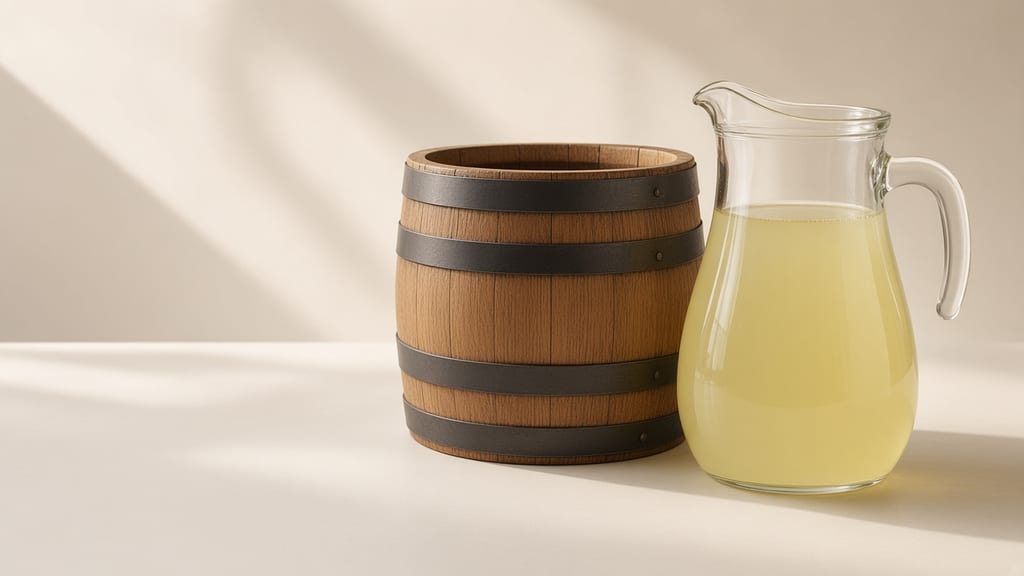
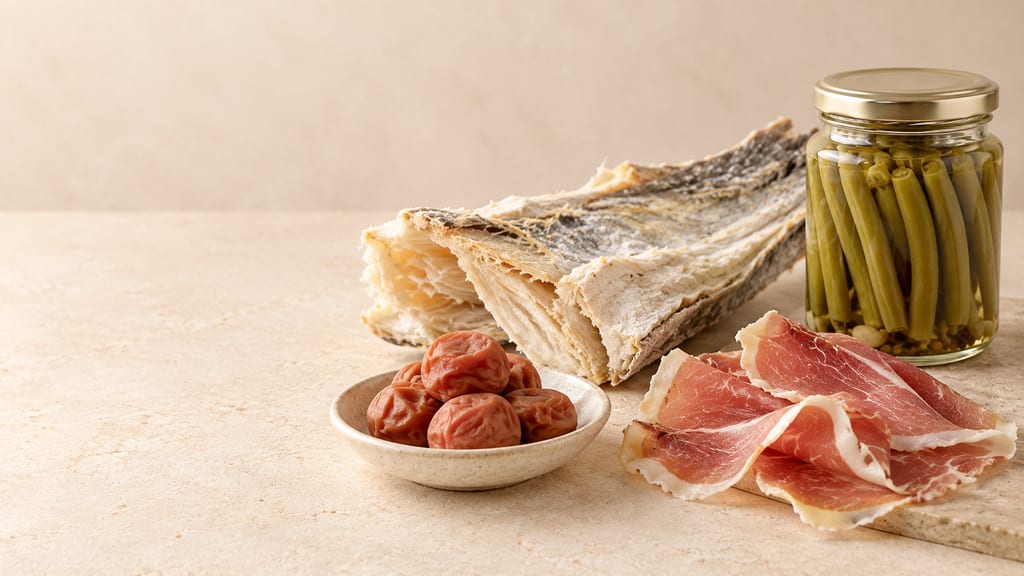
A modern still-life reading of an Icelandic whey store, not an excavation photograph.
A cask in the pantry floor
At Hofstaðir by Lake Mývatn, excavators traced a Viking-Age feasting hall built after about 940 and abandoned around 1030. Among the annexes was a pantry with a large cask set into the floor for storing food in whey. When the hall was later deconsecrated, that whey-keg was filled with iron-smelting slag. The gesture closed a pagan phase of the site. It also froze a food fact in place: whey was not an afterthought drained into the yard. It was a store worth a permanent vessel in the floor.
The find does not hand us a recipe card. No pH strip survived in the silt. No curing schedule was carved on the staves. What it does give is a hard object for a soft liquid. Iceland's dairy system left architecture behind.
Hofstaðir was not a quiet sheep farm that happened to leave a hole in the floor. The hall grew to about 38 metres, one of the largest Viking-Age structures excavated in the Nordic region. Animal bones point to feasts rich in fine meats. Bull skulls appear to have hung on the outside. The whey pantry sat inside that performance of power. Dairy storage belonged to hospitality as much as to winter fear.
Why the whey cellar matters
Sýra, soured skyr whey, sits at the centre of that system. Farms made skyr, kept the whey, and soured it in a vessel called a sýruker until it was sharp enough to drink diluted and strong enough to hold cooked meat and offal. Salt was scarce. Neighbouring regions packed flesh in brine. Icelandic households lowered pH instead. This piece follows the whey cellar: what the liquid was, how modern Matís writing describes the acid bath, what archaeology can and cannot prove, and how the drink sits beside skyr without retelling the skyr dossier.
Call it a cellar even when the vessel sits in a pantry floor rather than under a street. The point is permanence. Whey was kept, managed, refreshed, and trusted with the year's slaughter. Understanding Icelandic fermentation without that store is like reading a dairy ledger with the whey column torn out.
The liquid has two names that must not collapse
Skyrmysa is whey from skyr-making. Sýra is that whey after it has been kept souring with lactic-acid bacteria, often from a spoon of sour skyr. Visindavefur, answered by Matís meat specialist Óli Þór Hilmarsson, describes the household sýruker as a living store: sour skyr goes into the whey, lactose becomes lactic acid, and the liquid settles around pH 3.6-3.8.
Fresh leftover whey from tonight's draining cloth is not that store. The distinction is practical, not pedantic. A pale liquid that still tastes mild has not yet done the work the súrmatur accounts assume. Matís's farmers' leaflet repeats the warning in another register: methods vary, industrial whey differs from farm whey, and the bath weakens as bacteria run out of sugar.
Technical acid whey, the stream left after acid coagulation in yogurt or fresh cheese plants, overlaps chemically with parts of this story. Journal reviews discuss beverage trials, lactose recovery and mineral use. Those papers do not erase the Icelandic household practice, and the Icelandic practice does not define every acid-whey stream on earth. Keep the labels honest.
Why whey did salt's job
Hilmarsson's Visindavefur answer frames the geography in one line. Elsewhere people salted. In Iceland, salt was short and skyr whey was abundant, so meat went into sour whey. Lowering pH below about 4.5 makes life harder for many spoilage organisms. The souring medium itself is described even lower, near pH 3.6-3.8, and must not rise above pH 4.0 while in use.
That chemistry is not a slogan for dumping steak into yogurt water. The same answer insists the food is cooked first to a +75 °C core, cooled below +4 °C, then submerged at least two parts whey to one part food at +5 to +7 °C. Matís adds hygiene, continuous coverage, and the need to refresh whey when acidity slips. Household practice was never one standardised plant process. The leaflet is candid about that variation.
pH is not a magic wall. It is one hurdle among others: heat, cold, cleanliness, coverage, time. Matís's leaflet is blunt that súrmatur is a chilled product whose smell can taint other foods. The romance of a turf pantry does not cancel the microbiology of a weak bath.
What went into the bath
The Nordic atlas of sour-preserved foods lists separate products that could share one souring vessel: blóðmör, lifrarpylsa, súrsaðir hrútspungar, lundabaggi, bringur, sviðasulta. The shared rule in the Matís and Visindavefur accounts is cooking before souring. Blood pudding and liver sausage also exist unsoured; the whey stage is a choice, not the definition of slátur.
Matís notes that carbohydrate-rich pieces such as blóðmör can feed the lactic culture in the bath. When the sugar runs out, the whey "weakens" and may need replacement. A farm that kept the culture alive for months was managing a medium, not parking leftovers in a puddle.
Whale meat, seal flippers, roe and even eggs appear in heritage lists of foods that could be soured. Diversity of substrates does not mean every substrate had the same schedule. Each product still needed cooking and a living acid medium. The bath was shared; the recipes were not identical.
Drink from the same jar
Matarauður Íslands remembers diluted soured whey as an everyday drink, sometimes with creeping thyme, berries or sheep sorrel. Souring can create some alcohol. Dilution lowers strength without proving a glass is alcohol-free. Modern blueberry whey drinks sit on the same shelf of uses.
The drink is the gentle face of the same acid store that held winter meat. A farm that wasted whey wasted both thirst-quencher and preservative. That is why the cellar metaphor fits: the liquid was infrastructure.
Twelfth-century Norwegian observers already remarked on Icelanders' taste for whey drinks when beer was scarce. Later travelers wrote down dilution habits. The soft-drinks research atlas cites Mehler for a historical proportion near one part sour whey to eleven parts water. The Mehler PDF available for this piece is an image scan; the pages read for barrel pits and dairy rooms did not yield that ratio in recoverable text, so this article does not lean on the number. Generous dilution is enough, and Matarauður's plain description of whey-and-water as an everyday drink stands on its own.
Slag in the whey-keg
When Hofstaðir's hall was shut down around 1030, people did not simply walk away. They removed sacrificial bull skulls, took the ember-box from the long hearth, left a sheep killed by a blow between the eyes, and filled the whey-keg with iron slag. The pantry vessel that had held food in whey became a sealed deposit of smithing waste.
The sequence is religious and political as much as culinary. It still tells a food historian something blunt. The whey cask was important enough to close with intention. A throwaway bucket would not need that rite.
Archaeology loves a sealed deposit. Slag in a whey vessel is a sentence written in waste: the old religion ends, the smith's debris fills the food store, the hall's timber is stripped. Food history rarely gets a closing ritual this clear.
Barrels under other floors
Mehler's 2011 Ruralia survey gathers the wider pattern. Icelandic farms kept rooms for whey and skyr. Large wooden barrels sat in pits, insulated with sand or volcanic pumice. Stöng's dairy held sunken barrel remains. Hofstaðir's end rooms show barrel pits with cooking features. Later passage houses still placed storage rooms where vessels could be set into floors.
Mehler also records caution. Some barrels elsewhere held urine for wool scouring. Not every circular pit is a súrmatur vat. The whey cellar is a well-attested type, not a blank cheque to label every hollow in a floor plan.
At Bergþórshvoll, nineteenth-century excavators reported barrel contents interpreted as dairy, most likely skyr. At Hrísbrú, a flat-bottomed pit with packed stones probably supported a barrel near chopped bone. Contents there remain inferred. The pattern is repeated carefully: sunken vessels, dairy association, limits on what chemistry we pretend to know.
Complication: what we cannot publish as a home meat method
Authority sources describe súrmatur in detail. They do not hand a casual cook a validated, one-size kitchen process. Matís says methods differ and refrigeration matters. Visindavefur's numbers are tied to a described traditional process, not to every whey stream. Senses never prove safety. A sharp smell is not a lab result.
This site therefore publishes sýra as a refrigerated drink and sour store with clear limits, and keeps meat-in-whey as history. Hákarl and hangikjöt remain neighbouring Icelandic preservation stories, linked, not folded into the whey bath.
Hákarl is fermented Greenland shark, dried and served in cubes. Hangikjöt is salted and smoked lamb with its own Matís categories. Neither is a whey pickle. Linking them from this article marks the wider Icelandic preservation map without smuggling shark or smoke into the sýruker.
Beside skyr, not instead of it
Skyr is the drained curd. Sýra is the managed whey. They share a make day and then diverge. Rehashing how to heat milk, add rennet, and hang the cloth belongs on the skyr page. Here the question is what the household did with the liquid that remained, and why a floor needed a hole for a cask.
Industrial skyr changed the whey. Matís distinguishes clearer and milkier industrial streams and notes that taste and souring behaviour differ. A modern refrigerated drink made from pasteurised skyr whey is a descendant, not a time machine.
Readers who want the curd should open the skyr page. Readers who want the acid store stay here. The site gains more from that split than from one megapage that pretends whey is only a by-product paragraph.
How a modern technical account reads the old bath
Hilmarsson's Visindavefur text is unusually precise for a public heritage answer. It gives cooking temperature, cooling limit, bath ratio, storage temperature and pH bounds. It also answers when people began souring food, what happens chemically, and why acidity acts as a preservative. Read as a whole, it is a bridge document: ethnographic practice translated into food-science thresholds.
Matís's leaflet Súrmatur: Hollusta og möguleikar sits beside it as a farmers' and processors' note. It praises nutrient retention, warns about saturated fat in rich pieces, and records that souring can tenderise tissue until bones soften. It also asks whether the tradition can be developed under modern dairy whey. Trials preferred traditional whey flavour over straight lactic-acid solutions or yogurt cultures. Speed mattered to plants that tie up capital for months. Taste still voted for the old medium.
Together the two Matís-linked sources let a reader see súrmatur without romantic fog. The bath works when acidity, cold and hygiene hold. It fails when the culture starves or the pH climbs. That is the cellar's real rulebook.
Salt, trade and the long hunger for acid
Mehler's wider food history places dairy inside phases of Icelandic self-sufficiency, import dependence and famine. Cereal farming faded. Beer imports rose and fell with trade. Vinegar appears in harbor accounts. Against that backdrop, a farm that could turn milk into butter, skyr, whey drink and a meat bath was converting a short lactation season into several winters of use.
Salt scarcity is the usual explanation for whey pickling, and Visindavefur states it plainly. Trade history complicates any cartoon of total isolation. Ships brought malt, butter, honey, beer and vinegar in some centuries. The persistence of sýra nonetheless suggests that imported salt never fully replaced a medium the farm could renew from its own milk.
What a drink recipe can honestly borrow
A home cook can borrow the inoculum idea, the acidity targets and the demand for refrigeration. Pasteurised skyr whey, a spoon of sour skyr, a jar in the fridge, a pH check, then cold water for a same-day glass: that is a narrow modern method. It respects Matarauður's drink memory without claiming to recreate an unheated farm barrel.
A home cook cannot honestly borrow the meat path from a magazine paragraph. Cooking temperatures, bath ratios and multi-month holds need process control the average kitchen will not validate. This site refuses to publish that path as a safe weekend project. History remains available. The jar of steak does not.
Reading the floor plan without inventing the brine
Floor plans seduce writers into fiction. A circle in the dirt becomes a named recipe. Mehler's Stöng plan shows circular outlines in a dairy room; Hofstaðir's heritage text names a whey cask; Hrísbrú's pit suggests a supported barrel. The responsible reading stops at vessel and association. It does not invent a Viking dilution ratio, a saga-era thyme sprig count, or a claim that every guest at the 38-metre hall drank the same glass.
The soft-drinks atlas, working from Mehler among other sources, reports a historical drink proportion of one part sour whey to eleven parts water and compares Icelandic blanda with Shetland bland. That synthesis is useful for research inventory. Because the Mehler pages inspected for this article did not yield a recoverable printed ratio, the number stays out of the reader-facing claims here. Generous dilution and the Matarauður description carry the drink story instead.
Restraint is not a lack of colour. The slag-filled keg, the pH 3.6-3.8 medium, the cooked-then-cooled meat, the thyme in the water jug: those details are already strange enough. Adding invented precision would only make the cellar smaller.
From sýruker to glass
Picture the farm sequence without dressing it as a film set. Morning milk becomes skyr. Whey runs into the sýruker. Sour skyr feeds the jar. Days later the liquid is sharp. Someone dips a measure into a water jug for the household drink. Someone else lowers cooled, cooked pieces into the strong bath for the months ahead. One make day funds both thirst and storage.
That sequence is why this Saturday release pairs a drink recipe with a cellar article. The glass is not a soft-drink novelty bolted onto a meat story. It is the mild end of the same acid economy. Publish the drink with refrigeration and pH checks. Tell the cellar honestly. Leave the unsafe meat jar offline.
Readers who follow the links will find skyr for the curd, acid whey for the technical stream, hákarl and hangikjöt for other Icelandic paths, and sýra for the sour store itself. Eight published links are enough. Padding the related block with unpublished related items helps no one.
The hole in the floor
Walk back to Hofstaðir's pantry. The hall is turf and post-holes now. The cask is a memory drawn on a plan and a sentence on a heritage page. Somewhere in the tenth century, someone decided the whey store deserved a permanent place in the floor. When the hall's time ended, someone else filled that same vessel with slag.
The liquid is gone. The idea is not. Iceland still knows súrmatur. Farms and plants still argue about whey. And a glass of diluted sýra is still the mildest way to taste the cellar that salt never fully replaced.
If you taste diluted sýra cold, you are not tasting Hofstaðir. You are tasting a modern refrigerated cousin of a liquid that once justified carpentry. That is close enough to respect the cellar, and far enough to keep the meat out of an unsafe jar.
Related
Pairs with
Sýra
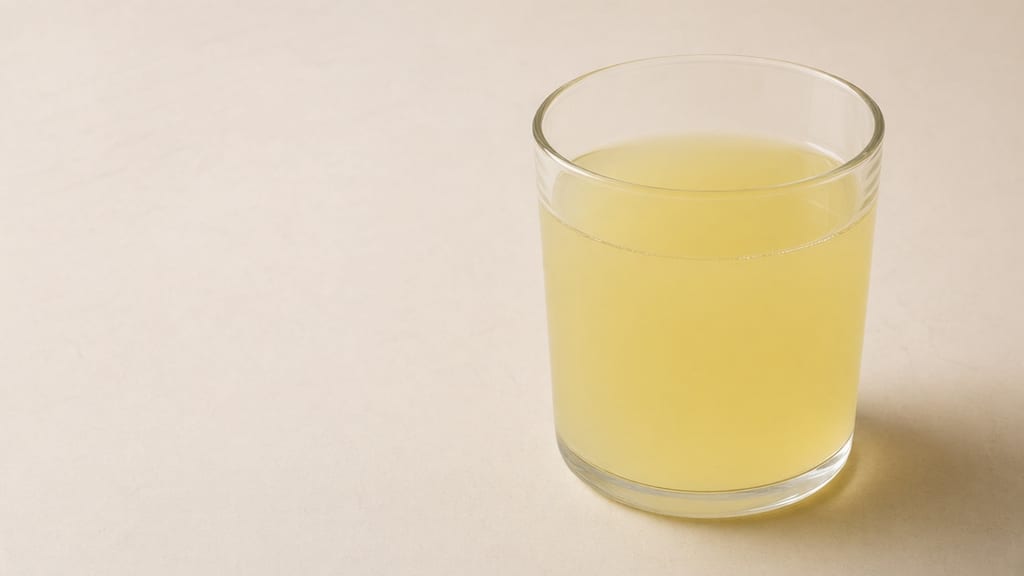
Sýra is Icelandic soured skyr whey kept as a household acid store: a drink when diluted, and historically the medium for súrmatur. Fresh leftover whey is not the same material.
Discussed in this article
Acid whey
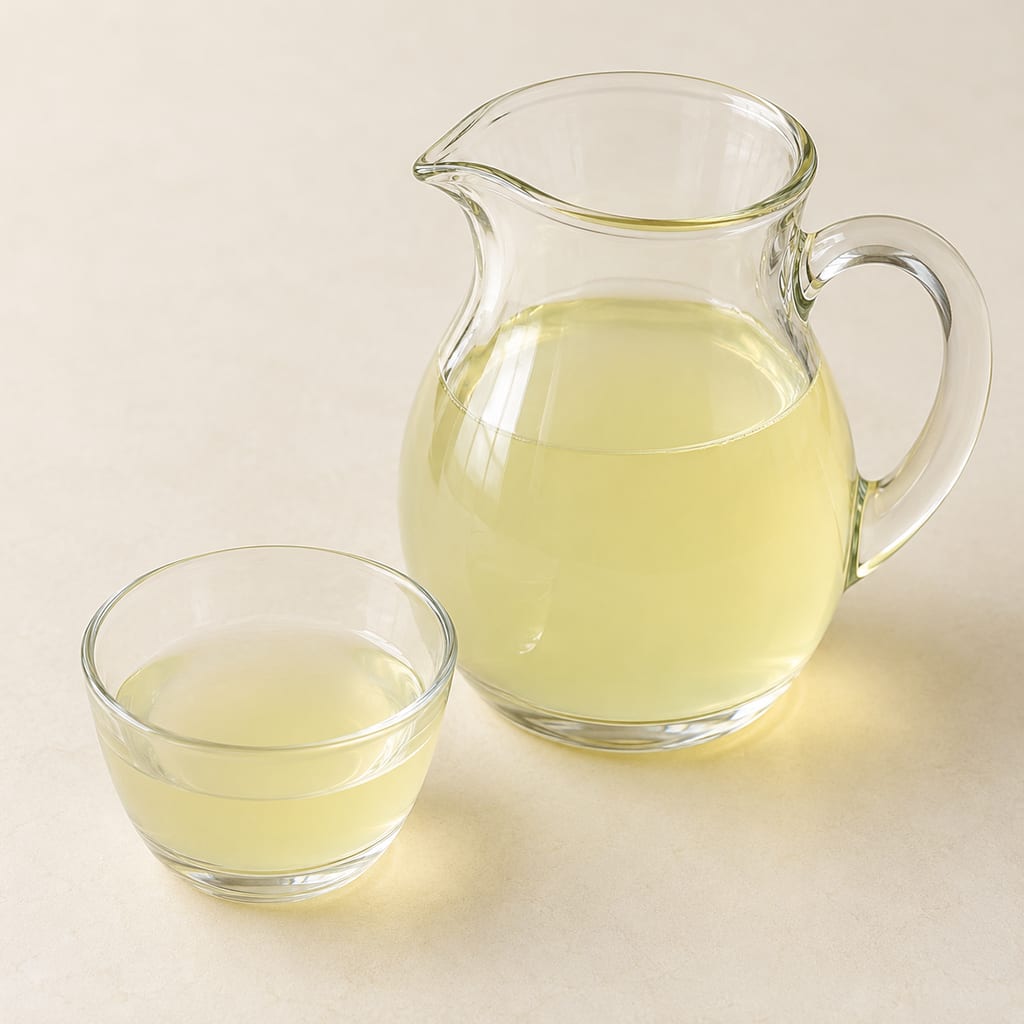
Acid whey is liquid left after acid coagulation of milk, including cultured dairy. Its composition and uses vary. Icelandic sour skyr-whey is related, but not automatically the same material.

Hákarl
A documentary account of Icelandic hákarl, fermented and dried Greenland shark. It describes cultural context and one production study, not a home preparation method.
Preserving food today: how cold, heat, drying, salt and acid keep a harvest, and how the world's traditions use them
Every preserved food is a stack of barriers against microbes, enzymes, air and time. This is how they work, what a recipe's numbers measure, and how cooks worldwide build them.

Skyr
Skyr is Iceland’s thick, tart fresh cheese. This home method cultures skim milk with fresh skyr and rennet, then drains the curd under refrigeration.
Community
No community contributions have been published for this entry yet.
Share what you made
Sign in to contribute. Published comments and photos are free to read.
Sources
Vísindavefurinn / Matís (Óli Þór Hilmarsson), 2023
Hvernig er súrmatur búinn til og hvernig eykur súrsun geymsluþol matvæla?Cited in: Why the whey cellar matters; The liquid has two names that must not collapse; Why whey did salt's job; What went into the bath; Drink from the same jar; Complication: what we cannot publish as a home meat method; Beside skyr, not instead of it; How a modern technical account reads the old bath; Salt, trade and the long hunger for acid; What a drink recipe can honestly borrow; Reading the floor plan without inventing the brine; From sýruker to glass
Matís (Ólafur Reykdal and Óli Þór Hilmarsson)
Súrmatur: Hollusta og möguleikarCited in: Why the whey cellar matters; The liquid has two names that must not collapse; Why whey did salt's job; What went into the bath; Complication: what we cannot publish as a home meat method; Beside skyr, not instead of it; How a modern technical account reads the old bath; What a drink recipe can honestly borrow; From sýruker to glass
Matarauður Íslands
Whey, Ale & moreCited in: Why the whey cellar matters; Drink from the same jar; What a drink recipe can honestly borrow; Reading the floor plan without inventing the brine; From sýruker to glass; The hole in the floor
Hofstaðir / Institute of Archaeology, Iceland
Cultural HeritageCited in: A cask in the pantry floor; Why the whey cellar matters; Slag in the whey-keg; Barrels under other floors; Reading the floor plan without inventing the brine; The hole in the floor
Ruralia VIII, 2011
From self-sufficiency to external supply and famine: Foodstuffs, their preparation and storage in IcelandCited in: A cask in the pantry floor; Drink from the same jar; Barrels under other floors; Salt, trade and the long hunger for acid; Reading the floor plan without inventing the brine
Gaps
- A single excavated Hofstaðir cask does not yield an ancient pH or curing schedule.
- Mehler's Ruralia PDF is image-scanned; drink dilution ratios were not recovered from the pages read for this piece.
- Household súrmatur methods vary and are not standardised for home recreation.
Updated 2026-11-07