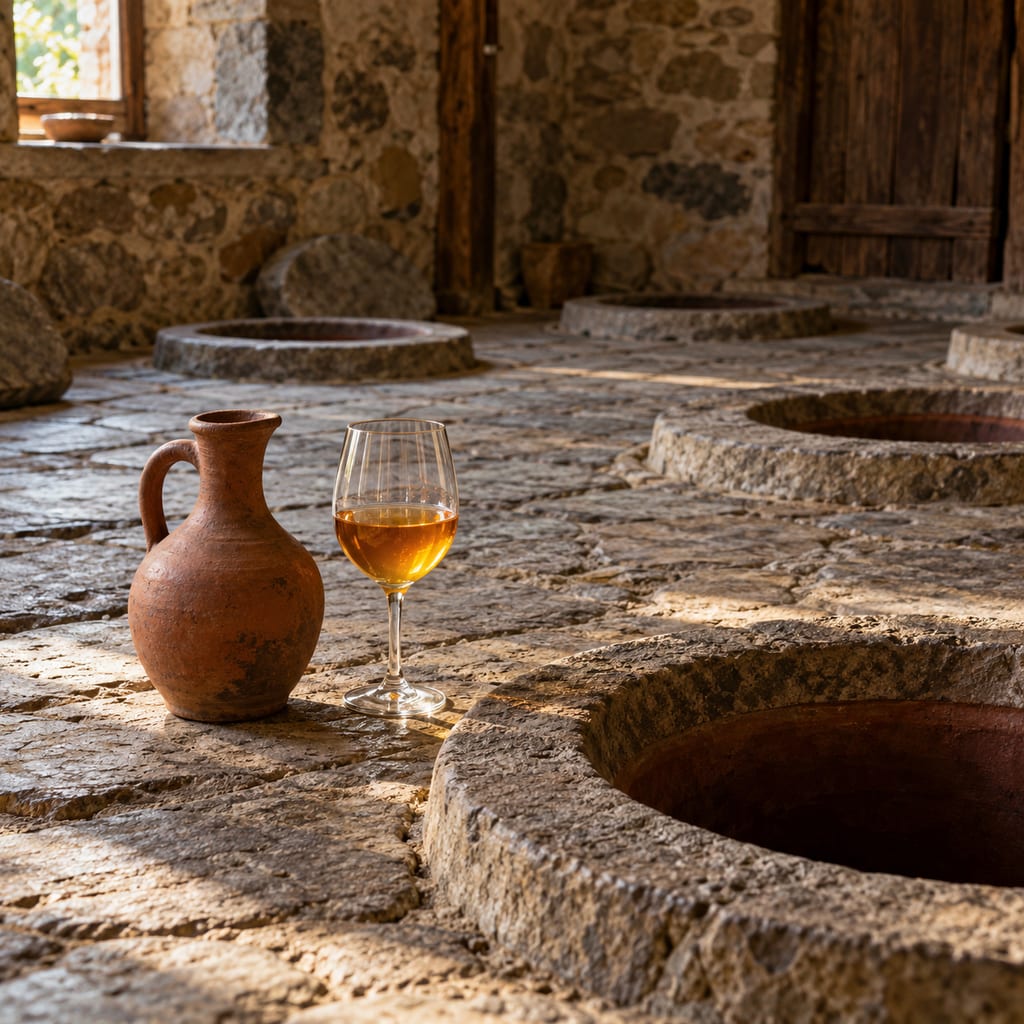
Qvevri wine
Georgian wine fermented and matured in buried clay vessels called qvevri, usually with grape skins, pips and sometimes stems, in styles from amber to red that differ by region.
 FermenteaWhere food goes to change
Chvishtari · Chishdvaar
Megrelian chvishtari uses a maize dough with sulguni wrapped around a cheese piece, then cooks covered over low heat in a skillet.
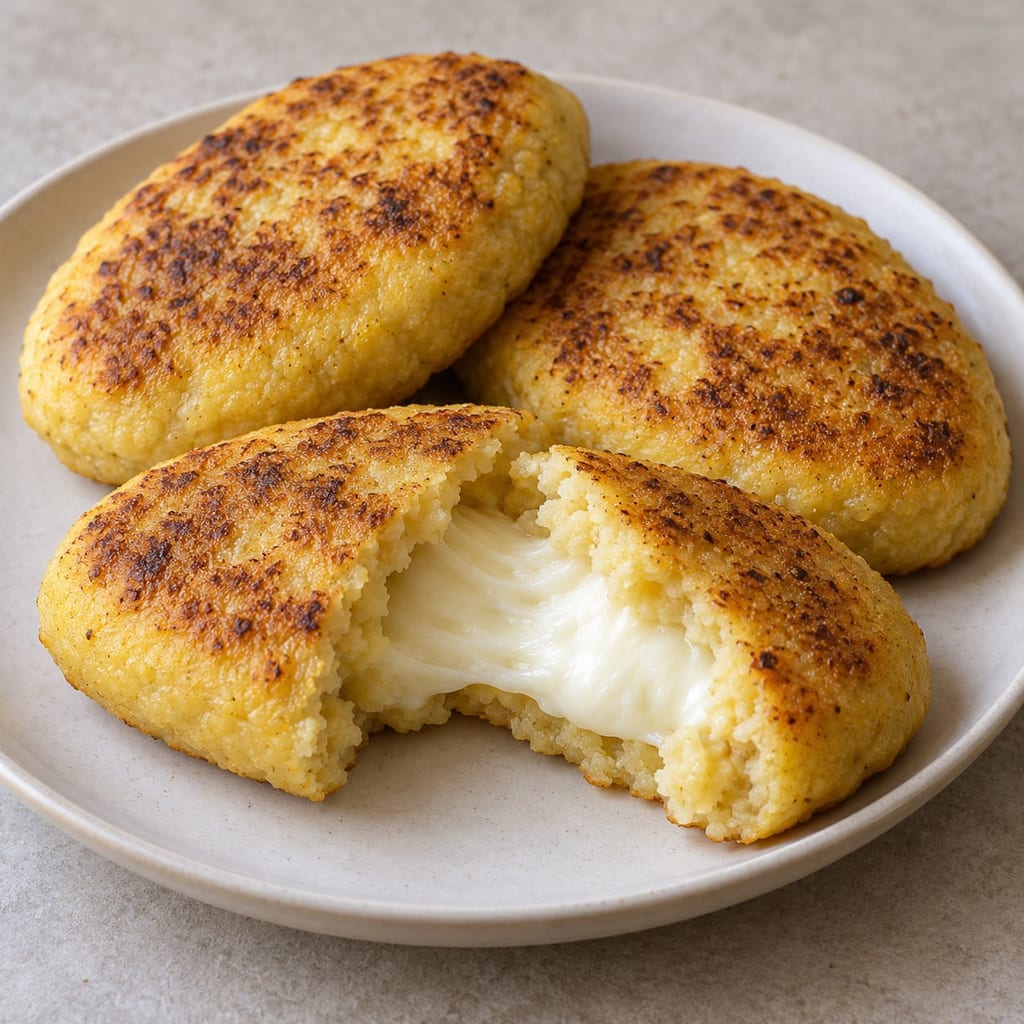
Chvishtari is a Georgian maize bread with cheese. Georgia Travel associates the bread with Samegrelo and Svaneti; the chosen six-cake formula is explicitly presented as a Megrelian version. It uses a cornmeal dough with a square of sulguni enclosed inside each cake. This is a regional variation, not a claim that every chvishtari is made this way.
The measured batch combines 400 g stone-ground white cornmeal with 230 ml warm milk, one egg, butter, sugar and salt. The source also allows water instead of milk but used milk in its own recipe. After at least five minutes of hand kneading, the dough is split into six portions. A thick square of sulguni is enclosed in each ball, then the cakes are cooked covered over low heat before being turned and finished uncovered.
The recipe gives 5–6 minutes per side but no measured skillet temperature or cake dimensions. The dough contains egg, so use a food thermometer and cook the centre to 160°F (71°C), following FDA guidance. Handle raw egg carefully and keep hands and tools clean. Serve the cakes hot; no storage time is established.
Georgia Travel describes chvishtari more broadly as a maize-flour and Georgian-cheese bread associated with Samegrelo and Svaneti, and gives a different oven version. That recipe says “250 degrees” without identifying Celsius or Fahrenheit, so this method does not borrow that setting. Plain mchadi has no cheese mixed into its maize dough, while elarji is stirred on the stove rather than shaped into individual cakes.
Georgia Travel describes chvishtari as maize flour and Georgian cheese associated with Samegrelo and Svaneti. The selected recipe source identifies its own formula as a Megrelian version and notes chvishtari's popularity in both Samegrelo and Svaneti. Neither establishes an earliest attestation.
Yield 6 cakes · Scaling: source batch only
Fresh eggs may carry Salmonella, and this dough contains egg.
Hazard sourceThe cakes cook in hot oil in a skillet; splashes and contact can burn.
Hazard sourceWash hands, utensils, equipment and work surfaces before and after contact with raw egg; cook the egg-containing cakes to 160°F (71°C) at the centre.
Control sourceAdd oil carefully and use a utensil to turn the cakes, keeping hands clear of hot oil.
Control sourceContains egg and dairy. Check ingredient labels for allergen and cross-contact information.
Cook the egg-containing cakes to 160°F (71°C) at the centre. No storage period is stated.
Georgia Travel associates chvishtari with Samegrelo and Svaneti; this is a broad regional association, not an exclusive birthplace claim.
This source labels its formula a Megrelian version and describes Samegrelo as a region where chvishtari is popular; it does not claim this is the only local form.
Georgian wine fermented and matured in buried clay vessels called qvevri, usually with grape skins, pips and sometimes stems, in styles from amber to red that differ by region.
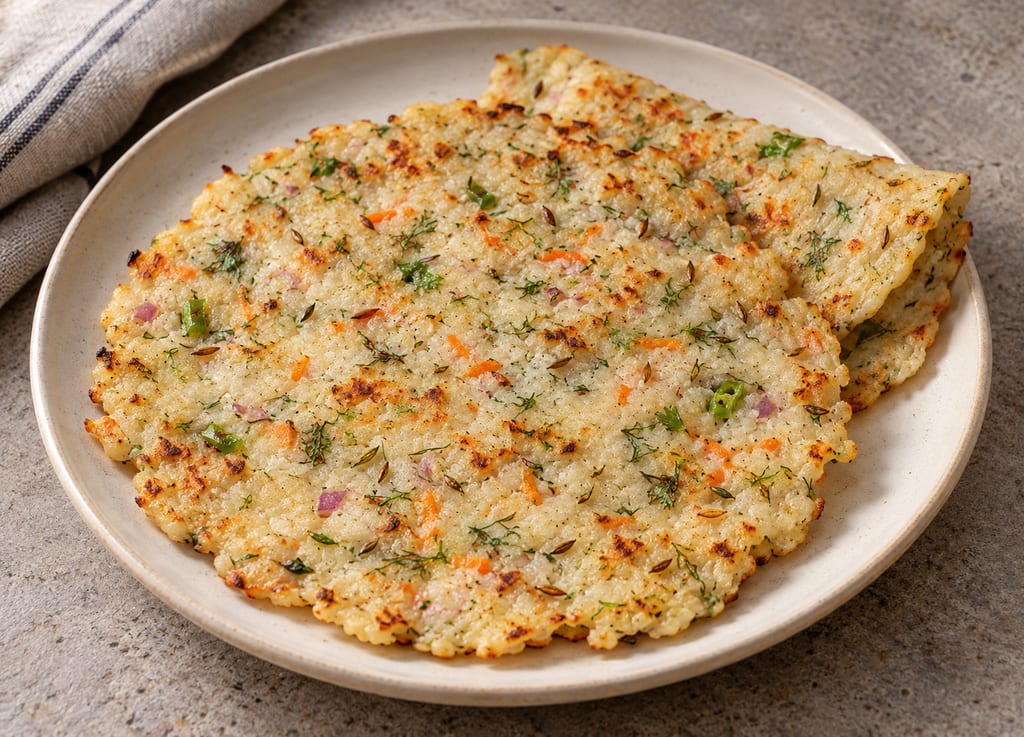
This Karnataka-style akki rotti mixes fine rice flour with vegetables, coconut, herbs and spices, then hand-pats and griddle-cooks the dough.
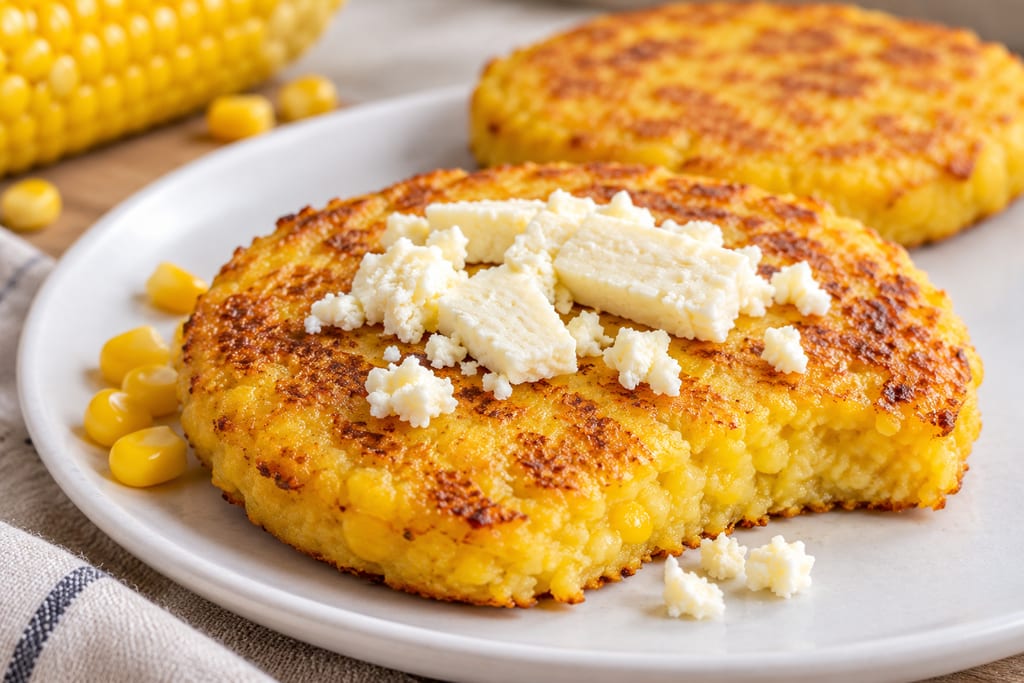
A Colombian Andean griddle cake made from fresh sweet-corn batter, cooked in butter and served with white cheese.
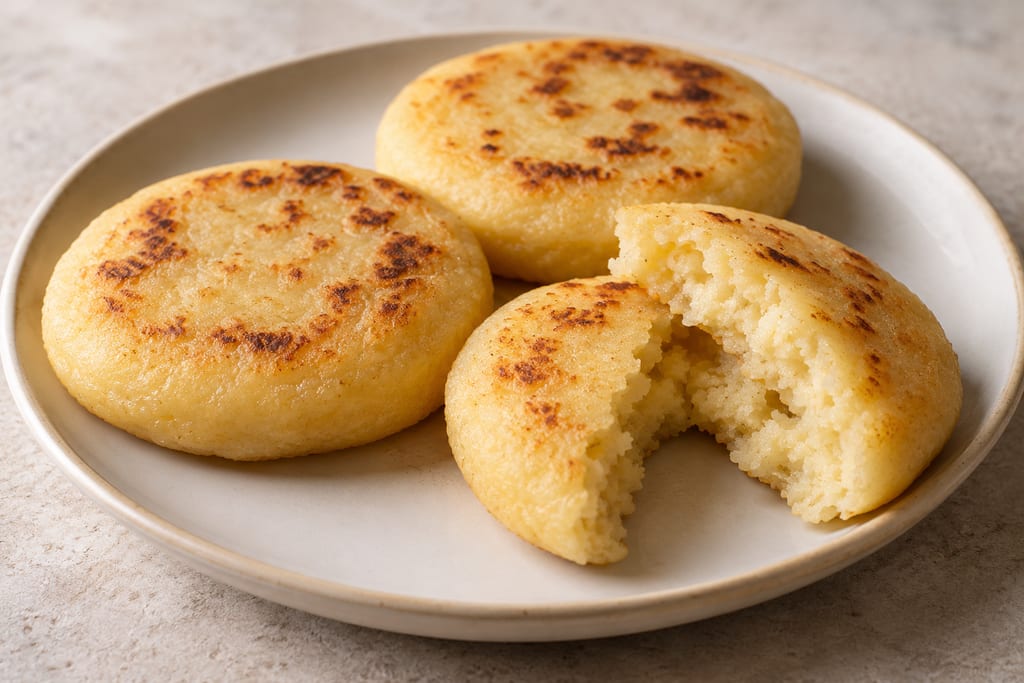
This household version combines precooked corn flour, warm water and salt, then cooks thick rounds on a lightly oiled skillet or griddle. It is one source-specific arepa method, not a universal Colombian or Venezuelan formula.
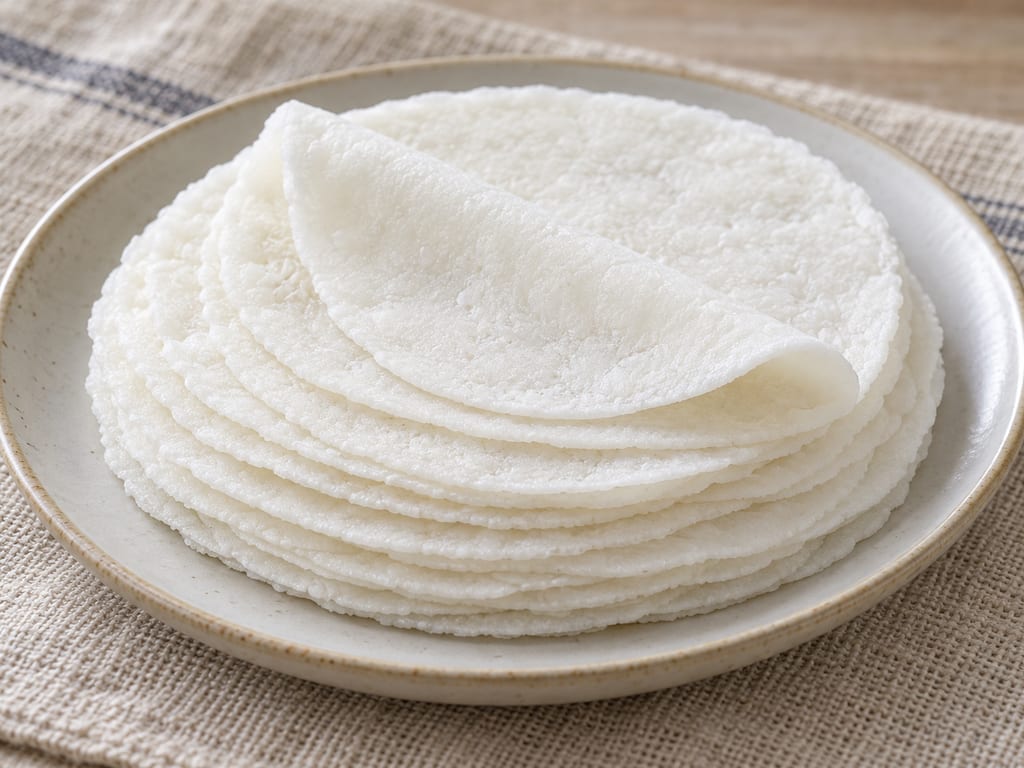
Thin Malabar rice-flour rounds made from roasted rice flour cooked into salted boiling water, kneaded after cooling, and rolled to about 1 mm. They cook on a hot griddle without taking on colour.
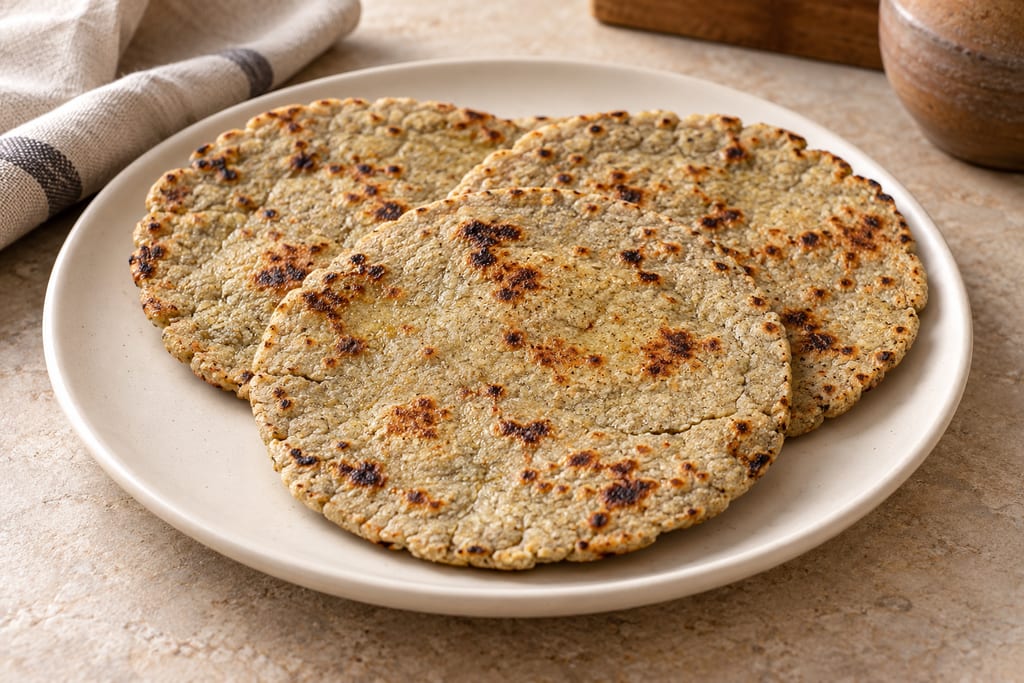
A pearl-millet flatbread shaped between sheets and cooked on a hot tawa. This home batch makes eight.
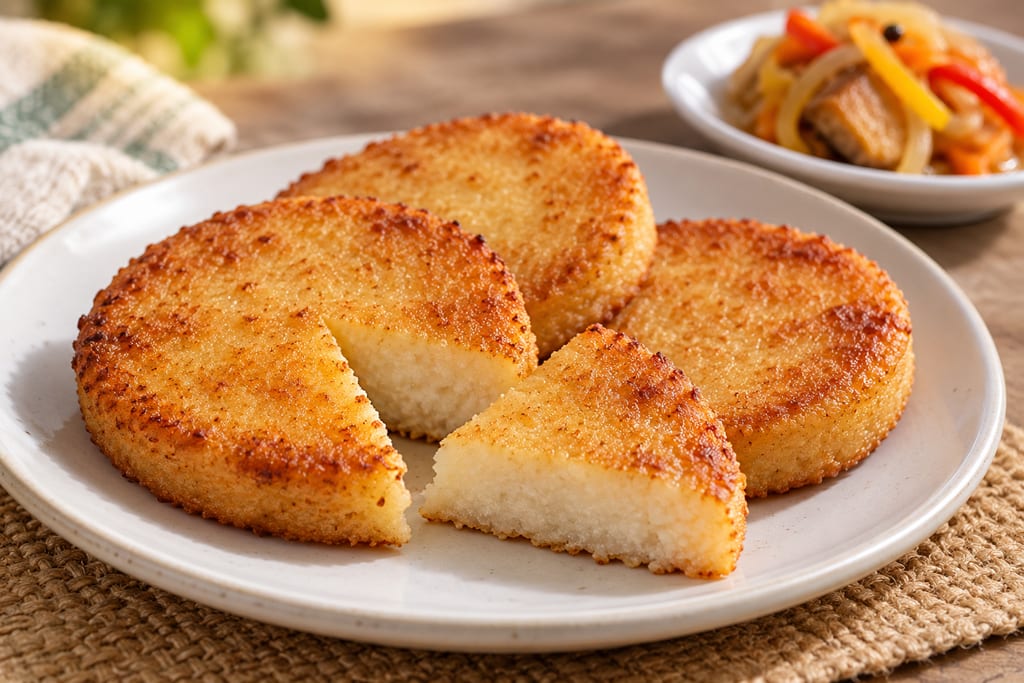
A serving method for approved, prepared bammy rounds: soak them in coconut milk and refry until golden. It does not process raw cassava.
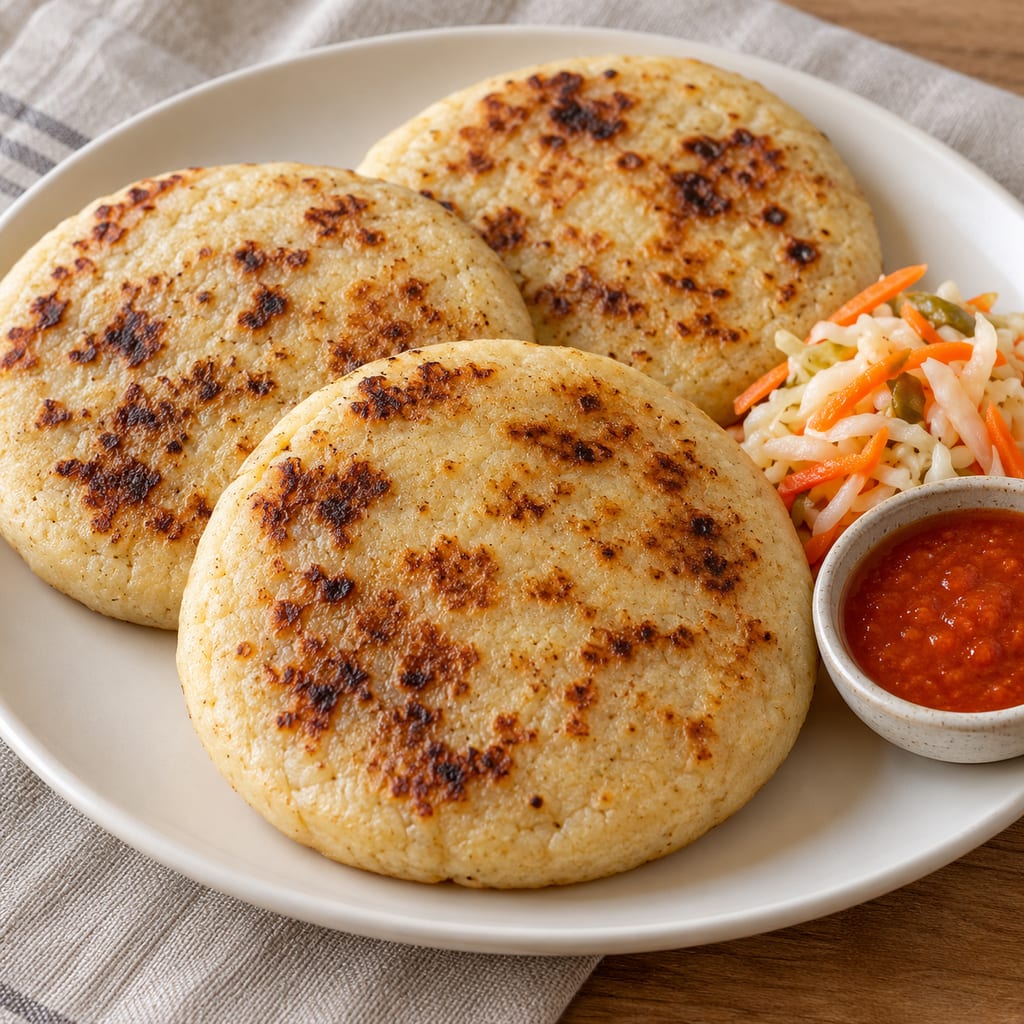
Salvadoran-style masa harina cakes filled with refried beans and cheese, sealed and cooked on an oiled skillet.
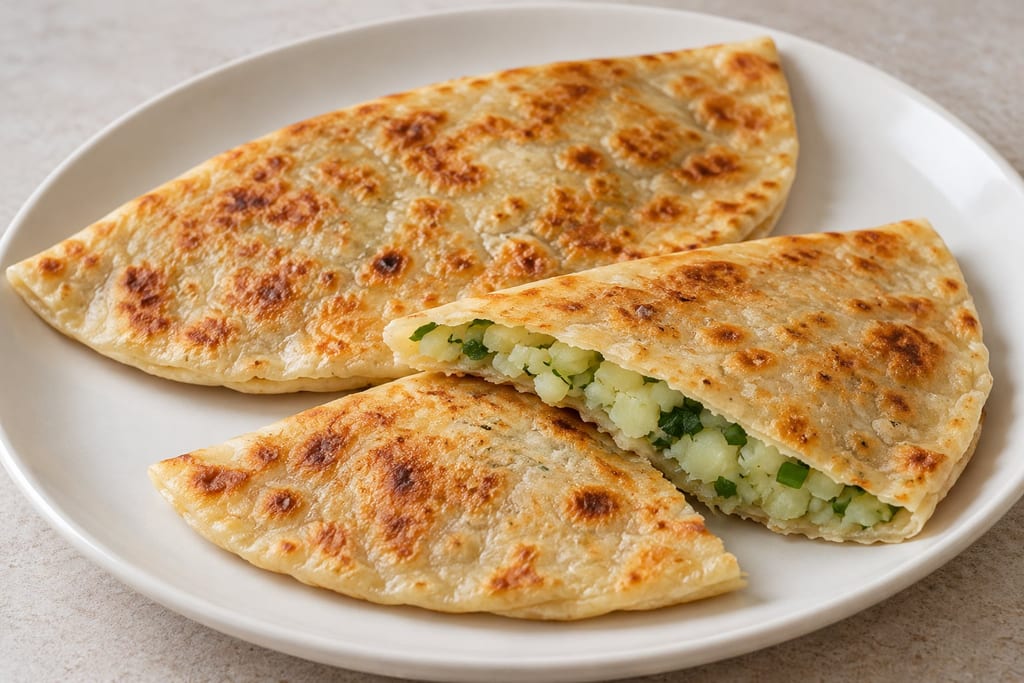
A thin, unleavened Afghan flatbread filled with mashed potato, scallion and cilantro, folded and pan-browned. This version uses a dough made from scratch.
No community contributions have been published for this entry yet.
Sign in to contribute. Published comments and photos are free to read.
Georgia Travel, Georgian National Tourism AdministrationGeography
Mchadi and ChvishtariDescribes chvishtari as a corn-flour and Georgian-cheese bread associated with Samegrelo and Svaneti.
Its separate oven version lists 500 g corn flour, 500 g sulguni, dairy liquid as required, salt and a pinch of soda or baking powder. The oven direction says 250 degrees without a temperature scale, so that setting is not used here.
Cited in: A Megrelian chvishtari; Choosing this version
Georgian RecipesMethod · Ingredients · Geography
Megrelian version of chvishtariThe recipe is explicitly labelled Megrelian and says chvishtari is also popular in Samegrelo, where it is made somewhat differently.
The six-serving formula uses 400 g stone-ground white cornmeal, 230 ml warm milk or water (the author used milk), 1 egg, 50 g butter, 1 level teaspoon each sugar and salt, 200 g sulguni cut into six thick pieces and 100 ml oil.
Knead the cornmeal dough for at least five minutes, divide into six balls, enclose one cheese piece in each, then pan-cook covered over low heat 5–6 minutes, turn, and cook uncovered on low heat a further 5–6 minutes.
Cited in: A Megrelian chvishtari
U.S. Food and Drug AdministrationSafety
What You Need to Know About Egg SafetyFresh eggs may contain Salmonella; wash hands, utensils, equipment and work surfaces before and after contact with raw eggs.
Cook casseroles and other egg-containing dishes to 160°F using a food thermometer.