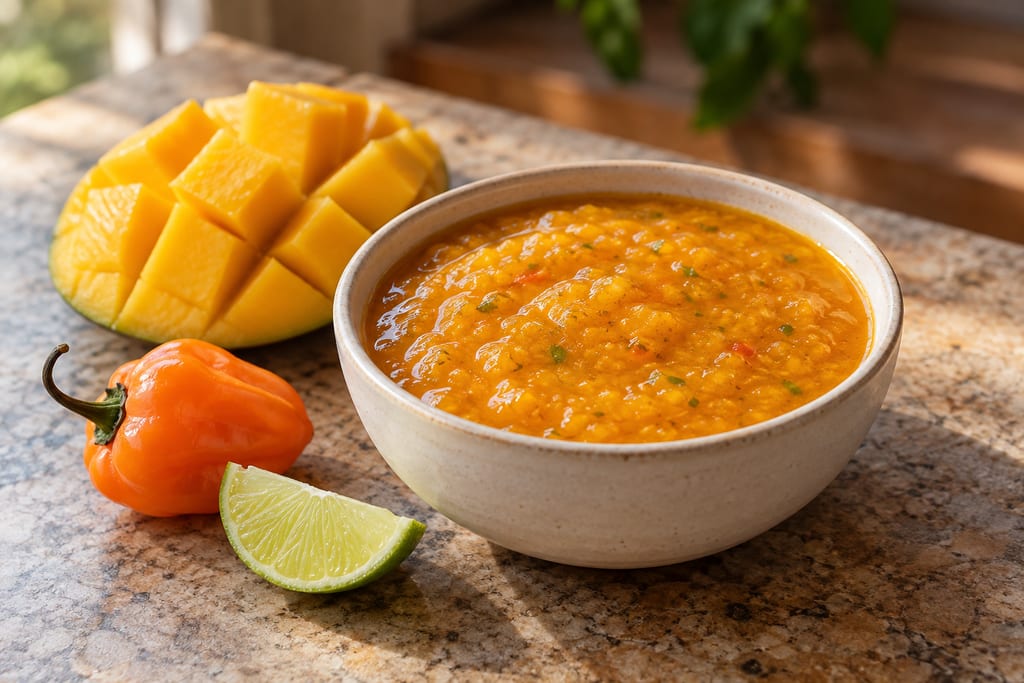
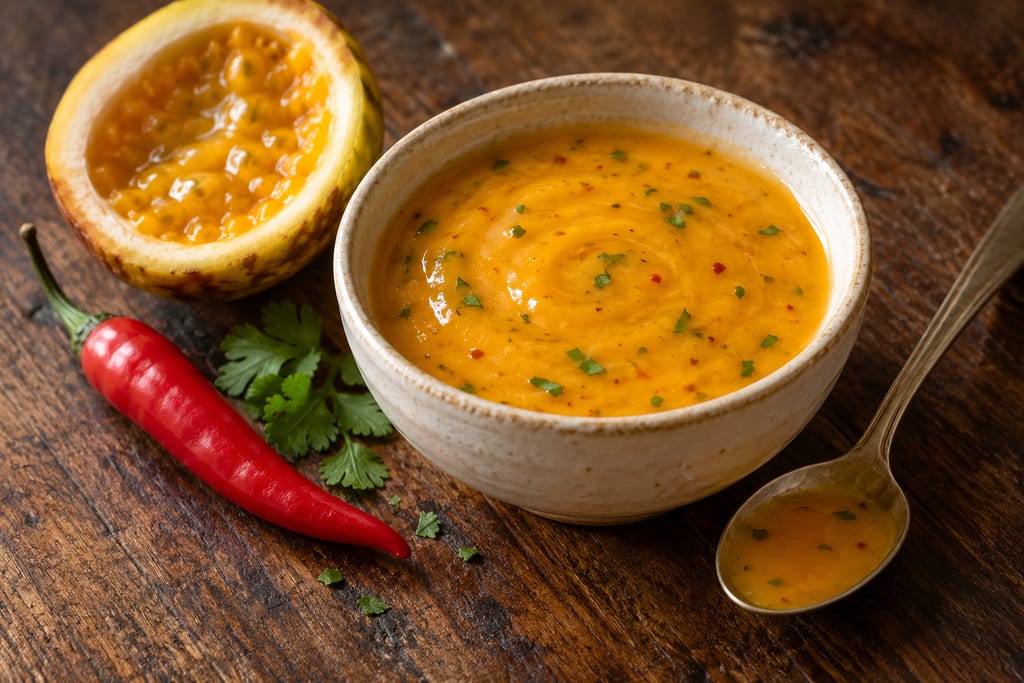
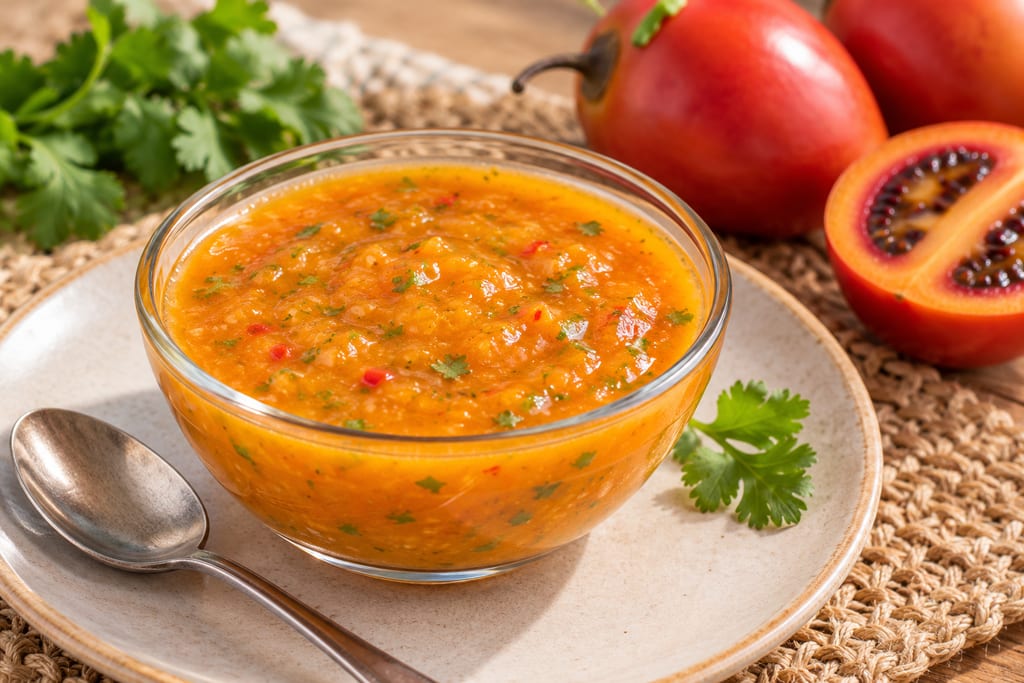
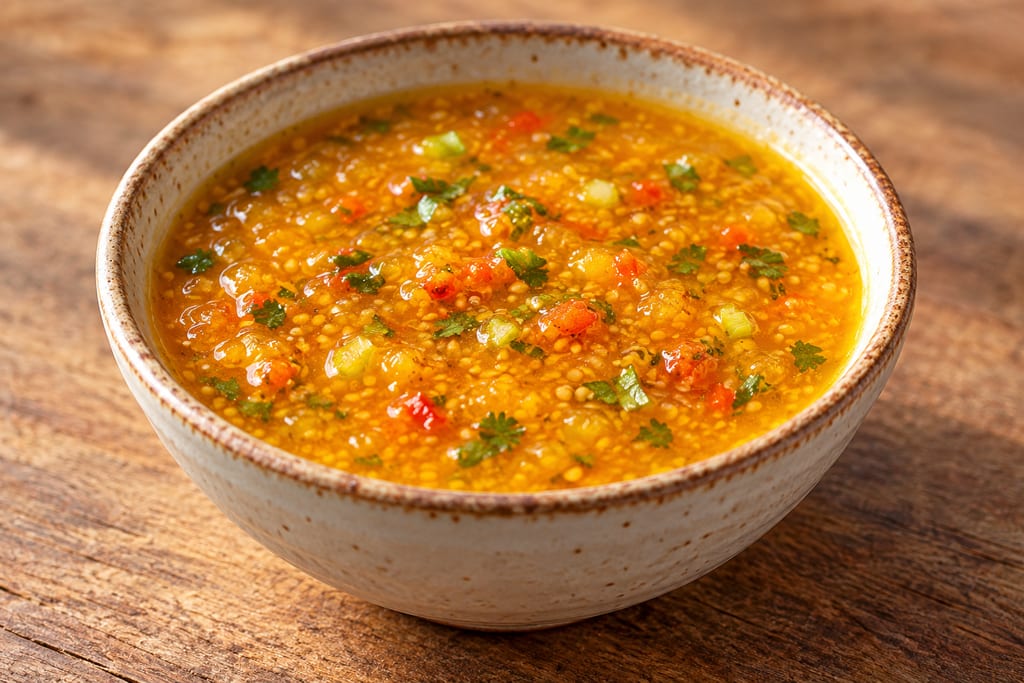
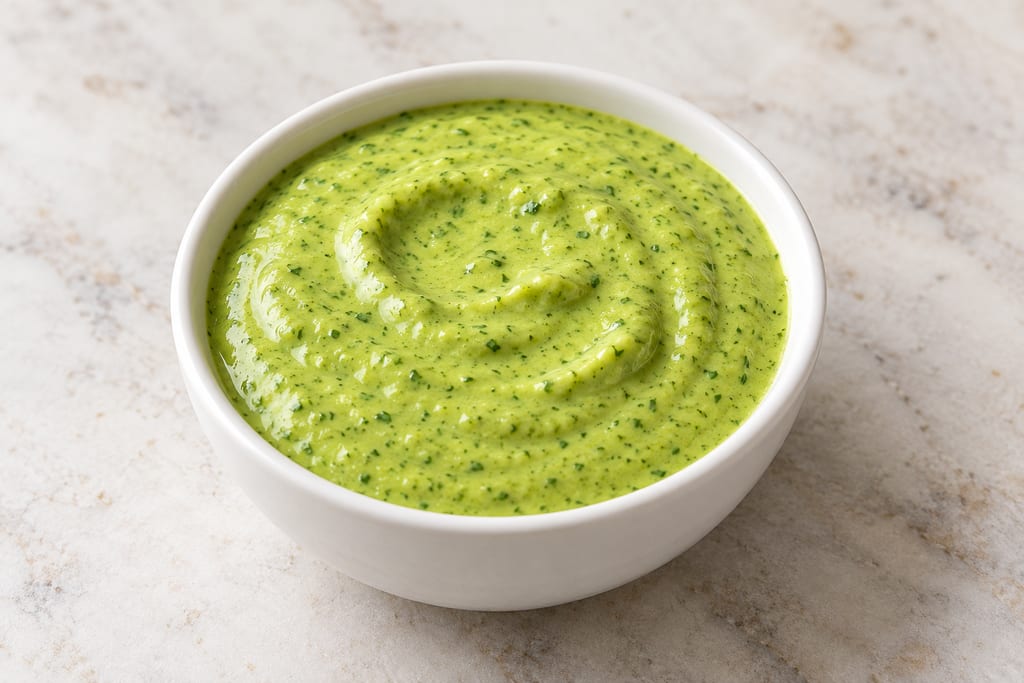
Caribbean pepper sauce is a family of hot sauces made from fresh hot peppers, salt, acid and aromatics, and cooks on the islands make it in many households. Mango is one of the fruits that cooks add. It softens the bite of Scotch bonnet and habanero peppers and gives the sauce a fruit aroma and a rounder sweetness.
The formula in this record is cooked and then blended. No culture, brine or resting period, so this record does not treat it as a fermented sauce.
The author's account is personal. He recalls vendors who sold a signature pepper sauce to children on the islands, and says the vendors reinvented what is known as pepper sauce there. The page offers no dated source for the practice or for mango's place in it, and it names no single island as the origin of this formula.
Commercial production is a later step. The author says the sauce was to be launched commercially; a 2017 reply on the same page states that it was not being manufactured for sale at that time.
The method is a short simmer followed by a blend. The peppers, onion, garlic, mango and vegetables cook together with the citrus, salt and ginger, then the mixture cools and is puréed. The simmer is the only cooking step given and does not say what it changes in the flavour or colour of the sauce.
Heat is the variable to manage. The author advises a first batch with about four habaneros, so the cook can judge the heat before making a larger one. The sauce is mild when first tasted, and the author describes a delayed heat, so tasting after cooling is the practical check. Banana pepper and red bell pepper give body and a milder pepper note. Mustard is optional.
No official shelf life is given or canning instructions, and this record does not supply one. Reader comments are not guidance. One reader kept a batch in the fridge for more than eight months and reported that it lost some of its heat. Another reported mould after two to three weeks in the fridge; the reply suggested that a used utensil might have been the cause.
The research brief lists pineapple, guava and other fruit variations alongside this one. Each fruit changes the sweetness, acidity and aroma, so each is a separate formulation rather than the same sauce with a new name. This record keeps to the mango version the source gives.
The recipe comes from a personal account of Caribbean island pepper-sauce vendors, who sold sauces of their own making. The page gives no dated source for a mango version.
Ingredients
Yield 4 cups · Scaling: the source gives one batch of about 4 cups; scale the peppers in steps, since heat builds unevenly from one batch to the next.
Ripe mangoPeel and dice.
1 large
Habanero pepperDice.
10 peppers
10 to 14 in the source; the author suggests starting with about 4 in a first batch.
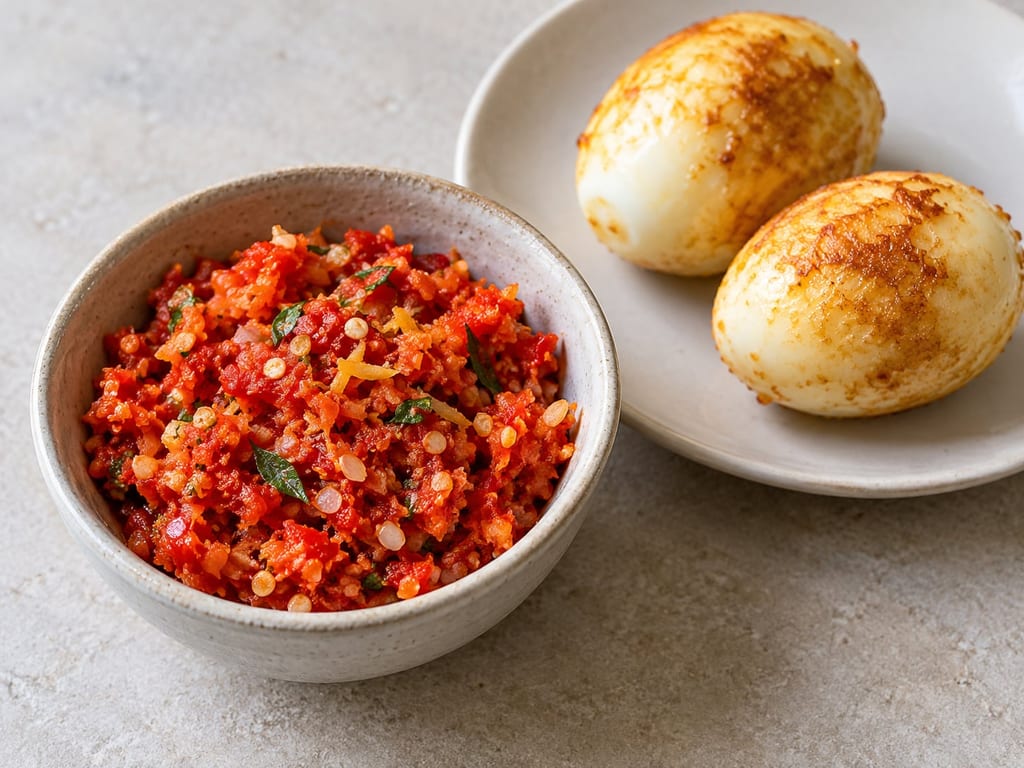
Ai-manas is described as a very hot chilli paste served with Timorese meals. One published version blends fresh chillies, shallots, garlic, Thai basil, ginger, lemon and salt, and serves it with eggs. Sources do not establish a standard formula, precise birthplace or earliest date.
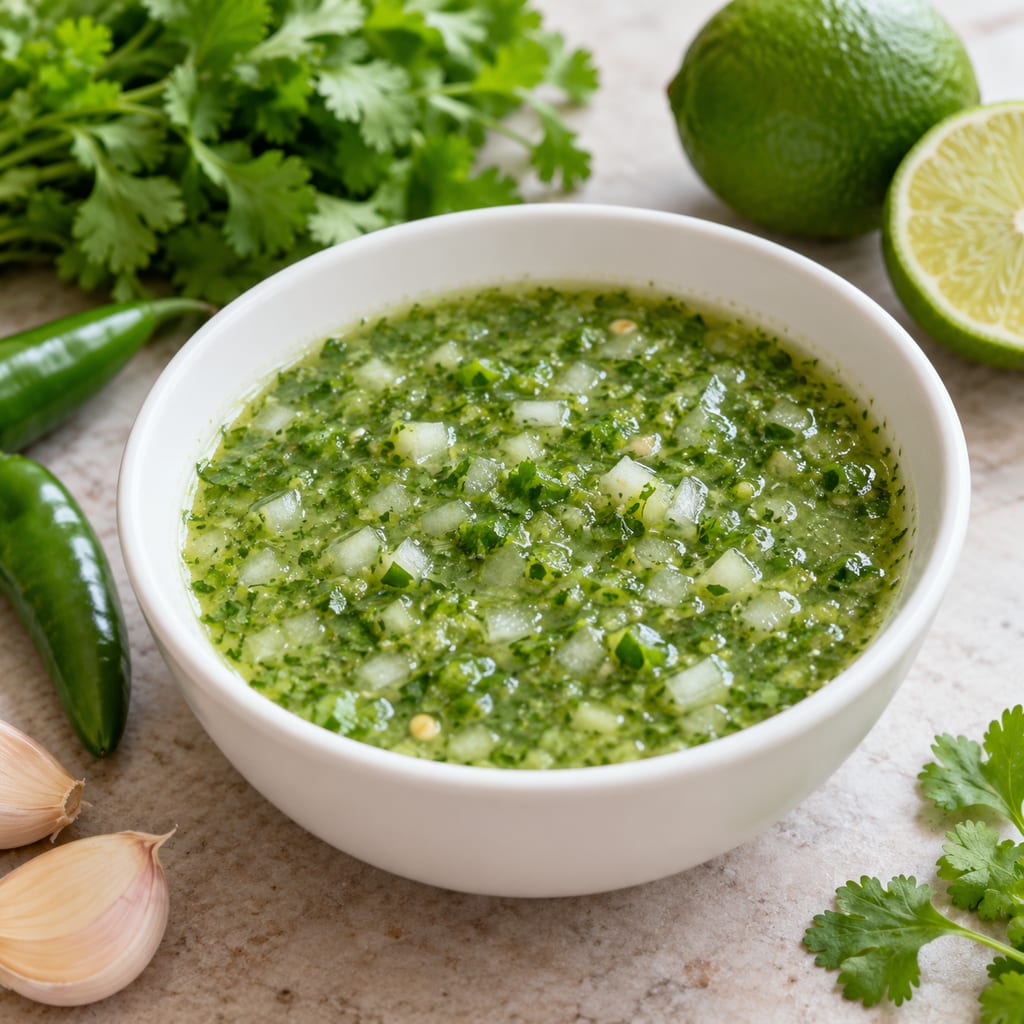
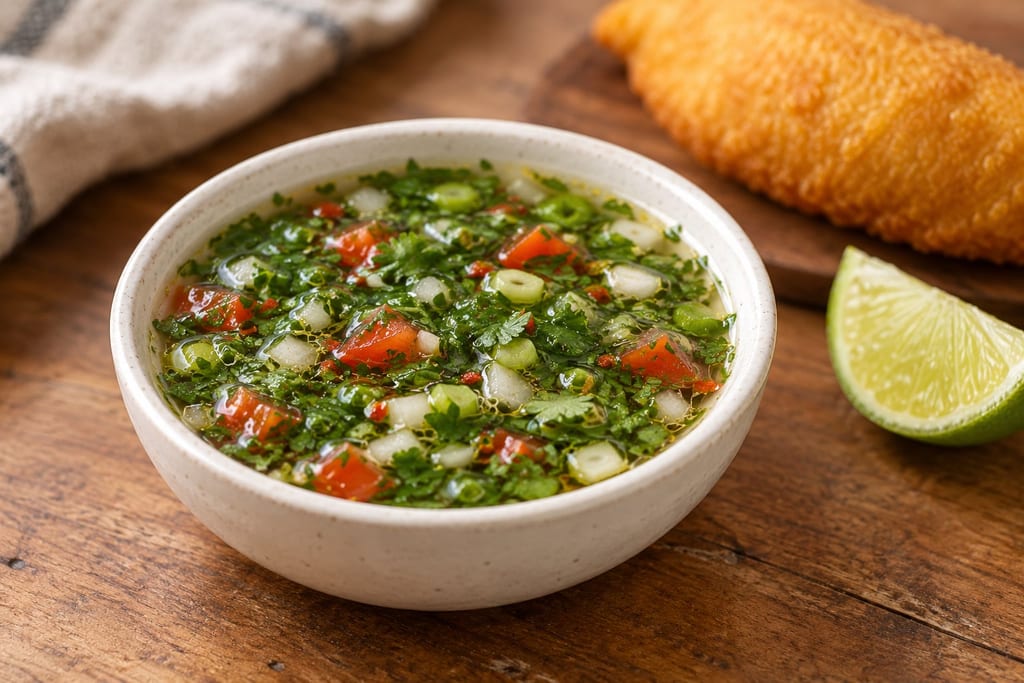
Ají verde is a Peruvian green sauce of coriander, chilli, onion and garlic in a mayonnaise or cheese base. It is best known through Peruvian restaurant cooking abroad.
Community
No community contributions have been published for this entry yet.
Share what you made
Sign in to contribute. Published comments and photos are free to read.
Recipe ingredients: ripe mango, 10 to 14 habanero peppers, onion, garlic, banana peppers, red bell pepper, cilantro, orange juice, salt, lime juice, ginger, optional mustard, for about 4 cups.
Method: simmer gently about 15 minutes, cool, then purée; the author suggests keeping it chunky for texture.
The author recommends starting with about 4 habaneros in a first batch and describes a mild start with delayed heat.
The page gives no official storage or canning instructions; reader comments report fridge storage for 8 months with lost heat and mould after 2 to 3 weeks.
Cited in: Overview; Background; Method and heat; Storage and results; Variations