
Alcoholic fermentation
The white drink: pulque from Teotihuacan to the pulquería
Pulque, the thick white drink of fermented agave sap, left its chemical trace in Teotihuacan jars 1,500 years ago. It went on to fill the tent-like pulquerías of colonial Mexico City, which officials tried and failed to reform.
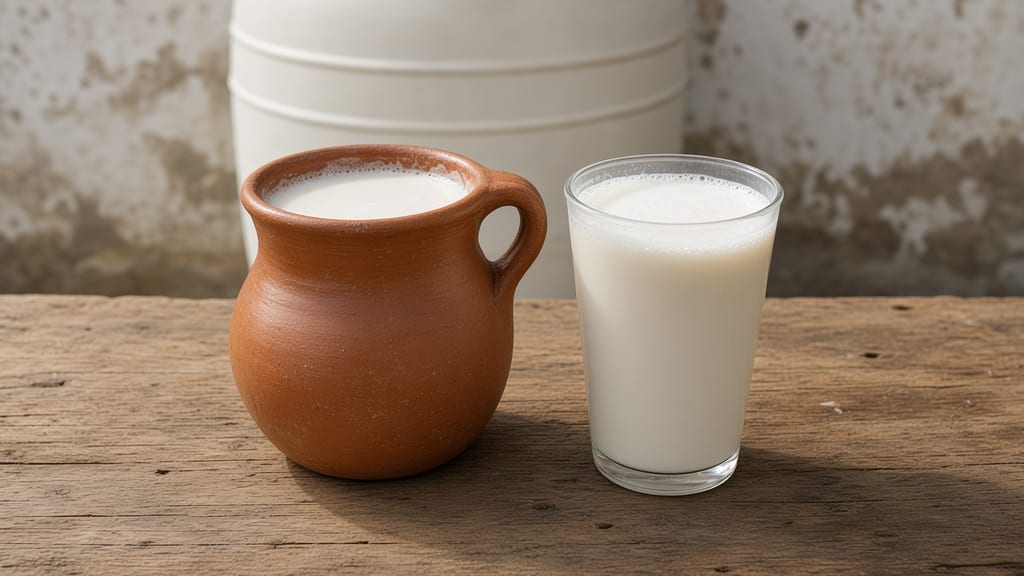
Fourteen sherds from La Ventilla
In a district of Teotihuacan called La Ventilla, people of the third to sixth centuries stored a drink in tall jars and sealed the jars with pine resin. The jars broke, and the pieces lay in the ground. Some 1,500 years later, chemists ground up pieces of them and found the trace of a bacterium.
The bacterium is Zymomonas mobilis. It turns sugar into alcohol, as yeast does, and its cell membrane holds more hopanoids than any other known bacterium. Hopanoids are fatty molecules that survive in pottery long after the drink is gone. A team led by Mariana Correa-Ascencio looked for those molecules in 313 sherds from three parts of the city. They found them in 14, all from La Ventilla. Ten of the 14 came from amphorae.
The same amphora sherds, and no others in the whole set, carried pine resin. The resin had gone on fresh, as a lining, which is how potters waterproof unglazed jars for liquids. The team read the two findings together. The jars were made for a fermented drink of agave sap, and Zymomonas is the bacterium that drink is best known for.
The drink is pulque. It is white, thick and sour, with about as much alcohol as beer. The evidence from La Ventilla is the oldest direct chemical sign of it, from the Tlamimilolpa and Xolalpan phases, about 200 to 550 CE. Teotihuacan then covered about 20 km² and may have held 100,000 people.
Before the sherds, the case for pulque at Teotihuacan rested on pictures and tools. Murals there show maguey plants and scenes that may be drinking. Excavators had found jars shaped like later pulque vessels, and stone scrapers that sap gatherers may have used. The hopanoids added a direct trace of the drink itself.
A food for a hungry city
Correa-Ascencio and her colleagues argue that pulque mattered at Teotihuacan as food, not only as drink. Plants made up most of the city's diet. Drought and frost often ruined the maize, and staples ran short. Agave grows where maize fails and gives sap through the year.
Their paper calls pulque a likely dietary supplement and a buffer against bad harvests. Studies of modern pulque list B vitamins, ascorbic acid, iron, calcium and amino acids such as lysine and tryptophan. The idea is a hypothesis. The sherds show the drink was there. They do not show how much of it people drank, or who drank it.
La Ventilla mixed high-status and low-status homes, so the jars do not settle that question either. What they show is a specialised vessel, lined with resin, made for one liquid and found in one neighbourhood.
Sap from a cut heart
Pulque begins inside the agave. Producers use several large species, among them Agave atrovirens, A. americana, A. salmiana and A. mapisaga. The work belongs to the tlachiquero, the sap gatherer, who knows when each plant is ready.
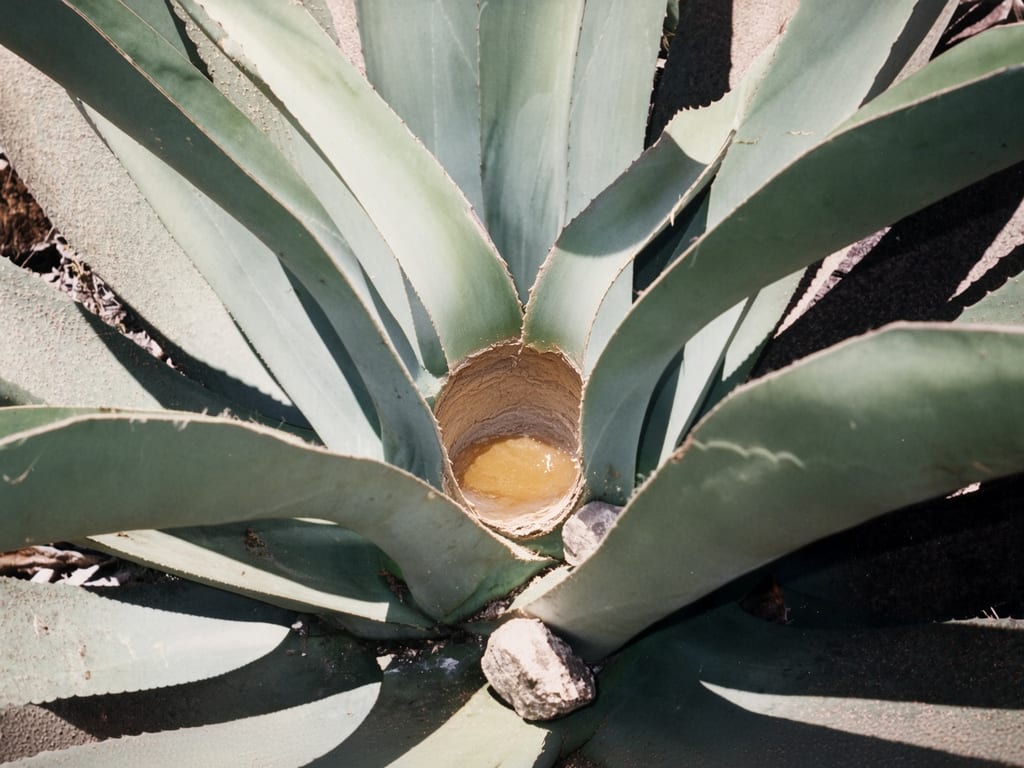
A mature agave is about to send up a tall flower stalk, the quiote. The tlachiquero gets there first. He cuts out the young flower bud and hollows a pit, the cajete, in the heart of the plant. The castrated plant then rests for three months to a year. A cut made too early gives less sap and poorer sap.
Once the plant is ready, he scrapes the walls of the pit. Sap seeps out and pools there. It is aguamiel, honey water, cloudy, thick and very sweet, with a fresh green taste. He collects it twice a day, at dawn and at dusk, by sucking it up through a long dried gourd called an acocote. After each collection he scrapes the pit again to keep the sap running.
A plant gives 4–6 L of aguamiel a day for three to six months, then dies. Over its working life it can yield about 1,000 L. In two villages in Michoacán studied in 2020, producers kept 10 to 15 agaves in production at a time and gathered an average of 26 L and 32 L of sap a day.
Seed, vat and tinacal
Fresh aguamiel ferments on its own, but the result varies. Producers speed it up with a seed. To make one, they leave a few litres of pulque in a vat of about 20 L of sap until it develops a strong alcoholic and acetic taste, or until a white skin called the zurrón forms on top. Depending on the season, this takes one to four weeks.
The seed then goes into fresh aguamiel in larger vats. These were once made of cowhide stretched on a frame. Today they are also made of fibreglass, plastic or wood. They stand in a closed room called the tinacal or in open spaces set aside for the purpose.
The tlachiquero judges the vat by its thickness, smell and taste. If a batch is thin or tastes wrong, he may add roots, herbs or pieces of agave, a practice called cardón. Pulque has no single recipe. Its alcohol, acidity and body change from one tinacal to the next.
The two Michoacán villages show how much one choice can change. In Santiago Undameo, near Morelia, producers boil the sap before they add the seed. They say raw sap causes an irritation they call carame. Their pulque came out sweeter and less acidic, and it carried fewer kinds of bacteria and yeast. In Tarímbaro, to the north, producers do not boil the sap, and their pulque had a wider range of microbes.
What turns the sap white
Pulque ferments in at least three directions at once. Yeasts, Saccharomyces cerevisiae among them, make alcohol and carbon dioxide. Zymomonas mobilis makes alcohol too, by a different route. Lactic acid bacteria sour the drink.
Other bacteria give pulque its body. Leuconostoc species turn sugar into dextrans, long chains of glucose that make the liquid thick and slippery. Drinkers know that texture as the sign of a good pulque. The white colour comes from the mass of microbes and the material they make.
Pulque holds 4–7% alcohol in most cases. A Mexican standard of 1972, NMX-V-037, set the density and acidity a good pulque should have. Few producers measure either. Studies of the microbes add a further benefit. Some of the bacteria and the sugars they make may act as probiotics and prebiotics, though the evidence comes from the laboratory.
The fermentation does not stop. Pulque keeps changing in the vat and in the jug, and it sours within days. That limit shaped its whole history. No one could age pulque or ship it far. Whoever controlled the fields close to a city controlled its supply.
The white wine of the Aztecs
In Nahuatl the drink had several names. Octli meant wine. Metoctli was agave wine and iztacoctli white wine. Poliuhquioctli meant spoiled wine, a pulque gone sour and rank. The Spanish word pulque may come from that last name.
Pulque had its own story of origin. In one version, Quetzalcoatl and Mayahuel came down to earth and hid as branches of a tree. Mayahuel's grandmother, a tzitzimitl, a being of darkness, found them and destroyed Mayahuel's branch. Quetzalcoatl buried her, and the first agave grew where she lay. The friar Bernardino de Sahagún recorded many gods connected with her gift.
The Aztecs drank pulque at rites and feasts, and they punished drinking to excess. The penalty could be death, even for priests.
A colonial trade
After 1521 pulque became the most popular alcoholic drink of New Spain and one of its main businesses. Large estates called haciendas pulqueras planted agave across the central plateau, in what are now Hidalgo, Tlaxcala, Puebla, Morelos, Michoacán and Querétaro.
Spanish law tried to control it from the start. Within a decade of the conquest, in 1529, the crown issued rules on alcohol among the Indigenous population. Over the next three centuries a stream of bans on public drunkenness followed. None of them stopped the drinking.
In June 1692 a food riot shook Mexico City, and officials blamed pulque. The viceroy banned its sale in the city. Five years later his successor allowed unadulterated pulque blanco again. Later viceroys kept blaming the 1692 riot on pulque for more than a century.
Mexico City's pulquerías around 1800
By the end of the colonial period, pulque was the main drink of Mexico City's poor. The historian Michael Scardaville estimated that every person over fifteen drank about 187 US gallons a year, about 700 litres. The poor made up more than 85% of the city's 112,926 people in 1790.
The law fixed the number of pulquerías. From the late seventeenth century the limit was 36. It rose to 45 by 1784. At the start of the nineteenth century the city had about 1,600 drinking places. Of the 758 legal ones, 45 were pulquerías and 593 were vinaterías, taverns for wine and cane spirit. Another 850 or so, the casas de pulque and tepacherías, had no licence.
The pulquerías made up in size what they lacked in number. They stood in plazas and on open lots, and some measured 150 by 60 feet. One could hold at least 600 drinkers at once. Together they sold enough pulque in a day for almost 62,000 customers.
They were built like tents. The ordinances required three sides open to the street so the police could see inside, with one side covered to keep the sun off the staff. Only seven pulquerías followed the rule. Forty per cent had boards or canvas on all four sides. None stood in the city centre. They clustered in the outer barrios, away from the cathedral and the palace.
Pulquerías opened at sunrise and closed at sunset. Drinkers filled them by ten in the morning, and on Saturday, payday for most workers, crowds filled them. They were places to dance, sing and gamble, to sleep for a small fee, to pawn a shirt for a drink. Wealthy men and institutions owned most of them. The average pulquería was worth 13,300 pesos in the early 1790s. The owners leased them to tenants who sold the pulque day to day.
A day in the drinking city
Drink shaped the daily rhythm of the city. An official of the merchants' guild, the consulado, described it in 1807. The spirit shops filled at sunrise. By ten o'clock crowds filled the pulquerías, people he said had come to cool off. At sunset artisans left the workshops and went back to the spirit shops to warm themselves.
Saturday was payday for most workers, and the official wrote that most of them spent it on drink that same night. The court records agree. Twenty per cent of all arrests for drunkenness, and 55% of arrests for tavern offences, happened on Saturday night.
In 1798 drink-related offences made up more than 45% of all arrests in the city. The police took in over 2,300 people for public drunkenness that year, about 3% of everyone over fifteen. The night watch needed four carts to haul the unconscious to the crowded city jail.
Arrests caught only a fraction of the drinkers. The consulado put the number of drunk people in the city at 12,000 a day, and more on the 85 religious holidays of the year, when whole neighbourhoods drank. Police arrested Indigenous drinkers most often. They were 28% of the population and 55% of the arrests for drunkenness.
Pulque was not the only drink. After the crown legalised colonial cane spirit in 1796, the spirit shops multiplied. Arrests for drunkenness by the night watch rose from 816 in 1796 to 1,750 in 1798 and 2,668 in 1810. By 1807 officials blamed cane spirit more than pulque for the flood of drunkenness.
The cuberas and the sour leftovers
Unlicensed drinking houses sold perhaps half the pulque in the city. That was the claim of the Conde de Regla, who owned four pulquerías, and it may be too high. Most of these houses were run by women, cuberas, who sold drink from their homes. In the court records, 54% of cuberas were of Spanish descent and 70% had husbands.
Some cuberas bought pulque from the tenants of the pulquerías. Others bought it three or four days old, already sour, and turned it into tepache by mixing it with brown sugar and citrus fruit. Most of their pulque was contraband. Customs guards at the city gates weighed only part of each load, kept some for themselves and sold it cheap to the cuberas.
Pulque was sold in other places too. The city rented stalls in the Volador and Parián markets for ten pesos a week. Indigenous sellers in the main square sold tlachique, a cheap, rough pulque, at low prices. After the pulquerías closed at sunset, women sold pulque in the streets.
Food, seats and reform
Officials blamed the pulquerías for crime, debt, disease and broken families. A royal order of 1778 asked for action. A committee reported in 1784 and proposed limits of four drinks per customer, cash sales only and a gap of two blocks between pulquerías and spirit shops. Nothing happened until the viceroy Revillagigedo took up the cause.
In December 1792 he began to enforce the old pulquería ordinances of 1671 and 1752. He started with food. The rules banned eating inside a pulquería and selling food on the surrounding block. Investigators found that almost all 43 pulquerías sold food. Small eating houses surrounded each one, along with women selling tortillas and tamales from baskets and stalls. Within three days the ward police had cleared most of them.
Some of the women protested that selling food to pulque drinkers was the only respectable way they had to feed their families. One group handed their children to the police. Revillagigedo let the eating houses reopen and banned only the street sellers. The owners then let customers carry food into the pulquerías, and the bartenders carried pulque into the eating houses. On 30 December the viceroy outlawed that as well.
Next came the seats. Forty pulquerías had benches, thousands of them. On 1 January 1793 Revillagigedo ordered every resting place taken out. Many administrators refused. Ten days later he tried a different order, telling the staff to stop customers from lingering once they had finished their drink. The tenants wrote that lingering was an old custom of the poor and that no one could move a crowd that did not want to go.
Why reform failed
For a few months the police enforced the rules. They arrested people for sitting, selling food, taking pawns and selling pulque after dark. Then enforcement faded. The court records list no arrests for breaking the pulquería ordinances between 1795 and 1807. By the late 1790s women sold food inside again, and customers stayed all day.
Money was the main reason. The sales tax on pulque brought the crown about 600,000 pesos a year in the 1770s and 1780s and about 800,000 a year in the 1790s and early 1800s. The market stalls alone earned the city almost 17,000 pesos a year, more than half of what it spent on public works in 1794. During Revillagigedo's campaign the city even built more stalls.
The police could not carry the load either. Ward officers also served as dogcatchers, fire inspectors and census takers. About a quarter of the unpaid ward officers owned or managed taverns themselves, and the night watch took bribes.
The hacienda owners had power too. The Conde de Regla earned 40,000 pesos in 1770 from one agave estate. In 1811 the city's chief magistrate, Ramón Gutiérrez de Mazo, proposed that no one drink inside a pulquería or spirit shop, or within 110 feet of the door. Customers would bring their own jugs and drink at home, as they already did with tortillas and atole bought from shops. The viceroy published the rule in September. The next day the widow of the Conde de Regla led the hacendados and pulquería owners in protest. Less pulque sold, they argued, meant closed taverns, ruined estates, thousands of farm workers out of work and lost taxes. The viceroy suspended the order before the month was out. It never came back.
Railways and the Pulque King
Pulque's short life tied it to the land around the cities. The railway loosened that tie. In the late nineteenth century trains carried pulque in wooden barrels from more than 300 haciendas and tinacales, most of them in Hidalgo and Tlaxcala, straight to Mexico City.
These were the decades of the drink's greatest wealth. People called agave the crop of the century and pulque white gold. Ignacio Torres Adalid, who built a business on the trains and on diversifying the agave trade, was known as El Rey del Pulque, the Pulque King.
By the start of the twentieth century Mexico made about 500 million litres of pulque a year. One estimate puts consumption in Mexico City alone at 350,000 L in 1905.
Revolution, beer and decline
The Revolution broke the haciendas. Pulque belonged to the old landowning class, and from 1914 to 1920 the government of Venustiano Carranza campaigned against it. Many hacendados left the country.
Worse came in the late 1930s. Between 1935 and 1940 an official campaign against alcohol, the destruction of many agave fields and the rise of beer as the popular drink cut pulque production hard. Beer kept in a bottle. Pulque soured in days.
Pulque never vanished. It is still made from the same species, in tinacales across central Mexico. The castration, the scraping and the seed have not changed.
Pulque today
Today's drinkers choose between two kinds. Some want pulque natural, fresh from the vat. Others prefer it after a day or more of fermentation, mixed with fruit juice into a curado. A curado blends pulque with macerated fruit, vegetables, nuts or spices.
Producers still work much as the old sources describe. The acocote is still in use in Hidalgo. Aguamiel still travels to the tinacal in plastic containers. Vats of hide, wood, plastic and fibreglass stand side by side.
Scientists now want to know what the drink does in the body and how its microbes behave. Some argue that tinacales could change a few practices to make pulque clean every time while keeping its local strains.
What remains unknown
The Teotihuacan sherds show pulque was there by about 200 CE. They do not show when people first cut an agave for sap, and the drink may be much older. The Aztec name poliuhquioctli is only the probable source of the word pulque. No one has shown how much pulque the people of Teotihuacan drank, or whether it carried them through bad harvests.
The amphorae of La Ventilla still hold the best answer to the first question. Ten jars lined with pine resin held a drink that soured in days, made by a bacterium that left its fat in the clay.
Related
Read more
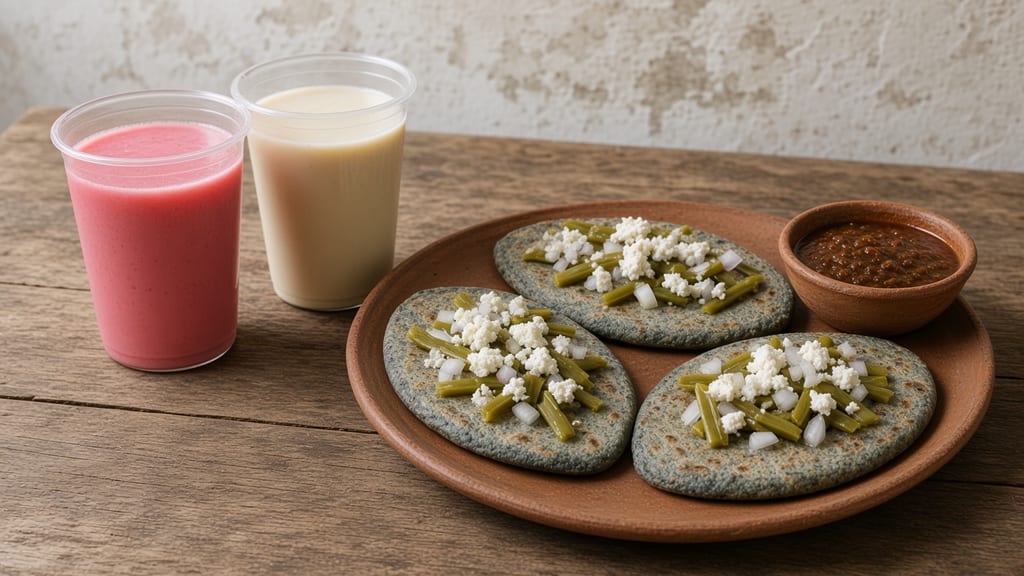
A pulquería meal: curado, tlacoyos and salsa borracha
A home pulquería meal for four: guava or oat curado made from bought pulque, bean, fava or requesón tlacoyos from the comal, and a pasilla salsa borracha loosened with pulque.
Discussed in this article

Acocote
The acocote is a long, hollowed and dried gourd used to draw aguamiel from a mature maguey. It is a harvesting tool: the sap is transferred to a separate vessel before it ferments into pulque.
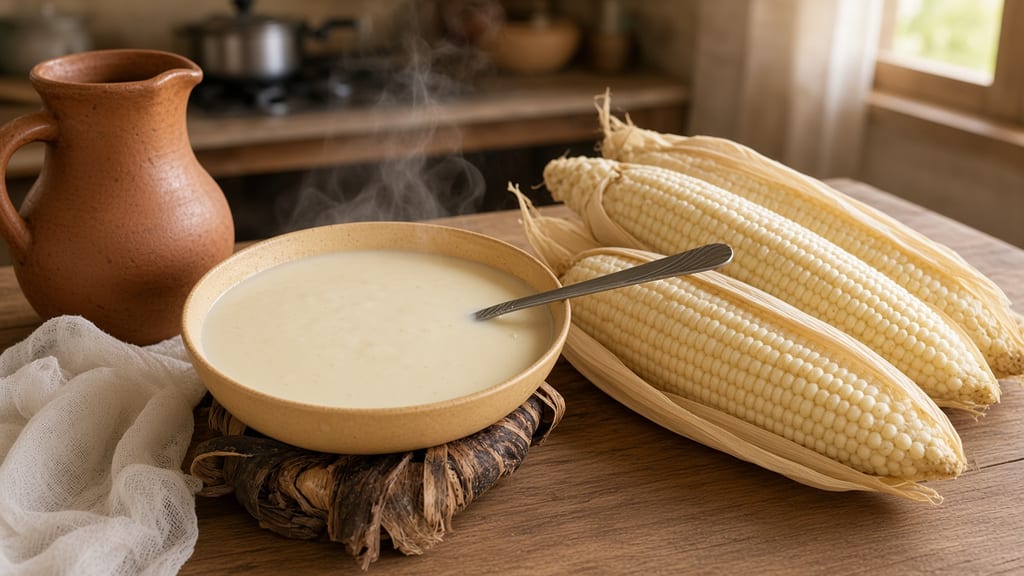
Atole agrio
A hot, sour maize drink from Tabasco made from maize that is not lime-cooked. The ground grain sours for half a day, then makers strain it and boil it until thick.
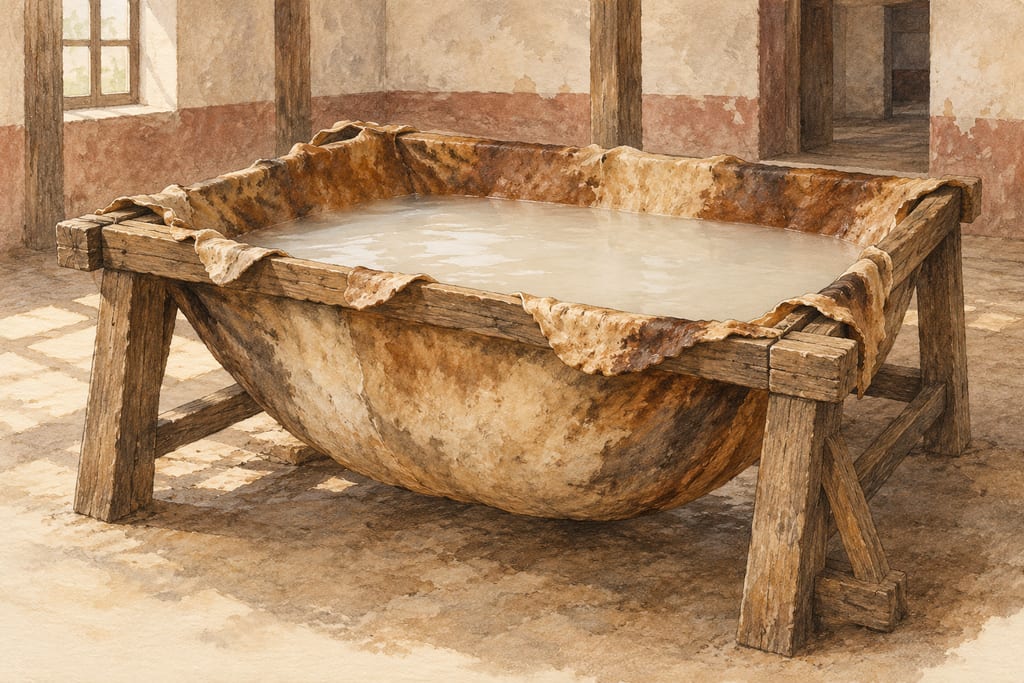
Framed hide vat for pulque
A framed hide vat is cattle hide fixed around a timber frame and sagging into a basin. In a tinacal it holds aguamiel and its ferment as they become pulque; it is distinct from the room, the acocote and a carrying skin.
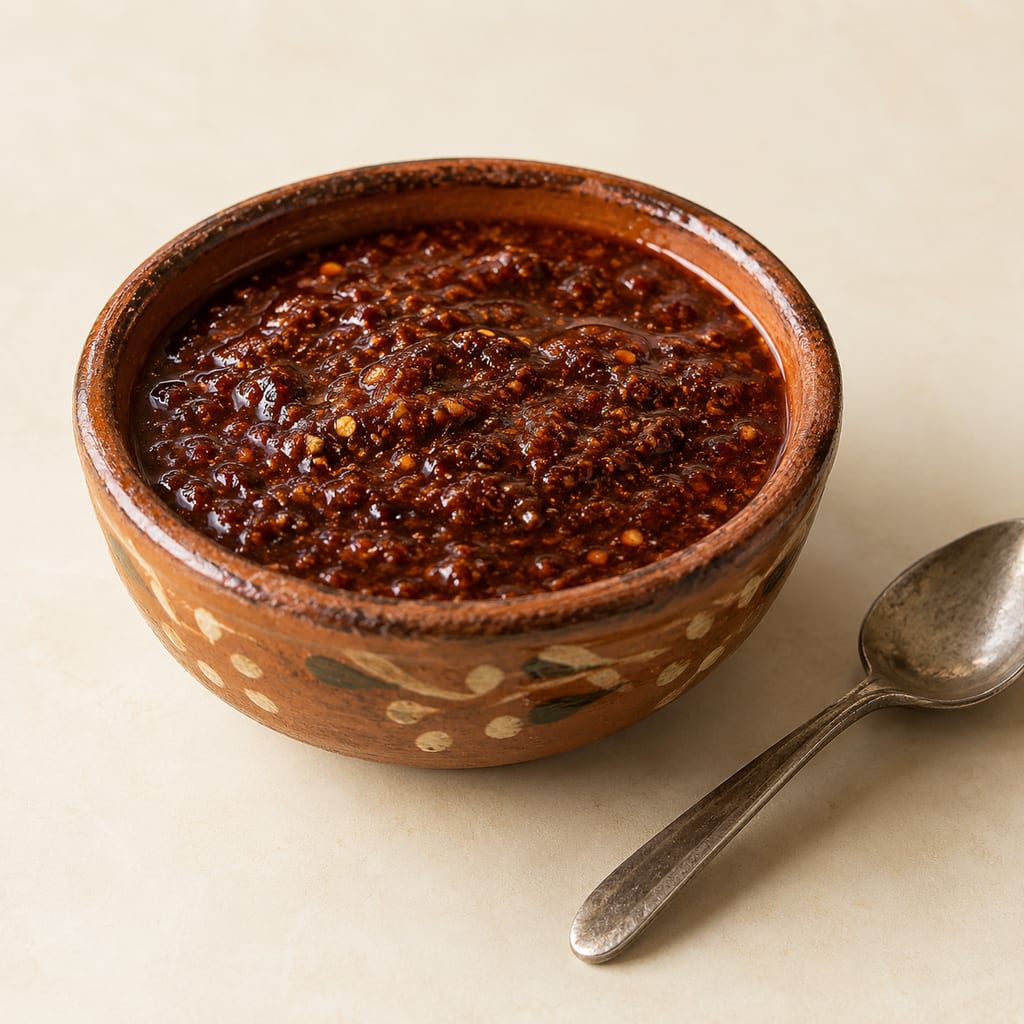
Salsa borracha
A chile sauce of dried pasilla peppers whose liquid is an alcoholic drink, pulque in the old form and beer where pulque is not available. It is served with barbacoa in Mexico City and the central states.
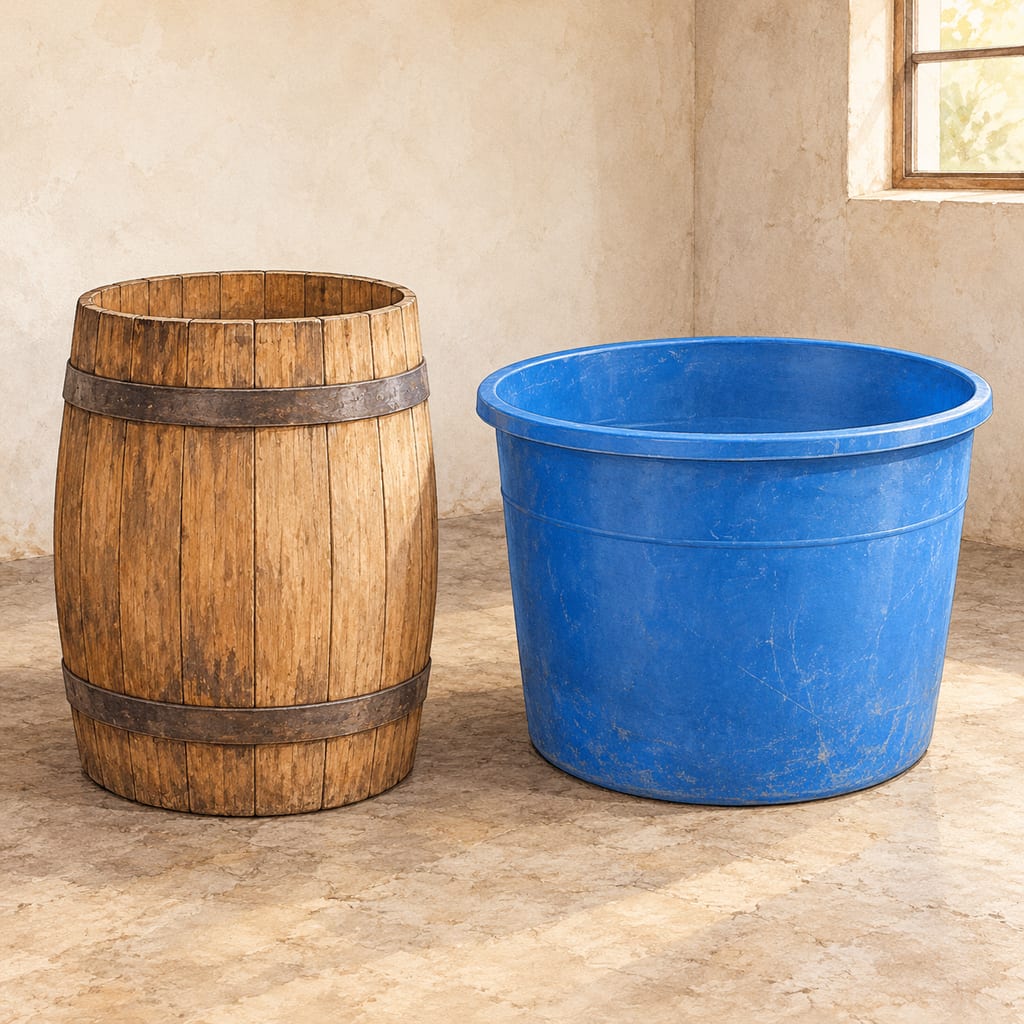
Wood barrel and modern tub in a tinacal
Pulque fermentation may use a wooden barrel or a modern plastic or fibreglass tub. The tinacal is the room or place where the vessels stand, not a name for either container.
Community
No community contributions have been published for this entry yet.
Share what you made
Sign in to contribute. Published comments and photos are free to read.
Sources
Correa-Ascencio et al., Proceedings of the National Academy of Sciences 111(39):14223–14228, 2014
Pulque production from fermented agave sap as a dietary supplement in Prehispanic MesoamericaCited in: Fourteen sherds from La Ventilla; A food for a hungry city; What turns the sap white; What remains unknown
Escalante et al., Frontiers in Microbiology 7:1026, 2016
Pulque, a traditional Mexican alcoholic fermented beverage: historical, microbiological, and technical aspectsCited in: Sap from a cut heart; Seed, vat and tinacal; What turns the sap white; The white wine of the Aztecs; A colonial trade; Railways and the Pulque King; Revolution, beer and decline; Pulque today; What remains unknown
Álvarez-Ríos et al., 2020
Bacterial community and physicochemical changes during pulque production in two communities of MichoacánCited in: Sap from a cut heart; Seed, vat and tinacal; What turns the sap white; Pulque today
Michael C. Scardaville, Hispanic American Historical Review 60(4):643–671, 1980
Alcohol Abuse and Tavern Reform in Late Colonial Mexico CityCited in: A colonial trade; Mexico City's pulquerías around 1800; A day in the drinking city; The cuberas and the sour leftovers; Food, seats and reform; Why reform failed
Gaps
- No published Fermentea recipe for pulque itself; the pulque item needs a research note before it can publish.
- Aguamiel has no published ingredient page.
Updated 2026-11-03