
Alcoholic fermentation
A pulquería meal: curado, tlacoyos and salsa borracha
A home pulquería meal for four: guava or oat curado made from bought pulque, bean, fava or requesón tlacoyos from the comal, and a pasilla salsa borracha loosened with pulque.
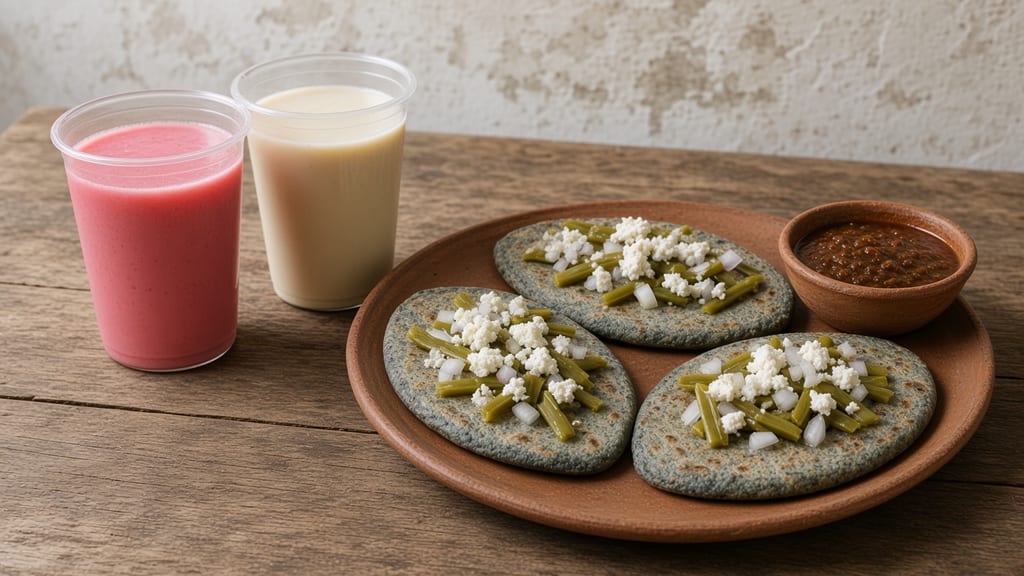
A meal that grew up beside the vats
A pulquería was never only a place to drink. In Mexico City in 1792, inspectors found that almost every one of the 43 licensed pulquerías sold food. Small eating houses stood around each of them, and women sold tortillas and tamales from baskets and stalls on the same block.
The viceroy tried to separate the drink from the food. He banned eating inside the pulquerías and selling food on the surrounding streets. Some of the women who cooked for the drinkers protested that it was the only respectable way they had to feed their families. When the eating houses reopened, owners let customers carry plates in, and bartenders carried pulque out. The ban on food did not last.
This menu follows that old habit. It pairs a glass of pulque, sweetened and thickened with fruit or oats, with hot tlacoyos from the griddle and a dark chile salsa loosened with pulque. All three are made in a home kitchen, from pulque you buy.
The meal serves four. Plan on about two hours of work from start to finish, most of it spent shaping and cooking the tlacoyos. The curado and the salsa can both be made while the masa rests.
Start with bought pulque
Pulque begins as aguamiel, the sweet sap that collects in the scraped heart of a mature agave. Tlachiqueros draw it off by hand twice a day, and it ferments in vats with a seed of older pulque. This menu leaves all of that to the producers. Collecting sap means cutting into a plant that has grown for years, and it is not something to try in a garden. Every step below starts with finished pulque.
Fresh pulque from a tinacal is alive. It keeps fermenting after it leaves the vat, and it does not stand long storage without developing off flavours. For that reason it rarely travels far from where it is made.
Outside central Mexico, the practical choice is canned or bottled pulque. Producers in Puebla, Tlaxcala and Hidalgo have built businesses on it, and canned pulque is exported to Europe, Central America and the United States. Most is pasteurised or otherwise stabilised so that it keeps. Pasteurisation changes the flavour and kills the living microbes that make fresh pulque what it is.
So be clear about what a can gives you. It is a fair stand-in for the taste and body of the drink, a little flatter and sweeter than the fresh kind. It is not a starter. A tin of pasteurised pulque will not seed a batch of agave sap, and nothing in this meal asks it to.
Buy two cans or bottles of about 330 to 500 ml each, enough for four glasses of curado and the salsa. Chill them overnight. Read the label for the alcohol content, which commonly sits around that of a light beer, and for any added sugar or flavour. Plain, unflavoured pulque works best, because you are going to flavour it yourself.
Natural or curado
Pulque is drunk two ways. Pulque natural is the plain drink straight from the vat. A curado is pulque blended with macerated fruit, vegetables, nuts or spices. Some drinkers want only the fresh natural kind. Others prefer pulque that has fermented for more than a day, mixed with fruit juice into a curado.
Curados are the drinks most visitors meet first. Market and fair stalls line them up in big glass jars or plastic cups, pink, cream, green and orange. Studies of Mexican fermented drinks list many names for them and often fold them all under the single word pulque.
The word curado means cured. A curado takes the sour edge off older pulque and covers some of its smell, which is one reason it suits canned pulque well. Fruit and sugar make up for the liveliness that a pasteurised drink has lost.
This menu gives two curados. Guava is the classic fruit curado, pink and perfumed. Oat curado is pale and creamy, closer to a milkshake. Make one or both. Each recipe makes four small glasses.
Guava curado
You need 400 g ripe pink or yellow guavas, 60 to 80 g sugar, 150 ml cold water and 500 ml chilled plain pulque.
Wash the guavas and trim off the stem and blossom ends. Cut them into quarters. Put them in a blender with the sugar and the water and blend until smooth. Guava is full of hard seeds, so press the purée through a fine sieve with the back of a spoon. You should have about 400 ml of thick pink purée. Chill it until it is as cold as the pulque.
Pour the cold pulque into a jug and stir in the purée a little at a time. Stop and taste after half of it. A good curado tastes of fruit first and pulque second, with the sour, yeasty finish still there underneath. Add more purée or a spoonful more sugar until it tastes right to you.
Many pulque sellers blend the fruit straight into the pulque and strain it. With canned pulque, stir the purée in by hand. That keeps more of the drink's thick, slightly ropy body and raises less foam.
If fresh guavas are hard to find, use 400 ml of good guava nectar or canned guava pulp and leave out the water. Cut the sugar, since bought nectar is already sweet, and taste as you go.
Oat curado
You need 60 g rolled oats, 300 ml cold water, 50 to 70 g sugar, a pinch of ground cinnamon, a few drops of vanilla extract and 500 ml chilled plain pulque.
Soak the oats in the water for 30 minutes. Blend them with the soaking water, the sugar, the cinnamon and the vanilla until smooth. Strain through a fine sieve or a cloth to remove the grit, pressing hard. You should have about 300 ml of pale oat milk.
Chill the oat mixture, then stir it into the cold pulque as for the guava version. Taste and adjust the sugar. The finished drink should be creamy and only lightly sweet, with the sourness of the pulque coming through.
Some cooks add a handful of toasted pine nuts or walnuts to the blender for a richer, nuttier curado. Strain it just as well if you do.
Serving and keeping the curado
Serve curados very cold, in tall glasses or clay jarros, and drink them the day they are made. Pulque sellers advise drinking curados the same day, before they lose flavour and body. Make the curado no more than an hour before the meal and keep it in the fridge at 4 °C or below until you pour it.
If you buy fresh, unpasteurised pulque, the fruit sugar feeds the living microbes and the drink goes on fermenting. Within a day it grows more sour, more alcoholic and fizzy. Do not seal a fresh curado in a stoppered bottle, because pressure builds. Canned, pasteurised pulque is more stable once mixed, but the fruit spoils as quickly as any juice would. Throw out what is left at the end of the day.
Stir the jug before you pour, because the fruit settles. A curado that has separated is still fine to drink. One that smells of nail varnish or vinegar, or has grown a film, should be poured away.
Tlacoyos, the masa
Tlacoyos are thick ovals of corn masa with a filling sealed inside, cooked on a dry griddle and topped like a tostada. They are an antojito of central Mexico with roots before the Spanish conquest. In the big cities they are sold mostly for breakfast, on street corners and in markets.
For four people you need 500 g masa harina, about 650 ml warm water, 1 teaspoon fine salt and 2 tablespoons lard or neutral oil. Fresh nixtamalised masa from a tortillería is better still, if you can get it. Use about 1 kg and skip the water.
Mix the masa harina and salt in a bowl. Add the water gradually and knead with your hands for three or four minutes, until the dough is soft and smooth and feels like modelling clay. Work in the fat. Press a small ball flat between your palms. If the edge cracks badly, the dough is too dry, so knead in a little more water.
Cover the bowl with a damp cloth and let the masa rest for 20 to 30 minutes while you make the filling and the salsa. Masa dries fast in the air, so keep it covered while you shape.
The filling
The usual fillings are pastes of fava beans, beans or dried split peas, or the fatty scraps left from frying pork crackling. In Morelos cooks also fill them with requesón, a fresh, crumbly whey cheese, or with cooked potato. Pick one, or make two kinds. Around Toluca the ovals are usually made from blue corn masa and filled with fava paste.
For beans, use 400 g cooked black beans, drained, 1 tablespoon lard or oil, half a small onion, finely chopped, and salt. Fry the onion in the fat until soft. Add the beans and mash them in the pan with a little of their liquid. Cook, stirring, until the paste is thick and dry enough to hold its shape on a spoon. A wet filling will burst through the masa.
For fava, cook 250 g dried split fava beans in water until soft, about 40 minutes. Drain well, then fry and mash them as for black beans, with a little chopped onion and a pinch of salt. Some cooks add a sprig of fresh mint.
For requesón, season 250 g requesón or ricotta with salt and a little chopped fresh chile or epazote. Ricotta is wetter than requesón, so drain it in a sieve for 30 minutes first.
Let any cooked filling cool to room temperature before you use it. Hot filling softens the masa and makes it tear.
Shaping
Divide the masa into 12 balls of about 90 g each. Keep them under the damp cloth.
Take one ball and pat it into a disc about 12 cm across and a little thicker than a tortilla. Hold it in the palm of one hand. Spread a heaped tablespoon of filling in a line down the middle. Leave a clear rim all round.
Fold the two long sides up over the filling and pinch them together along the top to seal. Pinch the ends closed. You now have a fat cigar of masa with the filling inside.
Lay it on the work surface and press it flat with your palm, then pat and pull it into a pointed oval about 15 cm long, 7 cm wide and 1 cm thick. If filling shows through a crack, pinch a scrap of masa over it. Set each finished tlacoyo on a sheet of baking paper and cover it while you shape the rest.
Cooking on the comal
Heat a comal, a heavy cast-iron pan or a griddle over medium heat for several minutes. It should be hot enough that a drop of water skips and vanishes, but not so hot that it smokes. No oil goes on the griddle at first.
Lay two or three tlacoyos on the dry surface. Cook for about five minutes, until the underside is set, dry and spotted with brown. Turn and cook the second side for another five minutes. Turn once more and give each side another minute or two. The masa should be cooked through and the filling hot in the centre.
Tap the side of one. It should feel firm, not soft and doughy. If you have a thermometer, the centre should reach 75 °C.
Brush the tops with a little lard or oil in the last minute if you like a crisper crust. Keep cooked tlacoyos warm in a cloth-lined basket while you cook the rest, and serve them within the hour. Leftovers should go into the fridge as soon as they have cooled, and be eaten the next day after reheating until piping hot.
Toppings
A tlacoyo is dressed after it leaves the griddle. The usual toppings are salsa, cooked nopal cactus strips, chopped coriander and onion, and often crumbled cheese.
For nopales, buy two or three cleaned cactus paddles, or a jar of nopalitos. Cut fresh paddles into thin strips and cook them in a dry pan over medium heat with a pinch of salt. They release a slippery liquid. Keep cooking and stirring until it dries up, about 10 minutes. Rinse jarred nopalitos well and drain them.
Crumble 150 g queso fresco or feta. Finely chop half a white onion and a small bunch of coriander. Put everything in bowls on the table so each person can build their own.
Spoon salsa borracha across the top of each tlacoyo, then the nopales, onion, coriander and cheese. Eat them with your hands or with a knife and fork, while they are hot.
Salsa borracha
Salsa borracha means drunken salsa. In central Mexico it is a thick sauce of pasilla chile, garlic, onion and pulque, smooth or coarsely ground, served under aged cheese and chopped onion. It is common in Tlaxcala, Puebla, Hidalgo, Morelos, Mexico City and the State of Mexico. In the north of the country the same name goes to a tomato and chile salsa made with beer.
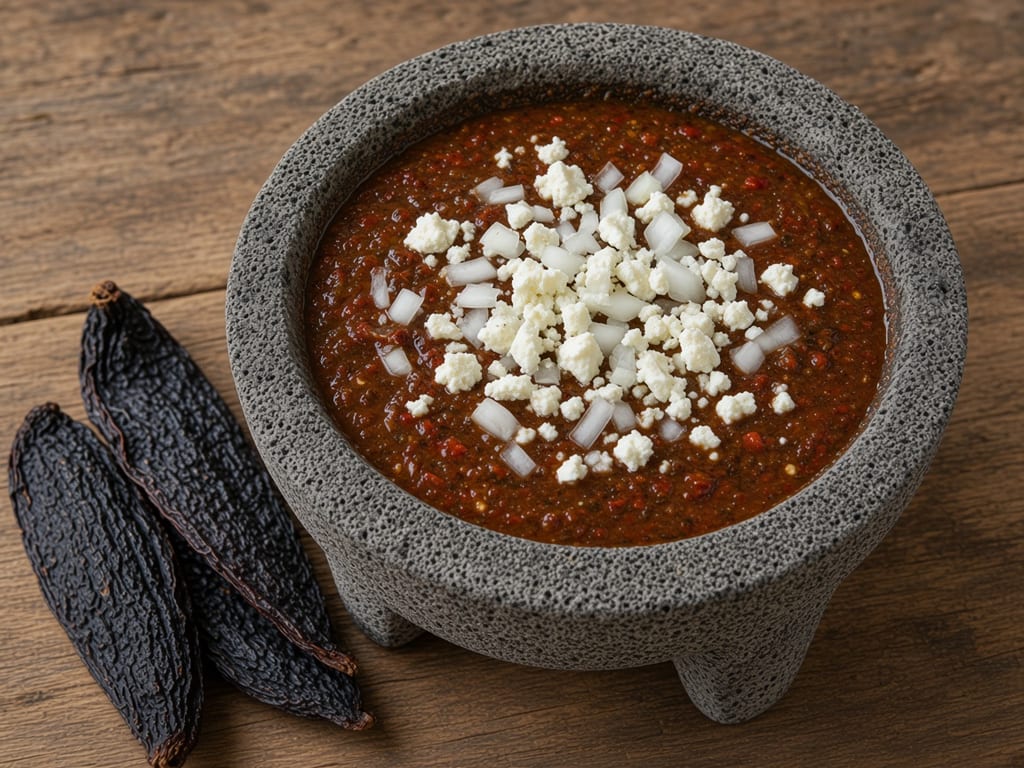
You need 6 dried pasilla chiles, 2 garlic cloves in their skins, half a white onion, 150 ml plain pulque, 1 tablespoon oil, salt, and for the top, 2 tablespoons crumbled aged cheese such as cotija and a little finely chopped onion.
Wipe the chiles clean. Cut off the stems, slit them open and shake out the seeds and the pale veins. Toast them on the hot comal for about 10 seconds a side, pressing them flat with a spatula, until they soften, smell fragrant and blister slightly. Do not let them blacken, or the salsa turns bitter.
Cover the toasted chiles with hot water and soak for 15 to 20 minutes, until they are soft. At the same time, toast the garlic and the onion half on the comal until charred in spots and soft, about 10 minutes. Peel the garlic.
Blending the salsa
Drain the chiles and discard the soaking water, which can be bitter. Put the chiles, garlic and half of the onion in a blender with 100 ml of the pulque and a good pinch of salt. Blend to a thick, slightly coarse paste. Add more pulque, a spoonful at a time, until the salsa flows slowly off a spoon.
Heat the oil in a small pan, pour in the salsa and cook it over medium heat for five minutes, stirring, until it darkens and thickens. This mellows the raw chile. Some cooks skip this step and serve the salsa raw, which keeps more of the pulque's taste and all of its alcohol.
Let it cool, then stir in the last of the pulque. Taste for salt. Pour the salsa into a bowl and scatter the cheese and chopped onion over the top just before serving.
Made with canned pulque, the salsa is a little sweeter, so a squeeze of lime helps. If there is no pulque left, a light lager will do, as it does in the northern beer salsas. The salsa keeps in a closed jar in the fridge for three days.
Putting it on the table
Set the table before you start cooking. Clay jarros or tall plain glasses suit the curado. Warm plates, a cloth-lined basket for the tlacoyos and small bowls for each topping save trips back to the stove. A jug of cold water belongs on the table too, because the salsa is hot and the curado goes down easily.
The order of work matters more than any one step. The day before, chill the pulque. If you are using dried fava beans, cook them.
On the day, make the masa first and let it rest. While it rests, make the filling and leave it to cool, then toast and soak the chiles. Blend and cook the salsa. Prepare the nopales, cheese, onion and coriander.
Shape the tlacoyos and start cooking them. While the first batch is on the comal, make the curado and put it in the fridge. By the time the last tlacoyos come off the heat, the drink will be cold.
Serve the tlacoyos hot, with the salsa and toppings on the table and a glass of curado beside each plate. Leftover plain pulque from the can can go on the table too, for anyone who wants to try it natural.
Changing the menu
Other curados follow the same pattern. Strawberry, pineapple, mango and celery with lime all make good curados. Purée the fruit with sugar, strain out seeds or fibre, chill, and stir the purée into cold pulque until it tastes right.
The tlacoyos change easily too. Blue corn masa gives a darker, nuttier shell. A filling of mashed potato with a little chile works well for anyone who does not eat beans or cheese. A spoonful of green tomatillo salsa can go on the table beside the salsa borracha for those who want something brighter.
Who should skip the pulque
Pulque is an alcoholic drink, and so is every curado made from it. The salsa holds some alcohol too, more if you serve it raw. Cooking it for five minutes drives off only part.
Leave the pulque out for children, for anyone who is pregnant, and for anyone who does not drink alcohol or takes medicine that does not mix with it. For them, make an agua fresca by blending the same guava purée or oat milk with cold water and a squeeze of lime. Use a light vegetable stock in place of pulque in their salsa, and add a little lime for sourness.
Fresh pulque bought in Mexico is a living, unpasteurised drink made by open fermentation. Buy it from a busy pulquería or a producer you trust, keep it cold and drink it the same day.
What the meal leaves out
This is a home version of a pulquería meal, not a copy of one. It skips the parts that belong to the producer, which are the agave, the aguamiel and the fermenting vats. Those take years of growing, daily collection and the judgement of people who learned the trade from their families.
It also skips the crowd. In 1807 an official of the merchants' guild in Mexico City described the pulquerías full by ten in the morning, with people who had come to cool off. Pulque drinkers stayed and talked, and the women outside kept them fed.
What a home kitchen can do is keep the pairing. Sour, cold pulque softened with fruit, hot corn from the griddle, and a salsa that carries the same drink through the food make a meal that still tastes like the old corner pulquería.
Related
Discussed in this article
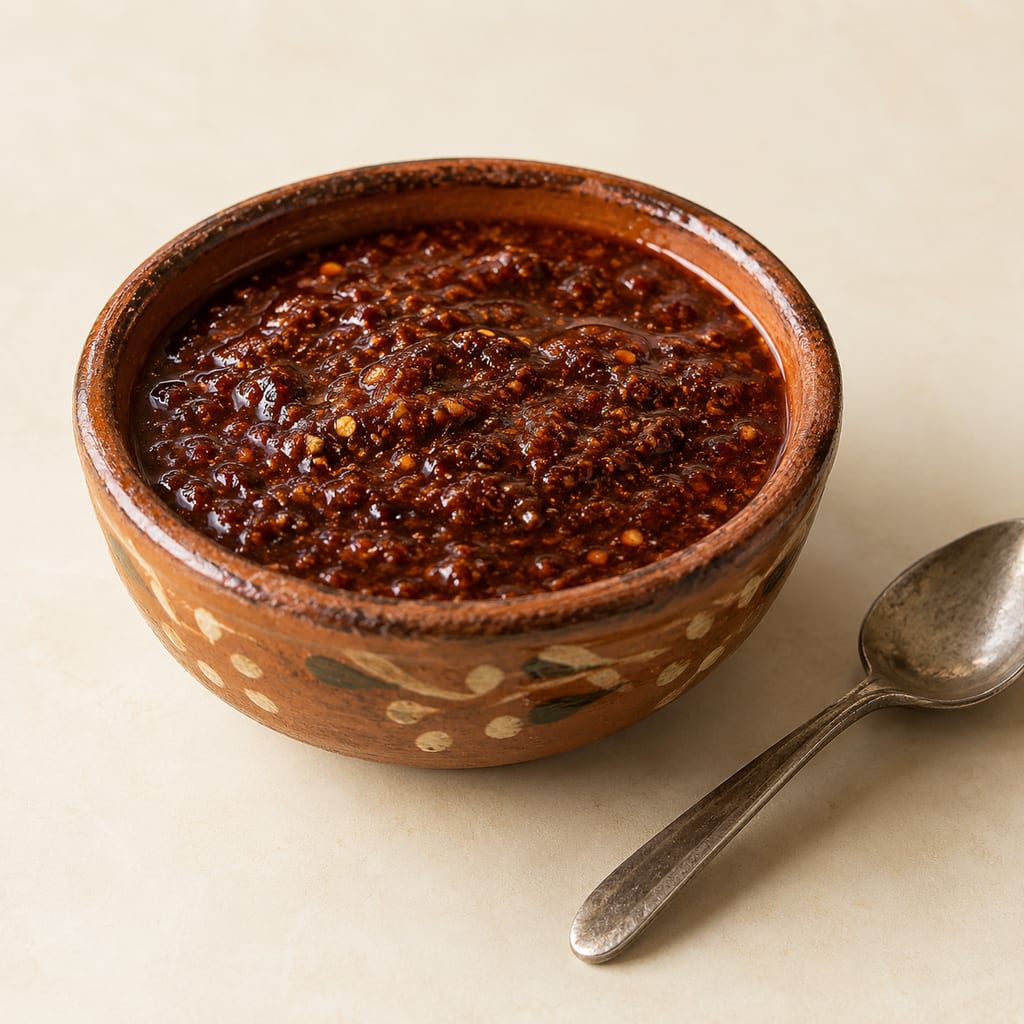
Salsa borracha
A chile sauce of dried pasilla peppers whose liquid is an alcoholic drink, pulque in the old form and beer where pulque is not available. It is served with barbacoa in Mexico City and the central states.
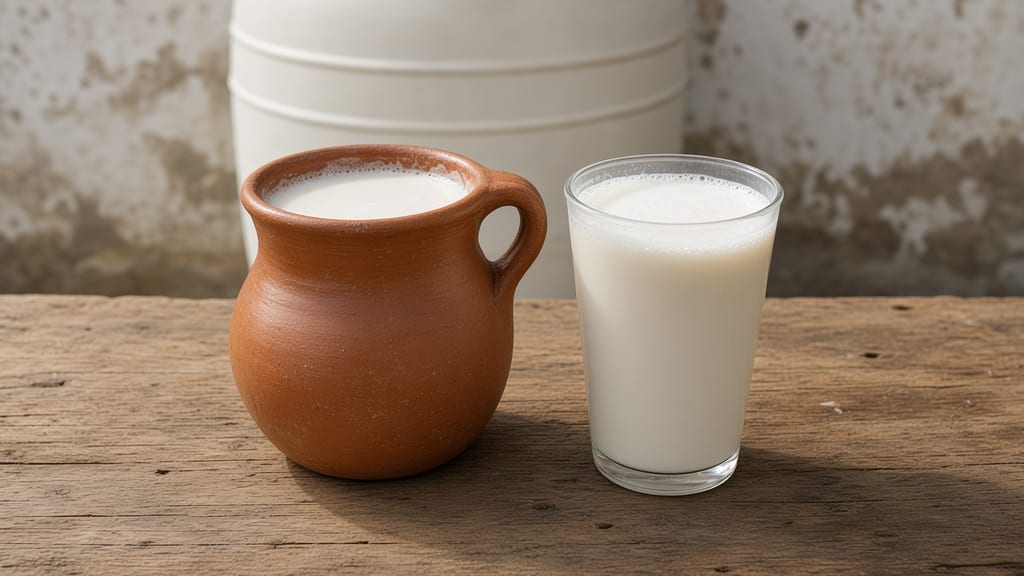
The white drink: pulque from Teotihuacan to the pulquería
Pulque, the thick white drink of fermented agave sap, left its chemical trace in Teotihuacan jars 1,500 years ago. It went on to fill the tent-like pulquerías of colonial Mexico City, which officials tried and failed to reform.
Community
No community contributions have been published for this entry yet.
Share what you made
Sign in to contribute. Published comments and photos are free to read.
Sources
Escalante et al., Frontiers in Microbiology 7:1026, 2016
Pulque, a traditional Mexican alcoholic fermented beverage: historical, microbiological, and technical aspectsCited in: Start with bought pulque; Natural or curado; Guava curado; Serving and keeping the curado; Changing the menu; Who should skip the pulque; What the meal leaves out
Michael C. Scardaville, Hispanic American Historical Review 60(4):643–671, 1980
Alcohol Abuse and Tavern Reform in Late Colonial Mexico CityCited in: A meal that grew up beside the vats; What the meal leaves out
Diccionario enciclopédico de la Gastronomía Mexicana, Larousse Cocina
TlacoyoCited in: Tlacoyos, the masa; The filling; Shaping; Cooking on the comal; Toppings; Putting it on the table; Changing the menu
Diccionario enciclopédico de la Gastronomía Mexicana, Larousse Cocina
Salsa borrachaCited in: Salsa borracha; Blending the salsa; Putting it on the table
Juan Carlos Segundo, Excélsior, 11 March 2020
¿Cómo preparar un curado de pulque en casa?Cited in: Guava curado; Oat curado; Serving and keeping the curado; Putting it on the table
Ojeda-Linares et al., Foods 10(10):2390, 2021
Traditional Fermented Beverages of Mexico: A Biocultural Unseen FoodscapeCited in: Natural or curado
Gaps
- Tlacoyo recipe is on hold and not linked.
- No published pulque recipe; curado is described in text only.
Updated 2026-11-03