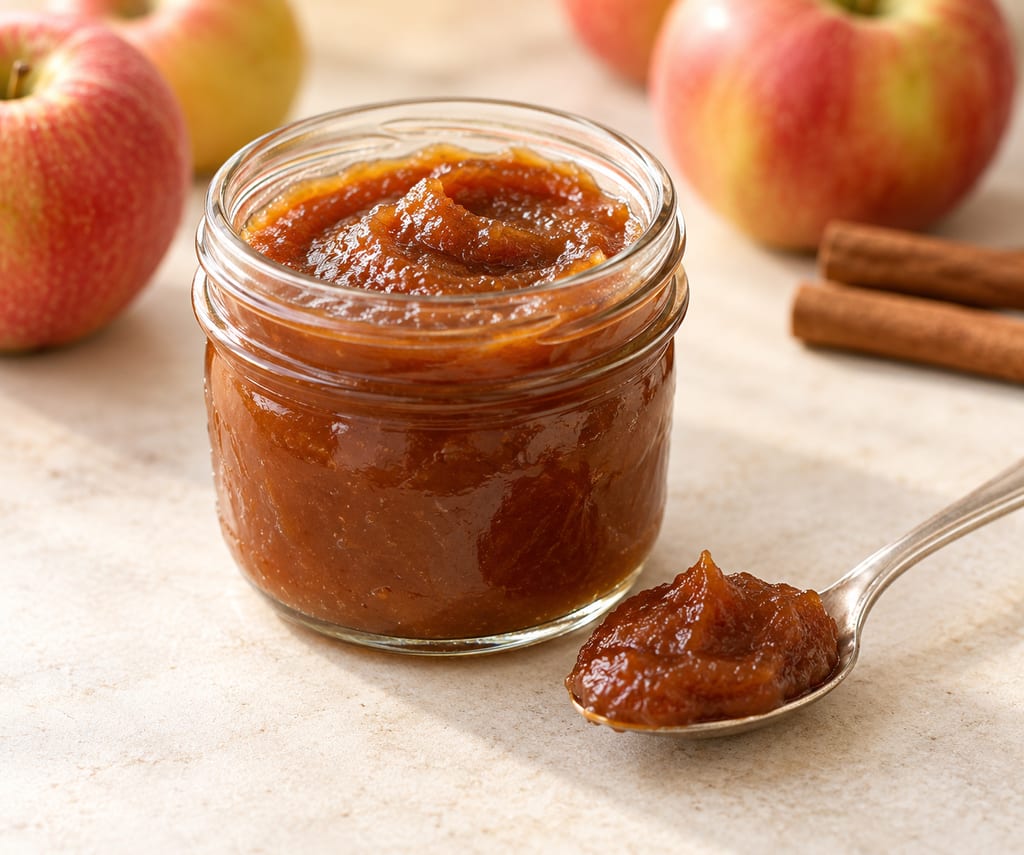
Apple butter, tested canning method
Apple butter is a smooth, concentrated apple preserve cooked with cider, vinegar, two sugars and spices, then hot-filled and processed in a boiling-water canner using the published jar-size and elevation schedule.
 FermenteaWhere food goes to change
Equipment · Jars, pots and crocks
Earthen pots (apple butter storage)
An earthenware storage pot named in an 1855 Pennsylvania German apple-butter account; later pottery writing describes a heavy-rimmed, internally glazed form.
A January 1855 account from eastern Pennsylvania describes apples and cider cooked down for several hours, then stored in earthen pots for winter. The pot is evidence of the storage stage: the account does not identify it as the vessel used for the long cooking. It also places the work in a communal setting, with neighbors gathering for the preparation. The historical record therefore connects this vessel to household preservation and seasonal apple harvests, without giving its maker, exact shape, capacity, or the number used.
The account appears in Alfred L. Shoemaker's 1950 transcription of nineteenth-century agricultural writing. It provides a dated attestation, not the origin date of the pot or proof that every Pennsylvania German household used the same form.
Edwin A. Barber's 1903 study of Pennsylvania German potters names apple-butter pots and describes a heavy collar around the rim, a glazed interior, and an unglazed exterior. Those details distinguish a documented form from a generic storage jar, but the book does not give a standardized capacity or dimensions for it. No numerical size is supplied here.
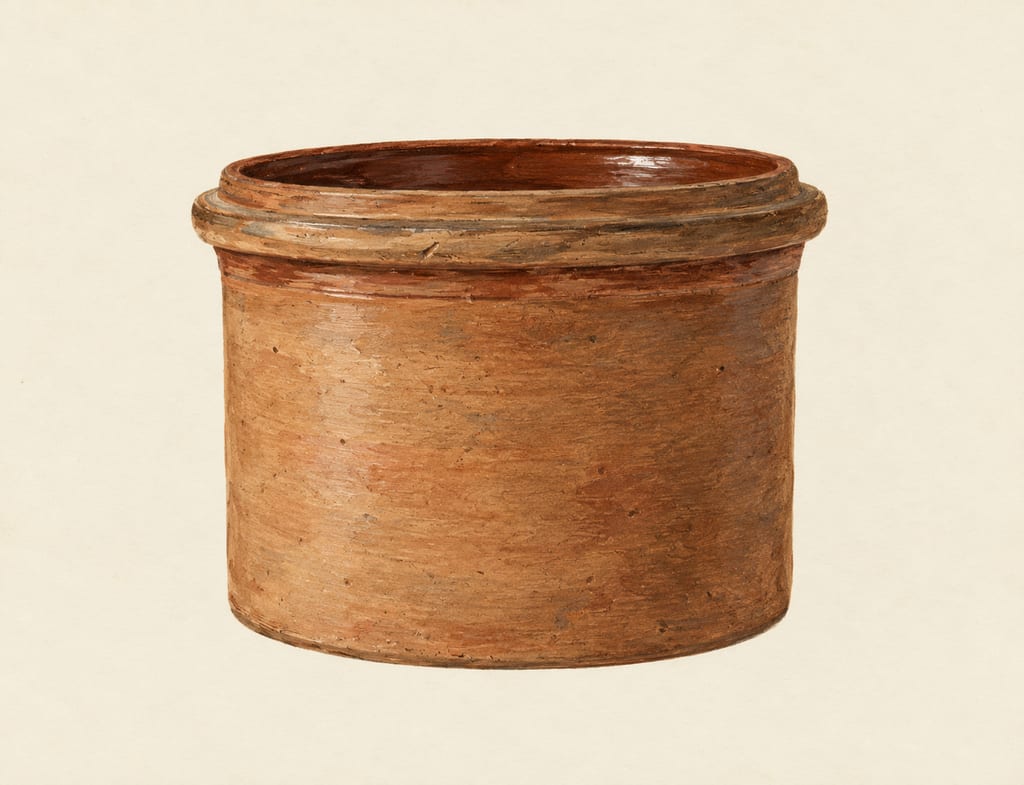
The National Gallery of Art's c.1940 drawing of a Pennsylvania German butter crock helps readers compare a later vessel's broad silhouette. It is a study identified as a butter crock, not the pot named in the 1855 account; its decoration and measurements should not be transferred to the apple-butter pot. The image is a reference comparison, not evidence that this exact form had a lid or ornament.
The sources do not establish when this pot form began, when its use ended, or whether the same form remains available today. They give no care routine, food-contact testing, or modern preserving instructions. The 1855 account describes storage for winter; it is not a tested present-day canning method. The pot's place in the record is specific and useful, but its historical role should not be stretched into claims not supported by these sources about safety, capacity, or continuous tradition.
The evidence establishes use by January 1855 and describes a related Pennsylvania German pot form in 1903; it does not establish a first date, uninterrupted use, or the form's present availability.
The historical sources describe storage, not a tested modern preserving process or food-contact assessment for a particular vessel.
Shoemaker's transcription records earthen-pot storage in an eastern Pennsylvania account; Barber describes apple-butter pots made by Pennsylvania German potters. This does not claim a single origin or a complete distribution map.
Apple butter is a smooth, concentrated apple preserve cooked with cider, vinegar, two sugars and spices, then hot-filled and processed in a boiling-water canner using the published jar-size and elevation schedule.
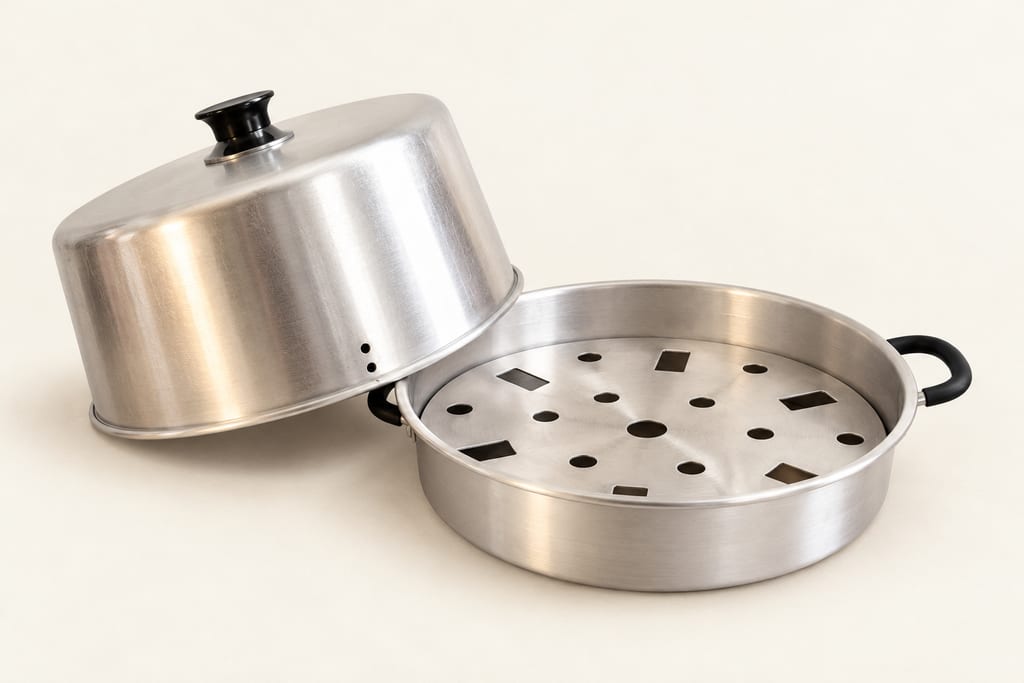
A shallow rack base and tall vented cover process jars in atmospheric steam. NCHFP limits the method to tested high-acid or acidified recipes requiring no more than 45 minutes, including altitude adjustment; this is not pressure canning.
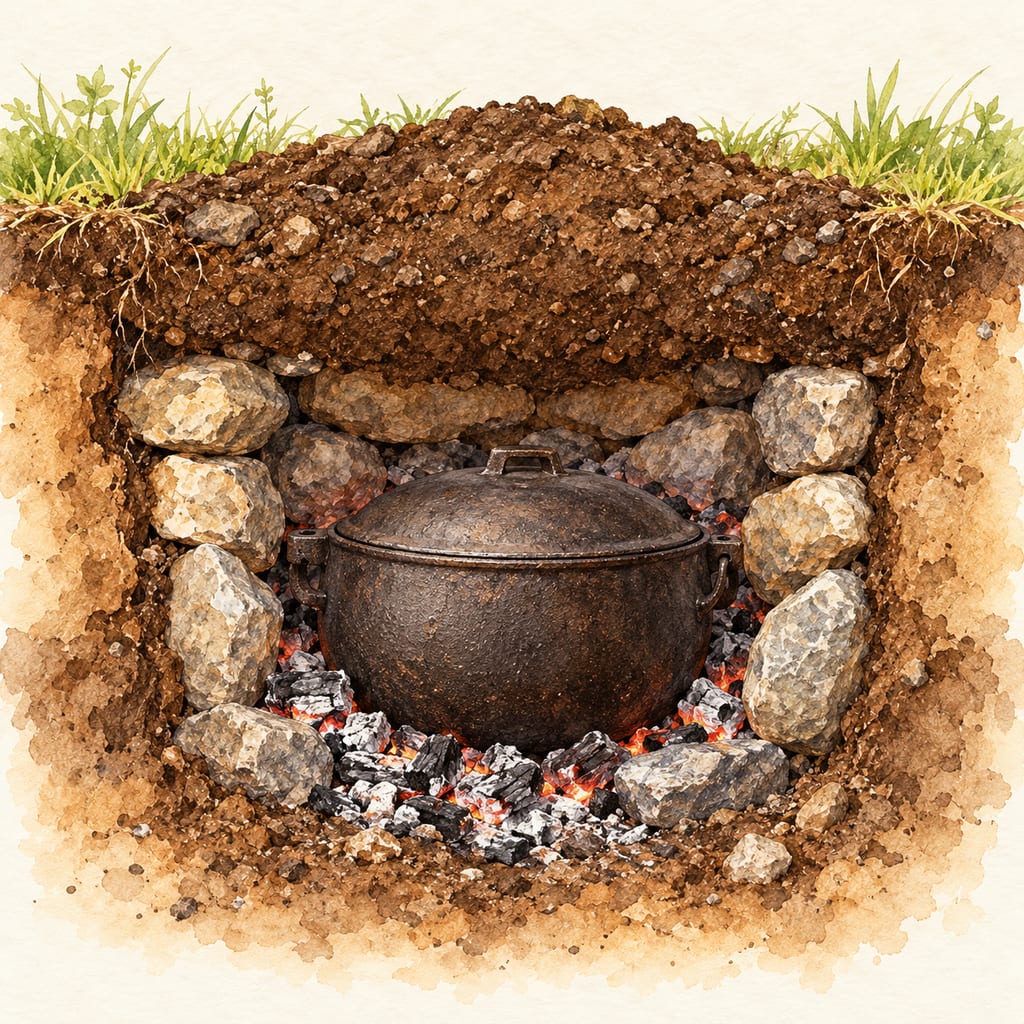
A covered iron vessel used in Maine bean-hole cooking, set into a preheated stone-lined pit and buried for a slow cook.
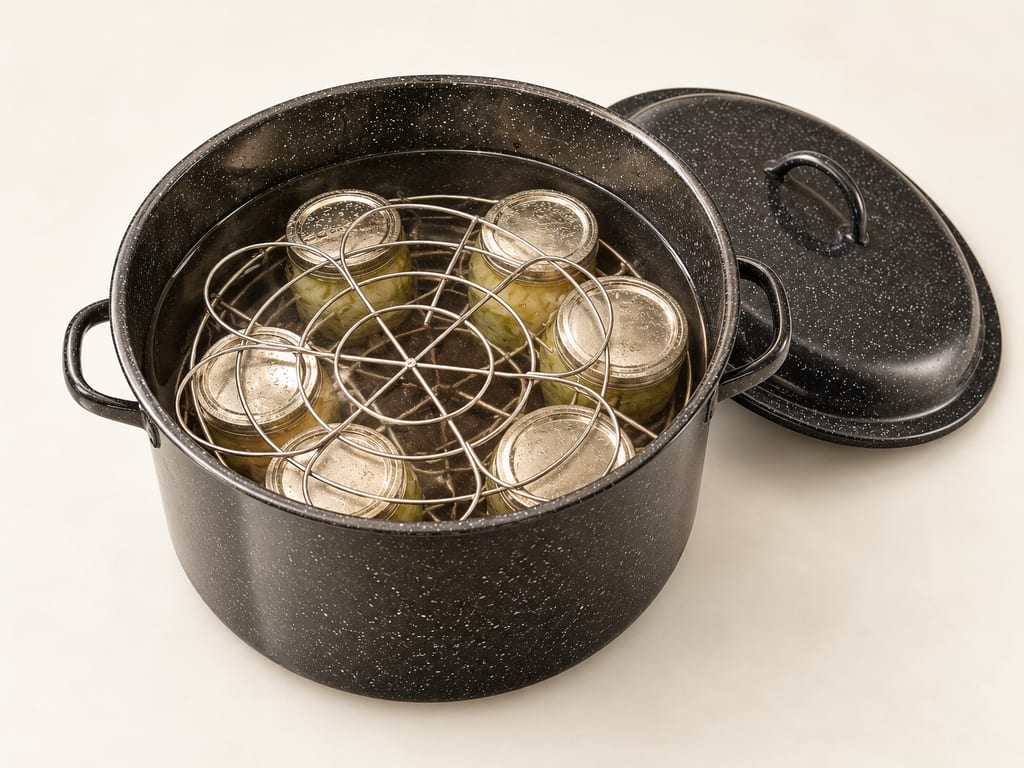
A deep, lidded pot with a removable rack processes jars beneath boiling water. It is intended for foods with tested boiling-water processes; low-acid foods require pressure canning.
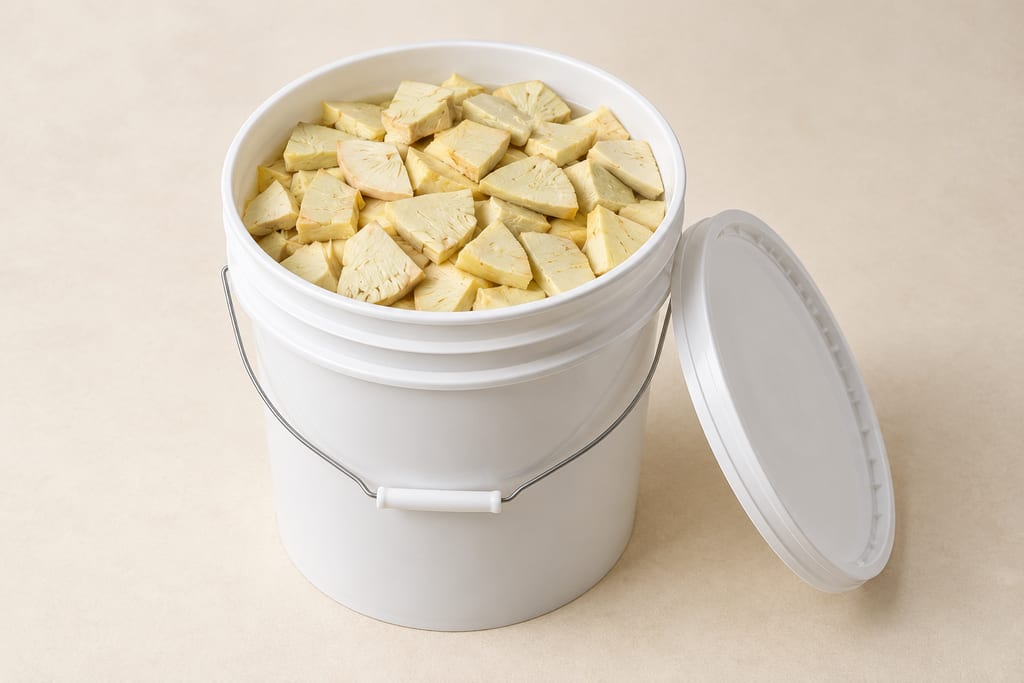
A contemporary household enclosure for preparing mā, fermented breadfruit, documented in Hawai‘i using food-safe buckets, coolers or large sealable bags in place of a pit.
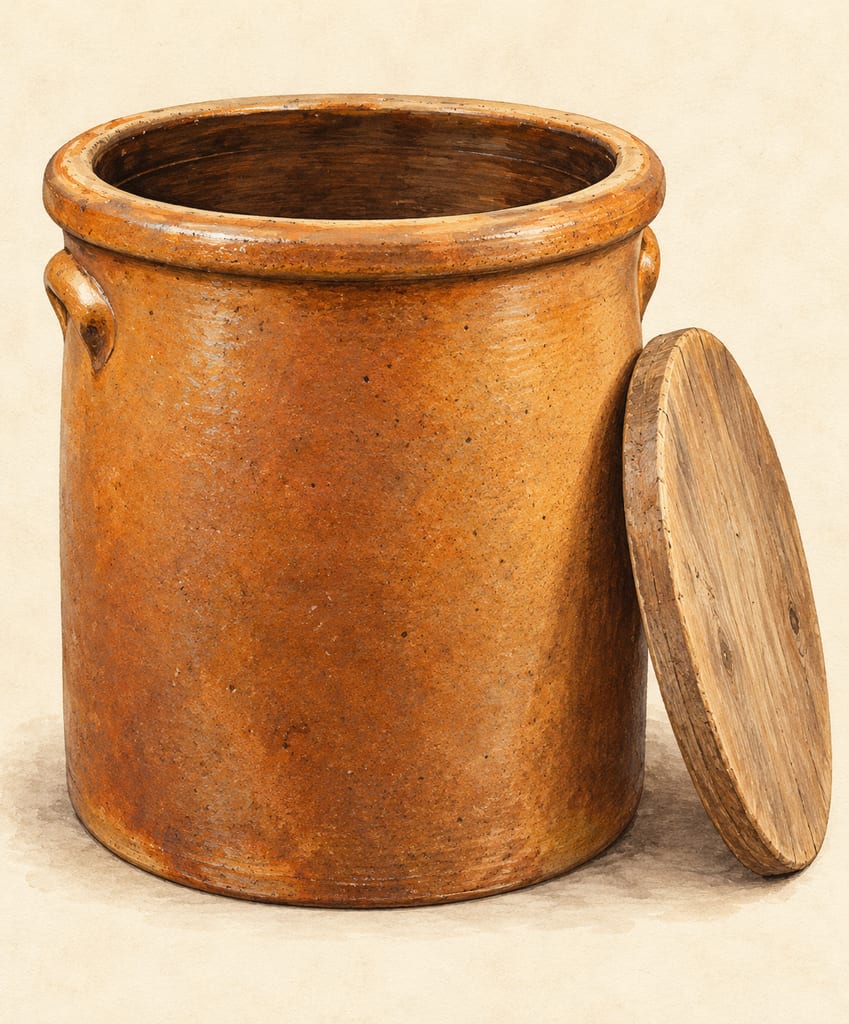
Containers for salt-curing fish and meat range from broad-mouthed stoneware crocks to tubs, cut-down barrels and chests. Their material, depth, cover and ability to retain or drain liquid shape how the food sits in salt or brine.
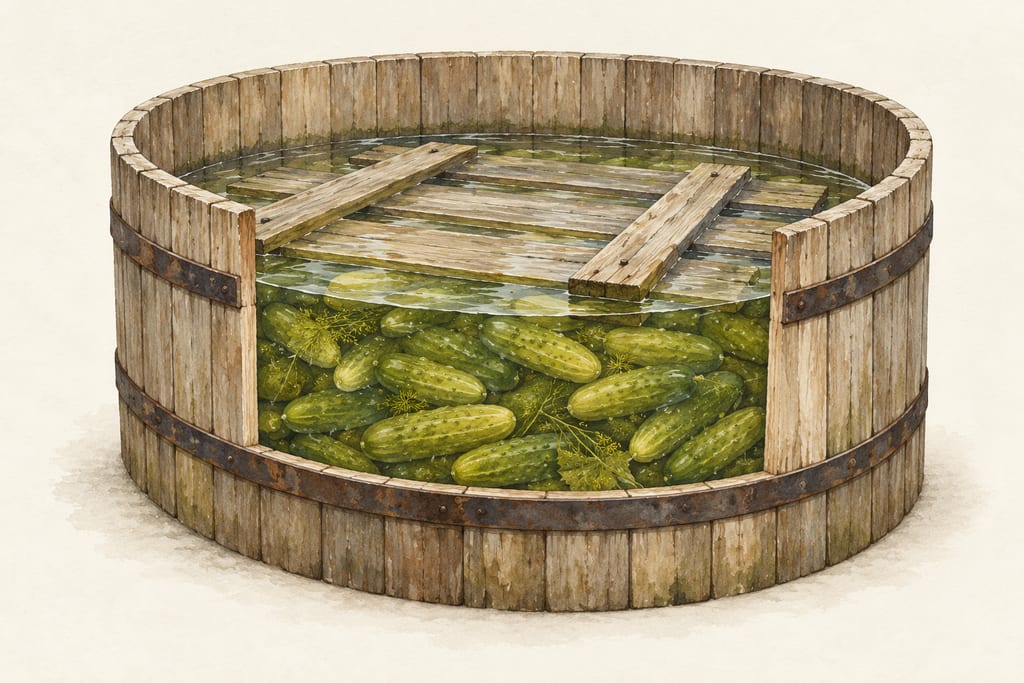
A bulk brining vat holds cucumbers and other vegetables under cover brine for fermentation and storage. North Carolina sources document a mid-century wooden tank yard and later outdoor fiberglass systems.
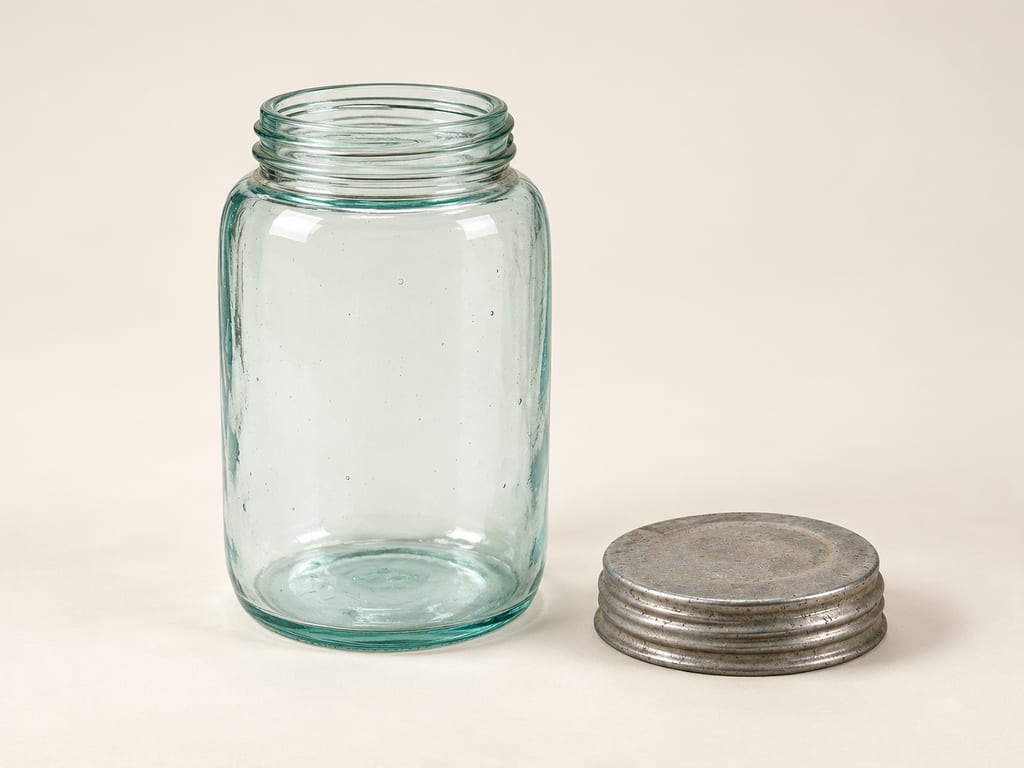
Threaded, heat-processing jars hold food and a fitted lid during a tested canning process; jar size and process belong to the specific recipe.
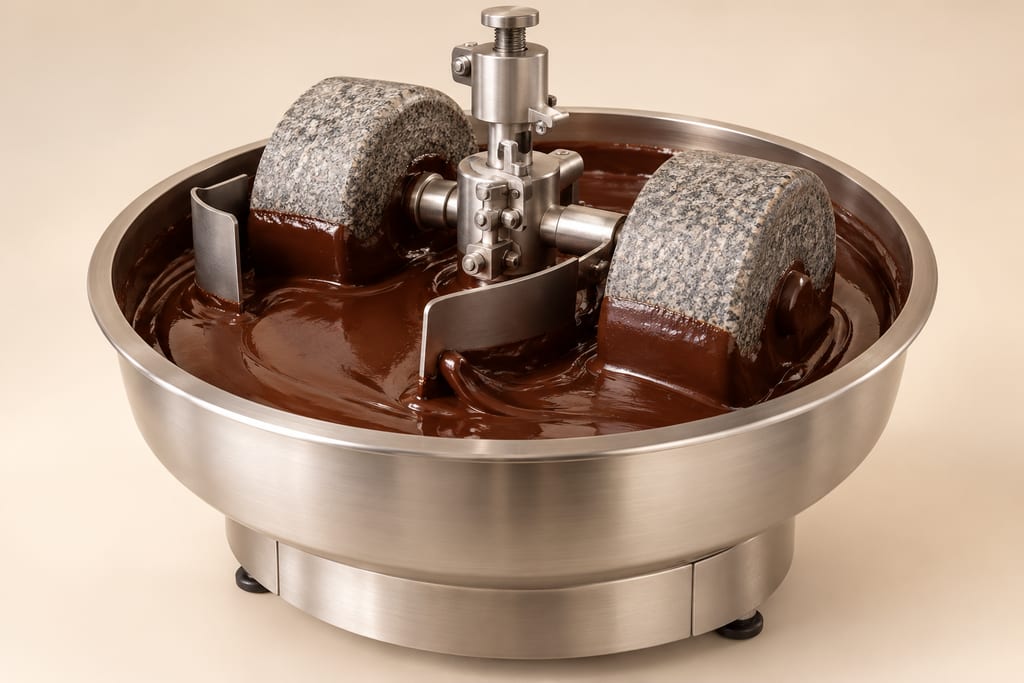
A chocolate refiner or melanger uses powered rotation and stone rollers to refine cocoa mass. Some models also process nut and seed pastes; design, material and operating limits vary.

A Cap-Pelé boucanière is an Acadian herring-smoking building. The documented Willie Niles example is a one-storey wood-frame structure with a ridge smoke vent and interior bays for hanging fish-bearing cannes.

Achcharu is a family of Sri Lankan vinegar pickles made with mixed vegetables or seasonal fruit and a piquant spice dressing. This version is a quick, refrigerated, non-fermented mixed-vegetable pickle.

The acocote is a long, hollowed and dried gourd used to draw aguamiel from a mature maguey. It is a harvesting tool: the sap is transferred to a separate vessel before it ferments into pulque.

Adrak murabba preserves young ginger in sugar syrup, a sweet South Asian preparation recorded in Indian cookery and food-processing sources.

Parkia biglobosa seeds are fermented into regional West African seasonings, including nététou, iru, dawadawa and soumbala. The yellow fruit pulp is a separate food, and names and methods vary by place.

Japanese reddish-brown vinegar from sake lees matured about three years, turned to vinegar by acetic bacteria; the vinegar of Handa and Edomae sushi rice.

A refined common-wheat flour blended for a broad range of baking; its protein and behavior vary with wheat, milling and market.

The almond mushroom, Agaricus subrufescens, was cultivated in eastern North America in the 1800s, lost its market, and returned as a cultivated mushroom from Brazil, where it is grown under several names.
No community contributions have been published for this entry yet.
Sign in to contribute. Published comments and photos are free to read.
Ursinus College Digital CommonsHistory · Geography
Notes on Barns and Apple Butter From The Cultivator and The Genesee Farmer, 1841–1859The January 1855 account's several-hour cooking description and winter storage in earthen pots
Communal preparation context
Eastern Pennsylvania setting
Cited in: A winter storage vessel; What the evidence does not establish
Drexel Biddle, PublisherDescription · Geography · History
Tulip Ware of the Pennsylvania-German Potters: An Historical Sketch of the Art of Slip-Decoration in the United States1903 descriptions of Pennsylvania German apple-butter pots
Heavy collar around rim, interior glaze, unglazed exterior
Pottery production in eastern Pennsylvania
Cited in: The described pottery form; What the evidence does not establish
National Gallery of ArtVisual comparison
Pa. German Butter CrockA c.1940 drawing catalogued as a Pennsylvania German butter crock, used only as a comparative silhouette reference; it is not identified as an apple-butter pot
Cited in: The described pottery form