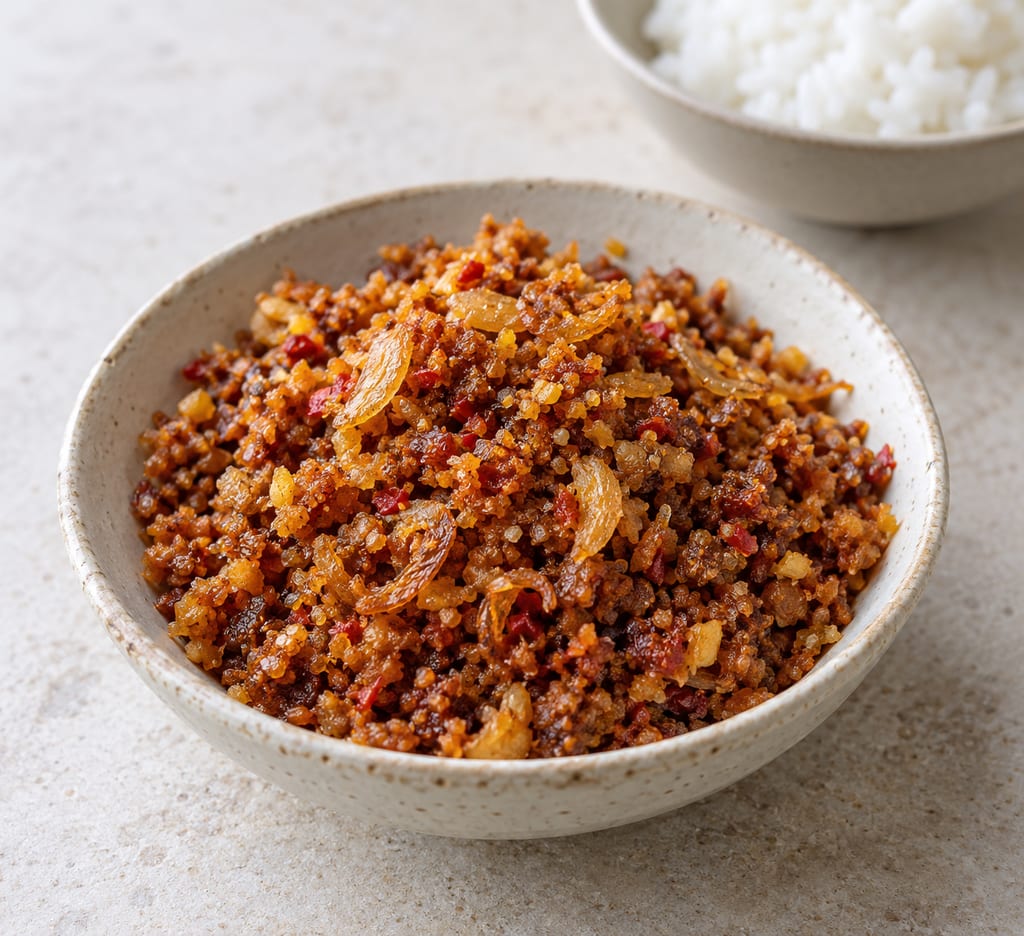
Balachaung
A Myanmar relish of dried shrimp, fried eschalot and garlic, chilli, turmeric, tamarind and ngapi. Naomi Duguid’s published recipe makes about 1 cup; it contains crustacean shellfish.
 FermenteaWhere food goes to change
Modern adaptation
Nan bya · Nan pyar · Burmese plain naan
Sandi Wai’s eight-piece Burmese plain naan uses yeast and baking powder, rests for 30 minutes and cooks on a hot nonstick pan without oil.
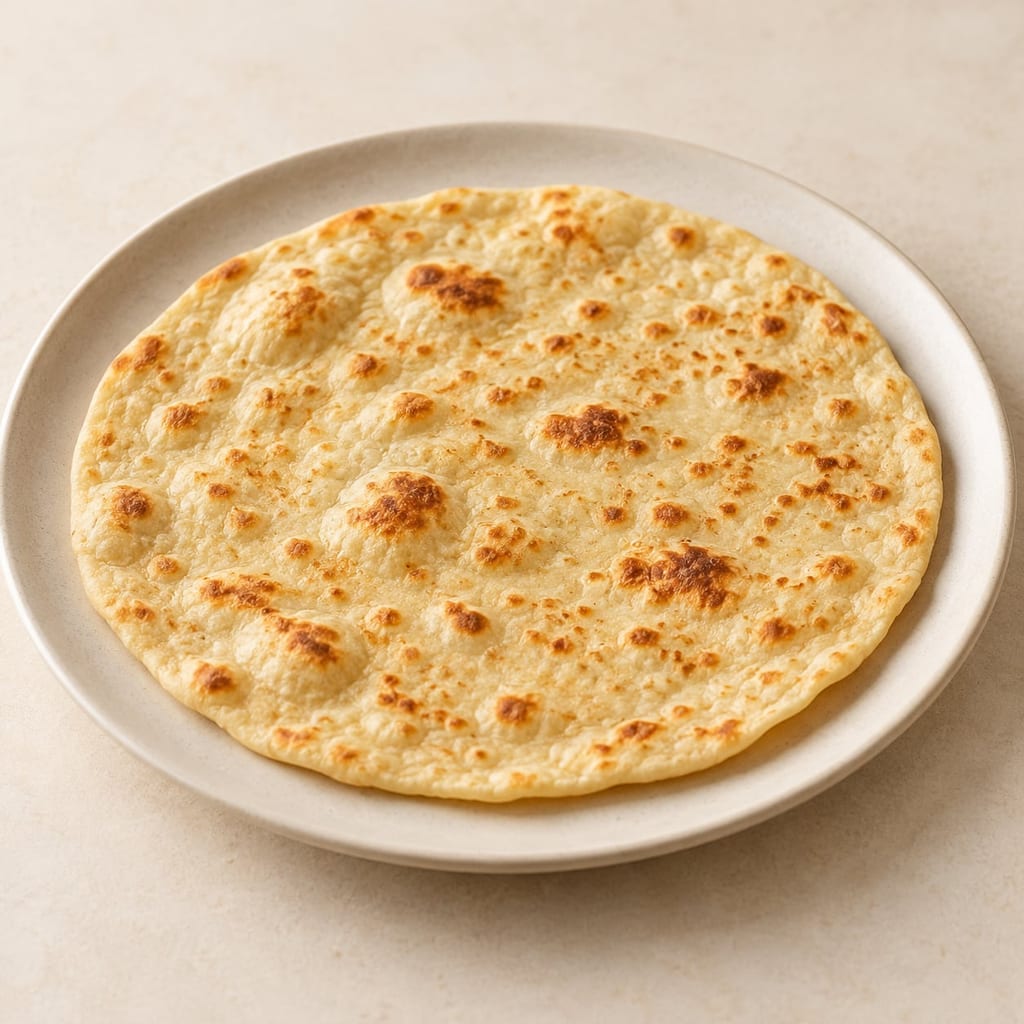
Sandi Wai presents this recipe as a way to make the plain naan she remembers from a corner tea shop in Myanmar while living abroad. She connects it with breakfast and with butter and sugar or soft beans. The method is her home version rather than a universal description of every nan bya sold in Myanmar. A Myanmar Times food column independently mentions nan, also called nan pyar, as bread available at larger tea shops around Yangon and served with soup. That report supports the bread's modern tea-shop context; it does not supply a recipe or establish an origin date. The two sources therefore do different work: one gives a household formula and method, while the other documents a public eating context.
The batch combines 2 1/2 cups all-purpose flour with sugar, yeast, baking powder and salt. Yogurt and oil are mixed with 150 ml lukewarm water, with a little extra water allowed if needed. The recipe does not name the yeast type or give a dough temperature, so those details remain unspecified. It asks for a single 30-minute rest, then eight equal portions. There is no staged fermentation or preservation step: the rest prepares the dough for shaping and griddle cooking. The family association with yeast-raised and leavened breads reflects the yeast and chemical raising agents together; it does not imply a long fermentation or an alcohol-bearing food. The ingredients are preserved in the measurements given rather than converted to assumed weights.
After resting, divide the dough into eight balls and roll them fairly thin. The chosen home route uses a hot nonstick pan over medium heat without adding oil to the pan. Watch for bubbles on the upper surface, turn the bread, then brown the other side. The author suggests cooking it for a few more minutes and lets the cook choose a softer or slightly crisp finish. No fixed pan temperature or total cooking time is listed, and this page does not add either. The quantity of water is also a range: start at 150 ml and add only enough for the ingredients to gather into a ball. The amount beyond 150 ml is not measured. These instructions preserve a practical household method while showing where the recipe leaves judgment to the cook.
The bread may be brushed with butter or garlic butter while hot. Sandi Wai also mentions eating it with mutton-bone soup; the soup is a separate preparation and is not included in this recipe. The page makes no storage recommendation, so serve it fresh rather than assuming a holding period. Flour is raw before cooking; do not taste the dough, and wash hands, tools and work surfaces after handling it. Yogurt is part of the dough and butter is an optional milk-derived finish, so readers who avoid dairy need a separately tested substitute. The hot pan needs attention throughout cooking. Bubbles and browned surfaces are the method's doneness cues, not a validated thermometer reading; this page makes no claim of a measured core temperature.
Sandi Wai describes longing for plain naan from a Burmese corner tea shop and says the bread is eaten for breakfast with butter and sugar or soft beans. A 2013 Myanmar Times passage says nan or nan pyar is sold at larger tea shops around Yangon and served with soup. These sources document modern use, not a birthplace or dated origin. This recipe is the author’s home skillet adaptation and should not stand for all bakery forms.
Yield 8 naan · Scaling: source batch only
Uncooked flour can carry germs; CDC advises against tasting or eating raw dough.
Hazard sourceThe dough cooks in a heated skillet and the pan can burn the cook.
Hazard sourceDo not taste or eat raw dough; clean hands, utensils and work surfaces after handling flour.
Control sourceStay by the stove while heating and cooking; use suitable tools to handle the pan.
Control sourceThe author gives no measured pan temperature or fixed frying time. Follow the described bubble and browning cues, turn the bread, and cook the second side for a few more minutes; no validated internal endpoint is claimed.
Contains wheat and milk ingredients (yogurt; optional butter). No storage guidance was supplied.
The author describes a plain naan from Burmese tea shops and provides a home method; this supports a country-level preparation association, not a birthplace.
A Myanmar relish of dried shrimp, fried eschalot and garlic, chilli, turmeric, tamarind and ngapi. Naomi Duguid’s published recipe makes about 1 cup; it contains crustacean shellfish.
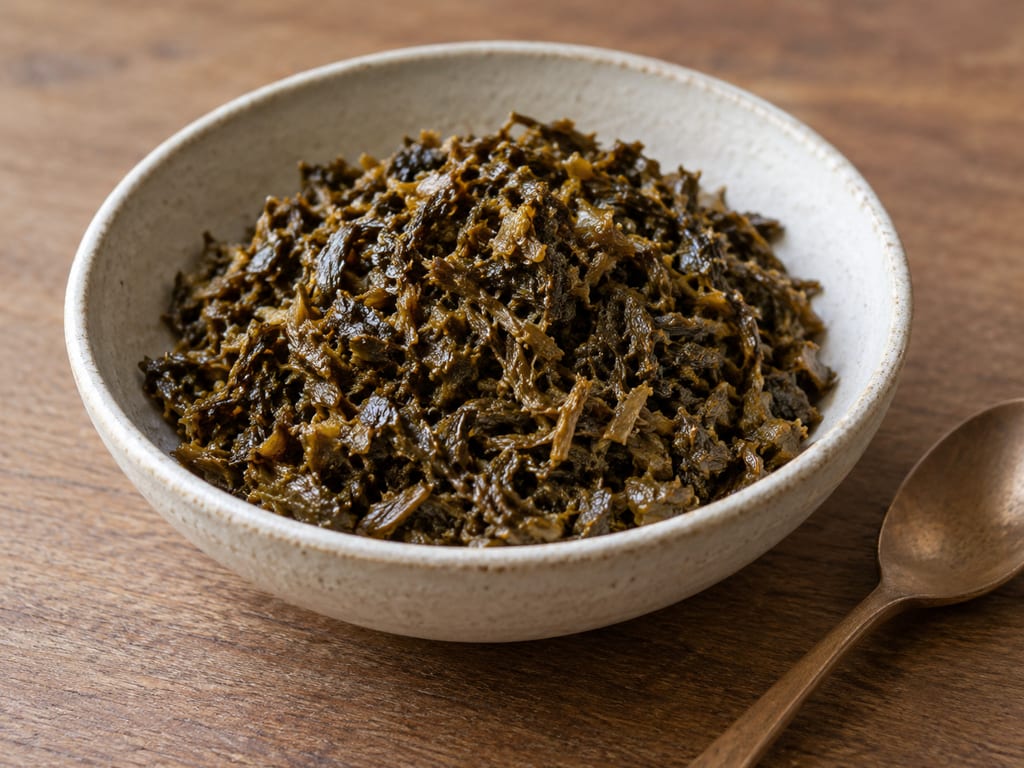
Laphet is Myanmar’s fermented tea-leaf food, associated with ceremony and hospitality. This entry documents cultural context and regional production accounts; it is not a household fermentation recipe.
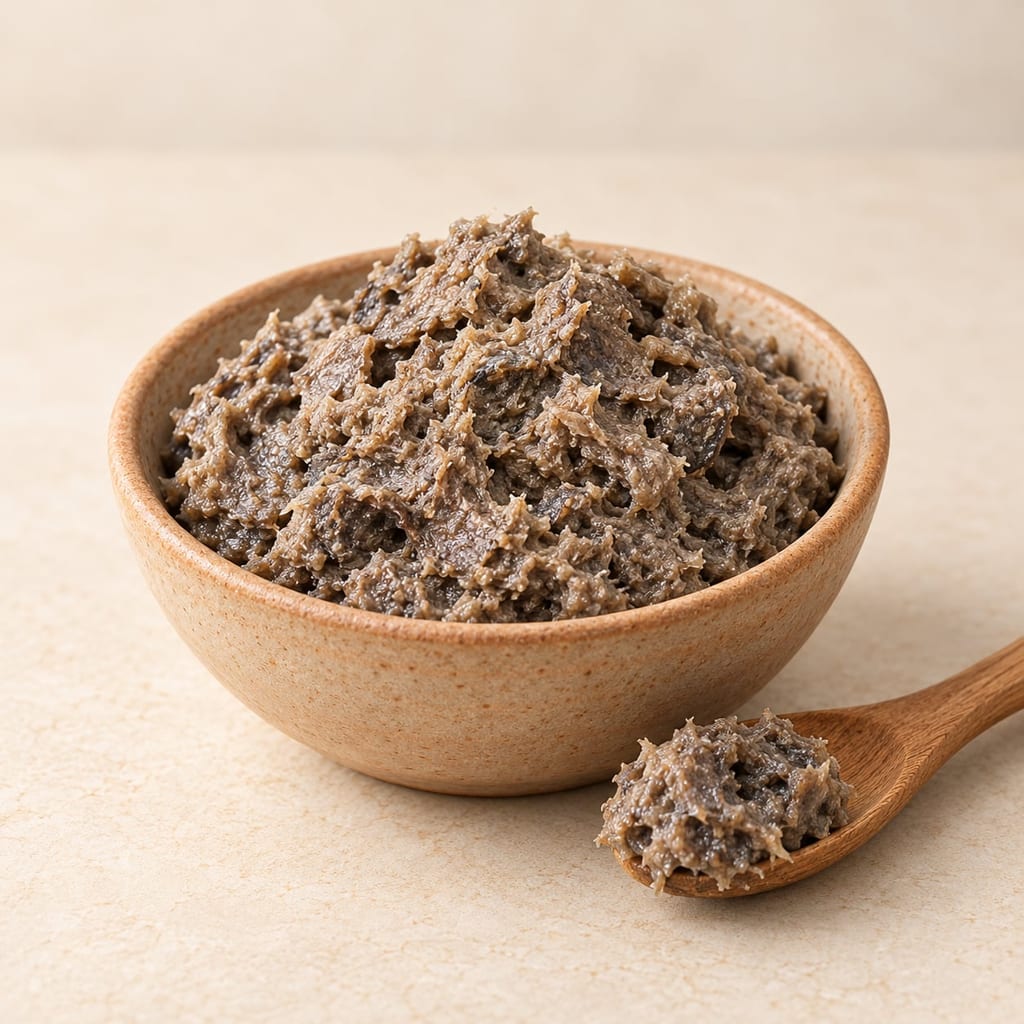
Ngapi is a Myanmar name used for varied fermented fish and shrimp pastes. Selected market and processor samples document differences in species, ingredients, and process; the evidence does not support one nationwide formula.
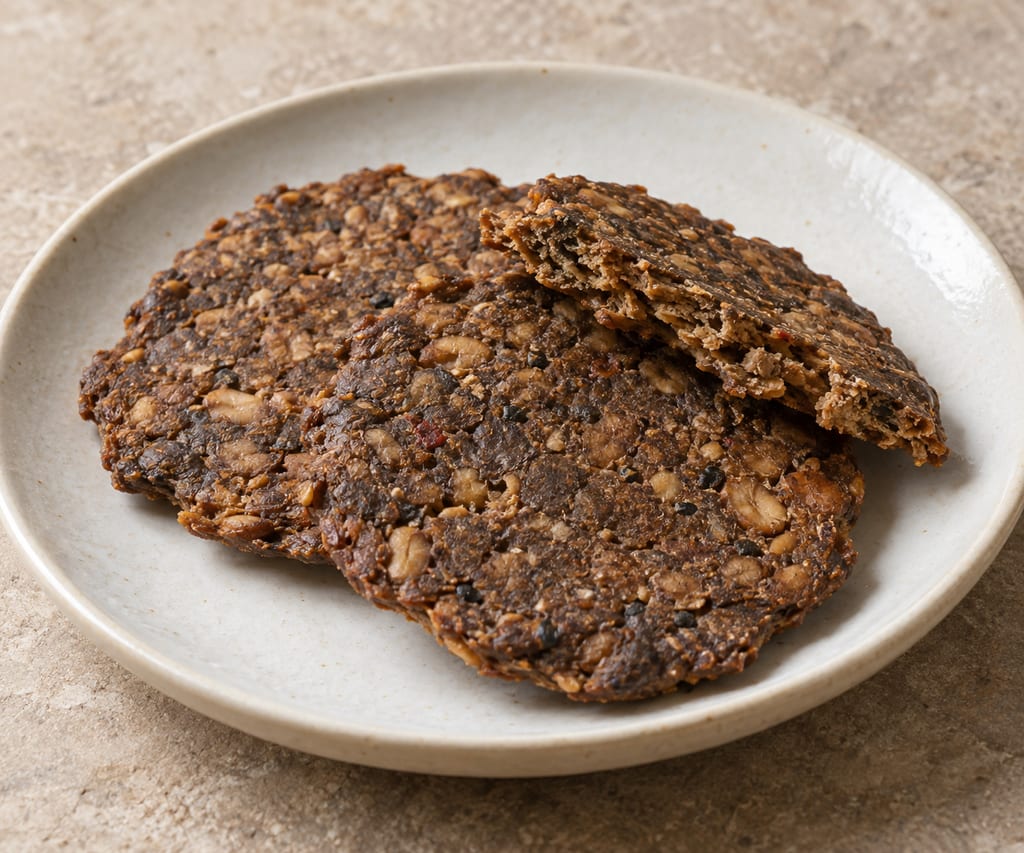
A Myanmar soybean ferment in which cooked beans turn sticky through alkaline bacterial fermentation, then are eaten fresh or seasoned, flattened and sun-dried into savoury wafers.
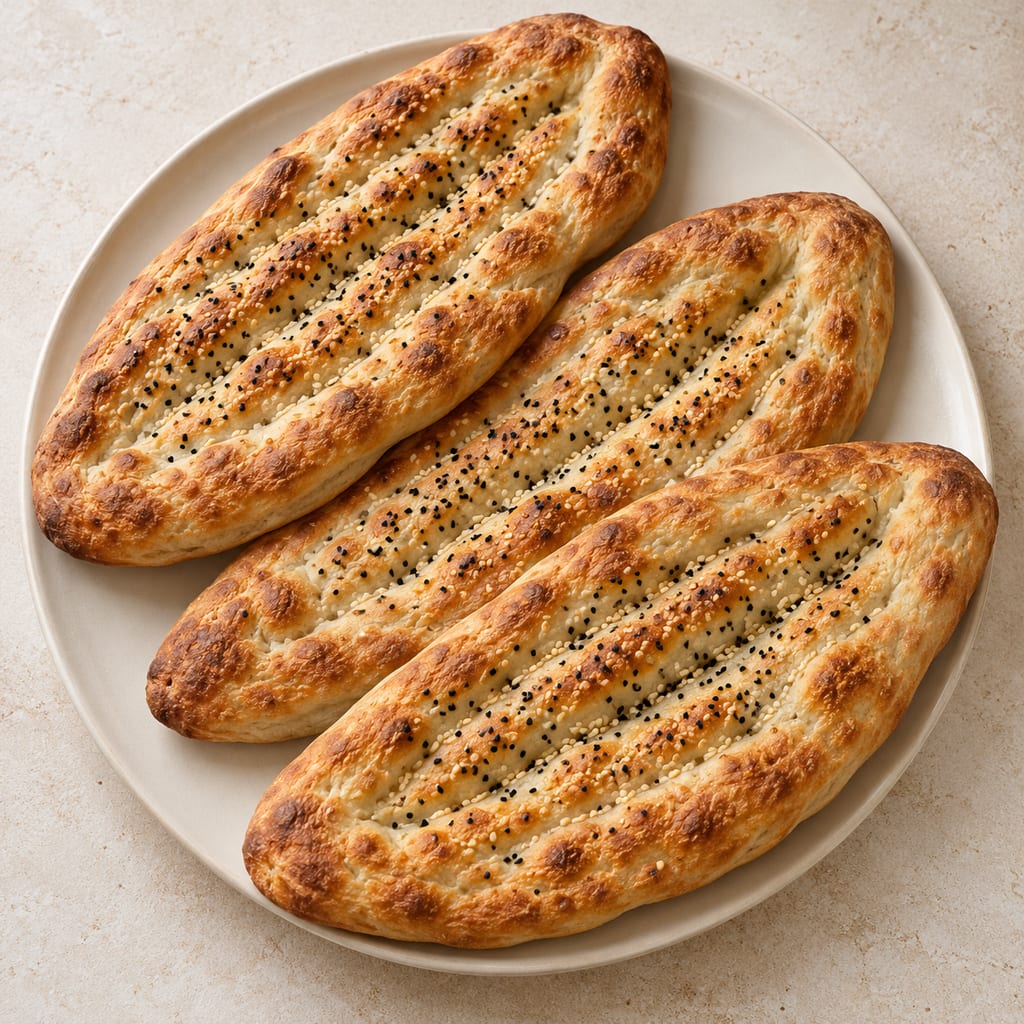
A long oval Afghan wheat bread, leavened with yeast, grooved along its length and baked until crisp outside and chewy within.
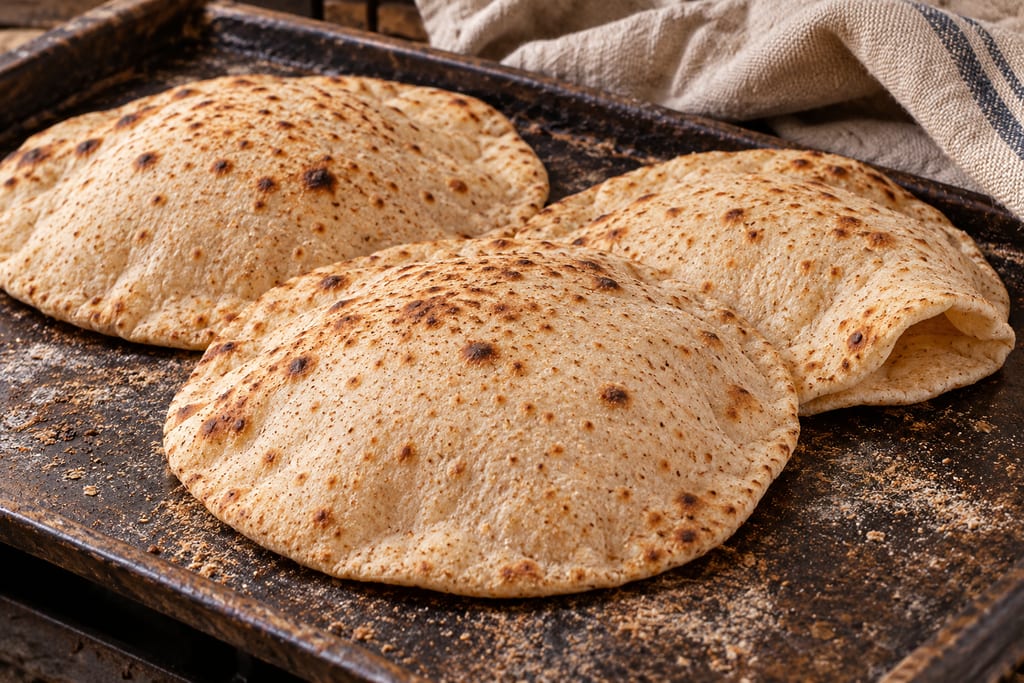
This home adaptation of Egyptian aish baladi uses a refrigerated yeast biga, whole-wheat dough, bran dusting and a very hot baking surface to make 16 pocketed rounds.
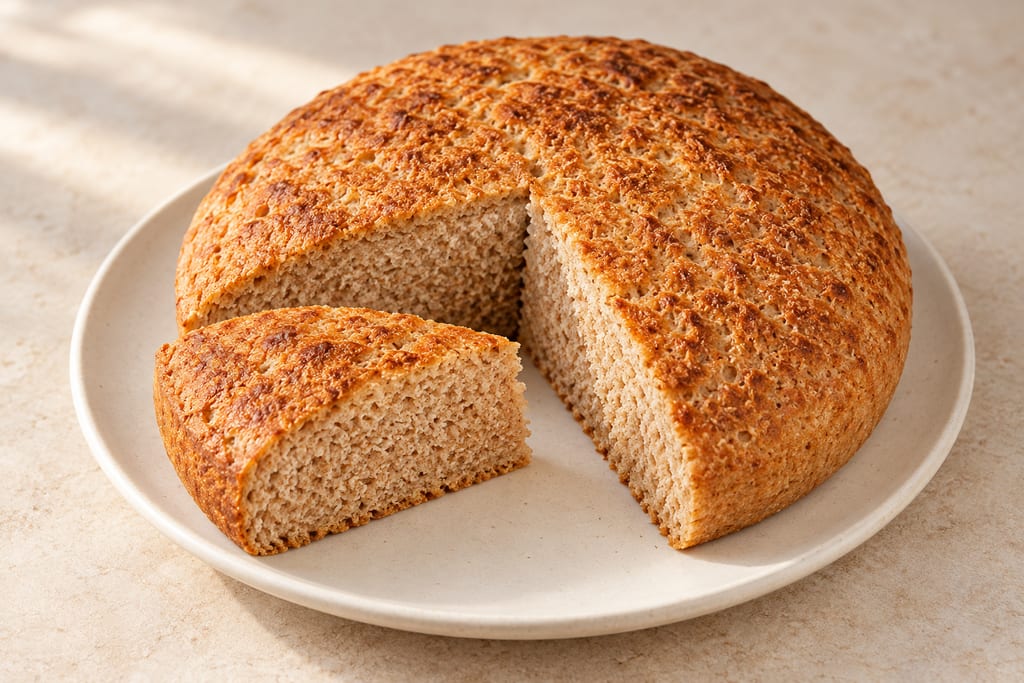
This oven-baked Amdo balep uses yeast, whole-wheat and white flour, a long covered rise and a two-sided bake in a heavy oven-safe pot.
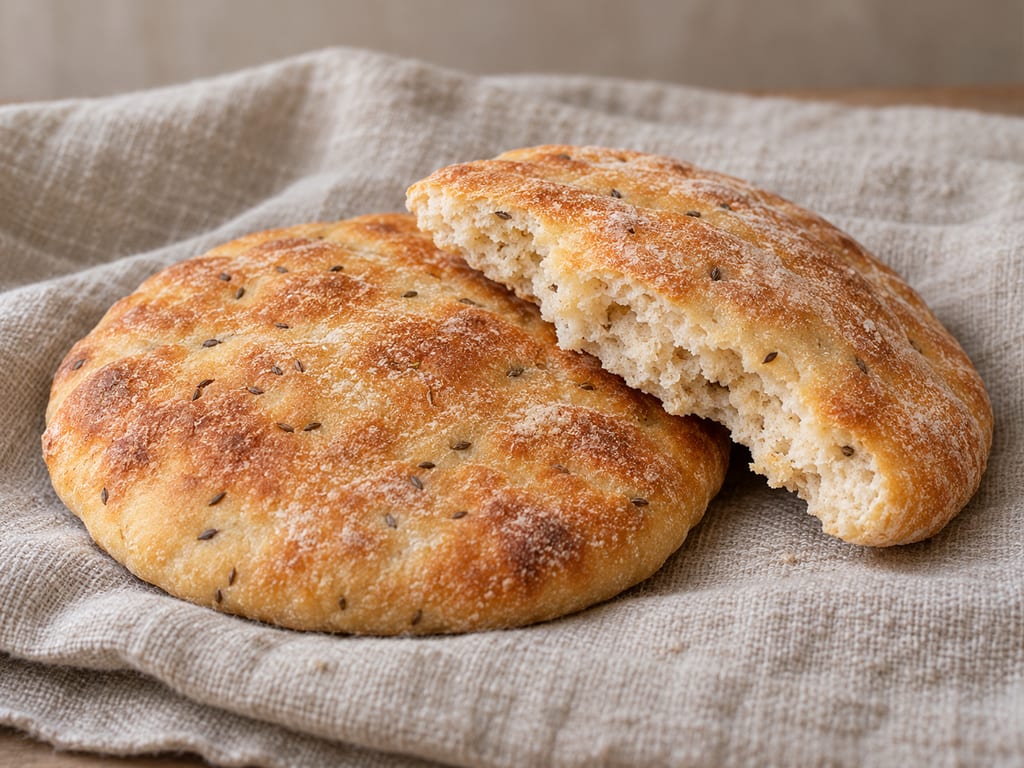
A measured, yeast-raised Ayacucho chapla home method shared by Thermomix Peru presenter Roxanna Salaverry. It makes thin, anise-scented rounds baked at 240°C; the historic qunchu-leavened form is documented separately.
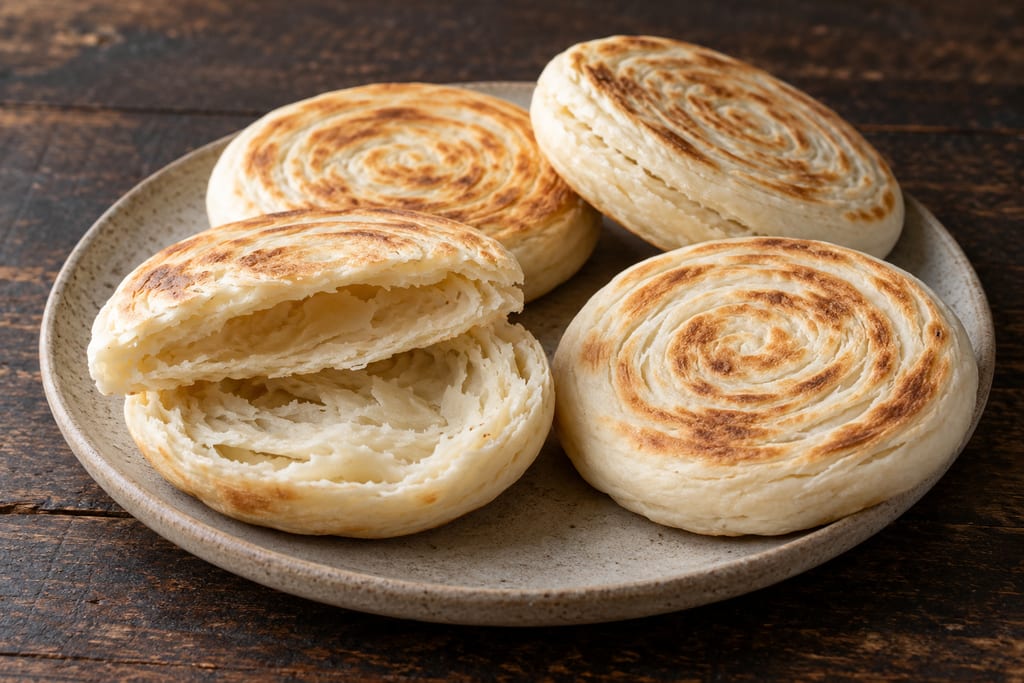
This Shaanxi-associated yeast flatbread uses a simple water dough, coiled shaping and a skillet bake. It is the bread used in roujiamo, not the filled meat dish.
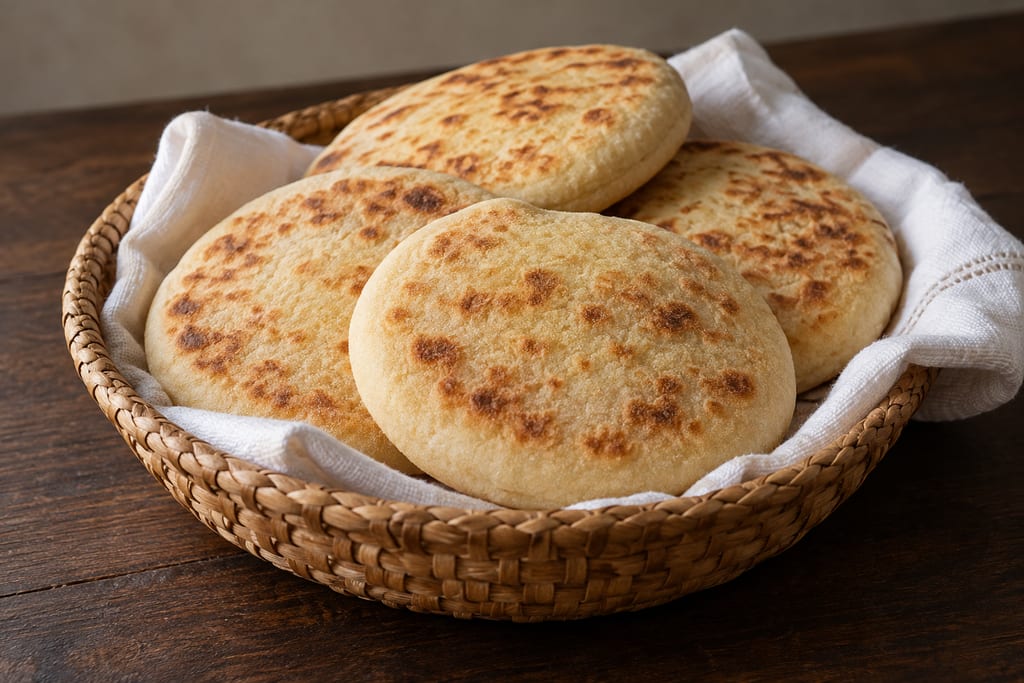
A Moroccan yeast-raised semolina pocket bread cooked on a dry pan or griddle; this measured batch makes about twenty 4-inch rounds.
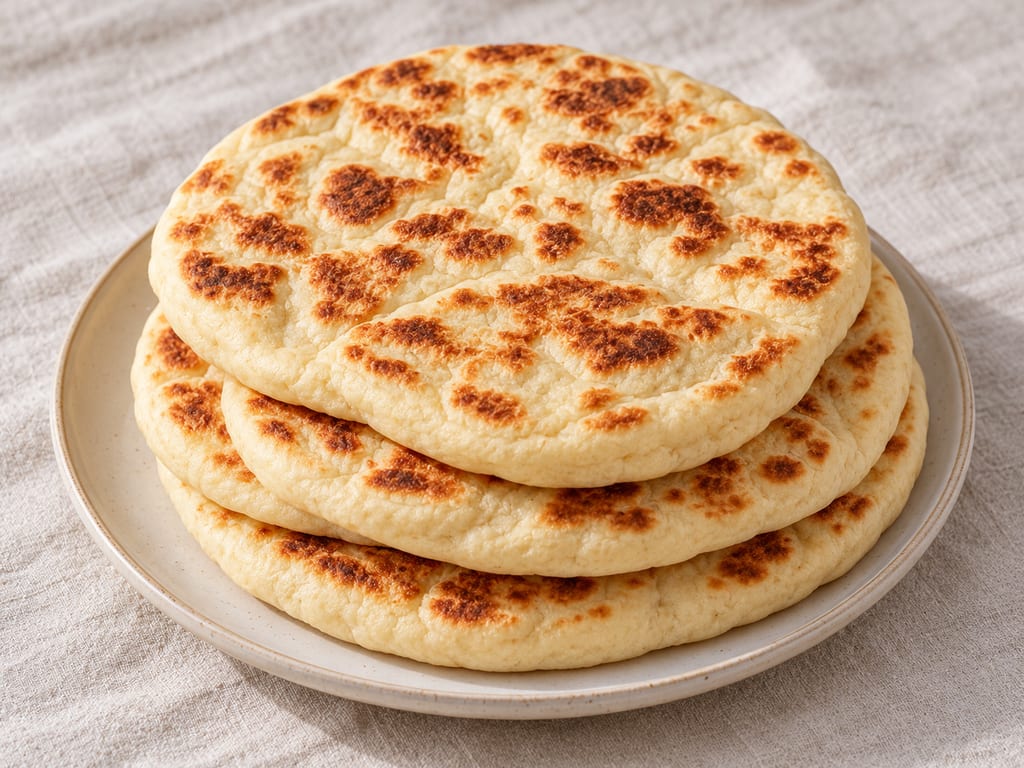
This Turkish bazlama uses yeast, plain yogurt and olive oil for a soft dough cooked in a skillet. Shape it into twelve small or six larger rounds, flip as bubbles appear, and wrap the breads to keep them soft.
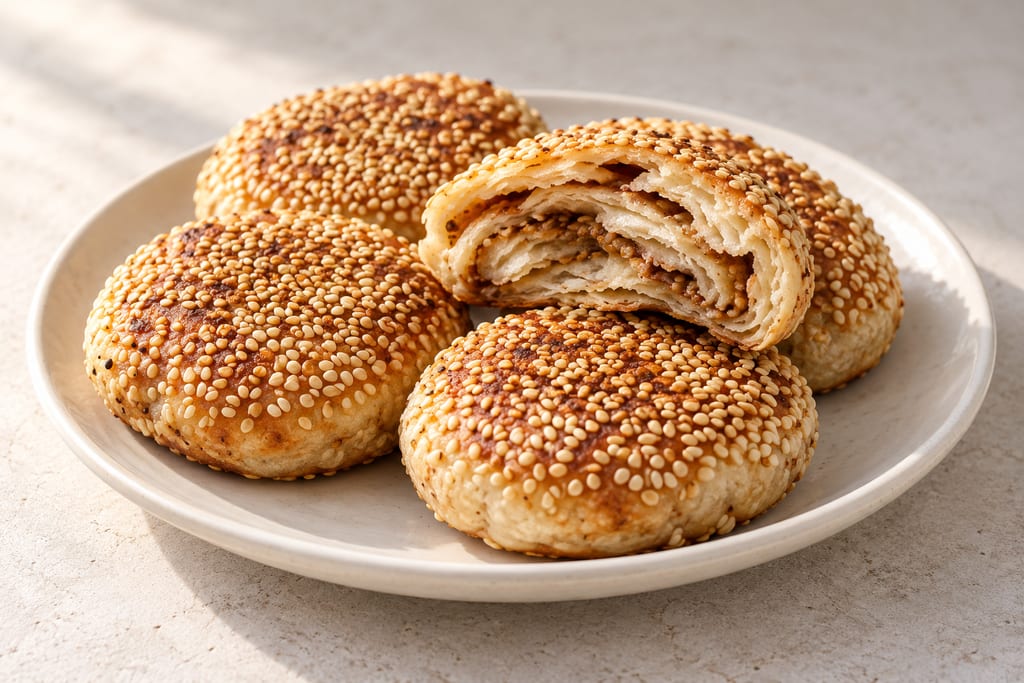
A Beijing-style yeast dough is layered with seasoned sesame paste, sealed into small buns, briefly pan-fried, seeded, and baked.
No community contributions have been published for this entry yet.
Sign in to contribute. Published comments and photos are free to read.
Jumble LivingInspiration · Recipe · Identity · Geography
Burmese Plain Naan (နံပြား)Search-indexed full article was inspected after direct open timed out: 2.5 cups flour, 2 tablespoons sugar, 1 tablespoon unspecified yeast, 1 teaspoon baking powder, 0.5 teaspoon salt, 2 tablespoons yogurt and oil, 150 ml or slightly more water; 30-minute rest, eight balls, thin rolling, medium nonstick pan cooking without oil; optional butter or garlic butter. Author situates this as her home version of tea-shop naan.
Cited in: A home version of tea-shop nan bya; This recipe's dough; Pan cooking and its limits; Serving and safety
Myanmar TimesIdentity · Geography · Historical context
Untitled Myanmar Times PDF passage (article heading unconfirmed)Search-indexed January 2013 Food & Drink passage says nan/nan pyar is sold at larger tea shops around Yangon and served with soup. PDF could not be opened directly because its 12 MB content exceeded the browser fetch limit; the page text was returned by search.
Cited in: A home version of tea-shop nan bya
Centers for Disease Control and PreventionSafety
Raw Flour and DoughRaw flour can carry germs; avoid raw dough and clean after handling.
Cited in: Serving and safety
Health CanadaSafety
Cooking safetyStay in the kitchen while cooking and take care around hot stovetops and cookware.
Cited in: Serving and safety