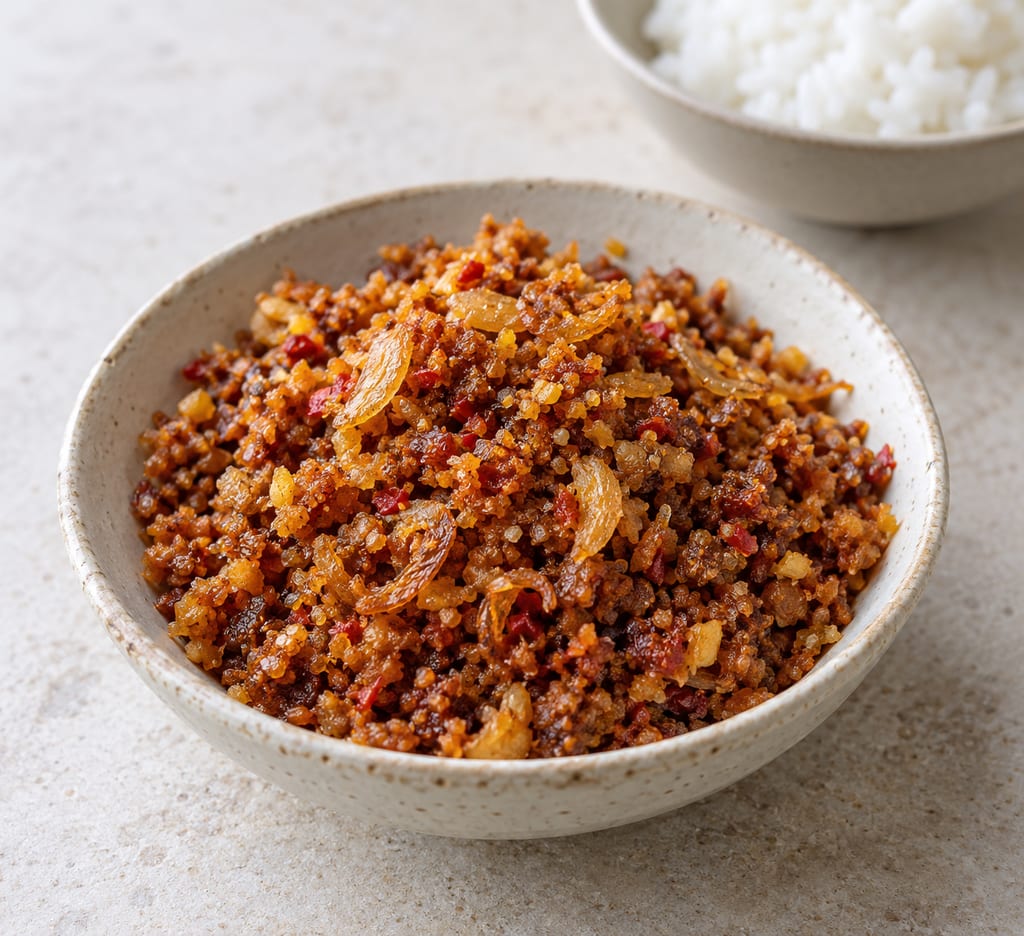
Balachaung
A Myanmar relish of dried shrimp, fried eschalot and garlic, chilli, turmeric, tamarind and ngapi. Naomi Duguid’s published recipe makes about 1 cup; it contains crustacean shellfish.
 FermenteaWhere food goes to change
လက်ဖက် · Lahpet · Laphet · Lepet-so · Pickled tea leaves · Fermented tea leaf Myanmar
Laphet is Myanmar’s fermented tea-leaf food, associated with ceremony and hospitality. This entry documents cultural context and regional production accounts; it is not a household fermentation recipe.
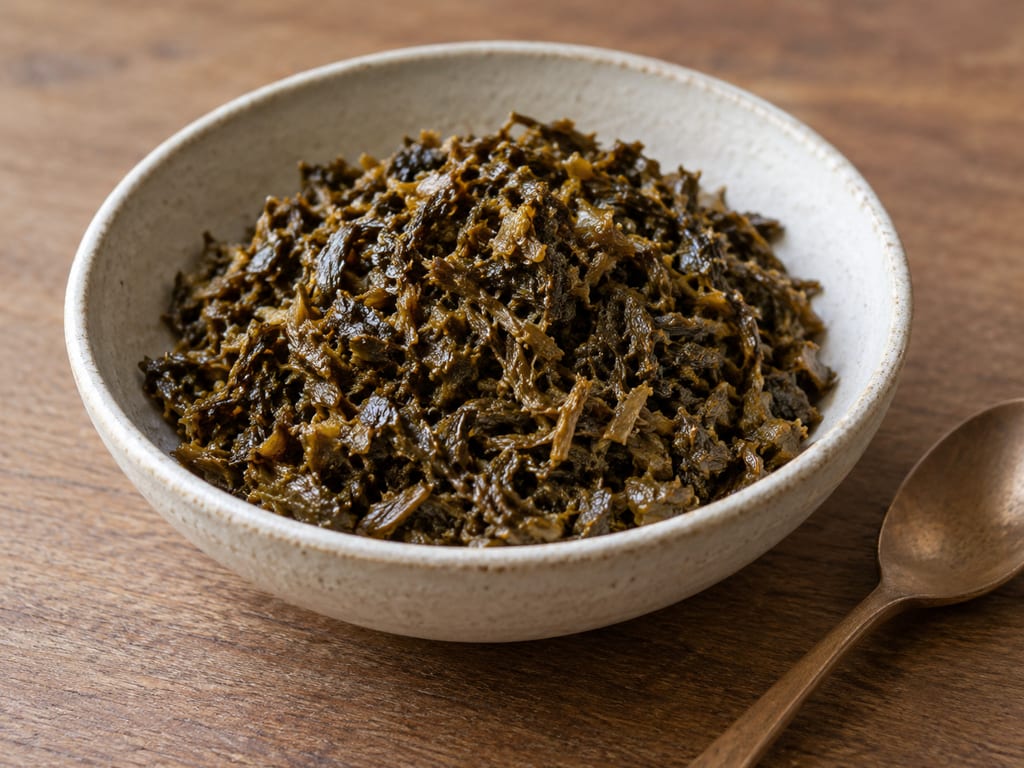
Laphet (lahpet, လက်ဖက်) is fermented tea leaf eaten as food, distinct from brewed tea and from lahpet thoke, the salad prepared with fermented leaves. A review in the Journal of Ethnic Foods describes laphet as an important Myanmar ceremonial food and the laphet tray as an expression of hospitality. It also recounts peace-offering traditions without presenting them as proof of a precise origin date.
Spelling varies across sources. This entry keeps both common English spellings and the Burmese name.
The International Labour Organization’s Myanmar tea guide documents two Shan State production traditions: a Northern Shan route involving steaming and underground fermentation, and a Southern Shan route using sealed bags. These are descriptions of regional production practice, recorded here as cultural context rather than as a household procedure.
The guide describes processing controls for production settings, but it does not establish a validated household recipe or batch-specific safety endpoint. This page therefore does not give a sequence, formula, duration, storage direction or method for assessing a homemade batch.
A study of 14 Laphet products from different Myanmar locations reported varied microbial communities and pH values of 4.53 to 6.91, with differences associated in part with sampling location and incubation time. Those measurements describe the sampled products only; they do not establish that any particular batch is safe or unsafe.
The World Health Organization explains that low-oxygen foods can support botulism toxin formation under suitable conditions, while acidity below pH 4.6 prevents growth of C. botulinum. The cited Laphet study and production guide do not provide a validated household control that could establish a safe endpoint. This entry is cultural documentation, not instructions for making, assessing or storing laphet.
Laphet has a documented cultural role in Myanmar's food traditions and hospitality. The cited review discusses stories of peace offerings but does not establish an invention date.
Scaling: source batch only
A study of 14 Laphet products reported pH values from 4.53 to 6.91; WHO states C. botulinum will not grow below pH 4.6 and can form toxin in low-oxygen foods under suitable conditions. These sources do not establish the safety of any individual batch.
Hazard sourceThis page documents food culture and regional production accounts; it is not a home fermentation or storage method.
The published sample study does not diagnose any individual batch; appearance, taste, or elapsed time cannot establish safety.
The ILO guide describes both Northern and Southern Shan State methods. Other production areas are not established.
A Myanmar relish of dried shrimp, fried eschalot and garlic, chilli, turmeric, tamarind and ngapi. Naomi Duguid’s published recipe makes about 1 cup; it contains crustacean shellfish.
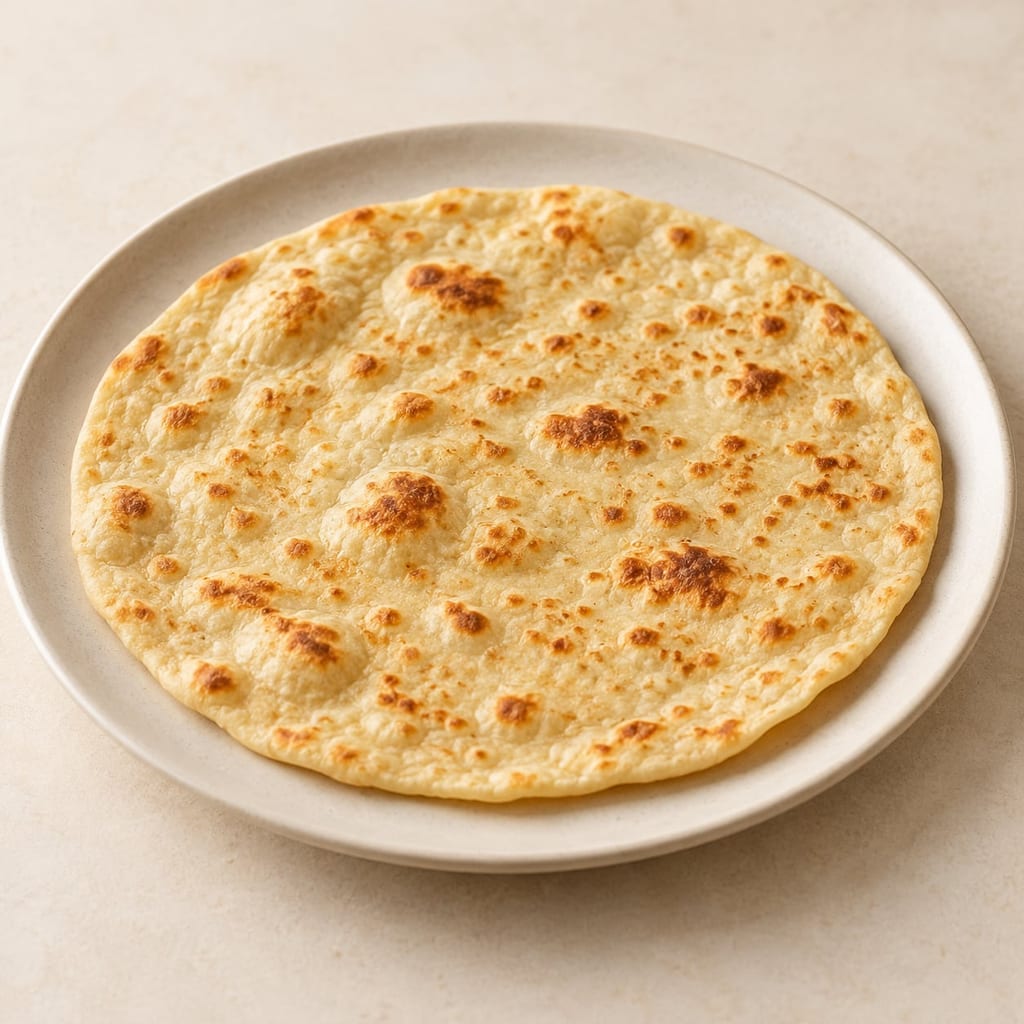
Sandi Wai’s eight-piece Burmese plain naan uses yeast and baking powder, rests for 30 minutes and cooks on a hot nonstick pan without oil.
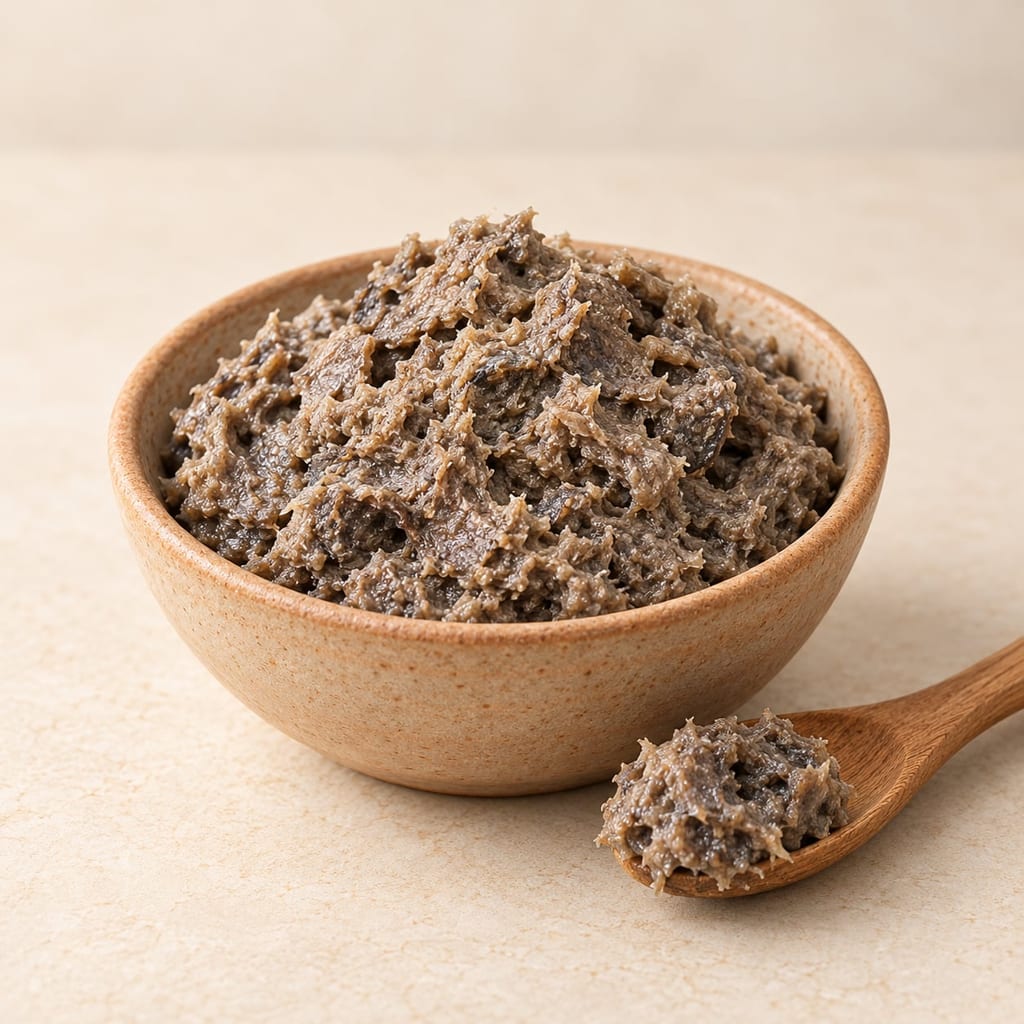
Ngapi is a Myanmar name used for varied fermented fish and shrimp pastes. Selected market and processor samples document differences in species, ingredients, and process; the evidence does not support one nationwide formula.
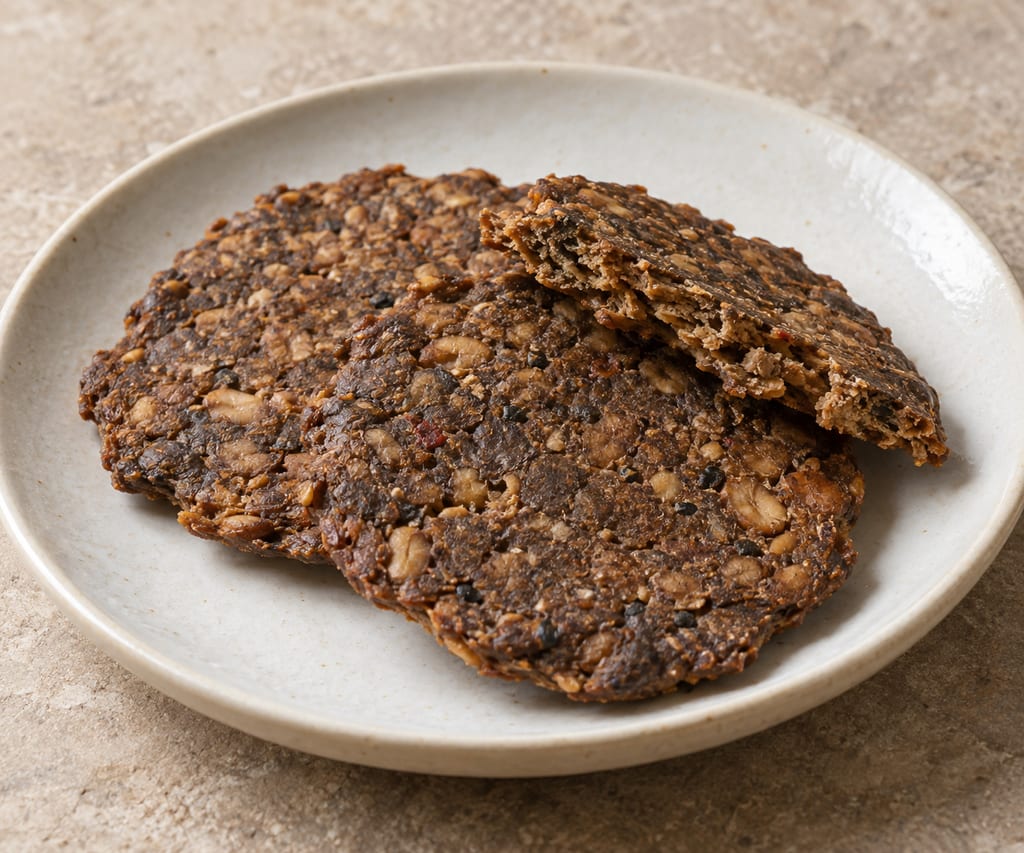
A Myanmar soybean ferment in which cooked beans turn sticky through alkaline bacterial fermentation, then are eaten fresh or seasoned, flattened and sun-dried into savoury wafers.
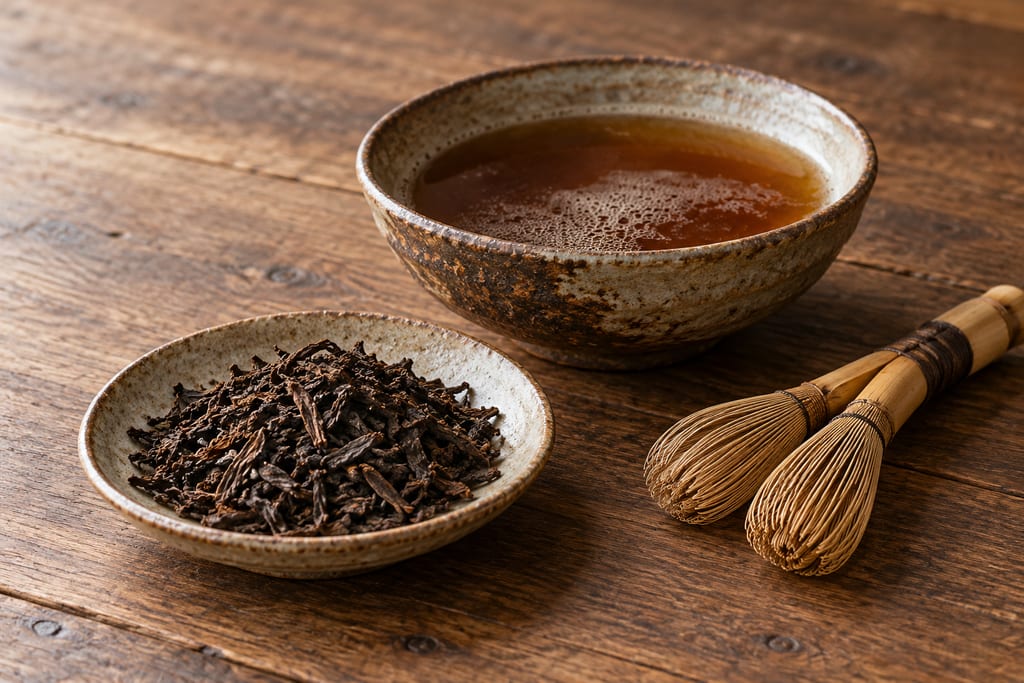
A Japanese post-fermented tea from Asahi in Toyama: mature tea leaves are steamed and fermented aerobically in turned, self-heating heaps, then dried; traditionally boiled and whisked into a foam.

Northern Thai fermented tea leaf: Assam tea leaves tied in bundles, steamed, packed in a lined tank and held under weight for three to four months. Eaten after meals.
No community contributions have been published for this entry yet.
Sign in to contribute. Published comments and photos are free to read.
ILO / ALiSEA catalogueMethod · Equipment
Myanmar Tea Cultivation and Processing Guide (2020)Northern Shan leaves are washed and steamed for three to five minutes and then placed in an underground pit; Southern Shan leaves are fermented in plastic bags.
Withering on bamboo mats or ventilated tanks, cooling, rolling, and equipment for the pit route.
International Journal of Food MicrobiologyMethod · Safety
Bacterial and fungal diversity in Laphet, traditional fermented tea leaves in MyanmarThe study analyzed 14 Laphet products from different locations in Myanmar and found varied microbial populations and pH values; discussion reports pH 4.53 to 6.91 and differences associated with samples and incubation periods.
Cited in: Variation and safety limits
Journal of Ethnic FoodsHistory · Cultural use
The legend of laphet: A Myanmar fermented tea leafLaphet is a traditional fermented tea-leaf food of Myanmar and remains important in ceremonies and hospitality; the article discusses its historical role as a peace symbol or offering and the laphet tray as a form of hospitality.
Cited in: A Myanmar food of hospitality
World Health OrganizationSafety
BotulismFoodborne botulism can occur when C. botulinum grows and produces toxin in low-oxygen food under suitable conditions; WHO states it will not grow in acidic conditions below pH 4.6.
Cited in: Variation and safety limits
International Labour OrganizationMethod · Equipment
Myanmar Tea Cultivation and Processing GuideThe ILO guide describes Northern and Southern Shan production pathways for fermented tea leaves.
Cited in: Regional production accounts