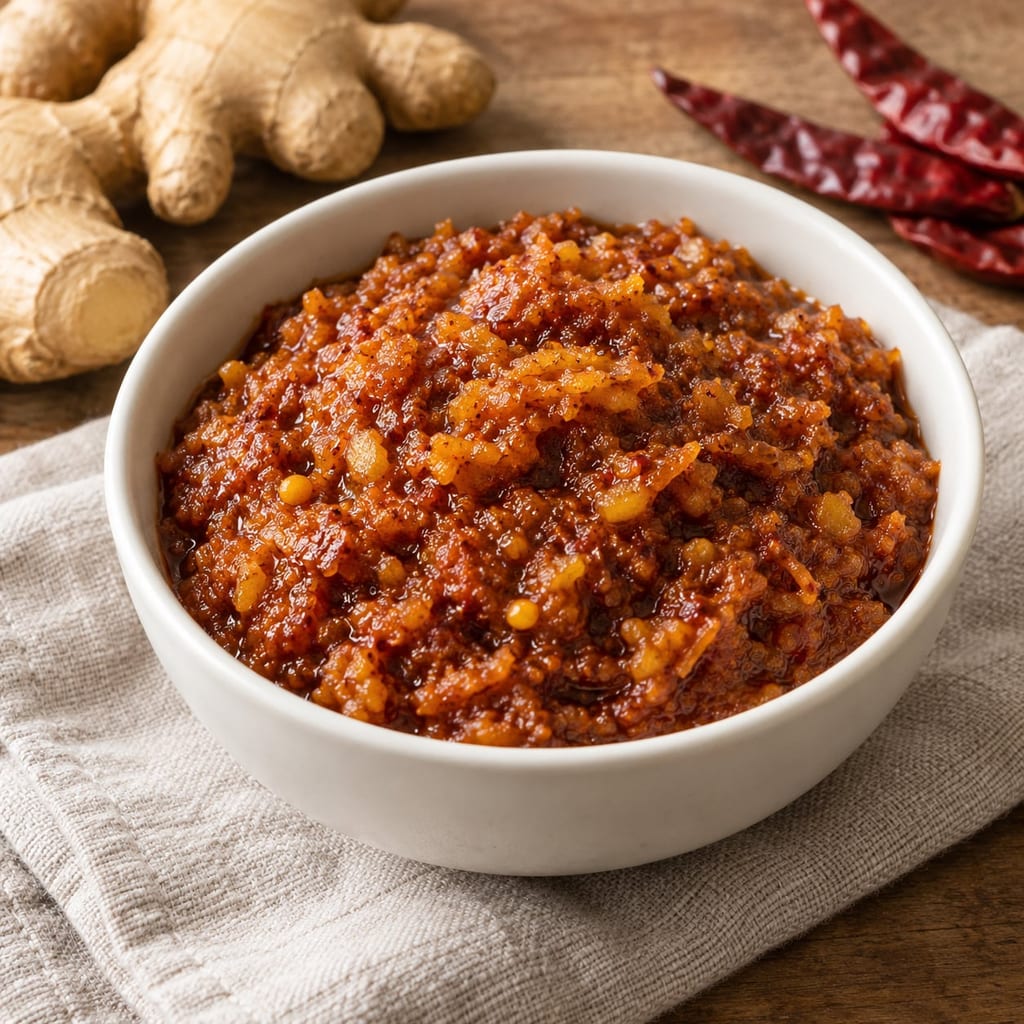
Allam pachadi
An Andhra ginger-and-urad chutney in which browned dal and briefly fried ginger and chillies are cooled, then ground with jaggery to a coarse paste.
 FermenteaWhere food goes to change
Traditional method
Til Ki Chutney (Sesame seed chutney) · Sesame seed chutney
Til ki chutney is a sesame-and-cumin condiment from an Uttarakhand cuisine collection: the seeds are roasted, finely ground with salt and green chillies, then mixed with lemon juice. The book describes it as a winter preparation.
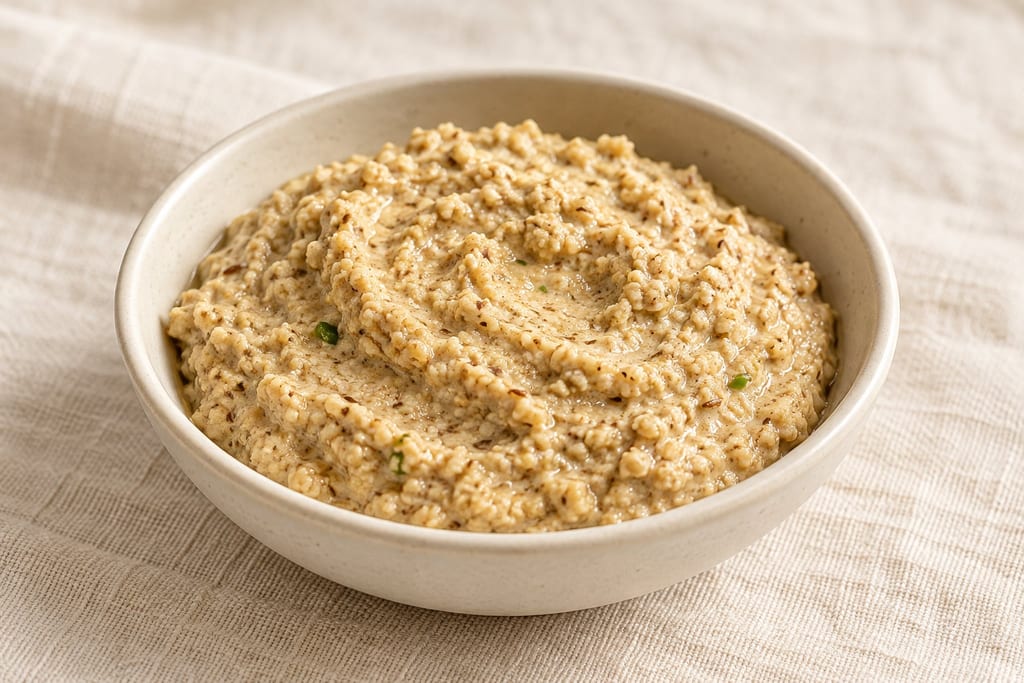
Til ki chutney is a roasted sesame-seed condiment associated with the traditional cuisine of Uttarakhand in the Indian Himalayas.
The name is written तिल की चटनी in Hindi.
Til means sesame and chutney identifies the preparation as a condiment.
The version documented here combines sesame seeds, cumin, green chillies, salt and lemon juice.
The sesame and cumin are roasted together, then finely ground with the remaining ingredients.
The result is a nutty, spicy and acidic preparation that can accompany a meal in a relatively small portion.
Unlike a fermented pickle, this chutney is made by roasting, grinding and seasoning.
It contains no intentional microbial fermentation stage.
Its inclusion in a fermentation reference is therefore best justified by its role within regional preserved-food and condiment traditions, rather than labelling it as fermented.
The preparation appears in Nutritious and Healthful Traditional Cuisine of Uttarakhand Himalayas, published in May 2023 by ICAR–Vivekananda Parvatiya Krishi Anusandhan Sansthan, Almora, with project partners.
The recipe is printed on page 141 of the book, corresponding to approximately page 152 of the PDF.
The book places til ki chutney within a collection of regional traditional foods.
It specifically describes the chutney as generally consumed during winter.
That is a meaningful cultural detail.
However, the publication does not establish a first historical preparation date.
It would therefore be incorrect to claim the recipe was invented in a named medieval kingdom, used in a particular ancient ritual or created by one historically documented household.
The source provides a regional culinary association and a modern written record.
Those are sufficient for an accurate entry without inventing a more elaborate origin story.
Uttarakhand occupies part of the central Himalayas in northern India.
Its landscapes include valleys, foothills and high mountain regions.
Agriculture and food traditions vary significantly with altitude, season and locality.
Regional cooking uses cereals, pulses, oilseeds, vegetables and locally available herbs and spices.
Sesame is one of the oilseed crops relevant to Indian food culture.
Its seeds can be used whole, roasted, ground into paste or pressed for oil.
A chutney based on sesame makes use of the seed's concentrated flavour and fat content.
The book's winter association is consistent with the role of rich, strongly flavoured condiments in seasonal meals, but the source does not provide a historical nutritional explanation for why this specific chutney is regarded as a winter food.
A responsible article should preserve the seasonal observation without turning it into an unsupported medical claim.
Sesame seeds — 100 g — Main ingredient, body and nutty flavour
Cumin seeds — 5–10 g — Warm aromatic seasoning
Lemon — 1 — Acidic juice
Green chillies — To taste — Heat and fresh chilli aroma
Salt — To taste — Seasoning
The original recipe gives no exact quantity for the green chillies or salt.
It does not provide a finished yield.
It also does not specify water, garlic, ginger, mint or fresh coriander as required ingredients.
A photograph accompanying the printed recipe may show coriander used in presentation, but coriander is absent from the ingredient list and written method.
It is therefore not included in this formulation.
Sesame comes from Sesamum indicum, a cultivated oilseed plant.
The small seeds contain substantial quantities of fat, as well as protein, fibre and mineral constituents.
Sesame occurs in several seed colours, including white, cream, brown and black.
The original Uttarakhand recipe does not specify seed colour.
Consequently, the botanical ingredient should be recorded as sesame seeds without imposing a particular variety.
Sesame oil contains a high proportion of unsaturated fatty acids.
The seeds also contain characteristic lignan compounds, including sesamin and sesamolin.
These substances contribute to sesame's chemical identity and are relevant to its behaviour during roasting and storage.
However, the presence of these compounds does not justify exaggerated health claims for the finished chutney.
The recipe is principally a food, not a scientifically validated medical treatment.
Cumin is produced from Cuminum cyminum.
Its seeds are widely used as a spice in South Asian and many other cuisines.
Cumin contains volatile compounds responsible for its warm, earthy aroma.
Roasting changes the availability and balance of these compounds.
The original recipe uses 5–10 g cumin per 100 g sesame.
This is a documented range rather than a single mandatory ratio.
More cumin gives the condiment a stronger spice character.
Less cumin allows the roasted sesame to dominate.
Both belong to the same recipe.
Fresh green chillies contribute pungency and vegetal aroma.
The original source does not identify a specific chilli cultivar.
Several cultivated species of Capsicum may be sold as green chillies.
Consequently, the heat can vary substantially.
The cook is instructed to add chilli according to taste.
Lemon, Citrus limon, provides acidity.
Its juice balances the fatty, roasted character of the sesame.
The recipe specifies one lemon but does not measure the juice volume.
Different lemons contain different amounts of juice and acid.
It would therefore be misleading to assign an exact final pH or acid concentration.
Salt completes the seasoning.
Its amount is also left to taste.
Measure 100 g sesame seeds.
Check for contamination, damaged material or signs of deterioration.
Sesame containing an obviously rancid odour is unsuitable for a fresh chutney.
The source does not require soaking the seeds.
Measure 5–10 g cumin seeds.
The range allows variation in spice intensity.
No exact seed-to-seed ratio beyond the stated weights is required.
Use a clean, dry pan suitable for roasting seeds.
The recipe does not specify a particular pan material, heating level or temperature.
Avoid adding oil unless following a separately documented variation.
The original method simply calls for roasting the seeds.
Place both seed ingredients in the pan.
Roast.
The source does not provide an exact duration.
Stir or move the seeds as needed to avoid uneven overheating.
The intended transformation is the development of toasted aroma.
Do not invent a fixed roasting temperature or time.
As the seeds heat, their aroma changes.
The aim is to produce a nutty, roasted flavour without burning.
Excessive roasting can make the condiment bitter.
Sesame seeds are small and can heat rapidly.
The exact endpoint is not quantified in the source.
Remove the roasted seeds from the heat.
Place them in a suitable grinder or mortar.
The original recipe does not state a required cooling interval.
Use equipment suitable for grinding seeds and chillies.
Prepare green chillies in the desired amount.
Add them to the roasted sesame and cumin.
Add salt to taste.
The original method combines these ingredients during grinding.
Grind the mixture until finely textured.
This is an explicit instruction in the source.
A coarse mixture will have a different mouthfeel.
The natural oil in the sesame helps bind the ground particles.
Squeeze one lemon.
Add the juice to the ground mixture.
Mix thoroughly.
The lemon provides acidity and moisture.
The exact resulting consistency depends on the quantity of juice and fineness of grinding.
Transfer the chutney to a serving bowl.
The source does not require a further cooking or fermentation period.
The chutney is ready after mixing.
Raw sesame has a comparatively mild flavour.
Roasting promotes chemical changes that create a more pronounced toasted aroma.
Heat can drive Maillard reactions involving amino compounds and sugars.
It also changes volatile compounds derived from sesame lipids.
Research on roasted sesame has identified numerous aroma-active substances, including compounds belonging to groups such as pyrazines, aldehydes and ketones.
Their relative abundance depends on the roasting conditions.
This explains why lightly roasted sesame and heavily roasted sesame do not taste the same.
However, the exact temperatures and durations in laboratory studies should not be transferred into the Uttarakhand recipe.
The original method does not prescribe them.
Scientific studies describe the mechanisms, not a validated roasting schedule for this condiment.
Sesame contains lignans such as sesamin, sesamolin and sesamol-related compounds.
Their behaviour during heating is a subject of food-chemistry research.
Some sesame lignans influence oxidative stability and the development of aroma compounds.
A 2024 study investigated their role in Maillard reactions and lipid oxidation.
Research published in 2026 also examined changes in sesame oil aroma under different roasting conditions.
These studies help explain why roasting can improve flavour while excessive heating may damage the sensory quality.
They do not establish that every roasted sesame chutney has the same chemical composition.
The seeds used, their storage history, roasting method and subsequent grinding all affect the result.
Whole sesame seeds have a relatively tough external structure.
Grinding breaks the seeds and releases their oil-rich contents.
The result is a paste or fine particulate mixture.
This alters both texture and flavour perception.
A whole roasted seed produces a crunchy sensation.
A ground sesame mixture provides a more continuous, rich mouthfeel.
The released oil also helps distribute some fat-soluble spice compounds.
Grinding with cumin and chilli creates a mixture whose flavour is more integrated than serving the separate ingredients side by side.
The original instruction to grind finely is therefore central to the recipe.
The documented method roasts the seeds first, grinds them with seasonings and adds lemon juice afterward.
This sequence preserves the dry-roasting character of the seeds.
Adding lemon juice before roasting would create a wet mixture.
Wet ingredients change heat transfer and prevent the seeds from undergoing the same dry-roasting process.
Adding juice after grinding introduces acidity without replacing the earlier toasted aroma.
This is an example of a simple recipe whose order of operations has a genuine technological purpose.
The stages are not interchangeable.
The finished chutney contains ground sesame solids, sesame oil, spice particles and lemon juice.
Its texture depends on the degree of grinding.
Finely ground sesame can produce a relatively cohesive paste.
A coarser grind leaves noticeable seed particles.
The exact quantity of lemon juice affects moisture.
A particularly juicy lemon may produce a looser chutney.
A smaller, drier lemon may produce a thicker mixture.
The source does not instruct the cook to add water.
Consequently, water should not be included as a required ingredient in the structured recipe.
A different recipe may use water, but that would be a variation.
Fermentation involves microorganisms transforming components of a food through metabolic activity.
This recipe does not include an intentional microbial starter or maturation period.
Roasting is a heat-treatment operation.
Grinding is a mechanical operation.
Lemon addition is direct acidification.
These processes can produce complex flavour without any new fermentation.
The chutney should therefore remain correctly labelled non-fermented.
For Fermentea, this distinction is valuable because the site also covers ingredients and cooking processes used alongside fermented foods.
Not every food in such a reference needs to be reclassified artificially as a ferment.
Sesame chutneys exist in multiple Indian cuisines.
Some use roasted sesame with garlic or additional herbs.
Others include curd, tamarind, tomato or different chillies.
Some are ground to a thick paste, while others are more pourable.
These should be treated as related culinary variations where their identities overlap.
The Uttarakhand recipe documented here is notably simple: sesame, cumin, chilli, lemon and salt.
The absence of many ingredients is part of the documented formula.
Adding coriander, garlic or tamarind to make the page more elaborate would alter the recipe.
The 2023 Uttarakhand publication describes til ki chutney as generally consumed during winter.
Sesame is energy-dense because of its oil content.
A seed-based condiment can provide rich flavour and a substantial texture in a small serving.
Nevertheless, the source does not explain the winter association through a controlled nutritional or historical study.
It would be inaccurate to claim that the chutney scientifically warms the body or prevents particular winter illnesses.
The more defensible description is that it forms part of a documented regional seasonal food tradition.
The recipe is served as a condiment.
Its nutty flavour, heat and acidity can accompany a wider meal.
It is particularly well suited to foods that benefit from a sharp, rich accompaniment.
A modern serving suggestion would be to offer a small portion with flatbread, cooked grains or savoury vegetable dishes.
However, the original book does not specify a particular mandatory pairing on the recipe page.
Those ideas should be identified as general culinary serving suggestions rather than documented historical accompaniments.
The chutney's strong sesame flavour means it need not be served in large quantities.
The original publication does not provide a number of servings or weight per portion.
The chutney tastes bitter: Sesame or cumin may have been overheated.
The texture is coarse: The seeds may not have been ground sufficiently.
The mixture is oily: Sesame naturally contains substantial oil, some of which becomes visible when ground.
The chutney is too thick: Lemon quantity and grind affect consistency. The original method does not provide a quantified adjustment.
Too sour: Lemon size and acidity vary.
Too spicy: Chilli variety and quantity affect the result.
Rancid odour: Sesame oil can oxidise during unsuitable storage. Reject rancid ingredients.
Visible mould after storage: Discard the chutney.
Sesame is a regulated allergen in the UK.
It must be identified accurately in food offered to consumers.
The recipe also contains no intentional fermentation stage that would extend its storage life.
Fresh chilli and lemon juice introduce moisture.
The source does not supply a validated storage period.
The finished chutney should be treated as freshly prepared and perishable.
Use clean utensils and refrigerate promptly if not consumed immediately.
The presence of lemon juice does not make it a tested shelf-stable preserve.
The book presents the recipe within a collection of traditional Uttarakhand Himalayan cuisine and says it is generally consumed during winter. The seasonal statement is attributed to the book; no dated origin or first attestation is supplied.
Scaling: source batch only
The source gives no measured yield, storage interval or validated holding process.
The 2023 ICAR-VPKAS publication places this recipe in its traditional Uttarakhand Himalayan cuisine collection. This supports a source-associated regional record, not an exclusive origin.
An Andhra ginger-and-urad chutney in which browned dal and briefly fried ginger and chillies are cooled, then ground with jaggery to a coarse paste.
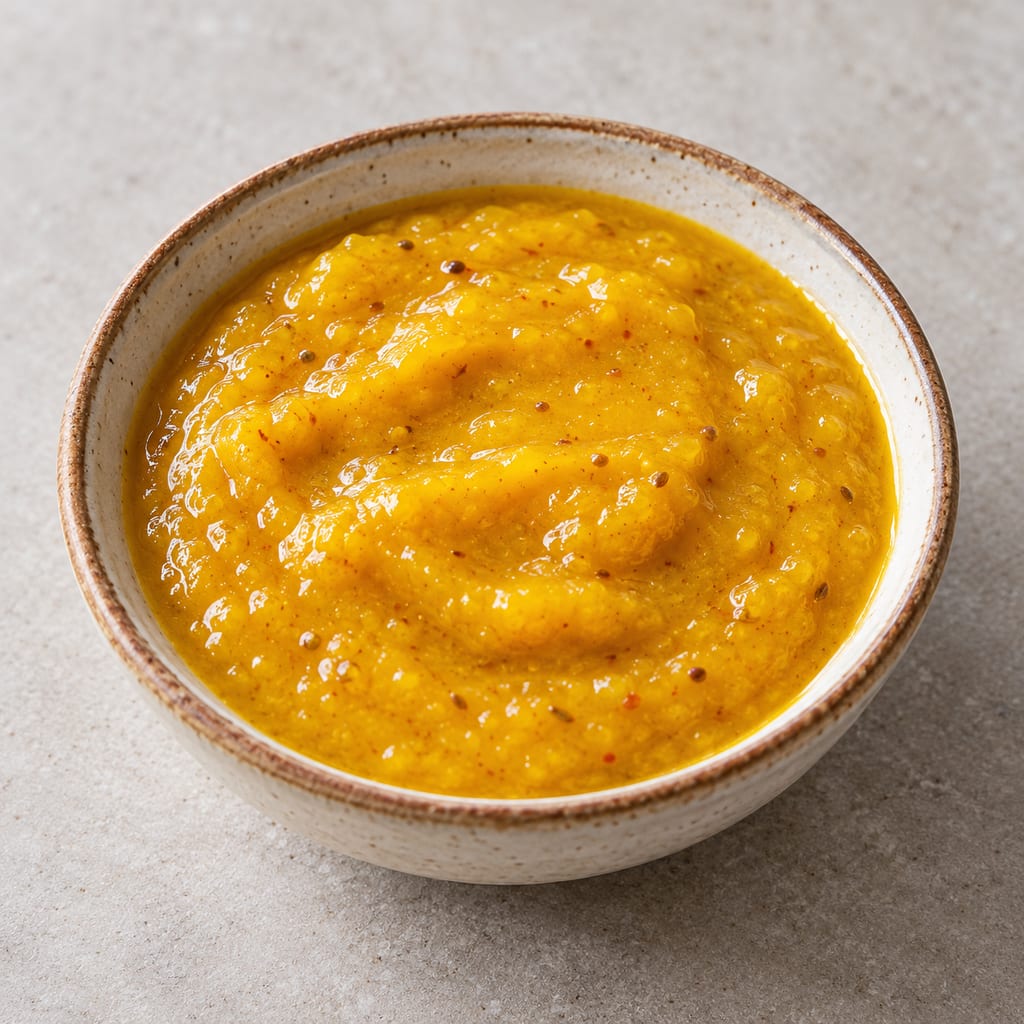
This cooked amba follows a Jewish Food Society recipe that simmers ripe mango with onion, garlic, mustard seed and warm spices into a tangy Middle Eastern condiment.
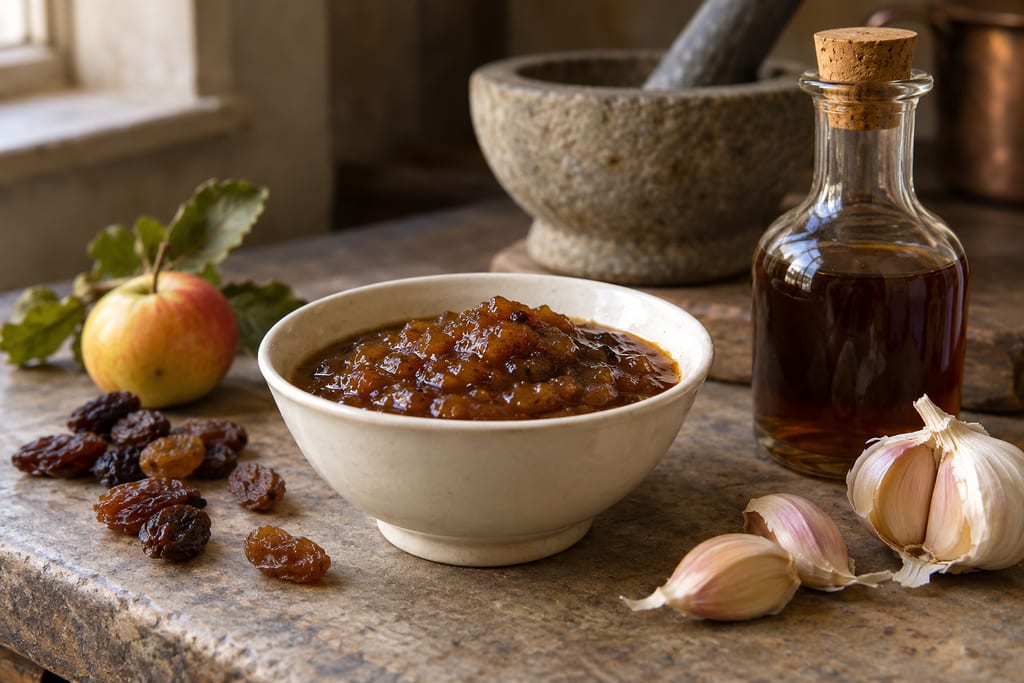
Eliza Acton's Bengal receipt for chetney sauce: stoned raisins and a hard acid fruit pounded with brown sugar, ginger, salt, cayenne and garlic, then thinned with vinegar to the consistence of thick cream.
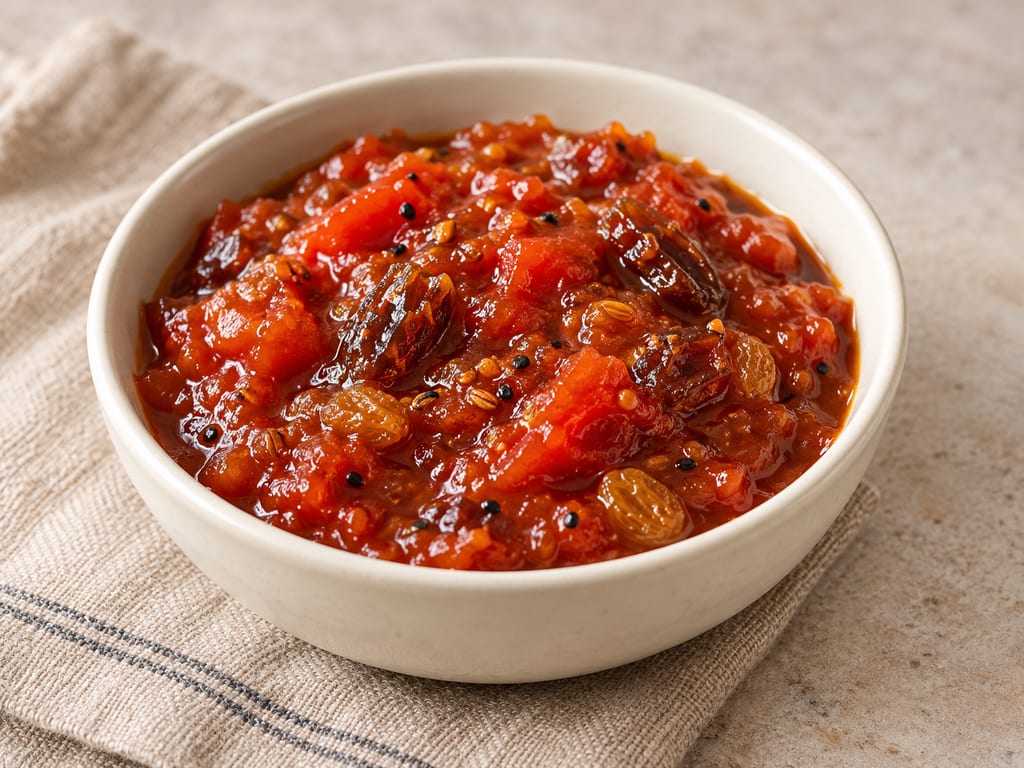
A cooked Bengali meal chutney combining tomatoes, dates, raisins, ginger and panch phoron.
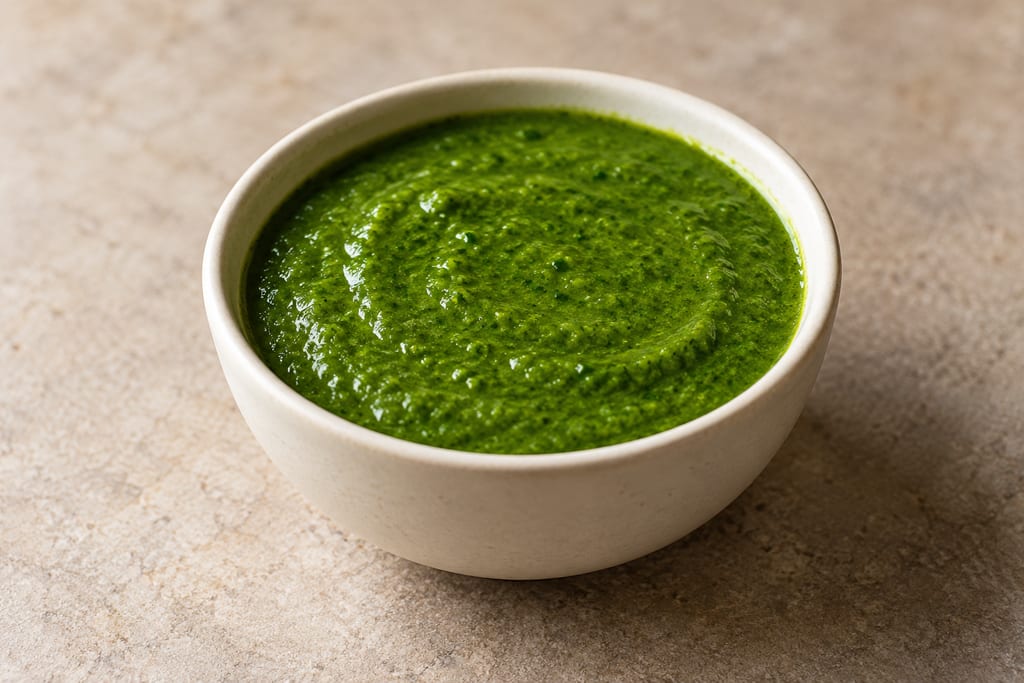
A cold-blended coriander and mint chutney with ginger, green chilli and optional cumin and lemon; the author serves it with snacks, chaat and sandwiches.
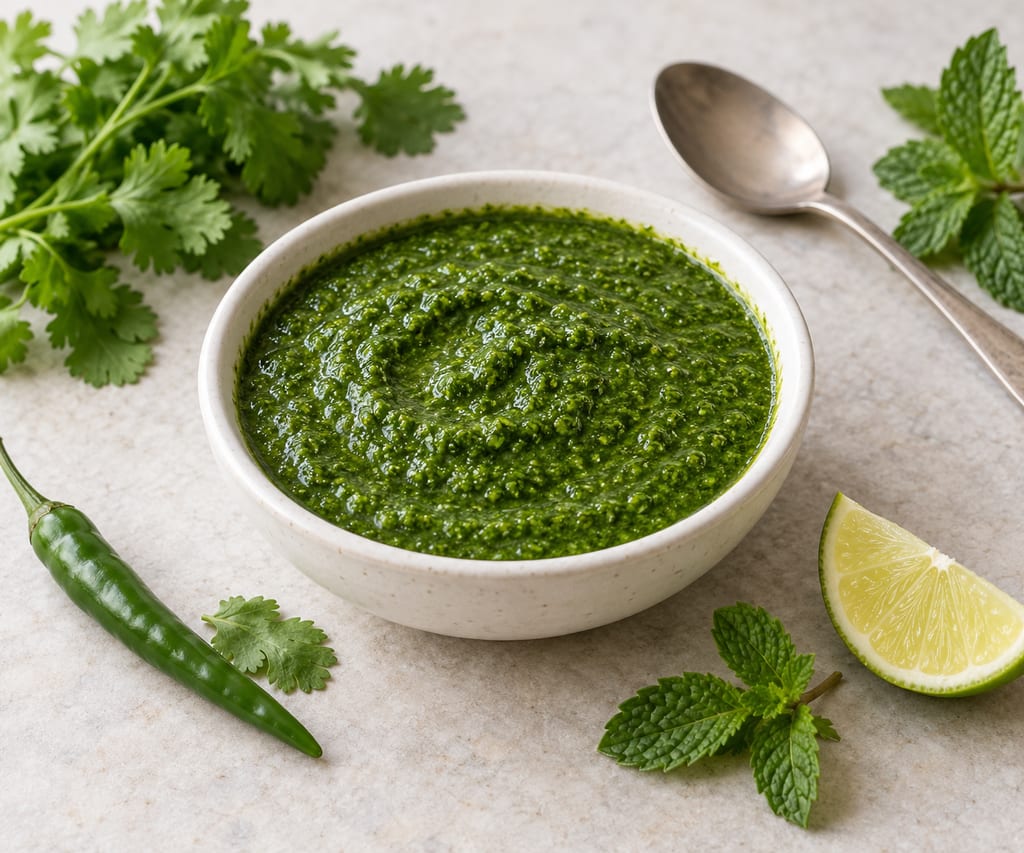
A fresh, uncooked green chutney blended from coriander, mint, chilli and citrus. This measured development batch is untested and intended for prompt serving.
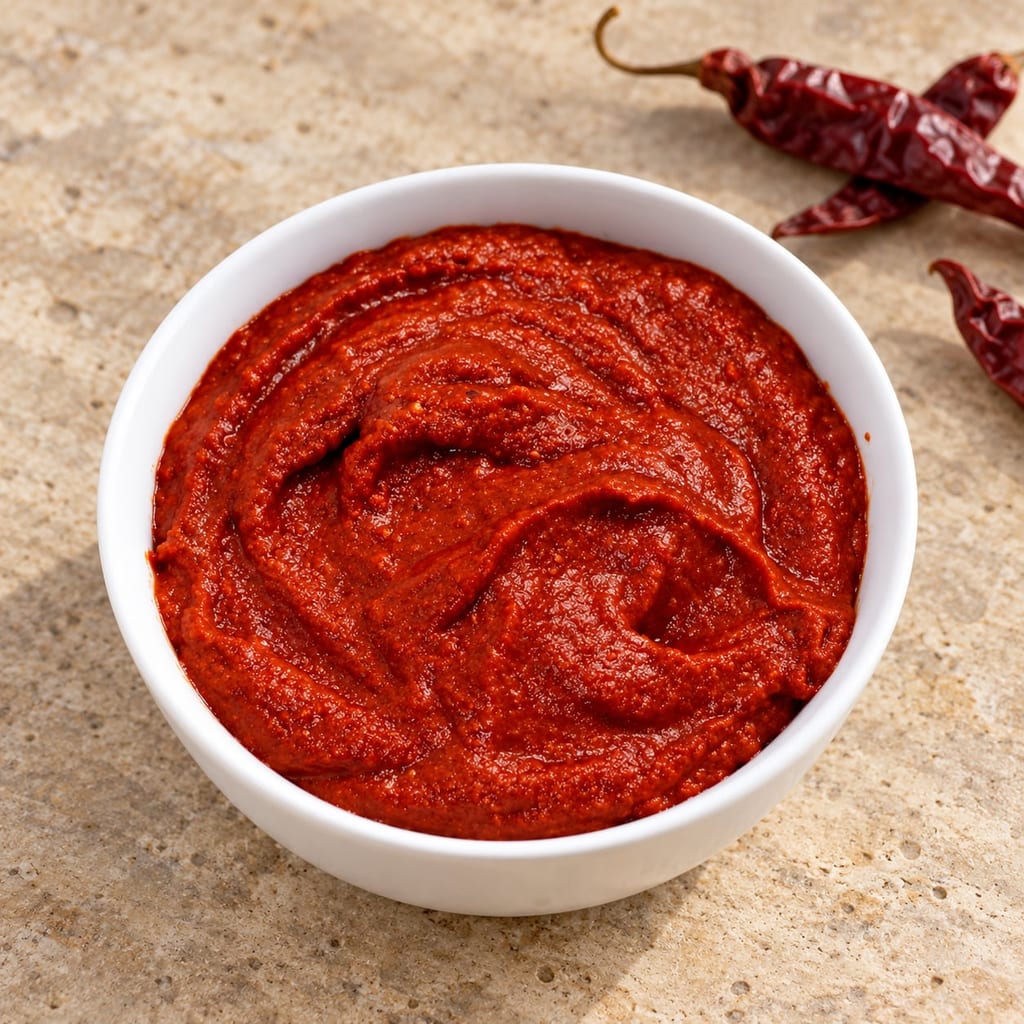
Recheado is a red Goan spice paste of Kashmiri chillies, garlic and spices ground in vinegar, best known as the stuffing for fried fish such as mackerel.
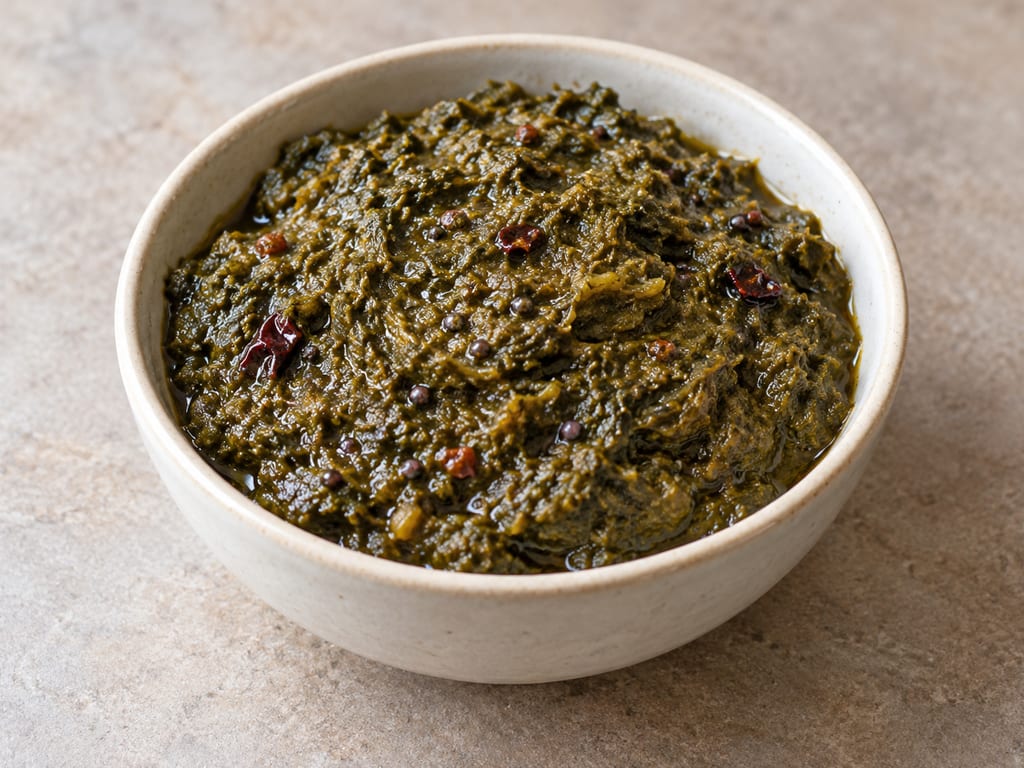
A hot, sour Andhra chutney of gongura (sorrel) leaves cooked soft and ground with fried dried chillies, garlic and onion, then finished with a hot tempering of dals, mustard and curry leaves.
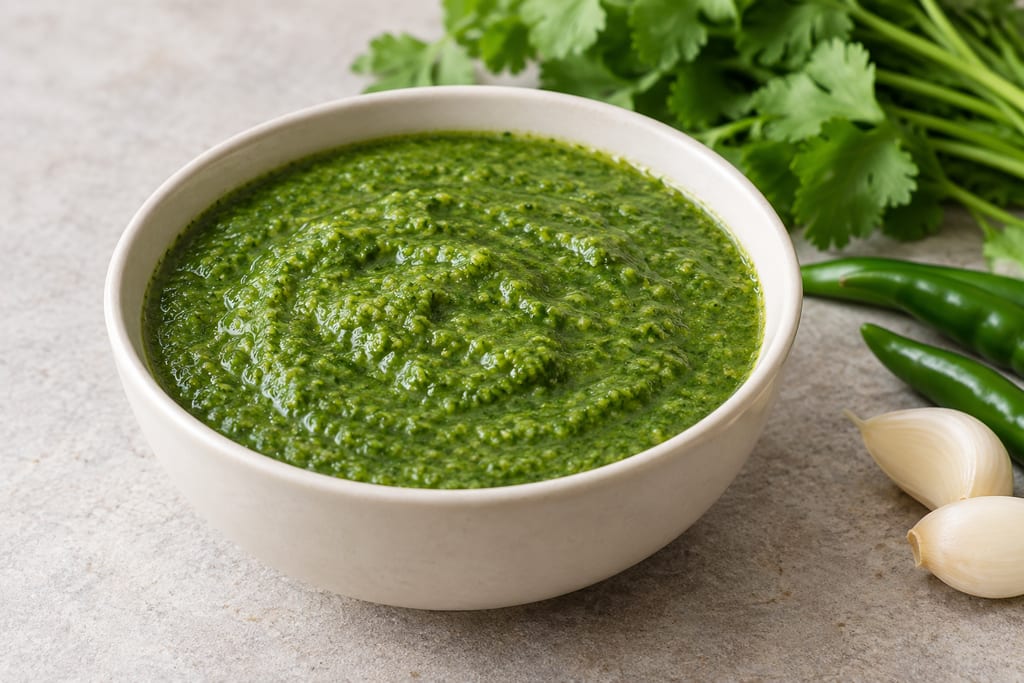
Afghan coriander chatni is a sharp, hot herb sauce with garlic and vinegar. A 2008 Afghanistan manual records green or red pepper and optional walnut; heat and household versions vary.
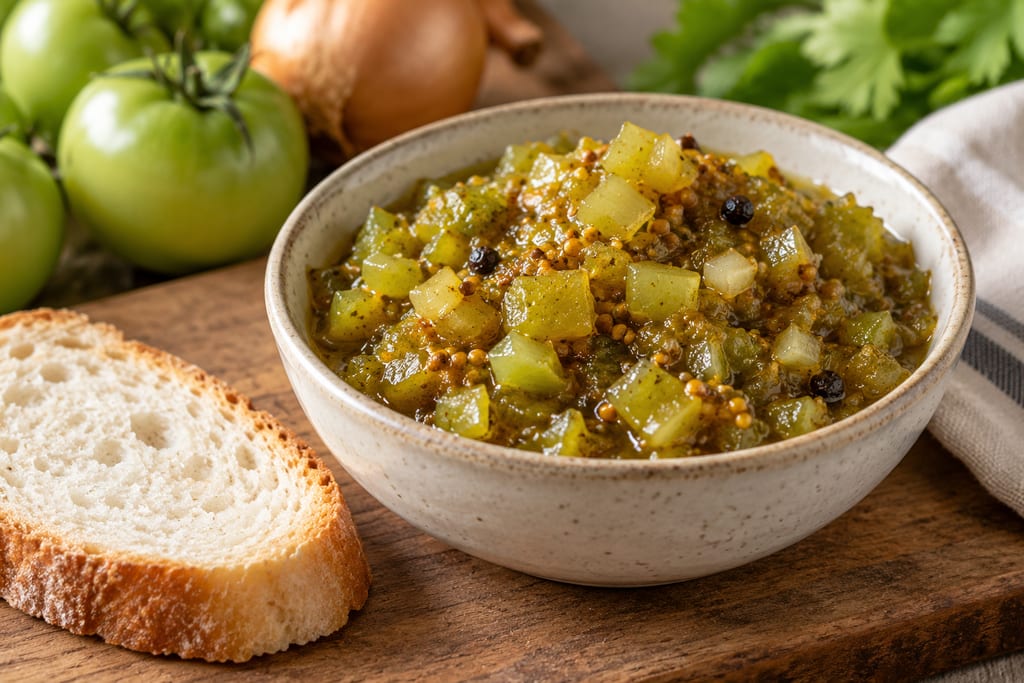
Australian green tomato pickles and relishes vary. This partial version follows ABC Western Victoria’s 2018 pickle recipe, not Beerenberg’s commercial formula. Sources document examples from 1944 onward, not a single origin.

A spicy South African vegetable relish of onion, carrot, pepper, tomato, curry seasoning and beans, cooked briefly and served warm or cold beside pap and grilled meat.
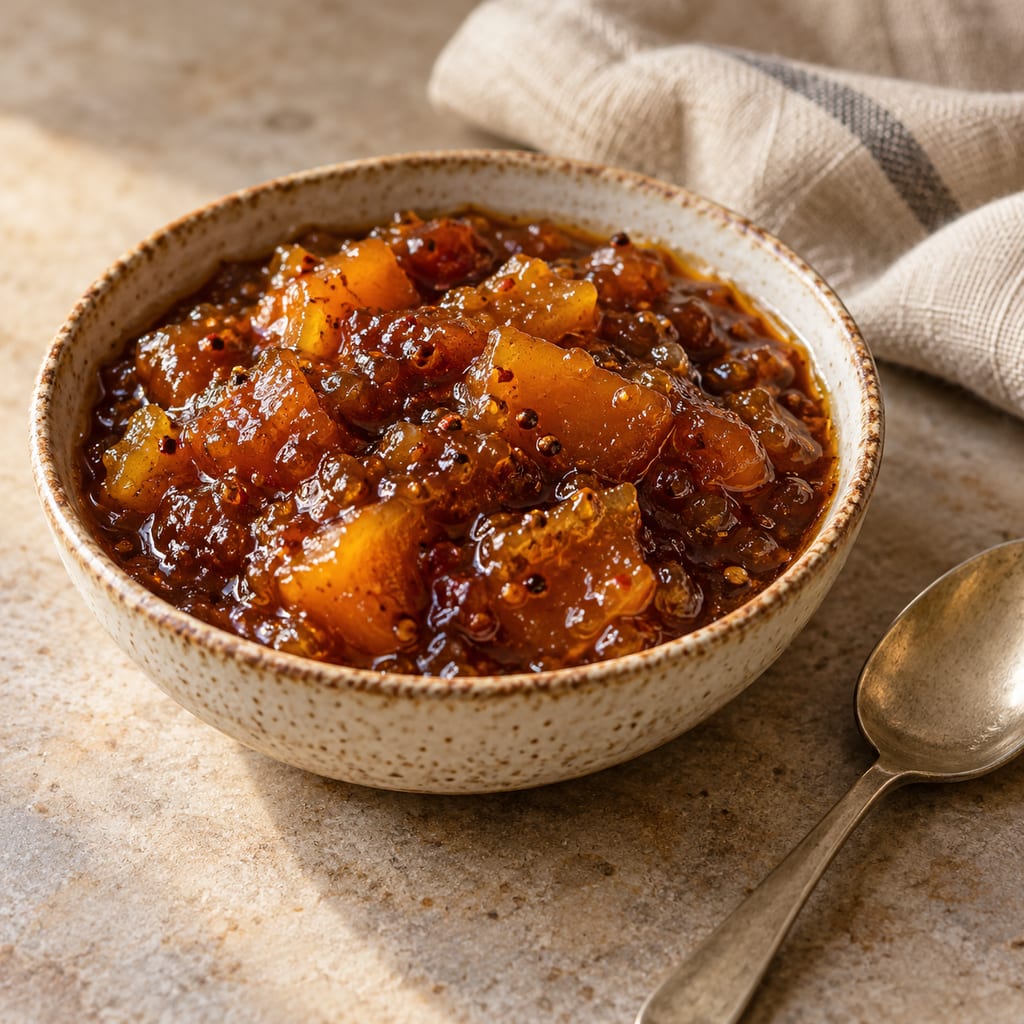
A broad account of cooked chutney traditions: fruit or vegetables combined with sugar, spices and sometimes acid, often boiled into a thick condiment. This record is historical and process context, not a formula or storage recipe.
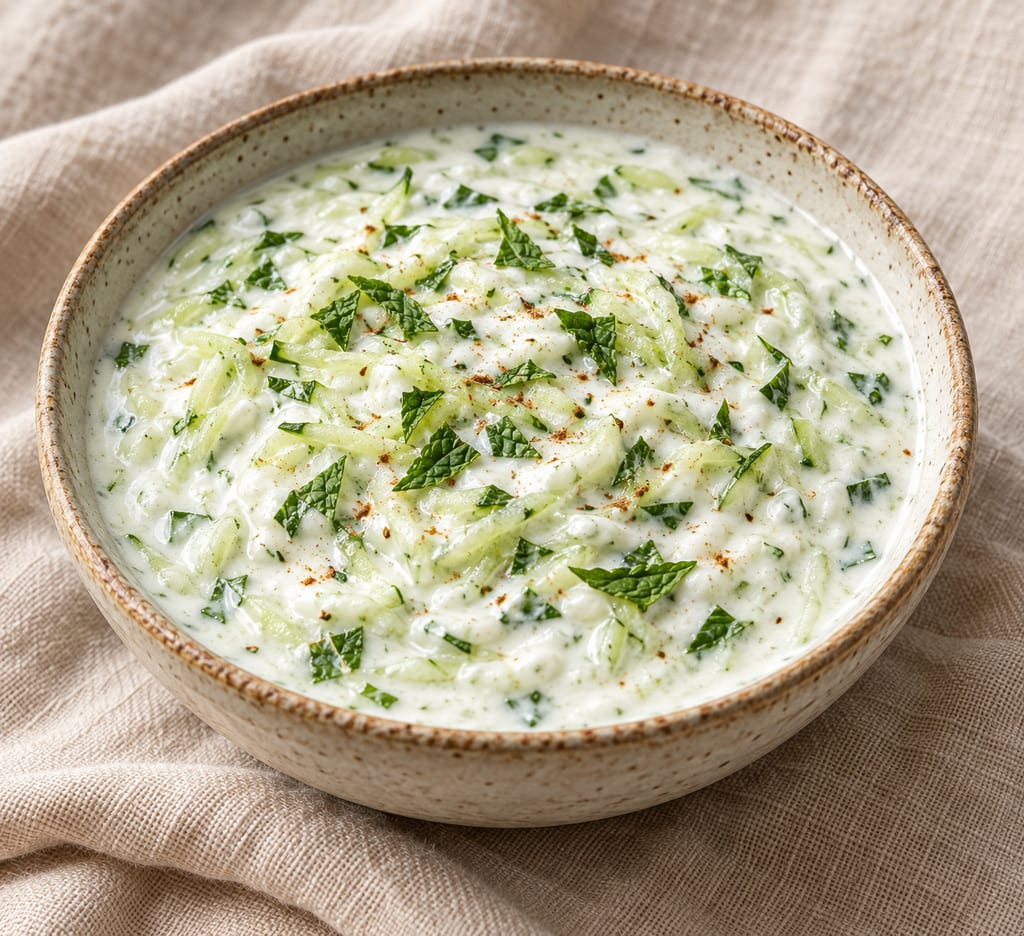
Cucumber and chopped herbs are folded into plain yoghurt with salt and roasted cumin for a cool South Asian accompaniment to spiced food.
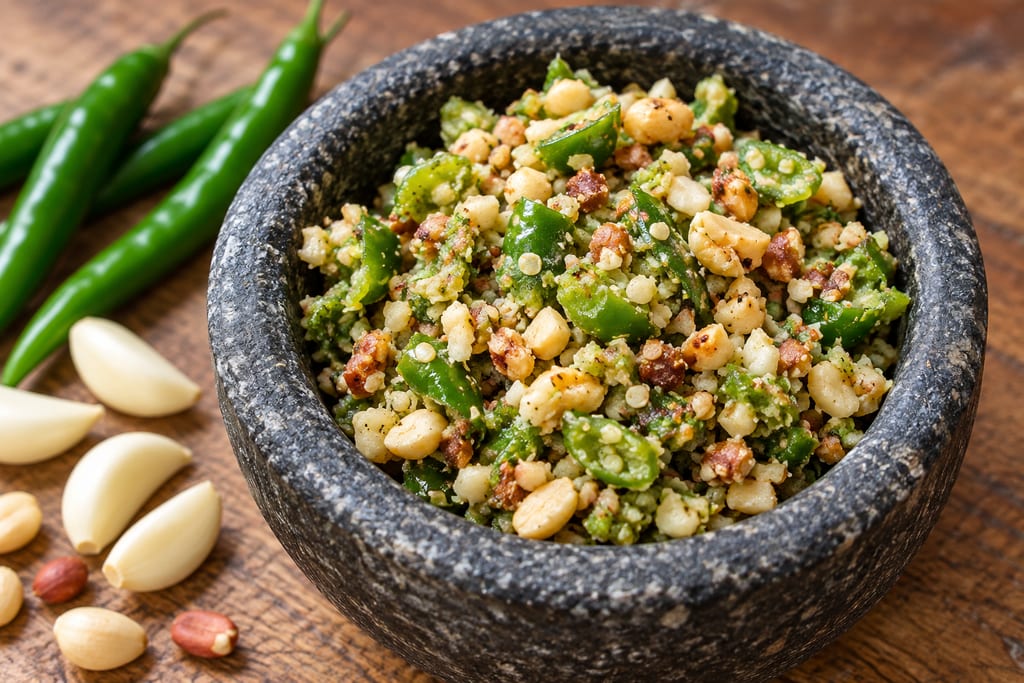
A fresh Maharashtrian thecha of green chillies, peanuts and garlic, roasted separately in the same oil and crushed with salt. Optional coriander joins the pan before grinding; serve with bhakari.
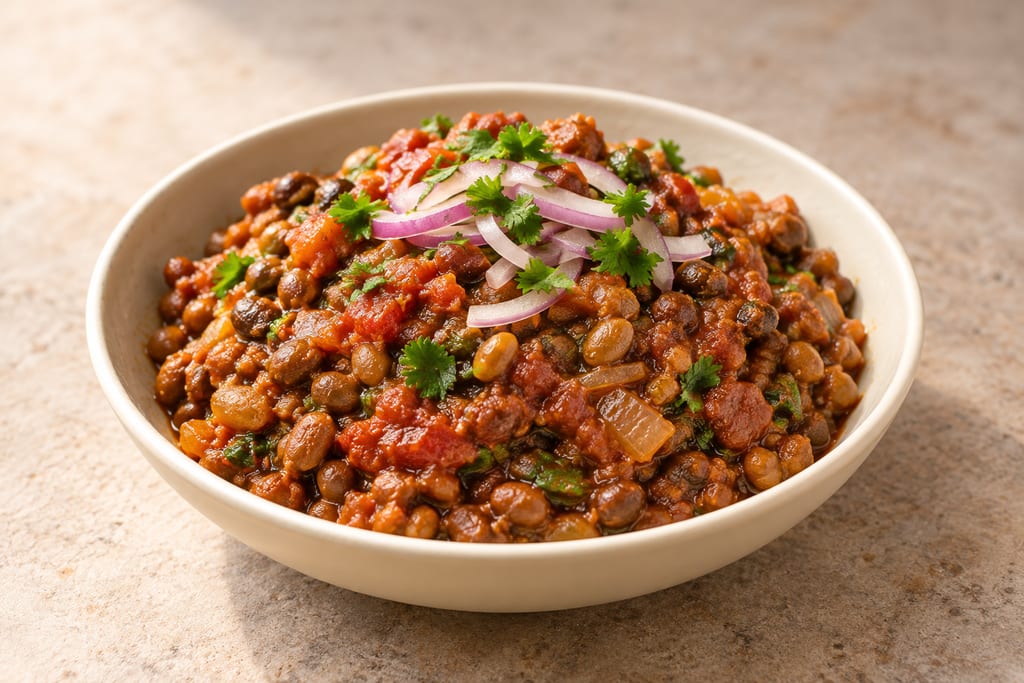
Kinema ra golbheda ko achar combines already-fermented soybean kinema with tomatoes, onion, garlic and spices, finished with sesame powder and fresh garnish, and is eaten with rice or toast.
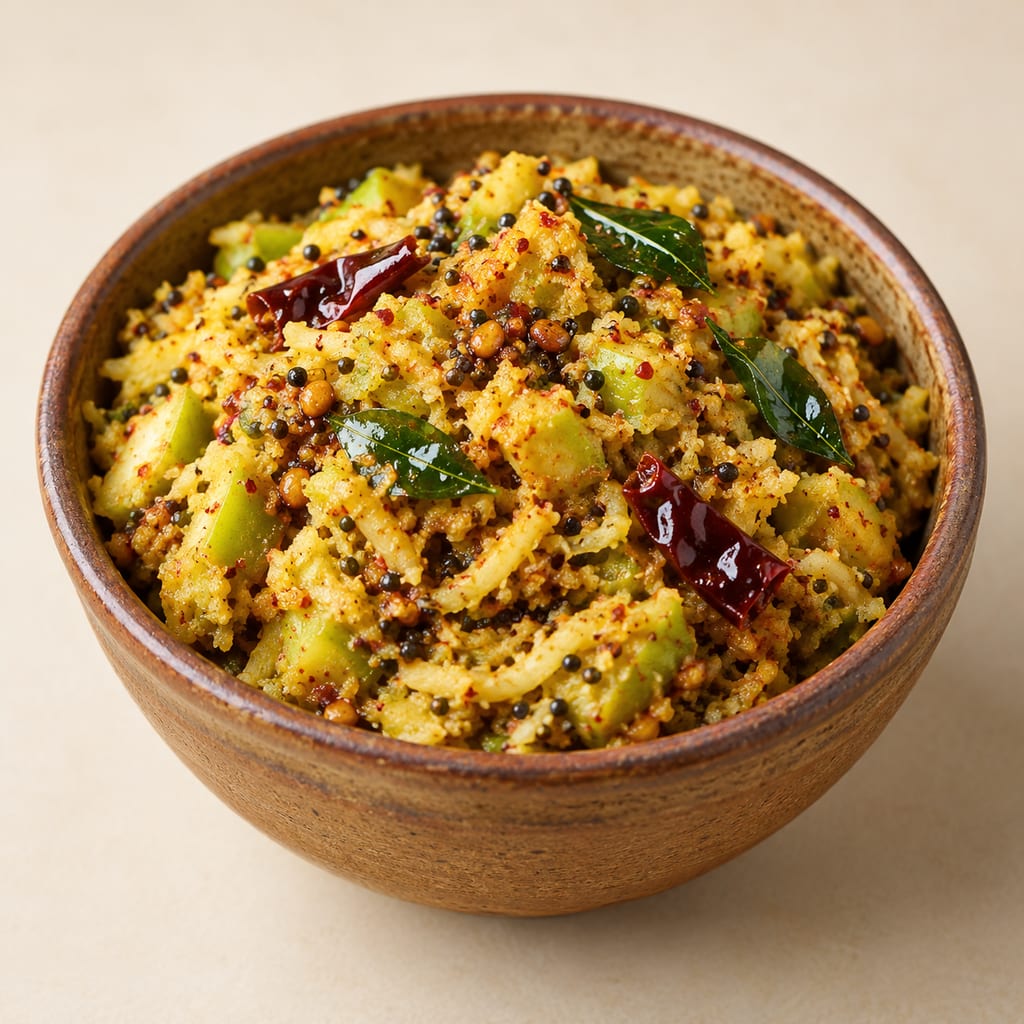
A Telugu coconut and raw mango pachhadi with a separately fried spice mixture.
No community contributions have been published for this entry yet.
Sign in to contribute. Published comments and photos are free to read.
ICAR-Vivekananda Parvatiya Krishi Anusandhan Sansthan (ICAR-VPKAS), Almora; published with project partnersRecipe · Geography · Seasonal use
Nutritious and Healthful Traditional Cuisine of Uttarakhand HimalayasPrinted p.141 (PDF p.152), “Til Ki Chutney (Sesame seed chutney)”: ingredients list 100 g sesame, one lemon, cumin seeds 5–10 g, green chillies and salt as per taste. The adjacent image credits A. Bhartiya but is not used to add ingredients.
Printed p.141 recipe prose: roast sesame with cumin; finely grind with salt and green chillies; then add lemon juice. The final sentence says it is generally consumed during winter.
Front matter and title page (source handoff): authors, ICAR-VPKAS publisher, May 2023 publication and ISBN; no historic date for this preparation.
Cited in: What is til ki chutney?; A documented Himalayan recipe; Uttarakhand and its food environment; Ingredients; The sesame ingredient; Cumin and its flavour; Green chilli and lemon; Stage 1 — Inspect the sesame seeds; Stage 2 — Measure the cumin; Stage 3 — Prepare the roasting pan; Stage 4 — Roast sesame and cumin together; Stage 5 — Prevent scorching; Stage 6 — Transfer for grinding; Stage 7 — Add chilli and salt; Stage 8 — Grind finely; Stage 9 — Add lemon juice; Stage 10 — Serve; Why grinding matters; Why lemon is added after roasting; Texture and consistency; Why this is not fermentation; Regional variations and naming; Winter consumption; How it is eaten; Quality and troubleshooting; Food safety and allergens
Food Chemistry (PubMed)Science
Sesame lignans and aroma formationLignans in sesame seed and their behaviour on roasting
Cited in: The sesame ingredient; Why roasting changes sesame flavour; Sesame lignans and oxidation
Foods (PMC)Science
Effects of sesame roasting conditionsHow roasting conditions change sesame aroma compounds and oxidative stability
Cited in: Why roasting changes sesame flavour; Sesame lignans and oxidation
GOV.UKSafety
Allergen labellingSesame as a mandatory declared allergen
Cited in: Food safety and allergens