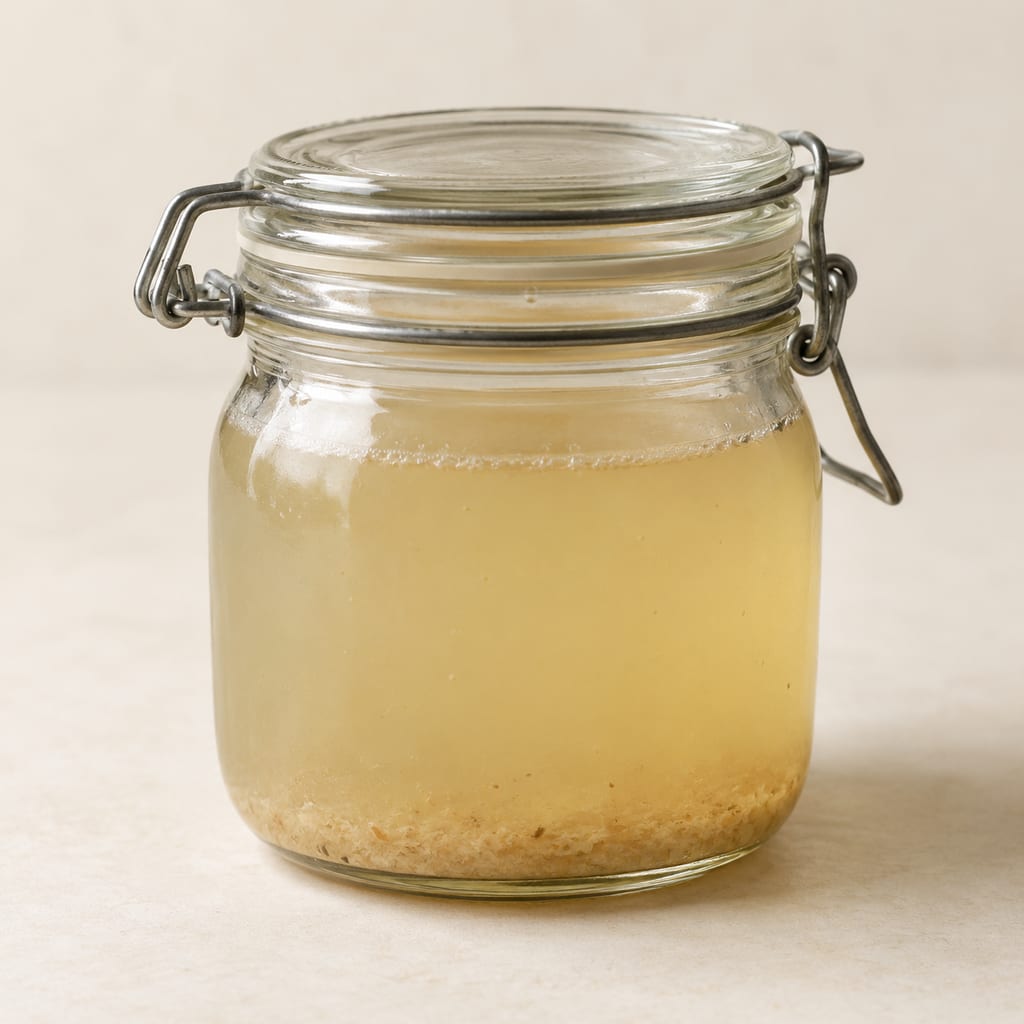
Soijim
The sour liquid that forms during Manipuri Soidon fermentation, kept to start the next batch and used to sour curries.
 FermenteaWhere food goes to change
Soidon, fermented bamboo shoot tips
Fermented tender bamboo-shoot tips from Manipur, started with the sour liquid of an earlier batch and eaten in chutneys and curries.
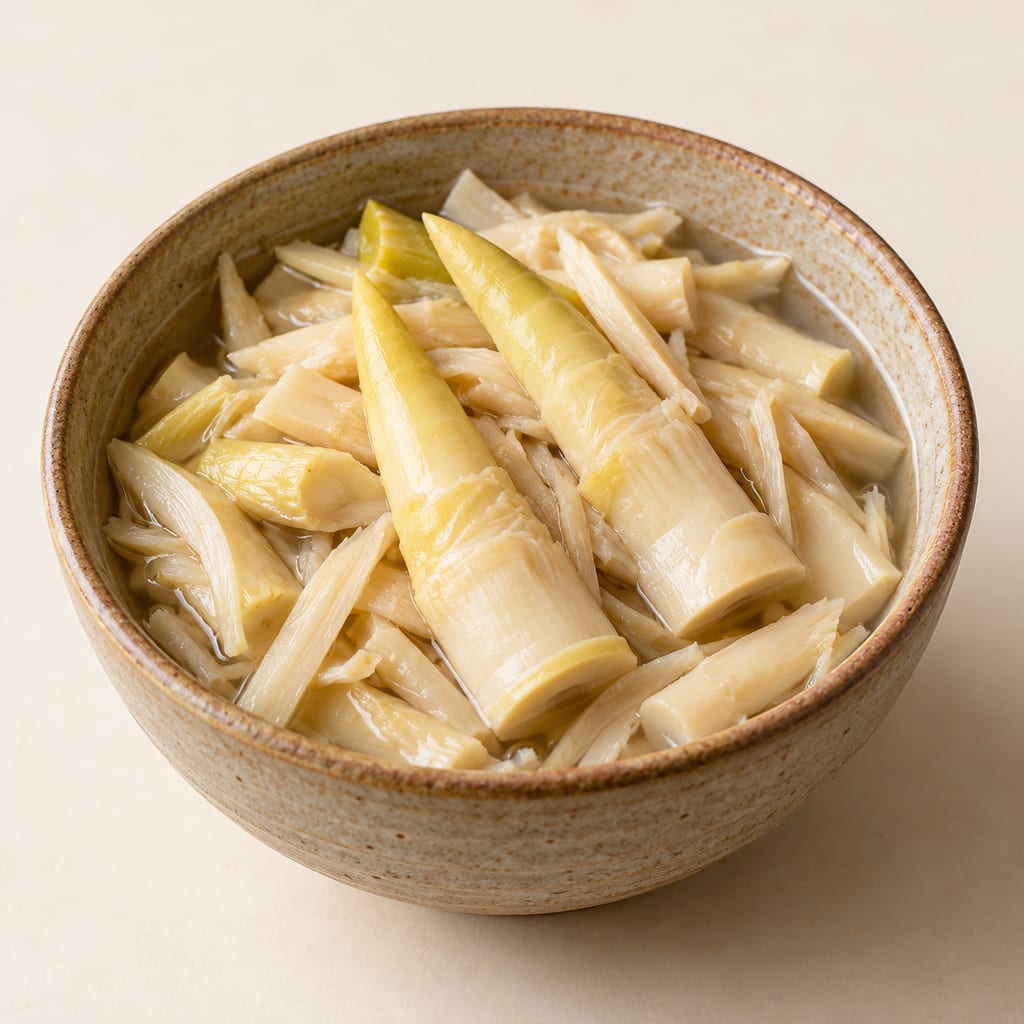
Soidon is a Manipuri fermented food made from the tender tips of bamboo shoots. The 2020 survey separates it from Soibum, which is made from thin slices of juvenile shoots. Soidon is also distinct from Soijim, the sour liquid that forms during its fermentation.
Its sour character comes from lactic fermentation. Cooks use it in chutneys and curries, and in the 2009 account it is also sold in markets.
The 2009 account describes whole tips held in an earthen pot with diluted soijim from an earlier batch, for three to seven days at room temperature. It notes that Garcinia leaves may be added.
The 2020 survey describes cut tips in a plastic tub with the previous batch's sour liquid and Garcinia pedunculata leaves, held five to seven days with regular stirring. The two accounts differ in vessel, cut and starter. Neither gives input quantities.
The traditional starter is the sour liquid of an earlier batch. A 2010 study of soidon mahi reports mixed bacteria in starter samples from Manipur and records high Bacillus cereus counts in 87 per cent of the samples. A 2014 study characterised lactic acid bacteria from three Soidon products from Manipur.
These are results for the sampled material. They do not define a standard starter, and they do not show that any batch is safe.
The 2009 account names Meitei women as the main producers, with men supporting, and records curry and pickle uses and market sale. The 2020 survey documents Soidon in surveyed markets and lists it in cooked Eronba chutney. The sources do not establish an origin or date.
Scaling: source batch only
A 2010 study of soidon mahi, the traditional liquid starter, reports Bacillus cereus at 10 to the 6th to 10 to the 7th cfu/ml in 87 per cent of the starter samples it studied, and the authors raise a biosafety concern. The finding is sample-specific, but reuse of a sour liquid carries the risk.
Hazard sourceThe sources describe sourness and stirring, but give no measured acidity or pH limit for Soidon.
Hazard sourceDo not treat a Soidon batch as safe because it is sour, smells normal or has been held for the stated days.
Control sourceThe 2010 starter study found high Bacillus cereus counts in traditional starter samples. Reusing sour liquid carries that risk. No source validates a household starter.
No validated household safety limit, endpoint or storage time is given for Soidon. Do not use smell, taste or appearance as proof of safety.
State-level association. The 2020 survey links the popular Naat form to Bishnupur; this is not an origin claim.
The sour liquid that forms during Manipuri Soidon fermentation, kept to start the next batch and used to sour curries.
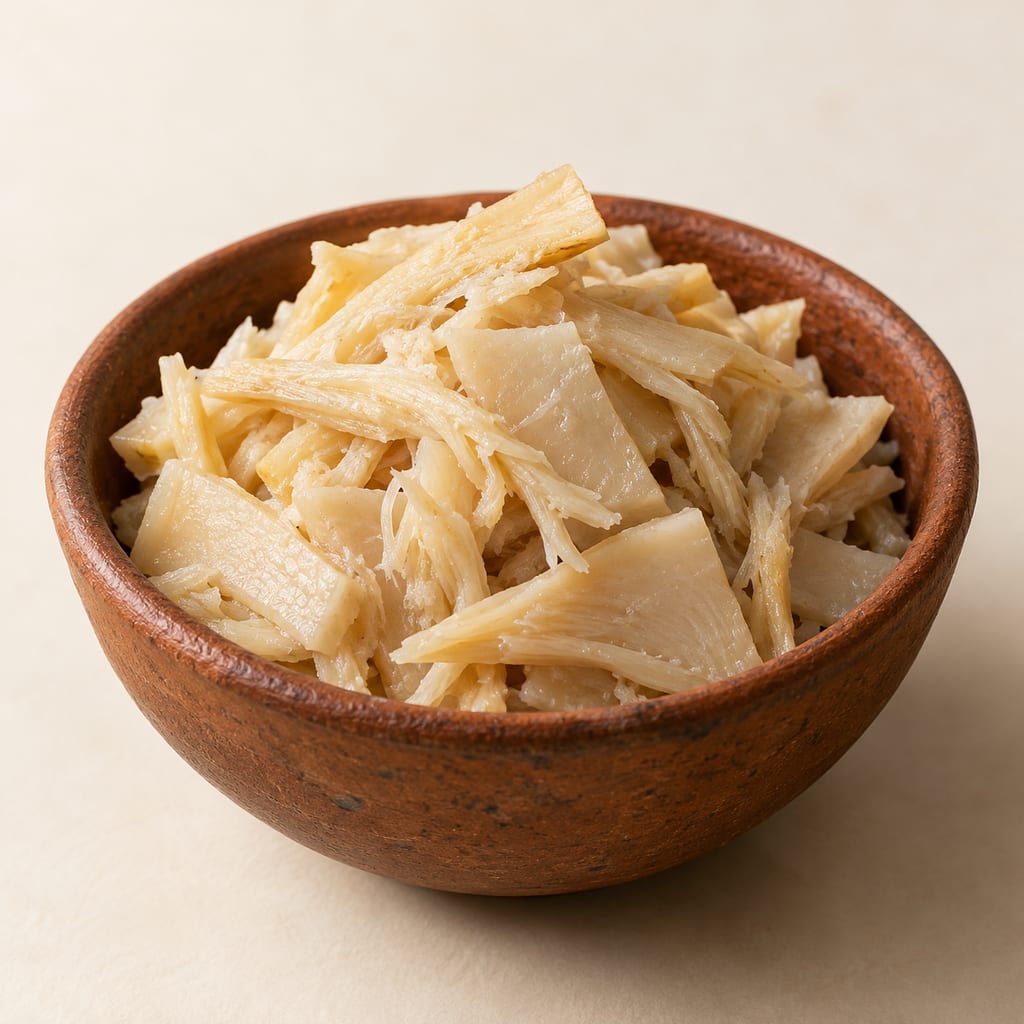
Thin slices of juvenile bamboo shoots fermented for six to twelve months in Manipur, eaten as a sour side dish with rice.
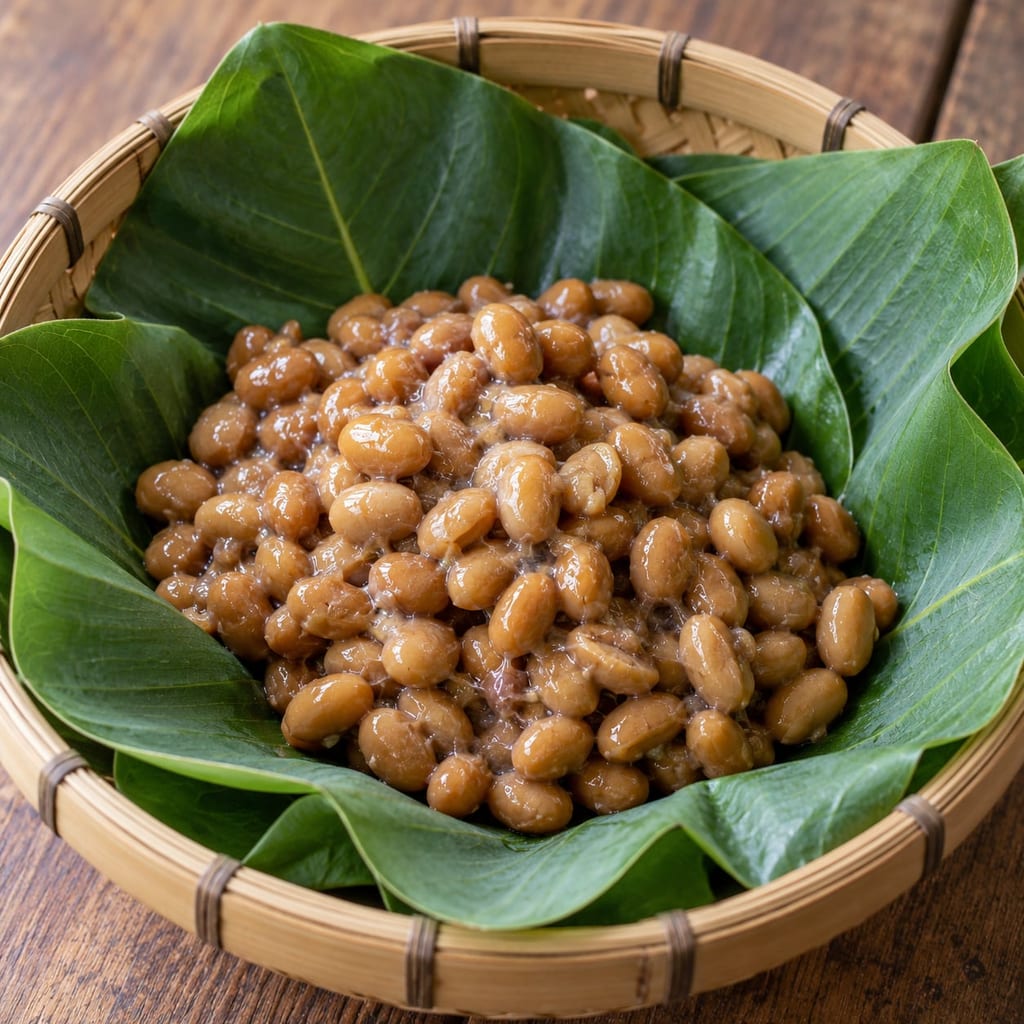
A sticky fermented soybean food of Manipur, made by packing cooked soybeans in leaf-lined bamboo baskets and keeping them warm, related to but distinct from Bekang and Akhone.
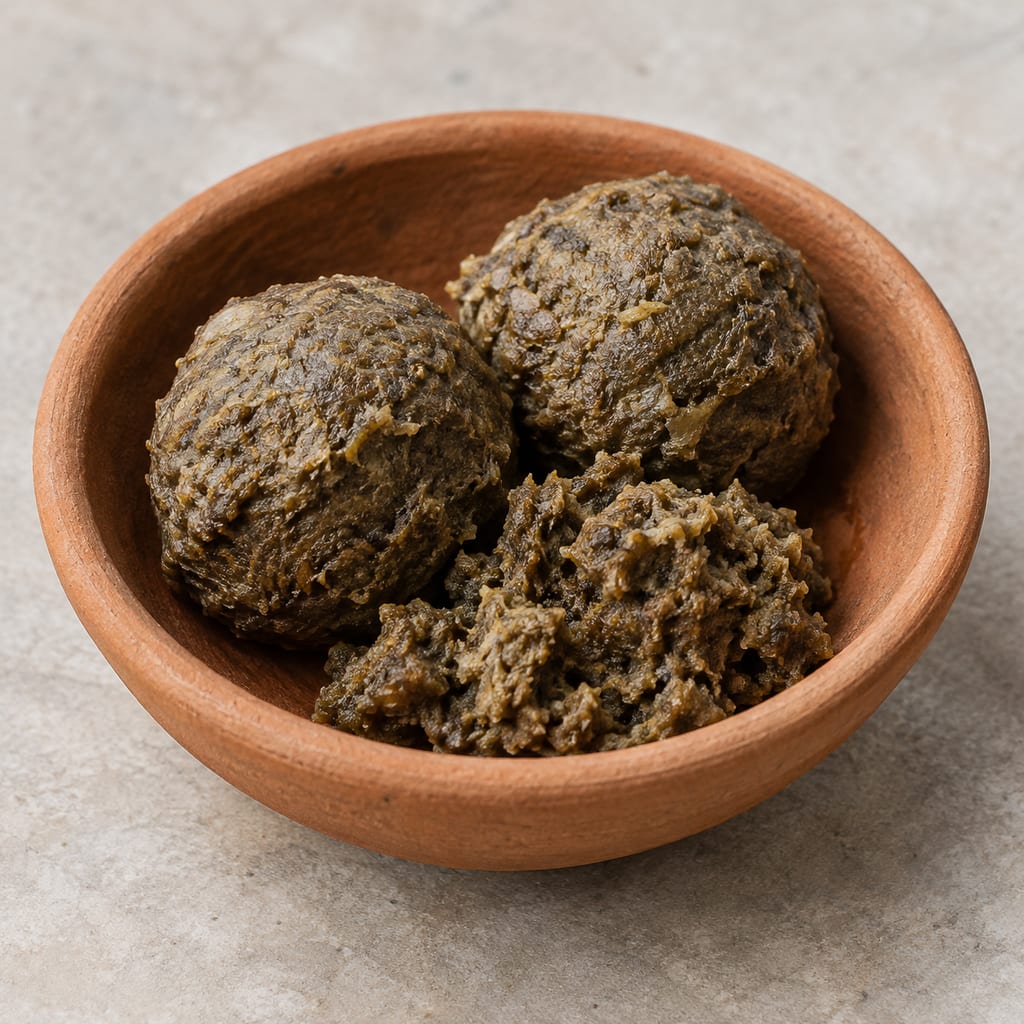
Manipuri fermented fish-and-aroid paste, formed into balls or kept in an earthen pot, used to season Manipuri dishes. Its method is documented in outline only.
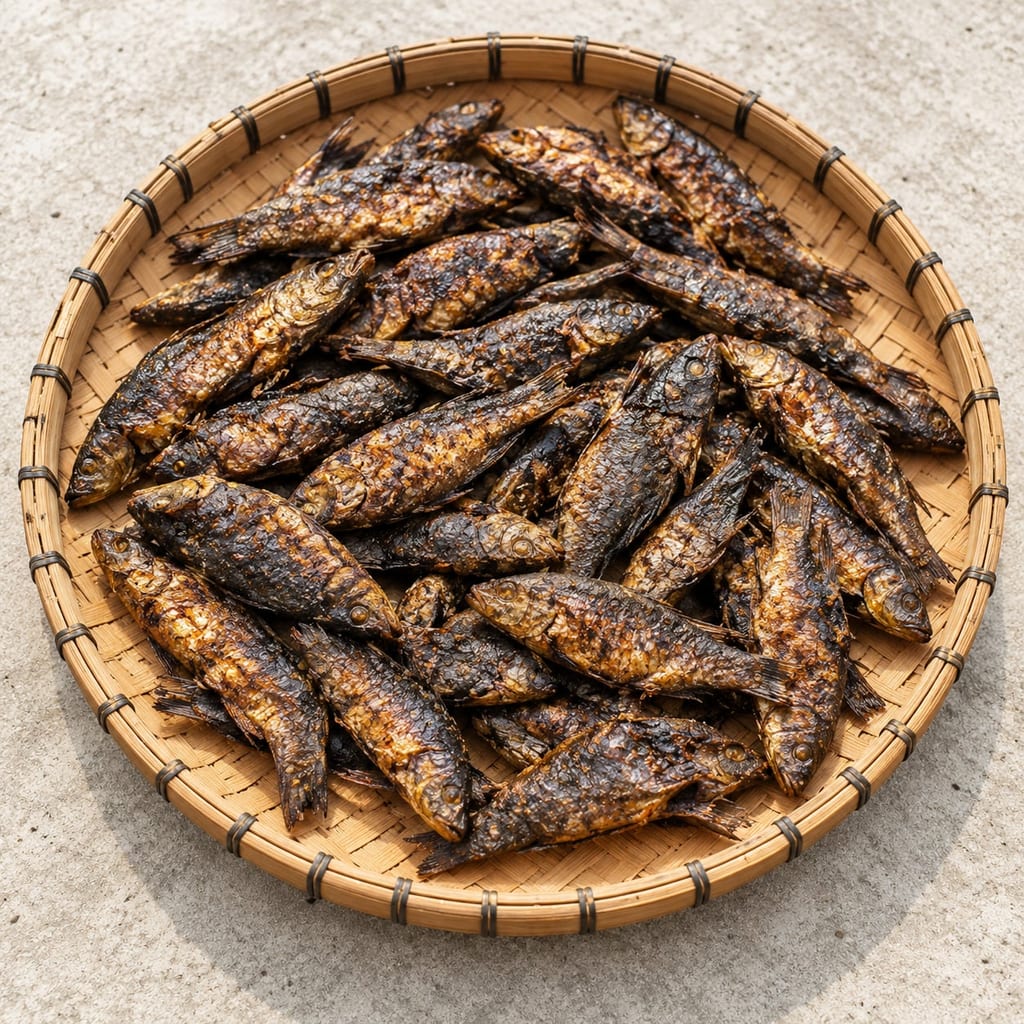
Leirou is fish smoked in a prepared kiln or room by processors around Loktak Lake in Manipur, India, a method the local survey keeps apart from open-flame ngaphak.
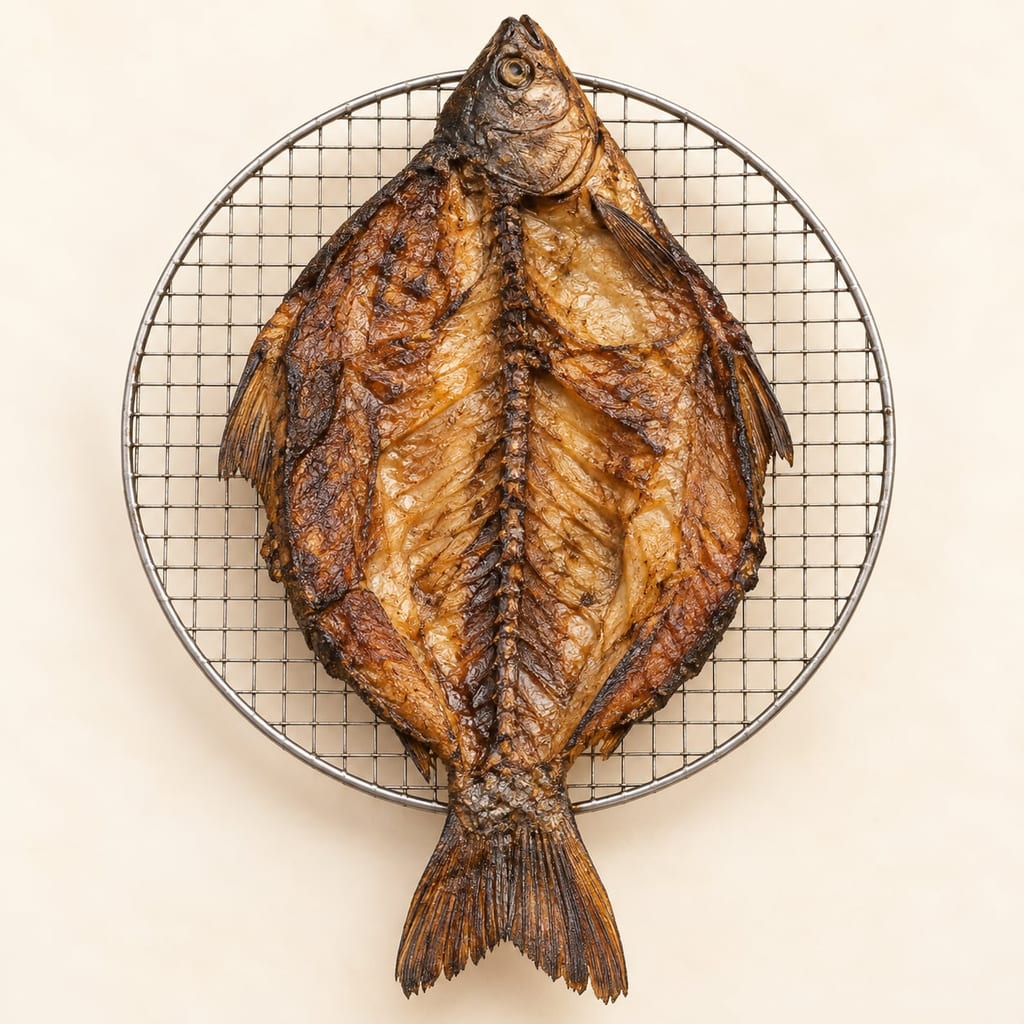
Ngaphak is fish split, flattened and roasted and smoked over an open flame on a wire net or woven bamboo mesh, as practised by fish processors around Loktak Lake in Manipur, India.
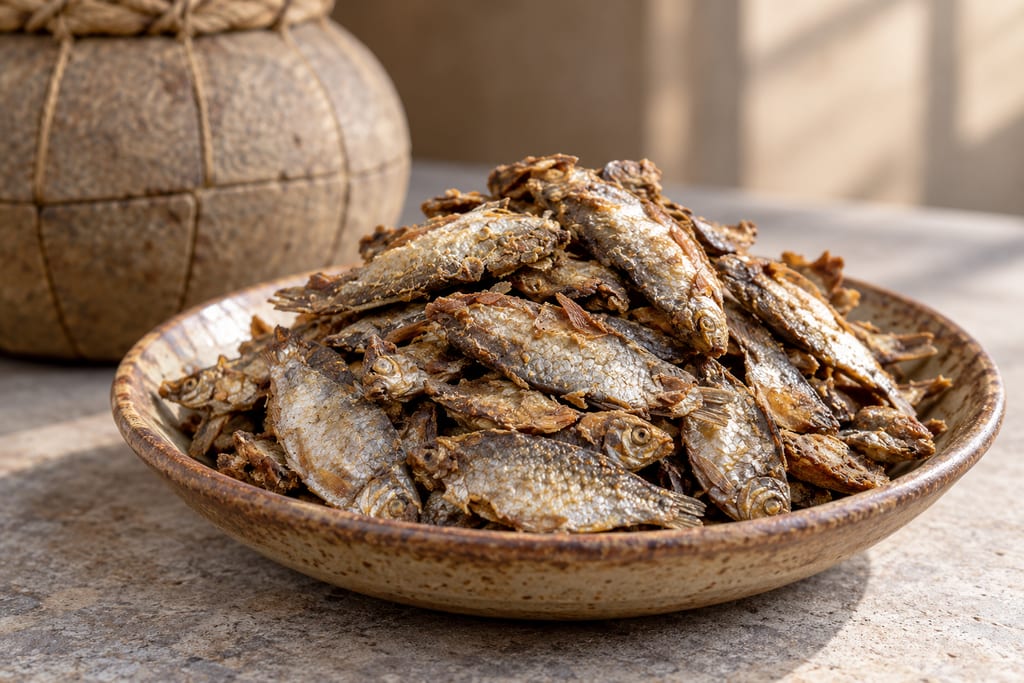
Ngari is a Manipuri fermented fish condiment made from small sun-dried fish, usually Puntius sophore, packed for fermentation. A biochemical study describes a salt-free method; it works as a condiment and ingredient rather than as a filtered sauce.
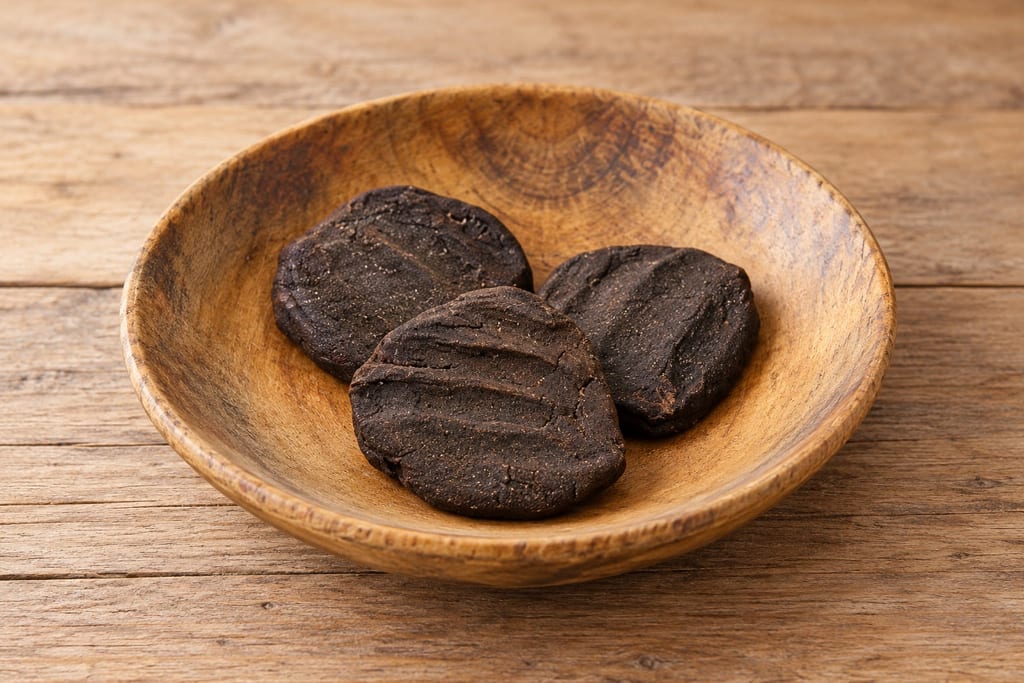
Dried cakes of pounded taro leaves from the Ao Naga in Nagaland, yellowed in a bag, then dried by hot ash or sun and used to flavour meat dishes.
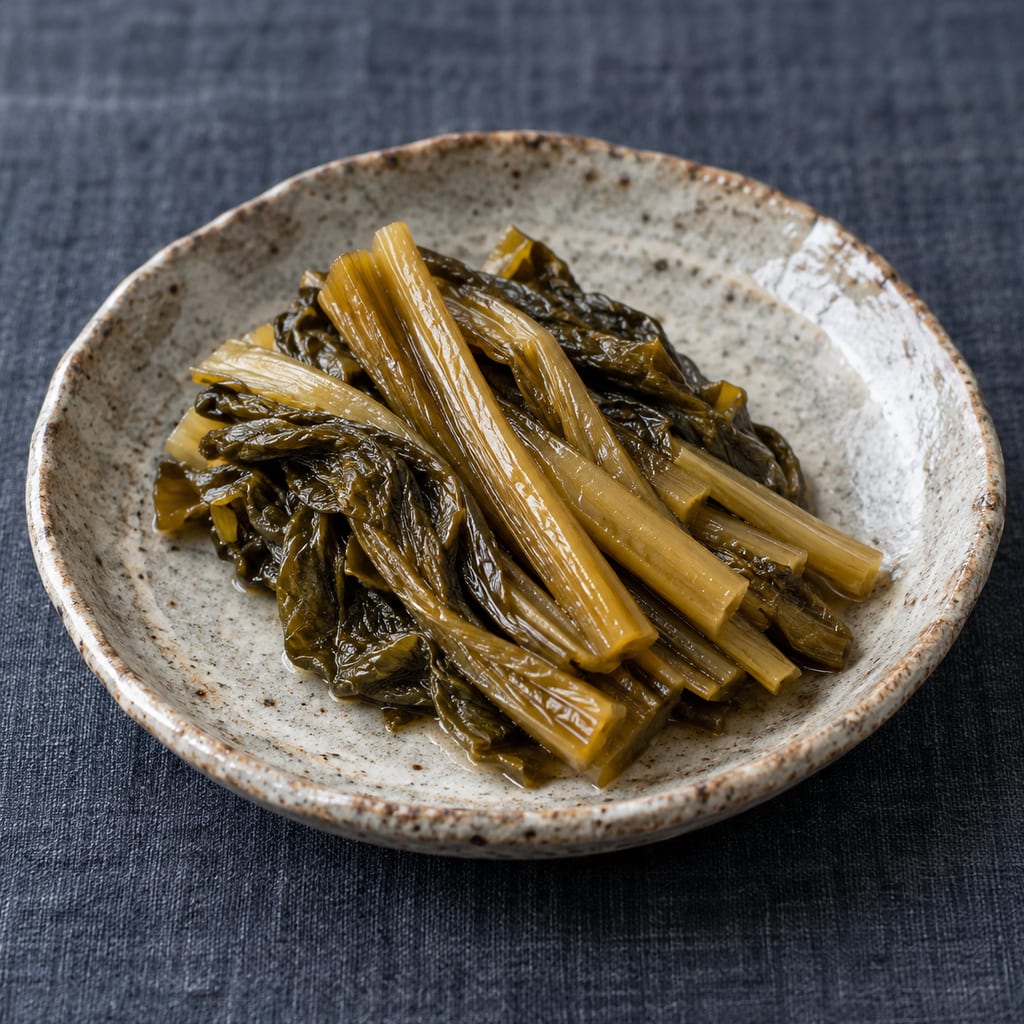
Takana mustard greens from Aso in Kumamoto are salted and pressed into a fresh spring pickle, or aged into a sour furuzuke that is fried and mixed into takana rice.
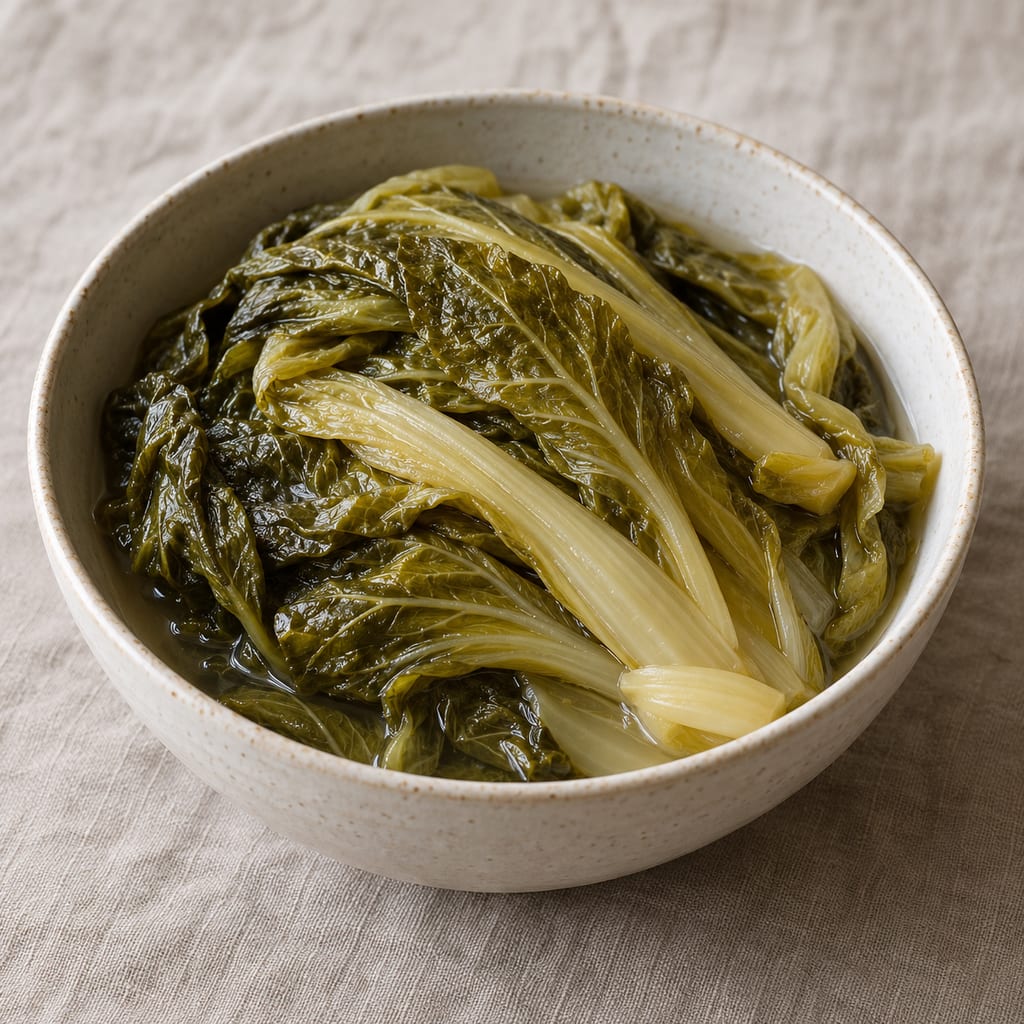
Wilted flat mustard leaves ferment with rice water and salt as a Filipino appetizer and cooking ingredient.
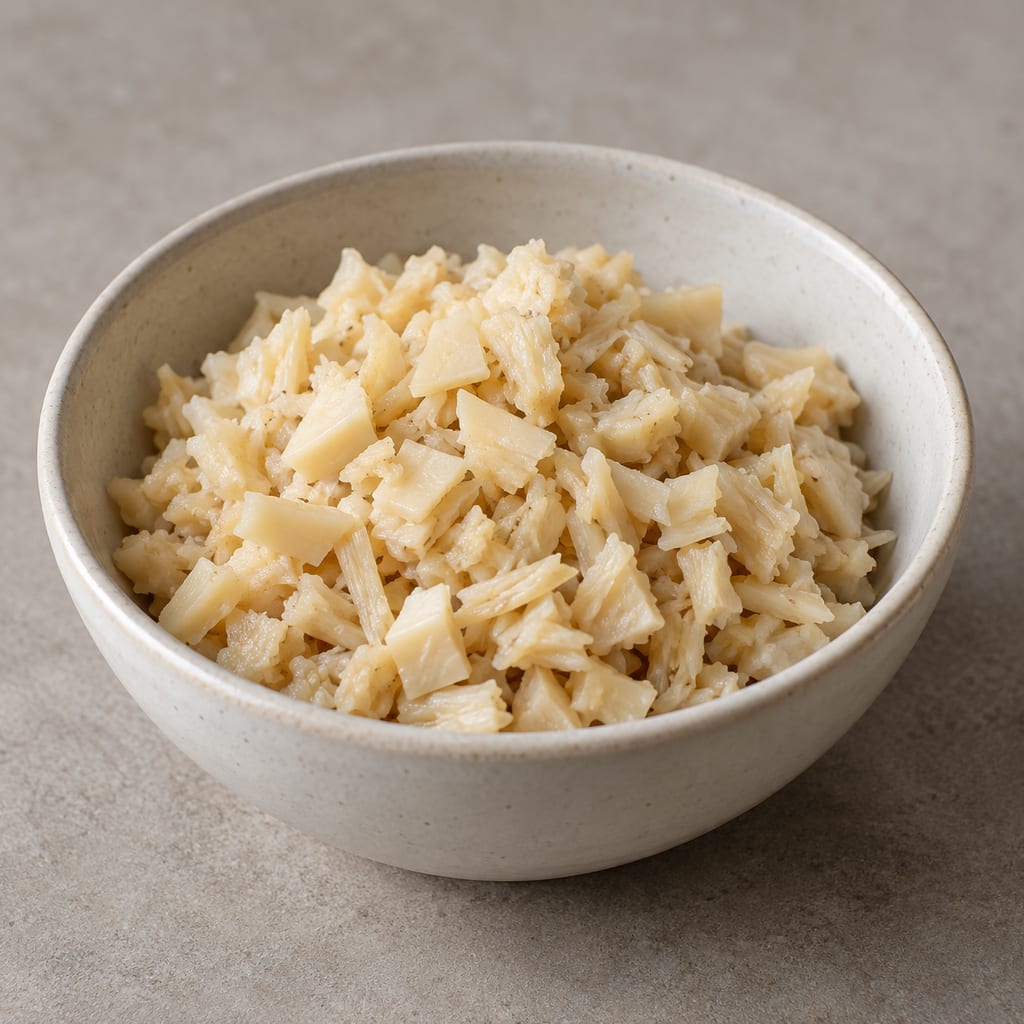
Finely chopped young bamboo shoots packed in leaf-lined baskets, sealed in a forest pit and weighted for one to three months, from Arunachal Pradesh.

Pit-fermented bamboo shoots from Arunachal Pradesh, cut smaller and sun-dried for five to ten days, used in curries.
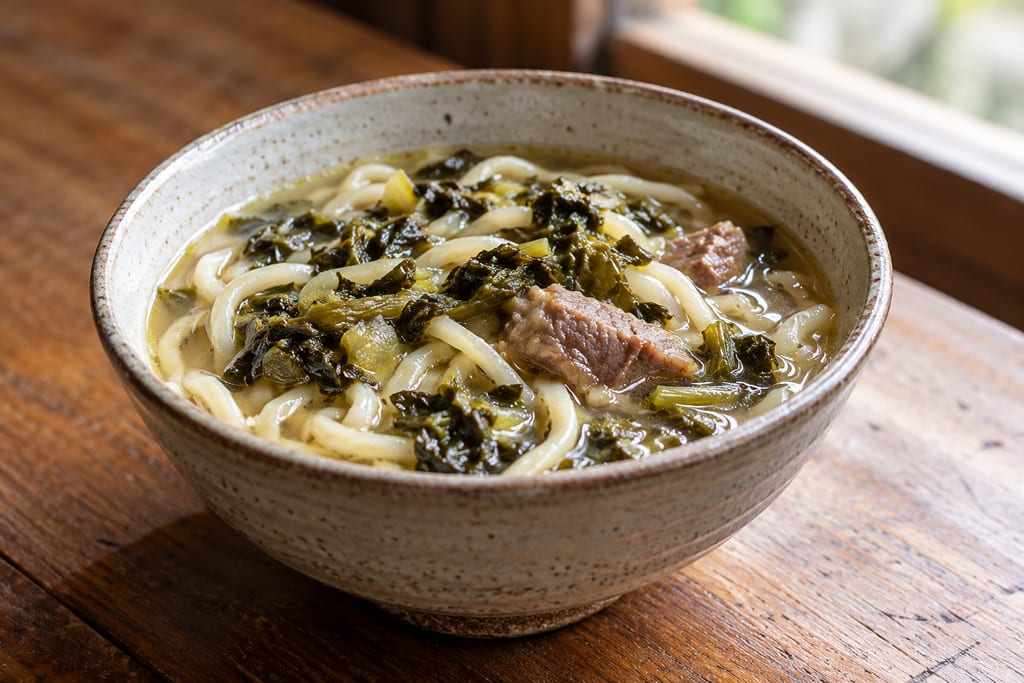
Goyang is a Sherpa fermented wild leafy food of the Darjeeling hills and Sikkim. Rainy-season magane-saag leaves are packed in a bamboo basket, held at room temperature for about a month, then eaten fresh or dried and used in soup.
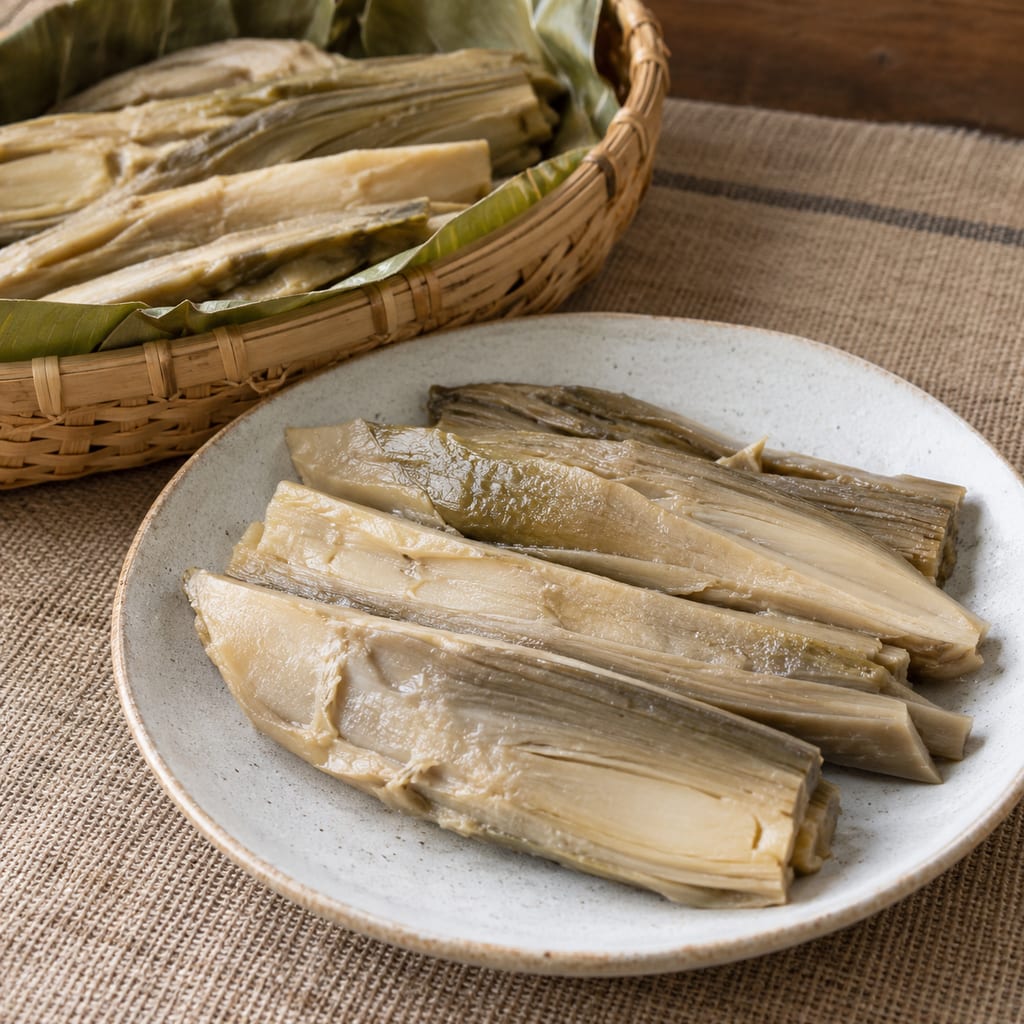
Upper tender bamboo-shoot tips, split or flattened, pit-fermented one to three months in Arunachal Pradesh and eaten in curries.
The original Polish barszcz: young hogweed leaves soured in warm water for a few days, then boiled into soup with egg, butter, cream or millet. Recorded from 1595, with warnings about the sap and lookalikes.
No community contributions have been published for this entry yet.
Sign in to contribute. Published comments and photos are free to read.
Indian Journal of Traditional Knowledge 19(1):73–82; author-uploaded full text on ResearchGateResearch
Edible bamboo resources of Manipur: consumption pattern of young shoots, processing techniques and their commercial status in the local marketCited in: Overview; Method and variants
Indian Journal of Traditional Knowledge 8(1):89–95 (2009); author-uploaded full text on ResearchGate; repository record NIScPR-CSIR handle 123456789/2978Research
Traditional knowledge of biopreservation of perishable vegetable and bamboo shoots in Northeast India as food resourcesCited in: Overview; Method and variants
Journal of Food Science and Technology 51(12):4143–4148; PMC full textResearch
Phenotypic identification and technological attributes of native lactic acid bacteria present in fermented bamboo shoot products from North-East IndiaCited in: Starter and microbiology
PubMed record, International Journal of Food Microbiology 143(1–2):1–8; DOI 10.1016/j.ijfoodmicro.2010.07.008Research
Bacterial species associated with traditional starter cultures used for fermented bamboo shoot production in Manipur state of IndiaCited in: Starter and microbiology
International Journal of Food Microbiology 121(1):35–40; DOI 10.1016/j.ijfoodmicro.2007.10.009Research
Phenotypic and genotypic identification of lactic acid bacteria isolated from ethnic fermented bamboo tender shoots of North East India