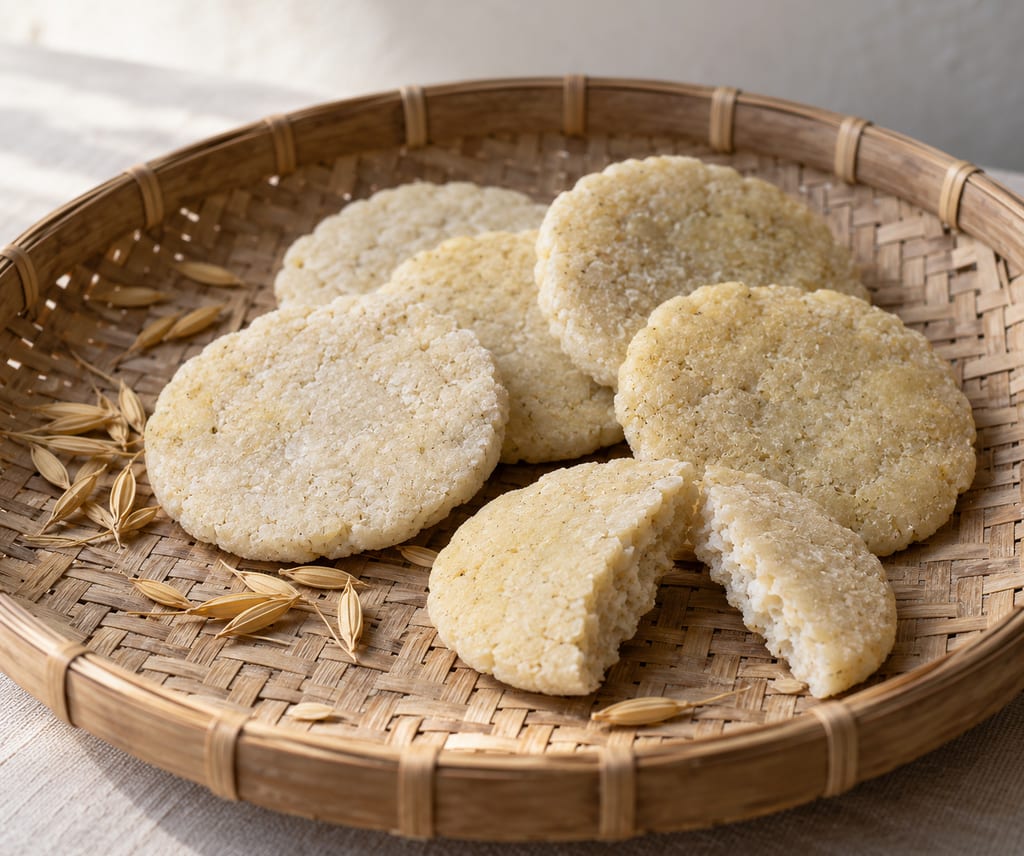
Hamei
Hamei is a Manipur rice-cake starter used for Atingba. Accounts of how the cakes are made differ, and microbial studies describe particular samples; none defines a universal formula or safety standard.
 FermenteaWhere food goes to change
Traditional method
Atingba
A Manipuri rice beverage: cooked rice is cooled to about 40°C, inoculated with Hamei starter cakes, fermented for a season-dependent spell, then held submerged before filtering.
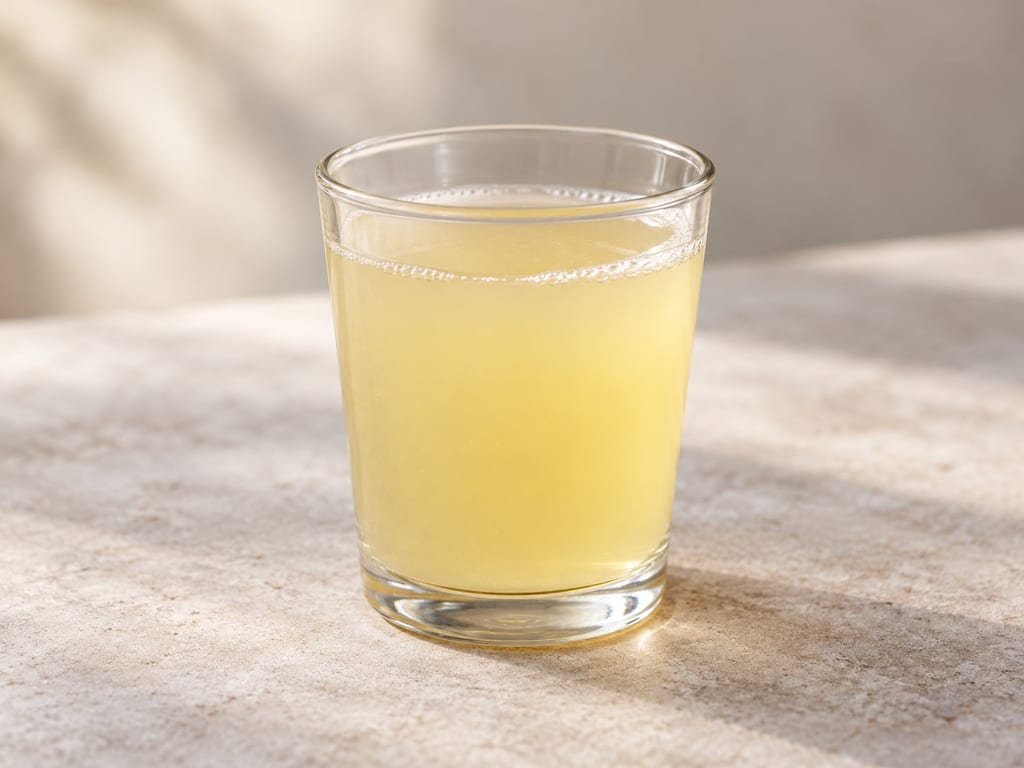
Atingba is a traditional fermented rice beverage associated with the Meitei communities of Manipur and related traditions in northeastern India.
A 2024 review pairs the names Atingba and Waiyu, but an earlier Manipur field study identifies the fermented beverage as Atingba and the distilled clear liquor as Yu. The relationship of Waiyu to either product is not resolved here.
Its preparation uses cooked rice and a fermentation starter called Hamei.
The inoculated rice undergoes a first fermentation under leaves, followed by another stage involving immersion in a clay vessel.
The resulting liquid is filtered to obtain a yellowish alcoholic beverage.
This is a distinct process from ordinary rice cooking and from industrial sake production.
Its importance lies partly in the locally produced starter, which carries microorganisms capable of transforming the rice substrate.
Name — Meaning
Atingba — Traditional fermented rice beverage
Hamei — Traditional fermentation starter cake
Meitei — Community associated with the preparation
Kabui — Community association recorded in the review
Rice — Oryza sativa
Alocasia — Alocasia species, leaves used as covering
The exact indigenous-script spelling of atingba and Hamei is not established in the supplied research and is therefore not invented here.
Waiyu appears alongside Atingba in the 2024 review, but is withheld as a search alias because the earlier field account distinguishes fermented Atingba from distilled Yu.
Northeastern India has a diverse collection of rice-beer traditions.
Different communities maintain their own starter cultures and preparation methods.
The starter cakes often embody knowledge of locally available plant materials, grain preparation and fermentation.
Atingba is associated with Meitei communities in Manipur, with the research also identifying related Kabui practices.
It is an alcoholic fermented beverage rather than a distilled spirit.
The source does not establish an exact invention date.
It also does not provide enough historical evidence to claim an unchanged process extending back to a particular ancient period.
Hamei is a traditional starter culture.
It introduces microorganisms into cooked rice.
Microbiological investigations have identified lactic acid bacteria and yeasts in Hamei and related rice-beverage fermentations.
These organisms contribute to starch transformation, acidification and ethanol production.
The properties of traditional starter cakes vary.
A starter produced in one household cannot automatically be assumed equivalent to a starter from another producer.
Ingredient — Documented quantity
Rice — 10 kg in the recorded source batch
Hamei starter — 5 cakes
Water for cooking — Not specified
Liquid for the submerged stage — Type and amount not specified
Alocasia leaves — Enough to cover the vessel; count unspecified
The five cakes per 10 kg rice ratio is directly recorded.
The mass of each Hamei cake is not supplied.
Therefore, the recipe cannot be converted into an exact gram-per-kilogram starter dose.
The liquid used during the submerged stage is not given.
Cook the rice with excess water until softened.
The source does not establish the precise water quantity or cooking duration.
Transfer the cooked rice onto a bamboo mat laid over banana leaves.
Spread it so the mass can cool.
Allow cooling to approximately 40°C.
This is the documented temperature for starter addition.
It is not a measured fermentation temperature.
Crush the Hamei cakes.
Mix five cakes into 10 kg rice.
Work the starter through the rice by hand, following the recorded practice.
For a modern food-production environment, hand contact would require appropriate hygiene controls.
Place the inoculated rice in large clay pots.
Cover the pots with Alocasia leaves.
The source does not identify the exact species or establish a standardized leaf-treatment procedure.
The review reports three to four days in summer or six to seven days in winter.
It gives no numerical fermentation temperature or validated endpoint for either season.
The fermented rice is submerged in clay pots for another two to three days.
The source does not identify the liquid medium or its quantity.
Filter the fermented material.
The resulting beverage is described as yellowish.
The source calls the filtered yellowish alcoholic rice beverage atingba.
Its yield, final alcohol concentration, acidity and storage conditions are not specified; the traditional process is not a validated household serving endpoint.
Rice is rich in starch.
Yeasts cannot use intact starch as their principal source of fermentable sugar.
A rice starter must therefore provide a means of making smaller carbohydrates available.
Traditional starter cakes may contain microorganisms with amylolytic capabilities.
These organisms can produce enzymes that act on starch.
Once fermentable sugars are released, alcoholic yeasts can convert them into ethanol and carbon dioxide.
Lactic acid bacteria may produce organic acids.
This mixed microbial activity is central to traditional rice-beer production.
The scientific literature reports organisms including:
- Pediococcus pentosaceus - Lactiplantibacillus plantarum, historically Lactobacillus plantarum - Saccharomyces cerevisiae - Pichia species - Other yeasts identified in particular starter samples
The presence of these organisms helps explain acid and alcohol formation.
However, starter composition varies.
Not every identified organism is necessarily desirable in every context.
Some reported microorganisms can be opportunistic or raise food-safety concerns depending on the product and host.
A traditional starter cannot be declared safe solely because it contains lactic acid bacteria.
Microbial activity is influenced by temperature.
Lower temperatures often slow metabolic processes.
The difference between three-to-four-day summer fermentation and six-to-seven-day winter fermentation is consistent with temperature-dependent fermentation behaviour.
The source does not provide measured temperatures, so the seasonal schedules cannot be converted into an exact modern incubation programme.
Atingba is one member of a wider northeastern Indian rice-beverage family.
Other named beverages use different starter cakes, plants, vessels and fermentation methods.
They should not all be combined into one generic “rice beer” recipe.
The use of Hamei is an important element of this preparation's identity.
The source identifies it as an alcoholic beverage associated with Meitei and related community food culture.
It does not establish one obligatory serving vessel or exact meal pairing.
Traditional beliefs attribute certain digestive and medicinal properties to the drink.
These should be recorded as cultural beliefs, not clinical treatment recommendations.
No medical benefit can be inferred from the mere presence of fermentation microorganisms.
A yellowish fermented liquid is described.
The beverage should have developed alcoholic-fermentation character.
Its viscosity depends on the rice processing and final liquid extraction.
The source does not specify a standard sweetness, pH or alcohol concentration.
Without those measurements, a sensory description cannot serve as a validated endpoint.
The most significant concern is the multiday handling of cooked rice.
Cooked rice can support the growth of Bacillus cereus if inappropriate conditions permit it.
The traditional process has no published validated control for that hazard in this specific recipe.
An unusual odour, mould or other visible spoilage should lead to rejection.
However, the absence of visible spoilage does not establish safety.
The submerged stage is incompletely documented, so it cannot be reliably reproduced at home.
Use clean equipment and avoid pressure-tight containers during active fermentation.
No validated finished-product shelf life exists for this recorded formula.
The 2024 review identifies Atingba/Waiyu as an alcoholic fermented rice beverage associated with Meitei/Kabui communities in Manipur and Assam and describes the Hamei starter method. It is not distilled in this recipe.
Scaling: source batch only
The documented process cools cooked rice and then ferments it for several days; public food-safety guidance identifies cooked rice held at room temperature as a B. cereus concern, and the recipe does not report a validated control for this stage.
Hazard sourceA mixed starter is used for a rice-based alcoholic beverage, but this preparation has no measured alcohol content.
Hazard sourceFoodSafety.gov advises keeping cooked foods hot or cold and refrigerating cooked foods promptly; the traditional ambient fermentation method does not document how that rice-holding hazard is controlled, so its time schedule is not a validated safety endpoint.
Control sourceThis source documents a traditional process, not a validated home-safety method. It gives no specific control for the multi-day ambient holding of cooked rice, an identified B. cereus concern.
The drink is fermented and may contain alcohol; this source reports no alcohol measurement for the described batch.
The submerging medium, quantity, fermentation temperature, measured acidity, alcohol level, storage life and final yield are not reported.
The review associates Atingba/Waiyu and its Hamei starter with Meitei/Kabui communities in Manipur and Assam; no narrower locality is identified.
Hamei is a Manipur rice-cake starter used for Atingba. Accounts of how the cakes are made differ, and microbial studies describe particular samples; none defines a universal formula or safety standard.
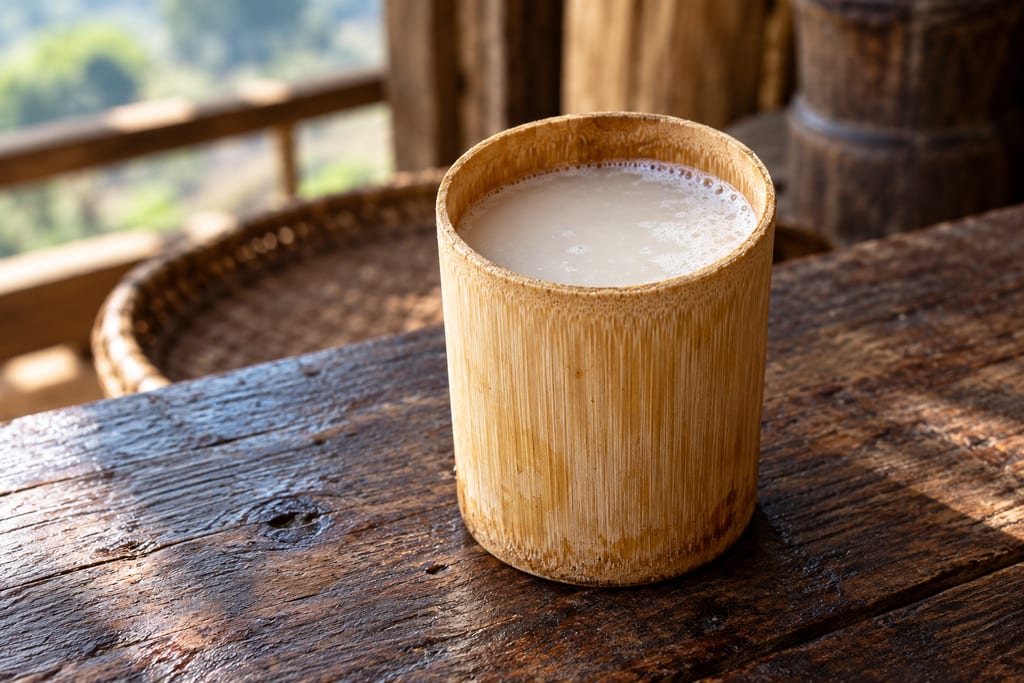
Angami rice beer from Nagaland. A surveyed method mixed cooked rice with piazu, fermented it for about four days in summer or a week in winter, then added water and filtered it. The starter ratio leaves the rice-weight basis unclear.
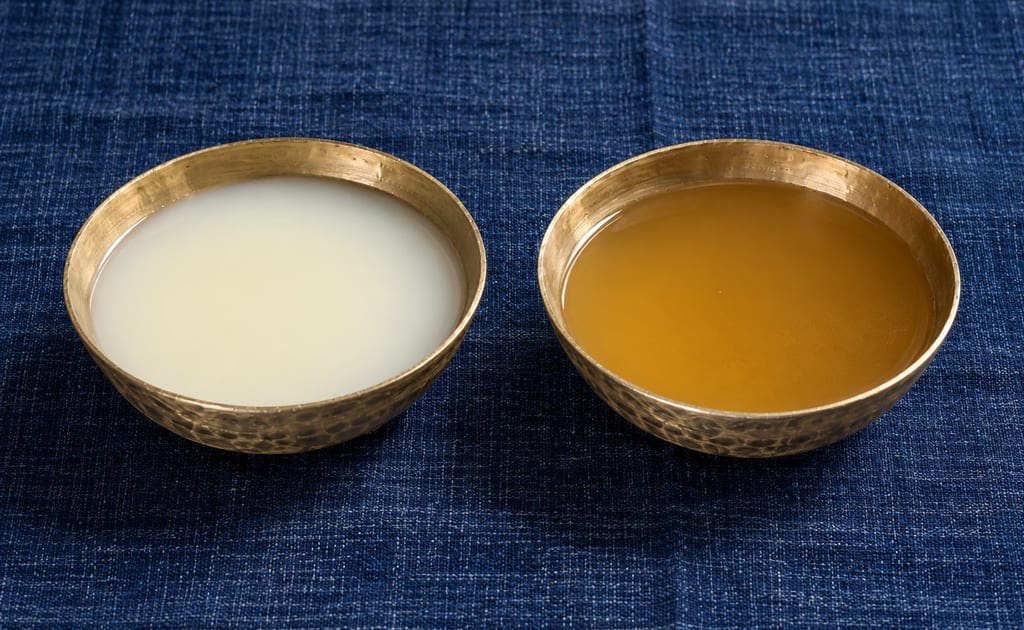
Apong names Mising rice beverages in Assam, including pale Nogin and ash-associated Po:ro. Sources describe distinct preparations and do not establish one unified household recipe or validated safety endpoint.
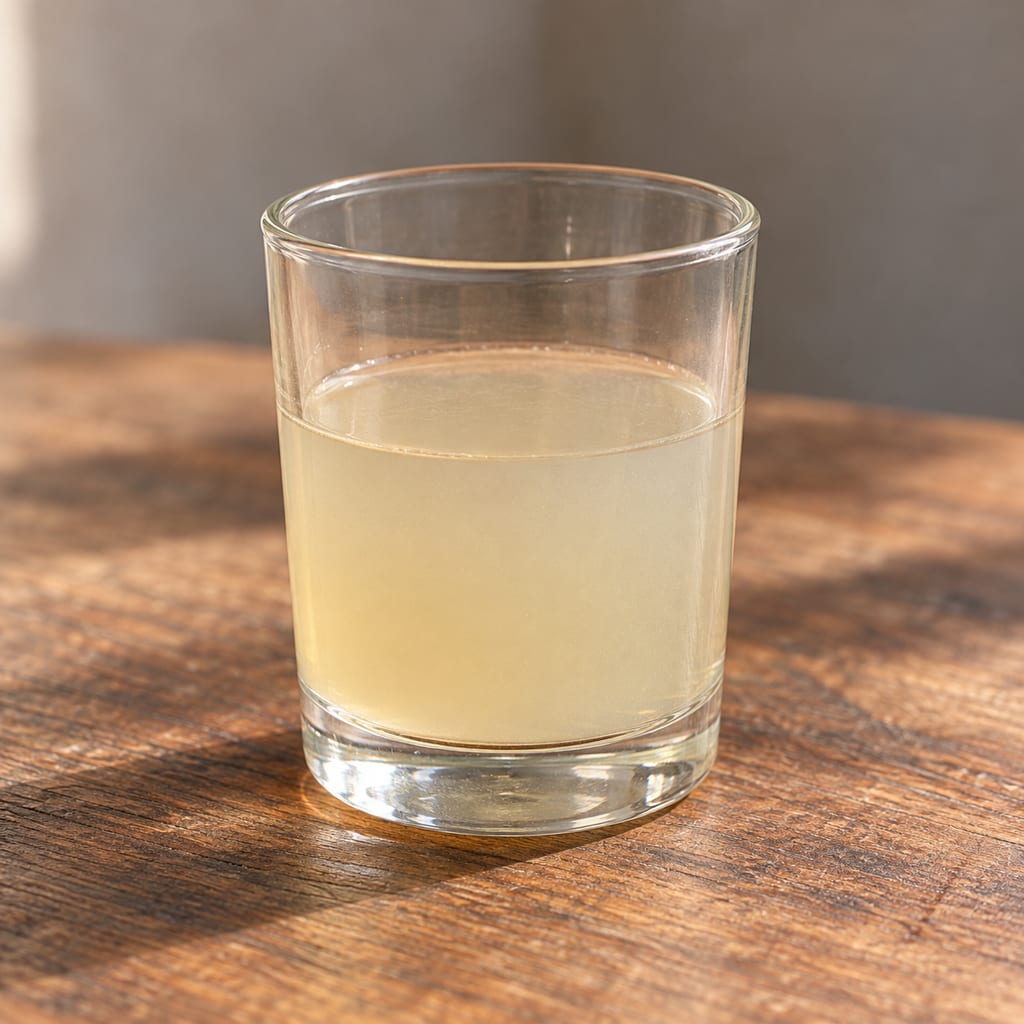
Judima is a Dimasa fermented rice drink from Assam. A 2022 Dhansiri account describes humao starter and rice fermentation, but sources disagree on the thembra bark species and do not provide a complete or validated home batch.
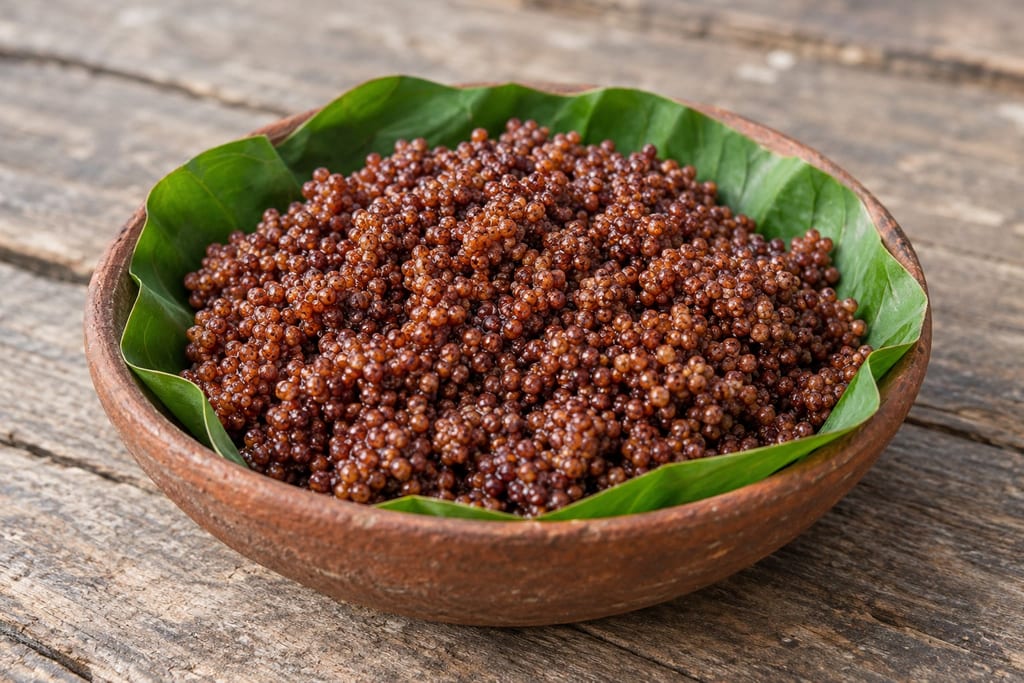
Finger millet fermented with marcha in surveyed Darjeeling and Sikkim communities. Tongba is the later warm-water extraction from the fermented grain. The cited accounts do not establish a complete or validated home batch.
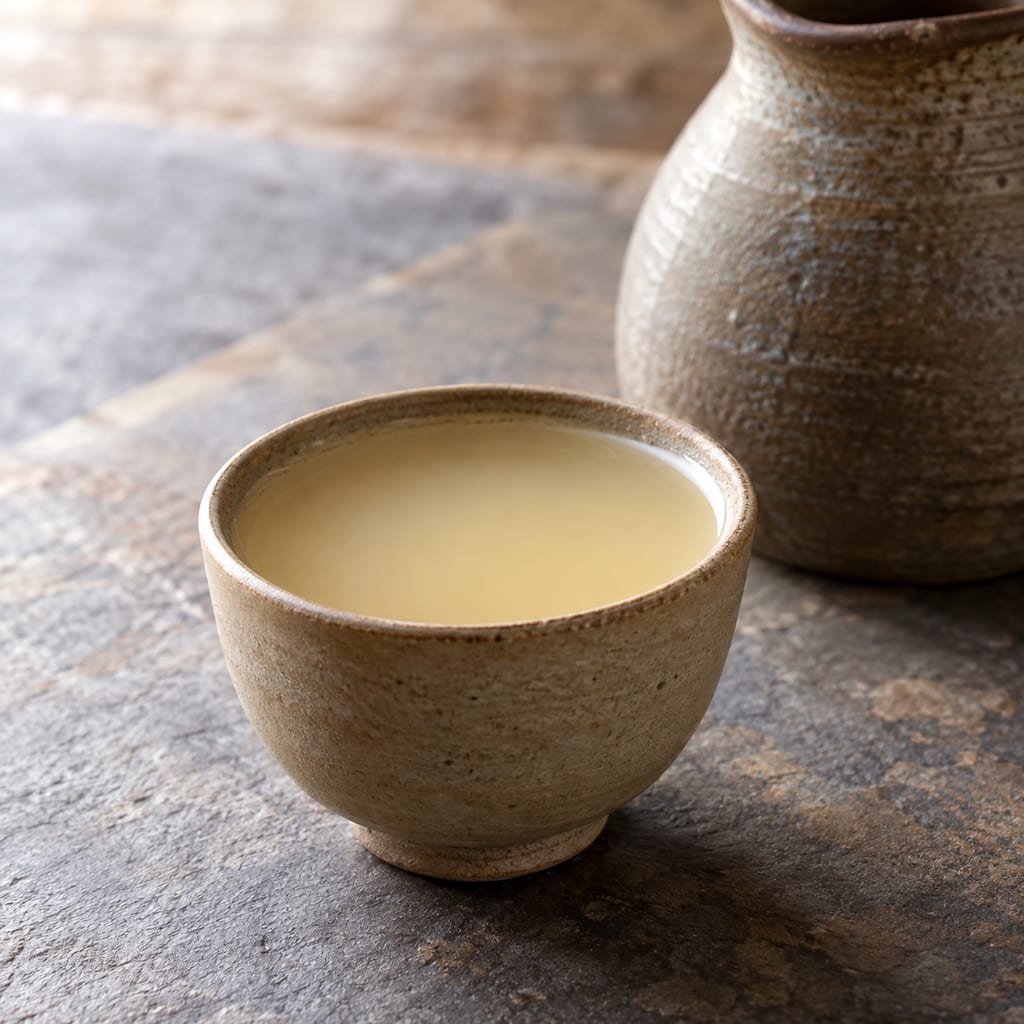
A 2005 Tibetan account describes cooked barley mixed with changdzi, fermented as moist grain, then steeped in water for an alcoholic drink. Grain and water amounts, starter dose and a verified safety endpoint are absent.

Aam panna is a tart Indian summer drink made by cooking unripe green mango until its flesh softens, then blending the pulp with sweetener, salt and spices and diluting it with water.
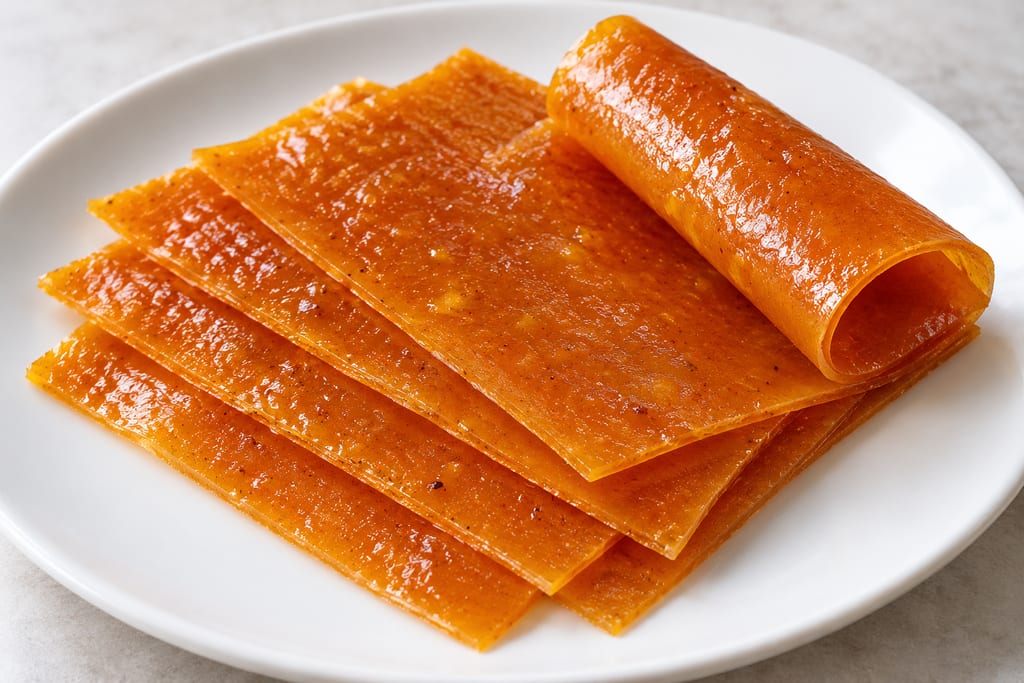
Ripe mango pulp spread thin and dried as a chewy fruit leather. This entry records one controlled unsweetened experiment and distinguishes it from Bengali sun-dried aamshotto and sweetened or spiced variants.

Adrak murabba preserves young ginger in sugar syrup, a sweet South Asian preparation recorded in Indian cookery and food-processing sources.
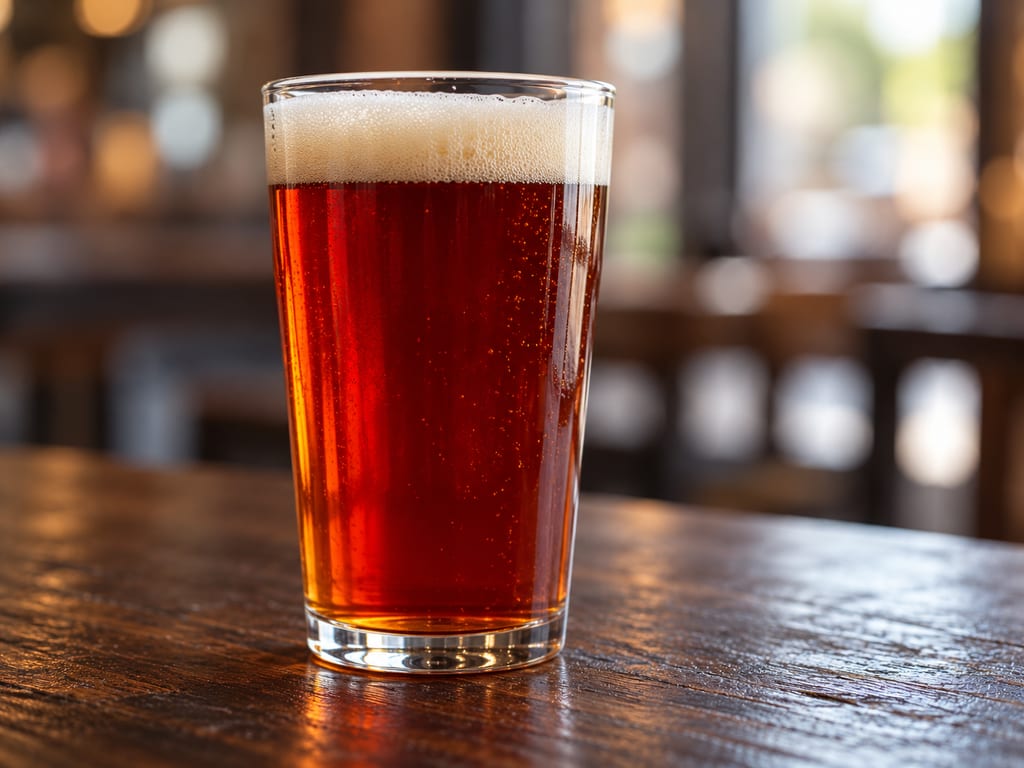
A deep amber-red American ale brewed from pale, Munich, CaraVienne and chocolate malts, bittered with Columbus hops and finished with Amarillo.
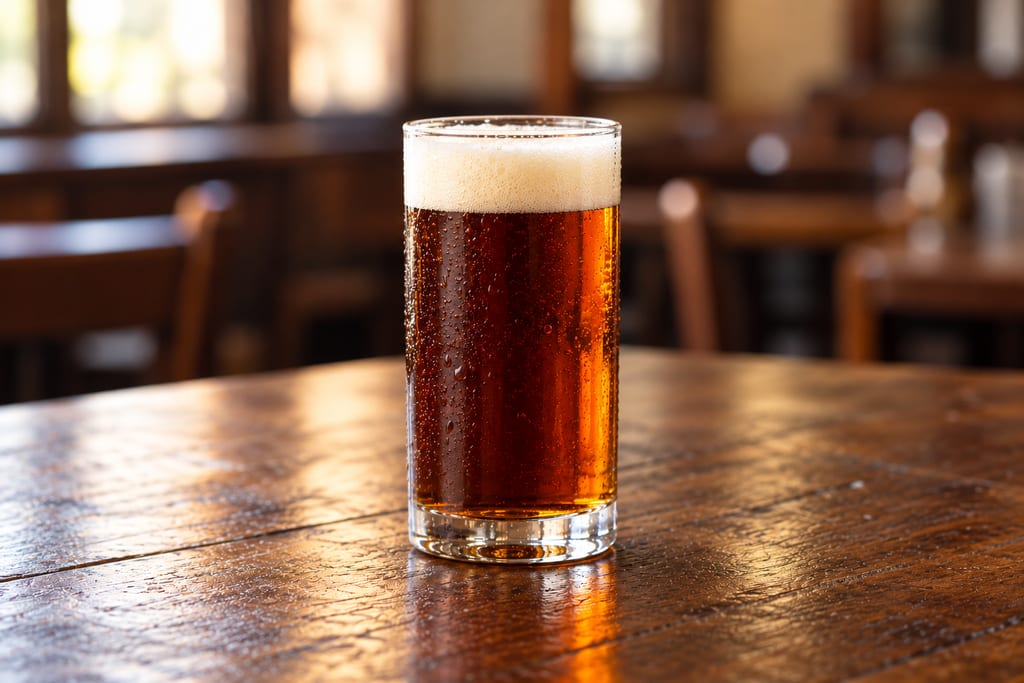
A source-specific modern extract adaptation of Düsseldorf Altbier, with specialty malts, two hop additions and an ale yeast. It is distinct from a brewery's commercial Altbier process and from Kölsch.
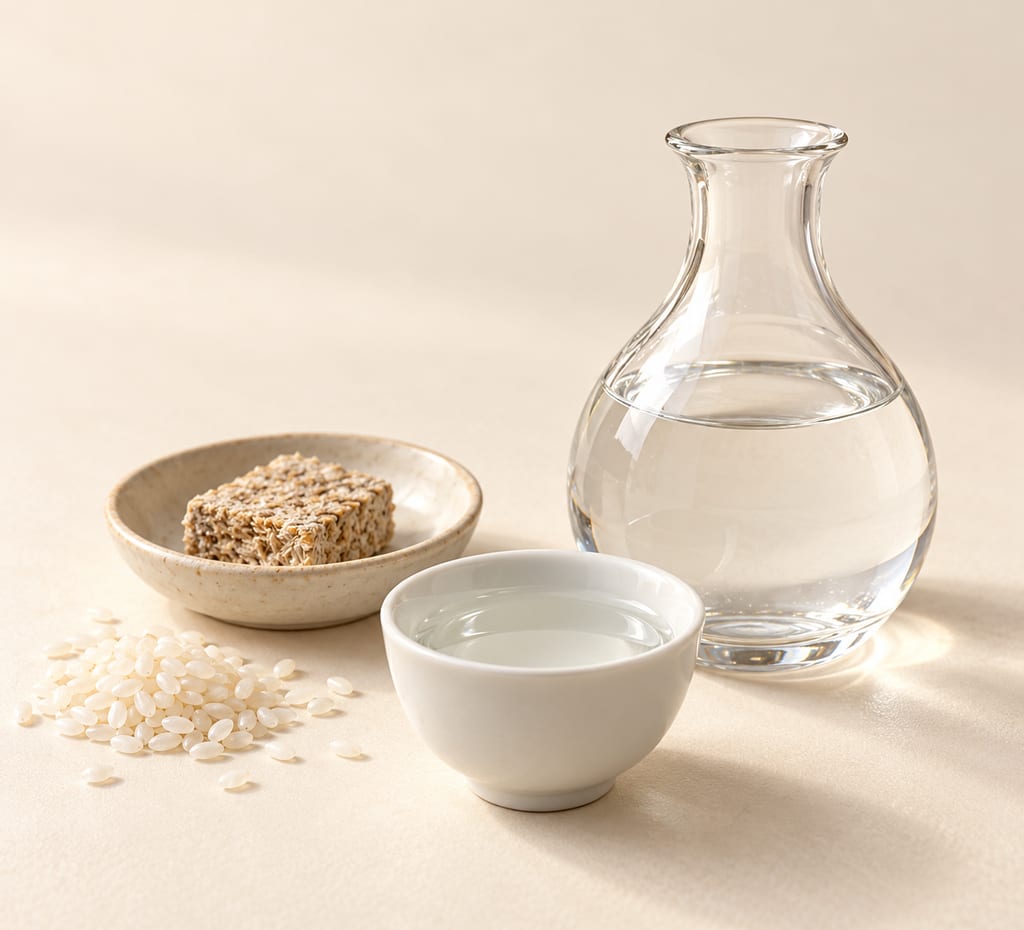
Andong soju is a rice spirit from North Gyeongsang, distilled from steamed rice and wheat nuruk. This method makes the starter before fermenting the rice mash in a jar.
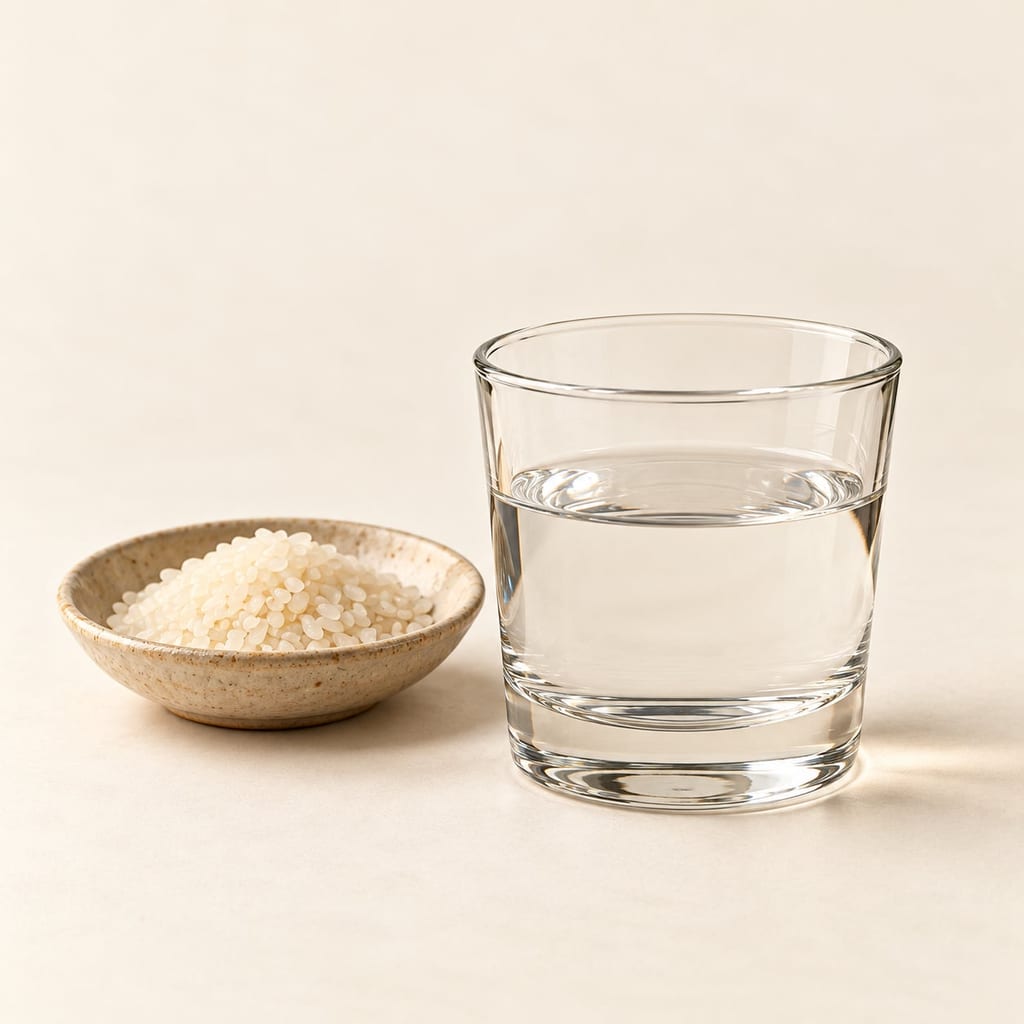
An Okinawan rice spirit made by turning all the rice into black koji, fermenting it with water and yeast, then pot-distilling and maturing the spirit.
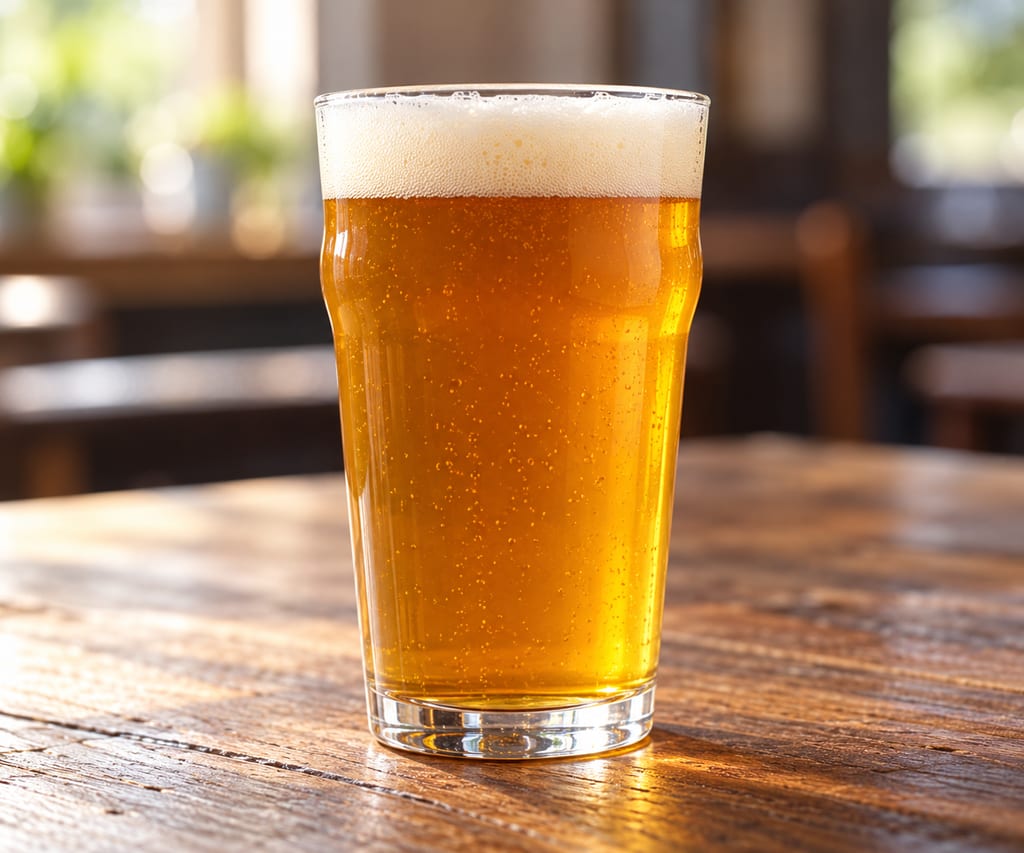
This is a process overview, not a complete batch recipe: key quantities, yield and packaging directions are absent. The AHA tutorial uses Hop Hammer Imperial IPA as an example; this page is not that full formulation.
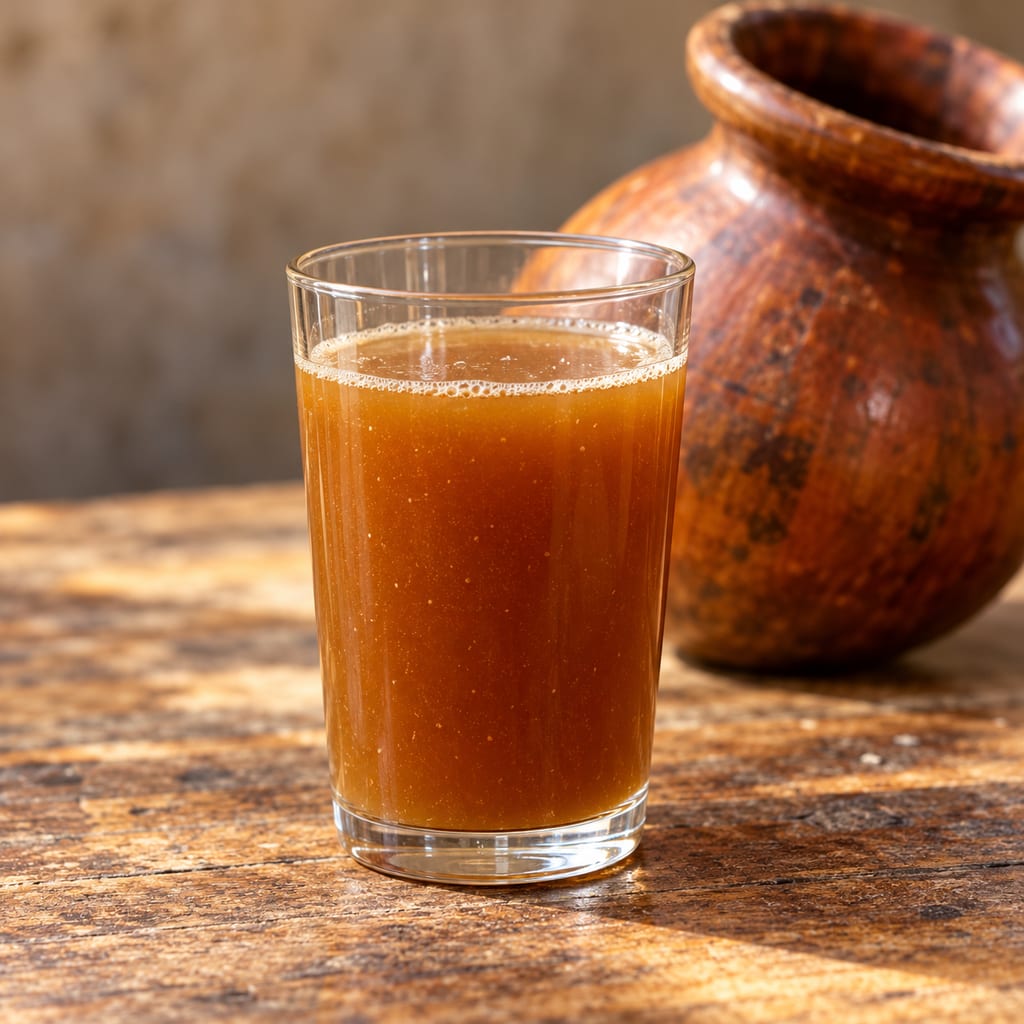
A darker Ethiopian maize tella, brewed from maize baked into a hot, dry kita pancake and then fermented in three stages with barley malt, gesho and water.
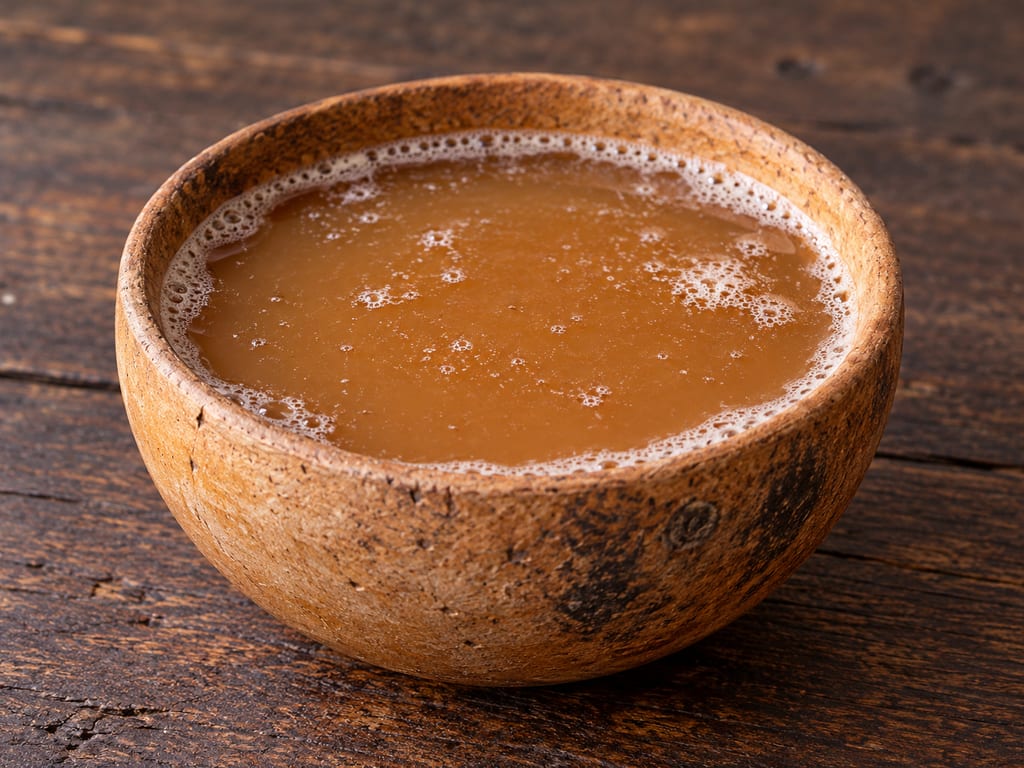
A Burkina Faso sorghum beer brewed from malted grain, soured by a spontaneous lactic stage and then fermented with a traditional yeast leaven.
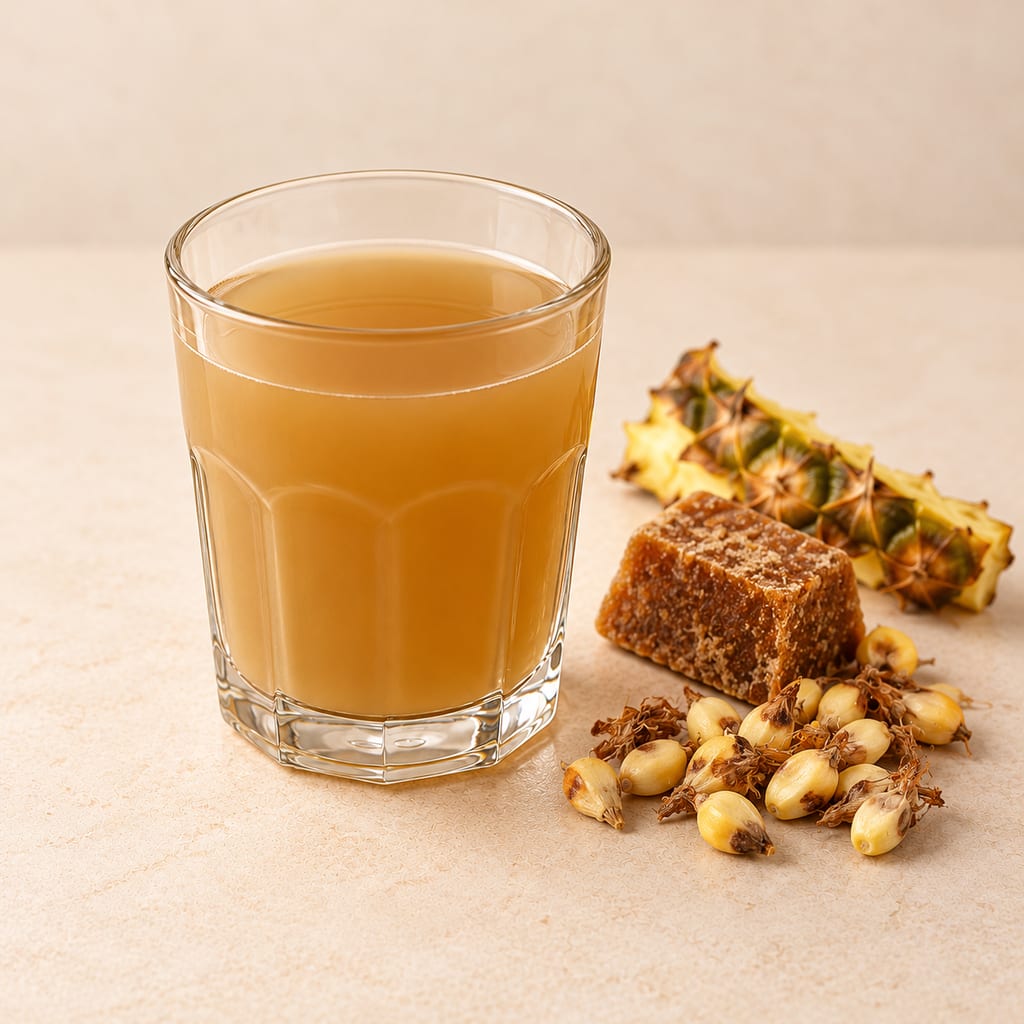
A contemporary Ecuadorian recipe simmers jora flour with spices, then adds panela and pineapple peel before a short spontaneous ferment. Its particular aromatics and measurements belong to this published adaptation.
No community contributions have been published for this entry yet.
Sign in to contribute. Published comments and photos are free to read.
Journal of Food Biochemistry / WileyInspiration · Process · History · Location · Safety
Rice-Based Alcoholic Fermented Beverages of North-East India: Insight into Ethnic Preparation, Microbial Intervention, Ethnobotany, and Health BenefitsThe 2024 review pairs Atingba/Waiyu with Meitei-associated Hamei rice fermentation; the Waiyu identity is treated as unresolved against the 2009 field study.
Cooked rice is cooled to about 40°C; the source gives five Hamei cakes per 10 kg rice
Ferment under Alocasia leaves for 3–4 days in summer or 6–7 days in winter, then submerge in clay pots for another 2–3 days and filter
The source does not give submerging medium/amount, ferment temperatures or final yield
Cited in: What is atingba?; Names and identity; Cultural background; The role of Hamei; Ingredients; Stage 1 — Cook the rice; Stage 2 — Spread for cooling; Stage 3 — Reach the inoculation temperature; Stage 4 — Add Hamei; Stage 5 — Transfer; Stage 6 — Cover; Stage 7 — First fermentation; Stage 8 — Submerged stage; Stage 9 — Filter; Stage 10 — Documented result; Understanding rice saccharification; Microorganisms identified in Hamei research; Why season changes fermentation duration; Regional relationships; How atingba is consumed; Quality assessment
FoodSafety.govSafety
Bacteria and Viruses: Bacillus cereusCooked rice held at room temperature can be a B. cereus concern; guidance advises keeping cooked foods hot or cold and promptly refrigerating cooked foods
Cited in: Problems and safety
History · Method
Clemson Cooperative Extension — Cleaning and sanitationCited in: Quality assessment; Problems and safety
Indian Journal of Traditional KnowledgeHistory · Method
Traditional fermented foods of ManipurField study reports five Hamei cakes per 10 kg cooked rice, seasonal solid-state fermentation, then two to three days submerged fermentation.
It calls the fermented beverage Atingba and the distilled clear liquor Yu, leaving the later review’s paired Waiyu name ambiguous for this undistilled record.
Cited in: What is atingba?; Names and identity