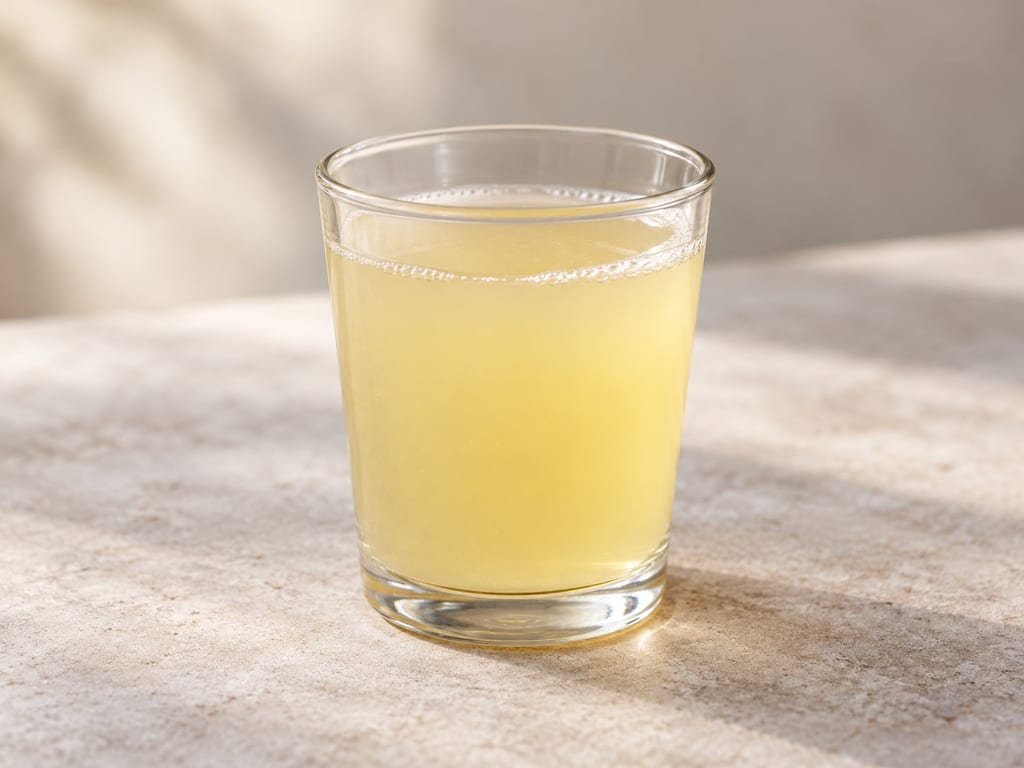
Meitei atingba rice beverage with Hamei starter
A Manipuri rice beverage: cooked rice is cooled to about 40°C, inoculated with Hamei starter cakes, fermented for a season-dependent spell, then held submerged before filtering.
 FermenteaWhere food goes to change
Cultures
Hamei is a Manipur rice-cake starter used for Atingba. Accounts of how the cakes are made differ, and microbial studies describe particular samples; none defines a universal formula or safety standard.
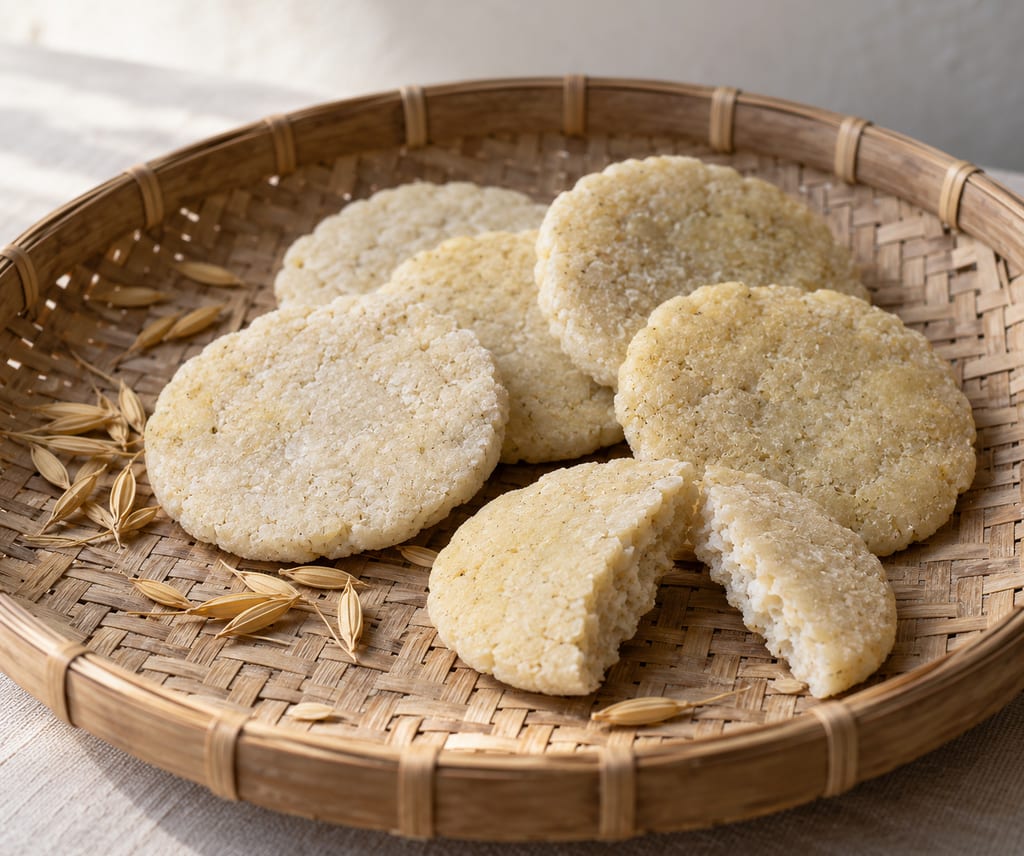
Hamei is a natural rice-cake starter used for Atingba, a fermented rice beverage of Manipur. A 2009 account names Hamei as a flat starter cake and connects it with Atingba. A 2024 review table specifically pairs Atingba with the Meithei community in Manipur, glutinous rice and Hamei. These regional statements do not establish that every Hamei cake or Atingba preparation is the same.
Hamei belongs to a family of dried mixed starters from Northeast India. A regional survey describes it as a dry, round-to-flattened mixed-dough starter, and the research literature often treats it alongside Marcha, the better-known starter of the Eastern Himalayas.
A Manipur account records one preparation using crushed raw rice with Yangli (Albizia myriophylla) bark powder. The printed bark rate is 0.25 kg/kg; the passage does not clarify a broader formulation basis or state that the quantity is standardized. The mixture is pressed into flat cakes, described as approximately 2–7 cm across and 0.6–1.5 cm thick. They are kept over rice husk in a bamboo basket for two to three days at room temperature. The account describes swelling, alcoholic aroma and yellowish color as desired characteristics, followed by drying; it says Hamei is mostly prepared in summer (May–July) and that dried cakes are stored year-round.
A 2018 regional survey gives a second, shorter description. It names local rice, yangli bark and a small proportion of old Hamei as the ingredients, followed by fermentation of the shaped dough in a basket with husk and then sun drying. The old Hamei is the carry-over of the previous batch's microbes, which is how such starters are kept going between seasons.
A separate case study of Meitei fermented foods describes another rice-and-yangli preparation and notes that drying depends on the weather. It places the beverage context in Sekmai and Awang Sekmai. The accounts differ in detail and none gives a validated endpoint, so they should not be combined into one recipe.
For one Atingba batch, the 2009 account reports crushing five Hamei cakes and mixing the powder with 10 kg cooked, cooled glutinous rice. It gives the cake count but not cake mass, a chemical specification or a batch-independent potency measure. This recipe-line observation does not establish a universal starter dose or make the beverage's fermentation stages part of Hamei manufacture.
Researchers have isolated yeasts from Hamei and identified them by molecular methods, and have isolated lactic-acid bacteria from Hamei and Marcha. Separate work has profiled the fungal communities of Hamei samples by high-throughput sequencing and has isolated filamentous fungi from it. Findings vary with sampling and method.
One brewing study used Hamei-derived isolates in a controlled black-rice-beer comparison with an established starter. Its shelf-life results concern that finished experimental beer, not dry Hamei stock. These results describe particular samples and laboratory work; they do not show that one organism is universal to Hamei or should be used alone as a starter.
A 2018 Northeast India survey included five Hamei samples in a set of 40 dried starters from eight states, collected after preparation from local people. Studies of Hamei report sampling at places such as Andro, Kangchup, Kakching and Phayeng. These are study sites, not proof of a sole birthplace, and they do not identify a single village of origin or establish that all Hamei has one microbial composition. The 2018 Meitei case account does not establish that every Hamei maker belongs to one community.
The consulted sources provide cake-making accounts and one beverage-use measure, but not a unique origin, a universal formula, a validated starter-quality test, objective drying endpoints, tested storage conditions or food-safety controls. The reported appearance and aroma cues are observations in the cited account, not proof of safety. Local-language forms and community variation need further evidence. No instructions for renewing or storing Hamei are given here.
Sources document Hamei for Atingba in Manipur and name sampling sites such as Andro, Kangchup, Kakching and Phayeng; study sites are not proof of a sole birthplace or exclusive distribution.
A Manipuri rice beverage: cooked rice is cooled to about 40°C, inoculated with Hamei starter cakes, fermented for a season-dependent spell, then held submerged before filtering.
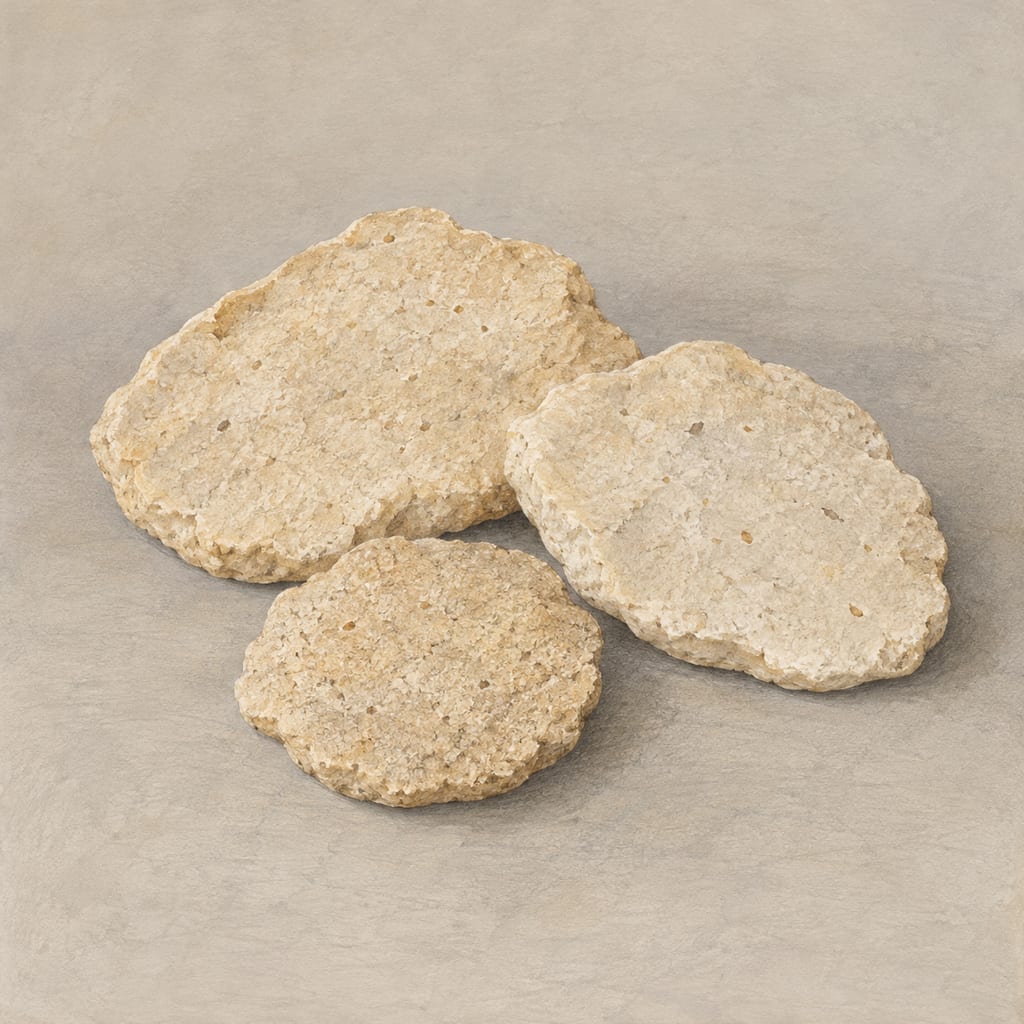
Chowan is a dried cereal starter associated with Tripura. Published accounts differ on its local names, and microbial findings come from sampled cakes; no single origin, method or culture is established.
Thiat is a dried mixed starter used for alcoholic beverages in Meghalaya. Field accounts differ and laboratory studies describe particular samples; none gives a universal recipe or validated household method.

Bamboo shoots are the young culms of many bamboo species, eaten after boiling or leaching in Asia, and fermented into sour and preserved foods in the Himalayas, northeast India and Burma.
Puntius is a genus of small freshwater fishes cited as raw material for fermented fish in northeastern South Asia. Shidal studies name the genus broadly; studies of ngari and hentak identify Puntius sophore specifically.
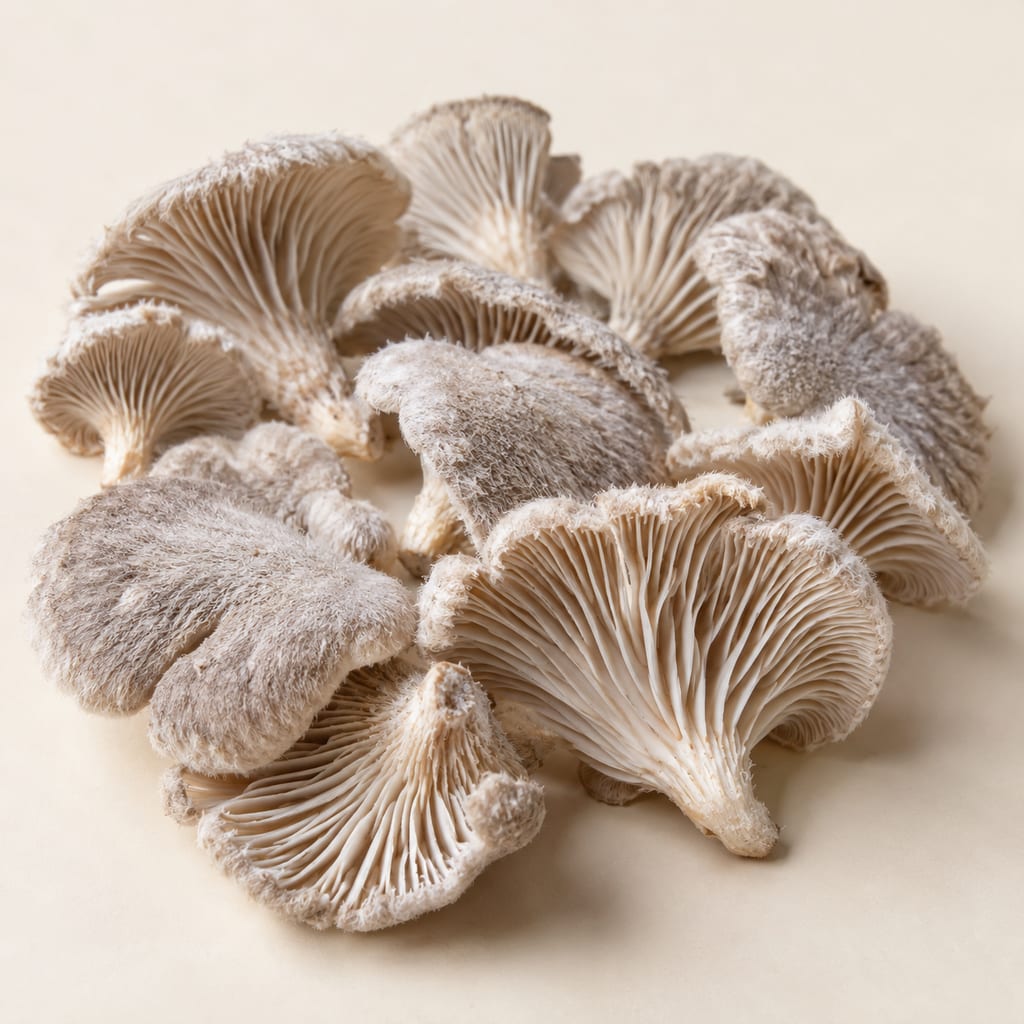
Split gill, Schizophyllum commune, is a common wood-decay mushroom that some sources report as eaten in parts of Southeast Asia and India, with its cultivation history unsettled in the sources.
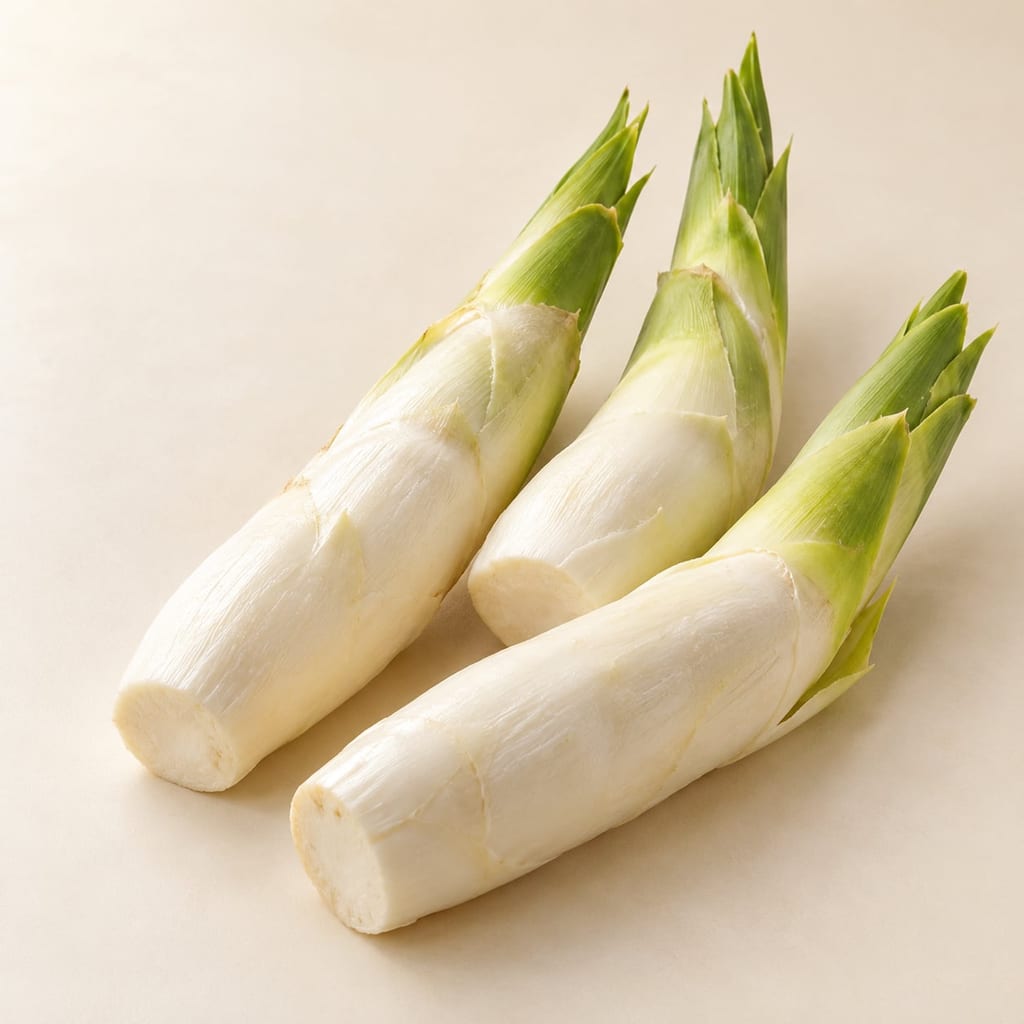
Water-bamboo smut is the swollen gall that the fungus Ustilago esculenta forms on the aquatic grass Zizania latifolia. It is eaten as a vegetable in China and elsewhere in East and Southeast Asia.
No community contributions have been published for this entry yet.
Sign in to contribute. Published comments and photos are free to read.
Indian Journal of Traditional Knowledge 8(1), 115–121Identity · Method · Use · Geography
Traditional fermented foods of ManipurThe authors describe Hamei as a natural flat rice-cake starter used for Manipur Atingba.
One Hamei cake account uses crushed raw rice and Yangli (Albizia myriophylla) bark powder; the printed rate is 0.25 kg/kg. It gives approximate cake dimensions and drying/storage observations. These are one documented account, not a general Hamei formula or validated safety protocol.
For the Atingba beverage, the authors report five crushed Hamei cakes per 10 kg cooked, cooled glutinous rice; the cake mass is not provided.
Cited in: Hamei and Manipur Atingba; One documented Hamei cake account; Atingba use is a separate measure; Limits of the available evidence
Frontiers in Microbiology 9 (2018), article 2237Identity · Geography · Microbiology
Diversity of Yeasts and Molds by Culture-Dependent and Culture-Independent Methods for Mycobiome Surveillance of Traditionally Prepared Dried Starters for the Production of Indian Alcoholic BeveragesThe introduction names Hamei of Manipur among traditionally prepared and sun-dried starters used for alcoholic beverages in Northeast India.
The sample collection included five Hamei samples among 40 starter samples from eight Northeast Indian states; the starters were collected after preparation from local people.
The article's broad description of starter cake methods is not a Hamei-specific recipe, and sample-based microbial findings do not establish the composition of every Hamei cake or safety.
Cited in: Study samples and places; Limits of the available evidence
Journal of Food BiochemistryIdentity · Geography · Community context
Rice-Based Alcoholic Fermented Beverages of North-East India: Insight into Ethnic Preparation, Microbial Intervention, Ethnobotany, and Health BenefitsA table associates Atingba with the Meithei community in Manipur, glutinous rice and Hamei starter, citing Jeyaram et al. 2009.
The review pairs the names Atingba/Waiyu; the 2009 study distinguishes fermented Atingba from distilled Yu, so the paired Waiyu identity remains unresolved and is not used as an alias here.
Cited in: Hamei and Manipur Atingba
Indian Journal of Traditional Knowledge; Sikkim University repositoryIdentity · Method · Geography
Traditional skill of ethnic people of the Eastern Himalayas and North East India in preserving microbiota as dry amylolytic startersA regional survey describes Hamei as a dry, round-to-flattened mixed-dough starter for Atingba, made with local rice, yangli bark and a small proportion of old Hamei, fermented in a basket with husk and then sun dried.
The survey does not give a validated household method, objective drying endpoint or storage evidence.
Cited in: Hamei and Manipur Atingba; Other accounts of the cake; Limits of the available evidence
International Journal of Food Microbiology; PubMedMicrobiology
Molecular identification of yeast species associated with 'Hamei'—a traditional starter used for rice wine production in Manipur, IndiaYeasts were isolated from Hamei and identified by molecular methods; the findings describe the sampled starters.
Cited in: What laboratory studies found
Indian Journal of Microbiology; PubMed CentralMicrobiology
Lactic acid bacteria in Hamei and Marcha of North East IndiaLactic-acid bacteria have been isolated from Hamei and the related Marcha starter.
Cited in: What laboratory studies found
Journal of the Institute of Brewing; Wiley Online LibraryMicrobiology · Use
Comparative shelf life study of two different rice beers prepared using wild-type and established microbial startersA controlled black-rice-beer comparison used Hamei-derived isolates; its shelf-life results concern the finished experimental beverage, not dry Hamei stock.
Cited in: What laboratory studies found
Frontiers in Microbiology; PubMed CentralMicrobiology · Geography
Mycobiome Diversity in Traditionally Prepared Starters for Alcoholic Beverages in India by High-Throughput Sequencing MethodFungal communities of Hamei samples were profiled by high-throughput sequencing; findings vary with sampling and method.
Cited in: What laboratory studies found
Frontiers in Microbiology; PubMed CentralMicrobiology · Geography
Diversity of Filamentous Fungi Isolated From Some Amylase and Alcohol-Producing Starters of IndiaFilamentous fungi were isolated from Hamei and other Indian starters; sampling locations in Manipur are reported.
Cited in: What laboratory studies found; Study samples and places
Journal of Pharmacognosy and PhytochemistryMethod · Community context
The traditional fermented foods of meiteis of Manipur, India: A case studyA Meitei case study describes a rice-and-yangli Hamei preparation whose drying depends on weather, in a beverage context in Sekmai/Awang Sekmai.
Cited in: Other accounts of the cake; Study samples and places