
Bamboo shoot
Bamboo shoots are the young culms of many bamboo species, eaten after boiling or leaching in Asia, and fermented into sour and preserved foods in the Himalayas, northeast India and Burma.
 FermenteaWhere food goes to change
Water-bamboo smut is the swollen gall that the fungus Ustilago esculenta forms on the aquatic grass Zizania latifolia. It is eaten as a vegetable in China and elsewhere in East and Southeast Asia.
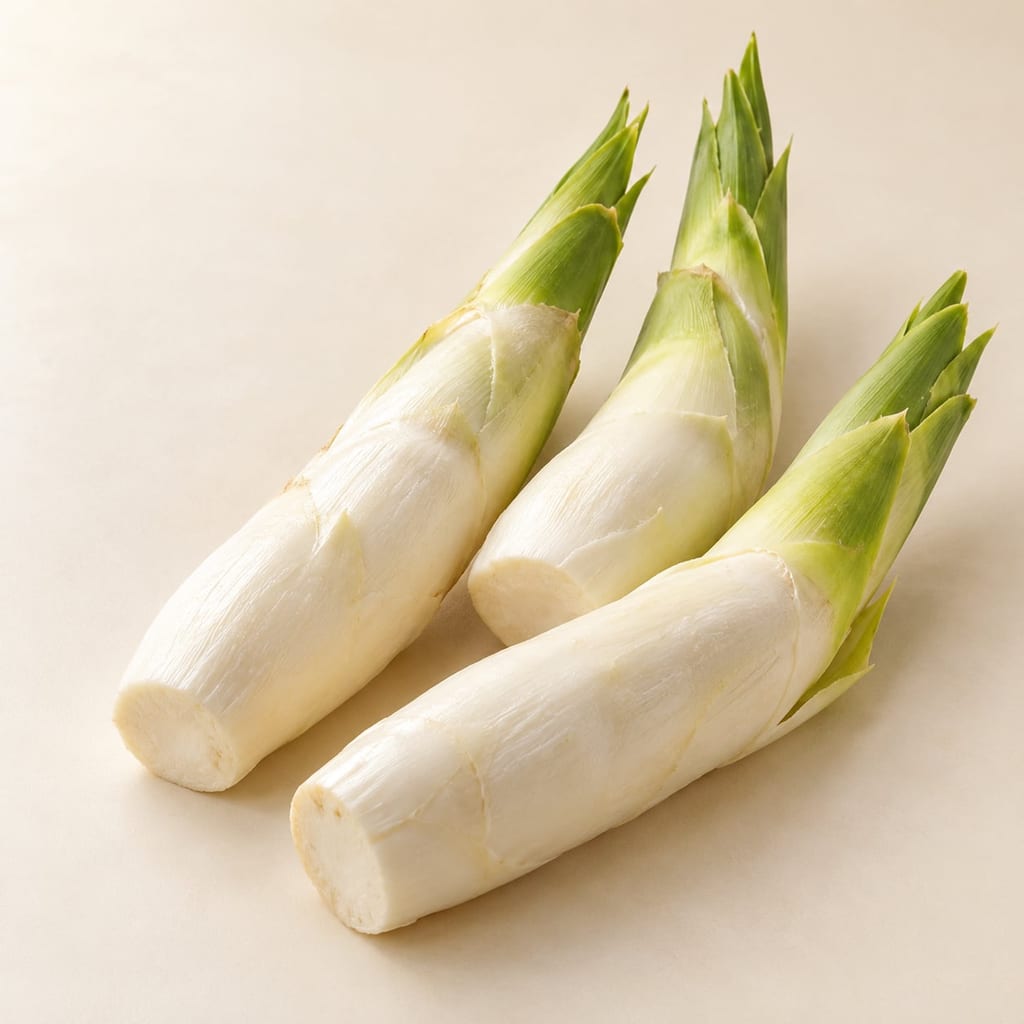
Water-bamboo smut is the gall that the smut fungus Ustilago esculenta forms on the aquatic grass Zizania latifolia. The fungus swells the top three or four internodes of the young stem into a cone or spindle. The swollen tissue is mostly plant tissue, and it is eaten as a vegetable. The PROSEA account describes it as the only known vegetable that is the product of a plant host and a fungal parasite.
The host is Zizania latifolia, a perennial aquatic grass. Infected plants do not flower. The gall is about 5 to 10 cm long and 2 to 4 cm wide. Its firm green outer layer is removed, and the white inside is eaten. The catalogue classes it as a fungus-associated food rather than an ordinary mushroom fruit body.
Per 100 g of edible portion, the gall contains about 78.5 g water, 1.7 g protein, 4.7 g carbohydrate and 109 kJ, according to the PROSEA account.
The white inner part is parboiled and then cooked. It is fried with meat and vegetables, or canned in brine. The gall is eaten as a vegetable, and the grains of the plant are used as food, sometimes ground into flour.
Plants are propagated vegetatively, from rhizome pieces or cuttings of immature culms that usually carry the smut. Fields are flooded to 10 to 20 cm and prepared much as rice paddies are, with organic fertiliser. Planting density is 10,000 to 30,000 plants per hectare. Galls appear four to five months after planting and are harvested one to two weeks later, with repeat harvests every one to two weeks. The PROSEA account states that no germplasm collections or breeding programmes exist.
The fungus is reported to raise the host's production of auxins and cytokinins, the plant growth hormones that drive the swelling. The fungus persists in the rhizome and culm.
Local names in the PROSEA account include gau sun in Cantonese, nomai-nam and kapek in Thailand, several Vietnamese names, and Manchurian wild rice and Manchurian water rice in English. The name jiaobai appears in the catalogue record and not in the PROSEA text.
The host is native to northeastern India, Burma, China, Japan, eastern Siberia and the Russian Far East. The gall is cultivated in China, Korea, Japan, Taiwan, Indo-China, Thailand, Burma and Malaysia, and locally by Chinese communities in Indonesia. It has been introduced to Europe, New Zealand and North America.
The PROSEA account lists medicinal uses of the culms, rhizomes and grains against fevers. In Japan, smut spores mixed with oil were used on eyebrows and hair. In Europe the plant has been used for forage and paper.
The gall is cultivated and eaten; the source gives the 10th-century date for cultivation.
Cultivation listed in the source.
Cultivation listed in the source; the source also records a cosmetic use of the spores in Japan.
Named in the catalogue record as a regional use; the host is native to northeastern India.
Bamboo shoots are the young culms of many bamboo species, eaten after boiling or leaching in Asia, and fermented into sour and preserved foods in the Himalayas, northeast India and Burma.
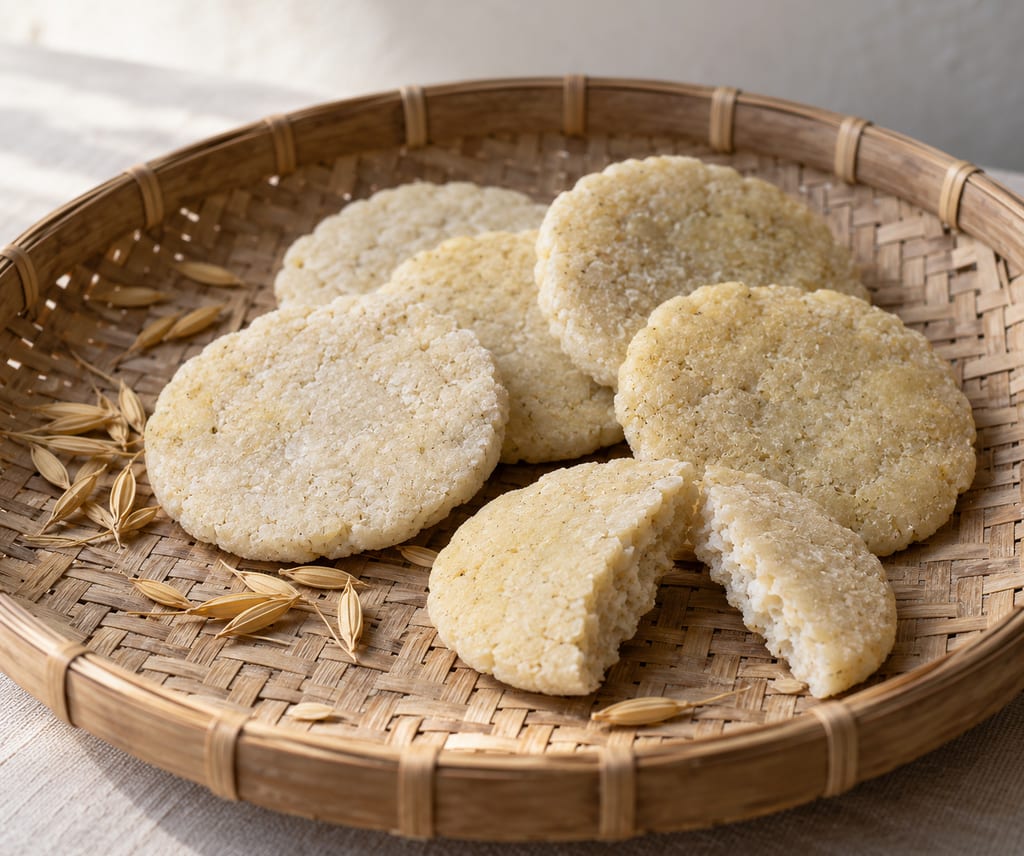
Hamei is a Manipur rice-cake starter used for Atingba. Accounts of how the cakes are made differ, and microbial studies describe particular samples; none defines a universal formula or safety standard.
Puntius is a genus of small freshwater fishes cited as raw material for fermented fish in northeastern South Asia. Shidal studies name the genus broadly; studies of ngari and hentak identify Puntius sophore specifically.
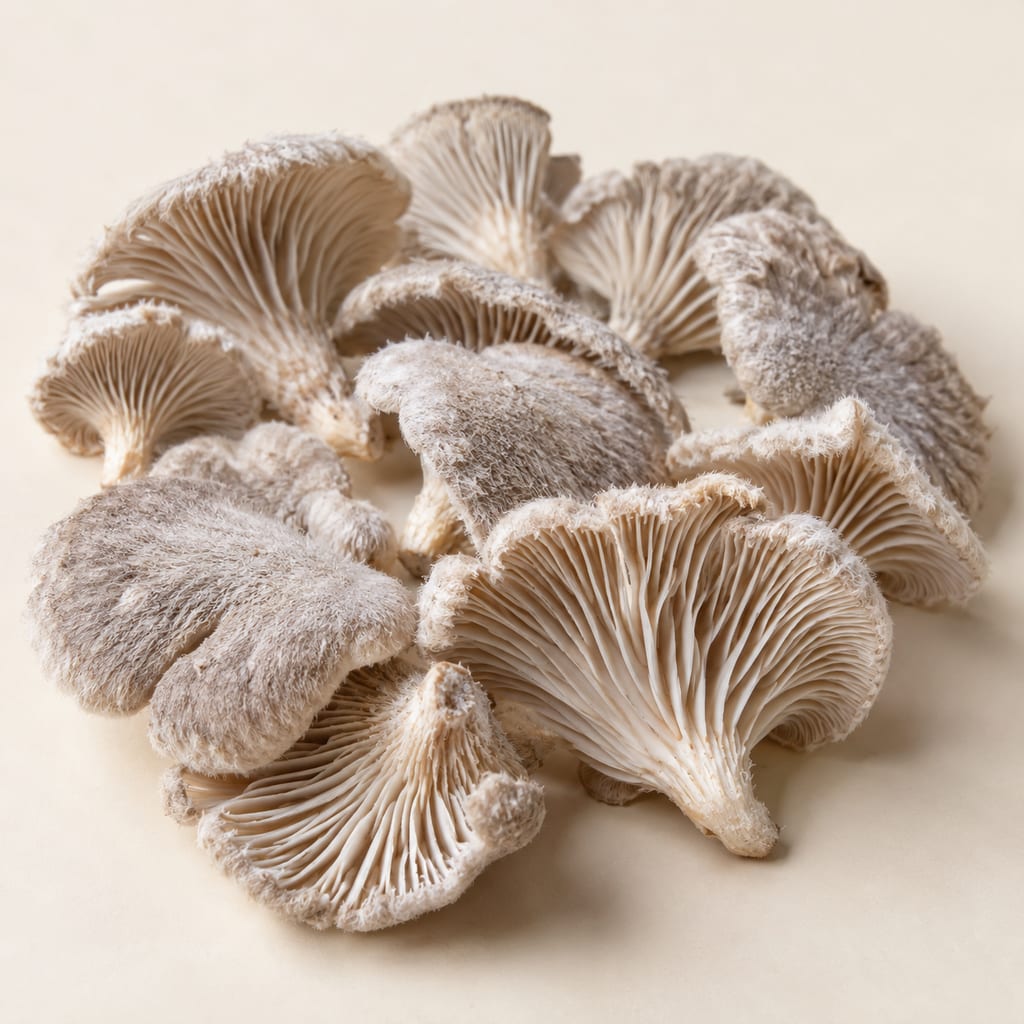
Split gill, Schizophyllum commune, is a common wood-decay mushroom that some sources report as eaten in parts of Southeast Asia and India, with its cultivation history unsettled in the sources.

Protected Italian vinegar made only from cooked grape must, fermented and aged in a battery of wooden barrels for at least 12 years: sweet, sharp and syrupy.

Airag is Mongolia’s fermented mare’s-milk drink, traditionally churned with saved starter in a reusable cowhide khokhuur.

Appam, or hoppers, are South Indian and Sri Lankan rice pancakes made from a fermented coconut-and-rice batter and cooked in a curved pan to a crisp lacy rim and a soft, spongy centre.

Auricularia tremellosa is a wood ear fungus of the genus that supplies most dried wood ear sold in China; its own food record is thin, and the culinary practice described here comes from the closely related wood ear species.

Ayran is Turkey’s cold, savoury yogurt drink: plain yogurt is loosened with water and lightly salted, then whisked smooth or aerated into a soft cap of foam.
A thin stone griddle used over an open hearth. Norwegian archaeology documents the established tradition from the early Middle Ages; a Viking-period origin is only a cautious suggestion linked to Shetland.

Crushed or milled barley cooked in water until the starch softens and the mixture thickens, the plainest way a northern household turned stored grain into a meal, here with apple and hazelnut.

Black carrot is the anthocyanin-pigmented Eastern carrot (Daucus carota var. atrorubens), the purple root that preceded orange types and still colours kanji and şalgam.
No community contributions have been published for this entry yet.
Sign in to contribute. Published comments and photos are free to read.
PROSEA / PROTAIdentity · Cultivation · Food use · Distribution · History
Zizania latifolia (PROSEA / PROTA plant resource account)Host and gall description; preparation; nutrition per 100 g; cultivation method and harvest; local names; regions; 10th-century record.
PubMedCatalogue source
Ustilago esculenta record (catalogue source, PubMed 30794950)Catalogue citation for the food use; the abstract was not read for this page.