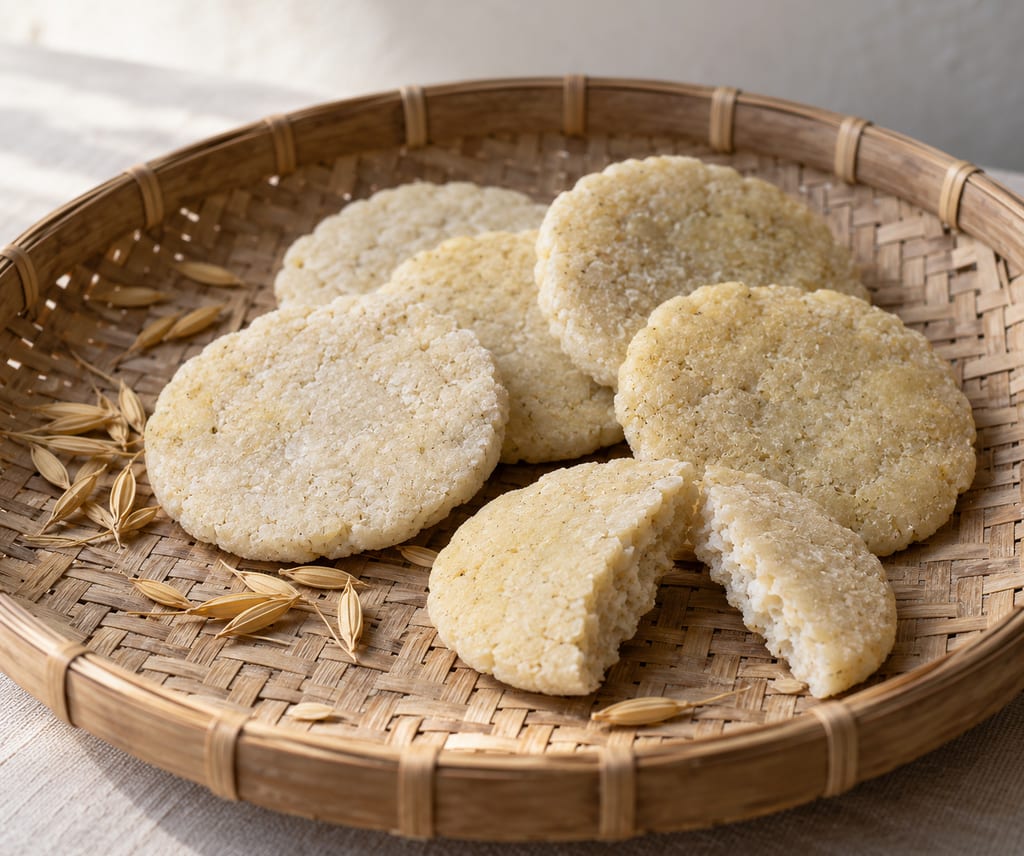
Hamei
Hamei is a Manipur rice-cake starter used for Atingba. Accounts of how the cakes are made differ, and microbial studies describe particular samples; none defines a universal formula or safety standard.
 FermenteaWhere food goes to change
Cultures
Thiat is a dried mixed starter used for alcoholic beverages in Meghalaya. Field accounts differ and laboratory studies describe particular samples; none gives a universal recipe or validated household method.
Thiat is a dried amylolytic starter, one whose microbes break starch down into fermentable sugars, used for alcoholic-beverage production in Meghalaya. A 2007 field account documents its preparation among Pnar communities in Jaintia Hills. A later regional study places Thiat in Meghalaya without naming a specific community in its Thiat passage. The evidence documents occurrence, not one birthplace or a uniform cake.
The 2007 account reports local red rice, Khaw-iang leaves, water, and wood and bamboo tools in one Pnar Thiat preparation. A separate overview describes glutinous rice with dried Khaw-iang leaves and roots, followed by fermentation and drying. The two accounts differ in detail, and neither gives a validated household method, an objective drying endpoint or a storage duration, so they should not be combined into a universal process.
In the 2007 Kiad account the names mark stages. Thiat is the starter cake. Jyndem is the fermented intermediate made with it, Sadhiar the fermented drink extracted from it, and Kiad the distilled product. The paper also describes Kiad's social and cultural use among Pnar communities in Jaintia Hills. Thiat itself is only the first of these.
A comparative sequencing study reports different community profiles in its Marcha and Thiat samples, with more moulds than yeasts in the Thiat samples. Another study reports Thiat-associated yeast isolates from a Northeast Indian sample set. This is why Thiat is described as a mixed starter and not as a pure yeast: moulds and yeasts are both reported in the sampled cakes. The results describe the studied samples and methods; they do not define a universal culture or recommend an isolate for food use.
The sources do not establish a unique historical origin or a seasonal calendar for making Thiat. Neither field account provides process-specific safety controls. Community-specific names and variation beyond the Pnar and Jaintia Hills account need local evidence and community review. No instructions for making, renewing or storing Thiat are given here.
A regional study places Thiat in Meghalaya without naming a community in its Thiat passage; this does not establish one birthplace or exclusive distribution.
A 2007 field account documents Thiat preparation among Pnar communities in Jaintia Hills district; it is a single account, not a uniform cake.
Hamei is a Manipur rice-cake starter used for Atingba. Accounts of how the cakes are made differ, and microbial studies describe particular samples; none defines a universal formula or safety standard.
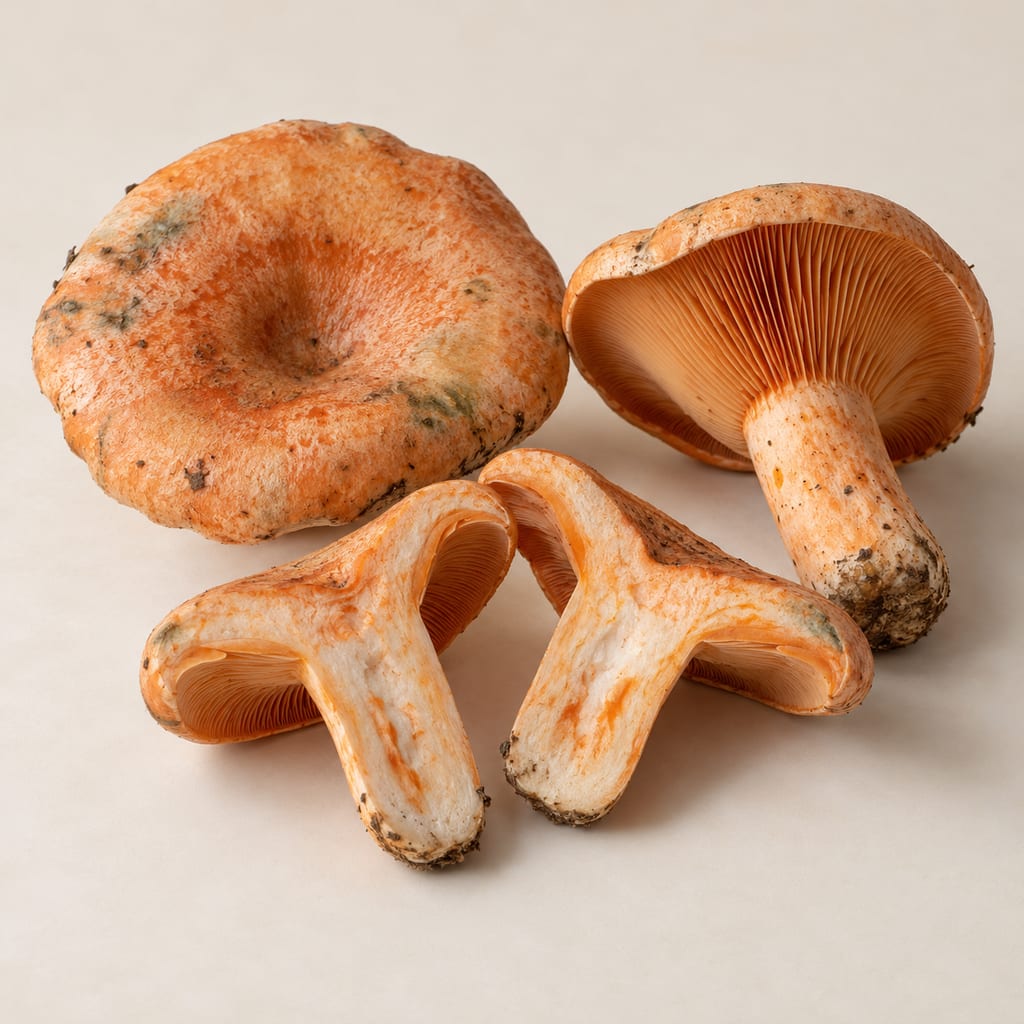
The saffron milkcap, Lactarius deliciosus, is a pine-associated wild mushroom native to Europe, fried, grilled, salted or pickled in several regional kitchens.
Scleroderma yunnanense is an earthball from Yunnan and parts of India that is eaten locally, but the genus contains poisonous species, and look-alike mix-ups have caused poisoning.
No community contributions have been published for this entry yet.
Sign in to contribute. Published comments and photos are free to read.
Indian Journal of Traditional Knowledge; NIScPR repositoryIdentity · Method · Use · Geography
Kiad—A popular local liquor of Pnar tribe of Jaintia hills district, MeghalayaDocuments Thiat preparation among Pnar communities in Jaintia Hills: local red rice, Khaw-iang leaves, water and wood and bamboo tools.
In the Kiad account Thiat is the starter cake, Jyndem the fermented intermediate, Sadhiar the extracted fermented drink and Kiad the distilled product; describes Kiad's social and cultural use among Pnar communities.
Cited in: A Meghalaya starter in distinct local contexts; What the field accounts record; Starter, mash and beverage are different things; Evidence limits
Indian Journal of Traditional Knowledge; Sikkim University repositoryIdentity · Method · Geography
Traditional skill of ethnic people of the Eastern Himalayas and North East India in preserving microbiota as dry amylolytic startersDescribes Thiat as a dried amylolytic starter used for alcoholic-beverage production in Meghalaya.
A separate overview describes glutinous rice with dried Khaw-iang leaves and roots, followed by fermentation and drying.
Cited in: A Meghalaya starter in distinct local contexts; What the field accounts record; Evidence limits
Scientific ReportsMicrobiology
Analysis of bacterial and fungal communities in Marcha and Thiat, traditionally prepared amylolytic starters of IndiaReports different community profiles in its Marcha and Thiat samples and more moulds than yeasts in its Thiat samples; results describe the studied samples.
Cited in: Microbial findings are sample-specific; Evidence limits
Frontiers in MicrobiologyMicrobiology
Diversity of Yeasts and Molds by Culture-Dependent and Culture-Independent Methods for Mycobiome Surveillance of Traditionally Prepared Dried Starters for the Production of Indian Alcoholic BeveragesReports Thiat-associated yeast isolates from a Northeast Indian sample set; results describe the studied samples and do not recommend an isolate for food use.
Cited in: Microbial findings are sample-specific; Evidence limits