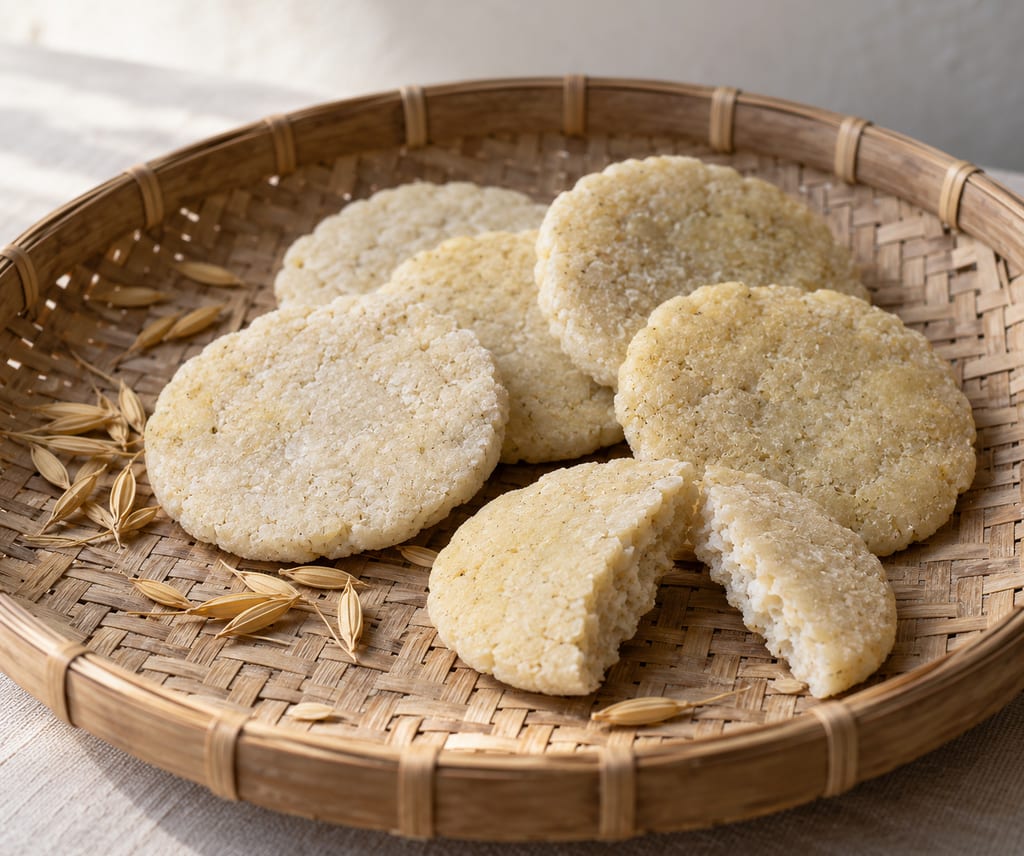
Hamei
Hamei is a Manipur rice-cake starter used for Atingba. Accounts of how the cakes are made differ, and microbial studies describe particular samples; none defines a universal formula or safety standard.
 FermenteaWhere food goes to change
Cultures
Chowan is a dried cereal starter associated with Tripura. Published accounts differ on its local names, and microbial findings come from sampled cakes; no single origin, method or culture is established.
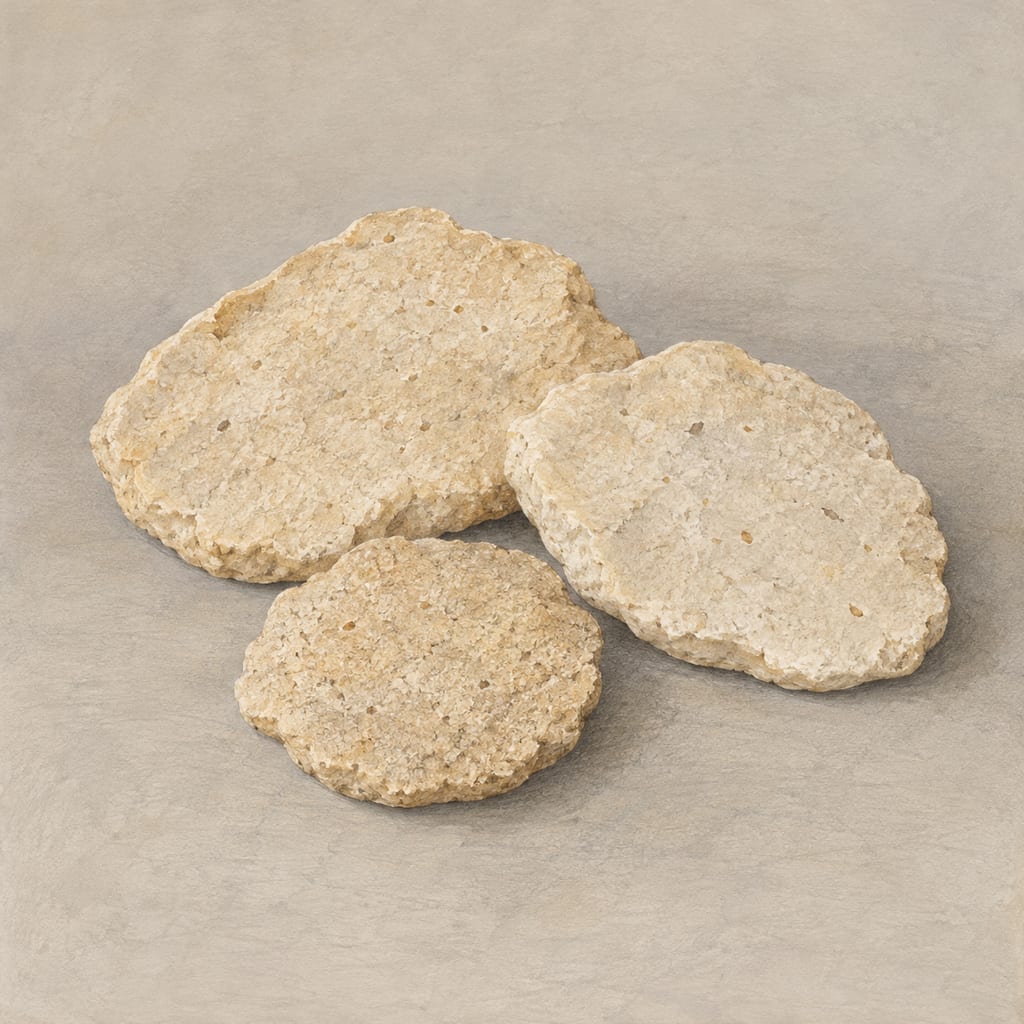
A 2018 regional survey prints “Chowan/chuwan beleb” and describes it as a starter used among different ethnic communities in Tripura. It associates the starter with Gora Bwtwk and with a distilled drink spelled Chuwak. The survey does not identify the communities, and its methods list does not name a Tripura field site. A separate report about a Debbarma household in Chailengta uses “chuwan” in another beverage account. Similar spelling does not establish that those products or uses are identical, and whether Chowan, chuwan beleb and other Tripura products called chuwan are one starter or distinct variants remains for local makers to clarify.
The regional survey describes soaked glutinous rice mixed with local roots, barks and leaves and with powdered older Chowan, and says plant use varies among communities. Water is added before the mixture is formed into flat or oval cakes, which are fermented over an earthen oven in a kitchen and sun-dried. The survey reports stage durations but no ingredient quantities or measured endpoint. Its stated field locations omit Tripura, so local makers should confirm the account before it is treated as community-specific.
A comparative study reports five samples labelled Chowan among 40 dried starters collected from local people. A later study reports four Chowan samples from Bangsul and Dharmanagar. These papers establish research sampling, not a reproducible home recipe.
Researchers reported yeast isolates, sequence detections and filamentous-fungal isolates from particular Chowan samples. One sequencing paper names Saccharomyces eubayanus as a dominant unique species in its Chowan sample. A separate culture-dependent study lists five representative filamentous isolates from Chowan samples. These findings come from specific samples and laboratory methods; they do not describe every Chowan cake or recommend an isolate for use.
The inspected sources do not establish Chowan’s earliest history, a unique origin, a seasonal calendar, consistent names across communities, a complete validated household method or product-specific storage and safety controls. The available process accounts should stay separate until Tripura makers and further research clarify their relationship. No instructions for making, renewing or storing Chowan are given here.
Sources associate Chowan with ethnic communities in Tripura without identifying them; this does not establish one origin or exclusive distribution.
A 2020 study reports four Chowan samples from Bangsul and Dharmanagar; they were research samples and do not establish where Chowan is made.
Hamei is a Manipur rice-cake starter used for Atingba. Accounts of how the cakes are made differ, and microbial studies describe particular samples; none defines a universal formula or safety standard.
No community contributions have been published for this entry yet.
Sign in to contribute. Published comments and photos are free to read.
Indian Journal of Traditional Knowledge; Sikkim University repositoryIdentity · Method · Geography
Traditional skill of ethnic people of the Eastern Himalayas and North East India in preserving microbiota as dry amylolytic startersPrints Chowan/chuwan beleb as a starter used among different ethnic communities in Tripura, associated with Gora Bwtwk and a distilled drink spelled Chuwak; the communities are not identified and the methods list names no Tripura field site.
Describes soaked glutinous rice mixed with local roots, barks and leaves and powdered older Chowan, with plant use varying among communities; water is added, the mixture formed into flat or oval cakes, fermented over an earthen oven in a kitchen and sun-dried. Stage durations are reported but no ingredient quantities or measured endpoint.
Cited in: What the sources call Chowan; A reported cake form; What remains unresolved
Frontiers in MicrobiologyIdentity · Microbiology
Diversity of Yeasts and Molds by Culture-Dependent and Culture-Independent Methods for Mycobiome Surveillance of Traditionally Prepared Dried Starters for the Production of Indian Alcoholic BeveragesReports five samples labelled Chowan among 40 dried starters collected from local people.
Cited in: A reported cake form; What microbial studies found; What remains unresolved
Frontiers in Microbiology; PubMed CentralMicrobiology
Mycobiome Diversity in Traditionally Prepared Starters for Alcoholic Beverages in India by High-Throughput Sequencing MethodSequencing paper names Saccharomyces eubayanus as a dominant unique species in its Chowan sample; the result describes that sample.
Cited in: What microbial studies found; What remains unresolved
Frontiers in Microbiology; PubMed CentralMicrobiology · Geography
Diversity of Filamentous Fungi Isolated From Some Amylase and Alcohol-Producing Starters of IndiaReports four Chowan samples from Bangsul and Dharmanagar and lists five representative filamentous isolates from Chowan samples.
Cited in: A reported cake form; What microbial studies found; What remains unresolved
Adivasi Lives Matter / Adivasi Awaaz projectIdentity · Community context
Fire Without Smoke: How Indigenous People Used To Make Flammable Spirits In TripuraA report about a Debbarma household in Chailengta uses 'chuwan' in another beverage account.
Cited in: What the sources call Chowan; What remains unresolved