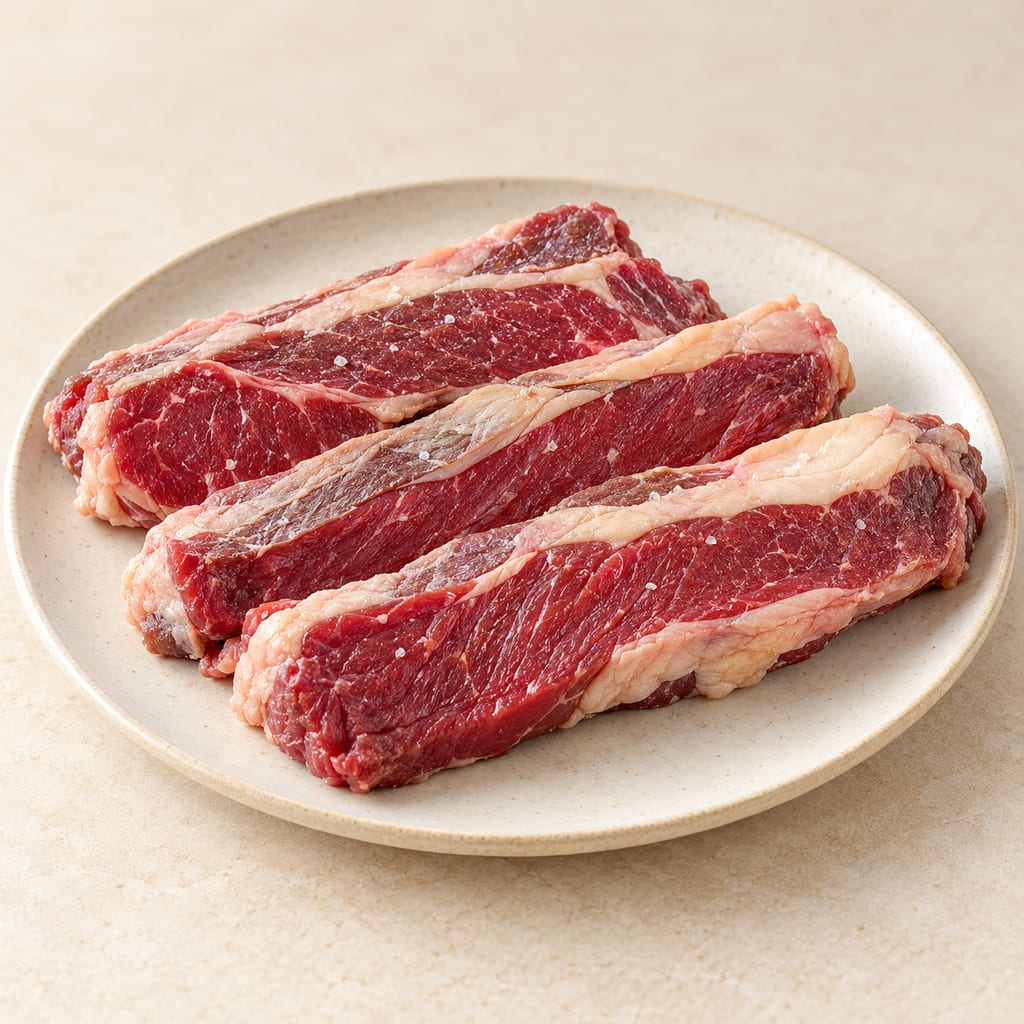
Carne-de-sol
Beef given limited salt and partial surface drying, a short-keeping Brazilian meat that is much less durable than fully dried charque and is treated as a cold-chain product.
 FermenteaWhere food goes to change
moquém · Moqueado · Moquear · Surarî' · Moqueteiro
Moquém is the Brazilian Indigenous method of laying meat or fish on a grill of wooden sticks to roast, dry or smoke it, and also the name of the grill itself.
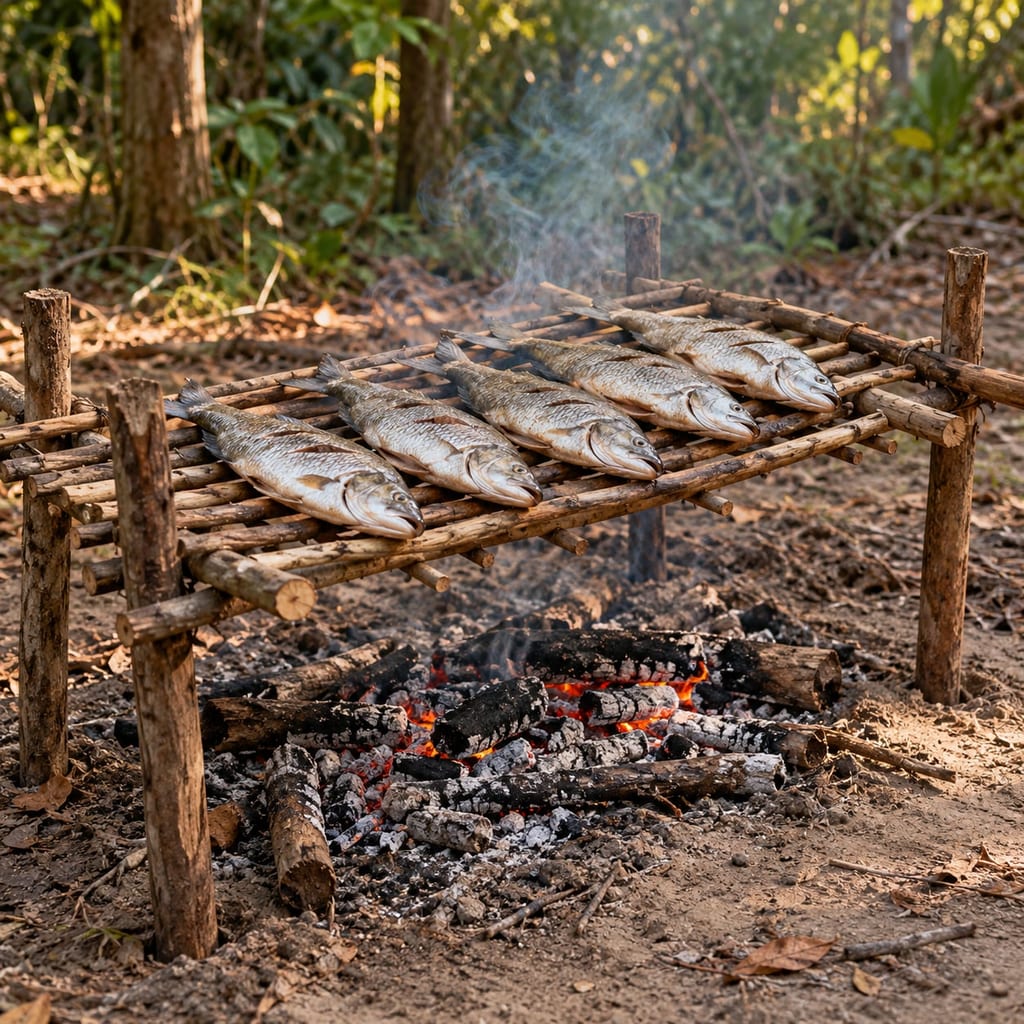
Moquém is both the object and the work: a grill of wooden sticks, and the roasting, drying or smoking of meat or fish on it. The Museu da Língua Portuguesa traces the word to Tupinambá and defines it as a stick grill. The verb moquear and the participle moqueado, a food treated this way, come from the same root.
The Makuxi call it surarî'. A 2025 exhibition at the Museu de Arte Moderna de São Paulo, curated by Jaider Esbell and bringing together 34 Indigenous artists, takes the word as its title. Its text describes the moquém as a rack used to dehydrate and smoke meat, and says the treatment preserves food and makes it easier to carry from hunting and fishing grounds to the villages. The text names meat as the food; it is a curatorial statement of a people's knowledge, not a technical manual.
The sources use roasting, drying and smoking for different things and this page keeps them apart where each source does. A stick grill puts the food above the fire on an open lattice, so heat, smoke and air all reach it; which of the three dominates depends on how close the grill is to the fire and how long the food stays, and the records give neither.
A catalogue of the Museu Nacional dos Povos Indígenas describes a black-and-white negative made by Harald Schultz in 1943, titled Local para assar alimento, a place for roasting food. It calls the pictured apparatus a stick grill named moquém, used to roast or dry fish or meat in a study context linked to the Umutina people. The image itself is not available in the catalogue, so there are no measurements or visual analysis.
A separate educational page of the Instituto Socioambiental attributes an account involving moquear fish to Tuyuka communities; that account rests on a 2004 book that was not inspected. These accounts stay with their named sources and peoples and are not merged into one moquém practice.
No source reviewed gives a rack design, a fuel, a duration, a temperature or a storage period for any moquém. A municipal notice from Jaru, in Rondônia, announced a 2025 workshop on an Indigenous smoking technique, but its body could not be read, so who took part and what was taught is unknown. Community terms and knowledge should be described only as the communities concerned agree, and a reader who wants to cook or preserve food this way should turn to them.
The word comes from Tupinambá. A 1943 photograph by Harald Schultz shows a stick grill in a study linked to the Umutina people; the date belongs to the photograph, not to the origin of the method.
Scaling: source batch only
The sources say moquém preserves food but give no endpoint, moisture figure or storage period.
Hazard sourceConsult the communities whose knowledge is recorded; do not infer a validated method from these sources.
Control sourceThis is not a validated home-preservation recipe.
Smell, colour and appearance are not a safety test for food treated on a moquém.
Museum, exhibition and community sources name moquém among Indigenous peoples including the Makuxi, Tuyuka and Umutina; none gives one continuous practice or a single place of origin.
Beef given limited salt and partial surface drying, a short-keeping Brazilian meat that is much less durable than fully dried charque and is treated as a cold-chain product.
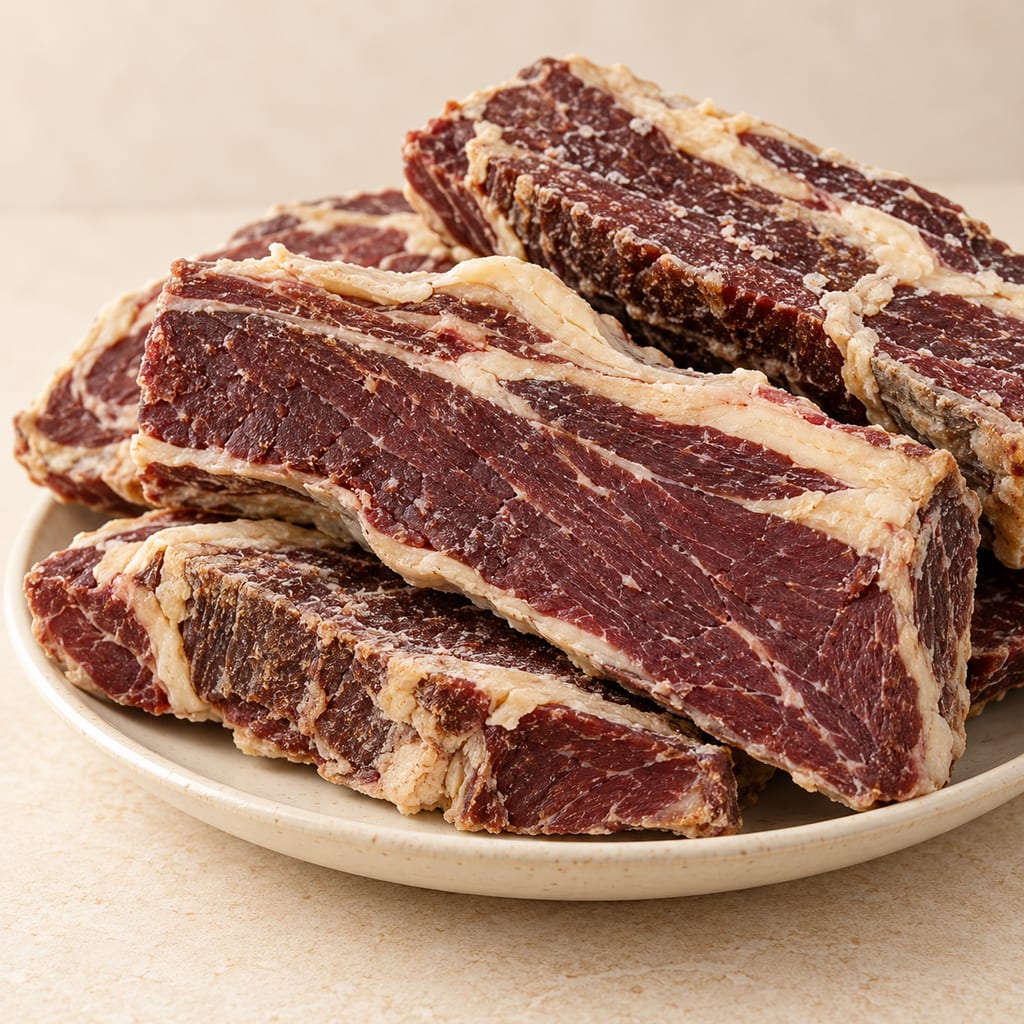
Beef salted heavily and dried into a strongly preserved ingredient that is desalted before it is cooked in stews; a Brazilian form of salt-dried meat that keeps far longer than the lightly salted carne-de-sol.
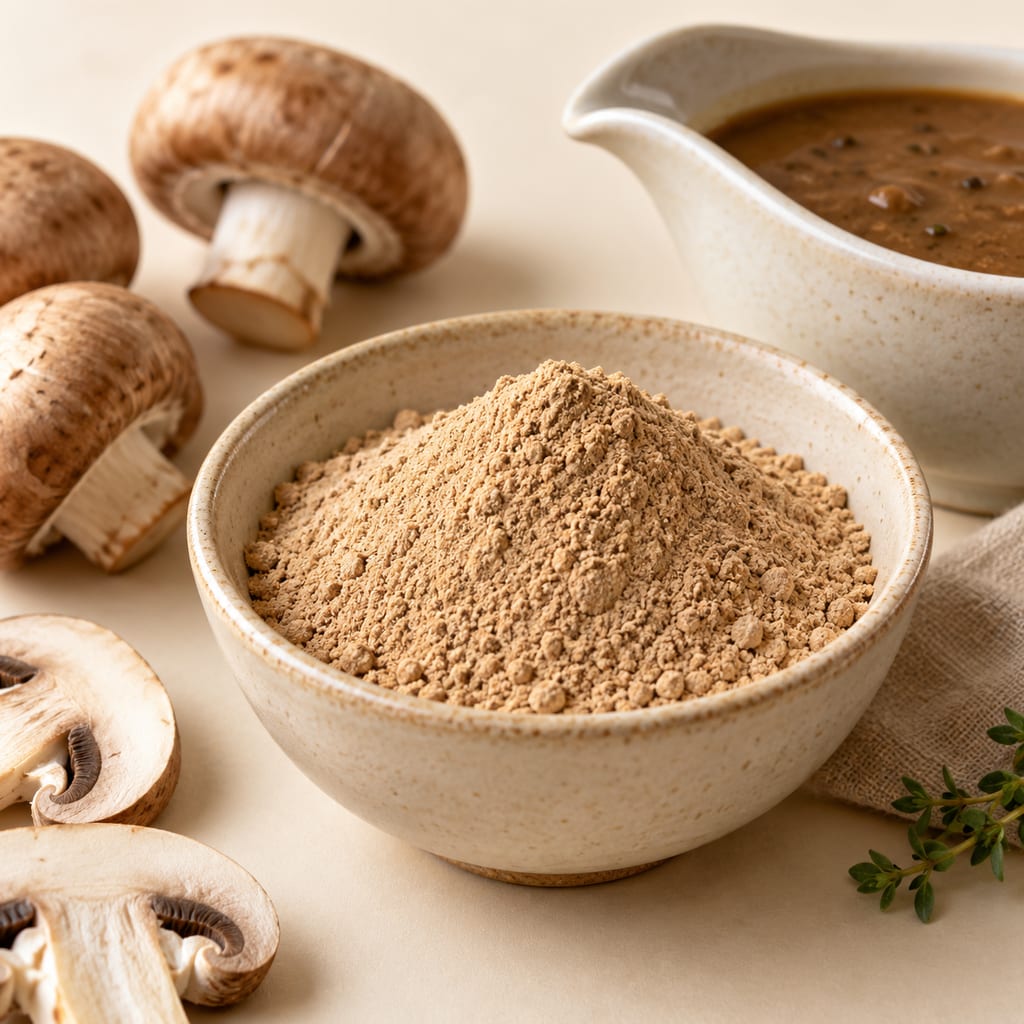
Mushroom powder is dried mushroom tissue ground to a fine powder and added to gravies and sauces. Victorian cooks made it from fresh cultivated mushrooms when fresh ones were not to hand.
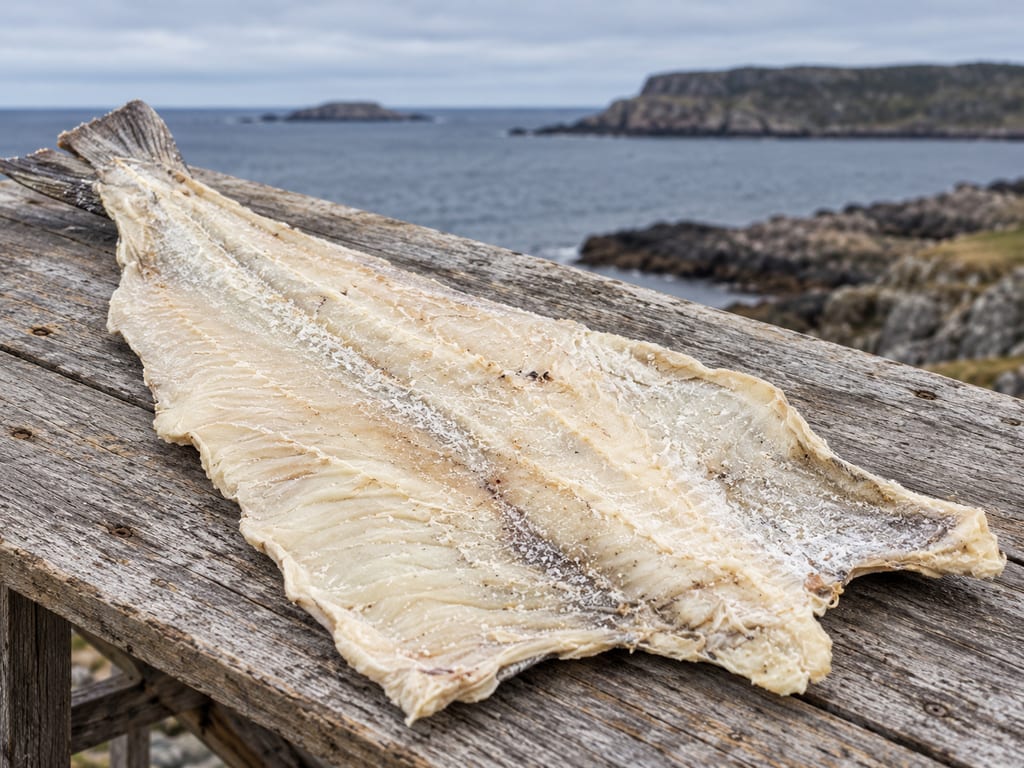
Atlantic cod split, salted and dried on raised flakes along the Newfoundland and Labrador shore, manufactured ashore for markets across the Atlantic.
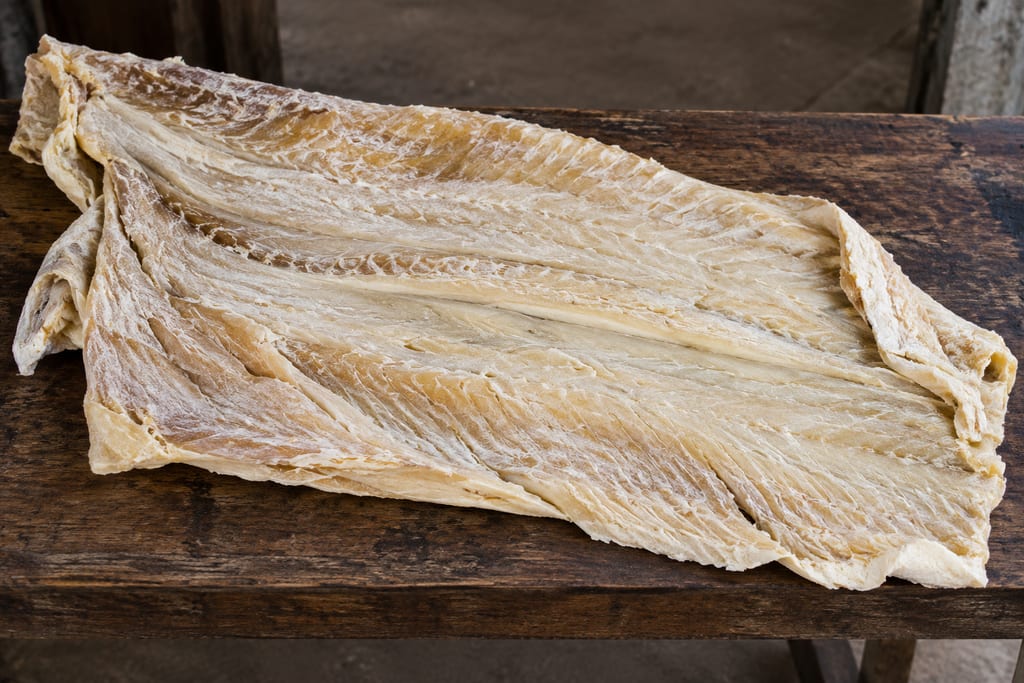
Arapaima gigas split into broad mantas, salted, matured for days and dried into the sheets that travel Amazonian river markets as bacalhau da Amazônia.
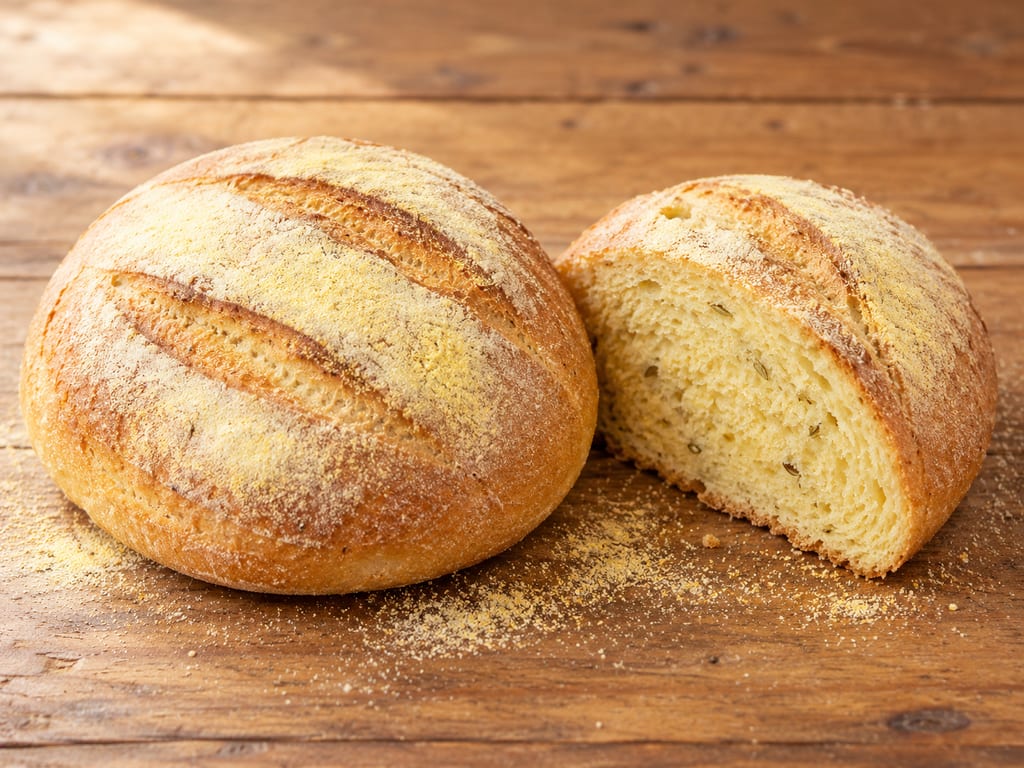
Brazilian broa de milho is a lightly sweet wheat-and-fine-maize bread with fennel and dry yeast, shaped into two small loaves for a Festa Junina or coffee break.
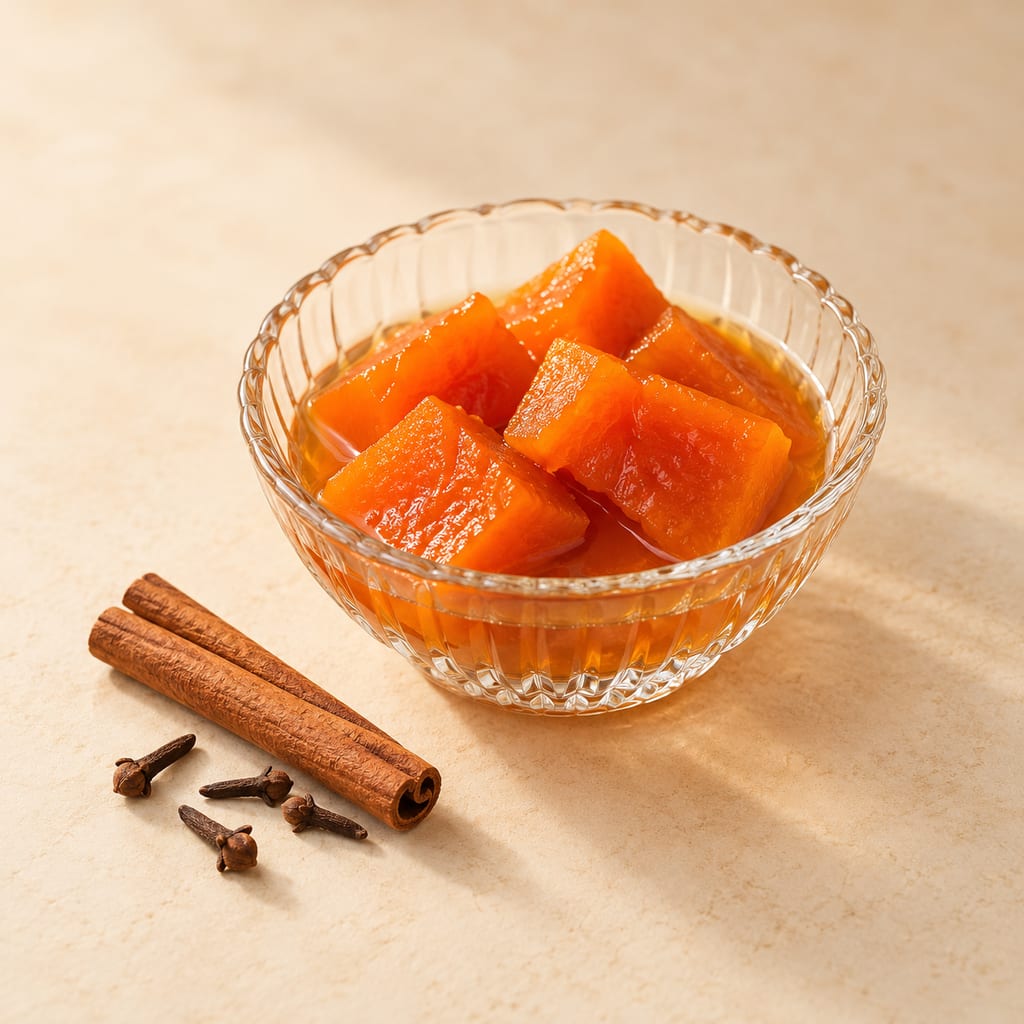
Brazilian doce de abóbora: Freeze for winter; small fresh portion refrigerated up to 48 hours.
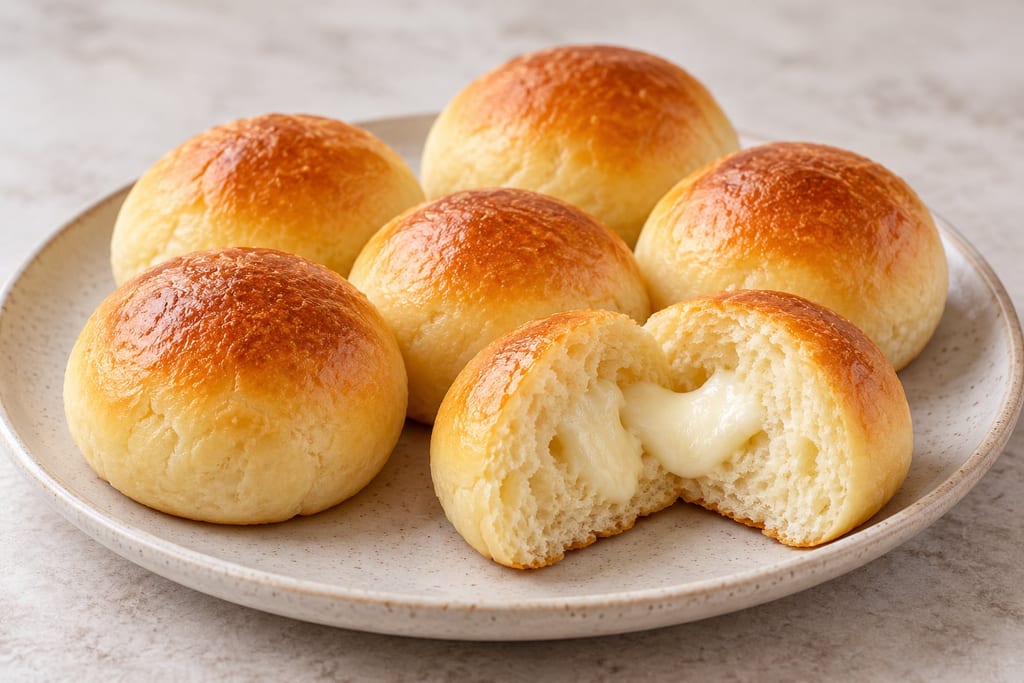
Soft Brazilian yeast rolls use cooked mashed potato in an enriched dough, with mozzarella cubes enclosed before baking.

Japanese skipjack tuna cooked, then repeatedly smoked and dried over a wood fire by the hand-fired tebiyama method into a hard block for shaving into dashi: the first stage of katsuobushi.
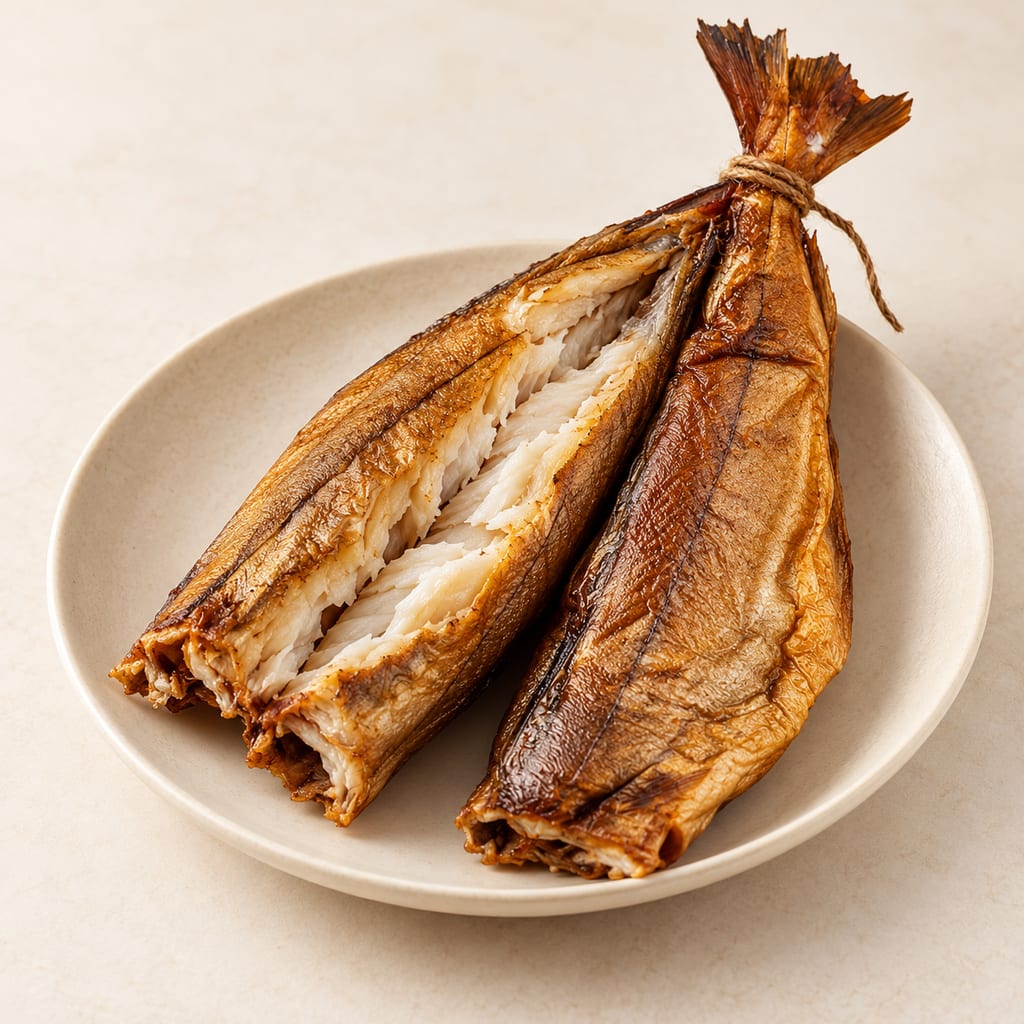
Arbroath smokies are whole haddock dry-salted, paired by the tail and hot-smoked in a protected coastal area. Their recorded history links Auchmithie and Arbroath, though the exact origin is unsettled.
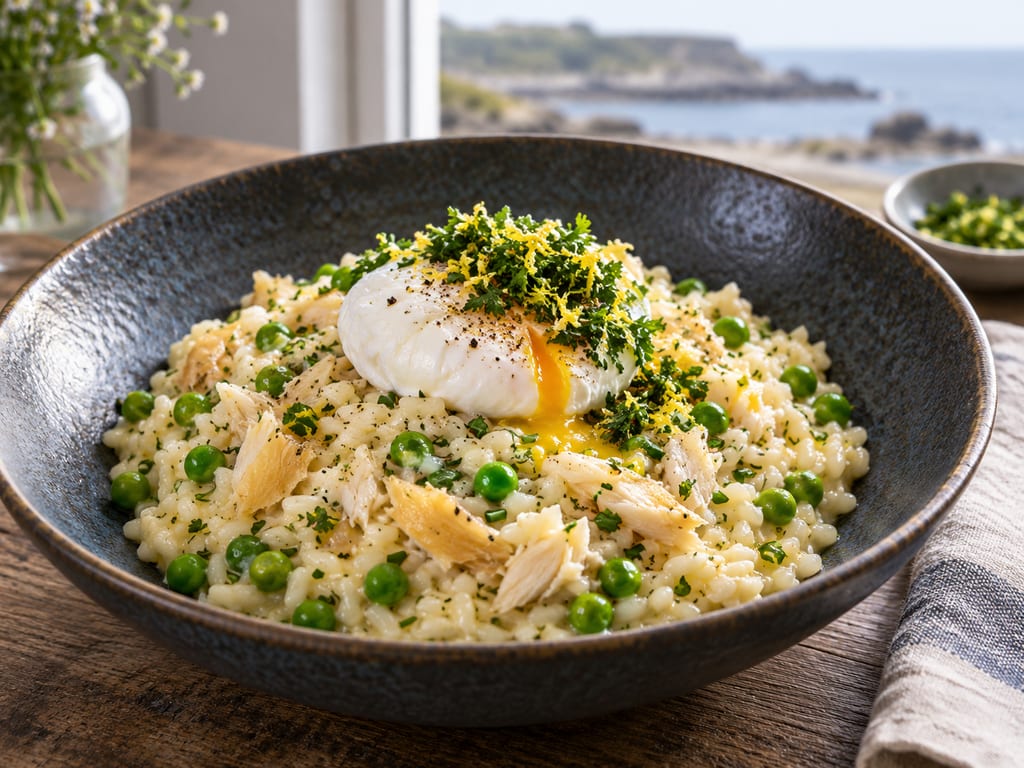
A four-serving risotto published in the 2014 Arbroath Smokie Trail booklet and credited to Hayley Wilkes. It cooks with finished Arbroath smokies; it does not describe smoking fish.
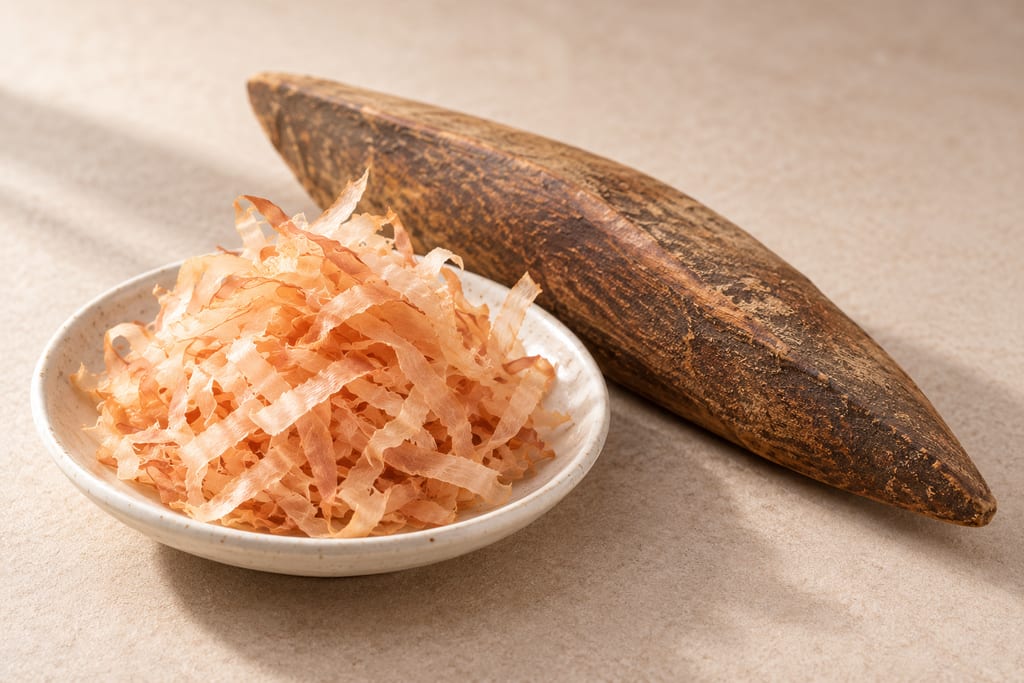
Katsuobushi is skipjack tuna cooked, smoked and dried into a hard block that is shaved into flakes for dashi and toppings. Some styles stop at the smoke-dried stage; others receive carefully managed mold maturation.
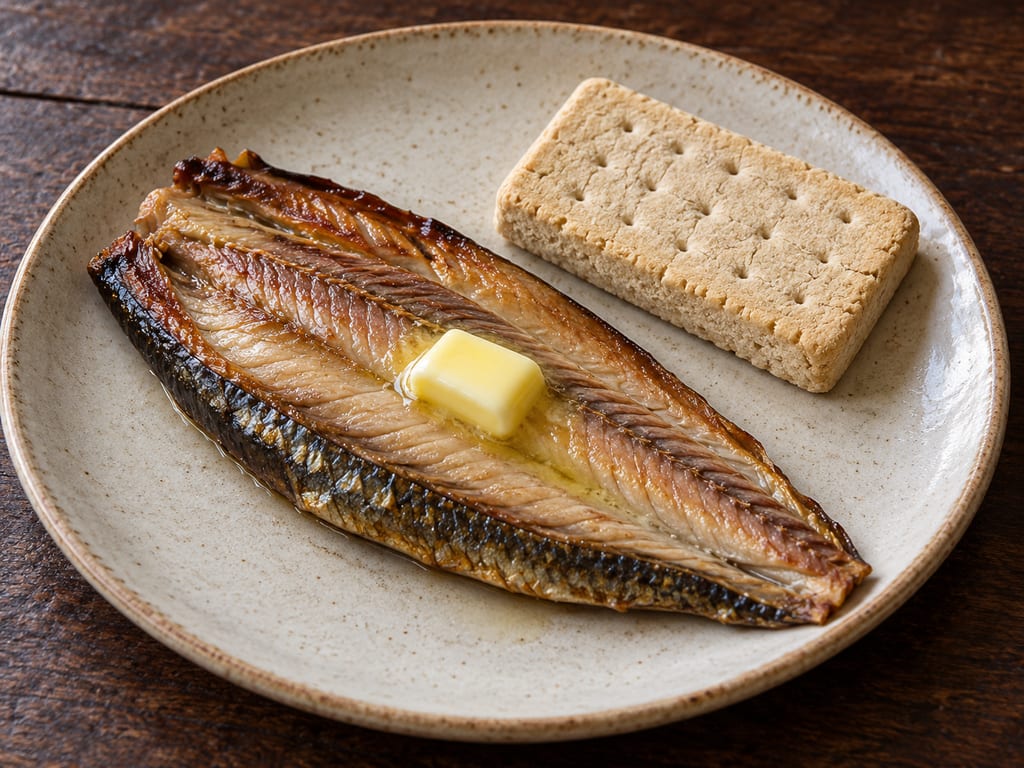
A Victorian way with Great Yarmouth bloaters: the lightly salted, cold-smoked whole herring is broiled and served with fresh butter and a warmed captain's biscuit.
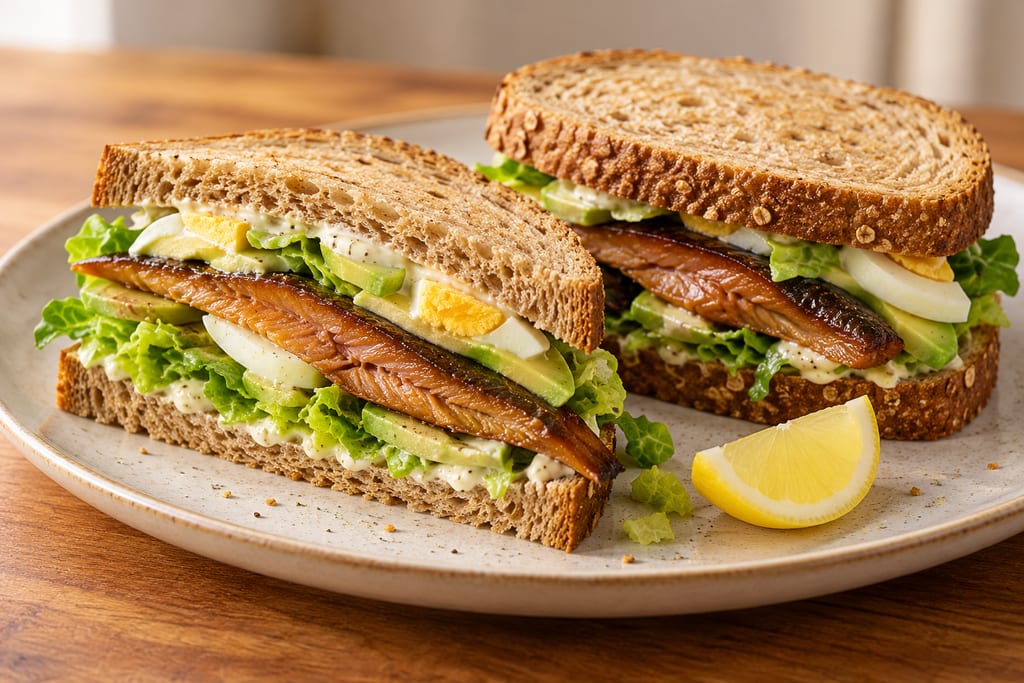
A warm club sandwich of oak-smoked Craster kipper fillets layered with soft-boiled egg, romaine, avocado and lemon mayonnaise on brown bread.
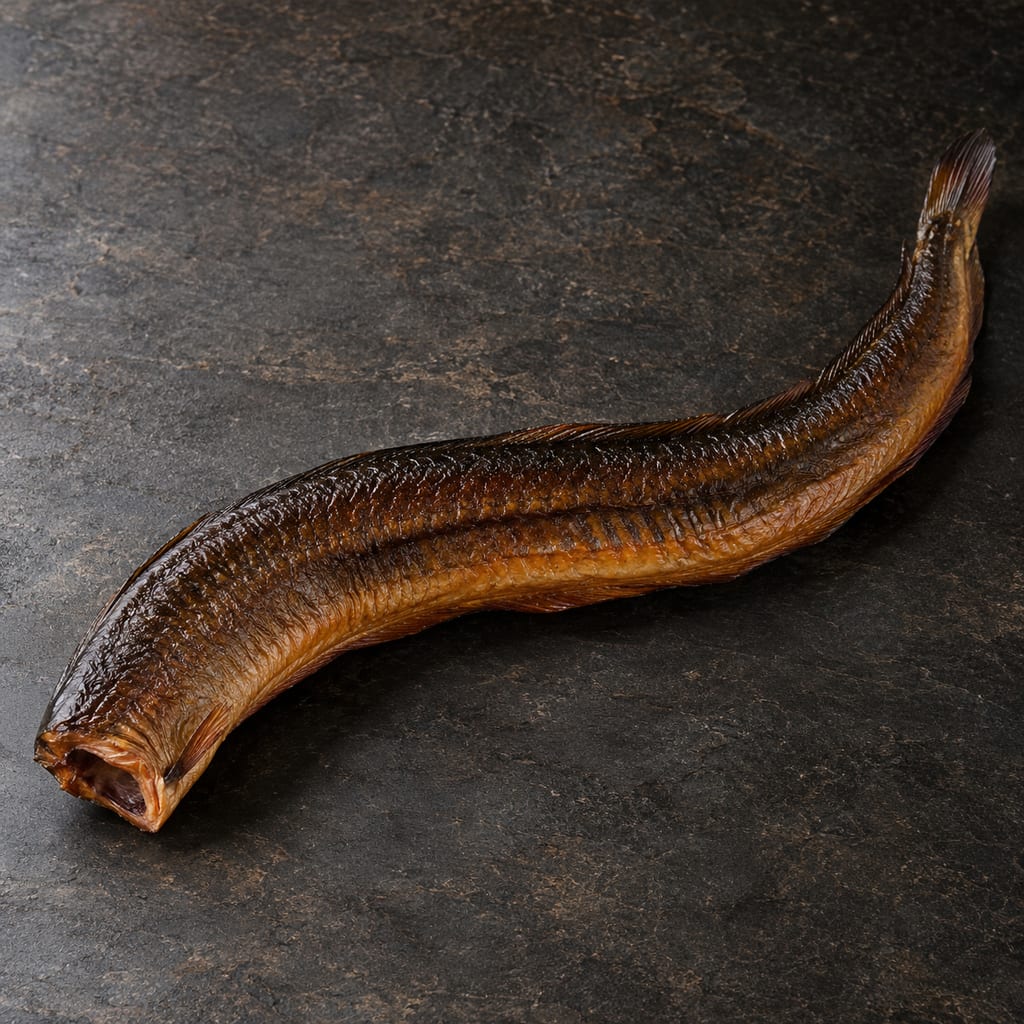
Short-finned eels, kooyang, smoked for a sustained period in the hollows of large trees at Budj Bim in south-western Victoria, a combined heat, smoke and drying method of the Gunditjmara people.
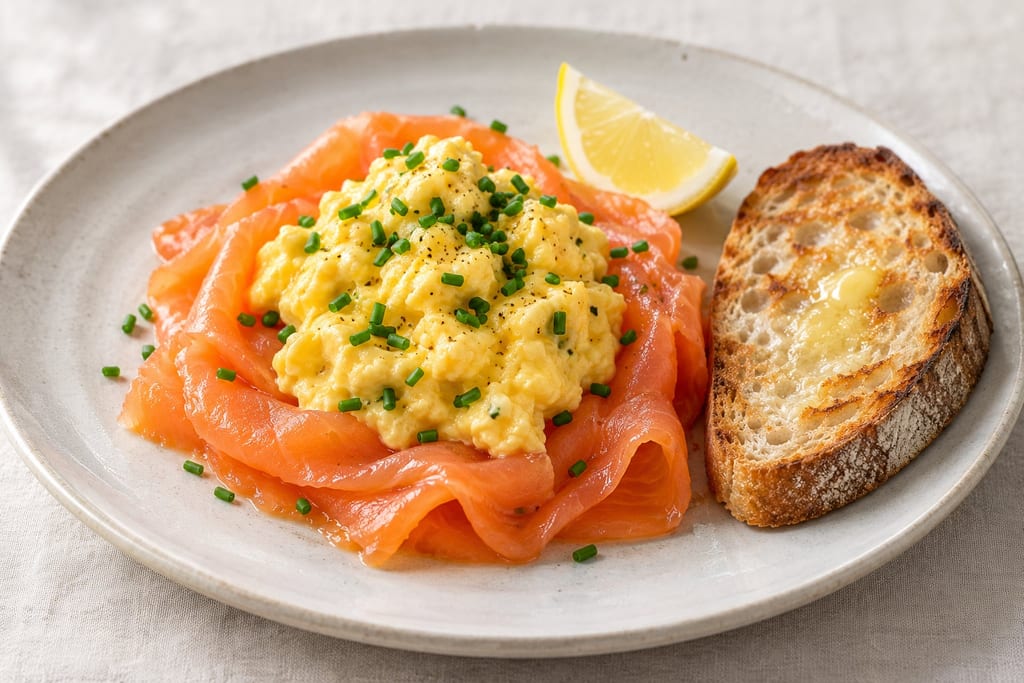
Softly scrambled eggs enriched with cream and butter, served with cold-smoked salmon, chives, lemon and sourdough toast as a British breakfast dish.
No community contributions have been published for this entry yet.
Sign in to contribute. Published comments and photos are free to read.
Museu da Língua PortuguesaHistory
MoquémMoquém derives from Tupinambá and means a grill of wooden sticks
Cited in: A grill of sticks and the work done on it
Museu Nacional dos Povos Indígenas (catalogue)History
Item SPI05380 - Local para assar alimentoA 1943 negative by Harald Schultz titled Local para assar alimento shows a stick grill named moquém used to roast or dry fish or meat, in a study linked to the Umutina people
The photograph itself is not accessible; no measurements
Cited in: Roasting, drying and smoking; Records from different peoples; What is not settled
Museu de Arte Moderna de São PauloMethod · History
Moquém_Surarî: arte indígena contemporâneaSurarî' is the Makuxi word for moquém
A rack used to dehydrate and smoke meat; preserves food and makes it easier to carry from hunting and fishing grounds to villages
Curated by Jaider Esbell; 34 Indigenous artists; a curatorial text, not a technical manual
Cited in: A grill of sticks and the work done on it; Roasting, drying and smoking; What is not settled
Instituto Socioambiental (mirim.org)Use
AlimentaçãoAn account involving moquear fish attributed to Tuyuka communities, resting on a 2004 book not inspected
Cited in: Records from different peoples