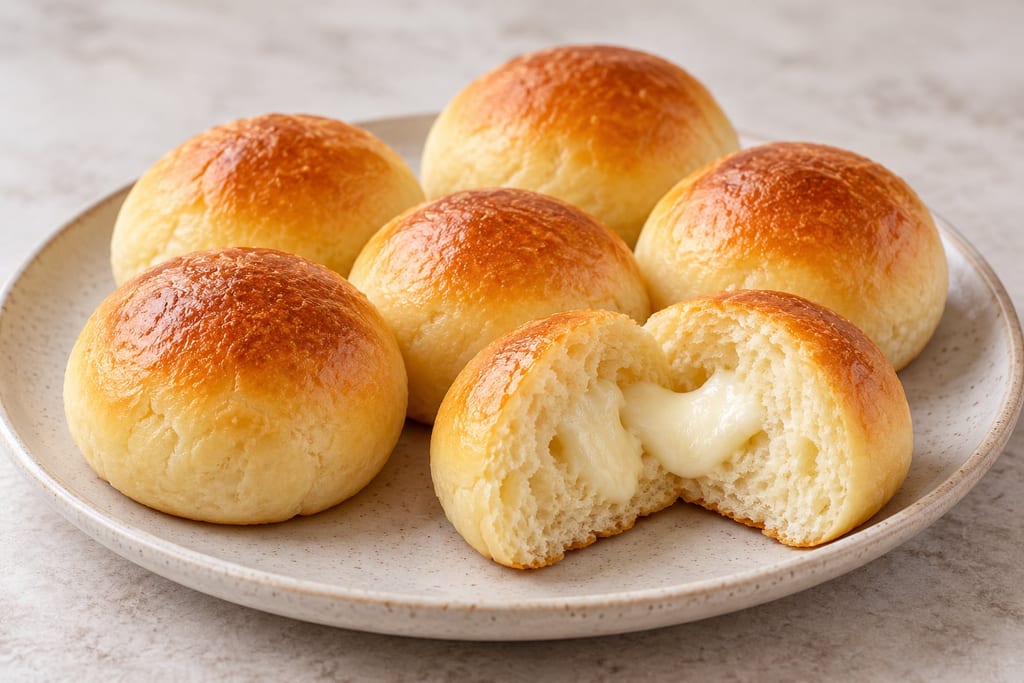
Brazilian pão de batata
Soft Brazilian yeast rolls use cooked mashed potato in an enriched dough, with mozzarella cubes enclosed before baking.
 FermenteaWhere food goes to change
Modern method
Pão de queijo · Brazilian cheese buns
Scooped tapioca-starch buns made by scalding the starch, then beating in garlic, cheese and eggs. This named version has no dough-fermentation stage.
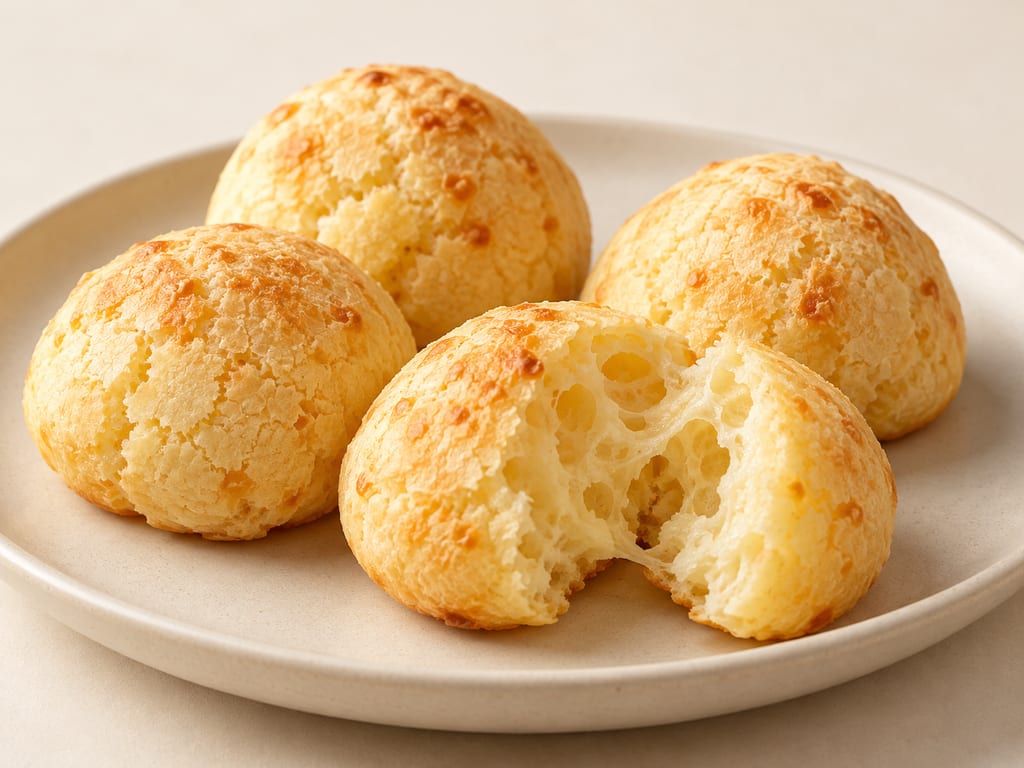
Pão de queijo is a Brazilian cheese bun made from tapioca starch rather than wheat flour. The dough is a soft, glossy paste that holds its shape when scooped, and the baked buns are small, round and golden, with a cheese-flavoured crumb.
This named version comes from a King Arthur Baking card by Ricardo Gonzalez. It adds garlic and a hard grating cheese to the dough, which sets it apart from versions built on different cheeses or starch treatments.
The method starts by boiling butter, water, milk and salt, then beating that hot liquid into the tapioca until the mixture is smooth. The hot liquid is what makes the starch cohesive before the garlic, cheese and eggs are added.
Tapioca starch from different brands absorbs liquid differently. The card therefore adds more tapioca only as needed, with no stated amount, until the dough holds its shape.
The ingredient list names no yeast, culture or chemical leavener, and the author gives no mechanism for the rise. This version has no dough-fermentation stage, so it is recorded as not fermented. Structure is attributed to the tapioca, not to a raising agent.
The eggs are beaten in gradually after the dough has cooled enough to take them, and the card's test is the dough's texture rather than a timing.
The card makes 18 to 20 buns, with about 10 minutes of hands-on work, 20 minutes of baking and 30 minutes in total, at 375 °F (190 °C). Two-tablespoon portions are spaced about 1 1/2 inches apart and baked until they are freckled and beginning to colour.
The aged hard cheeses in the card (Parmesan, Romano or aged Asiago) contribute salt and savour; the card names no substitute cheese.
The author advises wrapping leftover buns, keeping them at room temperature for a couple of days or freezing them for longer, and rewarming briefly before eating. This advice is the author's own and is not independently tested, so no shelf life is recorded here.
Ricardo Gonzalez's Brazilian cheese-bun recipe shared with King Arthur; a companion account was published February 2010. No earliest historical attestation is established.
Scaling: source batch only
Uncooked eggs may contain harmful bacteria.
Hazard sourceDo not taste raw dough. Keep flour away from ready-to-eat foods and clean hands, utensils and surfaces after handling.
Control sourceBoiling liquid can burn; handle the scald and mixer carefully. Do not taste raw egg dough. Brown speckles are not proof of safety; bake time is not a validated internal-temperature endpoint. Publisher room-temperature storage advice is not an independently validated shelf-life guarantee.
Country-level association; no precise birthplace inferred.
Soft Brazilian yeast rolls use cooked mashed potato in an enriched dough, with mozzarella cubes enclosed before baking.
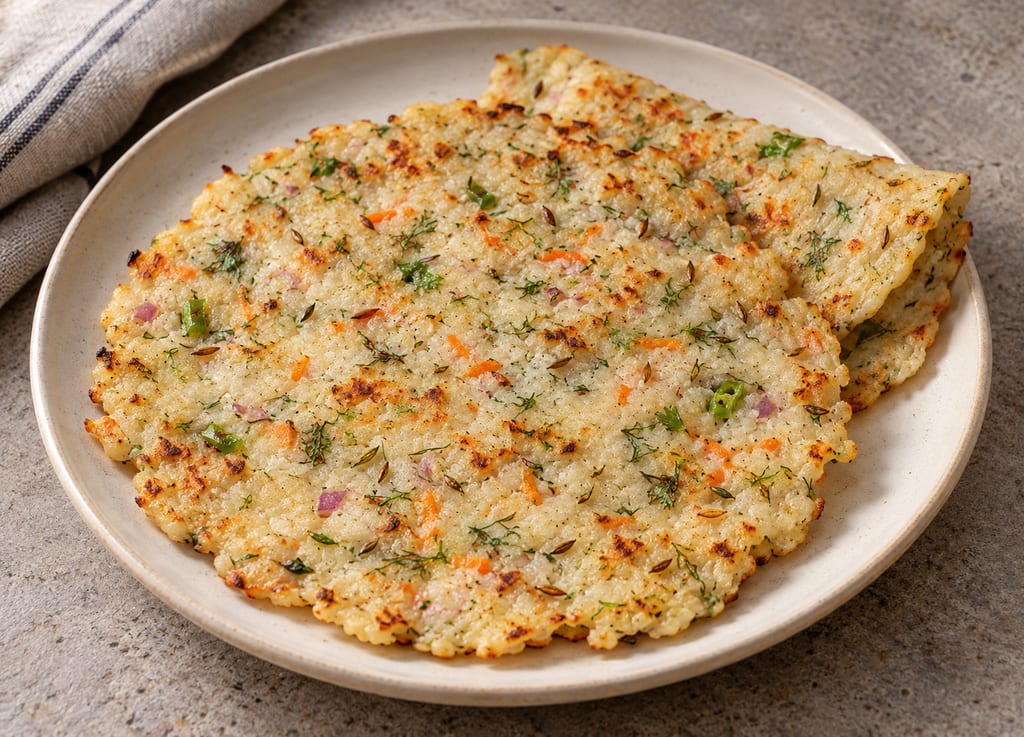
This Karnataka-style akki rotti mixes fine rice flour with vegetables, coconut, herbs and spices, then hand-pats and griddle-cooks the dough.
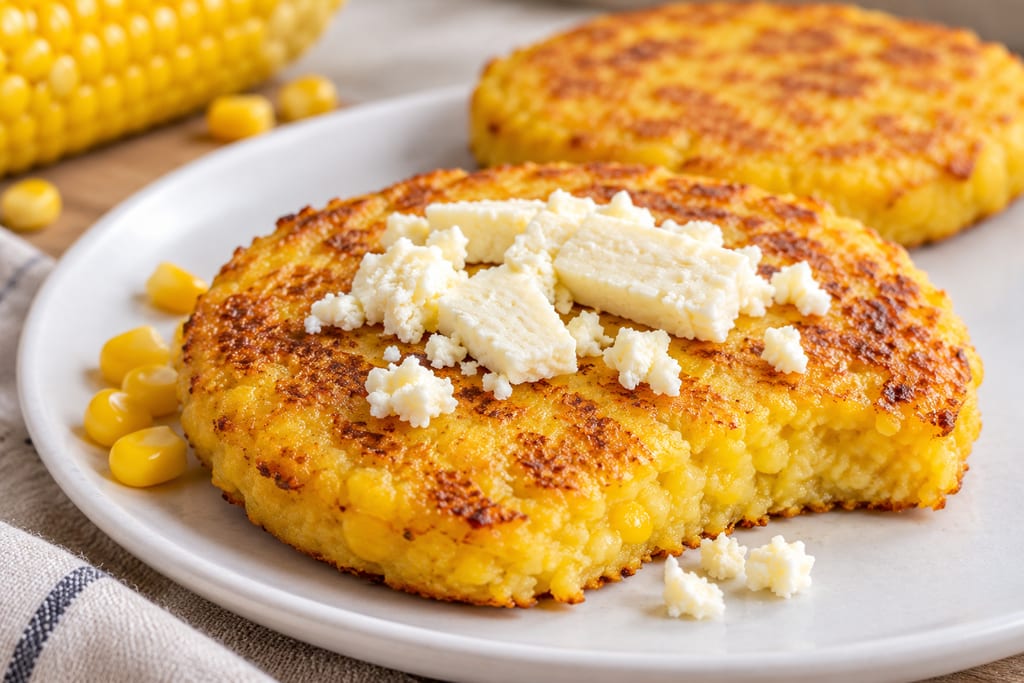
A Colombian Andean griddle cake made from fresh sweet-corn batter, cooked in butter and served with white cheese.
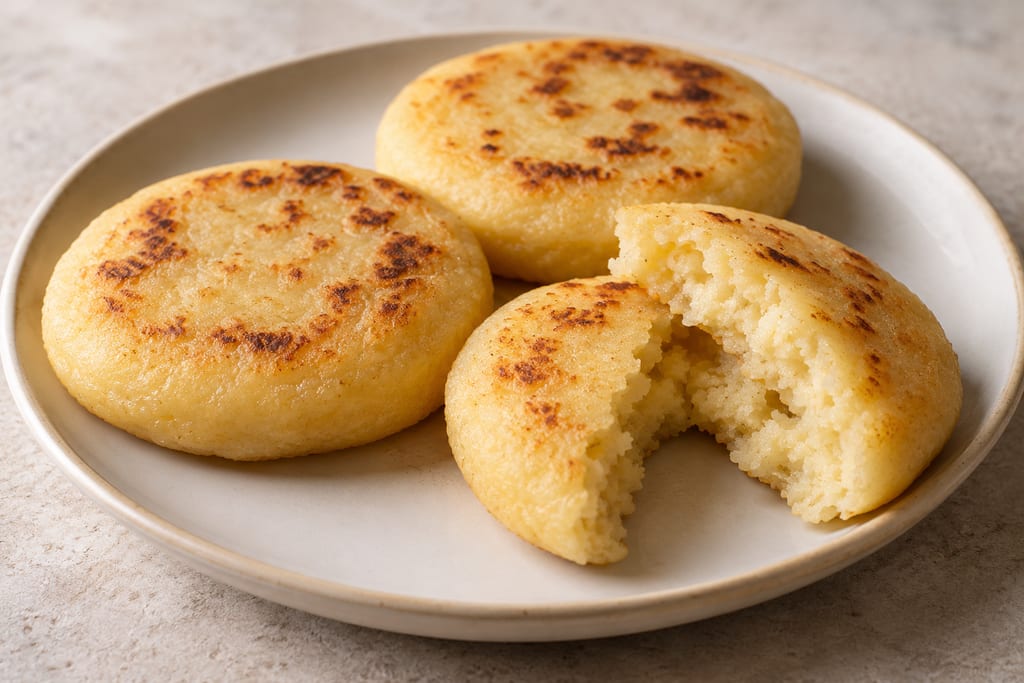
This household version combines precooked corn flour, warm water and salt, then cooks thick rounds on a lightly oiled skillet or griddle. It is one source-specific arepa method, not a universal Colombian or Venezuelan formula.
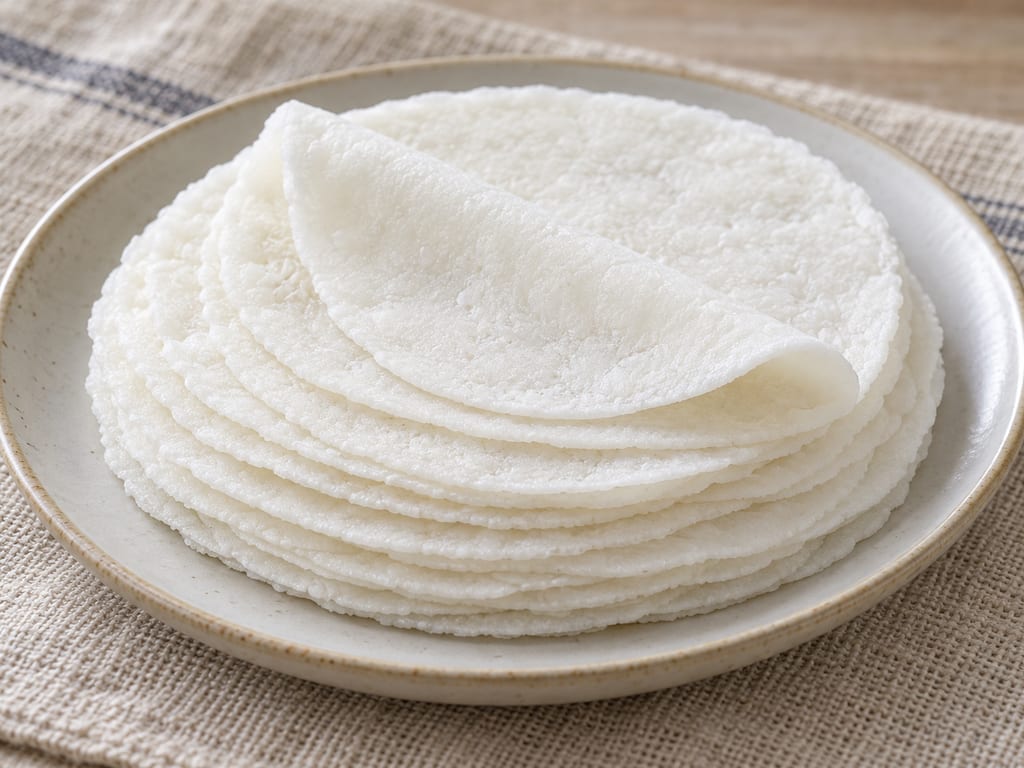
Thin Malabar rice-flour rounds made from roasted rice flour cooked into salted boiling water, kneaded after cooling, and rolled to about 1 mm. They cook on a hot griddle without taking on colour.
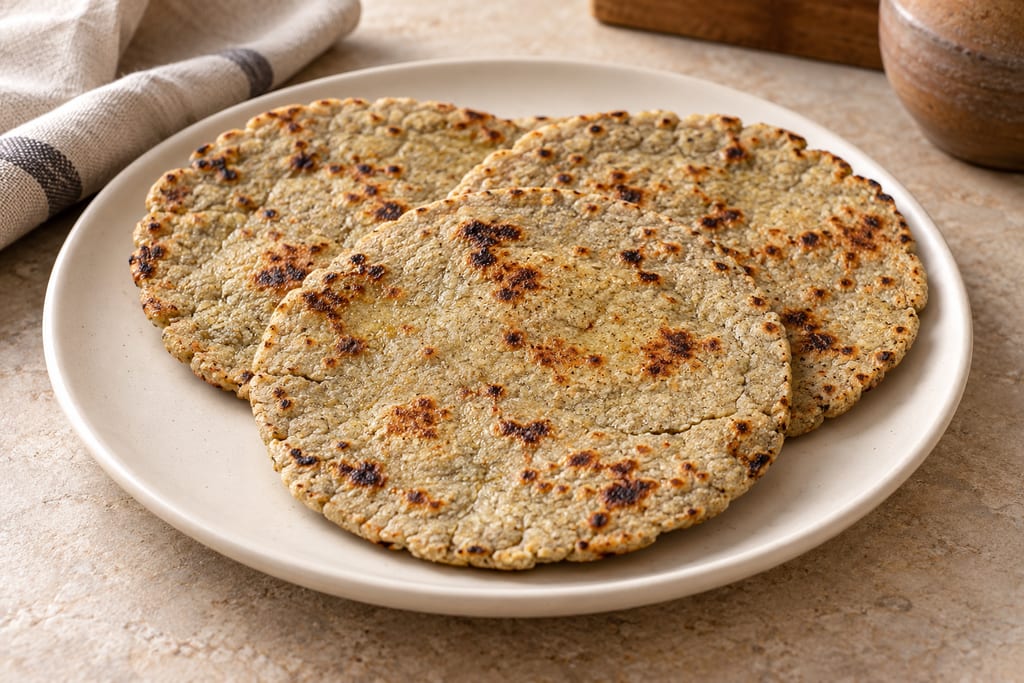
A pearl-millet flatbread shaped between sheets and cooked on a hot tawa. This home batch makes eight.
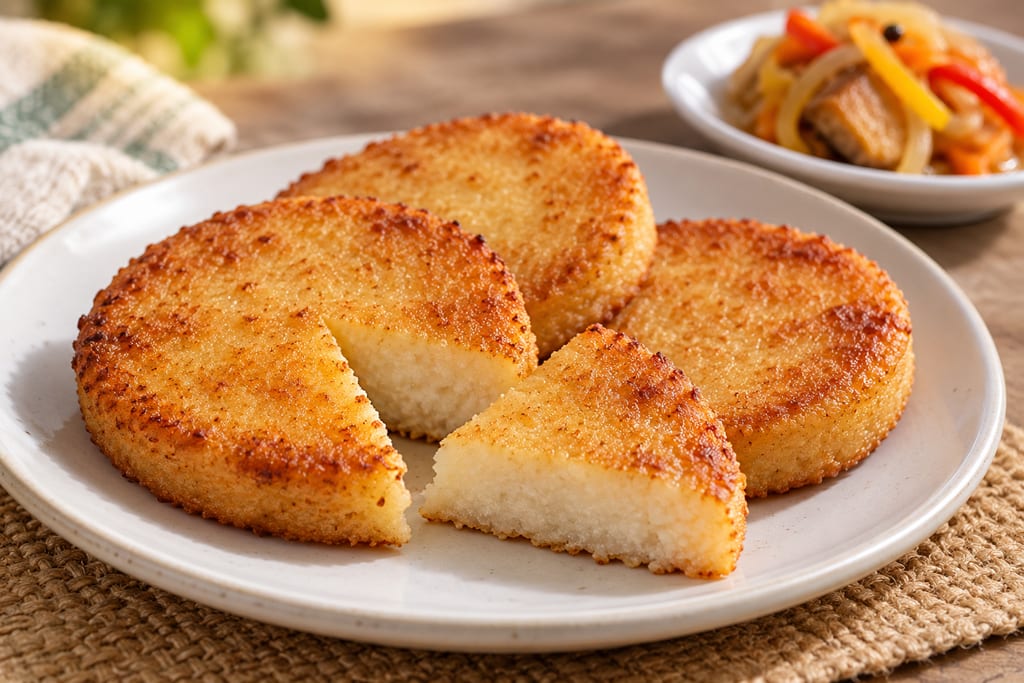
A serving method for approved, prepared bammy rounds: soak them in coconut milk and refry until golden. It does not process raw cassava.
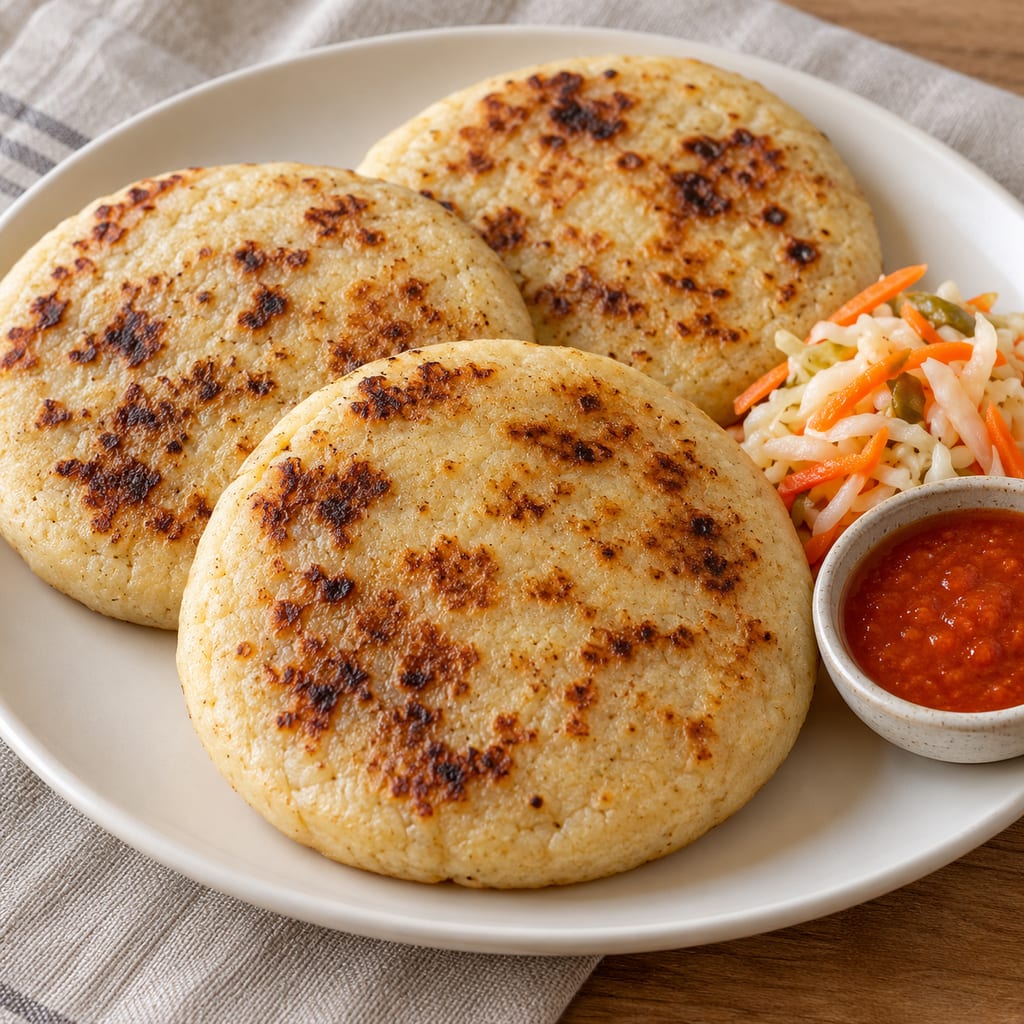
Salvadoran-style masa harina cakes filled with refried beans and cheese, sealed and cooked on an oiled skillet.
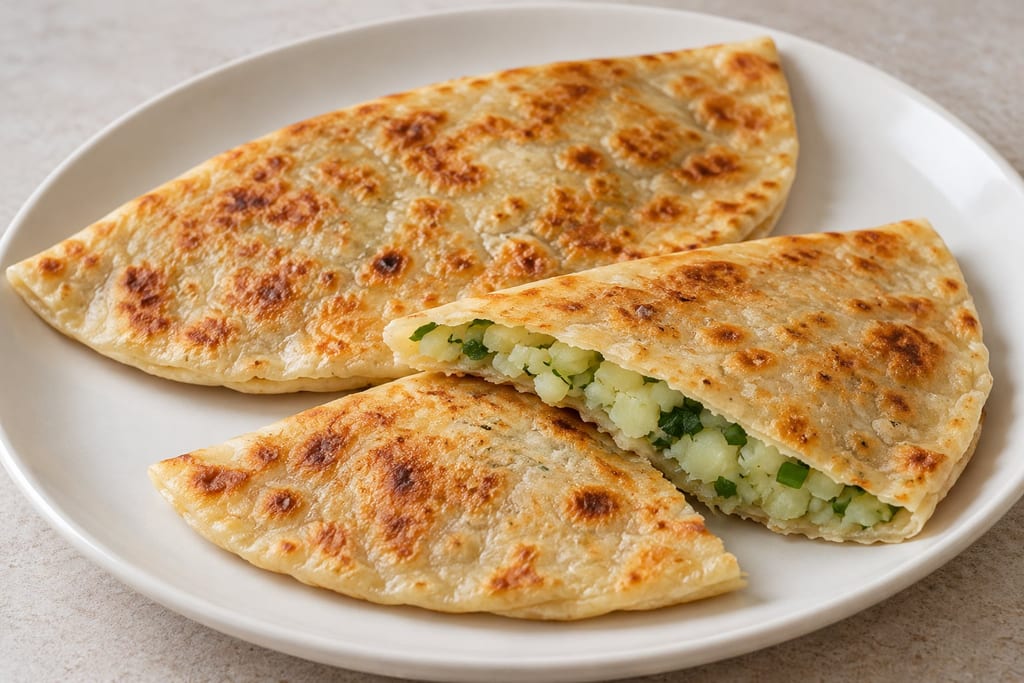
A thin, unleavened Afghan flatbread filled with mashed potato, scallion and cilantro, folded and pan-browned. This version uses a dough made from scratch.
No community contributions have been published for this entry yet.
Sign in to contribute. Published comments and photos are free to read.
King Arthur BakingRecipe · Identity · Geography
Brazilian Cheese Buns (Pão de Queijo)Full ingredient list including two eggs, scalding, cooling, absorption correction, portioning and bake.
Cited in: What it is; Scalding the starch; Leavening; Heat and shaping; Storing leftovers
King Arthur BakingMethod context · Provenance
Pão de QueijoBrazilian contributor Ricardo Gonzalez, 2010 publication and starch absorption differences.
U.S. Food and Drug AdministrationSafety
Handling Flour Safely: What You Need to KnowRaw flour hazards and handling.