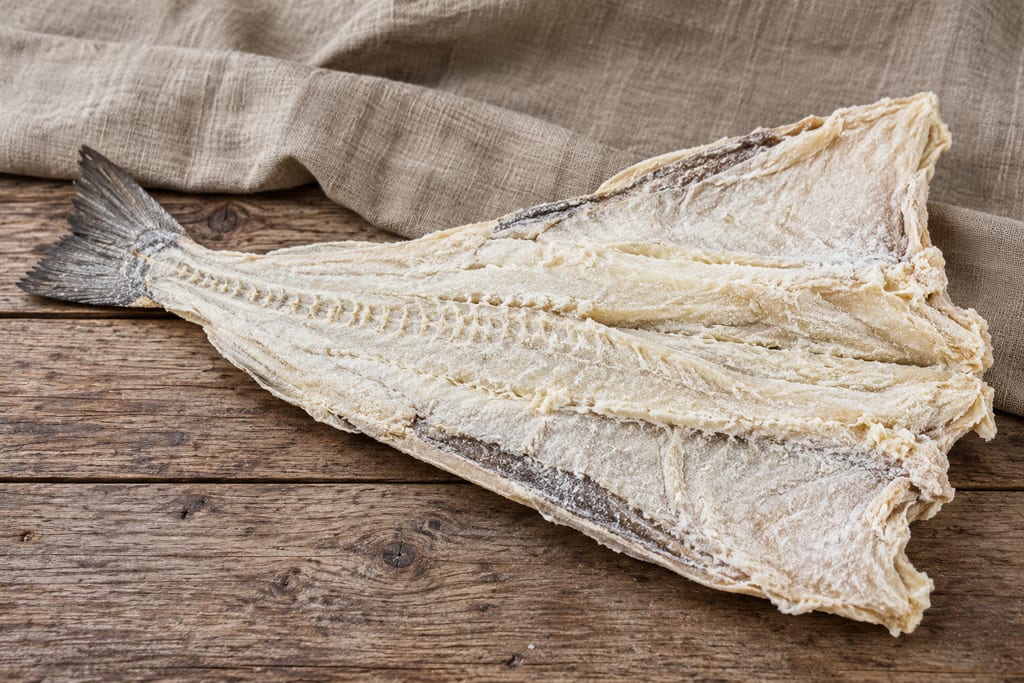
Dried salted cod
Cod split, salted and dried on flakes until hard, a long-keeping fish that must be desalted and rehydrated before use; the salting and the extensive drying together make it portable where light salting or partial drying does not.
 FermenteaWhere food goes to change
Built structures · Terraces, platforms and stands
flake · fish flake · cod-drying flake
A Newfoundland flake was an open wooden platform where split, salted cod was laid in the sun to dry. It belongs to the historic coastal fishery, not to smokehouses.
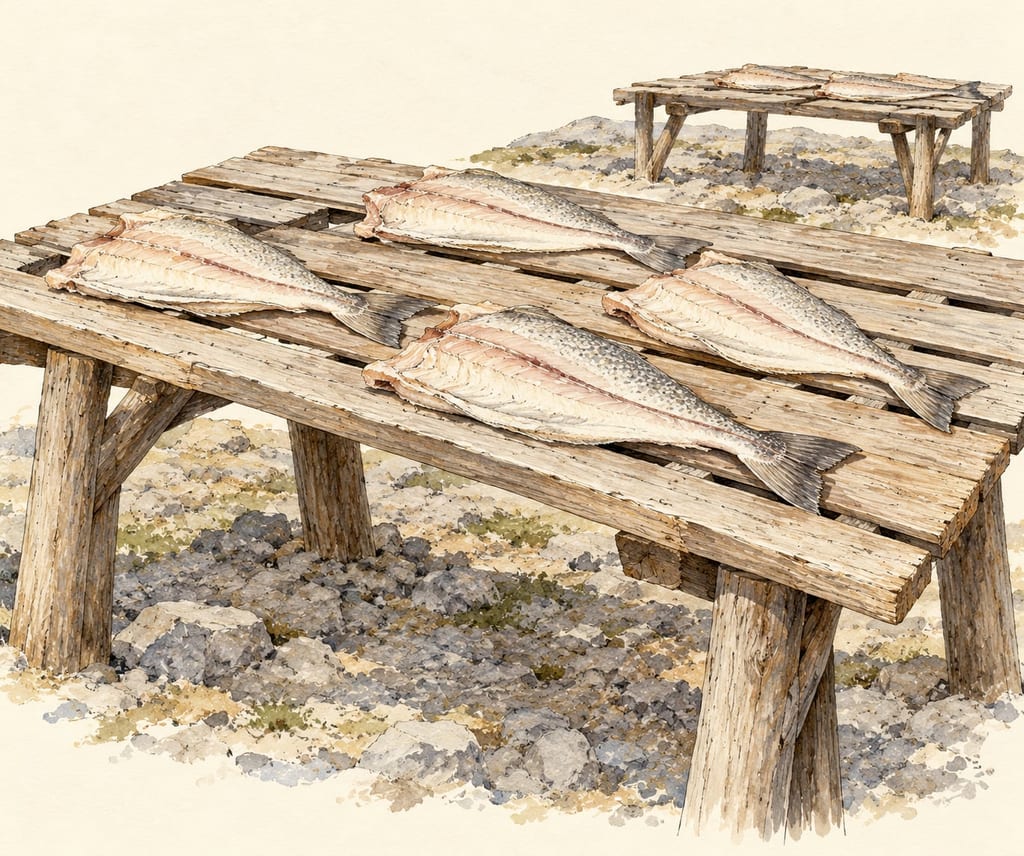
A flake was an outdoor wooden platform used to dry split salted cod in Newfoundland's historic fishery. It was part of the shore infrastructure where fish was cured after landing. The source material describes wooden flakes but does not set out one standard design.
The Newfoundland and Labrador Heritage account says split, salted cod was spread on wooden flakes in the sun. A Canadian fisheries report from 1893 refers to drying hurdles set parallel to one another, with room for workers to move around them. Together these sources support a raised, open wooden support structure; they do not establish a fixed height, surface material or pole spacing for every flake.
The heritage account describes the inshore catch being split, salted and left to dry in the sun, a process that could take weeks. Fish was brought inside whenever rain threatened. The flakes therefore belonged to a wider seasonal fishery and household shore-work system, not to an enclosed processor. The sources do not turn that historical context into a validated current method.
The attached public-domain photograph shows a flake-and-barrel heritage display at Signal Hill, photographed in 2002; it is not an operating nineteenth-century drying yard. A linked university-backed heritage page separately documents historical cod-drying images from Newfoundland. The generated hero is an editorial reconstruction of the wooden platform form, not a photograph or construction plan.
Newfoundland and Labrador Heritage describes split salted cod spread on wooden flakes in the nineteenth-century inshore fishery; historical images are dated before 1892 and 1898. A Canadian fisheries report from 1893 describes wooden hurdles for cod drying.
A build is made where it stands: moving it means building it again.
The sources describe the fishery at regional scale; no single locality or universal flake layout is claimed.
Cod split, salted and dried on flakes until hard, a long-keeping fish that must be desalted and rehydrated before use; the salting and the extensive drying together make it portable where light salting or partial drying does not.

A Cap-Pelé boucanière is an Acadian herring-smoking building. The documented Willie Niles example is a one-storey wood-frame structure with a ridge smoke vent and interior bays for hanging fish-bearing cannes.
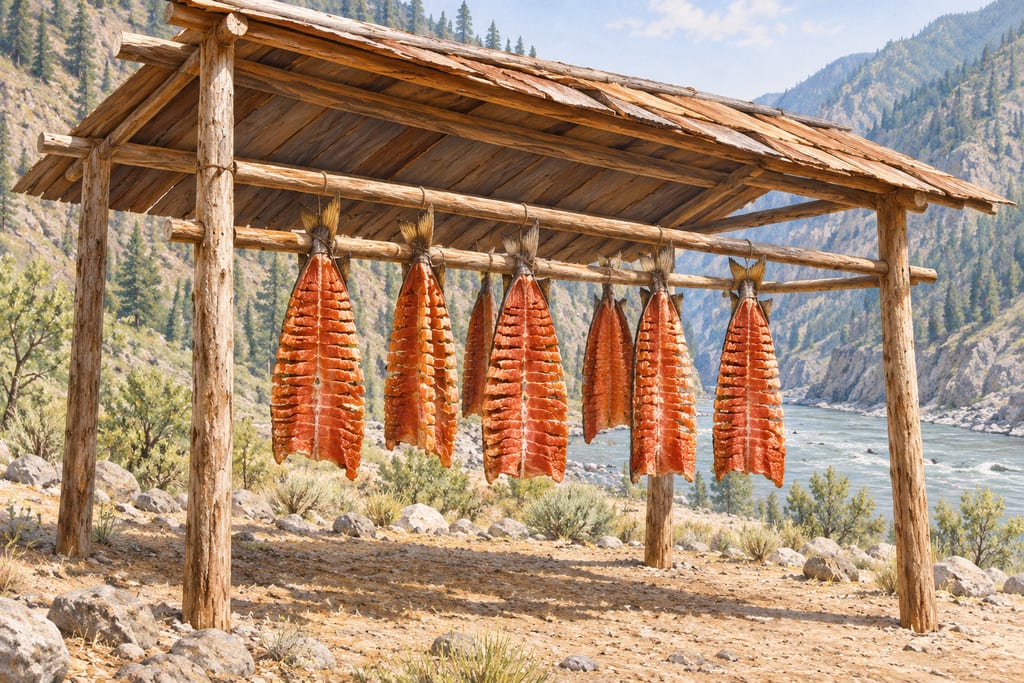
Stó:lō teaching materials describe roofed racks in the exposed Fraser Canyon for wind-drying salmon. Xwísten describes a separate living St’át’imc practice at Bridge River; these sources do not establish one shared rack design.
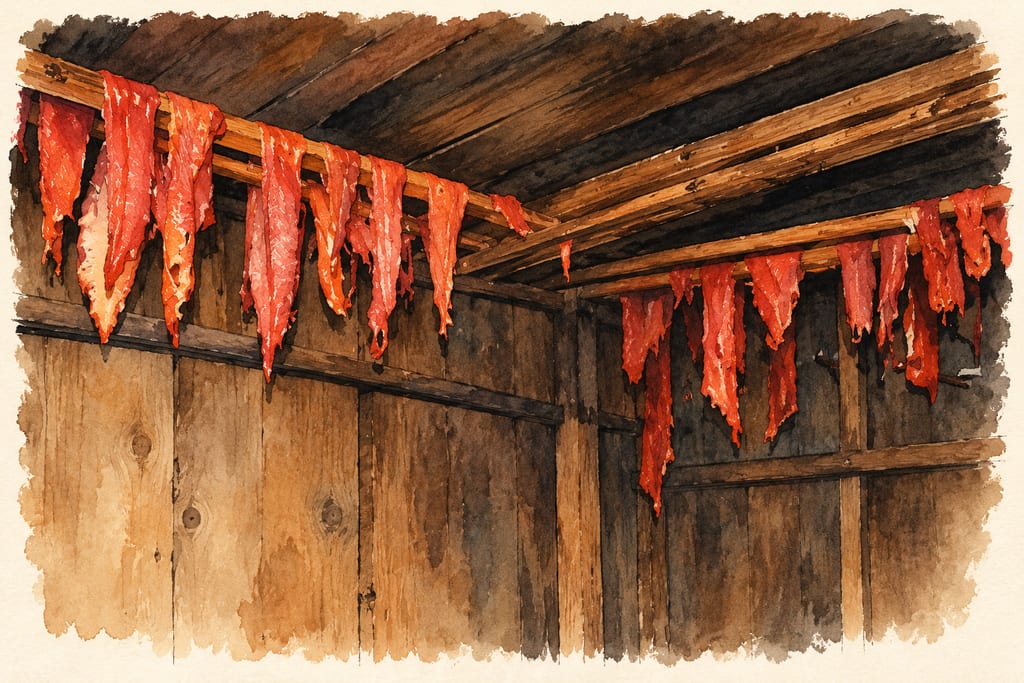
A household smokehouse used for salmon by named Tseshaht and Hesquiaht families near the Somass River. A 2019 report records different supports and smoking outcomes; it gives no standard building plan.
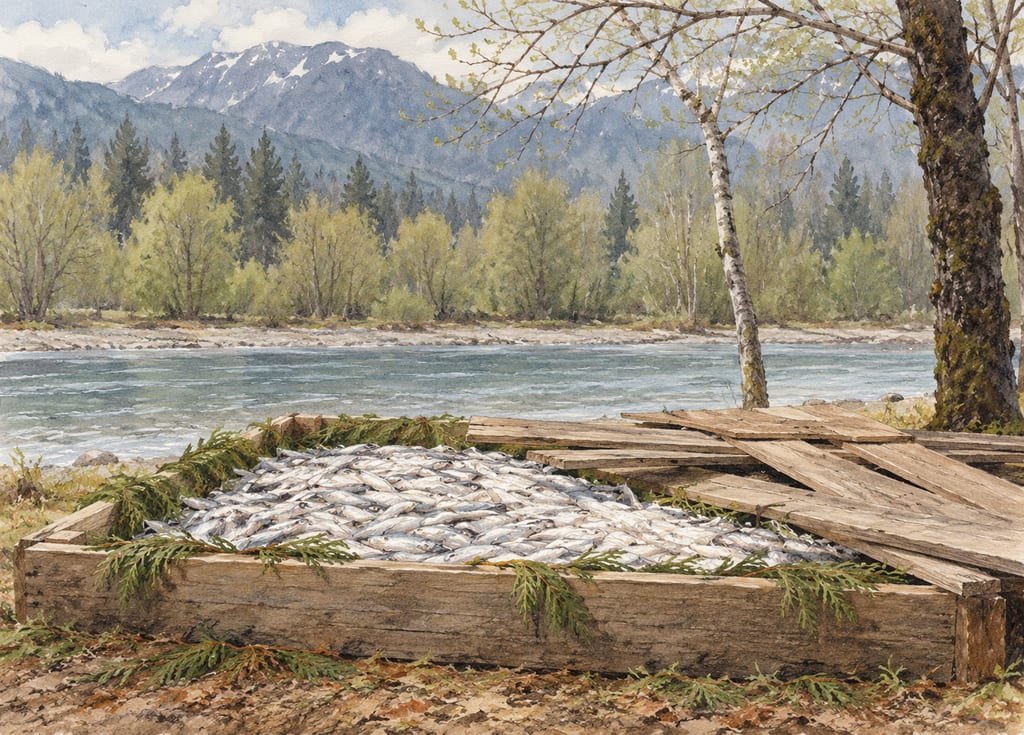
A 2022 study describes Nuxalk families using large, covered cedar-plank bins lined with western redcedar boughs to ripen eulachon beside the river. The later grease-rendering box is a separate structure.

Achcharu is a family of Sri Lankan vinegar pickles made with mixed vegetables or seasonal fruit and a piquant spice dressing. This version is a quick, refrigerated, non-fermented mixed-vegetable pickle.

The acocote is a long, hollowed and dried gourd used to draw aguamiel from a mature maguey. It is a harvesting tool: the sap is transferred to a separate vessel before it ferments into pulque.

Adrak murabba preserves young ginger in sugar syrup, a sweet South Asian preparation recorded in Indian cookery and food-processing sources.

Parkia biglobosa seeds are fermented into regional West African seasonings, including nététou, iru, dawadawa and soumbala. The yellow fruit pulp is a separate food, and names and methods vary by place.

Japanese reddish-brown vinegar from sake lees matured about three years, turned to vinegar by acetic bacteria; the vinegar of Handa and Edomae sushi rice.

A refined common-wheat flour blended for a broad range of baking; its protein and behavior vary with wheat, milling and market.

The almond mushroom, Agaricus subrufescens, was cultivated in eastern North America in the 1800s, lost its market, and returned as a cultivated mushroom from Brazil, where it is grown under several names.
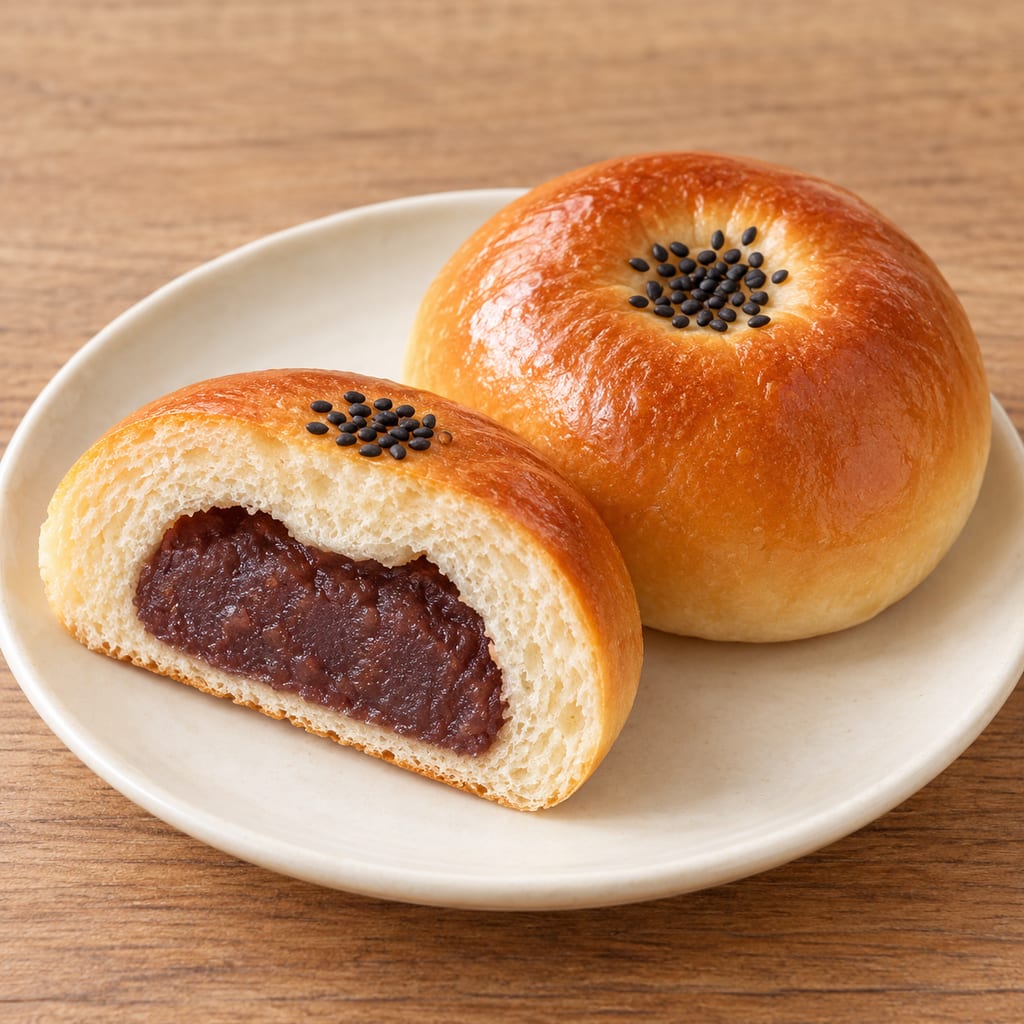
Anpan is a soft wheat bun filled with sweet red-bean paste and finished with egg wash and black sesame. This dough rises with commercial instant yeast.
No community contributions have been published for this entry yet.
Sign in to contribute. Published comments and photos are free to read.
Newfoundland and Labrador Heritage Web Site; Memorial University of NewfoundlandHistory · Use · Geography · Visual reference
19th Century Cod FisheriesNineteenth-century inshore cod was split, salted and laid on wooden flakes to dry in the sun.
Drying could take weeks and the family brought the fish inside whenever it rained.
The page shows a St. John's salt-cod drying image dated before 1892 and a separate image of cod drying on flakes dated before 1898.
Cited in: An open platform in the Newfoundland cod fishery; Wooden supports and an exposed drying surface; A seasonal shore-work structure; The images distinguish a display from a working yard
Department of Marine and Fisheries, CanadaStructure · Historic context
26th Annual Report of the Department of Marine and Fisheries (1893)The report calls cod-drying supports hurdles or flakes, describes them as set parallel with space for workers, and records fish being spread, gathered overnight and returned to dry.
The report supplies period process context, not a universal construction specification.
Cited in: Wooden supports and an exposed drying surface
Newfoundland and Labrador Heritage Web Site; Memorial University of NewfoundlandHistorical context · Geography
Lifestyle of Fishers, 1600-1900The heritage account describes flakes as part of the coastal infrastructure built for curing fish and says shore crews spread fish on flakes or beaches to dry in sun and air.
Cited in: An open platform in the Newfoundland cod fishery; A seasonal shore-work structure
Wikimedia CommonsVisual reference · Rights
File:Carlb-nfld-codflakes.jpgThe public-domain photograph depicts a cod-flake heritage display at Signal Hill, photographed in June 2002; it is not an operating drying yard.
Cited in: The images distinguish a display from a working yard