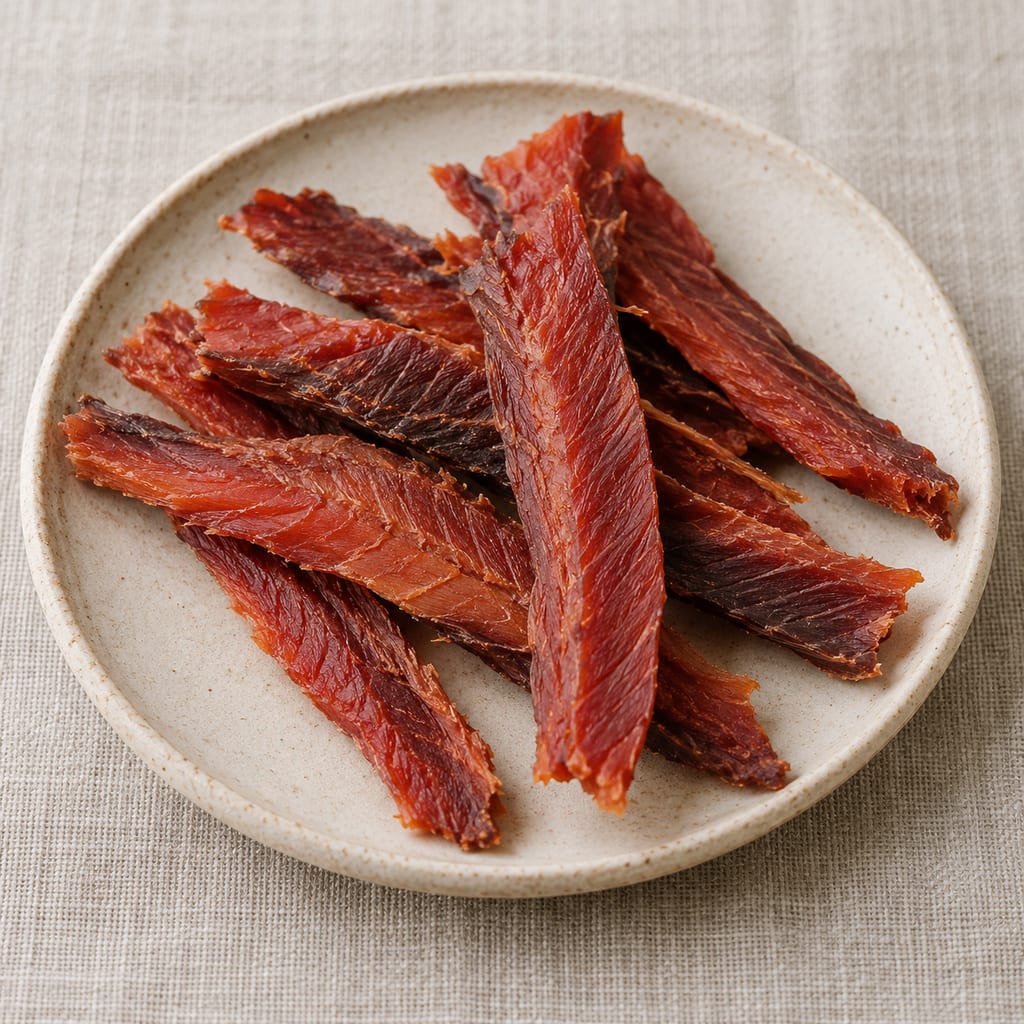
Fraser Canyon wind-dried salmon
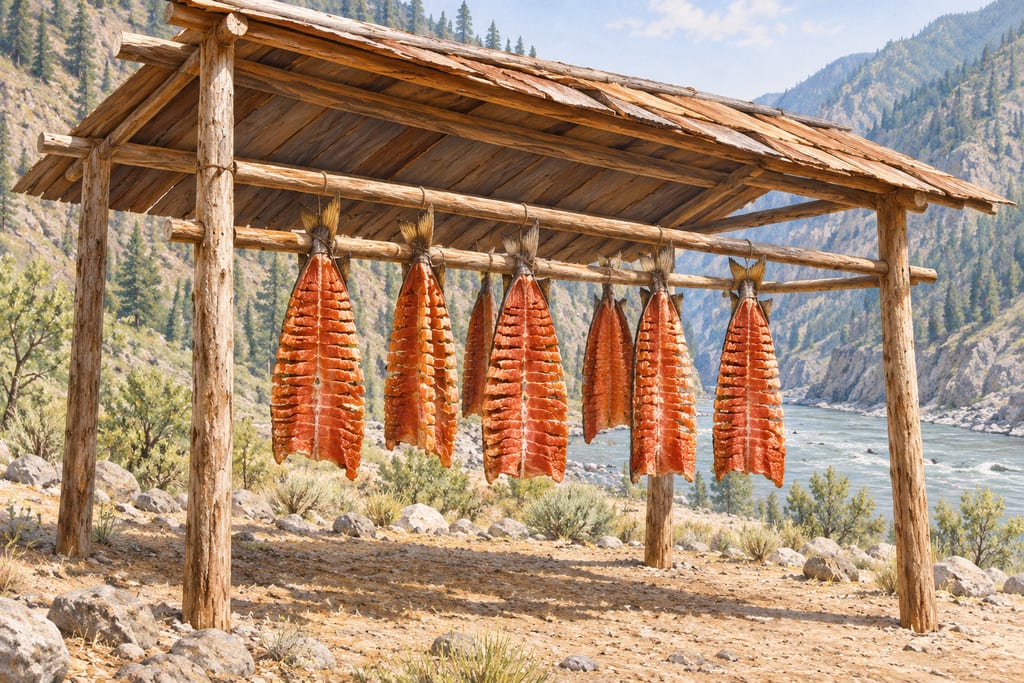
Salmon opened, scored and hung on roofed racks in the dry canyon winds of the Fraser River: slhíts'es in Stó:lō documentation, sts'wan in St'át'imc records.
 FermenteaWhere food goes to change
Built structures · Terraces, platforms and stands
Covered salmon wind-drying rack · Fraser Canyon salmon drying rack · Stó:lō wind-drying rack
Stó:lō teaching materials describe roofed racks in the exposed Fraser Canyon for wind-drying salmon. Xwísten describes a separate living St’át’imc practice at Bridge River; these sources do not establish one shared rack design.
Descriptive record only; not a construction plan or validated fish-preservation process.
Stó:lō teaching materials describe roofed racks and wind-dried salmon in the Fraser Canyon. A 1961 UBC Laboratory of Archaeology Archives item is catalogued as a Fraser Canyon salmon drying rack; its record is a geographic and form reference, not proof of one standardized design.
Xwísten identifies Bridge River as past and current St’át’imc fishing grounds and describes wind-dried salmon as a living practice. This separate tradition is not treated as the same roofed rack form described in the Stó:lō teaching source.
Salmon opened, scored and hung on roofed racks in the dry canyon winds of the Fraser River: slhíts'es in Stó:lō documentation, sts'wan in St'át'imc records.

A Cap-Pelé boucanière is an Acadian herring-smoking building. The documented Willie Niles example is a one-storey wood-frame structure with a ridge smoke vent and interior bays for hanging fish-bearing cannes.
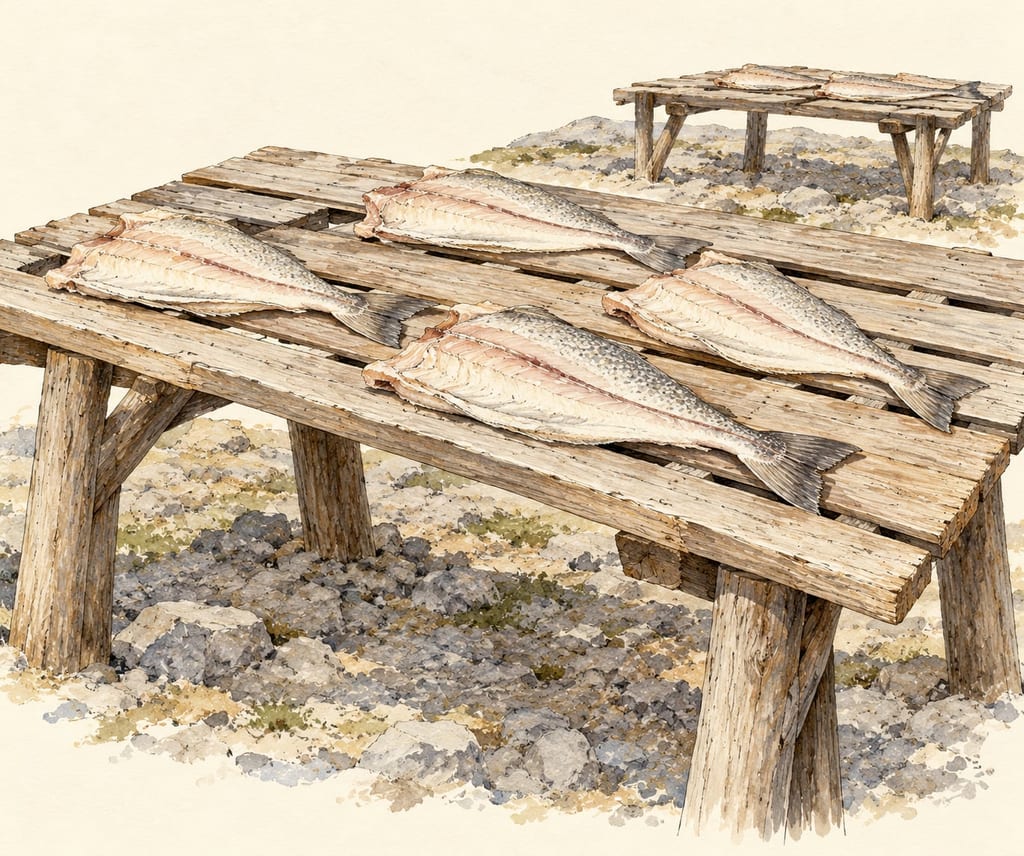
A Newfoundland flake was an open wooden platform where split, salted cod was laid in the sun to dry. It belongs to the historic coastal fishery, not to smokehouses.
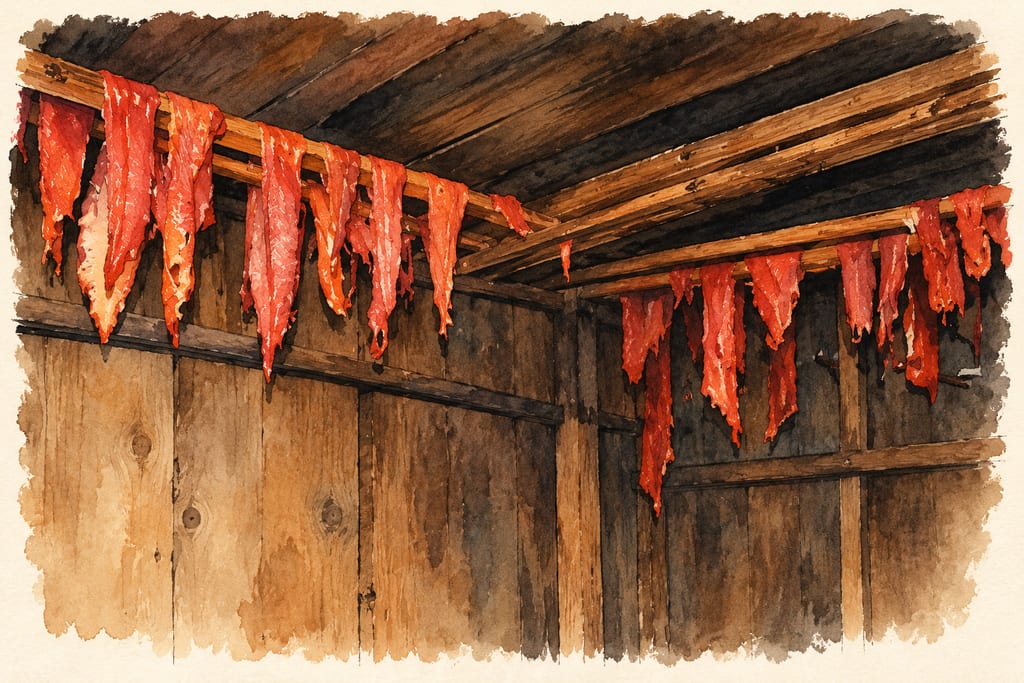
A household smokehouse used for salmon by named Tseshaht and Hesquiaht families near the Somass River. A 2019 report records different supports and smoking outcomes; it gives no standard building plan.
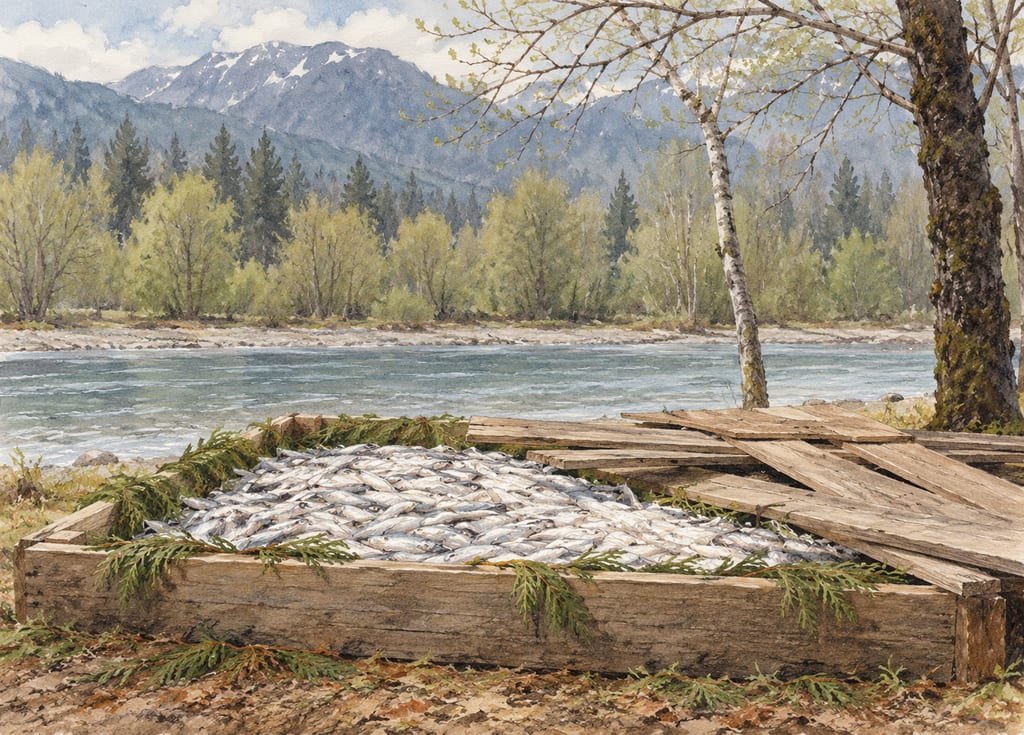
A 2022 study describes Nuxalk families using large, covered cedar-plank bins lined with western redcedar boughs to ripen eulachon beside the river. The later grease-rendering box is a separate structure.
No community contributions have been published for this entry yet.
Sign in to contribute. Published comments and photos are free to read.
University of Victoria Ethnographic Mapping LabForm · Use · Geography · Terminology
Stó:lō Food Preservation and PreparationThe resource names slhits’es as wind-dried salmon and distinguishes it from smoked salmon.
It describes roofed racks in exposed Fraser Canyon settings, with the roof protecting fish from rain and direct sun; it also records exchange with smoked salmon from elsewhere.
Xwísten Experience ToursGeography · Current use
Xwísten Experience Tours — Bridge River Fishing GroundsThe site identifies the Bridge River Xwísten fishing grounds as the past and current fishing area of the St’át’imc people and says traditional wind-dried salmon remains in use.
The site lists a demonstration of cutting St’át’imc salmon for hanging and wind drying; it does not specify a universal rack design.
Xwísten Experience ToursVisual reference · Method · Geography
Tour Packages — Xwísten Experience ToursXwísten describes a fish-cutting demonstration for St’át’imc wind-dried salmon at the Bridge River fishing grounds.
Government of British ColumbiaForm · Geography · Use
Stl’atl’imx Tribal Police Service ReviewThe 2007 review describes St’át’imc fish camps on the Fraser River and reports salmon cut into strips and hung on a rack to wind-dry; its reported weather-dependent time is not treated as a safety endpoint.
Laboratory of Archaeology Archives, Department of Anthropology, University of British ColumbiaForm · Geography · History
Salmon drying rack. Fraser CanyonThe archive catalogues a 1961 photograph as a Fraser Canyon salmon drying rack; it documents one archival example, not a universal design.