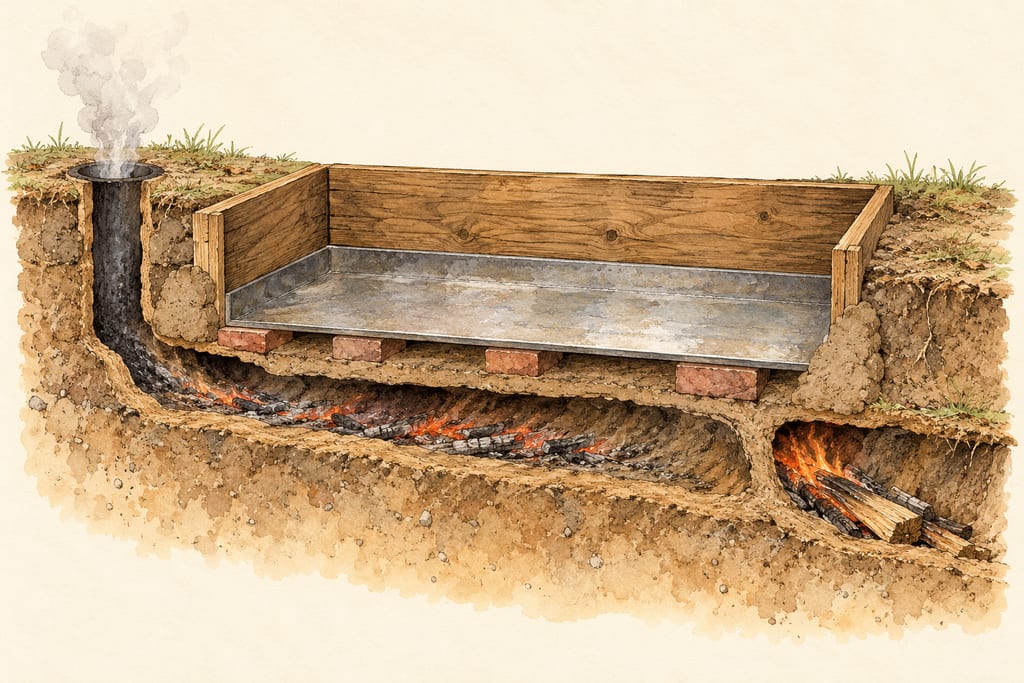
Eulachon rendering box
A separate cooking box heats ripened eulachon so grease rises for skimming. Nuxalk sources describe wooden or cedar sides, a metal bottom and, in one setup, a fire trench beneath the box.
 FermenteaWhere food goes to change
Built structures · Terraces, platforms and stands
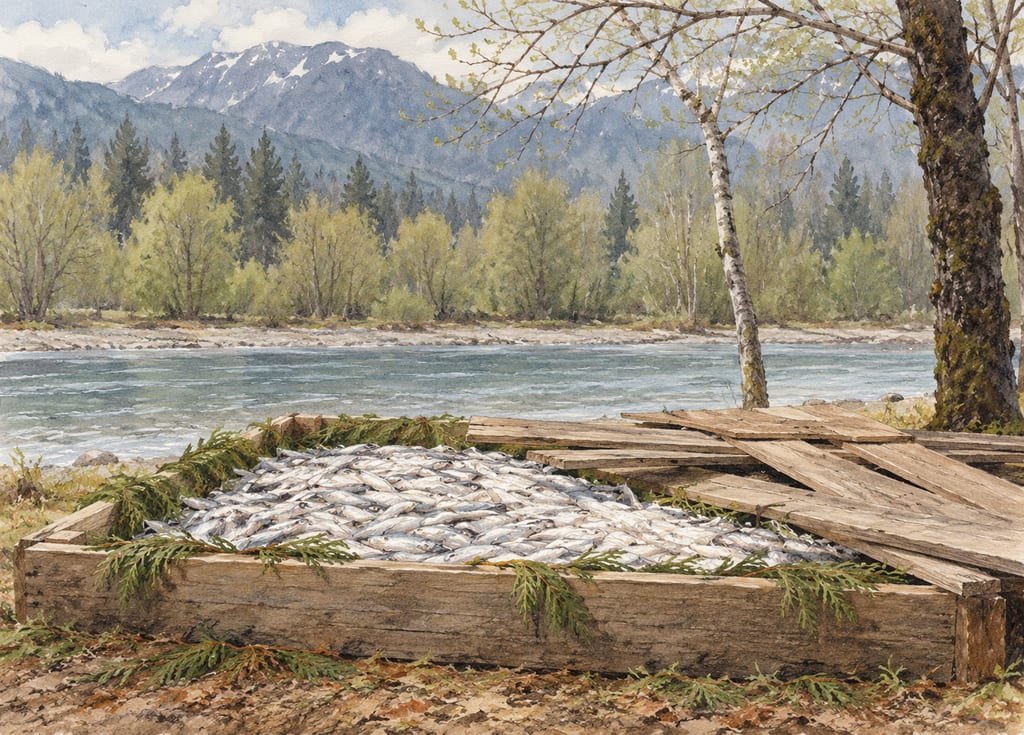
Eulachon ripening bin · Eulachon ripening bin · Nuxalk eulachon bin
A 2022 study describes Nuxalk families using large, covered cedar-plank bins lined with western redcedar boughs to ripen eulachon beside the river. The later grease-rendering box is a separate structure.
Historical and community-specific process description only; not a food-safety recommendation or validated fermentation process.
The article identifies the Nuxalk Nation in the Bella Coola Valley, central coastal British Columbia. It describes family-specific eulachon grease preparation; it does not claim the bin is a general Indigenous or Northwest Coast design.
A separate cooking box heats ripened eulachon so grease rises for skimming. Nuxalk sources describe wooden or cedar sides, a metal bottom and, in one setup, a fire trench beneath the box.

A Cap-Pelé boucanière is an Acadian herring-smoking building. The documented Willie Niles example is a one-storey wood-frame structure with a ridge smoke vent and interior bays for hanging fish-bearing cannes.
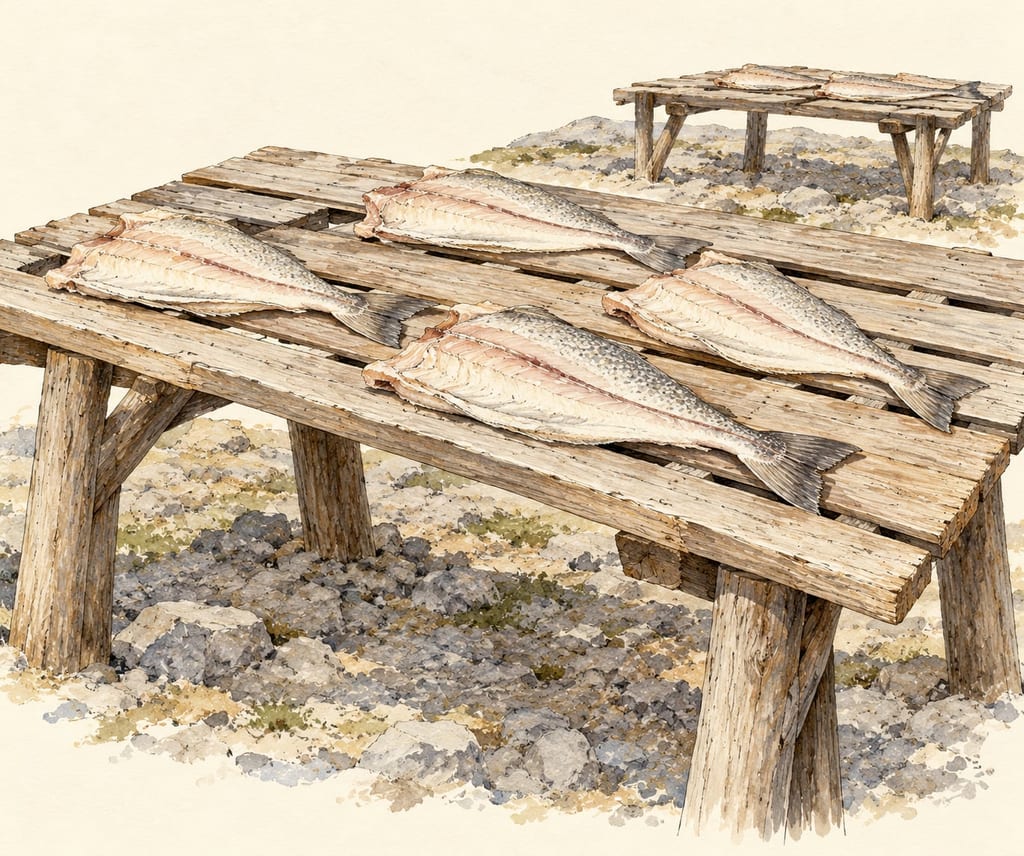
A Newfoundland flake was an open wooden platform where split, salted cod was laid in the sun to dry. It belongs to the historic coastal fishery, not to smokehouses.
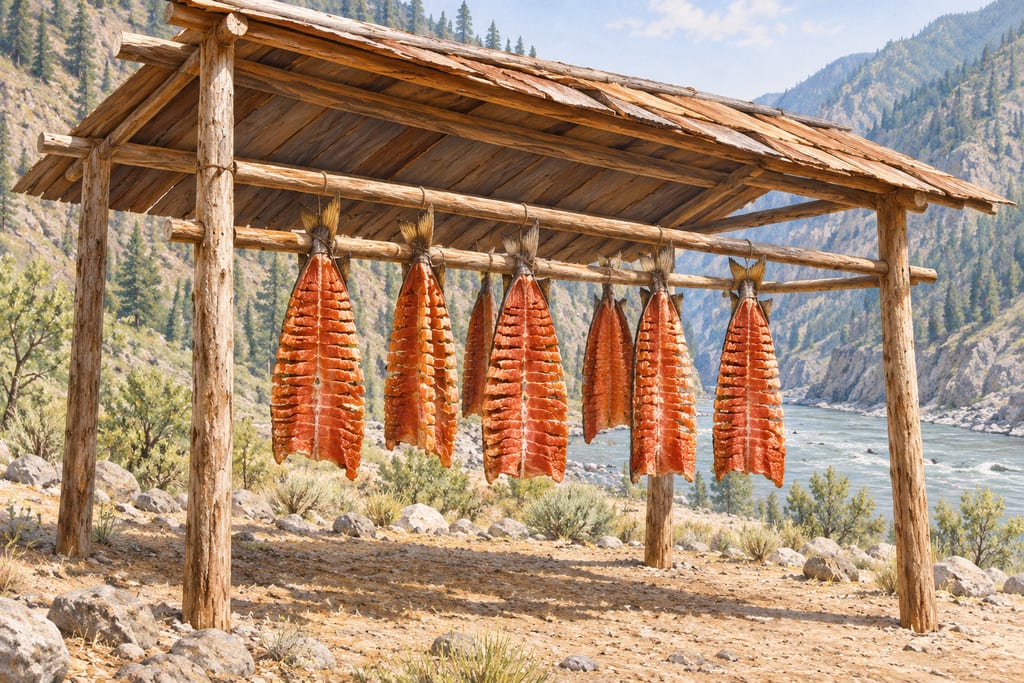
Stó:lō teaching materials describe roofed racks in the exposed Fraser Canyon for wind-drying salmon. Xwísten describes a separate living St’át’imc practice at Bridge River; these sources do not establish one shared rack design.
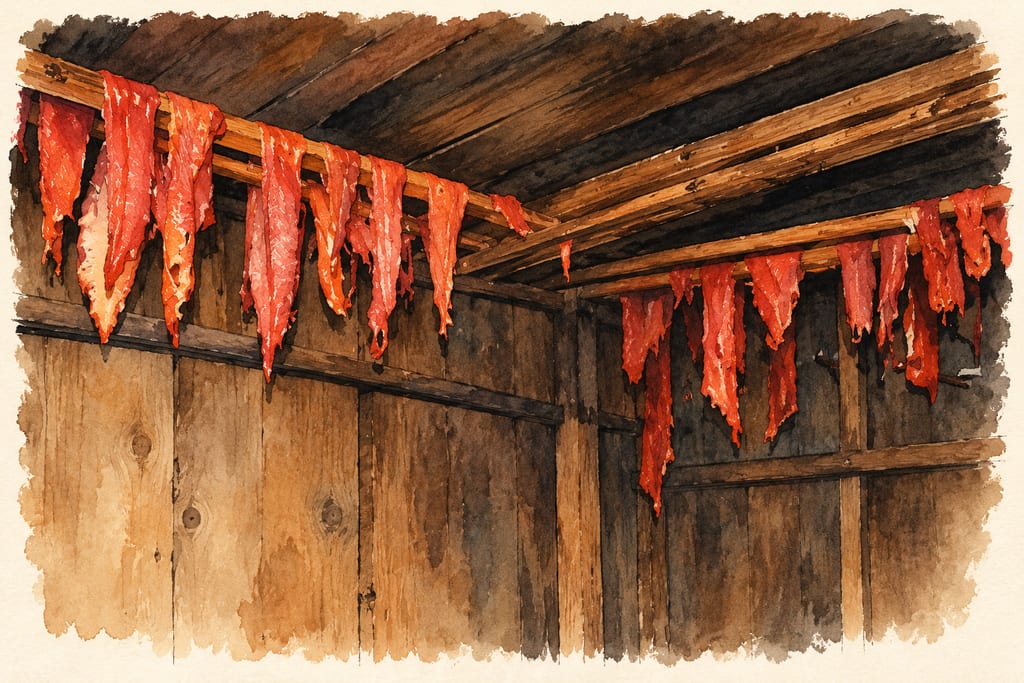
A household smokehouse used for salmon by named Tseshaht and Hesquiaht families near the Somass River. A 2019 report records different supports and smoking outcomes; it gives no standard building plan.
No community contributions have been published for this entry yet.
Sign in to contribute. Published comments and photos are free to read.
Harriet V. Kuhnlein and Sinee Chotiboriboon, Frontiers in Sustainable Food SystemsForm · Materials · Use · Geography · Culture · Visual reference
Why and How to Strengthen Indigenous Peoples' Food Systems With Examples From Two Unique Indigenous CommunitiesThe article describes eulachon as culturally important to Nuxalk identity and wellbeing and notes family-specific preferences in grease preparation.
The Nuxalk account describes cedar-plank bins about 2–3 m square, lined with western redcedar boughs and built on a riverbank; the bins are covered and fish ripen before a separate rendering stage.
The article distinguishes the ripening bin from a second rendering box with a metal floor heated by a fire below.
The article places Nuxalk food-system context in the Bella Coola Valley and central coastal British Columbia. Its CC BY 4.0 licence covers the article and credited figures; Figure 3 is a contextual harvest image, not the bin.