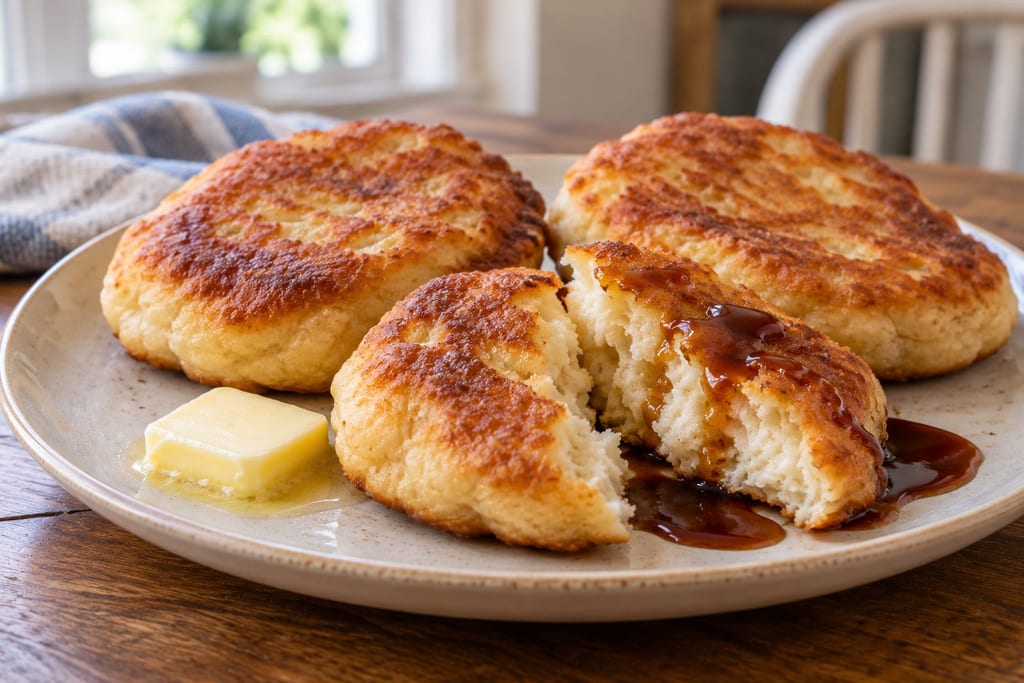
Newfoundland toutons
Rounds of leftover yeasted white bread dough, rested and shallow-fried slowly in canola oil; served warm with butter and molasses.
 FermenteaWhere food goes to change
Lassy bread · Newfoundland lassy bread · Newfoundland molasses raisin bread · Nanny Hemeon's sweet raisin bread
A Newfoundland family-style sweet yeast loaf with molasses, raisins, cinnamon and cloves. This version follows a half-batch adaptation of Nanny Hemeon's family formula; it is not a standard recipe for all Newfoundland households.
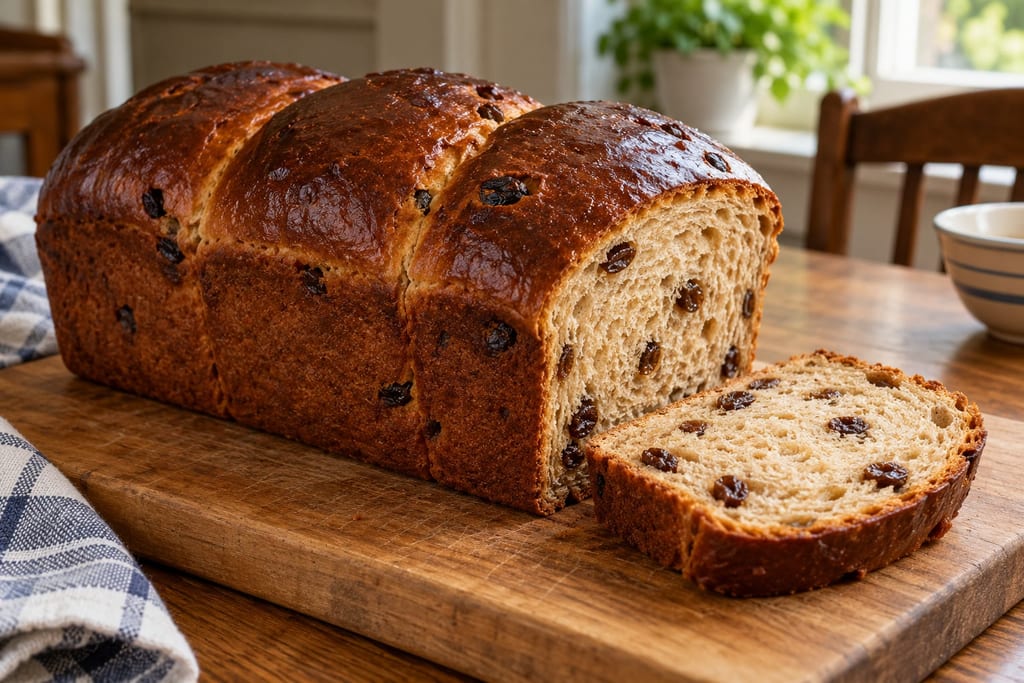
The term lassy bread is documented in Newfoundland English for bread made with molasses. The Canadian Oxford Dictionary lexicographer describes a Newfoundland sweet yeast bread with molasses, raisins and spices; the Dictionary of Newfoundland English cites a 1914 reference to raisins and molasses in whole-wheat bread called lassy bread. A family recipe recorded by Lois Gill identifies her version as Nanny Hemeon's molasses raisin bread and says versions differ from household to household. This page follows that family formula and does not present it as the one standard Newfoundland bread.
Gill's recipe is a wheat-flour yeast dough with molasses, sugar, butter, raisins, cinnamon and cloves, mixed with warm water and kneaded before a long rise. She says this half-batch adapts her family recipe to instant yeast and uses a full 250 g raisin package. The dough is shaped into several loaves or small buns grouped in pans; the source's base bake is low and long. These features distinguish this specific lassy bread from Boston brown bread, which uses a rye, maize and wheat batter raised with baking soda and cooked by steaming or covered baking. It also differs from Belgian cramique, a more enriched yeast loaf made with milk, egg and butter but without molasses or spices. The overlap in raisins does not make them the same preparation.
The recorded family recipe has both an optional second bulk rise and a note about changing the oven setting and bake time for one author's smaller loaves and cooler oven. This version follows the base schedule and keeps that later adjustment separate. It is a family-specific formula, not a claim about every Newfoundland home or bakery.
The Canadian Oxford Dictionary lexicographer describes Newfoundland lassy bread as a sweet yeast bread with molasses, raisins and spices. The Dictionary of Newfoundland English records a 1914 use describing whole-wheat bread with raisins and molasses under the name lassy bread. Lois Gill's source gives one Hemeon family recipe and explicitly notes that many household versions exist; this entry does not generalize her formula to every Newfoundland family.
Yield 3 large loaves (or 4 medium loaves) · Scaling: source batch only
Flour can carry harmful bacteria; do not taste raw dough.
Hazard sourceKeep raw flour and dough away from ready-to-eat food, wash hands and utensils after handling, and bake flour-containing dough before eating.
Control sourceThis is a family-specific home recipe, not a single standard Newfoundland formula.
The source gives no proof temperature and has an oven-specific bake adjustment for smaller loaves. No universal storage period or validated internal bake endpoint is established.
The source identifies this Hemeon family recipe and the lassy-bread name with Newfoundland, but does not establish a more specific place.
Rounds of leftover yeasted white bread dough, rested and shallow-fried slowly in canola oil; served warm with butter and molasses.
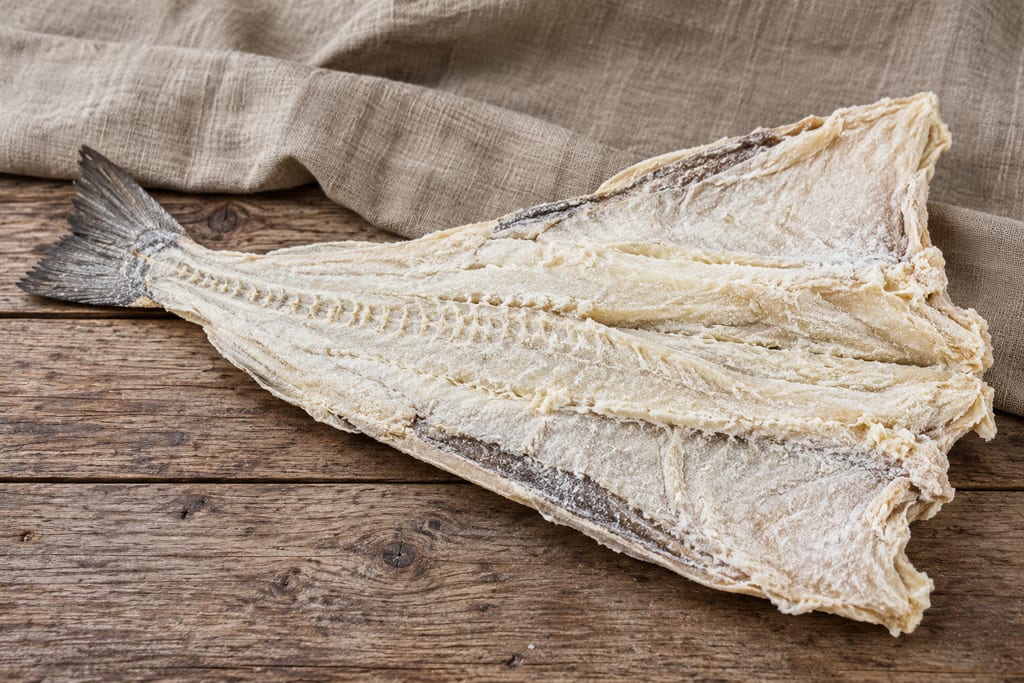
Cod split, salted and dried on flakes until hard, a long-keeping fish that must be desalted and rehydrated before use; the salting and the extensive drying together make it portable where light salting or partial drying does not.
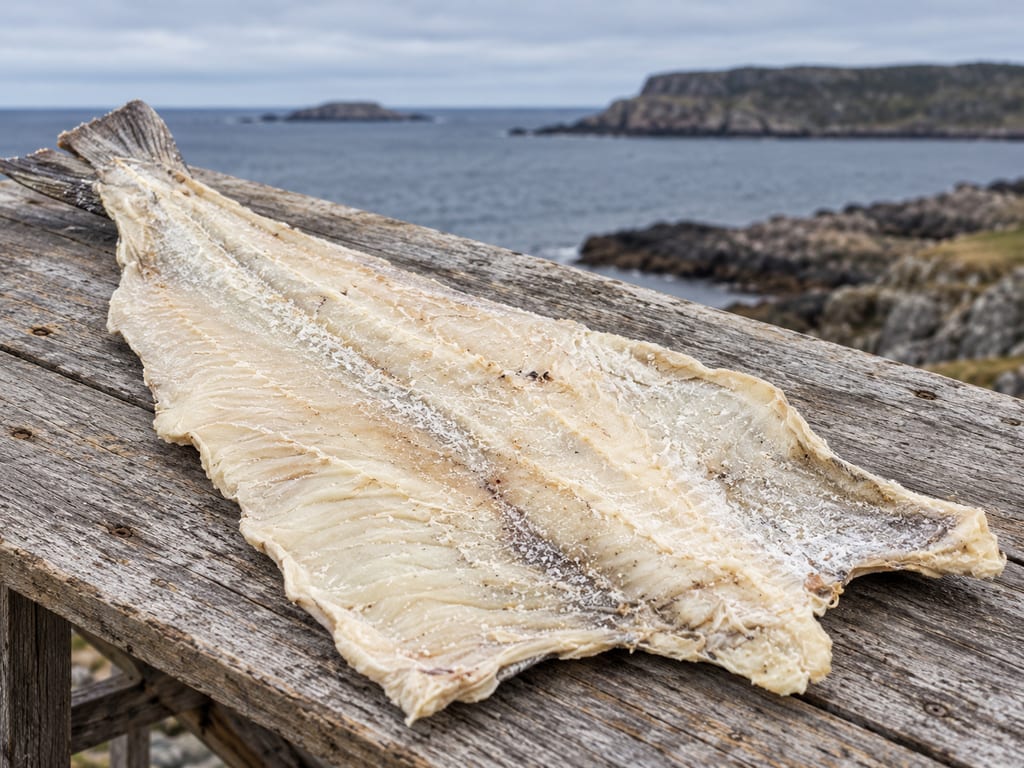
Atlantic cod split, salted and dried on raised flakes along the Newfoundland and Labrador shore, manufactured ashore for markets across the Atlantic.
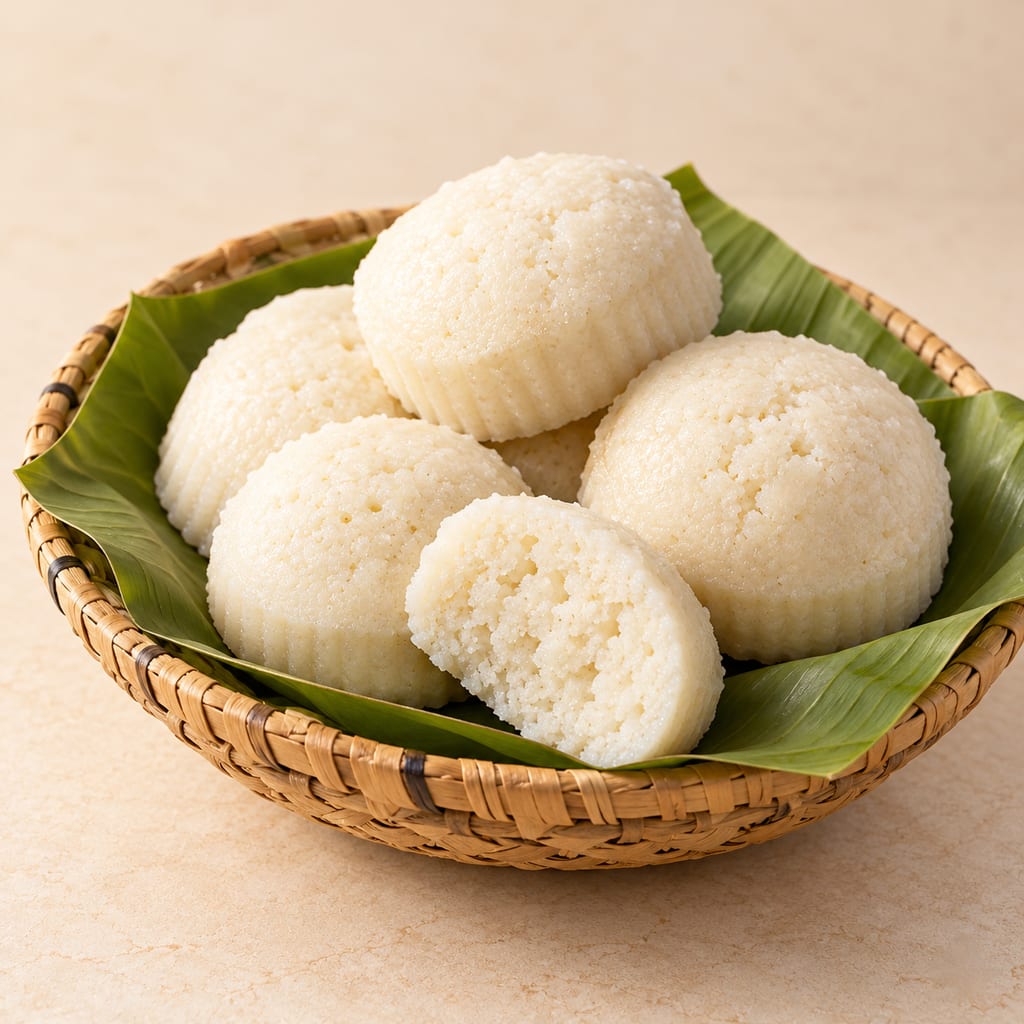
Soft, lightly tangy steamed cereal bread documented across Benin and Togo. This page gives one measured rice-flour research method; maize-based Ablo and mixed-grain versions remain distinct traditions.
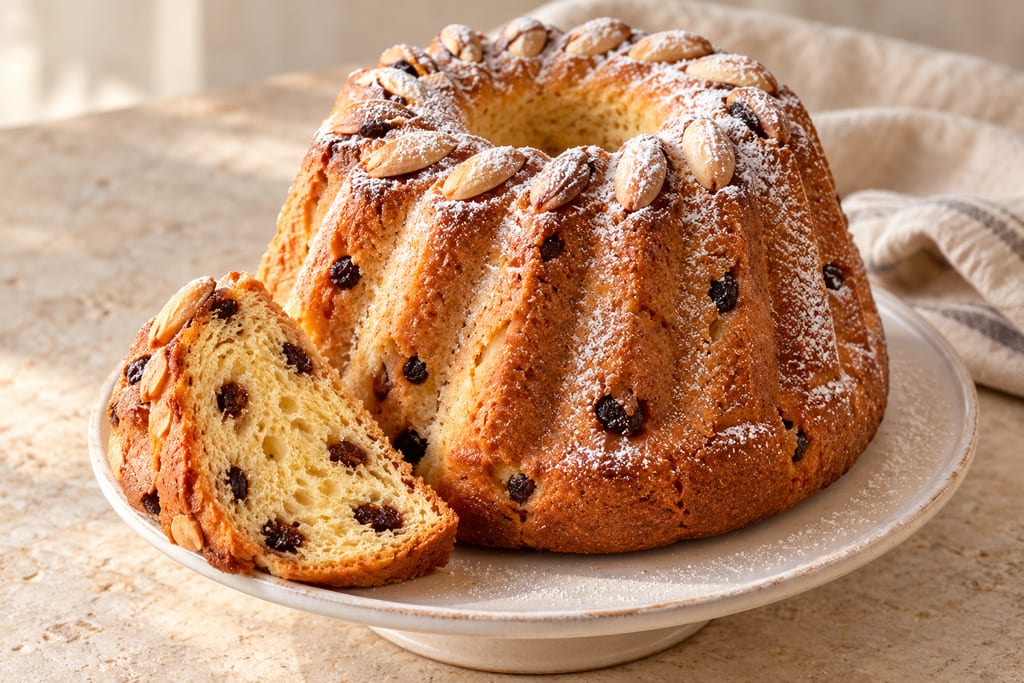
An enriched Alsatian yeast ring with raisins and almonds, kneaded with butter, proofed in a fluted mould and baked until browned.
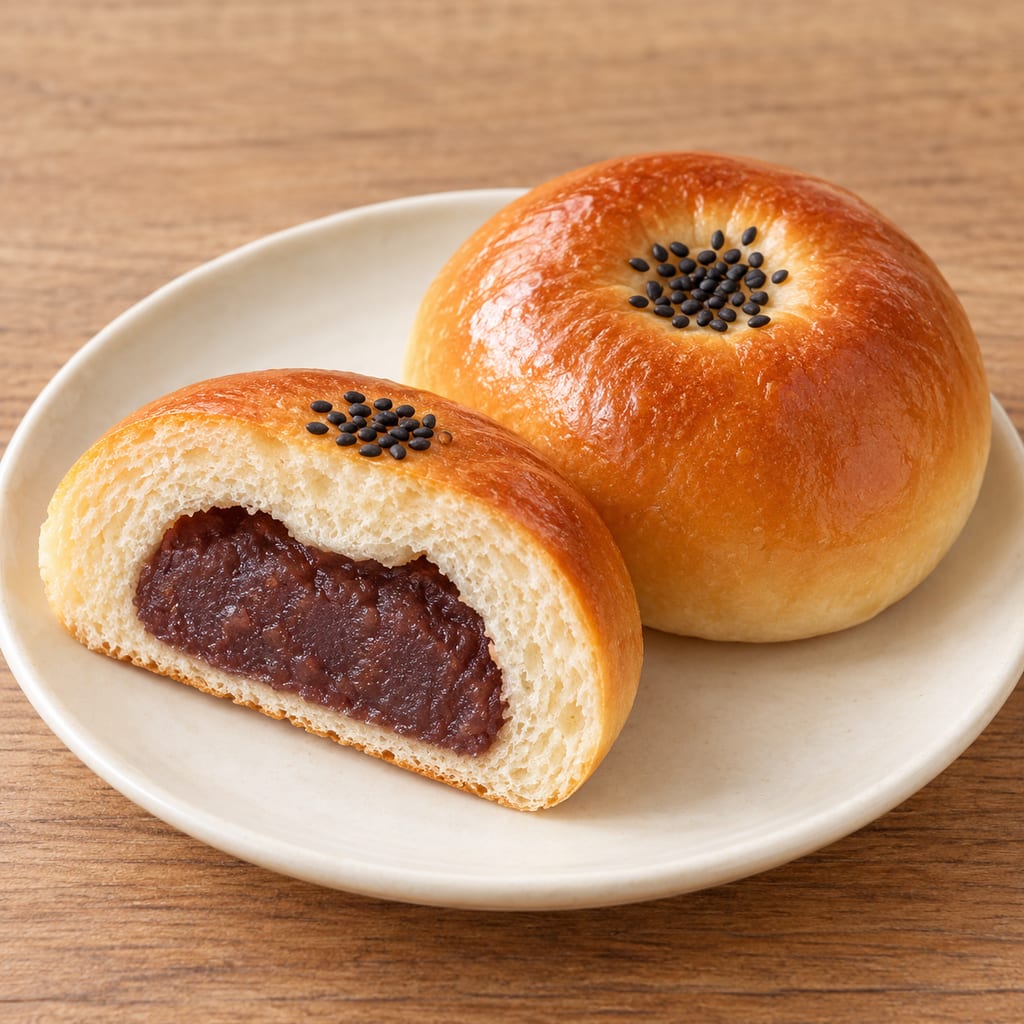
Anpan is a soft wheat bun filled with sweet red-bean paste and finished with egg wash and black sesame. This dough rises with commercial instant yeast.
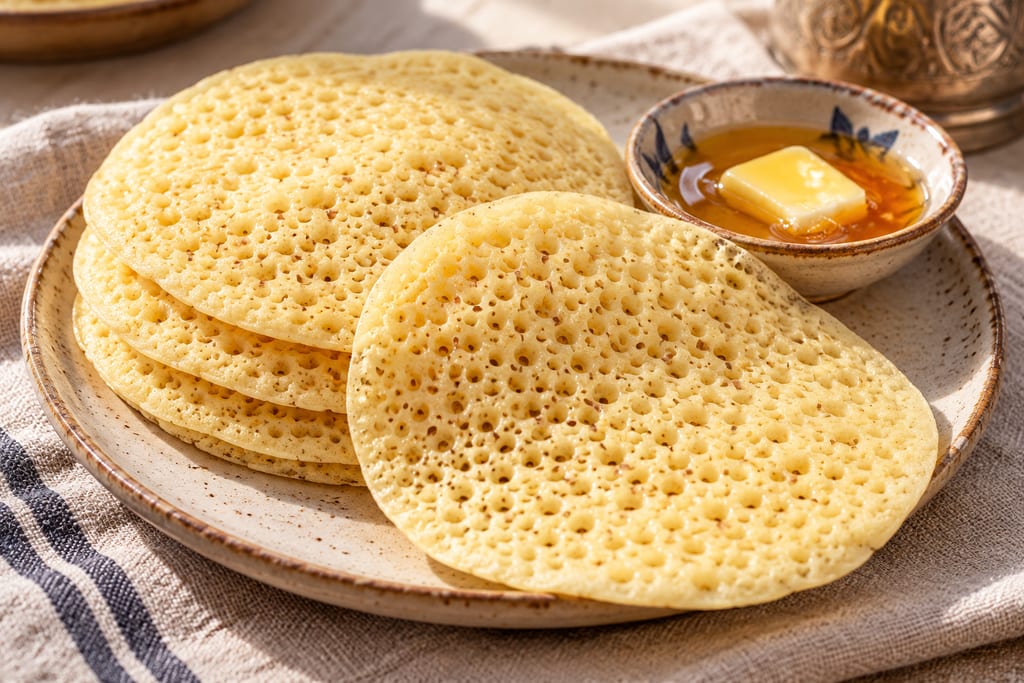
Moroccan semolina pancakes made from a thin yeast batter, rested until foamy and cooked on one side until the surface sets with a honeycomb of holes. This source-specific batch makes sixteen 5-inch pancakes.
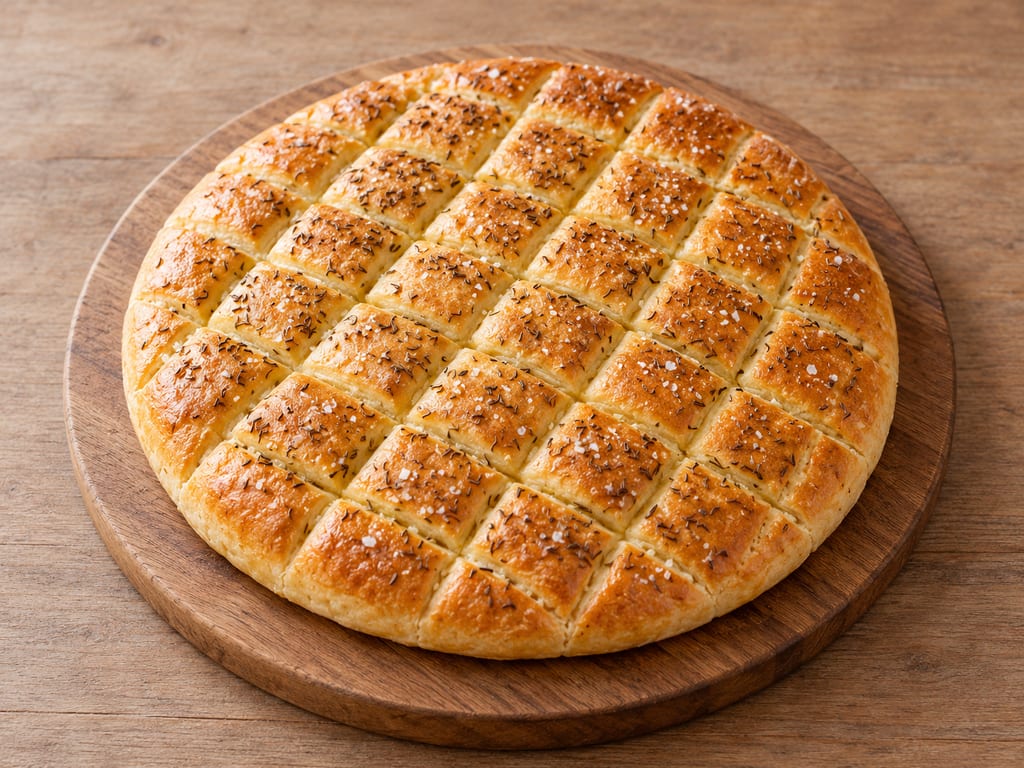
A round Slovenian flatbread scored in a grid and topped with caraway and coarse salt.
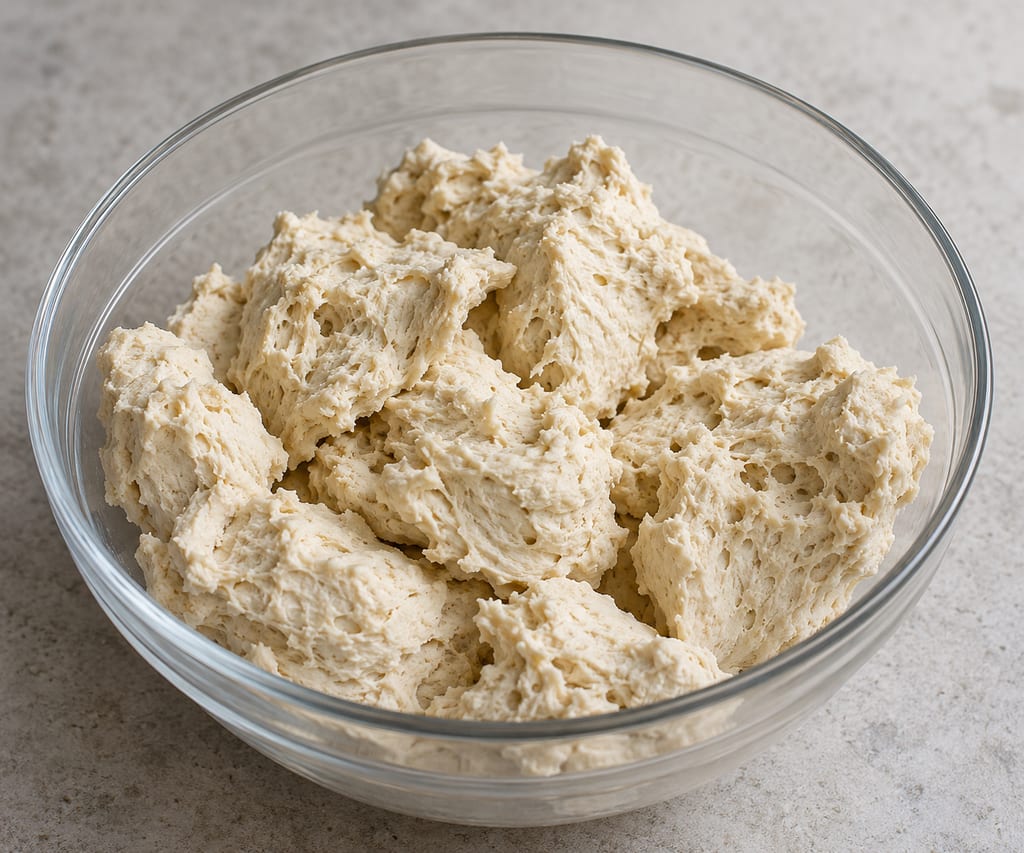
Biga is an Italian bread preferment of flour, water and a little yeast, usually a stiff unsalted mass of about 45 per cent water, fermented ahead and then mixed into the final dough.
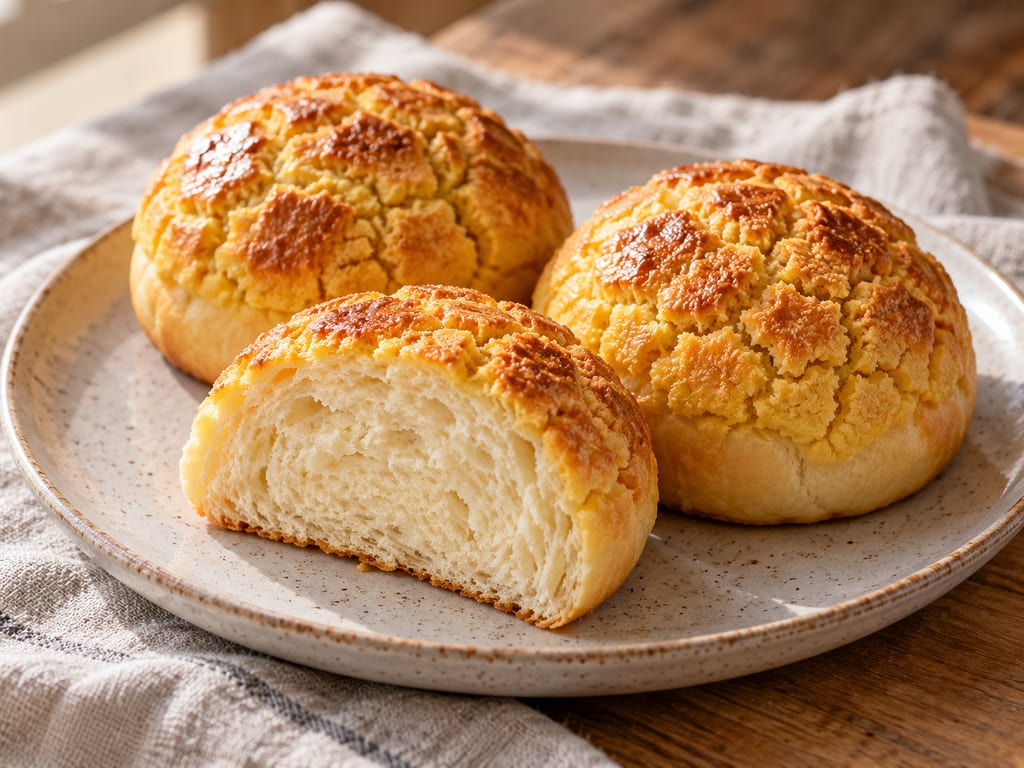
Hong Kong-style pineapple buns have soft yeast dough beneath a crisp, sweet pastry topping.
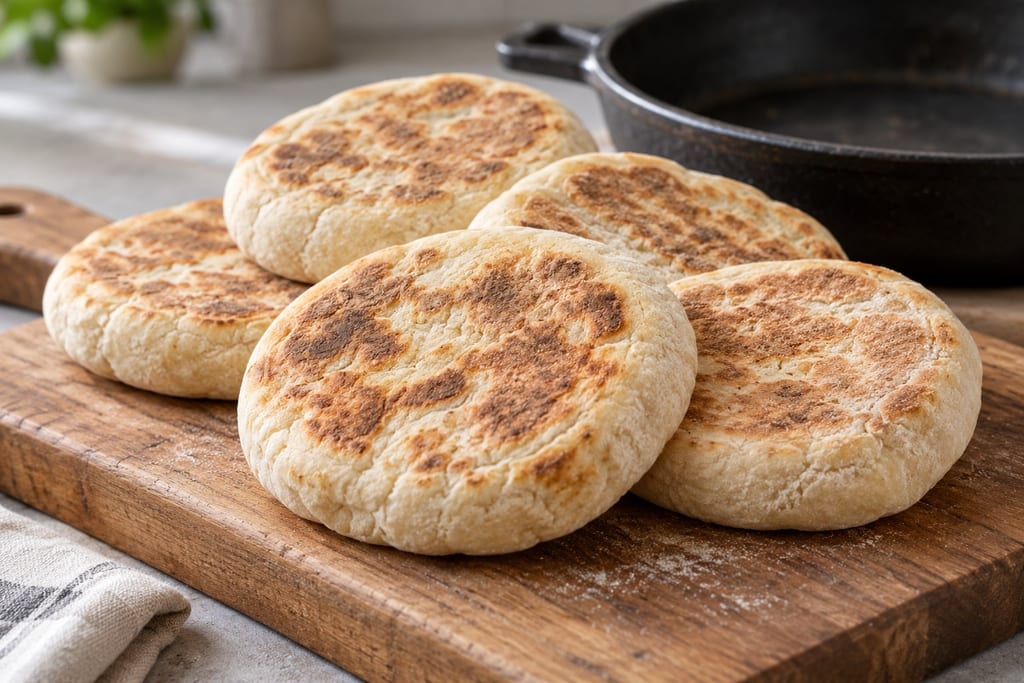
Sweet-potato wheat breads with fresh yeast, browned in a pan and finished in the oven. This is the bread component of Teleculinária's scrambled-egg dish.
No community contributions have been published for this entry yet.
Sign in to contribute. Published comments and photos are free to read.
Stuffed At the Gill'sNewfoundland family recipe and method
Nanny Hemeon's Sweet Raisin BreadIdentifies this as Lois Gill's half-batch update of her daughter-in-law's grandmother Nanny Hemeon's molasses raisin bread, with instant yeast substituted and a full 250 g raisin package used.
Provides the source formula and method: approximately 9 cups flour, molasses, sugar, butter, raisins, cinnamon, cloves, yeast, salt and about 2¾ cups warm water; knead, rise until doubled, shape in pans, proof again and bake at 250°F for 1½ hours.
The author separately reports changing to 300°F in her own oven and baking smaller loaves for 1 hour 15 minutes. This is retained as her own adjustment, not merged into the base schedule.
The author calls the Newfoundland versions numerous and family-specific and describes service with salt fish at Christmas Eve as well as tea, snacks and family meals.
Cited in: A Newfoundland family-style lassy bread
Government of Canada, Language Portal of CanadaRegional food definition
Wordsleuth (2004, volume 1, 1): Of Bangbellies and Banquet BurgersA Canadian Oxford Dictionary lexicographer describes Newfoundland lassy bread as a sweet yeast bread with molasses, raisins and spices, probably served with salt pork. The author marks the accompaniment as probable, not certain.
Cited in: A Newfoundland family-style lassy bread
Memorial University of Newfoundland, Heritage Newfoundland and LabradorHistorical dialect evidence
Dictionary of Newfoundland English: molassesThe entry records 1914 evidence for bread made with raisins and molasses under the name lassy bread and notes historical use of molasses buns. This supports the regional term but is not a complete recipe.
Cited in: A Newfoundland family-style lassy bread
U.S. Food and Drug AdministrationFood safety
Handling Flour Safely: What You Need to KnowRaw flour can carry harmful bacteria; do not taste raw dough and bake flour-containing foods before eating.
King Arthur BakingComparison: steamed chemical leavened brown bread
Boston Brown BreadProvides a molasses-sweetened rye, wheat and cornmeal batter leavened with baking soda and cooked by steaming or covered baking; this is a different preparation from the Newfoundland yeast dough.
Cited in: A Newfoundland family-style lassy bread
European Union at Expo Milano 2015Comparison: Belgian enriched yeast raised raisin loaf
Belgium Bread Recipe: Cramique/KramiekDocuments a Belgian cramique formula enriched with milk, egg, butter and sugar, with raisins but without molasses or the Newfoundland spice profile; used only for comparison, not as a method source for this family recipe.
Cited in: A Newfoundland family-style lassy bread