
Barley and oat porridge (Viking Age)
Crushed or milled barley cooked in water until the starch softens and the mixture thickens, the plainest way a northern household turned stored grain into a meal, here with apple and hazelnut.
 FermenteaWhere food goes to change
Modern method
Sol over Gudhjem layers hot-smoked herring and vegetables on buttered rye bread, topped with egg yolk.
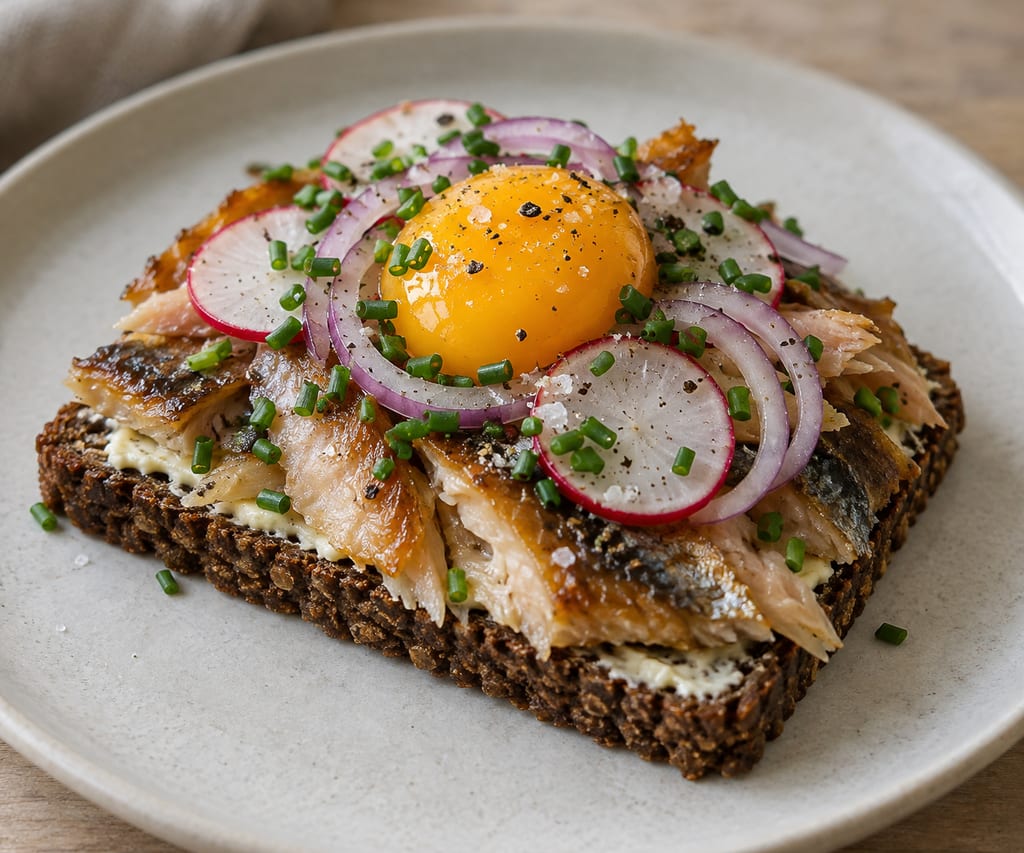
Sol over Gudhjem translates as “Sun over Gudhjem”. It is one of Denmark's best-known open sandwiches, or smørrebrød, combining buttered rye bread, hot-smoked herring, fresh vegetables and a raw egg yolk.
The name refers to Gudhjem, a small coastal town on the island of Bornholm in the Baltic Sea.
The egg yolk represents the sun rising over the town. Its bright yellow colour contrasts with the dark rye bread and golden smoked fish.
This recipe uses four pieces of hot-smoked herring, four slices of rye bread, four eggs, chives, radishes, red onion, butter and seasoning.
The defining fish is herring, Clupea harengus, usually Baltic herring when discussing the Bornholm tradition. Baltic herring belongs to the Atlantic herring species complex, with regional population distinctions.
The recipe is an assembly dish rather than a fish-smoking procedure. It begins with fully prepared hot-smoked herring purchased or obtained from a smokehouse.
Bornholm's position in the Baltic Sea helped shape an economy involving fishing, shipping and the trade in fish.
Herring was particularly important because it was abundant in regional waters and could be preserved for sale beyond the immediate fishing community.
Salted, dried and smoked fish all formed part of northern European food preservation traditions.
Bornholm has evidence of fish smoking extending back centuries. Historical material mentions exports of smoked herring and salmon in the seventeenth century.
At first, smoking could take place in large domestic chimneys. Specialised commercial smoking buildings later became increasingly important.
During the nineteenth century, fish-smoking businesses developed along the coast. Improved transport connections expanded markets for smoked fish.
Purpose-built smokehouses began appearing particularly prominently in the 1870s and 1880s.
One documented smokehouse at Allinge was built in 1883. Its former function and distinctive chimney are preserved in Danish heritage records.
At the industry's peak, Bornholm had more than one hundred smokehouses, with some accounts identifying approximately 130–135 establishments across Bornholm and Christiansø.
The first half of the twentieth century saw substantial commercial activity, particularly during the interwar years.
The familiar smokehouse architecture became an important part of the island's landscape.
Many older smokehouses have since closed or changed purpose, but hot-smoked herring remains strongly associated with Bornholm.
The exact origin of the Sol over Gudhjem sandwich is less securely documented than the history of smoked fish production.
A published description by Alan Davidson appeared in North Atlantic Seafood in 1980, showing that the dish was established by that date.
Some tourism descriptions claim a considerably older tradition, but an exact invention year is not supported by the primary recipe source.
The name's symbolism is clear, while the first individual to place a raw egg yolk on herring and rye bread is not established.
SAFECONSUME FOUR-SANDWICH RECIPE
Ingredient — Quantity
Rye bread — 4 slices
Butter — For spreading
Hot-smoked herring — 4 pieces
Chives — 1 bundle
Radishes — 4
Red onion — 1
Eggs — 4
Salt — To taste
Black pepper — To taste
The fish weight is not specified.
The butter, salt and pepper quantities are also unspecified.
The recipe instructs the maker to use the egg yolks. It provides no use for the separated egg whites.
No lemon, mayonnaise, capers or additional vegetables appear in this measured version.
Hot-smoked herring supplies the main protein and smoky flavour. Herring is a relatively oily fish, and its fat content contributes to the characteristic richness.
Rye bread, made from Secale cereale, provides a dense, sturdy base. Its dark colour and slightly acidic cereal flavour complement the fish.
Traditional Danish rye bread, rugbrød, often contains whole or cracked rye grains and may be made using sourdough fermentation. That fermentation occurs during breadmaking, not during assembly of the sandwich.
Butter adds richness and helps the toppings adhere to the bread.
Chives, Allium schoenoprasum, contribute a fresh allium aroma without the intensity of raw onion.
Radishes, Raphanus sativus, add crunch and a peppery note.
Red onion, Allium cepa, provides sharper flavour and colour.
Raw egg yolk contributes fat, emulsifying phospholipids and a rich texture. Its colour is also the visual centre of the dish.
Salt and pepper finish the flavours, although smoked herring may already be salty.
The SafeConsume recipe specifies a chopping knife, a boning knife, two mixing bowls and a cutting board.
A separate utensil for vegetables is useful for preventing cross-contamination.
The recipe does not require further cooking.
The stated timing is ten minutes preparation and zero minutes cooking.
This assumes that the smoked herring is already prepared and that the ingredients are ready for assembly.
Stage 1 — Prepare the work area
Wash hands and clean the preparation surface.
Arrange the fish, bread, vegetables and eggs separately.
Because the finished sandwich will not be heated, hygiene during assembly is particularly important.
Stage 2 — Remove the herring skin
Take the hot-smoked herring.
Open the fish along the belly or stomach side to loosen the bones.
Remove the skin and carefully lift out the bones.
The source does not specify a fillet weight or a particular boning-tool size.
Stage 3 — Check for remaining bones
Inspect the prepared fish carefully.
Herring contains many fine bones, and their removal is one of the most important preparation tasks.
The recipe does not provide a numerical bone-removal procedure.
Stage 4 — Separate the eggs
Crack the four eggs and separate the yolks from the whites.
Keep the yolks intact for presentation.
The source uses uncooked yolks, making egg selection and handling especially important.
Stage 5 — Prepare the bread
Butter the four slices of rye bread.
No specific butter quantity or bread thickness is given.
Stage 6 — Add the fish
Place a piece of hot-smoked herring over each slice.
Arrange the fish so that there is room for the vegetables and egg yolk.
Stage 7 — Prepare the vegetables
Thinly slice the four radishes.
Cut the red onion into rings.
Finely chop the bundle of chives.
Stage 8 — Assemble the toppings
Arrange radish slices and red onion over the herring.
Scatter the chopped chives.
Season with salt and pepper.
Stage 9 — Add the sun
Carefully place one egg yolk on each open sandwich.
The yolk is the characteristic visual element of Sol over Gudhjem.
Stage 10 — Finish
Add a few additional onion rings as directed.
Repeat for all four sandwiches.
Serve without further cooking.
The smoked fish has undergone significant transformations before the sandwich is assembled.
During hot-smoking, heat changes the structure of fish muscle proteins.
Protein denaturation and coagulation make the flesh opaque and firmer than raw fish.
Water is redistributed and some moisture may be lost during processing.
Smoke compounds interact with the fish's surface and contribute aroma, colour and flavour.
The exact intensity depends on the fish's salt treatment, wood, smoking temperature, airflow and exposure time.
Bornholm has a tradition of smokehouses using wood fires and distinctive chimney systems.
Historical descriptions mention alder wood in connection with Bornholm herring smoking.
However, the SafeConsume recipe does not identify the wood or smoking temperature used for its four fish pieces.
The purchased herring's production process must therefore remain separate from the sandwich recipe.
Egg yolk is rich in lipids and emulsifying compounds, particularly phospholipids associated with lipoproteins.
When broken during eating, the yolk spreads over the smoked fish and rye bread.
This produces a rich sauce-like effect without separately preparing a dressing.
The yolk's fat blends sensorially with the oils of the herring, while the onion and radish provide sharpness and crunch.
The contrast is central to the dish's appeal.
The yolk also carries symbolic meaning, representing the sun over Gudhjem.
This dual function makes it more than a decorative garnish.
Sol over Gudhjem belongs to Danish smørrebrød culture.
Other smoked-fish open sandwiches use mackerel, salmon or other seafood.
Some preparations include potatoes, lemon or different herbs.
However, the present recipe is specifically based on hot-smoked herring and raw egg yolk.
A mackerel sandwich with similar toppings is a related adaptation rather than the exact recorded recipe.
The type of rye bread may also differ. Commercial sliced rugbrød and locally baked sourdough rye bread vary in density, acidity and seed content.
Some restaurants place the egg yolk in an onion ring to hold it in place.
Others arrange vegetables differently or add a sauce.
These differences do not necessarily justify separate recipe records if the fundamental ingredients and process remain the same.
The sandwich is traditionally eaten as a Danish lunch dish.
It is served open-faced rather than closed between two slices of bread.
A knife and fork are often practical because the toppings are substantial and the egg yolk can run when broken.
The smoked herring supplies the principal savoury flavour.
The raw vegetables contribute freshness and crunch, while the egg yolk adds richness.
Danish open-sandwich meals may be accompanied by beer or aquavit, but neither is required by this specific recipe.
On Bornholm, eating smoked herring also has a strong connection with coastal tourism and visits to traditional smokehouses.
The dish therefore represents both everyday Danish lunch culture and the island's specialised smoking heritage.
The smoked herring should have the appearance, smell and texture expected of the labelled finished product.
Its flesh should separate sufficiently for the bones to be removed.
The bread should be sturdy enough to support the fish and vegetables.
Radishes should retain their crunch.
The egg yolk should remain intact until eating.
An excessively salty finished sandwich can result if heavily salted fish is combined with unnecessary additional salt.
Remaining small herring bones are an important physical hazard.
Stale rye bread may crumble or dry out, while excessively wet bread can lose the structural contrast expected in smørrebrød.
This recipe uses uncooked egg yolks.
Raw eggs may present a risk of Salmonella contamination.
The SafeConsume cookbook advises using commercial eggs or eggs from hens known to be vaccinated against Salmonella. For the UK, it gives the British Lion mark as a specific example.
The cookbook also directs users to check use-by dates, keep eggs refrigerated and wash hands after handling raw eggs.
Those instructions are source-specific and should not be represented as an identical universal rule for every country.
People particularly vulnerable to foodborne illness should follow current local guidance about eating raw eggs. Pasteurised egg yolks can provide an alternative where appropriate, though that is not part of the original measured recipe.
Smoked herring also requires proper handling and storage according to the product label.
Because the assembled sandwich is not cooked, contamination introduced during preparation is not removed by a final heating stage.
No validated storage period is provided for the assembled sandwiches.
The inspected recipe book describes Sol over Gudhjem as a traditional Danish lunch dish and provides this assembly batch, but does not date the dish’s first appearance.
Yield 4 sandwiches · Scaling: source batch only
The recipe leaves yolks uncooked on the sandwich. SafeConsume’s educational recipe advises commercial eggs or eggs known to come from Salmonella-vaccinated hens and separately names the British Lion mark as its UK example; it also advises refrigeration and checking the use-by date. This wording is attributed to that source and is not presented as a universal licensing rule.
Hazard sourceFollow SafeConsume’s source-specific advice for its raw-egg recipe: use commercial eggs or eggs known to come from Salmonella-vaccinated hens, keep them refrigerated and check the use-by date. The British Lion mark is the book’s UK example, not a universal requirement.
Control sourceThe recipe includes hygiene callouts for handwashing, a clean work surface, separate utensils and washing produce. These accompany its specific raw-egg handling advice.
Control sourceThe recipe uses uncooked egg yolks and gives no storage time for assembled sandwiches.
The inspected recipe book calls this a traditional Danish lunch dish and names Gudhjem as a town; the recipe is not evidence that the sandwich originated there.
Hot-smoked herring is strongly associated with Bornholm, where purpose-built smokehouses spread in the 1870s and 1880s and one at Allinge survives from 1883; the sandwich takes its name from Gudhjem on the island.
Crushed or milled barley cooked in water until the starch softens and the mixture thickens, the plainest way a northern household turned stored grain into a meal, here with apple and hazelnut.
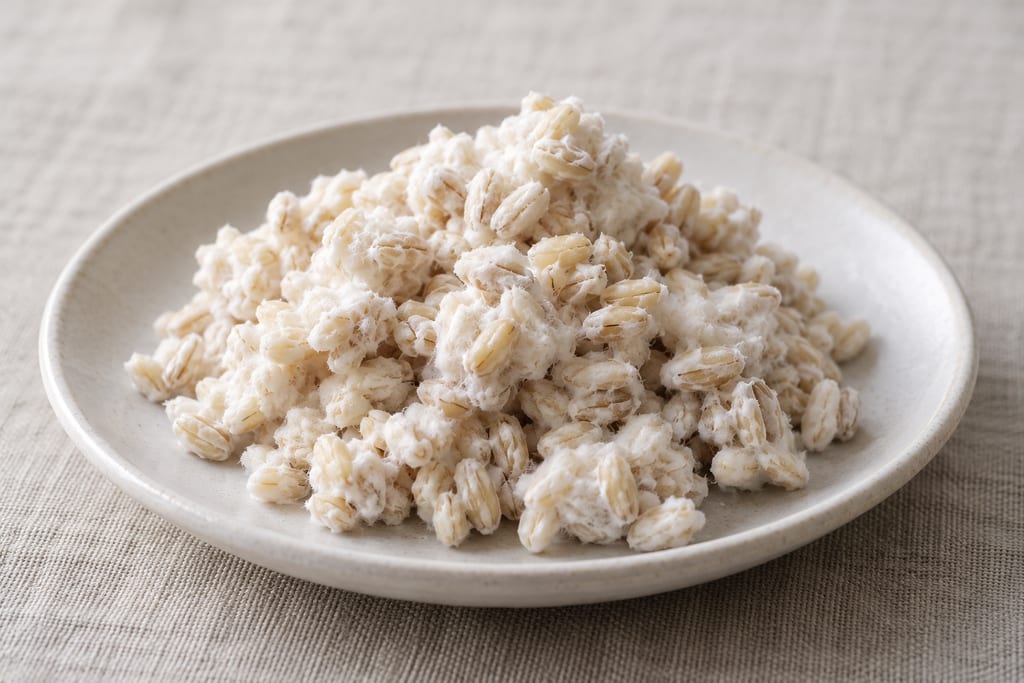
Steamed pearled barley grown into a white koji cake with Aspergillus oryzae over about 36 hours in a 30 °C chamber, turned three times under a damp cloth.
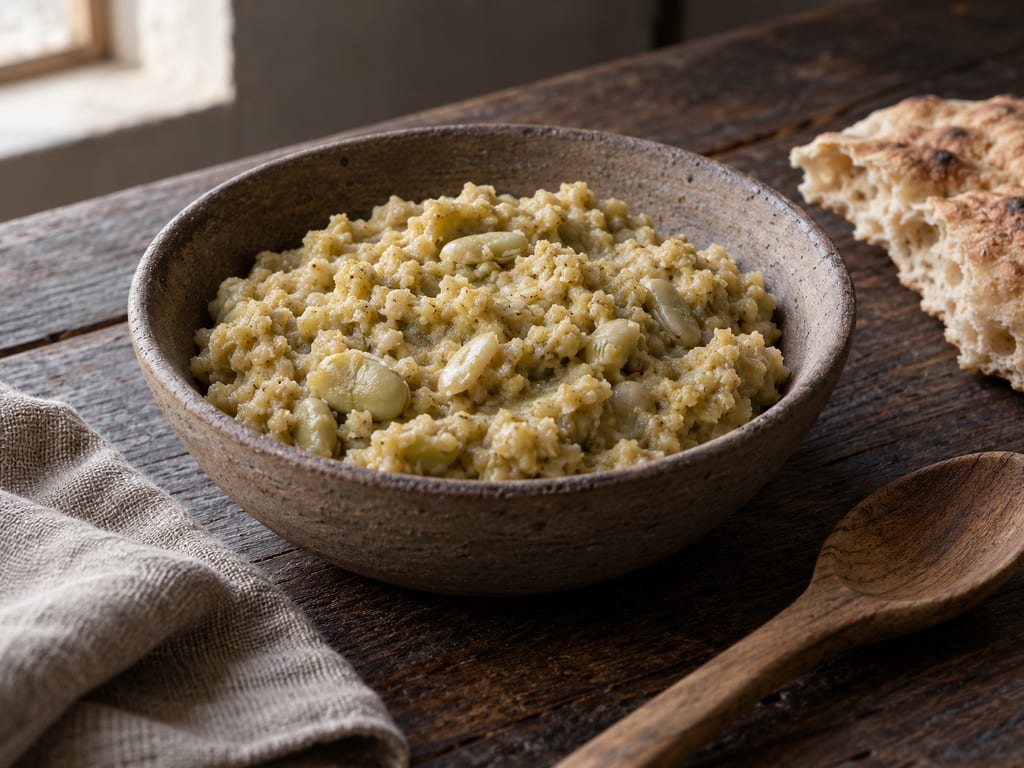
Cooked broad beans crushed to a thick paste with garlic and salt, a museum preparation built on the one European pulse that was already old when the Viking Age began.
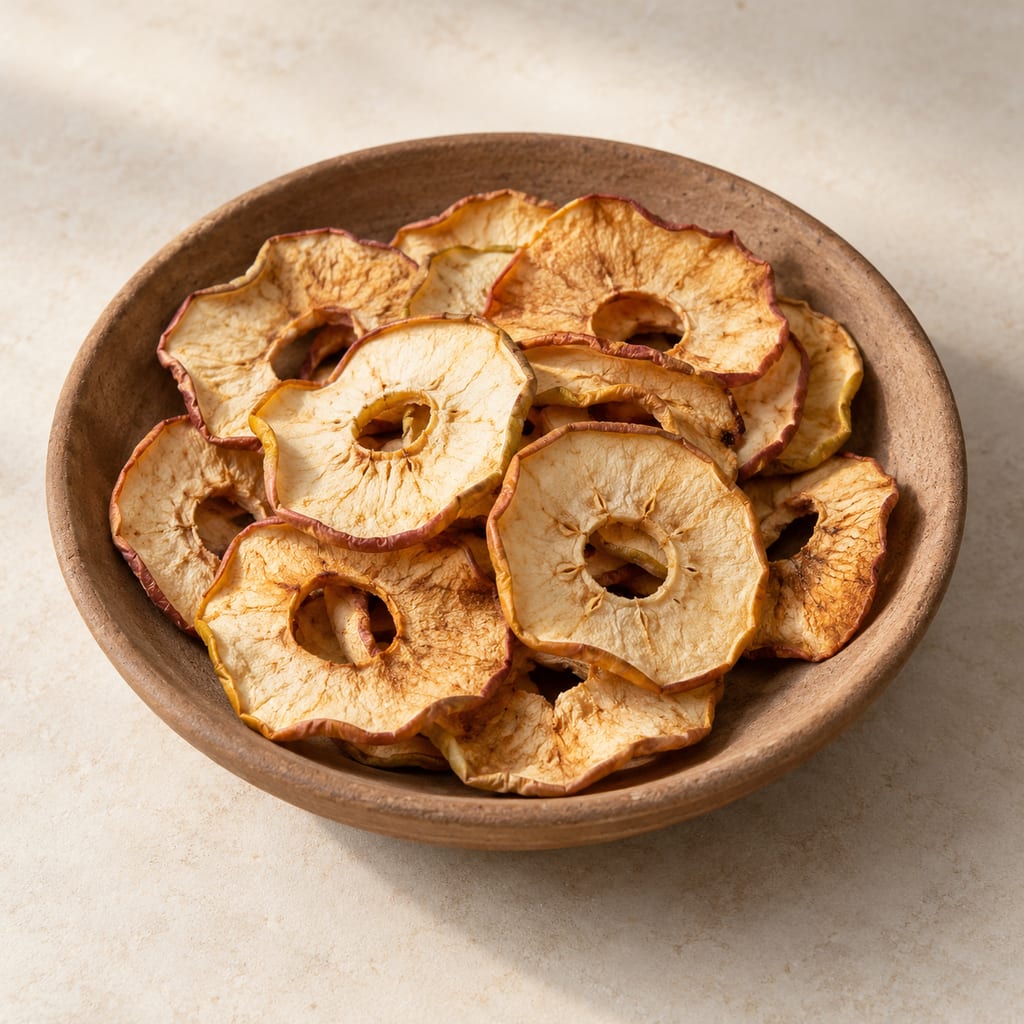
Apple slices dried until most of their water has gone, shrinking and concentrating into leathery or crisp rings, with the modern controls that a plausible old technique turns out to need.
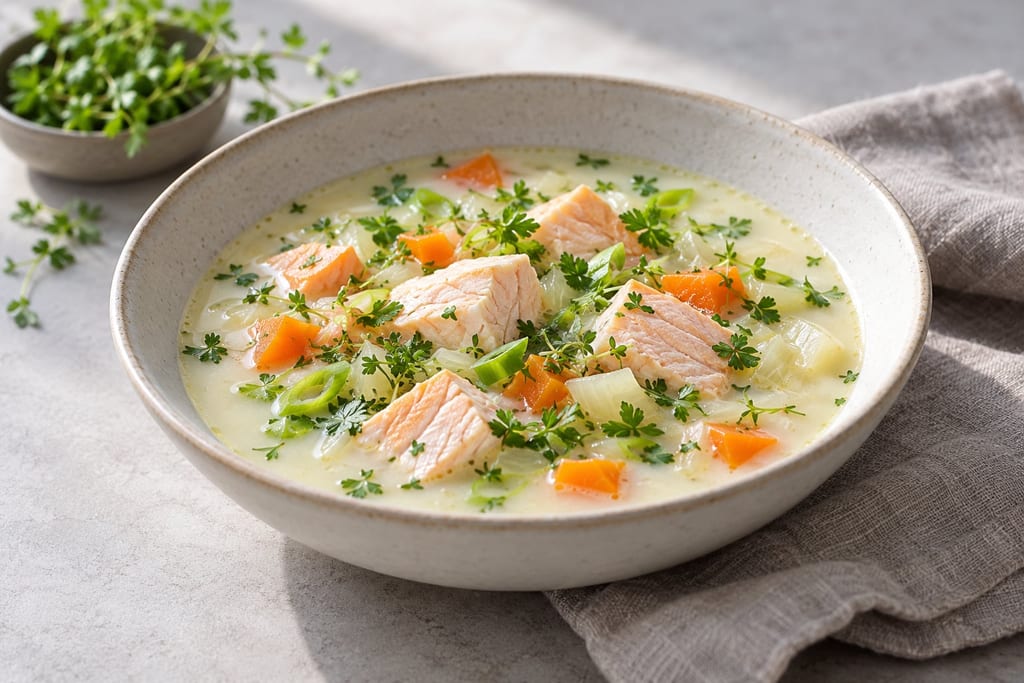
Trout or salmon poached at the end of a simmered broth of onion and root vegetables, a present-day reconstruction of coastal cooking built on excavated fish bones and a boiling pot.
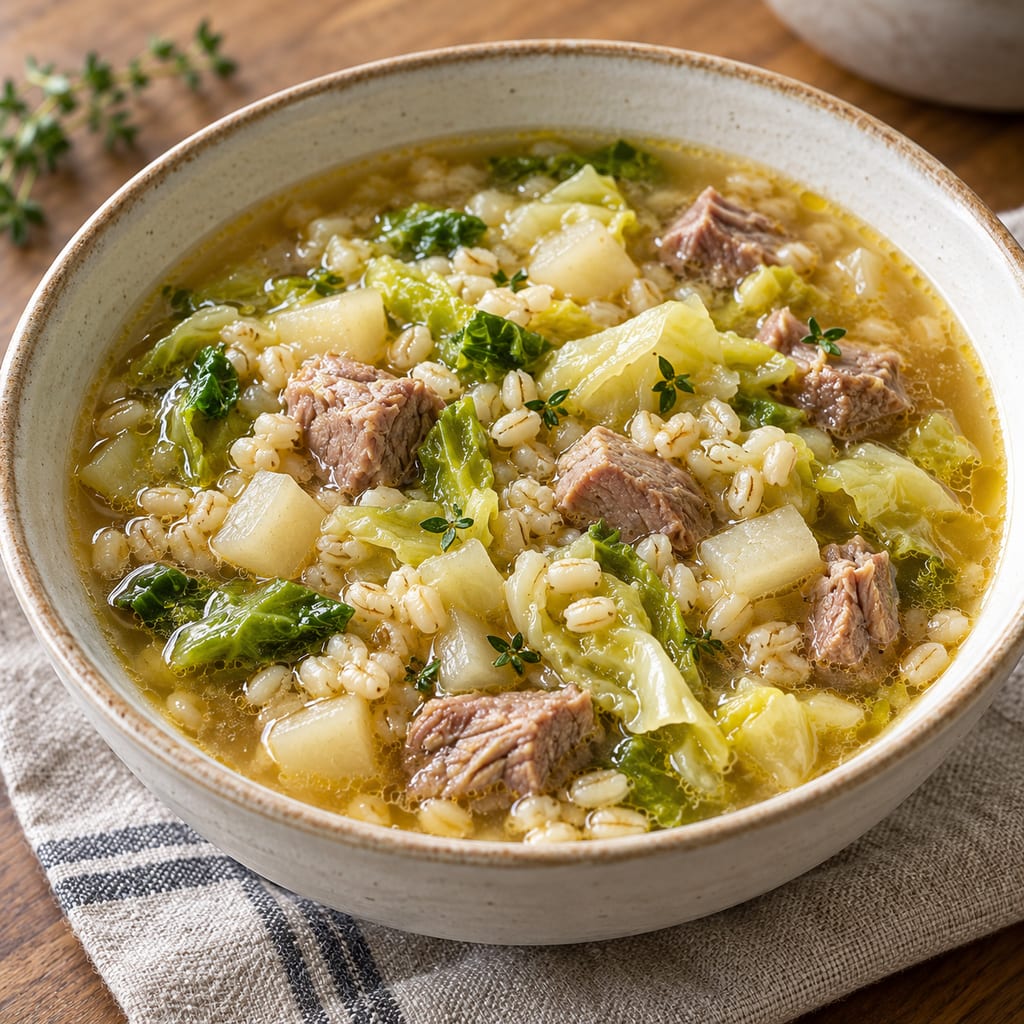
Lamb shoulder simmered with pearl barley, turnip and leafy cabbage in one pot, a present-day reconstruction built from the animals, grains and vegetables of northern European farming.

Mushroom garum is a savoury, smoked sauce made by crushing mushrooms with salt and rice koji and letting the mixture brew for months, a modern use of the garum method without fish.
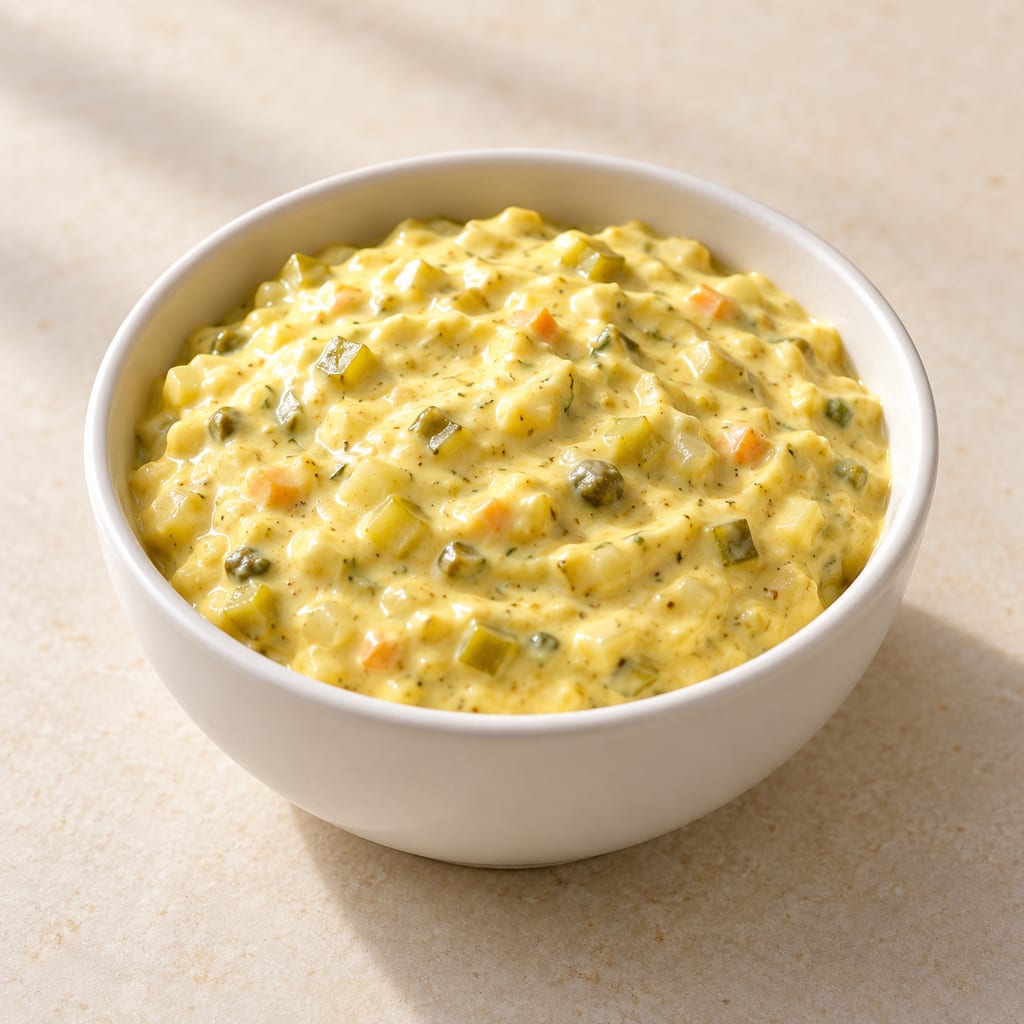
Danish remoulade is a thick, yellow, mayonnaise-based sauce flecked with finely chopped pickled vegetables. Arla’s quick home version stirs piccalilli remoulade purée with mayonnaise, crème fraîche, diced apple and capers.

Japanese skipjack tuna cooked, then repeatedly smoked and dried over a wood fire by the hand-fired tebiyama method into a hard block for shaving into dashi: the first stage of katsuobushi.
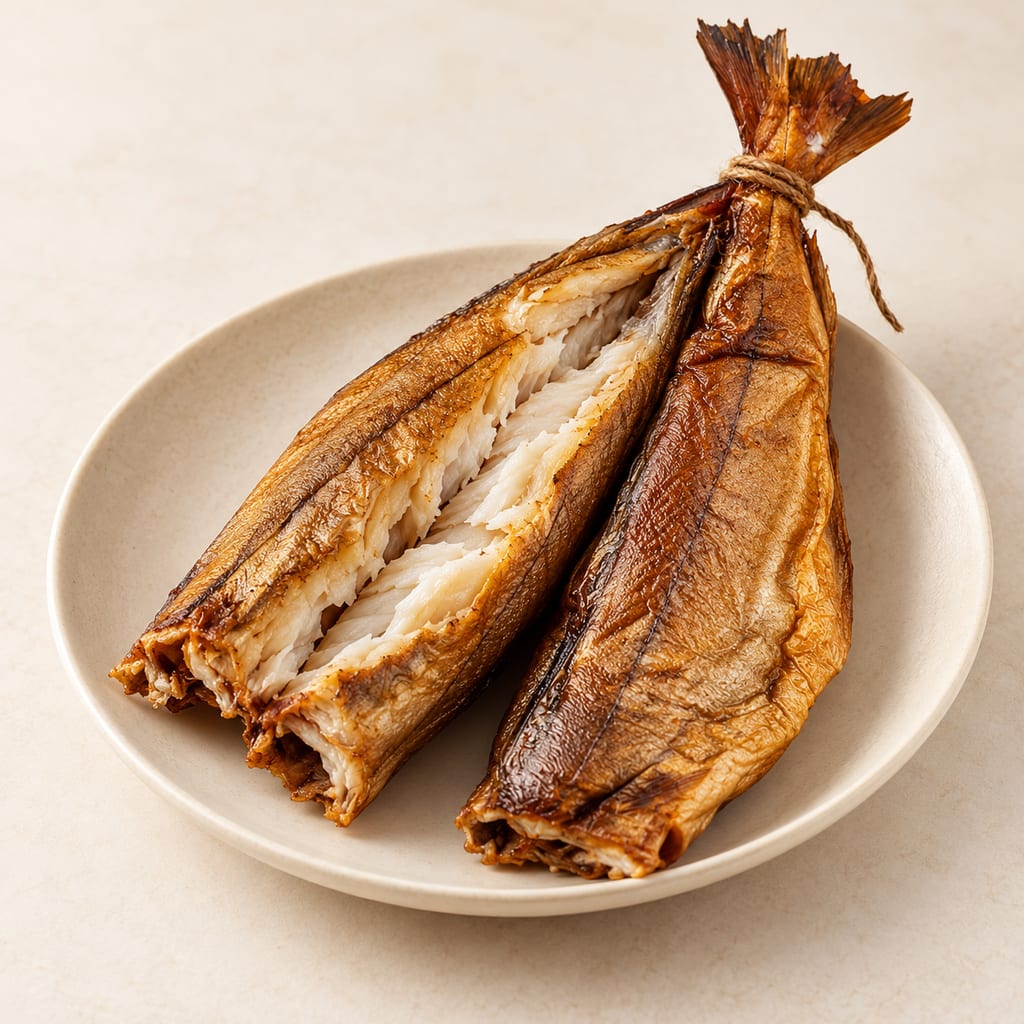
Arbroath smokies are whole haddock dry-salted, paired by the tail and hot-smoked in a protected coastal area. Their recorded history links Auchmithie and Arbroath, though the exact origin is unsettled.
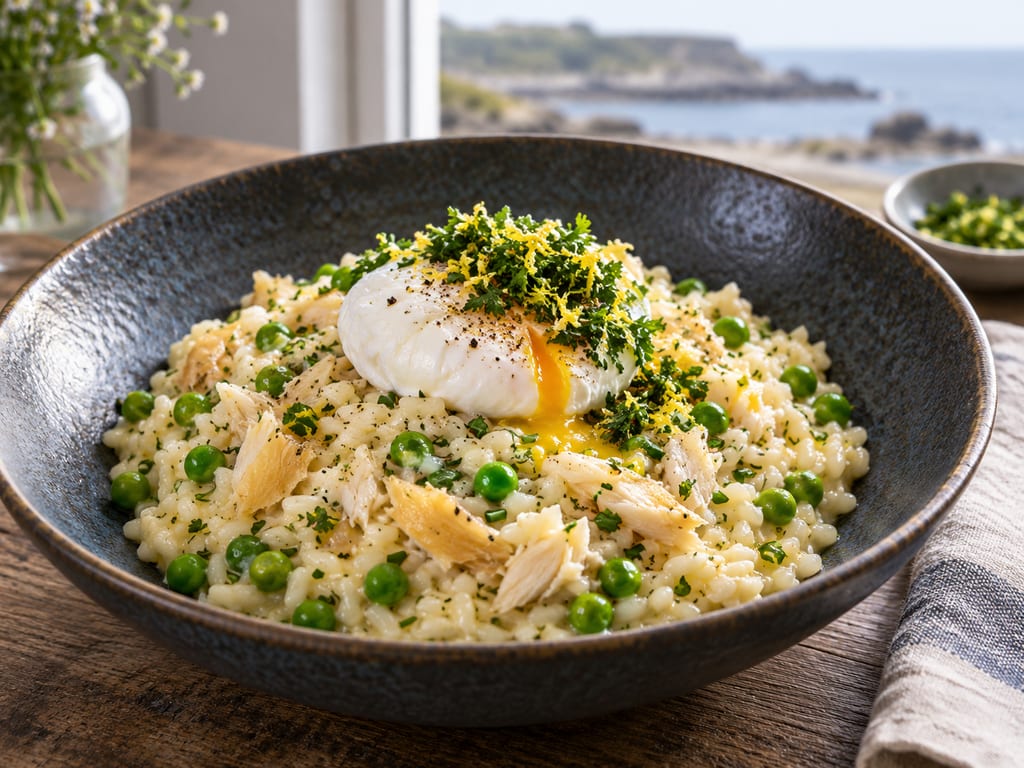
A four-serving risotto published in the 2014 Arbroath Smokie Trail booklet and credited to Hayley Wilkes. It cooks with finished Arbroath smokies; it does not describe smoking fish.
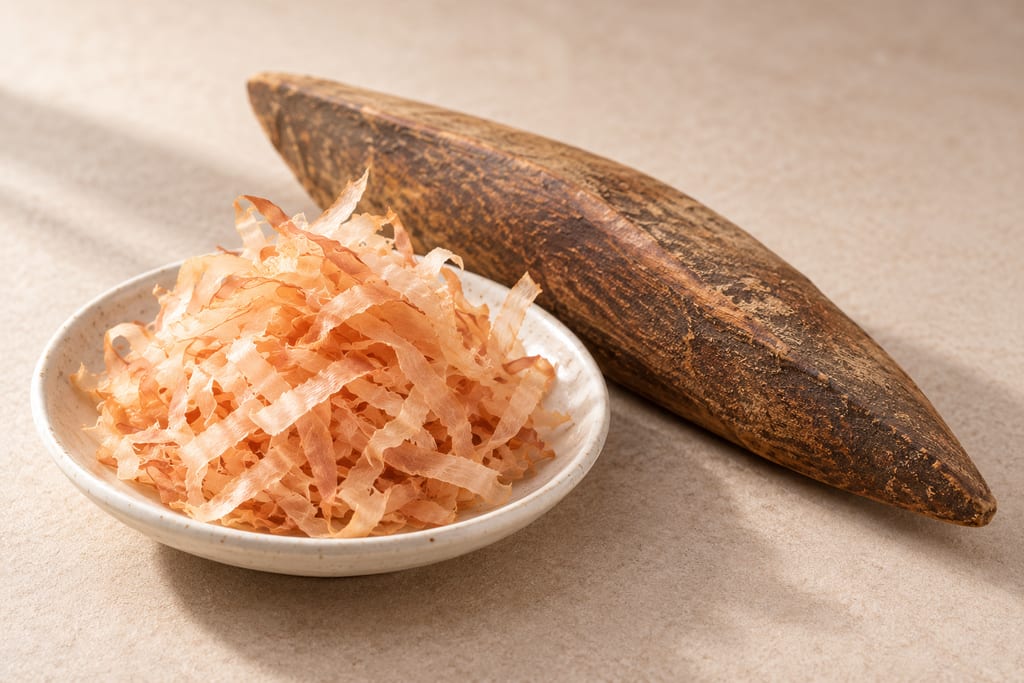
Katsuobushi is skipjack tuna cooked, smoked and dried into a hard block that is shaved into flakes for dashi and toppings. Some styles stop at the smoke-dried stage; others receive carefully managed mold maturation.
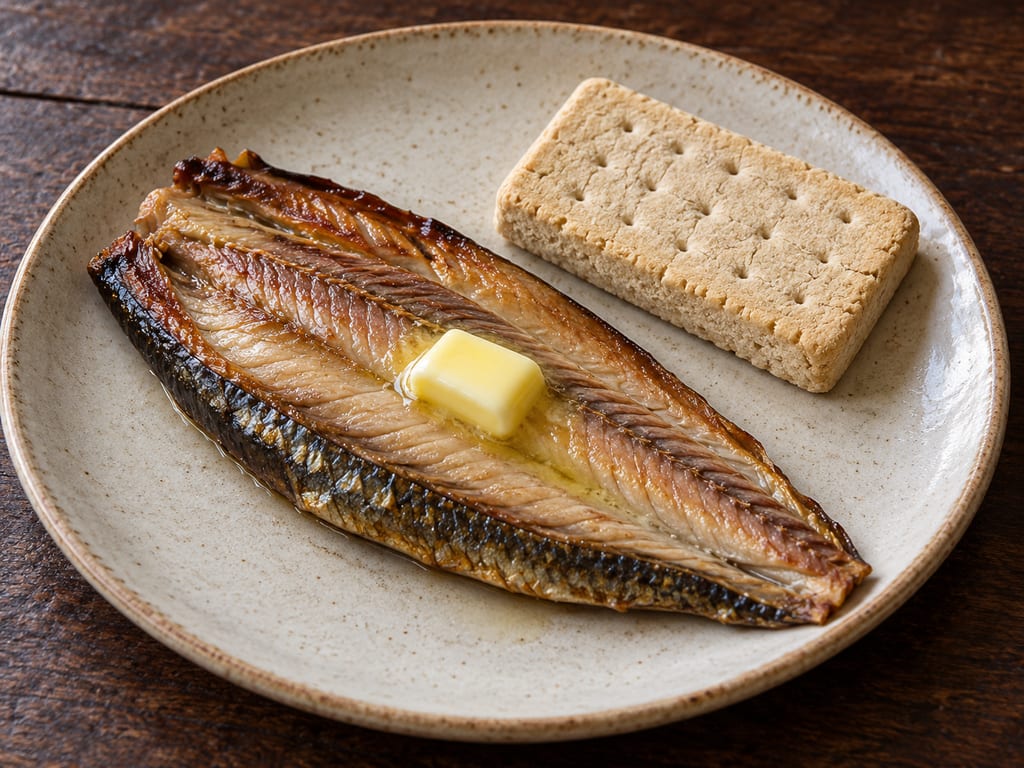
A Victorian way with Great Yarmouth bloaters: the lightly salted, cold-smoked whole herring is broiled and served with fresh butter and a warmed captain's biscuit.
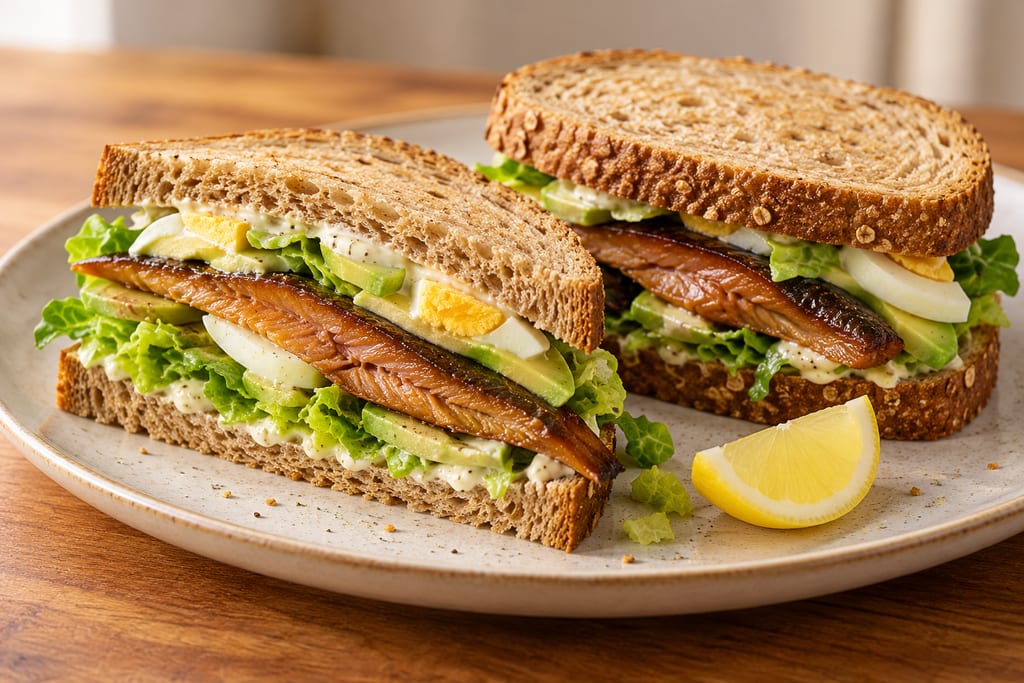
A warm club sandwich of oak-smoked Craster kipper fillets layered with soft-boiled egg, romaine, avocado and lemon mayonnaise on brown bread.
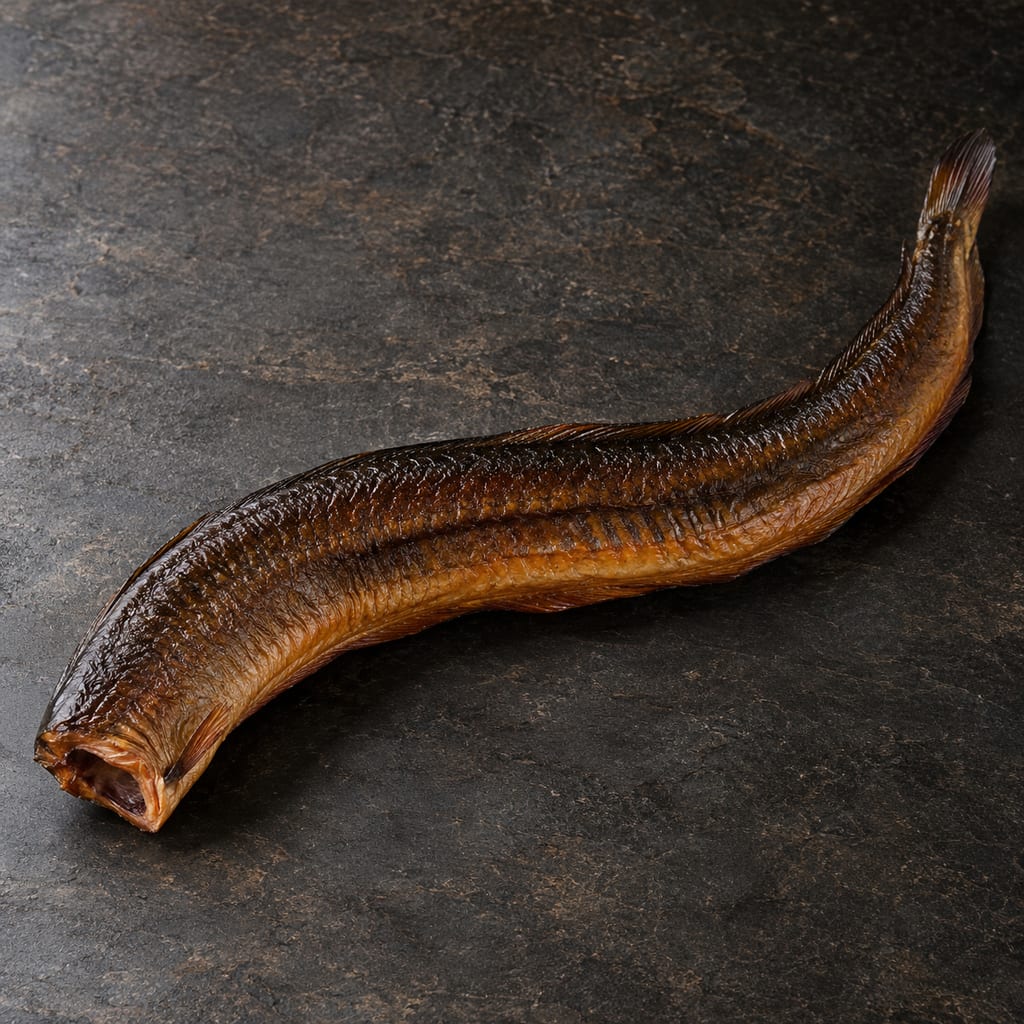
Short-finned eels, kooyang, smoked for a sustained period in the hollows of large trees at Budj Bim in south-western Victoria, a combined heat, smoke and drying method of the Gunditjmara people.
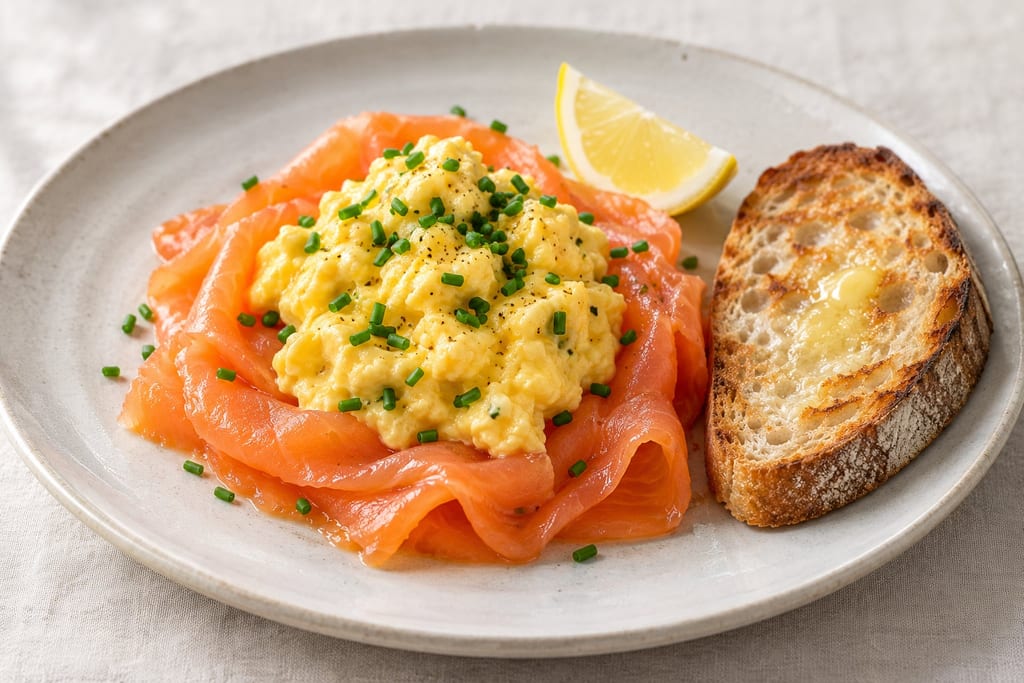
Softly scrambled eggs enriched with cream and butter, served with cold-smoked salmon, chives, lemon and sourdough toast as a British breakfast dish.
No community contributions have been published for this entry yet.
Sign in to contribute. Published comments and photos are free to read.
Public Health England and the SafeConsume teamRecipe · Food safety · Identity
REC P-E-BOOK: Learning to cook safely — Delicious recipes from across EuropePhysical PDF pp. 10–11 (printed pp. 7–8): four open sandwiches with four hot-smoked herring pieces, rye, vegetables and four eggs/yolks; 10 minutes preparation, no cooking; source note advises commercial or vaccinated-hen eggs and refrigerated storage/use-by checks.
Cited in: What it is; Ingredients; Ingredient functions; Equipment; Method; The science of hot-smoked herring; Why the yolk changes the dish; Regional and contemporary variations; How it is eaten; Recognising a good result; Food safety: raw egg
Danish Agency for Culture and PalacesHistory
Petersens RøgeriHistory of smokehouse construction.
Cited in: Bornholm and the history of smoked herring; The science of hot-smoked herring
Danish cultural heritageHistory
SilderøgerierHistoric Bornholm herring-smoking industry.
Cited in: Bornholm and the history of smoked herring; The science of hot-smoked herring
Alan Davidson, North Atlantic Seafood (1980)Context
Sol over GudhjelmCited in: What it is; Regional and contemporary variations; How it is eaten
Visit BornholmHistory
History of Smokehouses on BornholmCited in: Bornholm and the history of smoked herring; Regional and contemporary variations
